

Factors and Multiples

Presentation
•
Mathematics
•
6th - 8th Grade
•
Hard

Joseph Anderson
FREE Resource
12 Slides • 5 Questions
1
by Sophie Sinclair
2
Multiples are what we get after multiplying factors together

3
1 x 6 = 6 , so 1 and 6 are factors of 6
2 x 3 = 6, so 2 and 3 are factors of 6
0 x 6 = 0, so 0 is a multiple of 6
1 x 6 = 6, so 6 is a multiple of 6
2 x 6 = 12, so 12 is a multiple of 6
3 x 6 = 18, so 18 is a multiple of 6... and so on
4
Factors are the whole numbers we can multiply together to make a number
0, 6, 12, 18, 24
1, 2, 3, 6
5
Multiple Choice
What are the first five multiples of 11?
0, 11, 22, 33, 44
11, 22, 33, 44, 55
1, 11, 5, 2, 5.5
6
7
Always start with 1 x 12
Then go to 2 x 6
Then 3 x 4
Then 4 x 3 <--- we already have these numbers so we know we're finished.

8
Multiple Choice
What are the factors of 32?
0, 1, 2, 8
1, 2, 4, 8, 16, 32
32, 64, 96
9
Multiple Choice
What are the factors of 40?
1, 2, 4, 5, 8
1, 2, 4, 5, 8, 10, 20, 40
40, 80, 120
10
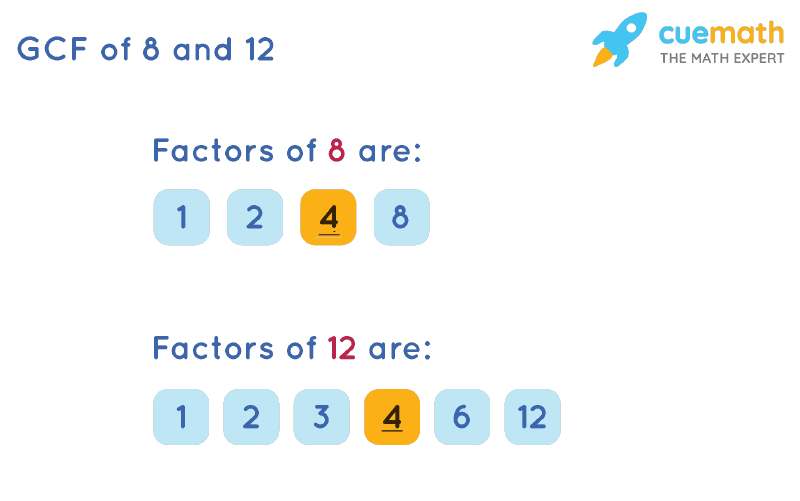
A common factor is a number that divides exactly into two or more different numbers.
The highest common factor is the largest common factor of those numbers
11
Multiple Choice
What is the HCF of 16 and 24?
2
8
16
4
12
e.g. 5 is a prime number
the only way we can make 5, is by doing 1 x 5
There are no other factors of 5...
5's only factors are 1 and 5 (itself), therefore it is prime!
13
All prime numbers have
exactly two factors!
e.g. 2 = 1 x 2
The factors of 2 are 1 and 2
It has exactly two factors,
therefore, 2 is prime

14

15
37, 38, 39, 40, 41
37 can't be divided by any numbers except 1 and itself... it has exactly two factors
38 has four factors:
19 x 2 = 38
1 x 39 = 38
39 has four factors:
3 x 13 = 39
1 x 39 = 39
40 has eight factors:
1, 2, 4, 5, 8, 10, 20 and 40
41 can't be divided by any numbers except 1 and itself... it has exactly two factors
16
Multiple Choice
Based on what we just learned. Which of the following are prime numbers: 37, 38, 39, 40, 41?
38, 39
37
41, 39
41, 37
17
Composite numbers are those that have more than two factors!

by Sophie Sinclair
Show answer
Auto Play
Slide 1 / 17
SLIDE
Similar Resources on Wayground

10 questions
Ամբողջ թվեր
Presentation
•
6th - 8th Grade
10 questions
12-3 Composite Figures
Presentation
•
6th - 8th Grade
10 questions
Equation Vocabulary
Presentation
•
6th - 8th Grade
13 questions
Pre-Algebra SOL 8.11, 8.12, and 8.13 SOL Prep
Presentation
•
6th - 8th Grade
12 questions
Equivalent Ratio Review
Presentation
•
6th - 7th Grade
11 questions
Add, Subtract, Multiply, and Divide Integers
Presentation
•
6th - 7th Grade
11 questions
cartesian plane
Presentation
•
6th - 8th Grade
13 questions
Two-Step Equations With Integers
Presentation
•
6th - 8th Grade
Popular Resources on Wayground
10 questions
How much do you know about our Portrait of an Eagle?

Quiz
•
10th Grade
10 questions
Fast Food Slogans
Quiz
•
6th - 8th Grade
21 questions
Continents and Oceans
Quiz
•
6th Grade
20 questions
Parts of Speech
Quiz
•
5th Grade
16 questions
Subject & Predicate
Quiz
•
5th Grade
25 questions
Multiplication Facts
Quiz
•
5th Grade
12 questions
Map Skills
Quiz
•
3rd Grade
22 questions
Continents and Oceans
Quiz
•
5th Grade
Discover more resources for Mathematics
20 questions
Rational and Irrational Numbers
Quiz
•
8th Grade
16 questions
Proportional and Non Proportional Relationships in Tables, Graphs, and Equations
Quiz
•
7th Grade
20 questions
Decimal Place Value
Quiz
•
4th - 6th Grade
10 questions
Unit Rate
Quiz
•
6th Grade
10 questions
Exploring Angles Formed by Lines Intersected by a Transversal
Quiz
•
8th Grade
22 questions
Explore Rational Number Operations and Applications
Quiz
•
7th Grade
20 questions
Add and Subtract Integers
Quiz
•
6th - 8th Grade
20 questions
Graphing Inequalities on a Number Line
Quiz
•
6th - 9th Grade