

Passive Transport and Osmosis

Presentation
•
Science
•
9th Grade
•
Hard

Joseph Anderson
FREE Resource
21 Slides • 11 Questions
1

Osmosis-Passive
Transport
Biology-on level
2

Learning objective for today’s lesson
❖ Standard B4.B : investigate and explain cellular
processes, including homeostasis, energy
conversions, transport of molecules, and synthesis of
new molecules.
3

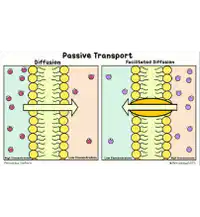
Passive transport check in:
1. Simple diffusion- unassisted movement of small
neutral molecules through a cell membrane (High →
Low)
4

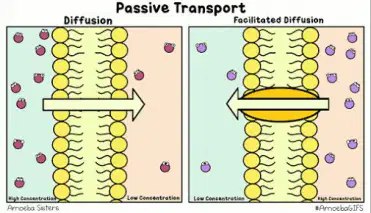
Passive Transport Check IN:
2. Facilitated Diffusion- protein assisted movement of
large charged molecules through the Cell Membrane (
High → Low)
NO ENERGY (ATP) USE
NEEDED BY THE
CELL TO MAKE
PASSIVE TRANSPORT
HAPPEN
5
Multiple Choice
In simple diffusion, which way are the small molecules moving through the cell membrane?
High to Low
Up and Down
Low to High
Down and Up
6

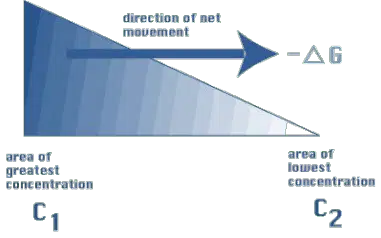

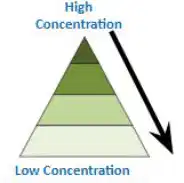
Concentration Gradient
High concentrations have a lot
molecules tightly packed
A good visual visualize them as
a solution with a deep color
-
Low concentrations have less
molecules and are spread out
A good visualize them as a
solution with a lighter color
7

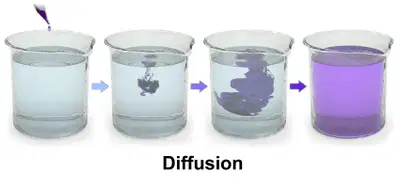
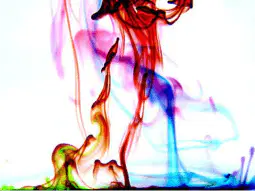
Diffusion: the movement of molecule from an area of
HIGH concentration to an area of LOW
concentration (across the plasma membrane/lipid
bilayer)
THE INK IS HIGHLY
CONCENTRATED IN ONE
PLACE WHEN ADDED-
IT SPREADS OUT INTO THE
WATER WHERE THERE IS NO
CONCENTRATION OF INK
UNTIL DYNAMIC
EQUILIBRIUM IS ACHIEVED
(Balanced/Even distribution)
8


Moving WITH the concentration gradient (HIGH to LOW) is…
Passive and requires NO ENERGY.
There are 3 types of PASSIVE Transport across the Cell
Membrane: simple, facilitated, and OSMOSIS
All of these “Go with flow”
9
Fill in the Blanks
Moving with the concentration gradient (High to Low) is
10

“How does WATER move across the cell membrane?”
11

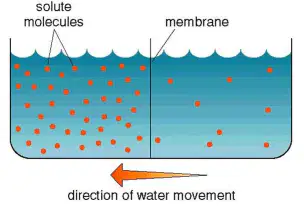
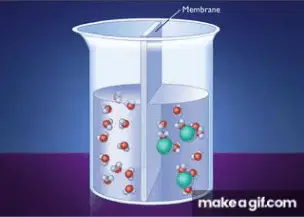
Osmosis
The diffusion of water specifically across
semipermeable membrane.
12
Multiple Choice
What type of cell membrane does osmosis diffusion of water?
Permeable
Impermeable
Semipermeable
13

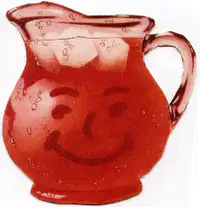
Osmosis
Solution is made of solutes dissolved in a solvent
(water= universal solvent)
KOOL-AID is the solute
WATER is the solvent
14

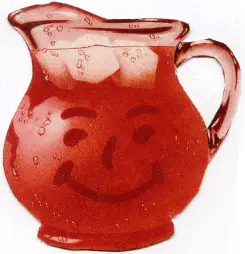
Concentration: the amount of solute (stuff) dissolved
into a solvent (liquid)
CONCENTRATION is how much
Kool-Aid you put in
Adding more Kool-Aid mix without
adding water increases the
concentration of the Kool-Aid solute
15
Fill in the Blanks
Which is the solute in Kool-Aid?
16
Fill in the Blanks
Which is the solvent in Kool-Aid
17


Tonicity
Tonicity is the concentration of a solution in a cell as
compared to another nearby solution.
It determines how water moves across the membrane.
Water is constantly trying to main HOMEOSTASIS for
the solution
DURING OSMOSIS THE WATER
MOVES, NOT THE SOLUTES!
THE WATER HELPS THE SOLUTION
ACHIEVE DYNAMIC EQUILIBRIUM
(HOMEOSTASIS)
18

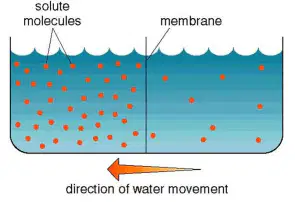
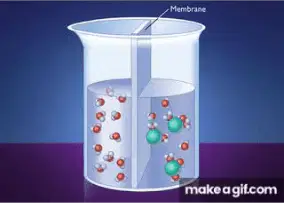
Tonicity
Wherever there is an imbalance, water wants to
move towards that direction to establish
equilibrium.
19
Multiple Choice
When there is a imbalance in water moves _______that direction to create __________.
away; non-equilibrium
towards; equilibrium
away; equilibrium
toward; non-equilibrium
20

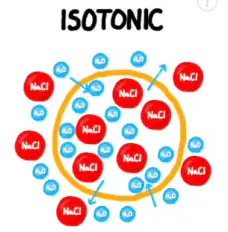
Isotonic
ISOTONIC solutions contain the same concentration of
solutes in the cell and solution-they are essentially at
homeostasis
Water will cycle in and out of the cell
since the environment inside the cell
and outside the cell have the same
concentration
21

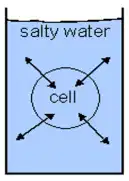
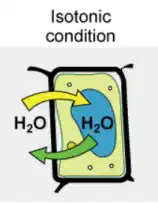
Isotonic
A solution that has the SAME concentration
of solutes as the environment of the cell.
●Water moves IN & OUT of the cell.
NO NET MOVEMENT OF WATER
ISOTONIC (ISO=same)
Means “same strength”
If water concentration is EQUAL inside &
outside
Then: NO VISIBLE CHANGE (water
moves evenly in & out)
22
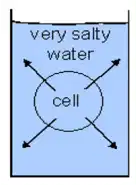
Draw
Draw what is happening to the cell in SALTY water. Remember to use arrows.*HINT LOOK AT YOUR NOTES ON HOW TO DRAW THE ARROWS
23

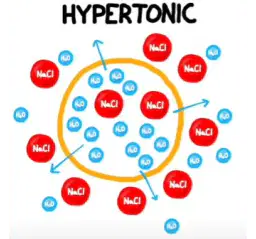
Hypertonic
If a solution has a higher concentration of solutes (less water)
outside then the cell has inside then it is said to be
HYPERTONIC.
Water will flow out of the cell and into the
surrounding environment in an attempt
to bring them both to equilibrium so that
their concentrations match.
24

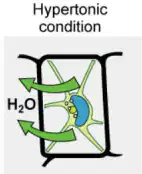
Hypertonic
A solution that has a HIGH concentration
of solutes than the environment of the
cell.
●Net movement of water OUT OF the
cell
CAUSES THE CELL TO SHRINK
HYPERTONIC (hyper=above)
Means “above strength”
If WATER concentration is LOWER outside the
cell
Then: water will move out of the cell
CELL WILL SHRINK (loses volume/mass)
HYPER is HIGH the cell will shrink
25
Draw
Draw what is happening to the cell in VERY salty water. Remember to use arrows.*HINT LOOK AT YOUR NOTES ON HOW TO DRAW THE ARROWS
26

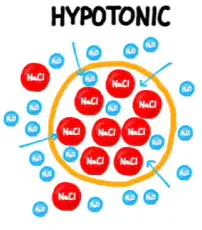
Hypotonic
If a solution has a lower concentration of solutes (thus
more water) outside then the cell has inside then it is said
to be HYPOTONIC.
Water will flow into the cell from the
surrounding environment in an attempt to
bring them both to equilibrium so that
their concentrations match.
27

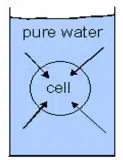
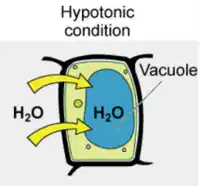
Hypotonic
A solution that has a LOWER concentration
of solutes than the environment of the cell.
●Net movement of water INTO the cell
CAUSES THE CELL TO SWELL
HYPOTONIC (hypo = low)
Means “below strength”
If WATER concentration is HIGHER outside
the cell
Then: water will move into the cell
CELL WILL SWELL (volume/mass increase)
HYPO is LOW the cell will SWELL!
28
Draw
Draw what is happening to the cell in PURE water. Remember to use arrows.*HINT LOOK AT YOUR NOTES ON HOW TO DRAW THE ARROWS
29
Match
Match the following
Hypertonic solution
Hypotonic solution
Isotonic solution
the cell will shrink
the cell will swell
the cell will have no change
the cell will shrink
the cell will swell
the cell will have no change
30

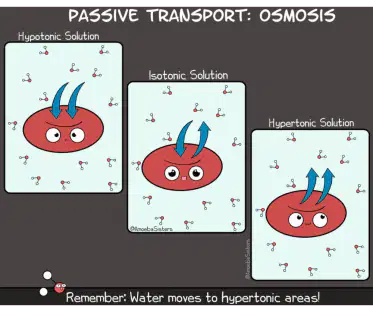
Summary
HYPOtonic: Water moves into cell
and it becomes swollen, like a
HIPPO (HYPO)
ISO: Water cycles in and out, cell
stays the same (HOMEOSTASIS)
HYPERtonic: Water moves out of
the cell and it shrinks
31

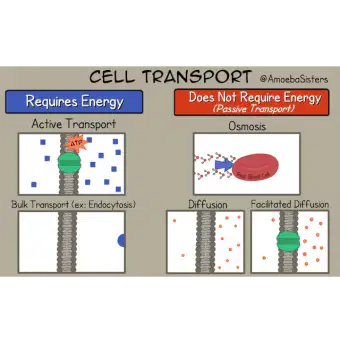
Summary
Simple diffusion
Facilitated diffusion
And Osmosis are all PASSIVE
TRANSPORT
All passive transport process
work based on concentrations
gradient flow, so no energy is
ever needed to be used by a cell
32
Poll
How did the egg look for Day 2?
Swelled up
Shrink
Nothing happen
Osmosis-Passive
Transport
Biology-on level
Show answer
Auto Play
Slide 1 / 32
SLIDE
Similar Resources on Wayground

26 questions
Review of Electromagnetic Waves
Presentation
•
9th Grade
25 questions
Reaction Rates and Equilibrium
Presentation
•
9th Grade
24 questions
Data Analysis - Bio tt
Presentation
•
9th Grade
24 questions
Review: Watersheds, Estuaries, and Dead Zones
Presentation
•
8th Grade
24 questions
10/17 - Weather Maps and Symbols
Presentation
•
8th Grade
26 questions
Exothermic and Endothermic Lesson
Presentation
•
10th Grade
27 questions
Ecology Review
Presentation
•
9th Grade
26 questions
Factors Affecting Climate
Presentation
•
9th Grade
Popular Resources on Wayground
10 questions
How much do you know about our Portrait of an Eagle?

Quiz
•
10th Grade
10 questions
Fast Food Slogans
Quiz
•
6th - 8th Grade
21 questions
Continents and Oceans
Quiz
•
6th Grade
20 questions
Parts of Speech
Quiz
•
5th Grade
16 questions
Subject & Predicate
Quiz
•
5th Grade
25 questions
Multiplication Facts
Quiz
•
5th Grade
12 questions
Map Skills
Quiz
•
3rd Grade
22 questions
Continents and Oceans
Quiz
•
5th Grade
Discover more resources for Science
10 questions
Exploring Chemical and Physical Changes

Interactive video
•
6th - 10th Grade
20 questions
Atomic Structure
Quiz
•
9th Grade
10 questions
Decoding the Periodic Table of Elements
Interactive video
•
6th - 10th Grade
10 questions
Exploring the Periodic Table
Interactive video
•
6th - 10th Grade
22 questions
Periodic Table Review
Quiz
•
9th - 12th Grade
20 questions
Observation vs. Inference
Quiz
•
7th - 9th Grade
10 questions
Exploring the States of Matter
Interactive video
•
6th - 10th Grade
10 questions
Exploring Physical and Chemical Changes
Interactive video
•
6th - 10th Grade