

A Model for Reaction Rates

Presentation
•
Chemistry
•
10th Grade
•
Hard

Joseph Anderson
FREE Resource
15 Slides • 17 Questions
1
Chemical Kinetics
2
Objectives
In this lesson you will
Define chemical kinetics and collision theory.
Identify ways to increase the rate of a chemical reaction.
Use collision theory to explain how temperature, surface area, pressure, concentration and a catalyst can affect the rate of a reaction.
3
Chemical kinetics is the study of
the rates at which chemical reactions occur and
the factors that affect those rates.
Chemical kinetics

4
Multiple Choice
What is chemical kinetics?
The study of how fast chemical reactions occur.
The study of the kinds of chemical reactions.
The study of the kinetic energy in an atom.
The study of redox and acid base reactions.
5
6
Collision theory is a key concept in chemical kinetics that explains how chemical reactions occur at the molecular level.
Collision Theory
Collision theory states that for a reaction to be occur, the reacting molecules
must collide with each other
with sufficient energy (the activation energy) and
in the proper orientation.
If all three occur, a collision will be successful (fruitful) and a chemical reaction will occur.
7
Drag and Drop
8
Factors Affecting Reaction Rate
The collision theory also helps to explain how factors such as temperature, pressure, concentration, and the presence of a catalyst can affect the rate of a chemical reaction by influencing the frequency and effectiveness of molecular collisions.
On the following slides we will look at each of these factors.
9
Increasing the temperature of a reaction increases the rate of the reaction.
Remember that temperature is a measure in the kinetic energy of a substance. An increase in temperature results in an increase in the average kinetic energy of the particles in the reaction mixture. This leads to more energetic and frequent collisions between the reactant molecules.
Temperature

Increasing the temperature increases reaction rate because:
Collisions happen more frequently.
When they collide, more particles have sufficient energy to overcome the activation energy barrier.
10
Multiple Choice
Increase in temperature causes the particles to
slow down
move faster
stay apart from each other
move in the correct order
11
Multiple Choice
Why does a higher temperature increase the rate of a reaction?
It increases both the frequency collision and energy of reactant particles
It only increases the frequency of collision
It only increases the energy of reactant particles
It reduces the activation energy of the reaction
12
Multiple Choice
Increasing the temperature gives particles more __________.
time
energy
space
frequency
13
Surface Area
When a solid reactant is crushed into smaller particles, its total surface area increases. As a result, the increased surface area of the smaller particles allows more of the reactant to come into contact with the other reactants or the solvent (if present). This in turn increases the frequency of collisions between the reactant particles. As a result, the reaction occurs faster when the solid reactant is crushed into smaller particles.

Increasing Surface Area Increases Reaction Rate
Decrease in particle size increases SA.
More reactant can come into contact with other reactants.
14
https://youtu.be/BWN8xVuzuFI
15
Multiple Choice
concentration
surface area
temperature
reactants
16
Multiple Choice
larger
smaller
17
Multiple Choice
temperature
surface area
concentration
pressure
18
Volume
Remember that Boyles Law tells us that decreasing the volume increases the pressure of a gas. When we decrease the volume of a gaseous system the molecules are forced closer together and they collide with each other more frequently. This increase in pressure increases the frequency of collisions between the reacting molecules. Thus decreasing the volume of a gaseous system leads to an increase in the rate of the reaction.

Decrease Volume increases Rate:
decrease volume increases pressure
increases frequency of collisions
19
Multiple Choice
Increasing pressure causes the reacting particles
to bond together
to repel from each other
gain more kinetic energy
to move closer together
20
Multiple Choice
As the frequency of ________________ collision increases, the rate of reaction increases.
time
speed
effective
efficient
21
Multiple Choice
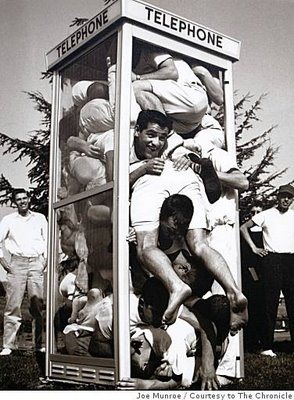
You make a space much smaller by increasing the ________________ hoping to increase the reaction rates.
temperature
concentration
catalyst
pressure
22
Concentration
In an aqueous system, increasing the concentration of a reactant increases the number of particles of that reactant in a given volume of the reaction mixture. Increasing the concentration of an aqueous reactant leads to a higher frequency of collisions between the reactant particles and the other reactants or products in the reaction mixture. As a result, the rate of the reaction increases.

Increased concentration
increases particles in the space
increases frequency of collisions.
23
24
Multiple Choice
Why does a higher concentration increase the rate of reaction?
it increases the amount of reactants
it lowers the activation energy
it increases the energy of reactant particles
it increases the frequency of collision
25
Multiple Choice

You add more bodies into a "mosh pit" to hope for more collisions. You have increased
temperature
concentration
pressure
catalyst
26
Multiple Choice
Why does a higher concentration increase the rate of reaction?
it increases the amount of reactants
it lowers the activation energy
it increases the energy of particle collisions
it increases the frequency of collisions
27
Catalyst
A catalyst increases the rate of a chemical reaction by lowering the activation energy needed for the reaction to occur. It can do this in two ways.
May provide an alternative pathway with a lower activation energy than the original pathway, or
A catalyst may physically orient the particles properly requiring less energy to react.
You may remember from biology that enzymes are important biological catalysts. However, catalysts also occur in daily life outside of living organisms. One example of such catalysts is the catalytic converter, which is used in the exhaust systems of vehicles to reduce harmful emissions.
28
Multiple Choice
Catalyst increase the rate of a reaction by
increasing the amount of product obtained
lowering the activation energy
increasing the reaction temperature
decreasing particle size.
29
Multiple Choice
What are enzymes
Biological molecules which have large surface area
Biological molecules which lower the activation energy of a reaction.
Biological molecules which slow down reactions
Biological molecules that have a lot of energy.
30
How to Speed up a Reaction
(and get a date)
Watch the video on the next slide which contains an analogy between rates of a reaction and getting a date. It will help you remember the factors affecting rates of reactions and why they increase the chance of a successful collision.
31
32
Match
Match the analogy descriptions from the video you just watched to its analogous factor which would increase the rate of a chemical reaction.
Shrinking the hallways
Adding more students
Shortening the passing periods
Students traveling alone by leaving the pack
Hiring a matchmaker
decreasing the volume of the reaction container
adding more particles of reactants
increasing the temperature of the reaction
crushing the reactants into smaller pieces to increase surface area
adding a chemical catalyst
decreasing the volume of the reaction container
adding more particles of reactants
increasing the temperature of the reaction
crushing the reactants into smaller pieces to increase surface area
adding a chemical catalyst
Chemical Kinetics
Show answer
Auto Play
Slide 1 / 32
SLIDE
Similar Resources on Wayground

25 questions
Kimia Hijau
Presentation
•
10th Grade
27 questions
The Scientific Method and International System of Units
Presentation
•
10th Grade
24 questions
Lesson 6: The Development of a New Atomic Model
Presentation
•
10th Grade
27 questions
The Enlightenment
Presentation
•
10th Grade
23 questions
Covalent Bonds Notes
Presentation
•
10th Grade
21 questions
Intro to mole
Presentation
•
10th Grade
26 questions
Nomenclature
Presentation
•
9th Grade
22 questions
Metallic Bonds
Presentation
•
10th - 11th Grade
Popular Resources on Wayground
6 questions
PRIDE Always and Everywhere
Presentation
•
12th Grade
20 questions
Lab Safety Quiz

Quiz
•
6th Grade
26 questions
KOR Review Kahoot Questions
Quiz
•
8th Grade
21 questions
Continents and Oceans
Quiz
•
6th Grade
12 questions
Unit Zero lesson 2 cafeteria
Presentation
•
9th - 12th Grade
20 questions
Parts of Speech
Quiz
•
5th Grade
10 questions
Riddles Riddles fun Riddles
Quiz
•
6th - 12th Grade
16 questions
Subject & Predicate
Quiz
•
5th Grade
Discover more resources for Chemistry
21 questions
Lab Safety
Quiz
•
10th Grade
20 questions
Scientific Method
Quiz
•
10th - 12th Grade
20 questions
Lab Safety
Quiz
•
10th Grade
12 questions
Significant figures
Quiz
•
9th - 12th Grade
20 questions
COUNTING ATOMS
Quiz
•
10th Grade
40 questions
26-27 Unit 1 Density and Metric Conversions
Quiz
•
10th Grade
20 questions
12.2 Scientific Notation and Significant Figures
Quiz
•
10th Grade
5 questions
Atomic Theory Intro Video

Interactive video
•
10th Grade