Biochemical Lesson
Presentation
•
Biology
•
9th - 10th Grade
•
Hard

Joseph Anderson
FREE Resource
12 Slides • 21 Questions
1
2
3
Multiple Choice
Enzymes are
Lipids
Proteins
Carbohydrates
Nucleic Acids
4
Multiple Choice
What 3 letters do enzymes typically end in?
-ose
-ase
-ese
-tic
5
Multiple Choice
Which of these is most likely an enzyme?
Sucrose
Galactose
Fructose
Amylase
6
7
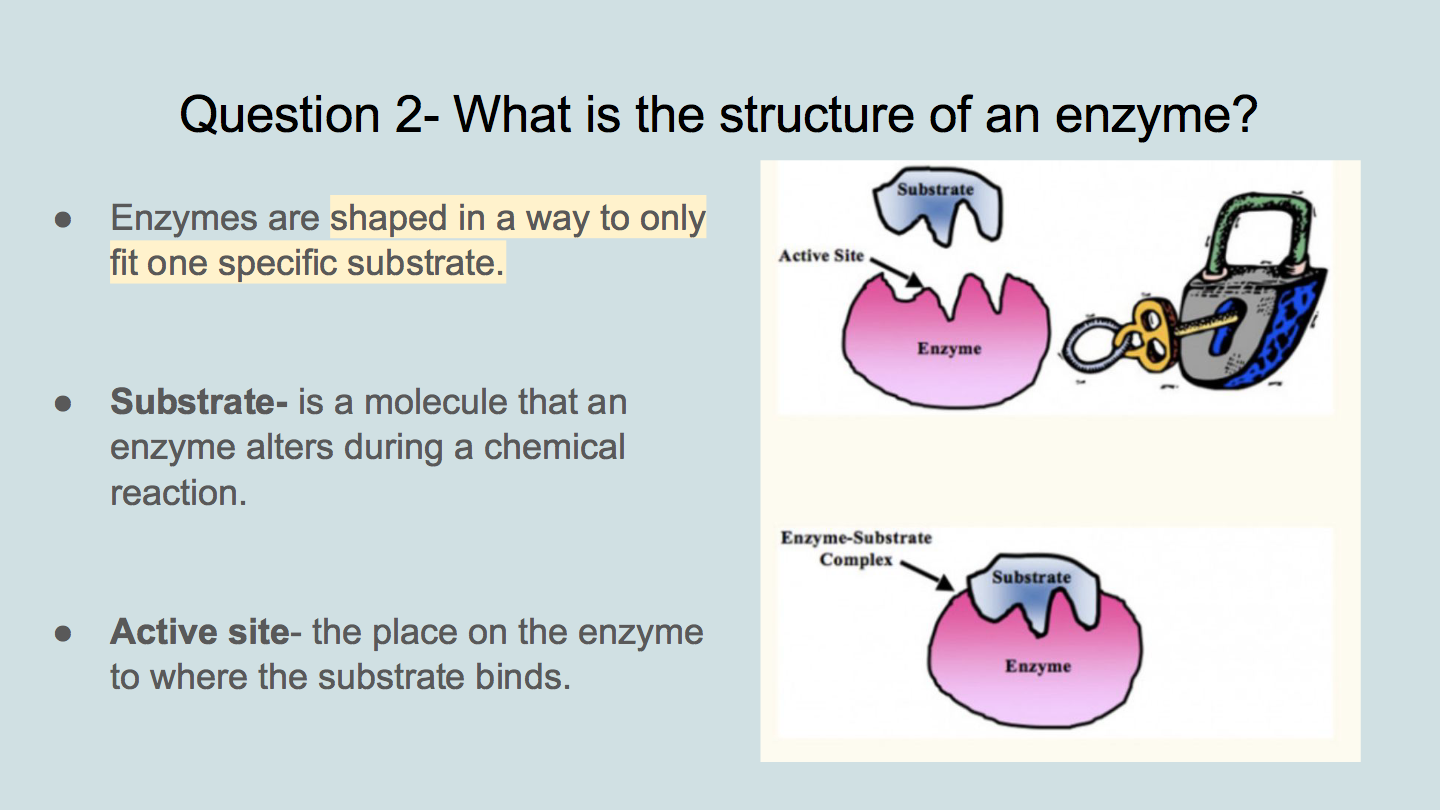
Enzyme Specificity - The shape of the enzyme (structure) fits it's substrate (function)
8
Multiple Choice
Coenzyme
Substrate
Vitamin
Polypeptide
9
Multiple Choice
reusablility
denaturation
specificity
fragility
10
Multiple Choice
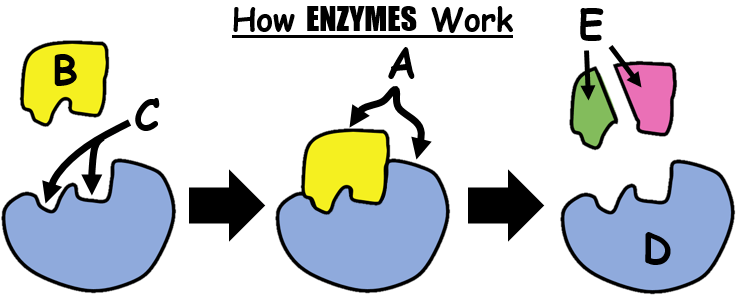
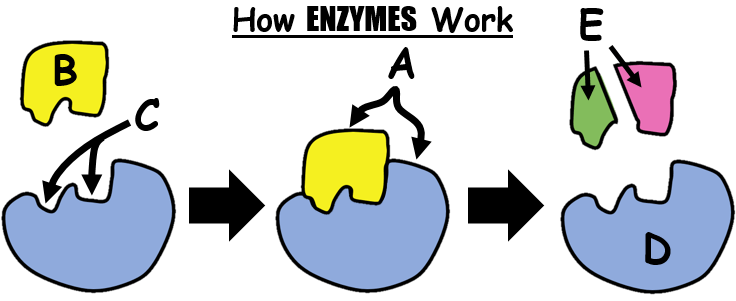
Letter D...
active site
enzyme
substrate
products
11
Multiple Choice
Letter B...
active site
enzyme
substrate
products
12
Multiple Choice
Letter c...
active site
enzyme
substrate
products
13
14
Multiple Choice
Enzymes are important for...
Digestion
Fighting germs
Building other proteins
All of the above and more!
15
16
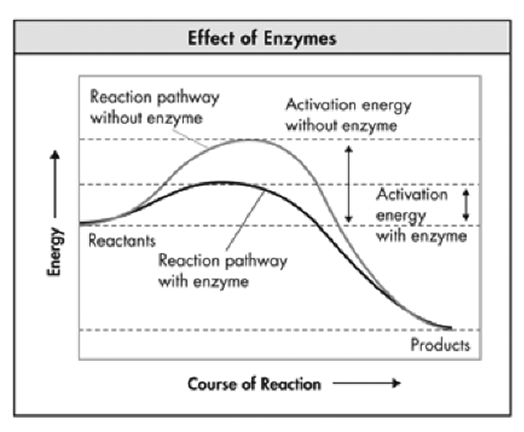
Enzymes speed up chemical reactions (Catalysts)
Activation energy is the energy needed to start a chemical reaction.
The less activation energy needed (smaller hill to climb) the faster the reaction will happen
Enzymes speed up reactions by lowering the activation energy
17
Multiple Choice
What is the purpose of an enzyme?
give permission for the reaction
raise activation energy
speed up reactions
control how many reactions occur
18
Multiple Choice
What is a substance called if it speeds up a chemical reaction?
reusable
catalyst
specific
fragile
19
Multiple Choice
Enzymes supply the oxygen necessary for the reactions
Enzymes change reactants from solid to liquids during the reactions.
The reactions take up too much space in the cell if the enzymes are missing.
The reactions are too slow to meet the needs of the cell if enzymes are missing.
20
Multiple Choice
Enzymes increase the energy of the reactants.
Enzymes decrease the energy level of the products.
Enzyme decrease the activation energy of the reaction.
Enzymes reverse the direction of the reaction.
21
22
Multiple Choice
An enzyme speeds up a chemical reaction in the cell but can only be used once. True or False?
true
false
23
24
25
Multiple Choice
a substrate
an enzyme
a product
an active site
26
27
28
Multiple Select
Which two factors can affect enzyme activity?
Light intensity
pH
Moisture
Temperature
29
Multiple Choice
What happens when enzymes are heated to a high temperature?
The enzymes die.
The shapes of the enzyme are altered (denatured)
The enzymes' amino acid sequence changes.
The enzymes remain the same
30
Multiple Choice
If an enzyme is denatured, what happens to the shape of the active site?
It becomes deformed and does not match the substrate
It becomes expanded and can fit more of the substrate
It becomes smaller and the substrate also shrinks
It becomes reversed and the reaction will go backwards
31
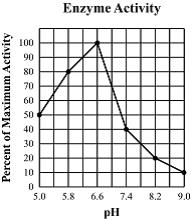
Multiple Choice
The optimum pH of the enzyme is 6.6.
The optimum pH of the enzyme is 5.8
The enzyme’s activity increases as pH increases 5.0 to 9.0
The enzyme’s activity is greater around pH of 8.0 .
32
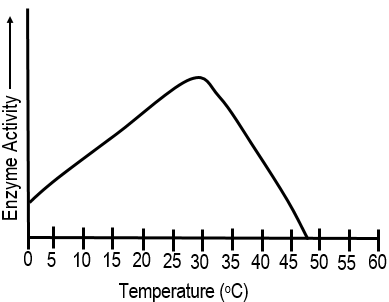
Multiple Choice
Based on the graph, what is the optimal temperature for this enzyme?
15oC
40oC
30oC
35oC
33
Multiple Choice
Which enzyme has an optimum temperature of 40 degrees Celsius?
Enzyme X
Enzyme Y
Show answer
Auto Play
Slide 1 / 33
SLIDE

Similar Resources on Wayground
21 questions
Cell Transport - Diffusion
Presentation
•
9th - 10th Grade
26 questions
Cell Transport
Presentation
•
9th - 10th Grade
25 questions
Human Body Systems Pt 2
Presentation
•
9th Grade
26 questions
Genetics Review
Presentation
•
9th - 10th Grade
23 questions
Cell Cycle
Presentation
•
10th Grade
26 questions
Sp. 3 Preterite Review
Presentation
•
9th - 10th Grade
26 questions
RNA Introduction
Presentation
•
10th Grade
25 questions
Ecology Review - Day 1
Presentation
•
9th Grade
Popular Resources on Wayground
20 questions
"What is the question asking??" Grades 3-5
Quiz
•
1st - 5th Grade
20 questions
“What is the question asking??” Grades 6-8
Quiz
•
6th - 8th Grade
10 questions
Fire Safety Quiz
Quiz
•
12th Grade
20 questions
Equivalent Fractions
Quiz
•
3rd Grade
34 questions
STAAR Review 6th - 8th grade Reading Part 1
Quiz
•
6th - 8th Grade
20 questions
“What is the question asking??” English I-II
Quiz
•
9th - 12th Grade
20 questions
Main Idea and Details
Quiz
•
5th Grade
47 questions
8th Grade Reading STAAR Ultimate Review!
Quiz
•
8th Grade
Discover more resources for Biology
24 questions
BIOLOGY STAAR REVIEW
Quiz
•
9th Grade
30 questions
Biology STAAR Review #3
Quiz
•
9th Grade
16 questions
AP Biology: Unit 1 Review (CED)
Quiz
•
9th - 12th Grade
50 questions
Biology EOC Review
Quiz
•
9th Grade
25 questions
photosynthesis and cellular respiration
Quiz
•
9th Grade
20 questions
AP Biology: Unit 3 Review (CED)
Quiz
•
9th - 12th Grade
20 questions
Enzymes
Quiz
•
9th Grade
20 questions
Food Chains and Food Webs
Quiz
•
7th - 12th Grade