
Search Header Logo
  1. Resource Library
  2. Math
  3. Financial Literacy
  4. Income And Expenses
  5. Making A Budget
Making a Budget

Making a Budget

Assessment

Presentation

Mathematics

9th - 12th Grade

Hard

Created by

Joseph Anderson

FREE Resource

9 Slides • 26 Questions

1

Budgeting: From Big to Small

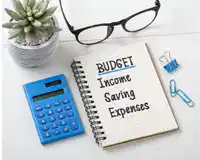
Learn how to effectively budget by breaking it down from big to small. Discover strategies for managing your finances and achieving your financial goals.

2

3

Multiple Choice

What is the definition of a budget?

1

A plan for how to spend and save money

2

A plan for how many pairs of shoes I'm going to buy

4

Budgeting Basics

Budgeting is a plan for how to spend and save money. It involves estimating your net pay (income after taxes) and tracking your expenses. Overspending occurs when you spend more than your budget allows. These steps can be applied to larger budgets as well.

5

Multiple Choice

Budgeting is crucial to your financial success.
1
True
2
False

6

Match

Match the following

Estimate

Net pay

Expense

Overspend

An educated guess

Income After Taxes

Something you will need to pay for

Spending more money than what you have

7

Purpose of Budgeting

To estimate net pay and track expenses. Budgeting helps individuals and businesses plan their finances, set financial goals, and make informed decisions. It provides a clear overview of income and expenses, allowing for better financial management. By tracking expenses, budgeting helps identify areas where spending can be reduced or optimized. It is an essential tool for financial stability and achieving financial objectives.

8

Fill in the Blank

A budget is a _____ for distributing your income.

9

Fill in the Blank

Creating a______: • makes accidental overspending less likely. • can make you more conscious of your money’s value. • can reduce your chances of falling into debt .* you'll feel less stressed and happier

10

Multiple Choice

What is the purpose of budgeting?

1

To estimate net pay and track expenses

2

To calculate the cost of buying lunch

3

To overspend and exceed the budget

4

To apply steps to larger budgets

11

Multiple Choice

Question image

Determine a time you would have to budget a SMALL amount of money

1

Vacation

2

Buying Lunch

3

Getting a new pet

4

Buying a House

12

Open Ended

Question image

What mathematical operation would you use when budgeting for lunch?

13

Open Ended

Question image

You have $15.00 for lunch

Menu:

Sandwich: $3.50 Panini: $4.50 Soup: $3.50 Drink: $2.50 Chips: $2.00 Cookie: $1.00

You must purchase at least 3 items.

14

Applying Steps to Larger Budgets

To apply the steps to larger budgets, it is important to calculate expenses using addition. This helps in determining if the total exceeds the budget. By following these steps, you can effectively manage larger budgets and ensure financial stability. Remember, every penny counts!

  • Calculate expenses using addition
  • Check if the total exceeds the budget

15

Budgeting Basics

1. Determine your monthly budget amount. 2. Define your monthly budget items and their amounts. 3. Use operations like addition and subtraction when budgeting. 4. Determine which items can be paid for with your budget. 5. Evaluate if you overspent and identify the reason. 6. Calculate your monthly income. 7. Determine 6 monthly bills if living alone. 8. Use operations to find the total expenses. 9. Reflect on overspending and reasons.

16

Poll

Question image

How many of you have had in the past or currently have a part-time job?

I currently have a part-time job

I used to have a part-time job

I have never had a part-time job

17

Open Ended

About how much did you make each paycheck?

18

Monthly Income and Expenses

Calculate your monthly income by multiplying your paycheck by 2 (or 4 if you get paid weekly). Determine 6 expenses you will have each month. Use addition to find the total of your expenses.


19

Reflect on Overspending

Reflecting on overspending is an important step in budgeting. It helps identify the reasons behind overspending and find ways to avoid it in the future. By understanding our spending habits, we can make better financial decisions and achieve our budgeting goals.

20

Multiple Choice

How can you determine your monthly income?

1

Multiply your paycheck by 2

2

Calculate your total expenses

3

Determine 6 bills you need to pay every month

4

Spend more on rent, food, and cable

21

Multiple Select

Question image

Which are examples of monthly expenses you may have when you live on your own?​ ​ ​ ​ ​ ​ ​ ​

1

Rent/Mortgage

2
Utilities
3
Phone Bill
4
Groceries
5
Internet Bill

22

23

Multiple Choice

what does the 50% represent?

1

Resources

2

Bills

3

Needs

4

Wants

24

Multiple Choice

what is an example of a Bill your parents might have?

1

Restaurant

2

Party Supplies

3

Birthday

4

Electric

25

Multiple Choice

An example of a fixed expense would be...

1

Water

2

Electric

3

Mortgage or Rent

4

Groceries

26

Multiple Choice

Which is a Variable expense?

1

Student Loan

2

Car loan

3

Rent

4

Water

27

Multiple Choice

What does the 20% represent?

1

Bills

2

Wants

3

Needs

4

Savings

28

Multiple Choice

What is not an example of savings?

1

College

2

Rent or Mortgage

3

Vacation

4

Boat

29

Multiple Choice

Which would be wise to save for?

1

Birthday

2

Car Payment

3

College

4

Shopping

30

Multiple Choice

Why is savings important?

1

To enjoy freedom

2

To have money for fun things

3

To plan for the future

4

ALL the ABOVE

31

Multiple Choice

Where should your savings go to protect it?

1

Bank Account

2

Piggy Bank

3

Shoe box

4

Wallet

32

Multiple Choice

What does the 30% represent?

1

Bills

2

Savings

3

Wants

4

Needs

33

Multiple Choice

Should our wants outweigh our needs?

1

yes

2

no

34

Multiple Choice

Should our wants be realistic and reachable?

1

No

2

Yes

35

Multiple Choice

Why is the savings Rule needed for most people?

1

To learn to spend money without thinking?

2

To learn to save money for the future?

3

To learn to avoid debt

4

Only save money and spend money

Budgeting: From Big to Small

Learn how to effectively budget by breaking it down from big to small. Discover strategies for managing your finances and achieving your financial goals.

Show answer

Auto Play

Slide 1 / 35

SLIDE

