Manipulating Latent Heat Equations
Presentation
•
Science
•
9th - 11th Grade
•
Hard

Joseph Anderson
FREE Resource
7 Slides • 15 Questions
1
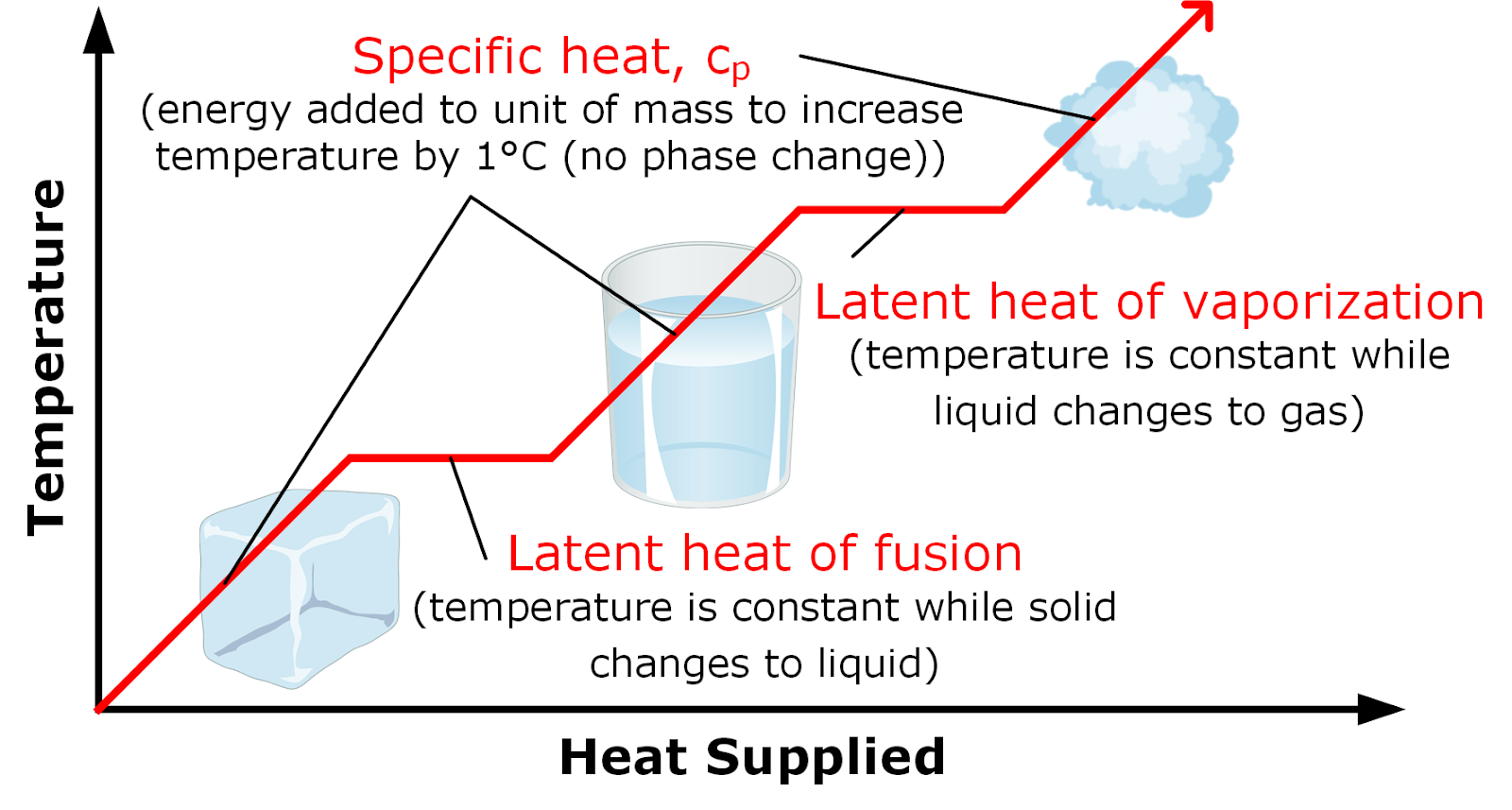
Specific Latent Heat
2
3
4
Multiple Choice
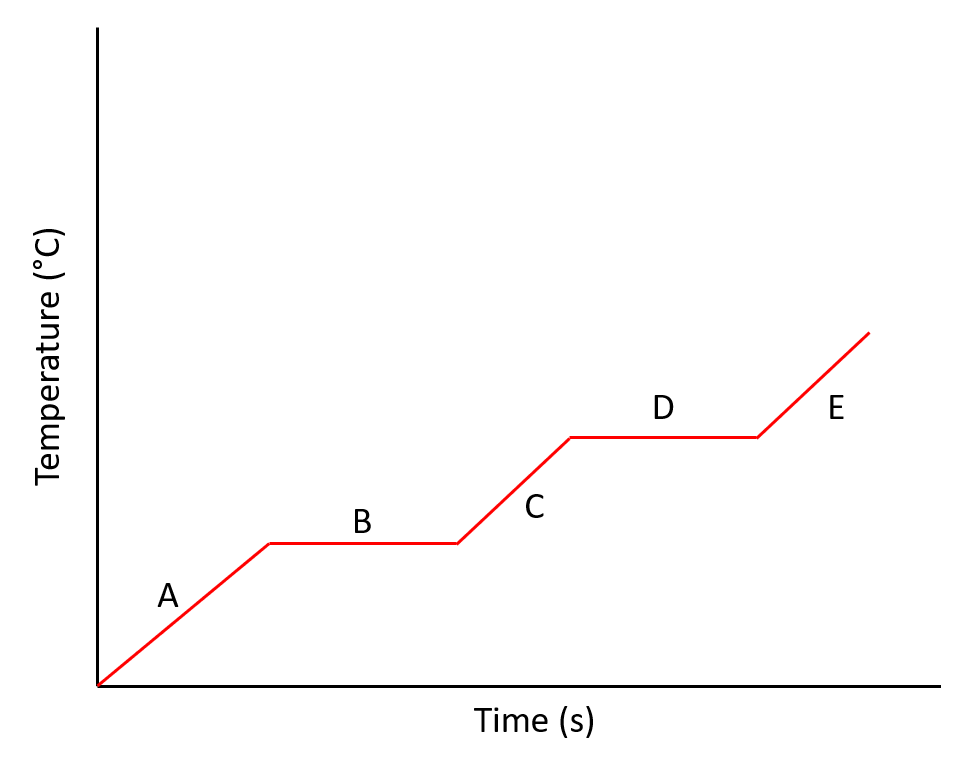
The diagram shows a cooling curve for water. Which line represents the water in a solid form?
A
B
C
D
E
5
Multiple Choice
The diagram shows a cooling curve for water. Which line represents the water freezing?
A
B
C
D
E
6
Multiple Choice
The diagram shows a cooling curve for water. Which line represents the it in a liquid state (water)?
A
B
C
D
E
7
Multiple Choice
The diagram shows a heating curve for water. Which line represents the it in a liquid state (water)?
A
B
C
D
E
8
Multiple Choice
The diagram shows a heating curve for water. Which line represents ice melting?
A
B
C
D
E
9
Multiple Choice
Why are lines B and D flat?
The ice is melting
The ice is freezing
All of the thermal energy is used to break the bonds
They stopped the stopwatch
They stopped heating the ice.
10
Multiple Choice
Latent Heat is
the heat absorbed or released at a boiling process during a change of state
the heat absorbed or released at a constant temperature during a change of state
the heat absorbed or released at a constant temperature during a change of state of 1 kg object
the heat absorbed or released by an object to increase or decrease its temperature by 1 degree Celcius
11
12
Fill in the Blanks
Type answer...
13
14
Multiple Choice
The heat absorbed by melting a solid is known as
latent heat of fusion
latent heat of solid
latent heat of liquid
latent heat of vaporisation
15
Multiple Select
Select the state changes that latent heat of fusion applies to.
melting
evaporating
freezing
condensing
sublimation
16
Multiple Select
Select the state changes that latent heat of vaporisation applies to.
melting
evaporating
freezing
condensing
sublimation
17
Multiple Choice
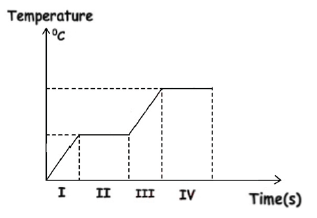
Consider the following temperature-time graph when a solid is heated. which part of the graph involves latent heat of vaporization?
Part I
Part II
Part III
Part IV
18
19
20
Multiple Select
Select the correct equations.
thermal energy = specific latent heat / mass
thermal energy = specific latent heat x mass
mass = specific latent heat / thermal energy
specific latent heat = thermal energy / mass
mass = specific latent heat x thermal energy
21
Multiple Choice
How much energy is required to melt down a 2000 g of mercury?(latent heat of fusion is 1.14 x 10⁴ J/kg)
2.55 x 10⁴ J
2.28 x 10⁴ J
2,280 x 104 J
3.28 x 10⁴ J
22
Multiple Choice
How much energy is required to change 5 kg of ice at 0 ° C into water at the same temperature? (latent heat of fusion is 3.36 X 10⁶ J/kg )
16.1 X 10⁶ J
16.8 X 10⁶ J
15.1 X 10⁶ cal
16.8 X 10⁶ cal
Specific Latent Heat
Show answer
Auto Play
Slide 1 / 22
SLIDE

Similar Resources on Wayground
19 questions
Scientific Hypothesis, Theory, and Law
Presentation
•
8th - 10th Grade
17 questions
Climate change
Presentation
•
9th - 12th Grade
18 questions
Cellular Respiration vs Photosynthesis
Presentation
•
9th - 10th Grade
15 questions
Reading solubility curves
Presentation
•
9th - 12th Grade
19 questions
Ionic Compounds
Presentation
•
9th - 12th Grade
17 questions
Rockets Part 2: How Rockets Move
Presentation
•
10th Grade
16 questions
Momentum and Collisions: What is Momentum?
Presentation
•
8th - 10th Grade
19 questions
Radioactive Decay
Presentation
•
10th Grade
Popular Resources on Wayground
11 questions
Hallway & Bathroom Expectations
Quiz
•
6th - 8th Grade
10 questions
HCS SCI 03 Summer School Assessment 2
Quiz
•
3rd Grade
11 questions
Home Scope
Quiz
•
7th - 8th Grade
12 questions
2026 TAP Technology in the Classroom
Presentation
•
Professional Development
15 questions
HCS SCI 05 Summer School Assessment 2 Review
Quiz
•
5th Grade
15 questions
HCS SCI 04 Summer School Review 2
Quiz
•
4th Grade
59 questions
Geometry Unit 3 Review
Quiz
•
9th - 12th Grade
14 questions
FAST ELA READING SMAPLE TEST MATERIALS
Passage
•
3rd Grade