

Medieval Europe Geography Challenge

Presentation
•
Social Studies
•
6th Grade
•
Hard

Joseph Anderson
FREE Resource
17 Slides • 9 Questions
1
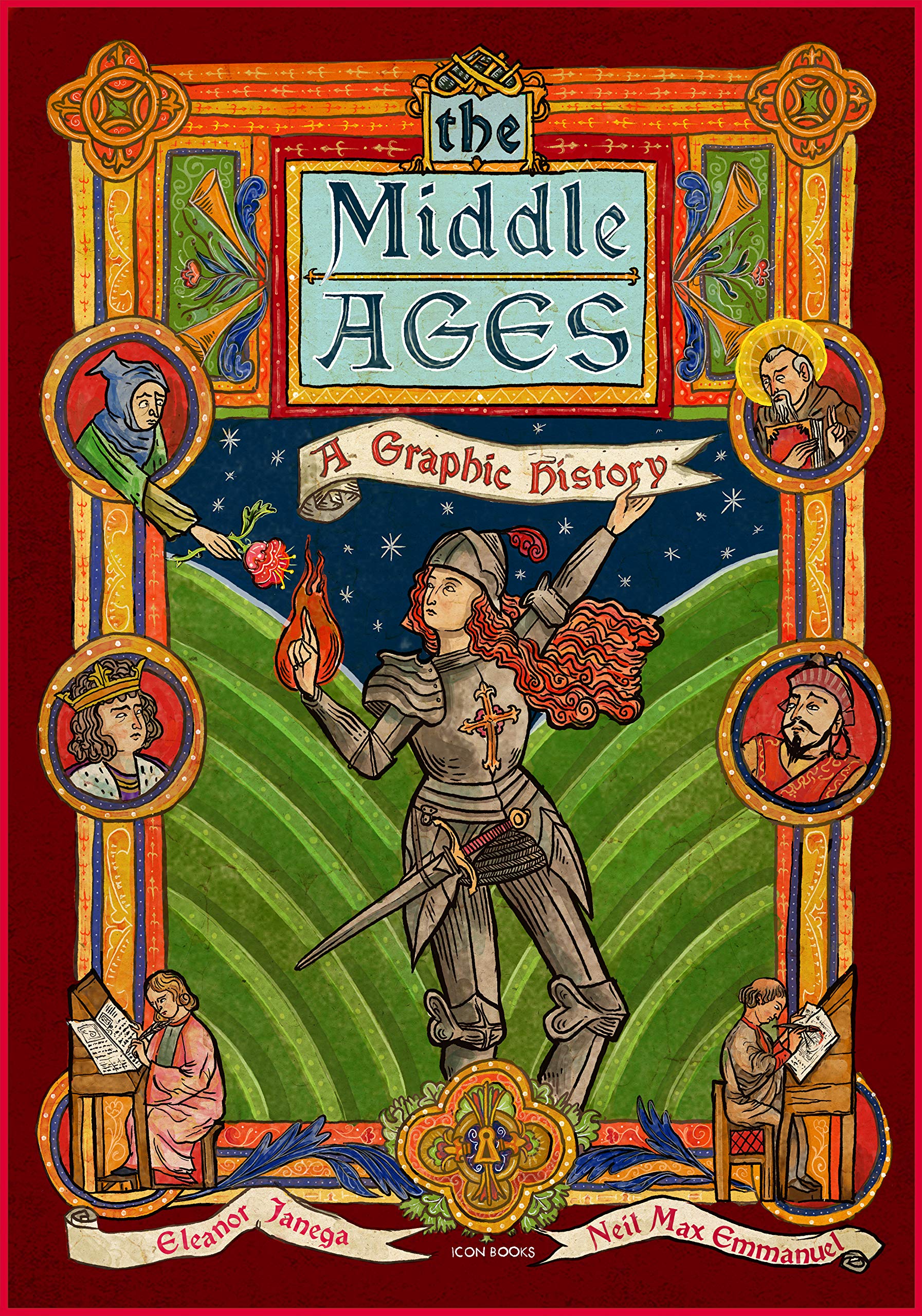
The Middle Ages
Lesson 1: The Early Middle Ages
2
Geography of Europe
Europe’s geography played an important role in shaping how Europeans lived. Europe is a continent. It is also a very large peninsula. A peninsula is land surrounded on three sides by water. As a result, most of Europe is within 300 miles (483 km) of an ocean or a sea. Europe also has many rivers, such as the Rhine, Danube, Seine, and Po. Access to rivers and seas often made it easy to travel and trade in other parts of the world. This helped Europe’s economy grow.
Large bodies of water, such as the English Channel, also separated Europe into distinct regions. Mountains played a similar role. Regions cut off from each other developed independent kingdoms and cultures.
3

4

5
Multiple Choice
Land surrounded on three sides by water.....
Island
Peninsula
Fjord
Jetty
6
Open Ended
Why were rivers important to the peoples of Europe?
7
Kingdoms in Western Europe
After Rome fell, Western Europe broke into many kingdoms. The Angles and Saxons invaded Britain from Denmark and Germany. They became known as the Anglo-Saxons, or the English.
The strongest Germanic people were called the Franks. They settled in what is now France and western Germany. In 496 King Clovis of the Franks accepted Catholic Christianity. Nearly all of the Franks became Catholic too.
After Clovis died, power passed from kings to government officials. A leader named Charles Martel defeated invading Muslims at the Battle of Tours in 732. This stopped the spread of Islam in Western Europe. Christianity remained the main religion in the region.
8
Kingdoms in Western Europe Cont...
After Charles Martel died, his son Pepin eventually became the new king of the Franks. Pepin forced a Germanic group called the Lombards to leave Rome. He then gave the pope the land he had taken from the Lombards.
After Pepin died, his son Charles became king. Charles won many battles against neighboring kingdoms. By 800, Charles’s kingdom was an empire covering much of western and central Europe. He was called Charlemagne, which means “Charles the Great.”
The pope made Charlemagne the new Roman emperor. Charlemagne used local officials to help him govern. He started a school for the children of gov't officials. They studied religion, Latin, lit, and math.
9

Charlemagne
10
Kingdoms in Western Europe Cont....
When Charlemagne died, his empire broke into separate kingdoms. Muslims, Magyars, and Vikings attacked these kingdoms in the 800s and 900s.
The Vikings came from Scandinavia in northern Europe. Scandinavia's coast has many fjords. Fjords are strips of water between steep slopes, where the water cuts into the land. Vikings depended on the sea for food and trade.
In 911 a group of nobles tried to unite small territories in Germany by electing a king. Otto I was one of the strongest kings of Germany. He defeated the Magyars and freed the pope from the control of Roman nobles. To reward Otto, the pope named him Roman emperor in 962.
11

helemts worn by Vikings
12

Traditional Viking Ship
13

14
Multiple Select
Select the names of the Germanic groups that invaded and settled in Britain
during the Middle Ages.
Lombards
Anglo-Saxons
Vikings
Franks
Huns
15
Open Ended
Name one of Charlemagne's accomplishments.
16
Open Ended
What impact did the Battle of Tours have on European history?
17
The Church and Its Influence
The Roman Catholic Church became very important during the
Middle Ages. Monks became missionaries and spread
Christianity over the next several hundred years. By 1050 most
people in Western Europe had become Catholic.
Monks and monasteries were important. They provided
schools and hospitals. Monks taught carpentry and weaving.
They invented better ways to farm. They also helped save
knowledge. Monks copied ancient works of Romans and Greeks
and Christian writings such as the Christian Bible.
18

19

Monks druing the middle ages
20

Monestary
21
The Church and Its Influence Cont...
Disagreements grew between popes and kings over who had
greater authority. In 1073 Pope Gregory VII and Holy Roman
Emperor Henry IV fought over this issue.
Henry wanted to keep his power to name high-ranking Church
officials called bishops. Gregory declared that only the pope
could choose bishops. He cast Henry out of the Catholic Church.
German nobles chose a new king, but Henry took over Rome and
replaced the pope. Still, the dispute was not settled.
22
The Church and Its Influence Cont...
In 1122 a new pope and king agreed that only the pope could
choose bishops. However, they decided that only the emperor
could give government jobs to bishops. This deal was called the
Concordat of Worms. A concordat is an agreement between the
pope and the ruler of a country.
When Innocent III became pope in 1198, he wanted to make
sure that only the Church could appoint bishops. He was able to
control kings. If a king did not obey, he would be punished.
23
Multiple Choice
a person who is sent by a religious organization to teach the religion
monk
missionary
preist
bishop
24
Open Ended
How were the Catholic Church and Roman emperors
connected to each other?
25
Multiple Choice
What major issue did kings and popes disagree on?
where monasteries should be built
what territories would be conquered
who had the greatest authority
26
Open Ended
List one way monasteries were important in early medieval Europe.
The Middle Ages
Lesson 1: The Early Middle Ages
Show answer
Auto Play
Slide 1 / 26
SLIDE
Similar Resources on Wayground

19 questions
Mesopotamia: The Land Between the Rivers
Presentation
•
6th Grade
22 questions
Glory, War and Decline
Presentation
•
6th Grade
20 questions
American Geography/Vocabulary
Presentation
•
5th - 6th Grade
20 questions
People of the American Revolution
Presentation
•
5th - 6th Grade
22 questions
The Golden Age of Athens
Presentation
•
6th Grade
17 questions
01/13 The Persian Wars
Presentation
•
6th Grade
20 questions
Geography of Ancient Greece
Presentation
•
6th Grade
21 questions
Buddhism
Presentation
•
6th Grade
Popular Resources on Wayground
10 questions
How much do you know about our Portrait of an Eagle?

Quiz
•
10th Grade
10 questions
Fast Food Slogans
Quiz
•
6th - 8th Grade
21 questions
Continents and Oceans
Quiz
•
6th Grade
20 questions
Parts of Speech
Quiz
•
5th Grade
16 questions
Subject & Predicate
Quiz
•
5th Grade
25 questions
Multiplication Facts
Quiz
•
5th Grade
12 questions
Map Skills
Quiz
•
3rd Grade
22 questions
Continents and Oceans
Quiz
•
5th Grade
Discover more resources for Social Studies
10 questions
Exploring the Age of Exploration: Key Events and Figures

Interactive video
•
6th - 10th Grade
13 questions
13 Colonies Map Quiz
Quiz
•
6th - 8th Grade
12 questions
7 Continents and 5 Major Oceans
Quiz
•
6th Grade
10 questions
Pillars of Free Enterprise
Quiz
•
6th - 8th Grade
26 questions
QA 1 Review
Quiz
•
6th - 8th Grade
8 questions
Geography of Mesopotamia
Presentation
•
6th Grade
10 questions
Exploring the 13 Colonies Regions
Interactive video
•
6th - 10th Grade
20 questions
Latitude and Longitude Practice
Quiz
•
6th Grade