

Mineralogy

Presentation
•
Science
•
11th Grade
•
Hard

Joseph Anderson
FREE Resource
5 Slides • 2 Questions
1
OBJECTIVES
At the end of the lesson, the students will be able to:
identify common rock-forming minerals using their physical and chemical properties.
identify the minerals important to society.
classify rocks into igneous, sedimentary, and metamorphic.
2
Multiple Choice
Rocks vary in color, size, texture and shape. They are classified based on how they were formed. Which of the following deals with the study of rocks?
a. BIOLOGY
b. GEOLOGY
c. PALEONTOLOGY
d. PETROLOGY
3
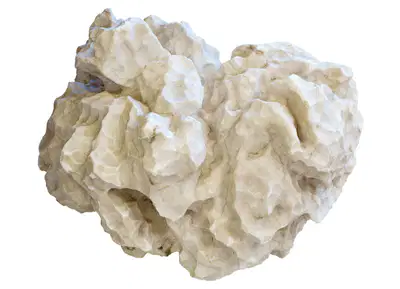
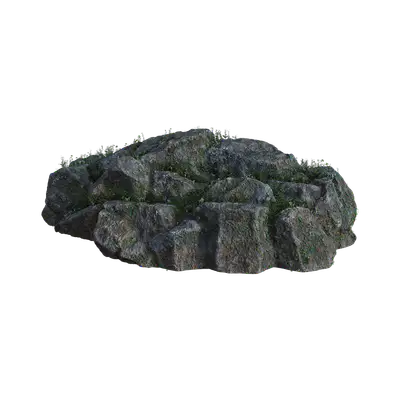
is the study of rocks - igneous, metamorphic, and sedimentary - and the processes that form and transform them.
PETROLOGY

4
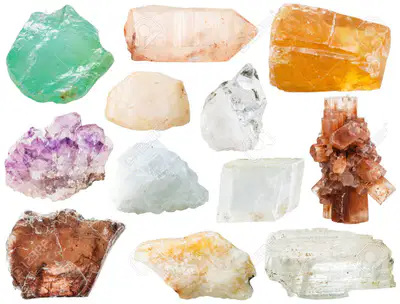
is the study of the chemistry, crystal structure and physical properties of the mineral constituents of rocks.
MINERALOGY
5
Multiple Choice
Halite is made when a body of seawater becomes closed off and evaporates and salt precipitates out and is deposited as crystallized halite. What type of sedimentary rock is formed?
a. Clastic
b. Chemical
c. Organic
d. Pyroclastic
6

This is a common way for chemical sedimentary rocks to form and the rocks are commonly called evaporites. They are typically made up of the minerals halite (calcium chloride, or rock salt) and gypsum (calcium sulfate).
7
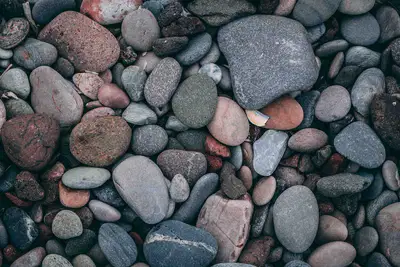
are composed of minerals. A mineral is a naturally occurring substance which is usually solid, crystalline, stable at room temperature and inorganic.
ROCKS
OBJECTIVES
At the end of the lesson, the students will be able to:
identify common rock-forming minerals using their physical and chemical properties.
identify the minerals important to society.
classify rocks into igneous, sedimentary, and metamorphic.
Show answer
Auto Play
Slide 1 / 7
SLIDE
Similar Resources on Wayground

6 questions
I2_S25
Presentation
•
12th Grade
8 questions
Regeneration Starfish
Presentation
•
KG
8 questions
Per 3: Principles of Health - HIPPA
Presentation
•
11th Grade
9 questions
-ed -ing adjectives
Presentation
•
11th Grade
7 questions
Lab Review: The Earth's Shape
Presentation
•
11th Grade
6 questions
Measuring and Data
Presentation
•
KG
6 questions
Renewable Sources of Energy 11A(2) 3rd qt
Presentation
•
11th Grade
4 questions
Crustal Deformation and Plate Tectonics
Presentation
•
11th Grade
Popular Resources on Wayground
19 questions
Naming Polygons

Quiz
•
3rd Grade
10 questions
Prime Factorization
Quiz
•
6th Grade
20 questions
Math Review
Quiz
•
3rd Grade
15 questions
Fast food
Quiz
•
7th Grade
20 questions
Main Idea and Details
Quiz
•
5th Grade
20 questions
Context Clues
Quiz
•
6th Grade
20 questions
Inferences
Quiz
•
4th Grade
19 questions
Classifying Quadrilaterals
Quiz
•
3rd Grade
Discover more resources for Science
100 questions
Biology EOC Review
Quiz
•
9th - 12th Grade
25 questions
Biology EOC review Quiz
Quiz
•
9th - 12th Grade
21 questions
Biology EOC Review (ecology)
Quiz
•
9th - 12th Grade
30 questions
Environmental Science Final Exam REVIEW
Quiz
•
9th - 12th Grade
49 questions
AP Environmental Science Final Exam Review
Quiz
•
10th Grade - University
16 questions
Taxonomy and Classification
Quiz
•
6th - 12th Grade
50 questions
Biology EOC Review
Quiz
•
9th - 12th Grade
28 questions
Greenhouse effect
Quiz
•
9th - 12th Grade