Natural Selection and Adaptations in Biomes
Presentation
•
Science
•
8th Grade
•
Hard

Joseph Anderson
FREE Resource
35 Slides • 15 Questions
1
AS YOU WALK IN…
1.
Get your textbook
2.
BELL WORK: Work on page 81 of your science
textbook
2
REMINDERS:
1.
SOLAR SYSTEM PROJECT DUE ON FRIDAY MARCH 24
2.
CAST – APRIL 17-18
3
BRAINSTORM:
Why do you think this plant has flowers that look like
bees?
4
5
BEE ORCHID
6
OBJECTIVE:
• Explore how similar variations in the population due to
inherited mutations can result in an adaptation
over generations
7
8
9
10
11
12
13
14
“The Father of Natural Selection”.
Charles Darwin
Born: 1809
Died: 1882
15
16
17
18
19
20
Multiple Choice
to hide from predators
to hunt for food
to survive in their habitats
All of these are correct
21
Multiple Choice
learned behavior
acquired traits
analogies
adaptations
22
Multiple Choice
Steven Hawking
Albert Einstein
Charles Darwin
Isaac Newton
23
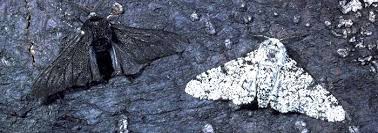
Multiple Choice
light
dark
24
Polar Bear
• Small ears to reduce heat loss
• Thick white fur to help keep the
bear warm and for camouflage in
the snow
• Thick layer of fat to help insulate
for warmth
• Large paws to stop the bear from
sinking in the snow
• Sharp teeth to eat prey easily.
25
Camel
• Large feet to reduce the pressure
the camel exerts on the sand
• Hump(s) containing fat, which the
camel can use for energy (the fat
doesn’t insulate its body)
• Nostrils are lined with hair and can
shut to stop sand getting into the
nose
• Thick lips, so the camel can eat
prickly desert plants
• Bushy eyelashes to stop sand from
getting in their eyes
26
Giraffe
• Horns to fight with other giraffes
• Patterned coat for camouflage
• Leathery mouth to eat tough and
prickly plants
• Long neck and legs to help the
animal reach food high up in the
trees
• Long, tough tongue that can grip
leaves and branches
27
Cactus
• Thick stem full of spongy tissue that
can absorb lots of water
• Spines are curled leaves that decrease
surface area and reduce water loss
through transpiration and deter
animals from eating the plant
• Thick, waxy epidermis to reduce water
loss
• Shallow, but expansive root system to
increase the water uptake
• Stem contains a high density of
chloroplasts for photosynthesis
28
Barn Owl
• Flexible neck allows the owl to see in
all directions
• Soft feathers for near-silent flight to
catch prey without being heard
• Large wingspan compared to body
mass, meaning they can fly very slowly
• Asymmetric ears allows the owl to
pinpoint the direction of sound with
high accuracy
• Sharp talons to grip prey
29
Multiple Choice
What is an adaptation?
a special feature that helps animals survive
the animal's environment
the way an animal hunts
predators eat prey
30
Multiple Choice
The ability to blend into one's surroundings is called...
predator
camouflage
adaptation
prey
31
Multiple Choice
Armor is an adaptation that helps animals...
hunt
protect themselves from predators
run quickly
blend in with their surroundings
32
Multiple Choice
Having webbed feet is an adaptation. How do webbed feet help animals survive?
They stay cool in the summer.
They can swim faster.
They can blend in with their surroundings.
They can attack their prey.
33
Multiple Choice
Sharp teeth are an adaptation. How do sharp teeth help animals survive?
Animals can use them to attack their prey.
Animals can run away from danger.
Animals can avoid the cold weather.
Animals can fly away.
34
Multiple Choice
Camouflage and mimicry are examples of ___________ adaptations.
behavioral
special
physical
predatory
35
Multiple Choice
___________ is a term used to describe animals that blend into their habitats.
Mimicry
Camouflage
Adaptations
Instincts
36
Multiple Choice
A cub will learn how to hunt by watching and copying its mother, which is a/an ___________ behavior.
instinctive
adaptive
learned
mimicry
37
Multiple Choice
What is an adaptation?
a special feature that helps animals survive
the animal's environment
the way an animal hunts
predators eat prey
38
Multiple Choice
A green snake blends in so predators can NOT find it. This is an example of?
Hibernation
Mimicry
Migration
Camouflauge
39
Multiple Choice
Birds flying south 800 miles to find food and to escape cold winters is an example of
Hibernating
Migrating
Camouflage
40
EXIT TICKET:
INDEPENDENT CLASSWORK:
MAKE A GOOGLE SLIDE that shows 5 examples of living things and their adaptation
to the environment
Do not include the examples given by the teacher (Polar bear, Camel, Giraffe, Cactus,
Barn owl)
41
42
43
44
45
46
47
48
49
50
Credits and Copyright
Black-Eyed Susan Science
Next Generation Science Standards
The Sciencesaurus
Sarah Pecorino Illustration
Studio Devanna
Kimberly Geswein Fonts
Teach To Tell
The Painted Crow
https://images.app.goo.gl/ogej
p8vDVURphgYo7
https://allaboutroses2013.wee
bly.com/generalspecial-adapta
tions.html
AS YOU WALK IN…
1.
Get your textbook
2.
BELL WORK: Work on page 81 of your science
textbook
Show answer
Auto Play
Slide 1 / 50
SLIDE

Similar Resources on Wayground
42 questions
1-Chemistry Basics Lesson
Lesson
•
8th Grade
48 questions
Magnets
Lesson
•
8th Grade
45 questions
Characteristics of Stars
Lesson
•
8th Grade
45 questions
Human impacts and Global warming
Lesson
•
8th Grade
44 questions
4/12 - Blitz - Physics
Lesson
•
8th Grade
46 questions
SSA Physical Science Critical Content + Practice
Lesson
•
8th Grade
45 questions
em spectrum
Lesson
•
8th Grade
44 questions
Physical Properties of Stars
Lesson
•
8th Grade
Popular Resources on Wayground
10 questions
5.P.1.3 Distance/Time Graphs
Quiz
•
5th Grade
10 questions
Fire Drill
Quiz
•
2nd - 5th Grade
20 questions
Equivalent Fractions
Quiz
•
3rd Grade
15 questions
Hargrett House Quiz: Community & Service
Quiz
•
5th Grade
20 questions
Main Idea and Details
Quiz
•
5th Grade
20 questions
Context Clues
Quiz
•
6th Grade
20 questions
Inferences
Quiz
•
4th Grade
15 questions
Equivalent Fractions
Quiz
•
4th Grade
Discover more resources for Science
20 questions
Recognizing Violence and Being an Upstander
Quiz
•
8th Grade
19 questions
Introduction to Properties of Waves
Lesson
•
6th - 8th Grade
16 questions
Interactions within Ecosystems
Lesson
•
6th - 8th Grade
10 questions
Exploring the Layers of the Earth
Interactive video
•
6th - 10th Grade
20 questions
Newton's Laws of Motion
Quiz
•
8th Grade
46 questions
8th Science STAAR Review
Quiz
•
8th Grade
10 questions
Exploring the Dynamics of Ocean Currents
Interactive video
•
6th - 10th Grade
23 questions
Newton's 3 Laws of Motion
Quiz
•
8th Grade