Search Header Logo
Neo-Confucianism

Neo-Confucianism

Assessment

Presentation

Social Studies

9th - 12th Grade

Hard

Created by

Joseph Anderson

FREE Resource

29 Slides • 45 Questions

1

media

2

Open Ended

Question image

1. Why was Buddhism considered “an unwanted foreign influence?”

3

Open Ended

Question image

2. Which dynasty was the first to make Neo-Confucianism the official state belief system in China?

4

media

5

media

6

media

7

media

8

media

9

Open Ended

Question image

Based on the quick review and information provided above, which elements of Neo-Confucianism come from Confucianism, Buddhism, and Daoism?

Elements of Confucianism in Neo-Confucianism

10

Open Ended

Question image

Based on the quick review and information provided above, which elements of Neo-Confucianism come from Confucianism, Buddhism, and Daoism?

Elements of Buddhism in Neo-Confucianism

11

Open Ended

Question image

Based on the quick review and information provided above, which elements of Neo-Confucianism come from Confucianism, Buddhism, and Daoism?

Elements of Daoism in Neo-Confucianism

12

media

13

media

14

media

15

Open Ended

Question image

Document 1: The Confucian Tradition Institutionalized Through the Examination System


1. What was the purpose of the civil service examinations in China?

16

Open Ended

Question image

Document 1: The Confucian Tradition Institutionalized Through the Examination System


2. Which belief system did students need to be familiar with to do well on the civil service examinations?

17

Open Ended

Question image

Document 1: The Confucian Tradition Institutionalized Through the Examination System


3. How did the civil service exams affect young boys in China?

18

Open Ended

Question image

Document 1: The Confucian Tradition Institutionalized Through the Examination System


4. Why were the civil service examinations important to Chinese families? 

19

Open Ended

Question image

Document 1: The Confucian Tradition Institutionalized Through the Examination System


5. This text states that success on the civil service examinations was “dependent only on one’s ability rather than one’s social position.” What does that mean? 

20

media

21

Fishbowl Discussion Preparation Instructions


Group Roles:

  1. Note Taker: This person will be responsible for documenting key ideas and evidence shared by the group. They will organize this information to help the group present a cohesive answer.

  2. Reporter: This person will present your group's findings during the fishbowl discussion. They will summarize the group's ideas and ensure they address the prompt clearly.

  3. Facilitator: This person will lead the group in discussing their annotations, ensuring that everyone shares their thoughts and that all aspects of gaining, consolidating, and maintaining power are covered.

  4. Time Keeper: This person will manage the time to ensure that the group stays on task and completes their preparation for the fishbowl discussion within the allotted time.

Step One: Group Work

  • Instructions: After completing your independent reading and annotations, you will work with your table group to share your findings and prepare for a fishbowl discussion.

Step Two: Prepare for the Fishbowl

  • Work together to ensure that all roles are fulfilled and your group has a clear, evidence-based response to the prompt.

  • The Note Taker should finalize the group notes, and the Reporter should be ready to present your key points.

Step Three: Fishbowl Discussion

  • We will gather in a fishbowl format, where each group's Reporter will share their findings with the class.

  • While listening, the rest of the class should take notes on the key points shared by other groups.


Step Four: Discuss, share and norm documents and answers
-D
ocument 2 answering questions 1-5

-Document 3: Impact on Women, The Legacy of Empress Wu answering 1-3

22

media

1. Who was the intended audience of these stories? Who were they written for?

Document 2: Selections from The Twenty‑four Exemplars of Filial Piety


23

media

2. Why were these stories written?

Document 2: Selections from The Twenty‑four Exemplars of Filial Piety


24

media

3. Claim: Filial piety was important to Confucians. 

Write two pieces of evidence from this document to support this claim. 


Document 2: Selections from The Twenty‑four Exemplars of Filial Piety


25

media

4. Is it likely that anyone would actually act the way the characters in these stories do? If not, then what is the point of the stories? Why not write something more realistic? 


Document 2: Selections from The Twenty‑four Exemplars of Filial Piety


26

media

5. These stories were written by elite men at the top of the social hierarchy in China. Why would they take the time and effort to produce stories like this for the instruction of commoners? Why should they care whether commoners understand filiality? 


Document 2: Selections from The Twenty‑four Exemplars of Filial Piety


27

Open Ended

Question image

Document 3: Impact on Women, The Legacy of Empress Wu

1. How was life different for women during the Tang and Song era?

28

Open Ended

Question image

Document 3: Impact on Women, The Legacy of Empress Wu

2. What religions did the empress Wu Zhao favor? Why?

29

Open Ended

Question image

Document 3: Impact on Women, The Legacy of Empress Wu

3. What impact did the rise of Neo-Confucianism have on women in China?

30

  • 1. Understanding of Causation:

    • Success: Students demonstrate how Neo-Confucianism positively or negatively affected Ming and Qing societies using appropriate examples.

  • 2. Scope of Impact:

    • Success: Students accurately explain the extent of population affected by Neo-Confucianism, recognizing its broad or limited reach.

  • 3. Long-Term Impact:

    • Success: Students describe how long-lasting these changes were, connecting them to future developments in China.

Exit Ticket Criteria for Success

31

media

32

Multiple Select

What were Suleyman I achievements?

1

He led a powerful navy and army

2

He captured and ended the Byzantine Empire

3

He reformed the legal system and passed laws to protect non-Muslims

4

He restored the Grand Mosque in Mecca

33

Multiple Choice

Question image
What was the title given to the ruler of the Ottoman Empire?
1
Janissary
2
Rajput
3
Sultan
4
Mansabdar

34

Multiple Choice

What religion did the Ottoman Empire help spread throughout their empire?

1

Buddhism

2

Christianity

3

Shintoism

4

Islam

35

Multiple Choice

What city did the Ottoman Empire conquer in 1453 putting an end to the Byzantium Empire?

1

Rome

2

Constantinople

3

Athens

4

Vienna

36

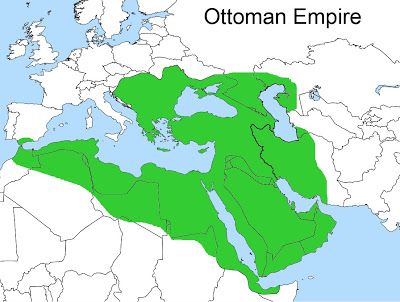
Multiple Select

Question image

Which continents did the Ottoman Empire have some control over? Click all that apply.

1

Europe

2

Asia

3

Africa

4

North America

5

South America

37

Multiple Choice

Who were the Ottomans named after? (He is the founder of Ottoman Empire)
1
Osman I
2
Mehmet II
3
Suleiman the Magnificent
4
Selim

38

Multiple Choice

What are these actions an example of: The Ottoman empire under Suleiman the Magnificent built strong fortresses to defend the places he conquered and adorned the cities with mosques, bridges, aqueducts, and other public works

1

Gaining power

2

Consolidating power

3

Maintaining power

39

Multiple Choice

What are these actions an example of: . The Ottoman Empire used Janissaries in all its military conquests such as the 1453 capture of Constantinople.

1

Gaining power

2

Consolidating power

3

Maintaining power

40

Multiple Choice

What are these actions an example of: . The Ottoman Empire protected Jewish people within the lands they conquered from persecution

1

Gaining power

2

Consolidating power

3

Maintaining power

41

Multiple Choice

True or False: The Ottomans required that all the peoples they conquered converted to the Islamic religion or they were executed.
1
False
2
True

42

Multiple Choice

____ were an elite guard of Ottoman soldiers.

1

sinans

2

ulema

3

pashas

4

janissaries

43

Multiple Choice

Due to its diverse population, the Ottomans were known for

1

Forcing its subjects to convert to Islam

2

Creating harsh laws against Christians and Jews

3

Allowing many non-muslims into the government

4

Allowing religious practice for all, at a price

44

Multiple Choice

Why did every great empire seek to control the Middle East
1
 rich in resources
2
didn't have deserts
3
trade center
4
it was never valued

45

Multiple Choice

Why were the Crusades fought?
1
Oil
2
Holy Land
3
Drama
4
Funsies

46

Multiple Choice

What religion did the Ottoman Empire help spread throughout their empire?
1
Islam
2
Christianity
3
Shintoism
4
Buddhism

47

Multiple Choice

Suleman was known to westerners as the Magnificent, but to many others he was known as the

1

Gravedigger

2

Enlightened

3

Lawgiver

4

Peace Maker

48

Multiple Choice

A non-Muslim area of the empire was referred to as.....
1
Mullet
2
ghetto
3
Millet
4
Quarantine

49

Multiple Choice

What is the definition of Daoism?

1

a series of rulers from the same family or group

2

Confucian concept of respect for one’s elders as described by the Five Relationships

3

a Chinese philosophy founded by Lao Tze around 500 BCE; Daoists believe that they should live their lives in harmony with nature by following “the way” (Dao). Daoists believe that people should not fight the way of nature, but instead follow it.

4

a system for ranking groups of people

50

Multiple Choice

What is the definition of Confucianism?

1

a philosophy founded by Confucius around 500 BCE in China; the philosophy stresses the importance of social order which can be explained through Five Relationships

2

Confucian concept of respect for one’s elders as described by the Five Relationships

3

a system for ranking groups of people

4

a Chinese philosophy founded by Lao Tze around 500 BCE; Daoists believe that they should live their lives in harmony with nature by following “the way” (Dao). Daoists believe that people should not fight the way of nature, but instead follow it.

51

Multiple Choice

What is the definition of Confucianism?

1

a philosophy founded by Confucius around 500 BCE in China; the philosophy stresses the importance of social order which can be explained through Five Relationships

2

Confucian concept of respect for one’s elders as described by the Five Relationships

3

a system for ranking groups of people

4

a Chinese philosophy founded by Lao Tze around 500 BCE; Daoists believe that they should live their lives in harmony with nature by following “the way” (Dao). Daoists believe that people should not fight the way of nature, but instead follow it.

52

Multiple Choice

What is the definition of filial piety?

1

a Chinese philosophy founded by Lao Tze around 500 BCE; Daoists believe that they should live their lives in harmony with nature by following “the way” (Dao). Daoists believe that people should not fight the way of nature, but instead follow it.

2

Confucian concept of respect for one’s elders as described by the Five Relationships

3

a system for ranking groups of people

4

a philosophy founded by Confucius around 500 BCE in China; the philosophy stresses the importance of social order which can be explained through Five Relationships

53

Multiple Choice

What is the definition of dynasty?

1

a Chinese philosophy founded by Lao Tze around 500 BCE; Daoists believe that they should live their lives in harmony with nature by following “the way” (Dao). Daoists believe that people should not fight the way of nature, but instead follow it.

2

a philosophy founded by Confucius around 500 BCE in China; the philosophy stresses the importance of social order which can be explained through Five Relationships

3

a system for ranking groups of people

4

a series of rulers from the same family or group

54

Multiple Choice

The Confucian code of laws regulated all aspects of social affairs which included what?

1

Political Affairs

2

Economic Affairs

3

International Relations

4

All of the above

55

Multiple Choice

Ming China's society was patriarchal. What does patriarchal mean?

1

is a social system in which men hold primary power and predominate in roles of political leadership, moral authority, social privilege and control of property.

2

is any community whose economy is based on producing and maintaining crops and farmland.

3

is a military hierarchy in which a ruler or lord offers mounted fighters a fief, a unit of land to control in exchange for a military service.

4

None of the above

56

Multiple Choice

Question image

Who did the Ming Dynasty overthrow?

1

Tang Dynasty

2

Song Dynasty

3

Yuan Dynasty

4

Qing Dynasty

57

Multiple Choice

The Ming Dynasty believed the best way to deal with the constant threat of Mongol invasion was to-

1

create a strong navy to defend China's coast

2

negotiate a peace with their enemies to the North

3

rebuild and improve the Great Wall

4

invade Mongolia

58

Multiple Choice

What continent is China located on?

1

Africa

2

Asia

3

Europe

4

India

59

Multiple Choice

What forms China's natural barrier to the east?

1

Pacific Ocean

2

Gobi Desert

3

Himalayas

4

Tibetan Plateau

60

Multiple Choice

Confucius said people in ____________ must set a good example.
1
authority
2
jail
3
love
4
trouble

61

Multiple Choice

Why was there more social mobility in this era?
1
The civil service exam
2
Better farming
3
More abilities to move
4
The creation of the Grand Canal

62

Multiple Choice

To become a scholar official
1
students had to know Buddhism
2
Students had to be from noble families
3
students had to make inventions
4
students had to pass a difficult Confucian test 

63

Multiple Choice

the Confucian idea that obedience to one’s parents is important above all else. It teaches important lessons about good citizenship, and creates social order and harmony

1

Taoism

2

Foot-Binding

3

Dynastic Cycle

4

Filial Piety

64

media

65

media

66

media

67

media

68

media

69

media

70

media

71

media

72

media

73

media

74

media
media

Show answer

Auto Play

Slide 1 / 74

SLIDE