

Physical and Chemical Properties and Changes

Presentation
•
Science
•
6th - 8th Grade
•
Hard

Joseph Anderson
FREE Resource
9 Slides • 18 Questions
1
Changes of Matter (feat. Law of Conservation)
By J Senghor
2
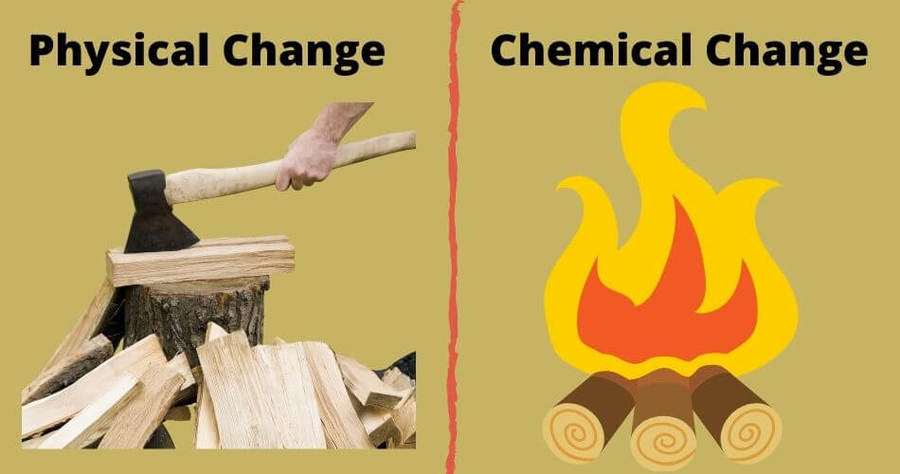
There are two types of changes in matter; physical change and chemical change. As the names suggest, a physical change affects a substance’s physical properties and a chemical change affects its chemical properties.
3

occur when there is a change to one or more physical properties
does not result in a change in chemical identity
are reversible in many cases
Physical Changes
4

occur when one substance changes into another after a chemical reaction
"ingredients" are called reactants and end results are called products
irreversible
Chemical Changes
5
Multiple Choice
A physical change...
changes the physical properties of an object, but does not create a new substance.
creates a new substance and cannot be undone.
6
Multiple Choice
A chemical change
changes the physical properties of an object, but does not create a new substance.
creates a new substance and cannot be undone.
7

Production of gas/bubbles
Production of odor
Change in color
Formation of precipitate
Exothermic/Endothermic reaction
Release of light
Identifying chemical changes
Signs of a chemical change
8
Chemical reactions tend to happen more quickly at higher temperatures. When temperatures are higher, atoms and molecules have more kinetic energy which enable them to move around and rearrange more quickly and easily.

9

This law states that mass cannot be created or destroyed during a physical or chemical change. The mass you have before the change is always equal to the mass after the change. For example, a chemical reaction between 93g of mercury and 7g of oxygen will produce 100g of mercuric oxide.
The Law of Conservation of Mass
10
Multiple Choice
What kind of change occurs if matter changes in amount, size, or shape?
substance change
chemical change
physical change
elemental change
11
Multiple Choice
Which of the following is NOT an example of a physical change?
Smashing a soda can
Wood breaking apart
Salt dissolving in water
Iron rusting
12
Multiple Choice
13
Multiple Choice
14
Multiple Choice
15
Multiple Choice
16
Multiple Choice
17
Multiple Choice
Which block model could represent Na2SO4?
18
Multiple Choice
Which block model could represent SrCl2?
19
Multiple Choice
20
Multiple Choice
21
Multiple Choice
According to the Law of Conservation of Mass, what happens to the wood and oxygen when it is burned?
The wood disappears.
It stays the same chemically.
The atoms in the wood and oxygen rearrange and form smoke and ash.
Nothing.
22
Building an Argument about Changes:
We can use what we see to show if a substance changes in two ways: physically or chemically.
Observing Physical Changes:
Changes in state (solid, liquid, gas) without forming new substances.
Changes in shape or size that can be reversed.
Observing Chemical Changes:
Color changes indicating a new substance is formed.
Formation of bubbles or gas, showing a chemical reaction.
Release of heat or light during the change process.
23
Multiple Choice
Which of the following is an example of a physical change?
Color changes indicating a new substance is formed.
Formation of bubbles or gas, showing a chemical reaction.
) Changes in state (solid, liquid, gas) without forming new substances.
Release of heat or light during the change process.
24
Multiple Select
What indicates a chemical change taking place?
Changes in shape or size that can be reversed.
Changes in state from solid to liquid.
Color changes indicating a new substance is formed.
Formation of bubbles or gas that disappear quickly.
25
Backing Up Our Claims:
Give examples of changes we can see and explain why they are physical or chemical.
Examples of Changes:
Physical Changes:
Melting Ice: Ice becomes water, still the same substance.
Tearing Paper: Paper rips into smaller pieces, but it's still paper.
Chemical Changes:
Burning Wood: Wood becomes ash and smoke, not wood anymore.
Rusting of Iron: Iron reacts with air to form rust, changing its makeup.
26
Multiple Select
During a science experiment, you mixed baking soda and vinegar in a test tube. As a result, the mixture started fizzing and bubbling. You and your lab partner are discussing if this reaction represents a physical or chemical change. Choose ALL of the evidence that supports a chemical change has occurred.
Which of the following observations support that a chemical change has occurred by mixing baking soda and vinegar?
The mixture started fizzing and bubbling.
The test tube felt warm to the touch after mixing the substances.
A new substance with a different color was formed.
The mixture can be easily separated back into baking soda and vinegar.
27
Multiple Choice
In a kitchen experiment, you mixed flour and water to create a dough. Your friend claims that the dough formation is a chemical change. Choose ALL of the evidence that supports a physical change has occurred.
Which of the following observations support that a physical change has occurred by mixing flour and water to create dough?
The dough can be flattened and reshaped multiple times.
The dough changes color when baked in the oven
The dough becomes hard and solid after baking.
The dough smells different than the original flour and water mixture.
Changes of Matter (feat. Law of Conservation)
By J Senghor
Show answer
Auto Play
Slide 1 / 27
SLIDE
Similar Resources on Wayground

21 questions
Changes of Matter (feat. Law of Conservation)
Presentation
•
6th - 8th Grade
22 questions
Reflection and Mirrors 7.P.10.2
Presentation
•
6th - 8th Grade
22 questions
Review of Plant and Animal Cells
Presentation
•
6th - 8th Grade
20 questions
Carbon Cycle
Presentation
•
6th - 8th Grade
20 questions
Moon Phases
Presentation
•
6th - 8th Grade
20 questions
Asexual and Sexual Reproduction
Presentation
•
6th - 8th Grade
20 questions
Energy Transformations
Presentation
•
6th - 8th Grade
20 questions
Electromagnetic Spectrum
Presentation
•
6th - 8th Grade
Popular Resources on Wayground
10 questions
Impact of 9/11 and the War on Terror

Interactive video
•
10th - 12th Grade
21 questions
Continents and Oceans

Quiz
•
6th Grade
5 questions
9/11
Interactive video
•
9th Grade
20 questions
Parts of Speech
Quiz
•
5th Grade
16 questions
Subject & Predicate
Quiz
•
5th Grade
10 questions
Riddles Riddles fun Riddles
Quiz
•
6th - 12th Grade
21 questions
Lab Safety
Quiz
•
10th Grade
6 questions
PRIDE in the Hallways and Bathrooms
Presentation
•
12th Grade
Discover more resources for Science
20 questions
Lab Safety
Quiz
•
5th - 8th Grade
17 questions
7.6D Aqueous Solutions
Quiz
•
7th Grade
20 questions
Scientific Method and Variables
Quiz
•
8th Grade
20 questions
Scientific method and variables
Quiz
•
8th Grade
27 questions
Counting Atoms - Subscripts
Quiz
•
8th Grade
10 questions
6.6D - Relative Density Review
Quiz
•
6th Grade
14 questions
Science Variables
Quiz
•
7th Grade
20 questions
Elements, compounds, and mixtures
Quiz
•
6th Grade