
Search Header Logo
Triangle Shirtwaist Factory

Triangle Shirtwaist Factory

Assessment

Presentation

Social Studies

10th Grade

Hard

Created by

Joseph Anderson

FREE Resource

31 Slides • 10 Questions

1

media

2

media

3

Open Ended

Describe a time when you were unhappy with certain conditions—at home, work, or school—that you had to deal with. How did you try to change those conditions? Were you successful? Why or why not?

4

media

5

media

6

Multiple Select

Question image

Which of the following statements are true? (Select all that apply)

1

The “Uprising of 20,000” referred to a conflict between the U.S. Army and Indigenous people in the Great Plains.

2

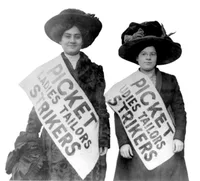
Poor working conditions and lack of concern about workers’ safety led to the Triangle Shirtwaist Factory Fire in 1911.

3

Rose Schneiderman is remembered for her work for Women’s Suffrage.

4

The Women’s Trade Union League was a national labor organization dedicated to improving working conditions for women.

7

media

8

media

9

media

10

media

11

media

12

media

13

media

14

Multiple Select

Question image

Which of the following descriptions are true about working conditions during the rise of American industry? (Select all that apply)

1

Workers worked long hours for little money.

2

Worker safety was important to the factory owners.

3

Only boys were forced to work as child laborers.

4

Many laborers lived with unsanitary working conditions.

15

media

16

media

17

media

18

media

19

media

20

Dropdown

Question image
Three main national labor organizations had large impacts on the labor movement. The ​
​​accepted both skilled and ​
workers, as well as women and African Americans. The ​
, which focused on skilled workers, eventually became the main labor organization in the United States. The ​
were a more radical group, that advocated ​
as the path to labor reform.

21

media

22

media

23

media

24

media

25

media

26

media

27

media

28

media

29

Multiple Select

Which of these events occurred as a result of conflict between the unions and their companies?

1

Federal troops were used to break up strikes.

2

Companies hired Pinkerton agents to identify union members.

3

Strikers shut down the rail lines.

4

The government did not support strikers.

5

There was a working class revolution against the army.

30

media

31

media

32

media

33

media

34

media

35

Match

Question image

Match the following

worked for fire safety laws and other union reforms

helped found and was the president of the American Federation of Labor

helped coal miners and textile workers form unions

leader of the Socialist Party of American and ran for president 5 times

Rose Schneiderman

Samuel Gompers

Mary Harris Jones

Eugene Debs

36

media

37

media

38

Multiple Choice

Question image

Which of the following describes the gains and losses made in the early years of unions?

1

The unions made no impact on working conditions.

2

The unions gained the respect of most Americans, but not of the government.

3

The unions earned better pay and hours, but did not gain government or popular support.

4

Both the government and the American people embraced unions.

39

Dropdown

Question image
The ​
suffered during the Gilded Age because they could not afford to lose their jobs. Because of this, they accepted ​
. Children worked in factories and sometimes ​
than adults. The government took the side of ​
during strikes.

40

Match

Match the following

an 1892 Carnegie Steel plant workers' strike that was broken by the state militia and resulted in the union being shut out of the plant for four decades

an 1894 railway workers' strike that was broken by federal troops, weakening the labor movement

a violent clash in 1886 between union supporters and Chicago police that divided and weakened the labor movement

Homestead Strike

Pullman Strike

Haymarket Affair

41

Match

Match the following

the practice of using children as manual laborers

a national labor organization, founded in 1886, that consisted mainly of skilled workers and focused on higher wages and shorter workdays

people who work for wages in factories, mills, mines, and other businesses, usually performing manual labor

child labor

American Federation of Labor

working class

media

Show answer

Auto Play

Slide 1 / 41

SLIDE

