Search Header Logo
ACT Reading Review

ACT Reading Review

Assessment

Presentation

English

11th Grade

Practice Problem

Medium

CCSS
RL.8.3, RL.1.6, RI.11-12.5

+41

Standards-aligned

Created by

Maria Baltsas

Used 4+ times

FREE Resource

18 Slides • 20 Questions

1

Review of ACT Reading
Prose and Social Science

By Maria Baltsas

media

2

Score 80%+ on Quizizz by answering accurately with textual evidence and logical reasoning.

WILF

Review prose and social science passages, identifying question types and applying strategies for comprehension.

WALT

We are Learning....

3

Review of Type of Questions

  1. Prose Fiction/Literary Narrative – Excerpt from a novel or short story; focuses on characters, themes, and tone.

  2. Social Science – Nonfiction passage on history, psychology, or political science; requires identifying main ideas and author’s purpose.

  3. Humanities – Covers topics in art, literature, or philosophy; often opinion-based with complex vocabulary.

  4. Natural Science – Discusses biology, physics, or chemistry; requires analyzing facts, experiments, and logical reasoning.

4

Tips and Tricks: Before Reading

  • Skim the passage first, then read selectively.

    • Focus on characters, places, repeated ideas, dates

  • Pay attention to tone, perspective, and main ideas

5

Tips and Tricks: After Reading

  • DO NOT spend more than 10 minutes on each passage!

  • Answer easier questions FIRST...

    • As it is used in line 34, ubiquitous means______________

    • The main purpose of paragraph 3 is to______________

  • Focus on key terms in questions.

  • Use the process of elimination

    • elimninate answers that do not fit the context of reading

  • Manage time: don’t focus on one question too long (more than 1 min)

  • Select a row (C or D) and fill in any missing answers.. DO NOT Leave BLANK

6

Multiple Choice

Question image

You should spend about _______ minutes on one reading passage on the ACT.

1

7 minutes

2

8.5 minutes

3

12 minutes

4

15 minutes

7

Match

Match the following:

Prose

Social Science

Humanities

Science

short story or novel excerpt

POV:1st 3rd

history, psychology, or political texts

art, philosophy, opinion-based

facts, experiments, and logic

8

Prose Passages: Types of Questions

  • Character Relationships & Feelings

    • Questions ask how characters feel about each other or how their relationship develops.

    • Strategy: Look for emotional shifts in dialogue or descriptive words.

  • Inferences (Reading Between the Lines)

    • Questions require making logical conclusions based on indirect information.

    • Strategy: Find textual clues about emotions or ideas.

  • Word Choice and Tone (ATTITUDE of Writer)

    • Questions focus on why a specific word or phrase is used and its impact.

    • Strategy: Tone can be positive, neutral, negative


media

9

Prose Passages: Types of Questions

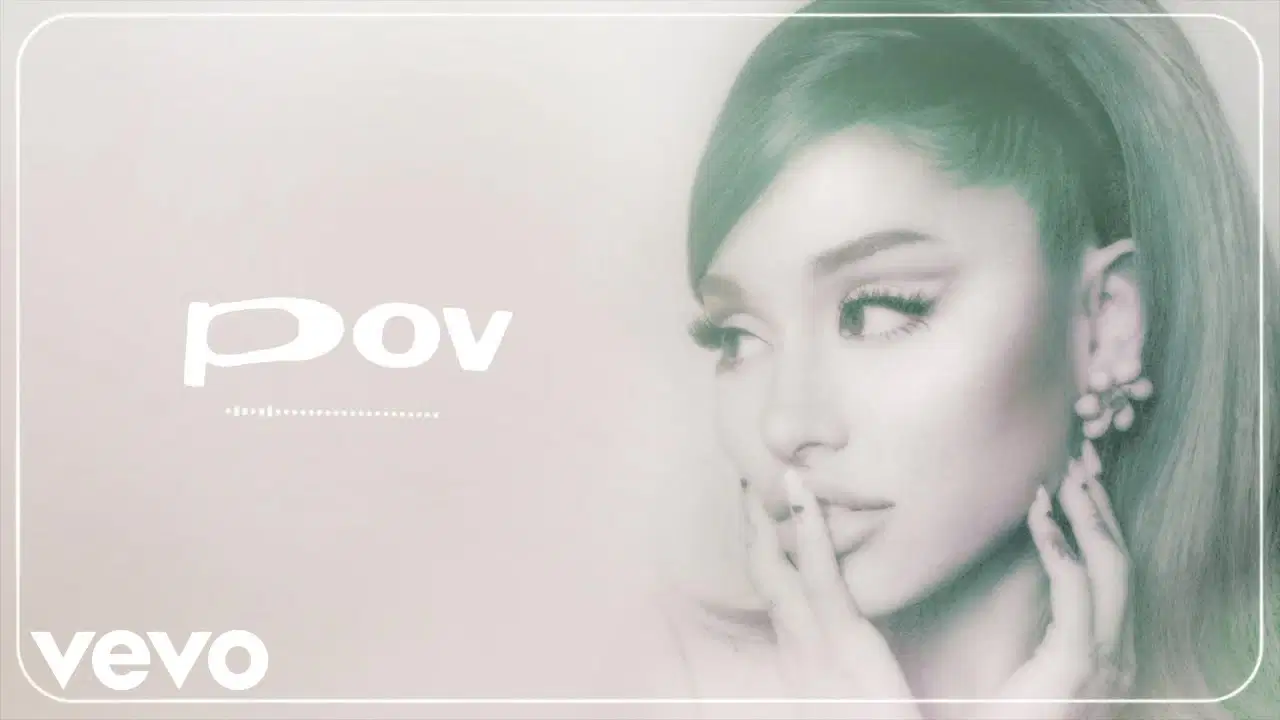
  • Point of View (POV) and Perspective

    • 1st person or 3rd person point of view

    • Strategy: Identify who is telling the story and what conflicts are present

  • Main Point/ Idea and Conclusion

    • Questions ask about the overall theme or message?

media

10

media
media

11

Omniscient POV (3rd person)

  • When the narrator knows everything about all the characters, including their thoughts, feelings, and motivations.

  • The narrator is like an all-knowing observer who can reveal what multiple characters are thinking

media

12

Multiple Choice

Identify the point of view:

Emma doubted she’d find the courage to speak. Across the room, Liam hoped she would. Neither knew the other felt the same, yet both hesitated, trapped by uncertainty.

1

first person

2

second person

3

third person

4

omniscient

13

Multiple Choice

Identify the point of view:

James scanned the crowd, searching for her. His pulse quickened. Did she even remember him? He took a deep breath, stepping forward, unsure if she would turn away.

1

first person

2

second person

3

third person

4

omniscient

14

Multiple Choice

Identify the point of view:

I gripped the letter tightly, my heart pounding. Why had she written after all these years? My fingers trembled as I unfolded the paper, afraid of what I'd find.

1

first person

2

second person

3

third person

4

omniscient

15

Multiple Choice

Identify the point of view:

As the clock struck midnight, Lucas whispered a wish into the stars, never realizing that across the ocean, his sister gazed at the same sky, making the very same wish as Lucas.

1

first person

2

second person

3

third person

4

third person omniscient

16

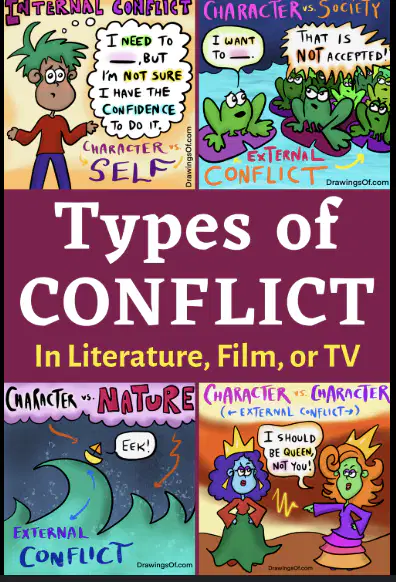
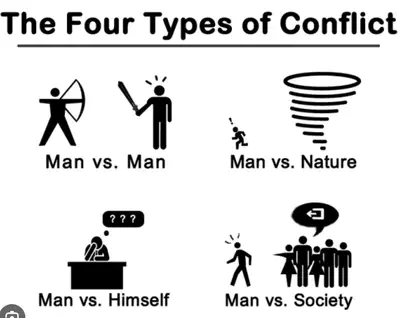
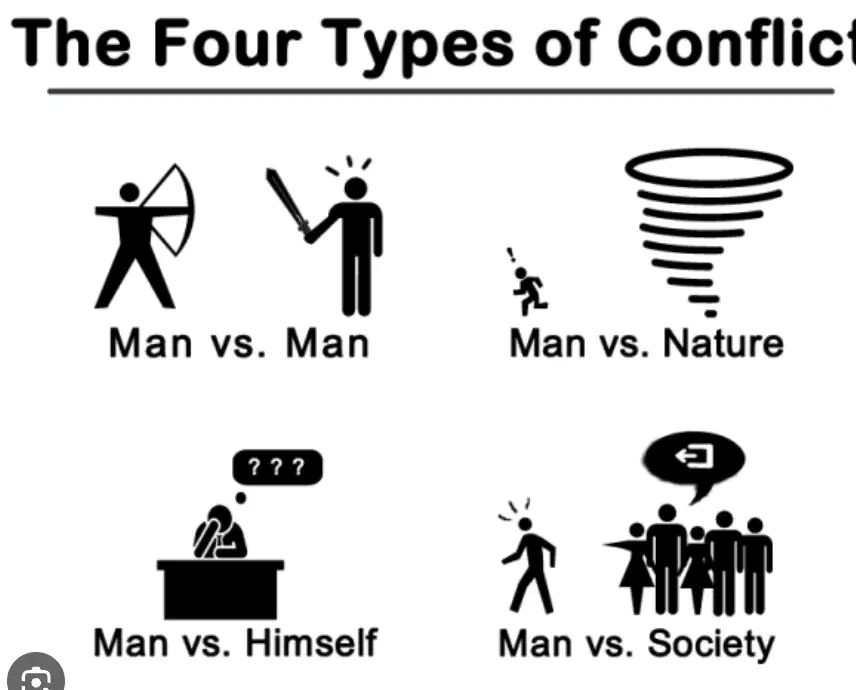
Conflicts in Prose/Literature

  • Man vs. Man – A fight between two people.

  • Man vs. Nature – Struggling against nature (storms, animals, disasters).

  • Man vs. Himself – An internal struggle with emotions or decisions.

  • Man vs. Society – Going against rules, norms, or a group.

media

17

Types of CONLICTS

media

18

Multiple Choice

Question image

In a fictional passage, if a character(s) faces a challenge, obstacle, struggle, indecision, or disagreement, that is called a __________?

1


a conflict

2

flashback

3

imagery

4

metaphor

19

Multiple Choice

Question image

What type of conflict is evident?

Juan hesitated at the piano recital, his hands trembling. The audience waited. Could he conquer his fear, or would doubt silence his melody before it began?

1

man/man

2

man/nature

3

man/self

4

man/society

20

Multiple Select

Question image

What two types of conflict is evident?

Lena refused to stand. The classroom buzzed with whispers. "Follow the rules," her teacher warned. But injustice burned inside her—some rules in society weren’t meant to be obeyed.

1

man/man

2

man/nature

3

man/self

4

man/society

21

Multiple Choice

Question image

What type of conflict is evident?

The storm raged, waves crashing against the tiny boat. Mia gripped the oars, fighting the wind. The ocean roared—would she reach shore, or be swallowed whole?

1

man/man

2

man/nature

3

man/self

4

man/society

22

Multiple Choice

Question image

What types of conflict is evident?

Jake clenched his fists. "You stole my idea," he growled. Mark smirked. "You never claimed it." Their friendship fractured, a rivalry sparked between ambition and betrayal.

1

man/man

2

man/nature

3

man/self

4

man/society

23

Multiple Select

Question image

The point of view in prose reading passages on the ACT is either _____ or ______ (pick 2

1

first

2

second

3

third

4

limited

24

Multiple Choice

Question image

When a question asks about the author's TONE this means

1

perspective

2

opinion

3

attitude

4

all of the above

25

Social Science Passages

  • In these passages, you need to:

    • Interpret key passages within historical, social, or political contexts.

    • Use evidence to support conclusions.

    • Determine word meanings based on  context 

    • Use Inference Skills Make logical conclusions from implied ideas

media

26

Social Science Passages

  • Based on Sociology, History or Politics

  • Compare/Contrast different perspectives

  • Understand the author's attitude, tone, and perspective.

media

27

5 Important Transitions to Know!

  • However: Contrast or shift in ideas.

  • Although – Introduces a contradiction.

  • Nevertheless – Shows contrast

  • Therefore/Thus – Indicates cause-and-effect relationships.

  • Moreover – Adds emphasis or additional information.

media

28

Multiple Select

Words like however and nevertheless are used for____ and _______ (pick 2)

1

comparisons

2

contrasts

3

contradictions

4

cause/effect

29

5 Important Tips

  • Identify the main idea: Focus on the passage’s central argument or purpose.

  • Look for cause-and-effect: Social science passages often explain relationships between events or concepts or people

  • Watch for contrast words – Words like however and although signal important shifts.

  • Use process of elimination – Narrow choices by eliminating extreme or irrelevant answers.

  • Don't get stuck on details – Focus on overall trends and author's perspective.

media

30

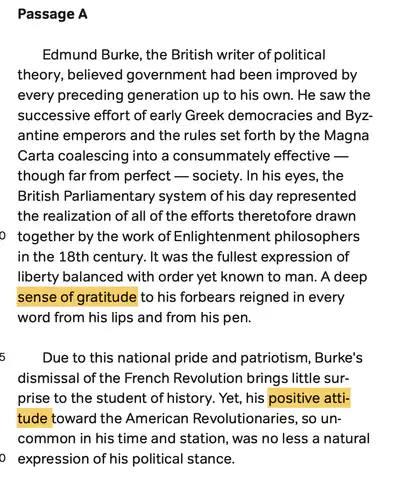
Re-read the passage

media

31

Multiple Choice

Question image

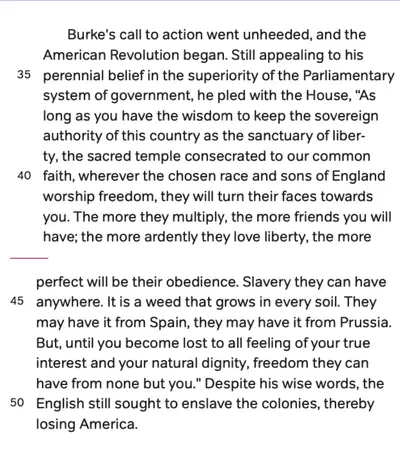
 The author's attitude toward Edmund Burke in can best be described as:

1

A. interest and wariness.

2

B. skepticism and apprehension.

3

C. amusement and sentimentality.

4

D. reverence and fascination.

32

Multiple Choice

Question image

 Lines 1 - 14 make it clear that Edmund Burke believed that early Greek democracies, Byzantine

emperors, and the Magna Carta were:

1

A. the result of Enlightenment philosophy.

2

B. influential in the formation of the British Parlia-

mentary system.

3

C. founded on outdated political science.

4

D. the fulfillment of all preceding governmental

models.

33

Re-read the passage

media

34

Multiple Choice

Question image

In lines 36 - 49, the author quotes Burke's speech to

Parliament primarily to emphasize the fact that:

1

A. Burke still believed Parliament was an inherently

good institution.

2

B. Parliament had ignored Burke's previous appeals.

3

C. the American colonies would find another na-

tion to govern them if Parliament pulled away its

support.

4

D. Parliament was too entangled in the slave trade

to maintain relations with America.

35

Multiple Choice

Question image

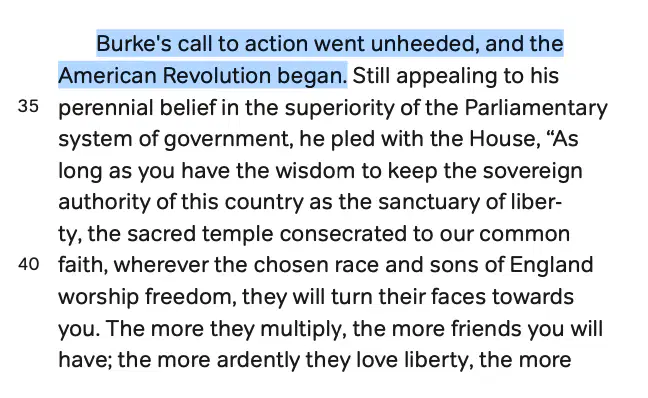
Passage A states that Edmund Burke's first effort to change British treatment of the American colonies was (CLUE): focus on the word "unheeded"

1

A. ineffective.

2

B. too emotional.

3

C. belated.

4

D. incoherent

36

Re-read the passage

media

37

Multiple Choice

Question image

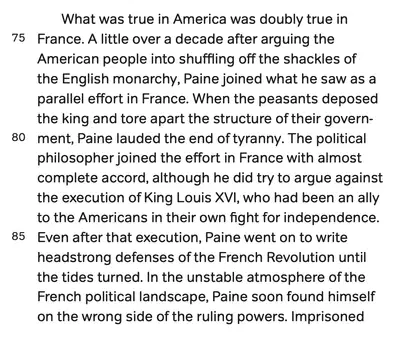
Passage B states that Thomas Paine made some

effort to defend:

1

A. King George III.

2

B. King Louis XVI.

3

C. Greek democracy.

4

D. the English throne.

38

Multiple Choice

Question image

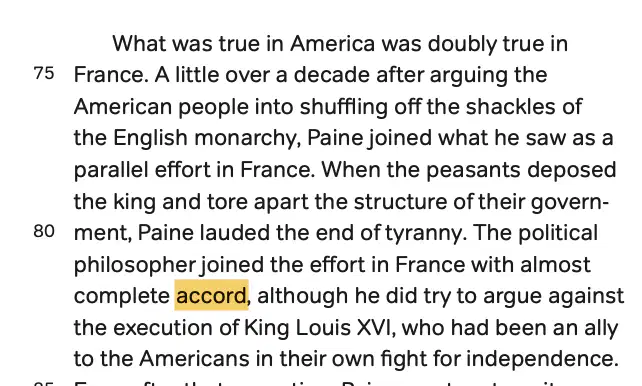
 As it is used in lines 79 - 83, the word accord most

nearly means:

1

A. proportion.

2

B. acknowledgement.

3

C. agreement.

4

D. length of rope.

Review of ACT Reading
Prose and Social Science

By Maria Baltsas

media

Show answer

Auto Play

Slide 1 / 38

SLIDE