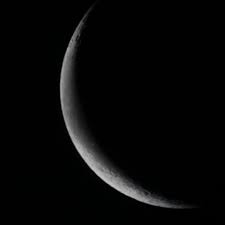
Review Lunar Phases
Presentation
•
Science
•
4th Grade
•
Practice Problem
•
Easy
+1
Standards-aligned
Amanda Cooper
Used 3+ times
FREE Resource
8 Slides • 11 Questions
1
Learning Objective: I will review the characteristics of Earth’s Moon and the different lunar phases.
DOL: Given 5 questions, I will analyze characteristics of Earth’s Moon by identifying the different lunar phases and how they are formed with 100% accuracy.
By Amanda Cooper
R.C.-The Moon changes from not visible to fully visible and then back to not visible.
Why does this happen?
2
Write down 3 new facts about the moon!
…
…
…
3
Brain Dump-Added Characteristics of the moon.
Structure: Solid rock
Surface: rock and dust; trace of ice; no air; no life
NO ATMOSPHERE
Diameter: 2,160 miles
Distance from Earth: 238,000 miles
Age: 4.5 billion years
Rotation: 27 days
Revolves around Earth: 27 days
4
Dropdown
It
5
Open Ended
Using the image, compare the size of the moon to Earth.
Terms to use:
Volume
Density
Mass
Gravitational Pull
6
Multiple Choice
Why is the moon so important anyways???
Gravitational pull of the moon also controls the ocean tides and most types of ocean waves.
Gravitational pull causes the Sun to rise and set each day.
Gravitational pull controls the direction of the wind on Earth.
7
Annotate-Brain Dump! Why do we have a lunar cycle?
The phases of the lunar cycle are defined by how the Moon appears from Earth as the Moon is revolving around the Earth.
Look at the outer circle
8
Create a flow chart of the New Moon.
New Moon
9
Dropdown
As the Moon revolves, we see
Light appears to
10
Hold up your right hand and make a crescent -
This is WAXING crescent or WAXING gibbous
11
Draw
Draw each of the moons from how we see it from Earth using yellow to show the illumination of the moon and black to show the side that is not illuminated.
Use guided reading
12
Labelling
Label each of the moon's phases.
Waxing gibbous
New Moon
First quarter
Waxing Crescent
13
Dropdown
14
Multiple Choice
Waxing
Waning
15
R.C.-
According to the image, what are two facts about the waning phases?
16
Multiple Choice
17
Drag and Drop
The lunar cycle begins and
18
Open Ended
The graphs shows the intensity of moonlight throughout the lunar cycle. How do you know this graph accurately represents the appearance of the Moon during the lunar cycle? Explain your answer.
19
DOL TIME!!!
Learning Objective: I will review the characteristics of Earth’s Moon and the different lunar phases.
DOL: Given 5 questions, I will analyze characteristics of Earth’s Moon by identifying the different lunar phases and how they are formed with 100% accuracy.
By Amanda Cooper
R.C.-The Moon changes from not visible to fully visible and then back to not visible.
Why does this happen?
Show answer
Auto Play
Slide 1 / 19
SLIDE

Similar Resources on Wayground
12 questions
constellations
Presentation
•
4th Grade
12 questions
Types of energy - light, sound and thermal
Presentation
•
4th Grade
15 questions
Vertebrates
Presentation
•
4th Grade
17 questions
Rocks and Minerals Grade 4 Quiz
Presentation
•
4th Grade
15 questions
Quarter 1: 4th grade Science Review
Presentation
•
4th Grade
15 questions
Food Web Vocabulary
Presentation
•
4th - 5th Grade
15 questions
Biomes and Ecosystems
Presentation
•
4th Grade
15 questions
Soil
Presentation
•
4th Grade
Popular Resources on Wayground
10 questions
5.P.1.3 Distance/Time Graphs
Quiz
•
5th Grade
10 questions
Fire Drill
Quiz
•
2nd - 5th Grade
20 questions
Equivalent Fractions
Quiz
•
3rd Grade
22 questions
School Wide Vocab Group 1 Master
Quiz
•
6th - 8th Grade
20 questions
Main Idea and Details
Quiz
•
5th Grade
20 questions
Context Clues
Quiz
•
6th Grade
20 questions
Inferences
Quiz
•
4th Grade
12 questions
What makes Nebraska's government unique?
Quiz
•
4th - 5th Grade
Discover more resources for Science
15 questions
Physical and Chemical Changes
Quiz
•
4th Grade
16 questions
Food Chains and Food Webs
Quiz
•
3rd - 4th Grade
12 questions
Seasons & Moon Phases Exit Ticket
Quiz
•
4th Grade
20 questions
The Water Cycle
Quiz
•
4th - 5th Grade
24 questions
Animal Structures (Internal & External)
Quiz
•
4th Grade
12 questions
Ecosystems
Quiz
•
3rd - 5th Grade
17 questions
Potential and Kinetic Energy
Quiz
•
4th Grade
16 questions
Moon Phases
Quiz
•
4th Grade