

Designing Curriculum

Presentation
•
Education
•
Professional Development
•
Practice Problem
•
Medium

Algerd Moscosa
Used 3+ times
FREE Resource
53 Slides • 22 Questions
1
By Algerd Moscosa
2
By the end, you will be able to:
Understand the importance of well-designed test questions.
Identify different types of test and evaluation questions.
Apply best practices in designing effective assessment items.
3
Open Ended
How do the types of questions we design impact student learning and the accuracy of our assessments?
4
Ensure alignment with learning objectives.
Well-structured questions assess what was intended to be taught.
Questions should directly measure the competencies outlined in the curriculum.
Poorly aligned questions can mislead assessment results and fail to provide meaningful feedback.
5
Measure student understanding effectively.
Properly designed questions help gauge comprehension beyond memorization.
Ensuring a range of cognitive skills is assessed, from recall to application and analysis.
Differentiating between surface-level understanding and deep comprehension.
6
Provide feedback for instructional improvement.
Helps educators identify gaps in student learning and adjust teaching strategies.
Assessment data should be analyzed to refine future instruction and curriculum design.
Timely feedback allows students to understand their strengths and areas for improvement.
7
Differentiate between various levels of cognitive skills.
Allows assessment of higher-order thinking, not just recall.
Incorporating Bloom’s Taxonomy to ensure students are tested on a spectrum of learning skills.
Encouraging critical thinking, problem-solving, and real-world application of knowledge.
8
Word Cloud
Now that we understand the importance of well-designed test and evaluation questions, what are the different types of questions we can use to assess student learning effectively?
9

10
11

Provide a stem and several answer choices with one correct answer.
Multiple-choice questions (MCQs)
12
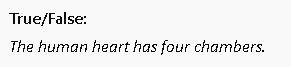
Simple statements requiring students to determine correctness.
True/False
13
Pairs related concepts for students to link correctly.
Matching Type

14
Requires students to recall key terms or concepts.
Fill-in-the-Blanks

15
Poll

Which objective question format do you most frequently use in your classroom assessments? Why do you prefer this type?
Multiple-Choice Question
True / False
Matching Type
Fill-in-the-Blanks
16
17
Require brief but precise responses.
Short-answer questions

18
Encourage in-depth explanations, reasoning, and critical thinking.
Essay questions

19
20
Collections of student work demonstrating learning progress.
Portfolios

21
Task-based assessments that integrate various skills.
Projects

22
Hands-on evaluations requiring demonstrations of skills.
Practical tasks

23
Open Ended
Which type of test and evaluation question do you find easier to use and more frequently applied in your classroom: objective or subjective? Why?
24
25
Avoid unnecessary complexity or ambiguity.


26
Negatively worded questions can confuse students and lead to misinterpretation.


27
All answer choices should be reasonable to prevent easy elimination.
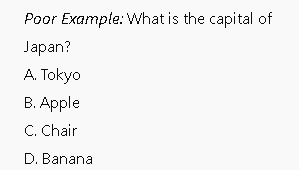

28
Avoid patterns or unintentional cues.


29
Ensure all choices are of similar length and complexity.


30
Multiple Choice
Which of the following multiple-choice questions violates the principle of keeping answer choices balanced and fair?
31
32
Clearly define what students need to answer or discuss.
Use clear and direct prompts.

33
Ensure questions measure intended skills or knowledge.
Align with learning objectives.

34
Define clear criteria for evaluating responses.
Provide rubrics for grading consistency.

35
Design questions that require explanation, justification, or analysis.
Encourage critical thinking and application.

36
37
Provide detailed rubrics and guidelines.
Define clear criteria and expectations.

38
Design tasks that simulate actual challenges students may face.
Provide real-world or authentic tasks.

39
Predefined criteria ensure objective and fair grading.
Use rubrics for evaluation.

40
Predefined criteria ensure objective and fair grading.
Incorporate self and peer assessment.

41
42
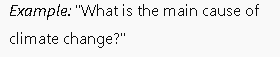
Poorly phrased questions can confuse students.
Ambiguous wording.
43
Poorly phrased questions can confuse students.
Ambiguous wording.

44
Avoid making questions unnecessarily difficult or too simple.
Unfair difficulty levels.

45
Avoid making questions unnecessarily difficult or too simple.
Unfair difficulty levels.

46
Prioritize questions assessing understanding and application.
Overuse of rote-memorization questions.

47
Prioritize questions assessing understanding and application.
Overuse of rote-memorization questions.

48
Ensure fairness across diverse student backgrounds.
Bias or culturally insensitive content.

49
Ensure fairness across diverse student backgrounds.
Bias or culturally insensitive content.

50
Every question should connect to curriculum objectives.
Lack of alignment with learning goals.

51
Every question should connect to curriculum objectives.
Lack of alignment with learning goals.

52
Multiple Choice

What is the mistake?
The question is too broad and lacks precision.
The question does not align with any learning objective.
The answer choices are too obvious.
The question is too easy for the grade level.
53
Multiple Choice

What is the mistake?
The question assumes all students have the same cultural background.
The answer choices are not fair and balanced.
The question is not relevant to science.
The question is too difficult for students.
54

55
Open Ended

What is your understanding of the difference between 'Assessment for Learning' and 'Assessment of Learning'? How do you currently use these in your classroom?
56
Measures overall learning achievements at the end of instruction.
"OF" (Summative)
Helps students understand their progress and areas for improvement.
"FOR" (Formative)
vs.
Assessment OF Learning
Examples: Quizzes, discussions, reflections, peer feedback.
Examples: Final exams, projects, standardized tests.
57

analyze real-world assessment challenges and apply best practices to improve test design
58
Open Ended

Identify the major flaws in Mr. Rivera’s test design.
59
Open Ended

How could these questions be revised to improve clarity, fairness, and alignment with learning objectives?
60
Open Ended
Why is it important to balance question difficulty in an assessment?
61
Open Ended
How can cultural sensitivity be ensured when designing test items?
62
Incorporating multiple formats provides a more complete picture of student understanding.
Use a mix of question types for comprehensive evaluation.
Good questions promote student engagement and accurate measurement of learning.
Well-designed test questions enhance learning and assessment accuracy.
63
Regular assessment updates help maintain quality and relevance.
Continuously review and improve test items.
Ensures that tests truly measure intended outcomes.
Align assessments with learning objectives.
64

65
Multiple Choice
A teacher is preparing a lesson on test design and wants to start by ensuring students understand the basic definitions of assessment types. To check students' understanding, the teacher asks them to differentiate between formative and summative assessments.
Question: What is the primary purpose of formative assessment?
To measure overall student achievement at the end of instruction.
To rank students based on performance compared to peers.
To provide ongoing feedback for learning improvement.
To replace summative assessments in grading systems.
66
Multiple Choice
A school administrator is conducting a review of different assessments used by teachers. The goal is to categorize them as either formative or summative based on their purpose. The administrator comes across a test that is conducted at the end of a semester and contributes to the final grade.
Question: Which of the following is an example of a summative assessment?
A weekly self-reflection journal.
A final end-of-term examination.
A peer evaluation checklist.
A teacher’s informal observation notes.
67
Multiple Choice
A teacher notices that students have different responses to essay questions. Some students provide in-depth explanations, while others only list key points without justification. The teacher decides to discuss why essay questions are useful for assessing critical thinking.
Question: Why are essay questions effective for assessing higher-order thinking skills?
They allow students to demonstrate factual recall without explanation.
They require detailed analysis, reasoning, and argument construction.
They are easier to grade objectively than multiple-choice questions.
They reduce the time needed to complete an assessment.
68
Multiple Choice
A new teacher is designing multiple-choice questions but finds that students often guess answers rather than thinking critically. The teacher consults a mentor, who advises ensuring that incorrect answer choices (distractors) are well-designed so that students must apply knowledge rather than eliminate obviously wrong answers.
Question: What makes a distractor in a multiple-choice question effective?
It is obviously incorrect so students can eliminate it easily.
It is of similar length and plausibility as the correct answer.
It is unrelated to the topic to confuse students.
It contains grammatical clues that hint at the correct answer.
69
Multiple Choice
A teacher wants to ensure that the test questions in an upcoming exam align with the learning objectives of a unit on environmental sustainability. One objective states: "Students will analyze the effects of human activities on the water cycle." The teacher needs to choose a question that effectively assesses this objective.
Question: Which of the following test items best assesses critical thinking skills?
"List the steps of the water cycle in order."
"Identify the correct definition of photosynthesis."
"Explain how human activities impact the water cycle."
"Match the terms with their correct definitions."
70
Multiple Choice
After grading a recent exam, a teacher notices that most students got one particular question wrong. The teacher is unsure if the question was too difficult or if students genuinely lacked understanding of the topic. The teacher considers strategies to determine whether the test item was unfair.
Question: What is the best way to determine if a test question is unfairly difficult?
Ask students to explain why they chose their answers.
Compare the question’s difficulty to the rest of the test.
Ensure the question is the longest in the test.
Make the question worth more points to adjust difficulty.
71
Multiple Choice
A teacher creates the following multiple-choice question:
"Which of the following is NOT a renewable energy source?"
A. Solar Energy
B. Wind Energy
C. Fossil Fuels
D. Hydropower
During the test, students express confusion over the word "NOT", and some misinterpret the question, leading to errors. The teacher realizes that negative wording can make questions unclear.
Question: Why should negative phrasing be avoided in test questions?
It makes the correct answer obvious to all students.
It increases test reliability and validity.
It can confuse students and lead to misinterpretation.
It ensures the question is challenging enough.
72
Multiple Choice
A school principal wants teachers to use a variety of assessments to measure student learning. Some teachers rely mostly on multiple-choice tests, while others prefer essays and projects. The principal wants an assessment method that measures students’ ability to apply knowledge in real-world contexts.
Question: Which assessment type is best for evaluating students' ability to apply knowledge in real-world contexts?
Multiple-choice tests
Performance-based assessments
True/False quizzes
Fill-in-the-blank worksheets
73
Multiple Choice
A test question asks, "What is the capital of France?" with the following options:
A. Paris
B. Paris
C. Berlin
D. Rome
After reviewing the test, a colleague points out a flaw in the answer choices that could confuse students and make the test question invalid.
Question: What is the main issue with this question?
The options are not in alphabetical order.
The answer choices are too difficult.
A distractor is missing from the choices.
A duplicate answer is included, creating confusion.
74
Multiple Choice
A science teacher wants to create an assessment that goes beyond simple recall and requires students to propose a solution to an environmental issue. The teacher considers different types of questions to ensure the assessment aligns with the learning objective of developing problem-solving skills.
Question: Which test item best assesses students’ ability to generate and evaluate solutions?
"Define the term 'carbon footprint'."
"List three causes of air pollution."
"Propose a sustainable plan to reduce carbon emissions."
"Match the pollutants with their sources."
75
General Guidelines for Creating Assessments
Bloom’s Taxonomy Overview
Taxonomies of Learning
By Algerd Moscosa
Show answer
Auto Play
Slide 1 / 75
SLIDE
Similar Resources on Wayground

71 questions
Lesson 4 and 5: Today's lesson is all about: People
Presentation
•
Professional Development
68 questions
IMS Awareness CL 8- CL10
Presentation
•
Professional Development
66 questions
Parts of speech_Determiners
Presentation
•
KG - University
70 questions
CSDC101 - Control Structure 1
Presentation
•
University
73 questions
みんなの日本語初級1第1課
Presentation
•
Professional Development
73 questions
VOWERLS AND CONSONANTS (L1)
Presentation
•
Professional Development
70 questions
SISTEM PNEUMATIK
Presentation
•
KG - University
70 questions
Topic 11-14: MNA & MNB
Presentation
•
University
Popular Resources on Wayground
10 questions
Safety Day 2026 – Student Review

Quiz
•
9th Grade
21 questions
Continents and Oceans
Quiz
•
6th Grade
20 questions
Parts of Speech
Quiz
•
5th Grade
16 questions
Subject & Predicate
Quiz
•
5th Grade
25 questions
Multiplication Facts
Quiz
•
5th Grade
12 questions
Map Skills
Quiz
•
3rd Grade
22 questions
Continents and Oceans
Quiz
•
5th Grade
15 questions
Rounding Decimals
Quiz
•
5th Grade