Search Header Logo
Periodic Trends

Periodic Trends

Assessment

Presentation

Chemistry

10th Grade

Practice Problem

Medium

NGSS
HS-PS1-1, HS-PS1-2

Standards-aligned

Created by

Janet Reichmuth

Used 7+ times

FREE Resource

7 Slides • 18 Questions

1

Periodic Trends: Atomic Radius, Ionization Energy, and Electronegativity

By Janet Reichmuth

2

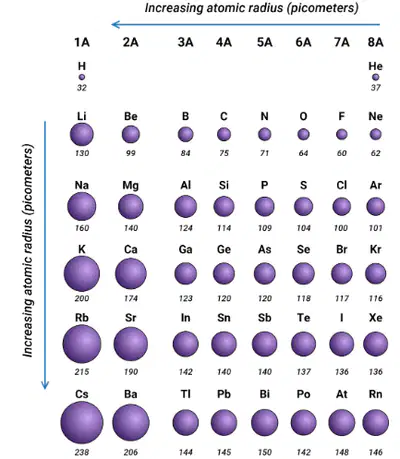
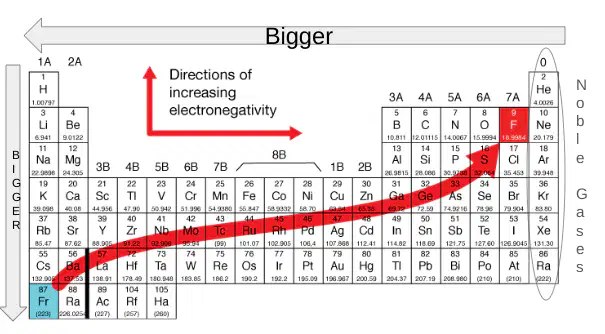
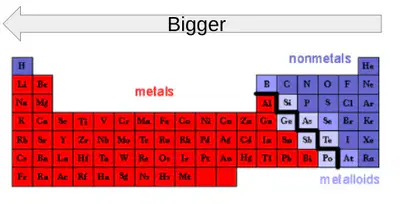
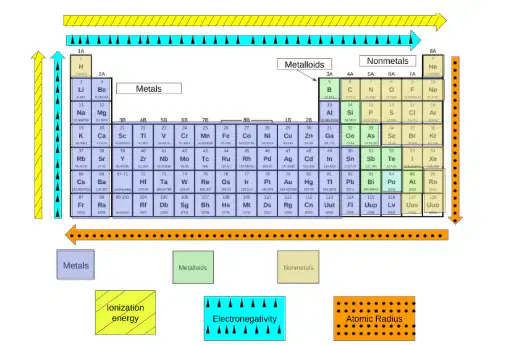
How "big" an atom: An atom has equal numbers of electrons and protons.

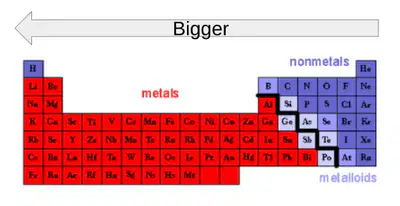
Notice that atoms get bigger from right to left.

Atomic Radius

media

3

Reorder

Question image

Rank the atoms from SMALLEST to BIGGEST.

Fluorine (F)

Oxygen (O)

Carbon (C)

Beryllium (Be)

Lithium (Li)

1
2
3
4
5

4

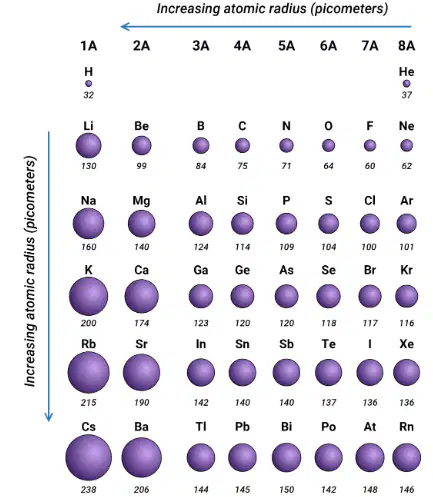
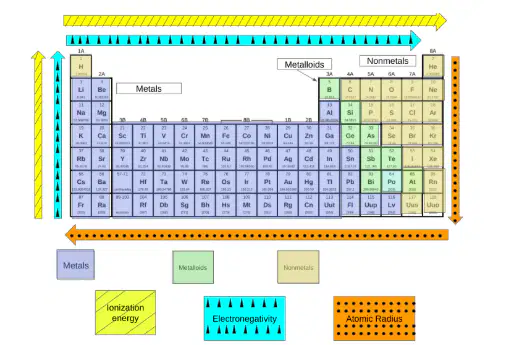
How "big" an atom: An atom has equal numbers of electrons and protons.

Notice that atoms get bigger from top to bottom.

Atomic Radius

media

5

Reorder

Question image

Rank the atoms from SMALLEST to BIGGEST.

Helium (He)

Neon (Ne)

Argon (Ar)

Krypton (Kr)

Xenon (Xe)

1
2
3
4
5

6

Multiple Choice

Question image

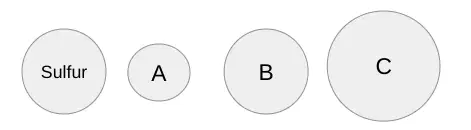
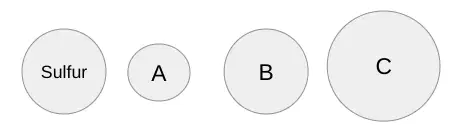
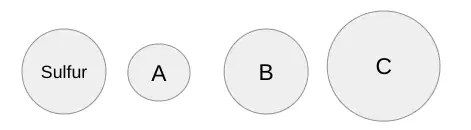
Given the size of the Sulfur (S) atom, which would be the size of an Oxygen (O) atom?

1

A

2

B

3

C

7

Multiple Choice

Question image

Given the size of Sulfur (S), what would be the size of Chlorine (Cl)?

1

A

2

B

3

C

8

Multiple Choice

Question image

Given the size of Sulfur (S), what is the size of Silicon (Si)?

1

A

2

B

3

C

9

Multiple Choice

Question image

Given the size of Sulfur (S), what is the size of Selenium (Se)?

1

A

2

B

3

C

10

Ionization Energy

Definition

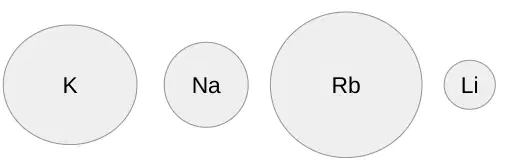
Ionization energy is the energy required to remove an electron off of the valence shell.

Because valence shells (negative electrons) are farther away from the nucleus (positively charged), it will require LESS energy to remove an electron off of a bigger atom (lower ionization energy)

11

Multiple Choice

Question image

Of those elements listed, which would have the lowest ionization energy value?

1

K

2

Na

3

Rb

4

Li

12

media

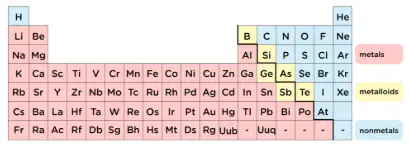
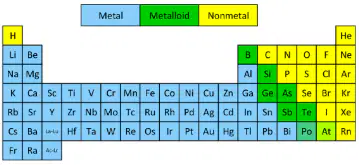
Because metals are, in general, bigger than nonmetals, they will likely have the lower ionization energy value.

Metals vs. Nonmetals

13

Multiple Choice

Question image

Which element will probably have the lowest ionization energy value?

1

Mg

2

Cl

3

Ar

4

Si

14

Electronegativity

Definition

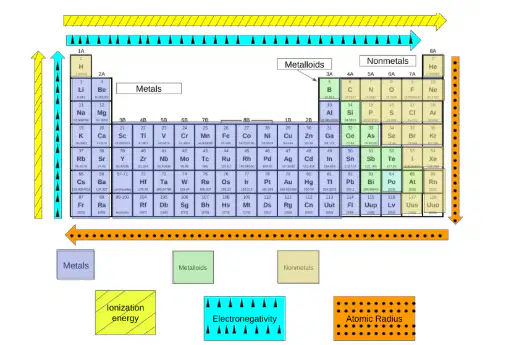
Electronegativity is the probability that an atom will attract electrons (in a bond). Electronegativity has same general trend as ionization energy, but it means something different.

This time, the smaller the atom, the closer the valence shell is to the positive nucleus. Therefore it will attract another electron.

The exception is the noble gases, which have no electronegativity value because they already have full shells and don't pull any more to them.


15

Multiple Choice

Question image

Which element has the LEAST or NO electronegativity value?

1

Fluorine (F)

2

Neon (Ne)

3

Boron (B)

4

Lithium (Li)

16

Multiple Choice

Question image

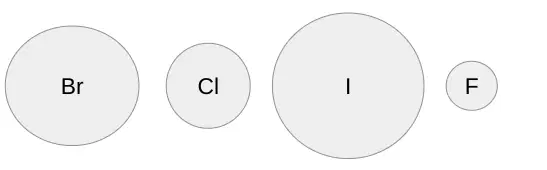
Which of these halogen elements would have the HIGHEST electronegativity value?

1

Br

2

Cl

3

I

4

F

17

media

Also based on the fact that metals tend to be bigger than nonmetals, nonmetals (except noble gases) will likely have a higher electronegativity value.

Metals vs. Nonmetals

18

Multiple Choice

Question image

Which element likely has the highest electronegativity value?

1

Si

2

Cl

3

Ar

4

Mg

19

Reorder

Question image

Order the atoms from LARGEST to SMALLEST

Cs

Rn

Xe

Na

Ar

1
2
3
4
5

20

Multiple Choice

Question image

Which is true?

1

Li is more likely to lose an electron than K.

2

K is more likely to lose an electron Cs.

3

Na is more likely to lose an electron than Li

4

Ne is more likely to lose an electron than Li

21

Multiple Choice

Question image

Which atom is MOST likely to gain an electron?

1

Cl

2

F

3

He

4

Ne

22

Match

Match the following

Electronegativity

Ionization Energy

Atomic Radius

Probability of gaining an electron

Energy required to remove an electron.

The size of an atom.

23

Drag and Drop

are more likely to lose electrons than​
.
Drag these tiles and drop them in the correct blank above
Metals
nonmetals

24

Drag and Drop

The bigger the atom, the
likely an atom will lose an electron.
Drag these tiles and drop them in the correct blank above
more
less

25

Drag and Drop

The group that will neither gain nor lose an electron is the
group.
Drag these tiles and drop them in the correct blank above
noble gas
halogen
alkali metal

Periodic Trends: Atomic Radius, Ionization Energy, and Electronegativity

By Janet Reichmuth

Show answer

Auto Play

Slide 1 / 25

SLIDE