Search Header Logo
Earth’s History 2: Vocab and Fossil Timeline

Earth’s History 2: Vocab and Fossil Timeline

Assessment

Presentation

Science

8th Grade

Practice Problem

Easy

NGSS
MS-ESS1-4, HS-ESS1-5

Standards-aligned

Created by

Stephanie Roush

Used 18+ times

FREE Resource

11 Slides • 6 Questions

1
media

2

media

3

media

4

Multiple Select

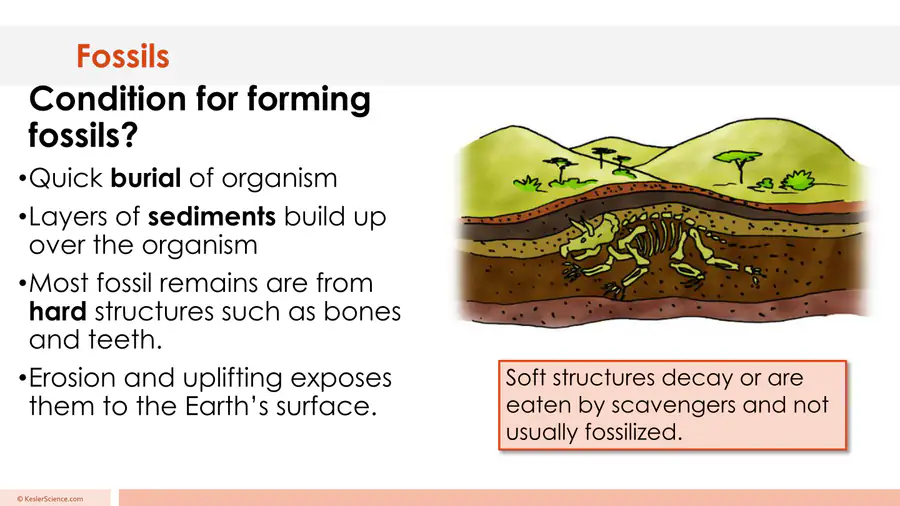
Which of these are conditions for forming fossils?

1

needs to be something large that will make an imprint

2

quick burial of organism

3

any creature can become a fossil

4

layers of sediment build up over organism

5

animals dies on top of sedimentary rock

5

media

6

Multiple Choice

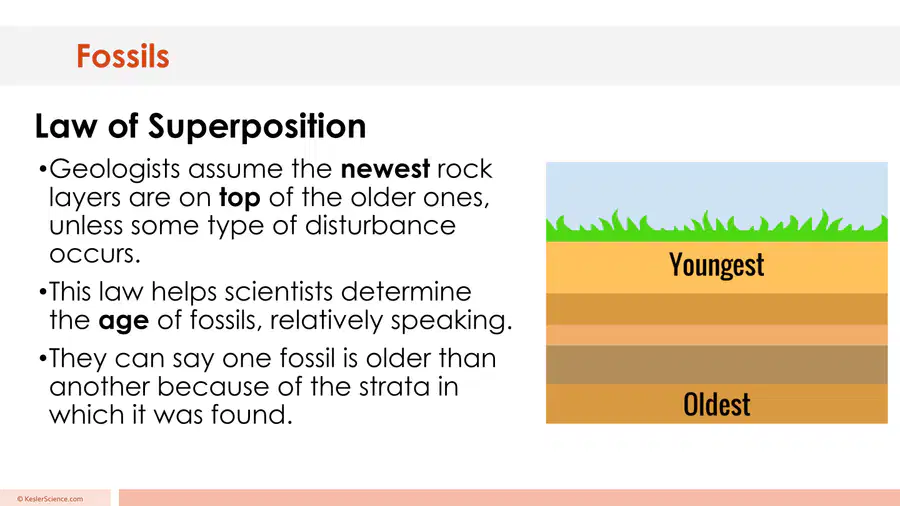
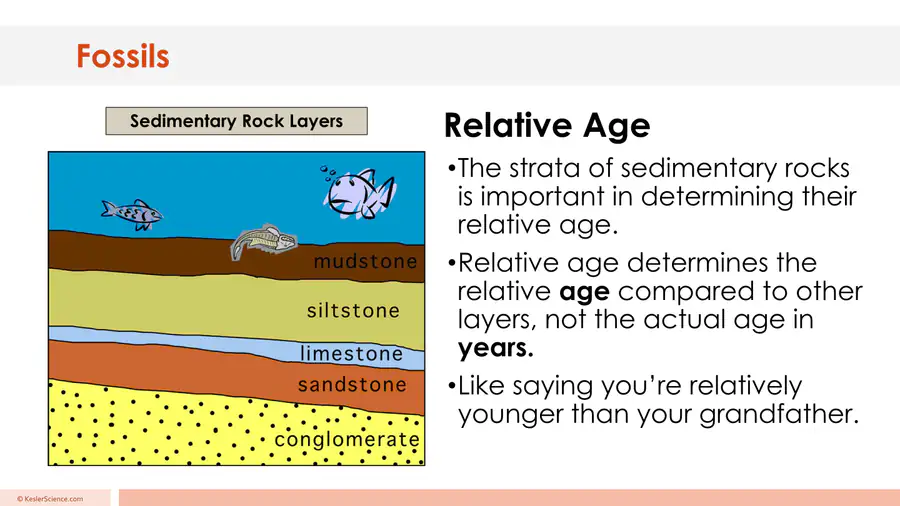
What is the law of superposition?

1
The oldest layers are at the top and the youngest are at the bottom.
2
All layers are formed simultaneously regardless of age.
3

The oldest layers are at the bottom and the youngest are at the top.

4
Sedimentary layers are always horizontal and never tilted.

7

media

8

media

9

media

10

Multiple Choice

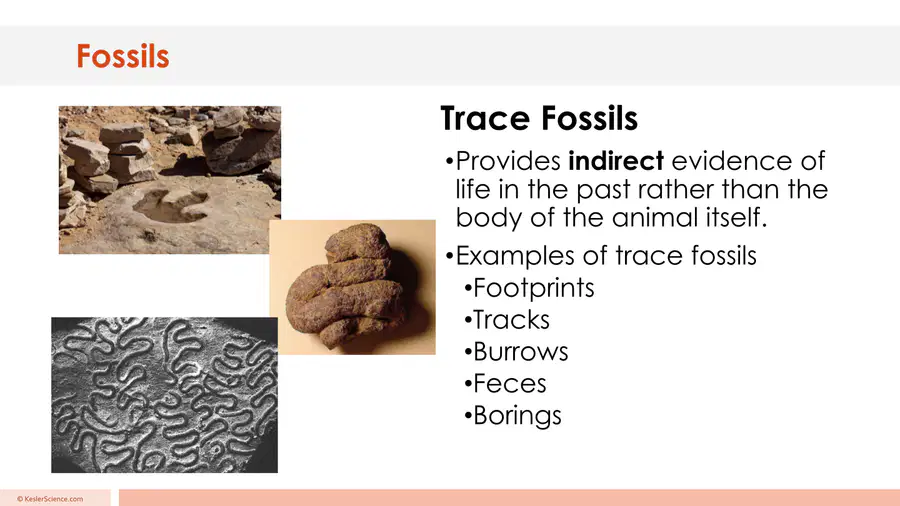
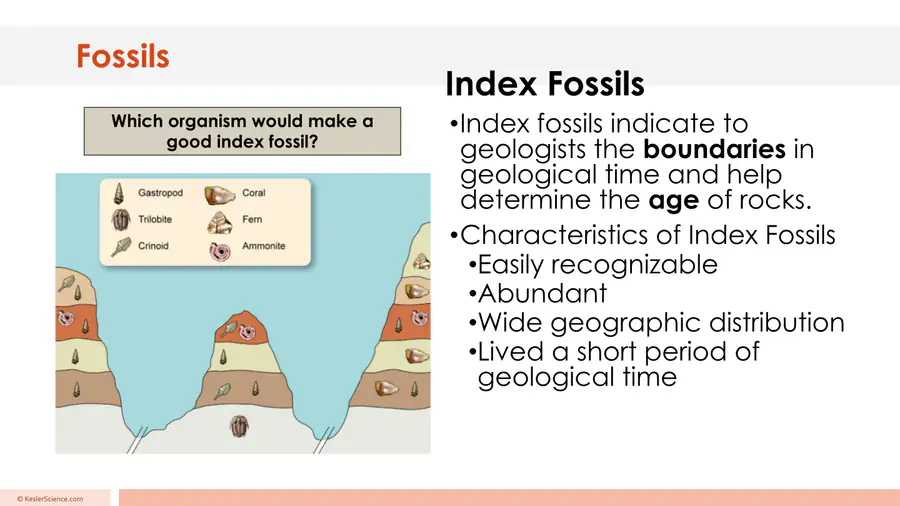
What is the difference between index fossils and trace fossils?

1
Index fossils are formed from preserved remains, while trace fossils are not.
2
Trace fossils are used for dating rock layers, while index fossils show organism activity.
3
Index fossils are found only in sedimentary rocks, while trace fossils can be found in all rock types.
4
Index fossils are used for dating rock layers, while trace fossils are evidence of organism activity.

11

media

12

media

13

media
media

14

Open Ended

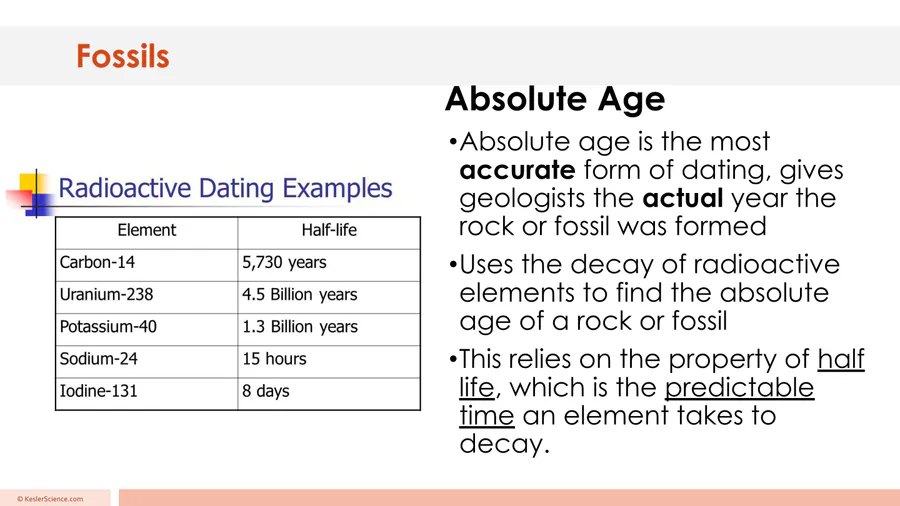
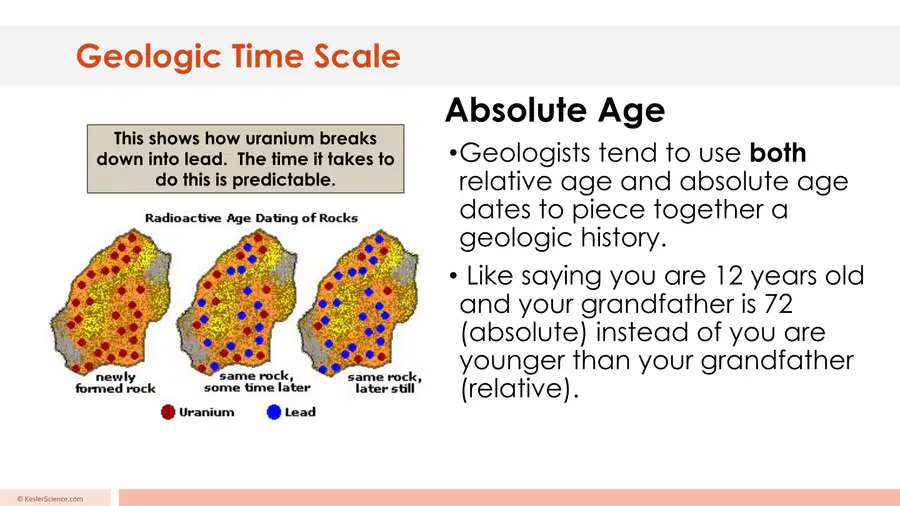
How do scientists determine the actual age of rocks?

15

media

16

Open Ended

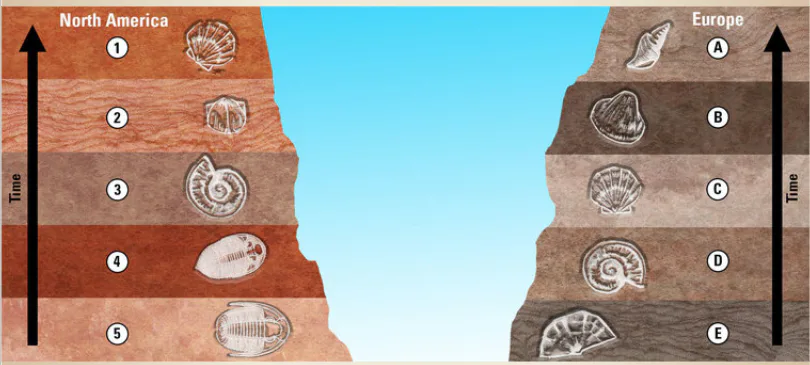
Question image

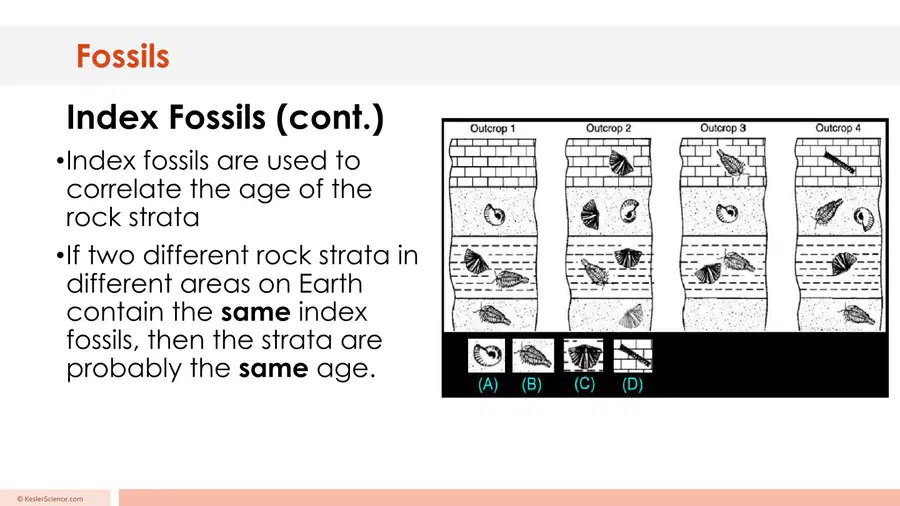
Which layers from North America are the same age as layers from Europe? Use the number or letter of the layer to identify it.

17

Multiple Choice

How is the layer of iridium used to tell the relative age of different rock strata and fossils?

1

The layer of iridium helps match which layers of rock are older than the meteor crash that deposited the iridium and which are younger.

2

The iridium shows scientists what was alive during that time.

3
The layer of iridium is found only in volcanic rock formations.
4
Iridium is used to date fossils directly through radiometric dating.
media

Show answer

Auto Play

Slide 1 / 17

SLIDE