
Texas High Biology EoC Review - Lewis
Presentation
•
Science
•
9th - 12th Grade
•
Practice Problem
•
Medium
+10
Standards-aligned
Christian Lewis
Used 19+ times
FREE Resource
43 Slides • 73 Questions
1
2
3
4
5
6
Multiple Choice
7
8
Multiple Choice
A cell wall...
is very soft and flexible
is very rigid, and supports the plant cell, giving it its shape
is the part that is inside the plant's nucleus
9
Multiple Choice
What is the structure that contains DNA and directs the cell?
endoplasmic reticulum
central vacuole
cell wall
nucleus
10
Multiple Choice
What organelle is called the "powerhouse" of a cell?
mitochondria
nucleus
cell wall
cell membrane
11
Multiple Choice
This organelle controls what goes in and out of plant and animal cells.
Cell Wall
Cell Membrane
Chloroplasts
Cytoplasm
12
Multiple Choice
13
Multiple Choice
The _____________ is a gel-like fluid that fills plant and animal cells. It holds the organelles in place and gives each cell its shape.
Cytoplasm
Cell Membrane
Cell Wall
Chloroplast
14
Multiple Choice
15
Multiple Choice
What is found on the outside of the rough er?
vacuoles
lysosomes
ribosomes
rough er
16
Multiple Choice
What is the large organelle filled with water that is found in plant cells?
lysosome
vacuoles
central vacuole
cell wall
17
Multiple Choice
this protects the nucleus
nucleolus
cell membrane
cell wall
nuclear membrane
18
Multiple Choice
collects, processes, and packages proteins for the cell
mitochondria
gogli apparatus
smooth ER
rough ER
19
Multiple Choice
Prokaryotes do NOT have....
membrane bound organelles
DNA or RNA
Cell membrane
Life
20
Multiple Choice
Which of the following is NOT a characteristic of a Prokaryotic cell?
unicellular
floating DNA
very small
complex
21
Multiple Choice
22
23
24
25
Match
Match the following images to correct solution
Hypertonic
Isotonic
Hypotonic
Hypertonic
Isotonic
Hypotonic
26
Match
Match the following transport image to the correct term
Simple diffusion
Facilitated Diffusion
Osmosis
Simple diffusion
Facilitated Diffusion
Osmosis
27
Multiple Choice
Cell membranes are described as selectively permeable.
Four students were asked to explain what this means. Which one is correct?
Student 1: Cell membranes prevent all materials from entering the cell.
Student 2: Cell membranes only provide structural support for the cell.
Student 3: Cell membranes regulate which substances can enter and exit the cell.
Student 4: Cell membranes allow water and water-soluble substances to enter the cell.
28
Multiple Choice
The sodium potassium pump uses ATP to transport sodium and potassium across the cell membrane into or out of the cell. Which of the following terms is best associated with the sodium potassium pump?
Passive Transport
Active Transport
Osmosis
Facilitated Diffusion
29
Multiple Choice
30
Multiple Choice
31
Multiple Choice
32
Multiple Choice
33
34
35
Multiple Choice
S Phase
Telophase
36
Multiple Choice
M Phase
Anaphase
Prophase
37
Multiple Choice
G1
S phase
G2
M Phase
Mitosis
38
Multiple Choice
During which part of the cell cycle does the cell grow?
G1
S phase
G2
Mitosis
M phase
39
Multiple Choice
Metaphase
40
Multiple Choice
To make the cell grow in size
41
Multiple Choice
Uncontrolled cell division which usually leads to tumors and disease is called:
High cholesterol
Blood clots
Cancer
Diabetes
42
43
Multiple Choice
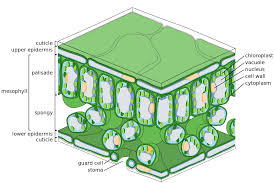
What is the function of the STOMATA in plants?
Allows water to enter the plant
Provides food to enter the plant
Allows for gas exchange
Site of photosynthesis
44
Multiple Choice
45
Multiple Choice
46
Multiple Choice
47
48
Multiple Choice
Why aren't viruses considered living things?
They aren't made of cells
They don't have DNA or RNA
They make us sick
They are made of protein
49
Explanation Slide...
VIruses are made of a protein capsule containing DNA or RNA. All living things are made of cells.
50
Match
Match the following pictures to their names:
Eukaryotic Cell
Prokaryotic Cell
Bacteriophage virus
Flu virus
Eukaryotic Cell
Prokaryotic Cell
Bacteriophage virus
Flu virus
51
Multiple Choice
What do bacteriophages infect?
Plants
Bacteria
Animals
Humans
52
Explanation Slide...
VIruses are specialized for which cells they infect. The bacteriophages can only infect bacteria, so they can't make us sick!
53
Multiple Choice
A virus that hides within the host cell for up to years is going through the _______ cycle.
Lytic
Lysogenic
54
Multiple Choice
A virus that goes through the ______ cycle will allow you to feel symptoms immediately due to the cells lysing.
Lytic
Lysogenic
55
56
Multiple Choice
Which biomolecules contains your genetic information?
Proteins
Lipids
Carbohydrates
Nucleic Acids
57
Multiple Choice
Which biomolecules act as stored energy storage for the cell and also cushions and insulates organs?
Carbohyrdates
Lipids
Proteins
Nucleic Acids
58
Multiple Choice
Which biomolecules provide quick energy for the cell?
Carbohydrates
Proteins
Lipids
Nucleic Acids
59
Multiple Choice
Which biomolecules transport oxygen and other substances and also form part of most organelles?
Lipids
Carbohydrates
Proteins
Nucleic Acids
60
61
62
63
64
65
66
67
Multiple Choice
Differences in traits such as hair texture are determined by differences in -
the location of sugar groups in DNA
the sequence of nucleotides in DNA
the number of nitrogenous bases in DNA
the molecules attached to the phosphate in DNA
68
Multiple Choice
In a Punnet Square, which letter is used to represent the dominant allele?
Capital letter
Lower-case letter
69
Multiple Choice
In a Punnet Square, which letter is used to represent the recessive allele?
Capital letter
Lower-case letter
70
Multiple Choice
The passing of traits from parent to offspring is called _____.
heredity
genetics
DNA Replication
photosynthesis
71
Multiple Choice
The branch of biology that focuses on heredity is called _______.
genetics
traits
translation
protein synthesis
72
73
74
75
Multiple Choice
76
Multiple Choice
77
Multiple Choice
In the punnett square below, what belongs in the missing square
78
Multiple Choice
The genotype for a yellow plant is...
79
Multiple Choice
In the punnett square, what is the probability for white fur?
80
Multiple Choice
81
Multiple Choice
82
Multiple Choice
83
84
85
86
87
Multiple Choice
What is a homologous structure?
having a body part that has no known function
similar structures in more than one organism because they evolved from a common ancestor
a structure that evolved to help an organism survive in their environment
similar structures that evolved independently in two living organisms to serve the same purpose
88
89
Multiple Choice
What is a vestigial structure?
having a body part that has no known function
similar structures in more than one organism because they evolved from a common ancestor
a structure that evolved to help an organism survive in their environment
similar structures that evolved independently in two living organisms to serve the same purpose
90
91
Multiple Choice
What is an adaptive structure?
having a body part that has no known function
similar structures in more than one organism because they evolved from a common ancestor
a structure that evolved to help an organism survive in their environment
similar structures that evolved independently in two living organisms to serve the same purpose
92
93
Multiple Choice
What is an analogous structure?
having a body part that has no known function
similar structures in more than one organism because they evolved from a common ancestor
a structure that evolved to help an organism survive in their environment
similar structures that evolved independently in two living organisms to serve the same purpose
94
95
Multiple Choice
What evidence do similarities between fossil bones and modern organisms provide?
species that face similar environmental pressure will develop similar traits.
homologous structures are evidence that the two species are related or shared a common ancestor
natural selection
adaptive structures help organisms survive in their habitat
96
97
Multiple Choice
98
99
Multiple Choice
100
101
Multiple Choice
102
103
Multiple Choice
These are living organisms that make the sun light’s energy into food.
Producers
Consumer
104
Multiple Choice
These animals are usually herbivores because they eat the producers.
Primary consumer
secondary consumer
105
Multiple Choice
Plants are also called by this term because they make their own food.
Predator
Autotrophs
106
Multiple Choice
107
108
Multiple Choice
109
Multiple Choice
110
Multiple Choice
111
Multiple Choice
A population of rabbits grows rapidly from one year to the next. Then one year, a disease strikes approximately one fourth of the adult rabbits. The disease remains with the population in the years that follow.
As explained by Darwin’s theory, which of these conditions allows the rabbit population to evolve by natural selection?
The disease affects adult and juvenile rabbits equally.
The disease reduces the ability of the rabbits to reproduce.
Some rabbits are resistant to the disease, and they pass the resistance to their offspring.
No rabbits are resistant to the disease, and all die when the disease strikes them.
112
Multiple Choice
What is the most likely explanation of the data shown below?
There has been a drought in the area that is affecting all life forms.
The population of natural predators of the moths has gotten smaller.
The moths are living in an environment with light trees.
The moths are living in an environment with dark trees.
113
114
115
116
Show answer
Auto Play
Slide 1 / 116
SLIDE

Similar Resources on Wayground
106 questions
Blood Type Mystery
Presentation
•
9th - 12th Grade
108 questions
Wildlife and Exotic Radiology
Presentation
•
KG - University
111 questions
Q1W3 ES Minerals Uses & Processing
Presentation
•
11th Grade
107 questions
Biology EOC Review 2
Presentation
•
9th - 10th Grade
106 questions
KEBEKERJAAN
Presentation
•
9th - 12th Grade
107 questions
ADV Unit 8 Notes
Presentation
•
9th - 12th Grade
105 questions
Cell cycle & cell division
Presentation
•
9th - 12th Grade
111 questions
Psych: Lesson-9/25/20
Presentation
•
9th - 12th Grade
Popular Resources on Wayground
20 questions
STAAR Review Quiz #3
Quiz
•
8th Grade
20 questions
Equivalent Fractions
Quiz
•
3rd Grade
6 questions
Marshmallow Farm Quiz
Quiz
•
2nd - 5th Grade
20 questions
Main Idea and Details
Quiz
•
5th Grade
20 questions
Context Clues
Quiz
•
6th Grade
20 questions
Inferences
Quiz
•
4th Grade
19 questions
Classifying Quadrilaterals
Quiz
•
3rd Grade
12 questions
What makes Nebraska's government unique?
Quiz
•
4th - 5th Grade
Discover more resources for Science
46 questions
Unit 4 Geosphere Test Review
Quiz
•
9th - 12th Grade
25 questions
Naming Ionic and Covalent Compounds
Quiz
•
9th Grade
20 questions
Human Impact on the Environment Review #2
Quiz
•
9th Grade
16 questions
Ecosystem Stability
Quiz
•
9th Grade
20 questions
Mendelian Genetics Review
Quiz
•
9th Grade
12 questions
Unit 6 Quiz #3 (Life Cycles of Stars)
Quiz
•
9th Grade
34 questions
Human Impact on Ecosystems Quiz
Quiz
•
9th Grade
10 questions
Exploring Alfred Wegener's Continental Drift Theory
Interactive video
•
6th - 10th Grade