Search Header Logo
Characteristics of Life Notes

Characteristics of Life Notes

Assessment

Presentation

•

Biology

•

9th Grade

•

Medium

•
NGSS
MS-LS4-4, HS-LS1-3, MS-LS4-2

+18

Standards-aligned

Created by

Jennings Jennifer

Used 4+ times

FREE Resource

54 Slides • 43 Questions

1

media

2

media

3

Fill in the Blank

.  _____________________ is an organized way of using evidence to learn about the natural world.

4

media

5

Drag and Drop

Observations usually involve the ​
.
Drag these tiles and drop them in the correct blank above
senses
scientists
interpretation
eyes
microscope

6

media

7

Multiple Select

Give an example of quantitative data.

1

Temperature in degrees Celsius.

2

Weight of an object in kilograms.

3

Height of a person in centimeters

4

Number of students in a classroom.

8

Multiple Choice

Is the color of a flower an example of quantitative or qualitative data?

1

quantitative

2

numerical

3

qualitative

4

measurable

9

Multiple Select

Give an example of quantitative data.

1

Temperature in degrees Celsius.

2

Weight of an object in kilograms.

3

Height of a person in centimeters

4

Number of students in a classroom.

10

Multiple Choice

Is the number of students in a class an example of quantitative or qualitative data?

1

discrete

2

qualitative

3

quantitative

4

categorical

11

Fill in the Blank

Observations or data that involve numbers are called _______ data.

12

Fill in the Blank

_____ data involve characteristics that cannot be easily measured or counted such as color or texture.

13

Multiple Choice

The basketball player has the number 11 on their jersey.

1

Quantitative

2

Qualitative

14

Multiple Choice

The liquid is a pink color.

1

Qualitative

2

Quantitative

15

Multiple Choice

I caught a fifteen foot shark.
1
Qualitative data
2
Quantitative data

16

Multiple Choice

The clouds are grey and ground is wet.

1

qualitative

2

quantitative

17

media

18

Open Ended

What type of statement should a hypothesis be?

19

media

20

media

21

media

22

media

23

media

24

Categorize

Options (9)
Question image
Question image
Question image
Question image
Question image
Question image
Question image
Question image
Question image

Place each organism under the correct heading

Unicellular
Multicellular
Colonial

25

media

26

media

27

media

28

Homeostasis in Cells

THE CELL (or plasma) MEMBRANE!

  • The cellular (or plasma) membrane is responsible for controlling substances entering and leaving its boundaries.

  • Hypertonic, Isotonic, and Hypotonic situations/solutions

  • Balance & Equilibrium

  • Water soluble and insoluble substance control

29

Homeostasis

Keeping "normal" conditions for survival

​

​Proper functioning of systems

​

​Maintaining Equilibrium

media

30

media

31

Homeostasis

Negative Feedback Loop

​-Nothing bad about this system

​-Simply moves back to a "normal" state

-Ex. If your body temperature rises to 103 degrees (F), and then returns to 98F hours later, that is movement in a "negative" direction...but totally normal!​

media

32

Open Ended

What is another example of a "negative feedback mechanism" in your body?

33

media

34

media

35

Homeostasis

Positive Feedback Loop

This mechanism results, usually, in a permanent change

​

It also is a push to a "completion" of something. Ex. pregnancy

​

​It's a change in the SAME direction, unlike NF, whereas the change goes back the other way

36

media

37

Multiple Choice

Which of those examples was a POSITIVE feedback loop?

1

The pregnant woman

2

Cut on arm

3

Blood pressure

4

Running a fever

38

Open Ended

Describe a recent experience you had with homeostasis in the past 24hrs:

39

media

40

media

41

Categorize

Options (4)
Question image
Question image
Question image
Question image

Organize the following into the correct category

Asexual
Sexual

42

media

43

media

44

Multiple Choice

How do you "win" at natural selection?

1

survive

2

go extinct

3

survive & reproduce

45

Multiple Choice

What word describes a trait that helps an organism survive in its environment?

1

natural selection

2

mutation

3

camouflage

4

adaptation

46

Multiple Choice

Which organisms are most likely to survive?
1
the best adapted
2
the fastest
3
the strongest
4
the most domesticated (tamed)

47

Multiple Choice

Question image
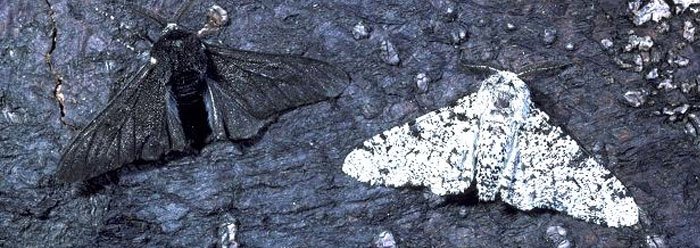
The trees these moths used to live on were white, but have been covered in soot from coal factories. Which moth will be more successful in this environment?
1
Dark moth
2
Light moth
3
Both will be equally successful
4
Neither will be successful

48

Multiple Choice

Question image
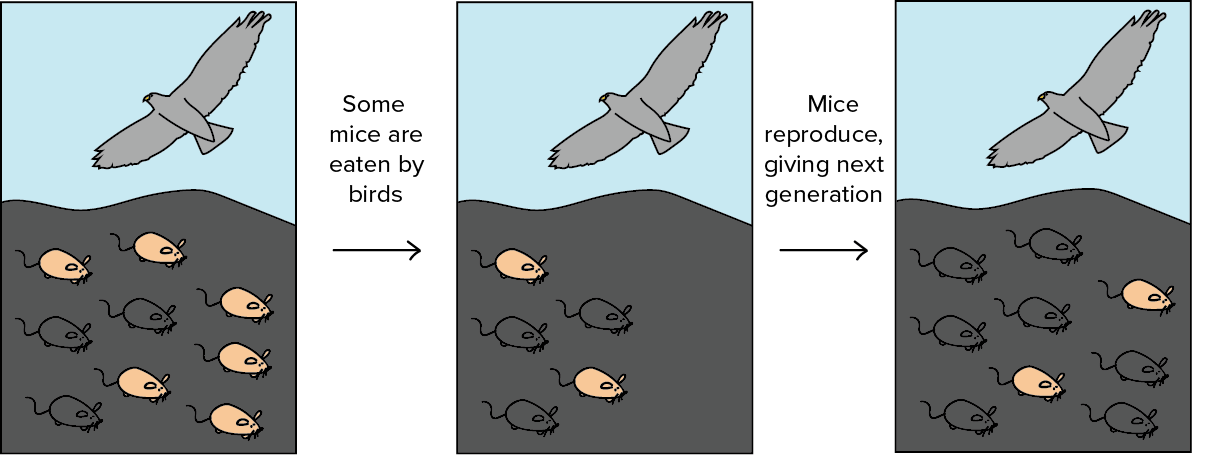
Why is the mouse population changing over time?
1
The light mice can reproduce more successfully than the dark mice
2
The hawks eat more dark mice than light mice because the dark mice taste better
3
The hawks eat more light mice than dark mice because they can see the light mice more easily
4
The hawks eat more dark mice than light mice because they can see the dark mice more easily

49

Multiple Choice

Question image
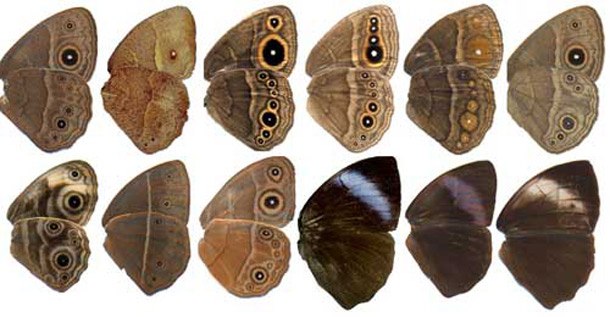
These moths are all the same species. The differences between their wings is an example of ________________
1
Natural Selection
2
Variation
3
Homeostasis
4
Extinction

50

Multiple Choice

When an organism of a species has an adaptation, it will compete for resources better, survive longer and pass that adaptation on to it's offspring. This process is called
1
evolution by natural selection
2
artificial selection
3
inbreeding
4
outbreeding

51

Multiple Choice

Which of the following explains adaptation.
1
An individual organism changes to meet its needs in the environment. These changes pass down to their offspring.
2
The species as a whole changes their characteristics.
3
Beneficial traits allow organism to survive and pass on those traits
4
New characteristics arise in a species as needed.  If these traits are helpful, they are passed down.

52

Multiple Choice

When an environment changes faster that an species can adapt, the most likely outcome is...
1
...biological evolution.
2
...voluntary mutation
3
...species extinction
4
...selective breeding

53

Multiple Choice

Evolution works by 
1

individuals changing to suit their environment

2

Individuals learned new traits and pass them on

3

no change in the environment cause a species change 

4

small changes passed down through many generations

54

Multiple Choice

Mutations are important because they bring about
1
death of the organism in which they develop
2
genetic variation needed for a population to evolve
3
benefits for the individual, not for the population
4
Hardey-Weinberg equilibrium within a population

55

Multiple Choice

What is another name for natural selection?
1
survival of the smartest
2
survival of the fastest
3
survival of the biggest
4
survival of the fittest

56

Multiple Choice

Question image
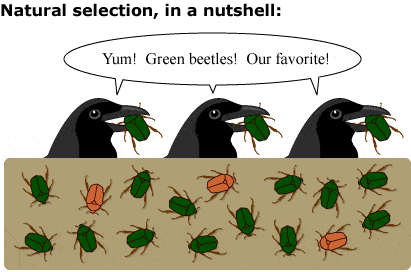
Which of the following is a factor in natural selection?
1
Individuals of species compete with one another to survive.
2
All species are genetically diverse.
3
Individuals better able to adapt to changes leave more offspring.
4
All are correct 

57

Multiple Choice

Charles Darwin observed that finches of different species on the Galápagos Islands have many similar physical characteristics, this supports the hypothesis that these finches

1

are twins

2

acquired traits through use and disuse.

3

all eat the same type of food.

4

descended from a common ancestor.

58

media

59

media

60

media

61

media

62

media

63

media

64

Multiple Choice

Question image
Cattle egrets forage (feed) in fields among cattle. The egret gets easy access to flying insects stirred up by the cattle, and the cattle don't care if they are there or not.
1
mutualism
2
commensalism
3
competition
4
parasitism

65

Multiple Choice

Question image

-

1

Predation, because the ants feed on the fungi

2

Mutualism, because both the ants and the fungi benefit from each other

3

Competition, because both organisms consume the same resource for energy

4

Commensalism, because the ants receive energy from the fungi and the fungi are unaffected

66

Multiple Choice

Question image

The acacia ant nests and feeds in the plant’s hollow thorns. The ant helps protect the bullshorn acacia by attacking insects and grazing animals that come near the plant. The relationship between the acacia ant and the bullshorn acacia is an example of which of the following?

1

Commensalism

2

Mutualism

3

Neutralism

4

Parasitism

67

Multiple Choice

Question image
a relationship that occurs when two or more organims of the same species need the same resource at the same time
1
competition
2
symbiosis
3
predation

68

media

69

media

70

media

71

media

72

Multiple Select

What are autotrophs

1

organisms that produce their own food

2

producers

3

organisms that consume what they eat

4

consumers

73

Multiple Choice

Where does the energy flow start in an ecosystem?

1

autotrophs

2

heterotrophs

3

the sun

74

Poll

What is the process that plants use to obtain energy?

Tell me how in the chat...

Photosynthesis

Cellular Respiration

75

Multiple Choice

The same atoms can cycle constantly between photosynthesis and cellular respiration.

1

True

2

False

76

media

77

media

78

media

79

media

80

media

81

media

82

media

83

media

84

media

85

media

86

Multiple Choice

Before the 19th century if you asked an educated person "where does new life come from?' they would probably say....

1

From other life

2

From vital forces in the air, water, and Earth.

87

Multiple Choice

Today...Biogenesis replaces Spontaneous Generation..."life comes

1

from the vital force

2

from a super being

3

from pre-existing life

4

from inorganic material

88

Multiple Choice

__________ is the theory that living things come from other living things.

1

biogenensis

2

spontaneous generation

3

cell theory

4

evolution

89

media

90

media

91

media

92

media

93

media

94

media

95

media

96

media

97

media
media

Show answer

Auto Play

Slide 1 / 97

SLIDE