Genetics and Punnett Squares Review - HMS Demo Lesson
Presentation
•
Science
•
6th - 8th Grade
•
Practice Problem
•
Hard
Standards-aligned
Alexis Charles
FREE Resource
18 Slides • 20 Questions
1
Genetics and Punnett Squares Review
Hicksville Middle School Demo Lesson
By Miss A. Charles
2
I can define vocabulary words associated with Punnett squares.
I can use academic vocabulary words in the context of analyzing Punnett squares.
Language Objective
I can recall key vocabulary terms to assess my understanding of genetics.
I can analyze a monohybrid cross using a Punnett square.
Monday June 9th Learning Objectives
Content Objective
3
Monday June 9th Learning Objectives
Puedo definir palabras de vocabulario asociadas con los cuadrados de Punnett.
Puedo usar palabras de vocabulario académico en el contexto de analizar los cuadrados de Punnett.
Objetivo Del Lenguaje
Puedo recordar términos clave del vocabulario para evaluar mi comprensión de la genética.
Puedo analizar un cruce monohíbrido usando un cuadrado de Punnett.
Objetivo De La Ciencia
4
First, let's start our review by defining these key terms necessary for Punnett square analysis.
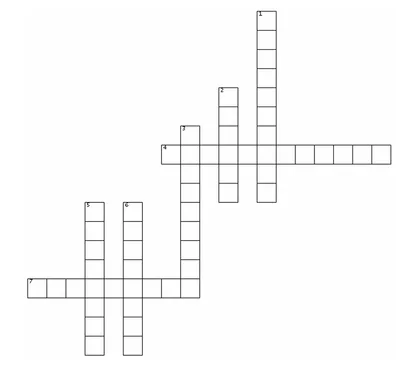
Direction: After each vocabulary review question, write down the answer on your crossword puzzle. Después de cada pregunta de repaso, escribe la respuesta en tu crucigrama.
Allele/Alelo
Dominant/Dominante
Recessive/Recesivo
Homozygous/Homocigoto
Heterozygous/Heterocigoto
Genotype/Genotipo
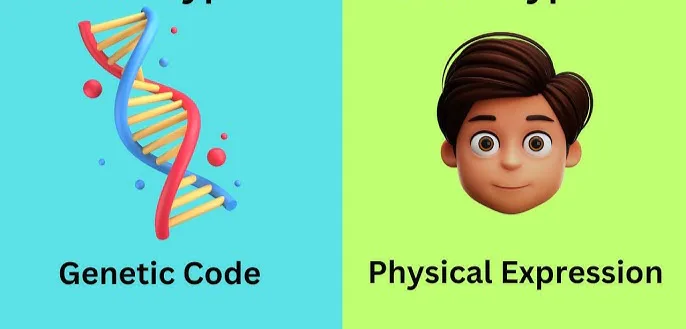
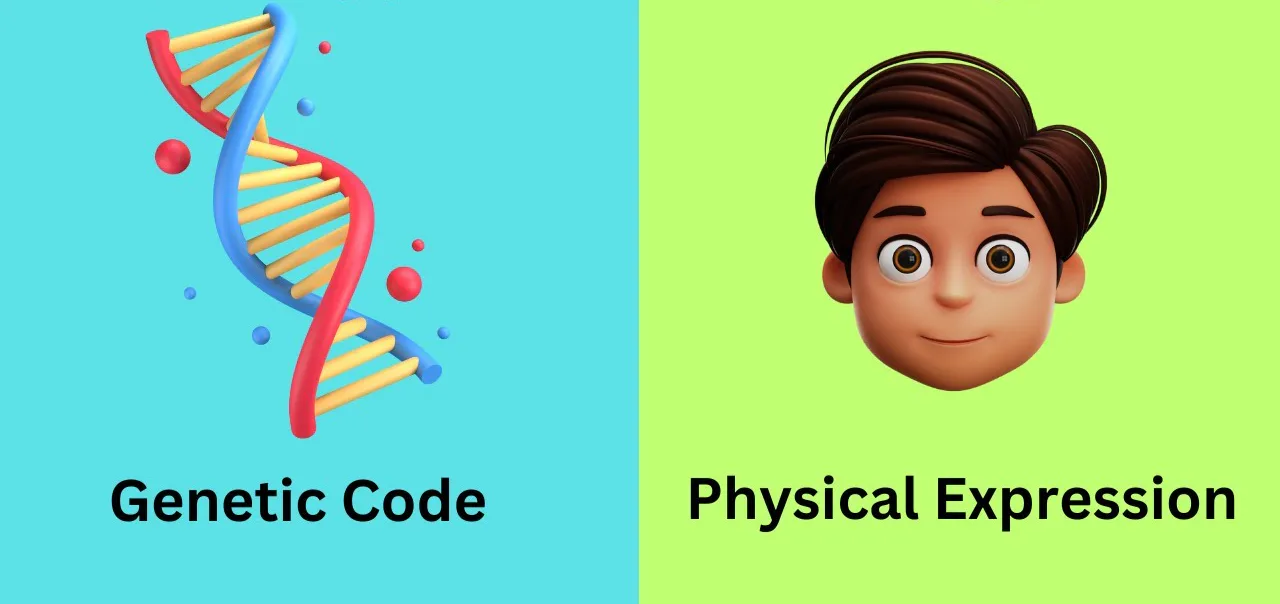
Phenotype/Fenotipo
Key Vocabulary - Vocabulario Clave
5
Multiple Choice
Choose the word that best matches the following definition: This is when both alleles of a gene are the same. Think about a purebred. Esto es cuando ambos alelos de un gen son iguales. Piensa en un caballo de raza pura.
homozygous
heterzygous
dominant
recessive
6
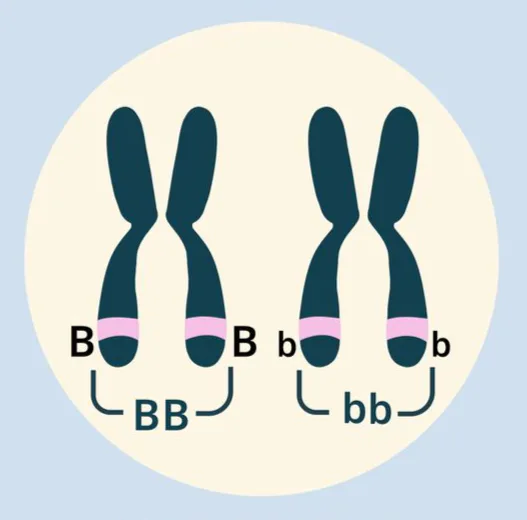
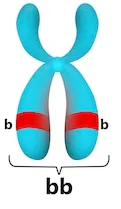
This is when both alleles of a gene are the same. Think about a purebred.
Esto es cuando ambos alelos de un gen son iguales. Piensa en un caballo de raza pura.
1-Down
h
o
m
o
z
y
g
o
u
s
7
Multiple Choice
Choose the word that best matches the following definition: This is an alternative form of a gene. When they are dominant, they are represented with capital letters and when they are recessive, they are represented with lowercase letters. Esta es una forma alternativa de un gen.
genoptype
chromosome
allele
gene
8
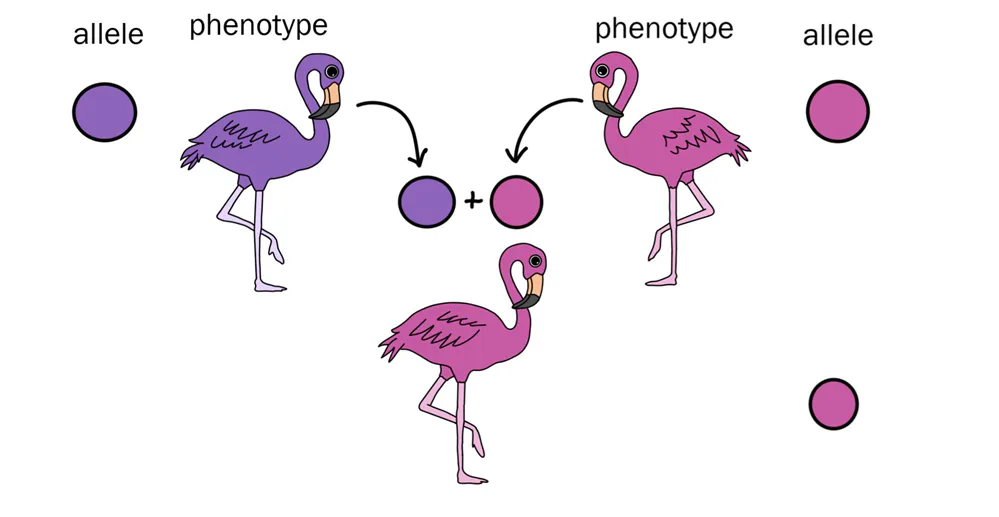
This is an alternative form of a gene. When they are dominant, they are represented with capital letters and when they are recessive, they are represented with lowercase letters.
Esta es una forma alternativa de un gen.
2-Down
h
o
m
o
z
y
g
o
u
s
A
l
l
e
l
e
9
Multiple Choice
Choose the word that best matches the following definition: This type of allele is only expressed if there are two of the same alleles present. You need two of these alleles to result in the corresponding phenotype. Este tipo de alelo solo se expresa si hay dos alelos iguales presentes.
dominant
recessive
strong
weak
10
This type of allele is only expressed if there are two of the same alleles present.
Este tipo de alelo solo se expresa si hay dos alelos iguales presentes.
3-Down
h
o
m
o
z
y
g
o
u
s
A
l
l
e
l
e
r
e
c
e
s
s
i
v
e
11
Multiple Choice
Choose the word that best matches the following definition: This is when the alleles of a gene are different. Think about a hybrid because they carry two forms of the gene. Esto es cuando los alelos de un gen son diferentes. Piense en un híbrido porque porta dos formas del gen.
homozygous
heterozygous
polygenic
pleiotropy
12
This is when the alleles of a gene are different.
Esto es cuando los alelos de un gen son diferentes.
4-Across
h
o
m
o
z
y
g
o
u
s
A
l
l
e
l
e
r
e
c
e
s
s
i
v
e
h t r z y g o u s
13
Multiple Choice
Choose the word that best matches the following definition: This type of allele is always expressed if it is present. You only need one of these alleles to have its corresponding phenotype. Este tipo de alelo siempre se expresa si está presente. Solo necesitas que uno de estos alelos tenga su fenotipo correspondiente.
Strong
Weak
Recessive
Dominant
14
This type of allele is always expressed if it is present. You only need one of these alleles to have its corresponding phenotype.
Este tipo de alelo siempre se expresa si está presente.
5-Down
h
o
m
o
z
y
g
o
u
s
A
l
l
e
l
e
r
e
c
e
s
s
i
v
e
h t r z y g o u s
d
o
m
i
n
a
n
t
15
Multiple Choice
Choose the word that best matches the following definition: This describes the alleles that an organism contains. Describe los alelos que contiene un organismo.
Genotype
Phenotype
Gene
DNA
16
This describes the alleles that an organism contains.
Describe los alelos que contiene un organismo.
6-Down
h
o
m
o
z
y
g
o
u
s
A
l
l
e
l
e
r
e
c
e
s
s
i
v
e
h t r z y g o u s
d
o
m
i
n
a
n
t
g
e
n
o
t
y
p
e
17
Multiple Choice
Choose the word that best matches the following definition: This describes the physical characteristics displayed by an organism. This is the physical end result of your genes. Describe las características físicas que muestra un organismo. Este es el resultado final físico del genotipo.
Genotype
Phenotype
Trait
Characteristic
18
This describes the physical characteristics displayed by an organism. This is the physical end result of the genotype.
Describe las características físicas que muestra un organismo.
7-Across
h
o
m
o
z
y
g
o
u
s
A
l
l
e
l
e
r
e
c
e
s
s
i
v
e
h t r z y g o u s
d
o
m
i
n
a
n
t
g
e
n
o
t
y
p
e
p h e o y p
19
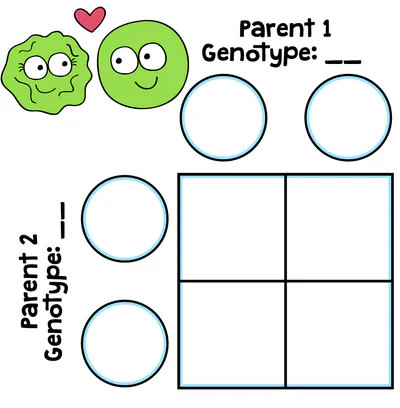
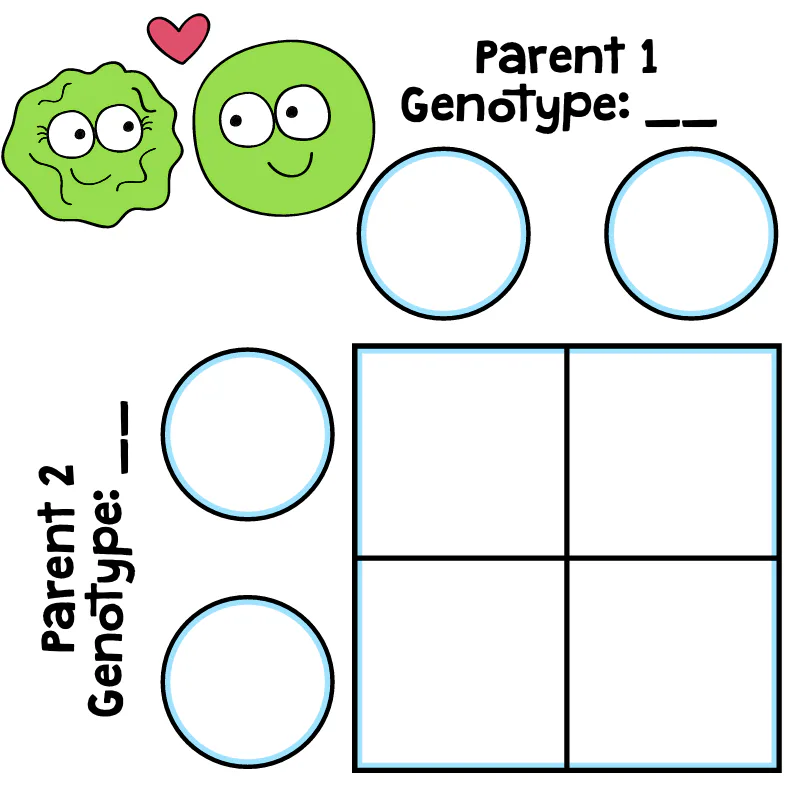
Use the information given to work out the parent genotypes and fill them in.
Each parent can only pass on one allele to their offspring. Split up each parents alleles along the sides of the Punnett square.
Read across and down to work out the possible offspring genotypes in each quarter of the square.
Now work out the phenotypes for each genotype that is in the square.
Finally, work out the probability of each phenotype. This can be given as a percentage, fraction, number, or as a ratio!
Follow these steps to use a Punnett square!
20
Question: Smooth peas are dominant over wrinkled peas. A heterozygous pea plant is crossed with a homozygous recessive pea plant. Work out the probability of each offspring genotype and phenotype for this trait using a Punnett square. Use the letter "S" to represent the alleles.
Follow these steps to use a Punnett square!
21
Categorize
Ss
SS
ss
Match the following genotypes to the phenotype that is produced according to our example about smooth and wrinkled peas. Remember, the smooth allele is dominant!
22
Question: Smooth peas are dominant over wrinkled peas. A heterozygous pea plant is crossed with a homozygous recessive pea plant. Work out the probability of each offspring genotype and phenotype for this trait using a Punnett square. Use the letter "S" to represent the alleles.
1. Parent 1 is heterozygous; therefore, their genotype is "Ss". This parent is smooth. Parent 2 is homozygous recessive; therefore, their genotype is "ss."
2. Parent 1's alleles will go across the top of the Punnett square and Parent 2's alleles will go down the side of the Punnett square.
3. Bring each of the alleles down and across to fill out the Punnett square.
4. Now we need to work out the phenotypes. Our Punnett square contains two genotypes, "Ss" and "ss." Based on the information from the question, we know that "Ss" results in a smooth pea, since smooth is dominant. "ss" results in wrinkled peas since wrinkled peas are recessive.
5. For the probability, we can see that 2 of the four boxes contain the genotype "Ss" and we can see that two of the four boxes contain the genotype "ss." The probability of smooth peas is 1/2 or 50%. The probability of wrinkled peas is 1/2 or 50%.
Follow these steps to use a Punnett square!
Ss
ss
S
s
s
s
s
s
s
s
s
s
S
S
23
Multiple Choice
What is the probability that the new baby peas will be smooth?
100%
0%
50%
75%
24
Multiple Choice
What is the probability that the new baby peas will be wrinkled?
100%
0%
50%
75%
25
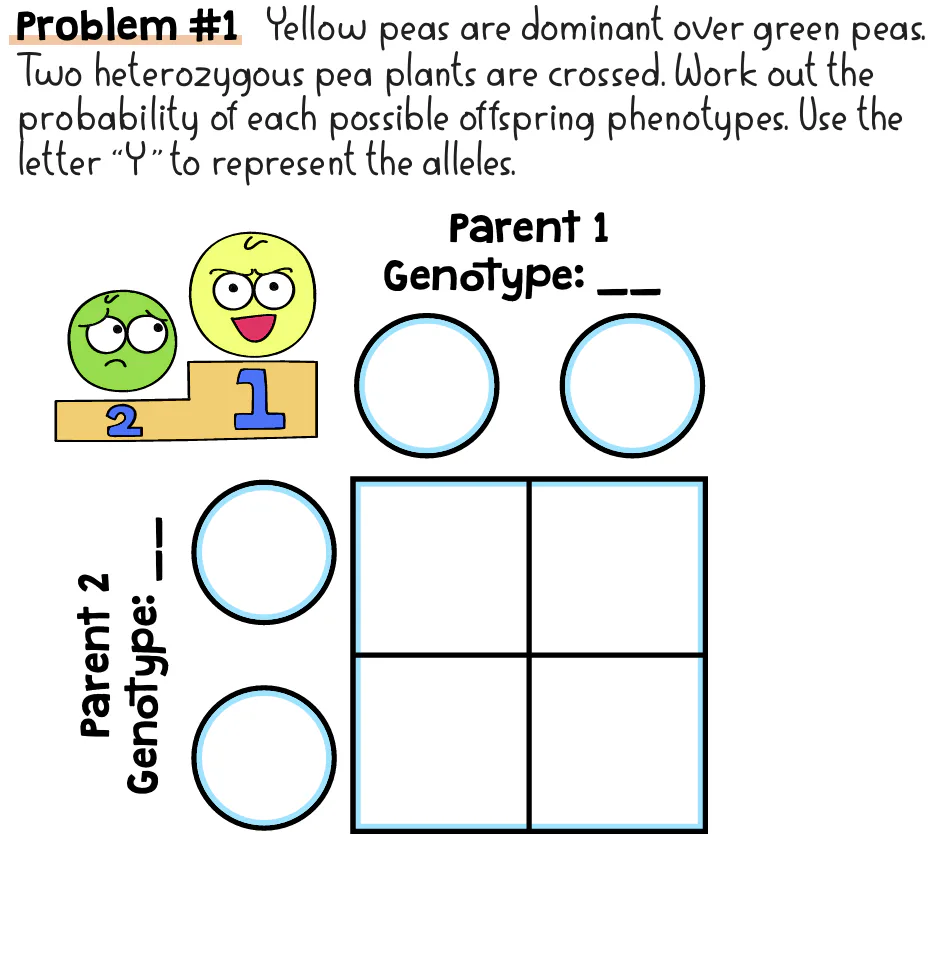
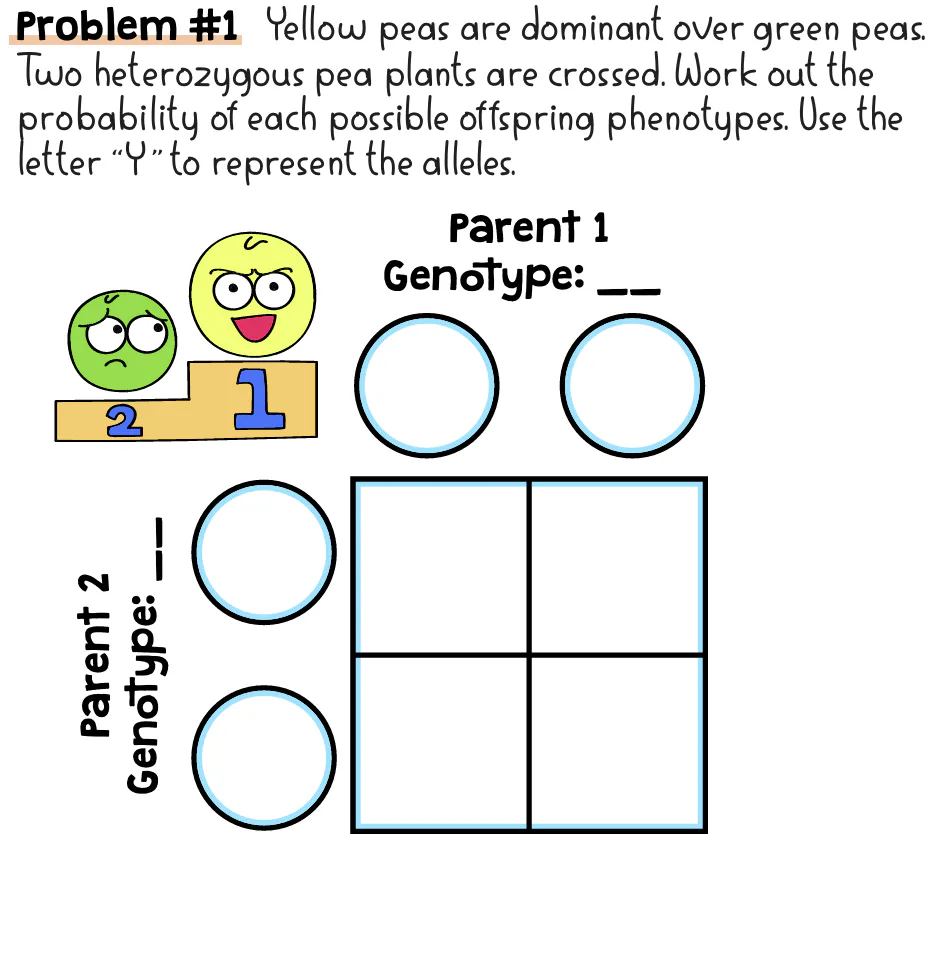
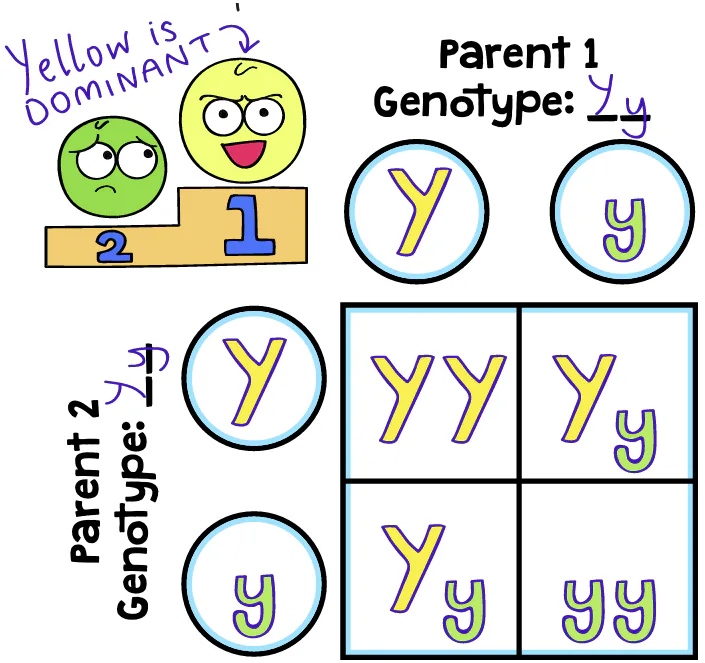
Work out the parent genotypes.
Write the parent alleles along the top and sides of the square.
Read across and down to work out the possible offspring genotypes in each quarter of the square.
Remember the steps to solving a Punnett Square!
26
Multiple Choice
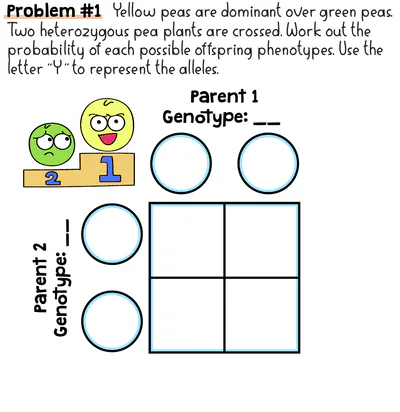
According to the problem, two heterozygous pea plants are crossed. What is the genotype of both parent plants?
YY
Yy
yy
27
Multiple Choice
According to the problem, which allele is dominant?
Green is dominant!
Yellow is dominant!
28
Work out the parent genotypes.
Write the parent alleles along the top and sides of the square.
Read across and down to work out the possible offspring genotypes in each quarter of the square.
Remember the steps to solving a Punnett Square!
Yy
Yy
Y
Y
y
y
Y
Y
Y
Y
y
y
y
y
29
"YY" and "Yy" produce yellow peas. "yy" produces green peas.
"YY" 1/4, "Yy" 2/4 -> 1/2, "yy" 1/4
Now we need to work out the phenotype and genotype probability.
Yy
Yy
Y
Y
y
y
Y
Y
Y
Y
y
y
y
y
30
Multiple Choice
What is the probability that the new baby peas will be yellow? ¿Cuál es la probabilidad de que los nuevos guisantes tiernos sean amarillos?
1/4 or 25%
1/2 or 50%
3/4 or 75%
100% They will all be yellow because its dpminant.
31
Multiple Choice
What is the probability that the new baby peas will be green? ¿Cuál es la probabilidad de que los nuevos guisantes tiernos estén verdes?
1/4 or 25%
1/2 or 50%
3/4 or 75%
100% They will all be yellow because its dpminant.
32
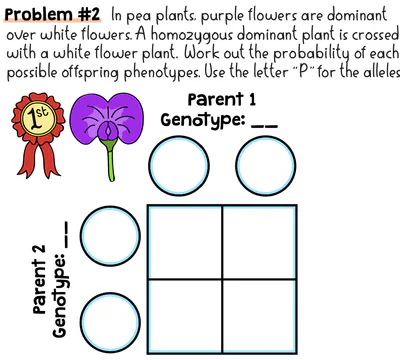
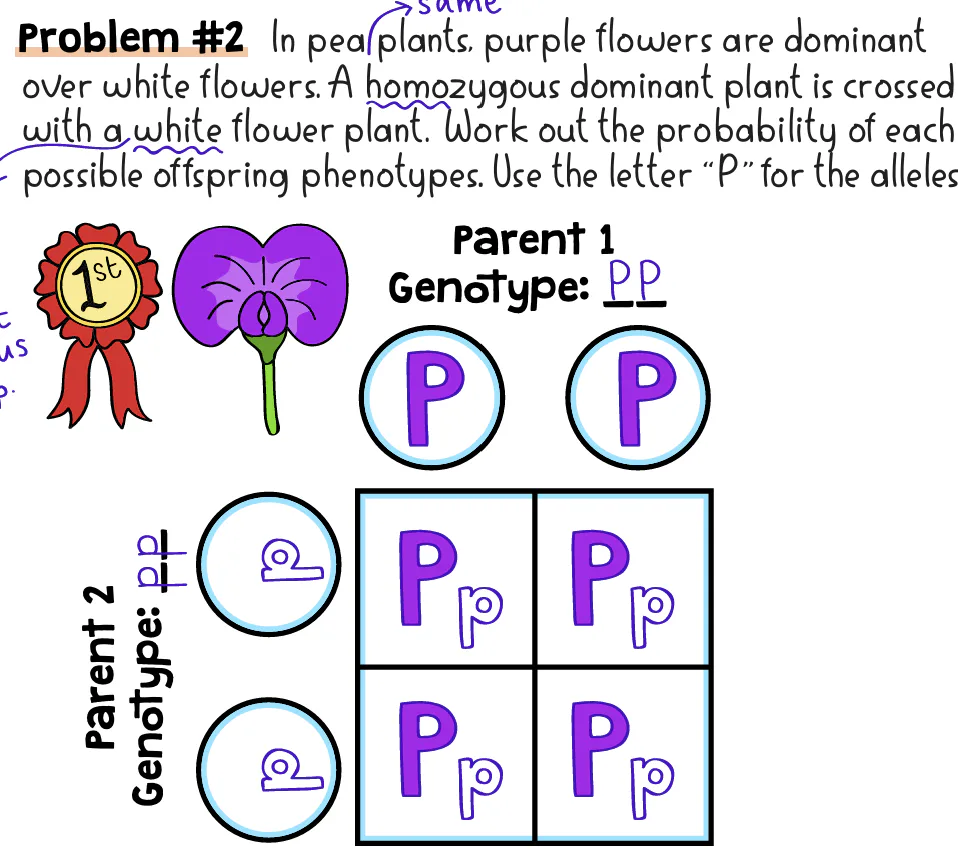
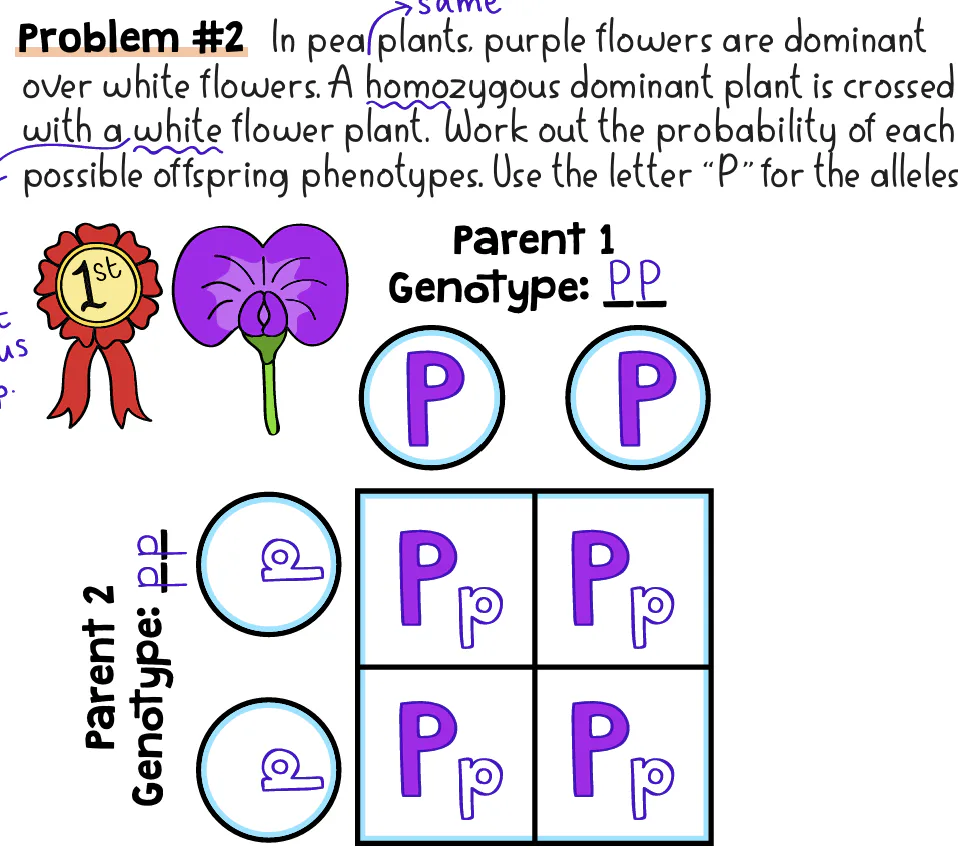
Both parents are homozygous. One is homozygous dominant PP and the other is recessive pp.
Ambos padres son homocigotos. Uno es el PP homocigoto dominante y el otro es el PP recesivo.
Solve this Punnett square on a piece of paper
33
Multiple Choice
There is only one possible genotype for the baby pea plants. What is it? Solo hay un genotipo posible para las plantas de guisantes. ¿Qué es?
PP
Pp
pp
34
Multiple Choice
What is the probability that the new baby pea plants will have purple flowers? ¿Cuál es la probabilidad de que las nuevas plantas de guisantes baby tengan flores moradas?
0%, they will all be white (todos blanco)
50%, Some will be white and some will be purple. (algunas morado)
75%, most of them will be purple because it's dominant.
100%, all of the flowers will be purple! (todos morado)
35
Multiple Choice
A heterozygous yellow pea plant's genotype would be... El genotipo de una planta de guisante amarillo heterocigótico sería...
36
Multiple Choice
In the Punnett square shown, what must the genotype of the missing parent be? En el cuadrado de Punnett que se muestra, ¿cuál debe ser el genotipo del progenitor desaparecido?
37
Multiple Choice
B - black, b - brown. Two black mice mate and have some black and some brown mice. What is the genotype of the parents? B - negro, b - marrón. Dos ratones negros se aparean y tienen algunos ratones negros y otros marrones. ¿Cuál es el genotipo de los padres?
38
Multiple Choice
What ratio of the offspring from the cross shown will be homozygous recessive for the trait of tallness? ¿Qué proporción de la descendencia de la cruza mostrada será homocigota recesiva para el rasgo de altura?
Genetics and Punnett Squares Review
Hicksville Middle School Demo Lesson
By Miss A. Charles
Show answer
Auto Play
Slide 1 / 38
SLIDE

Similar Resources on Wayground
32 questions
Unit 5 Topic 3 and 4
Presentation
•
6th - 8th Grade
31 questions
Atmosphere, Clouds, Water Cycle
Presentation
•
6th - 8th Grade
31 questions
Energy Transfer
Presentation
•
6th - 8th Grade
31 questions
Solutions
Presentation
•
6th - 8th Grade
34 questions
Balanced/Unbalanced Forces
Presentation
•
6th - 8th Grade
35 questions
Force of Gravity
Presentation
•
6th - 8th Grade
35 questions
Volcanoes and Earthquakes
Presentation
•
6th - 8th Grade
35 questions
Endothermic and Exothermic
Presentation
•
6th - 8th Grade
Popular Resources on Wayground
10 questions
Fire Safety Quiz
Quiz
•
12th Grade
20 questions
Equivalent Fractions
Quiz
•
3rd Grade
20 questions
Main Idea and Details
Quiz
•
5th Grade
20 questions
Context Clues
Quiz
•
6th Grade
20 questions
Inferences
Quiz
•
4th Grade
36 questions
6th Grade Math STAAR Review
Quiz
•
6th Grade
19 questions
Classifying Quadrilaterals
Quiz
•
3rd Grade
12 questions
What makes Nebraska's government unique?
Quiz
•
4th - 5th Grade
Discover more resources for Science
20 questions
8th Grade Science STAAR Review
Quiz
•
8th Grade
8 questions
Amoeba Sister Asexual vs Sexual Reproduction
Interactive video
•
8th Grade
19 questions
Introduction to Properties of Waves
Presentation
•
6th - 8th Grade
16 questions
Interactions within Ecosystems
Presentation
•
6th - 8th Grade
68 questions
8th Grade Physical Science GMAS Challenge
Quiz
•
8th Grade
20 questions
Rocks and The Rock Cycle
Quiz
•
6th Grade
20 questions
genetics, punnett squares, heredity
Quiz
•
7th Grade
16 questions
Photosynthesis and Cellular Respiration Review
Quiz
•
7th Grade