

Infection

Presentation
•
Other
•
University
•
Practice Problem
•
Medium

Joseph Chamness
Used 3+ times
FREE Resource
24 Slides • 7 Questions
1
Infection
2
3
Multiple Choice
What is the best description of normal flora in the human body?
4
Multiple Choice
What does “virulence” refer to?
The ability of a microorganism to cause disease or damage in the host
5
Multiple Choice
Which of the following is a local (rather than systemic) sign of infection?
6
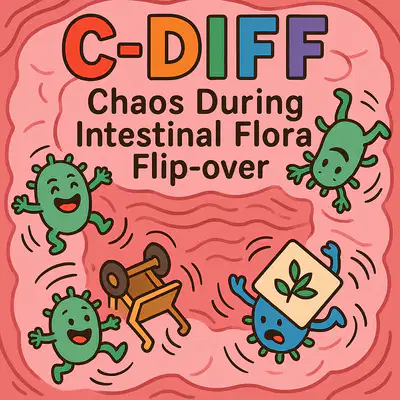
Antibiotic-induced invader that dumps toxins and floods you with diarrhea.
C. diff: the Gut Disruptor
7

ANTIBIOTICS ⇢ Flora wipeout ⇢ C. diff blooms.
Toxin A = “Attack” (inflammation & fluid).
Toxin B = “Big Bad Breaker” (deeper mucosal damage).
Visualize A as acid splashing the lining, B as a bulldozer tearing it up.
Pathophysiology → Toxins Tag-Team
8
Fecal-oral spores = glitter gone wild – stick to skin, sheets, doorknobs, stethoscopes.
Heat-tough, alcohol-proof. Soap & water or bleach-based cleaners only.
Clinical mantra: If it’s C. diff, scrub, gown, glove, and wipe down twice.
Transmission → “Spores Score”

9

Antibiotics (broad-spectrum)
Aged >65 yrs
Admission (hospital/LTC)
Abnormal immunity (chemo, steroids)
History of C. diff = bullseye for relapse
Risk Factors → “4 A’s + 1 H”
10


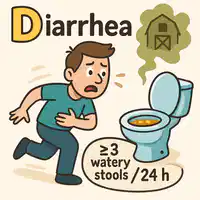
≥ 3 watery stools/24 h, barn-yard odor
Diarrhea
crampy, tender belly
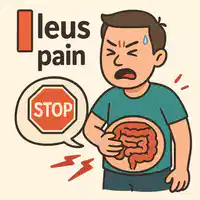
Ileus
Elevated WBCs (leukocytosis)
Fever & fight-back
sudden quiet belly + distension → suspect toxic megacolon!
red Flag
Signs & Symptoms
11

Flush isolation-gown, gloves, soap & bleach
Antibiotic (Vancomycin)
Support: IV fluids, NO Loperamide
Trouble : Relapse- fecal transplant; Megacolon go to surgery
Tx-FAST
Dehydration/electrolyte crash
Ileus-Toxic Megacolon
Colon Perforation - Sepsis
Elderly - high risk mortality
Major Complications - DICE
Management & Complication: Treat FAST, Dodge DICE

12
Multiple Select
A 78-year-old man was admitted for community-acquired pneumonia and has received IV piperacillin-tazobactam for 6 days. Today he reports abdominal cramping and has had four foul-smelling, watery stools since 0400. Which interventions should the nurse implement immediately? (Select all that apply.)
Place the patient on contact precautions with gown and gloves
Initiate enteric isolation and move the patient to a negative-pressure room
Obtain a stool sample for C. difficile toxin PCR testing
Administer loperamide 4 mg PO now and repeat every 6 h PRN
Begin oral vancomycin after the stool specimen is collected
13
Multiple Choice
The nurse is caring for four patients with confirmed C. difficile infection. Which patient requires assessment first?
A 66-year-old with 101.1 °F (38.4 °C) fever and mild diffuse abdominal pain
A 59-year-old complaining of tenesmus and passing small amounts of bloody mucus
A 72-year-old who has received two liters of IV fluids and now shows a serum potassium of 3.2 mEq/L
A 70-year-old with abdominal distension, hypoactive bowel sounds, and heart rate 128 bpm
14
Multiple Choice
An oncology client receiving high-dose steroids and broad-spectrum antibiotics develops profuse diarrhea. The clinician orders oral metronidazole 500 mg every 8 hours. Twelve hours later the patient’s WBC climbs from 12,000 → 28,000 /mm³, and lactate is 3.6 mmol/L. Which nursing action is most appropriate?
Notify the provider to escalate therapy to oral fidaxomicin or vancomycin
Administer loperamide 4 mg now to reduce stool output
Prepare for emergent total abdominal colectomy
Draw repeat blood cultures and continue current therapy for 24 hours
15
Multiple Select
A client is being discharged after a second episode of C. difficile infection treated with oral vancomycin. Which discharge instructions should the nurse include to reduce the risk of a third recurrence? (Select all that apply.)
Avoid proton-pump inhibitors unless absolutely necessary.
Take OTC loperamide at the first sign of loose stool.
Complete the entire antibiotic course exactly as prescribed.
Use alcohol-based hand rubs for at least 30 seconds after each bathroom use
Ask your provider about fecal microbiota transplantation if another relapse occurs.
16

One-liner: Ascending UTI that torches the renal pelvis & cortex.
“PYELO = Painful Yank of E. coli Landing On Kidneys.”
Acute vs chronic - Uncomplicated vs complicate
Pyelo: Kidney on Fire
17
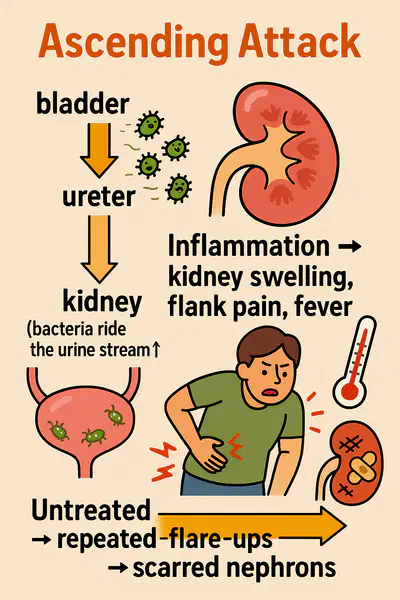
Bladder → ureter → kidney (bacteria ride the urine stream ↑)
Inflammation ⇒ kidney swelling, flank pain, fever
Untreated ⇢ repeated flare-ups ⇢ scarred nephrons
Pathophysiology → “Ascending Attack”
18

Flank/CVA pain ★ hallmark
Fever > 38 °C & chills (N/V)
Lower UTI trio: dysuria, urgency, frequency
Elderly = confusion, malaise > classic pain
Signs & Symptoms “Fever + Flank = Pyelo”
19
Replace this with your body text. All provided templates can be reused multiple times.
Have a nice day. Happy teaching!
Spot (S/S + Labs)
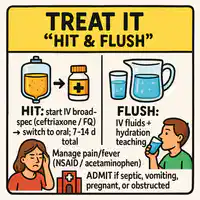
HIT: start IV broad-spec (ceftriaxone / FQ) → switch to oral; 7-14 d total
FLUSH: IV fluids + hydration teaching
Manage pain/fever (NSAID/acetaminophen)
Admit if septic, vomiting, pregnant, or obstructed
Treat It (“Hit & Flush”)
Replace this with your body text. All provided templates can be reused multiple times.
Have a nice day. Happy teaching!
Avert
Pyelo Snapshot: Spot, Treat, Avert

20
Cirrhosis
End-stage chronic liver disease
Healthy liver cells → replaced by scar tissue nodules
Irreversible damage → >80% function lost by diagnosis
Result: detox, metabolism, and protein synthesis all impaired
Think of cirrhosis as a once-flexible sponge turned into stiff cement — it can’t filter, flow, or function.
21
What Causes Cirrhosis?
#1 USA causes: Hepatitis C and alcohol
Others: Hep B/D, NAFLD (from obesity), autoimmune hepatitis
Also: Biliary disease, genetic/metabolic disorders
Bottom line: Anything that injures liver long-term can cause cirrhosis
H-A-L-O
Hepatitis, Alcohol, Lifestyle (fatty liver), Other (autoimmune, biliary, genetic)
22
Patho Breakdown
Repeated hepatocyte death → scar tissue builds
Fibrous nodules disrupt liver structure & blood flow
Portal hypertension = blocked flow → splenomegaly, varices, ascites
Liver can’t detoxify (↑ ammonia) or produce albumin/clotting factors
23
Signs and Symptoms
Fatigue, anorexia, weight loss
Jaundice, pruritus, spider angiomas
Ascites, edema, caput medusae
Varices (bleed risk), splenomegaly
Hepatic encephalopathy: confusion, asterixis
Bruising, gynecomastia, muscle wasting
Clinical Clue: Sudden confusion or GI bleeding in a cirrhotic = emergency!
24
Diagnostics
↑ AST/ALT (early), ↓ in late stage
↑ Bilirubin & ammonia
↓ Albumin, ↑ PT/INR, ↓ platelets
US/CT: nodular liver, ascites, HCC screen
Biopsy: confirms fibrosis (if needed)
Pearl: Low albumin + high INR = very sick liver (even if enzymes look "okay")
25
Management
No alcohol or hepatotoxic meds
Small frequent meals; balance protein
Cholestyramine for severe itching
Admit if fulminant signs (INR↑, encephalopathy)
Complications to keep front-of-mind
Chronic HBV/HCV → cirrhosis → hepatocellular carcinoma (screen Q6 mos)
Rare fulminant failure (mostly HBV) → transplant
26
Red Flags & Risks
Bleeding varices (GI hemorrhage)
SBP (infected ascites)
Hepatorenal syndrome (renal failure)
Encephalopathy (↑ ammonia → coma)
Liver cancer (HCC) — screen Q6 months
Coagulopathy — easy bruising/bleeding
Takeaway: Cirrhosis = multi-organ threat, not just liver failure.
27
Virus | Main Route / Who’s at Risk | Chronic? | Memory Hook |
|---|---|---|---|
HAV | Fecal-oral → dirty water, daycare, travel | Never (acute-only) | A = Anus-to-mouth |
HBV | Blood & body fluids → sex, shared needles, birth, HCWs | Sometimes (5–10 % adults, ↑ if infected as baby) | B = Blood, Babies |
HCV | Blood-to-blood → IVDU, transfusions < 1992, dialysis, tattoos | Common (≈ 85 %) | C = Chronic is Common but Curable |
28
Diagnosis
ALT & AST rockets (hundreds–thousands U/L)
↑ Bilirubin if jaundiced
Serologies
HAV: IgM anti-HAV
HBV: HBsAg (acute/chron), anti-HBs (immunity)
HCV: anti-HCV → confirm with HCV-RNA
US/biopsy if staging chronic damage
29
Treat, Teach, & Watch for Trouble
Virus | Primary Treatment | Prevention |
|---|---|---|
HAV | Supportive (rest, fluids) | 2-dose vaccine; post-exposure Ig |
HBV | Acute → usually supportiveChronic → antivirals (tenofovir, entecavir ± peg-IFN) | 3-dose vaccine; safe sex, needle safety |
HCV | Direct-acting antivirals (12 wk course cures > 95 %) | Screen high-risk; no vaccine (yet) |
30
Management at a Glance
Fix cause: Stop alcohol, treat Hep B/C
Diet: Low Na+ (ascites), protein mod (encephalopathy)
Meds:
Diuretics → ascites
Beta-blockers → varices
Lactulose → ammonia
Vitamins: A, D, E, K + thiamine
Avoid: NSAIDs, Tylenol, alcohol
31
Spot It Quickly
Prodrome: fatigue, arthralgia, N/V, low-grade fever
Classic liver signs (days later)
Jaundice + pruritus
Dark cola urine / clay stool
RUQ tenderness, hepatomegaly
Infection
Show answer
Auto Play
Slide 1 / 31
SLIDE
Similar Resources on Wayground

20 questions
LIVER
Presentation
•
University - Professi...
20 questions
Chapter 11 EMT Quiz
Presentation
•
12th Grade
29 questions
Acids and bases
Presentation
•
12th Grade
25 questions
Lymphatic & Immune Pathologies
Presentation
•
University
27 questions
Medical Record Reports
Presentation
•
12th Grade
25 questions
TUTORÍAS NIVEL 3 CORTE 3 LECCIÒN 1- SHOULD FOR GIVING ADVICE
Presentation
•
University
22 questions
Pharmacology Bowl
Presentation
•
University
28 questions
Cestodes 4-7
Presentation
•
University
Popular Resources on Wayground
10 questions
GPA Lesson
Presentation
•
9th - 12th Grade
7 questions
Albert Einstein

Quiz
•
3rd Grade
31 questions
Bridge A Review
Quiz
•
3rd Grade
6 questions
Blue Sue and Red Ruth
Quiz
•
3rd Grade
8 questions
(Day12 HW) Inverse Trig Ratios
Quiz
•
9th Grade
20 questions
Summer Geometry QUIZ (Week3)
Quiz
•
9th Grade
16 questions
Theme Practice
Quiz
•
7th Grade
20 questions
Taxes
Quiz
•
9th - 12th Grade