

Polymers, ceramics & composites

Presentation
•
Chemistry
•
7th Grade
•
Medium

Segun Ogunsunlade
Used 1+ times
FREE Resource
12 Slides • 27 Questions
1
C6 Materials Revision
Instructions:
•Turn your microphone and your camera off.
•Move any distractions. You must not use your phone during the lesson.
•Do not write anything in the chat unless your are told to.
•Wait for the lesson to start.
•Be aware that the session is recorded.
•Have pen and equipment ready.
Depending on the quality of your internet connection, you may experience a ‘lag’ in the lesson.

2
Construction Materials
A quarry is an open mine where limestone can be extracted.
Limestone is a sedimentary rock made from the crushed shells and skeletons of animals in the sea.
Limestone is useful for making glass, concrete and other building materials.
A metal ore is a naturally occurring rock that contain metals.
•People mine for metal ores (dig in the earth).
3
Multiple Choice
4
Multiple Choice
5
Evaluating Quarrying
Advantages of quarrying - Employment
opportunities, economic benefits, provides
useful materials
Disadvantages of quarrying - Noise and air pollution, habitat destruction and increased traffic

6
Multiple Choice
7
Open Ended
Why do people quarry or mine for ores?
8
Multiple Choice
9
Physical Properties of Metals
•Shiny
•Hard
•Malleable
•Ductile
•Solid (except for mercury)
•Conduct electricity
•Conduct heat
•Magnetic (iron, cobalt and nickel)
•Dense
•Sonorous

10
Multiple Choice
11
Multiple Choice
What does sonorous mean?
Can be bent into shape
Can be drawn into wires
Makes a sound when hit
Can conduct electricity
12
Multiple Choice
13
Multiple Choice
What does malleable mean?
Can be bent into shape
Can be drawn into wires
Makes a sound when hit
Can conduct electricity
14
Multiple Choice
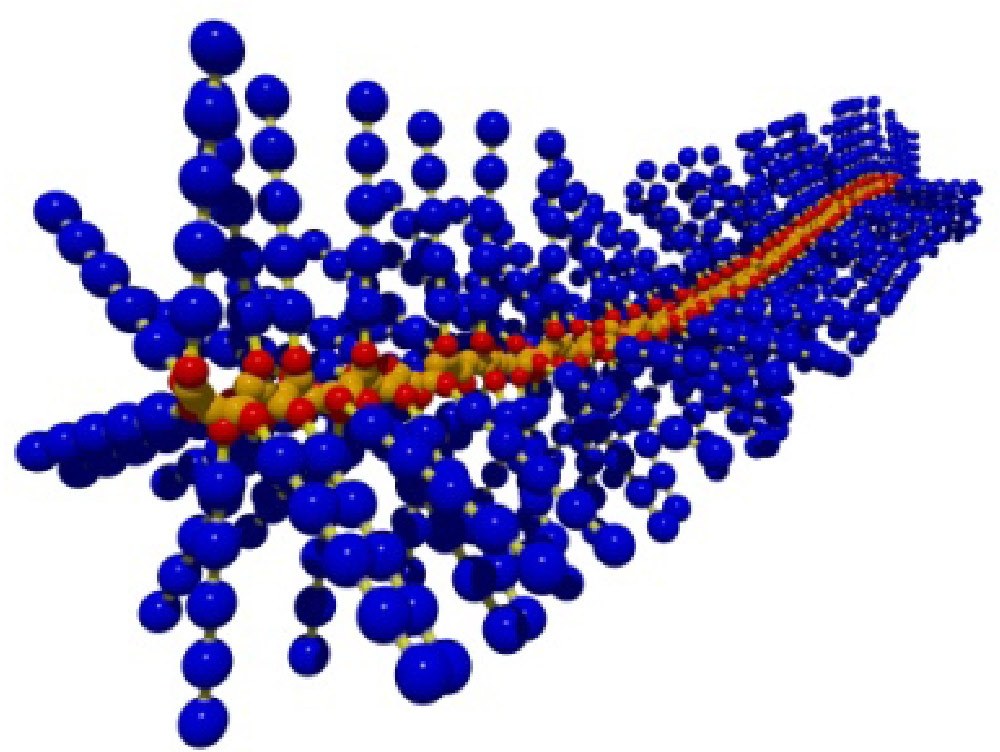
A chain of repeating units (called monomers)
monomer
dimer
replicate
polymer
15
Multiple Choice
What does ductile mean?
Can be bent into shape
Can be drawn into wires
Makes a sound when hit
Can conduct electricity
16
Multiple Choice
Define polymer
circular molecule made with many repeating units
short molecule made of a few repeating units
long, chain-like molecule made of repeating units
chain-like molecule that contains hydrogen and oxygen
17
Corrosion
When metals react with the air or water around them, they react to form metal oxides. This is called corrosion.
The corrosion of iron is called rust.

18
Multiple Choice
19
Fill in the Blanks
Type answer...
20
Multiple Choice
21
Alloys
Metals can be combined with other metals or non-metals to make an alloy.
This combines their properties to make new materials that have more uses, e.g. steel

22
Multiple Choice
A polymer made in the laboratory (or industry) usually made from petrochemicals
nature polymer
natural polymer
protein
synthetic polymer
23
Multiple Select
What elements are in steel alloys?
Carbon
Iron
Copper
Tin
Lead
24
Multiple Choice
What is the definition of a composite?
Composites are when you weld two or more metals together to form a new type of metal.
Composites are a combination of two or more materials that are bonded together to improve their mechanical or physical properties.
Composites are when you take 2 or more metals and fuse them through melting.
Composites are when you take 2 or more matrix and mix them to create a new material.
25
Reactivity Series
The reactivity series puts metals in increasing order of reactivity.
The noble metals are very unreactive and are found at the bottom.
The group 1 and 2 metals are very reactive and are found at the top

26
Multiple Choice
27
Metal Displacement
Displacement is when a more reactive metal will replace another metal in a compound.
•Displacement can be used to extract metals from their ores.
Carbon is often used to do this (it is cheap and a very common element).

28
Multiple Choice
A problem with modern composites is that they
can be lightweight
are expensive
can be molded into shapes
29
Multiple Choice
Carbon can be used to displace aluminium oxide
True
False
30
Multiple Choice
Advantages of Carbon fibre are ...
Mass production processes can be used to bring down costs
Low skilled workers to create complex shapes
Cheap to produce complex shapes
Complex shapes can be created that are extremely strong and lightweight
31
Multiple Choice
Carbon can be used to displace iron oxide
True
False
32
Metal Reactions
33
Multiple Choice
What salt would form between the reaction of lead and hydrochloric acid?
Lead chloride
Lead chlorine
Lead nitrate
Lead sulphate
34
Multiple Choice
What salt would form between the reaction of lead and nitric acid?
Lead nitric
Lead chloride
Lead nitrate
Lead sulphate
35
Multiple Choice
How can you test for hydrogen gas?
Limewater turns cloudy
You can't
Squeaky pop test
36
Ceramics
•Made from materials joined together by heat.
•They can be used for: tiles, crockery and cooking pots, bricks and cement.
•Advanced ceramics are used for space travel and in bone replacements.
•Ceramics are hard, brittle and corrosion resistant.

37
Composites
•Made from two or more different materials with different properties.
•E.g. fibreglass, reinforced concrete, plywood and carbon fibre.
•Composites have different properties depending on what materials are used.
•It is made of a reinforcement material – which makes it stronger and a matrix which gives it shape.

38
Polymers
Polymers are long chains made of monomers.
The process of making a polymer is called polymerisation.
Wool is a natural polymer and chewing gum is a synthetic polymer.
•Polymers are often; flexible, durable, light, transparent, mouldable, an insulator and waterproof

39
Fill in the Blanks
C6 Materials Revision
Instructions:
•Turn your microphone and your camera off.
•Move any distractions. You must not use your phone during the lesson.
•Do not write anything in the chat unless your are told to.
•Wait for the lesson to start.
•Be aware that the session is recorded.
•Have pen and equipment ready.
Depending on the quality of your internet connection, you may experience a ‘lag’ in the lesson.
Show answer
Auto Play
Slide 1 / 39
SLIDE
Similar Resources on Wayground

32 questions
Math MAP Trivia (7th Grade Review for MAP Test)
Presentation
•
7th Grade
36 questions
Roots Words
Presentation
•
6th - 7th Grade
35 questions
Rinforcement session
Presentation
•
6th - 7th Grade
36 questions
SW Asia History Review
Presentation
•
7th Grade
30 questions
Organisms and their Environment Review
Presentation
•
7th Grade
31 questions
Comparing Earth and Rocky Planets
Presentation
•
7th Grade
35 questions
Unit 2.3 The Executive Branch
Presentation
•
7th Grade
32 questions
Digestive System
Presentation
•
7th Grade
Popular Resources on Wayground
20 questions
STAAR Review Quiz #3

Quiz
•
8th Grade
20 questions
Equivalent Fractions
Quiz
•
3rd Grade
6 questions
Marshmallow Farm Quiz
Quiz
•
2nd - 5th Grade
20 questions
Main Idea and Details
Quiz
•
5th Grade
20 questions
Context Clues
Quiz
•
6th Grade
20 questions
Inferences
Quiz
•
4th Grade
19 questions
Classifying Quadrilaterals
Quiz
•
3rd Grade
12 questions
What makes Nebraska's government unique?
Quiz
•
4th - 5th Grade
Discover more resources for Chemistry
20 questions
Revising & Editing practice
Quiz
•
7th Grade
10 questions
Box Plots
Quiz
•
6th - 7th Grade
14 questions
Volume of rectangular prisms
Quiz
•
7th Grade
22 questions
Simple Probability
Quiz
•
7th Grade
20 questions
Graphing Inequalities on a Number Line
Quiz
•
6th - 9th Grade
20 questions
genetics vocabulary
Quiz
•
7th Grade
4 questions
Spring Break rest and recharge
Presentation
•
6th - 8th Grade
24 questions
7th grade STAAR Reading Review
Quiz
•
7th Grade