

IPR S3 ICT6-Intellectual Property Rights

Presentation
•
Computers
•
6th Grade
•
Practice Problem
•
Easy

John Dan Rey Bautista
Used 4+ times
FREE Resource
27 Slides • 18 Questions
1
Understanding Intellectual Property Rights
By John Dan Rey Bautista

2
Open Ended
Describe your school mood today using a song title.
3
Intended Learning Outcomes
a. defined the basic concept of intellectual rights property;
b. differentiates the terms copyright, public domain, fair use, and creative commons;
c. applied copyright, public domain, fair use, and creative commons in real-world examples; and
d. discussed the importance of copyright, fair use, public domain and creative commons.
At the end of the session, we should have;
4
Ponder on this
How can we determine and use online content safely and ethically?
5
Lesson Overview
RECAPitulation
Guess the Logo
KWL Chart
IPR Matters
Fair and Square
Think-Pair-Share
Who Owns It?
Idea Factory
Ipad AUP
6
RECAPitulation
Directions: Write your takeaways from our previous lesson.
7
Open Ended
I am happy to learn the following things last session;
8
Guess the Logo
Directions: Identify the name of the following logo.
9
Multiple Choice
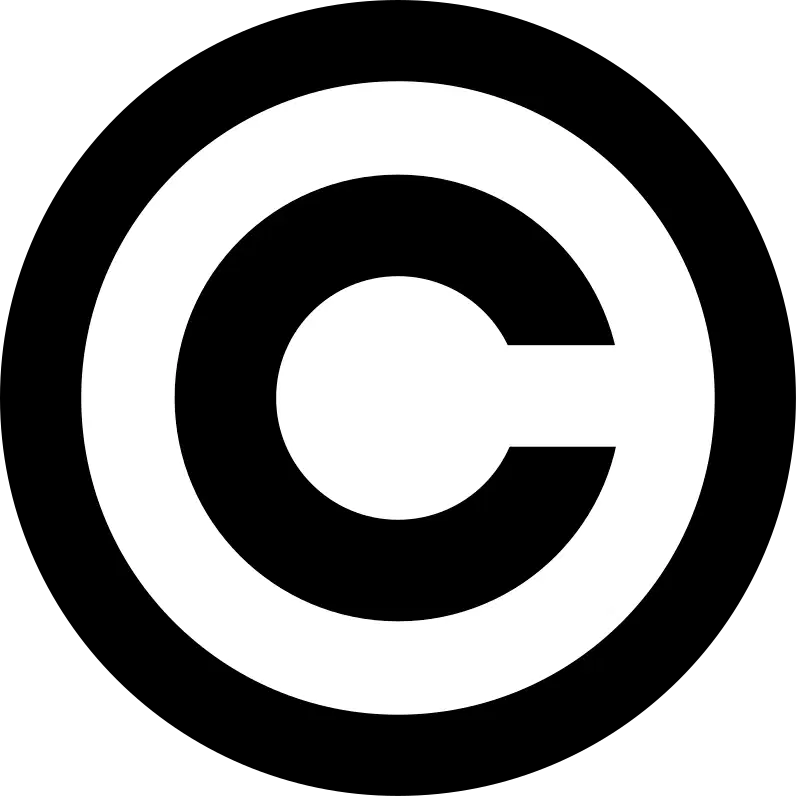
Select the correct name of the logo on the side.
Public Domain
Fair Use
Copyright
Creative Commons
10
Multiple Choice
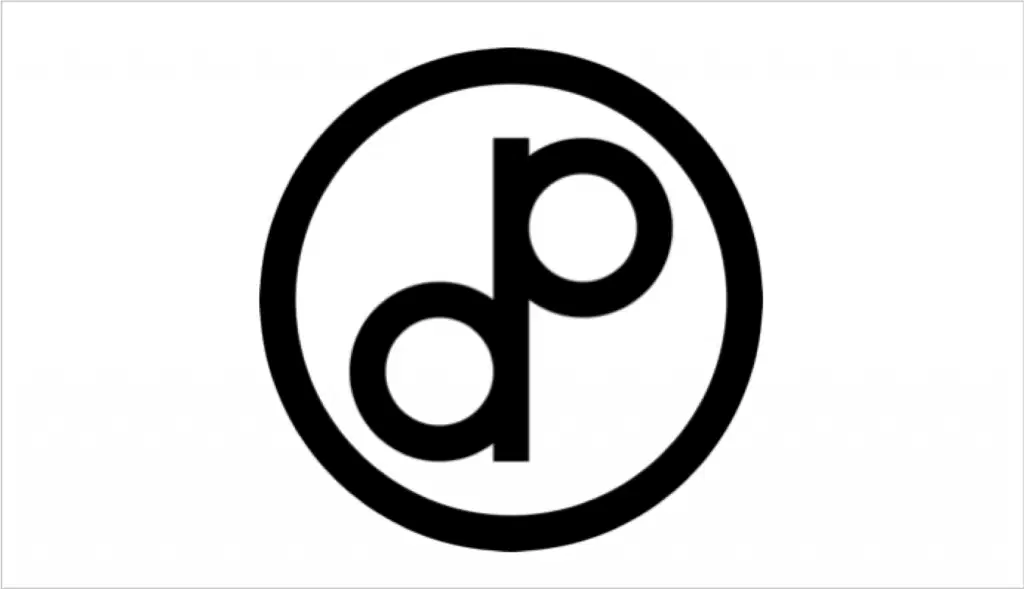
Select the correct name of the logo on the side.
Public Domain
Fair Use
Copyright
Creative Commons
11
Multiple Choice
Select the correct name of the logo on the side.
Public Domain
Fair Use
Copyright
Creative Commons
12
Multiple Choice
Select the correct name of the logo on the side.
Public Domain
Fair Use
Copyright
Creative Commons
13
K-W-L Chart
Directions: There are three columns in a K-W-L chart. The K column is first and represents what you already “Know” about the topic. The W column comes second and write what you “Want” to know about the topic. Finally, the L column write, What did you “Learn?
14
K-W-L Chart
K (What I KNOW?) | W (What I want to KNOW?) | L (What I have LEARNED?) |
|---|---|---|
| | |
15
Open Ended
What is intellectual property rights?
16
Intellectual Property Rights
Intellectual property (IP) pertains to any original creation of the human intellect such as artistic, literary, technical, or scientific creation. Intellectual property rights (IPR) refers to the legal rights given to the inventor or creator to protect his invention or creation for a certain period of time.
17
IPR Matters
Directions: Watch the video to fully understand the concept of Intellectual Rights Property.
Click the link to access:
https://www.youtube.com/watch?v=XzzkSZ0Jrko
18
Understanding Copyright
Copyright is the legal protection extended to the owner of the rights in an original work. “Original work” refers to intellectual creation in the literary, scientific and artistic domain.
19
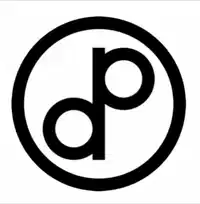
Understanding Public Domain
A creative work that’s not copyrighted and free to use without permission is known as being in the public domain. This means that anyone can use, share, copy, or build upon the work without asking the creator or giving credit.
20
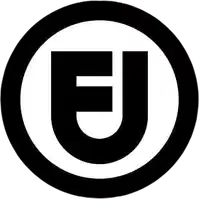
Understanding Fair Use
The ability to use copyrighted work without permission, but only in certain ways and specific situations like education, commentary, criticism, news reporting, scholarship, or research.
21
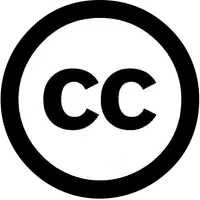
Understanding Creative Commons
CC licences allow the creator of the work to select how they want others to use the work. When a creator releases their work under a CC licence, members of the public know what they can and can’t do with the work. This means that they only need to seek the creator’s permission when they want to use the work in a way not permitted by the licence.
22
Understanding Creative Commons
Creative Commons is an internationally active non-profit organisation that provides free licences for creators to use when making their work available to the public. These licences help the creator to give permission for others to use the work in advance under certain conditions. A special license that tells people how they can use a work legally.
23
Understanding Creative Commons
Every CC license allows you to;
copy the work
distribute the work
display or perform the work
communicate the work
format shift verbatim copies of the work
24
IPR MATTERS
Directions: Read each situation and select what IPR law is being described.
25
Multiple Choice
1. Sophie found a popular song online and used the entire track as background music for her YouTube video without asking the creator or giving credit.
Fair Use
Creative Commons
Copyright
Public Domain
26
Multiple Choice
James wants to act out a scene from Romeo and Juliet for a school play. He finds the original script online and uses it.
Fair Use
Creative Commons
Copyright
Public Domain
27
Multiple Choice
During a class presentation, Mia plays a 30-second clip from a movie to show how the main character overcame a challenge. She adds her own explanation and analysis.
Fair Use
Creative Commons
Copyright
Public Domain
28
Multiple Choice
Ethan is making a digital art project. He finds a photo online with a Creative Commons license that says “CC BY,” which means he can use it if he gives credit to the original photographer.
Fair Use
Creative Commons
Copyright
Public Domain
29
Multiple Choice
Lily copies several full chapters from a recently published book and posts them on her blog for anyone to read.
Fair Use
Creative Commons
Copyright
Public Domain
30
Multiple Choice
During her speech for a class debate, Zoe quotes two lines from a copyrighted book and explains their meaning.
Fair Use
Creative Commons
Copyright
Public Domain
31
Multiple Choice
Noah finds a song with a Creative Commons "CC BY-NC" license and uses it in a school video project, giving credit and not selling the video.
Fair Use
Creative Commons
Copyright
Public Domain
32
Fair and Square
Directions: Discuss if the following situation is fair use.
33
Example No. 1
Maya is making a flyer for her
pet-sitting business to post on her social media account. She finds a cool pet store logo and uses part of it in the flyer.
34
Example No. 2
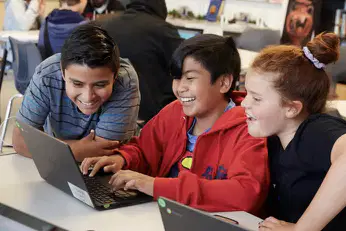
A group of students are making a video for their class remembering all they've done throughout the year. They use the song "Good Riddance (Time of Your Life)" by Green Day in the background.
35
Example No. 3
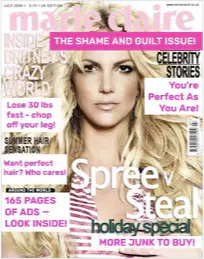
Eva takes an image of a famous magazine cover of a celebrity model, but she changes the headlines on the cover. She does this to criticize how magazines pressure girls to look perfect.
36
Example No. 4
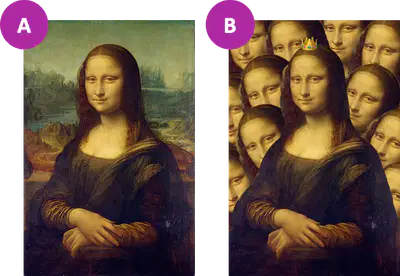
Darren uses Photoshop to create
a new version of the Mona Lisa by Leonardo da Vinci (image A).
He uses this image on his website where he sells other photos he's created.
37
Think-Pair-Share
Directions: With your pair discuss and answer the following questions.
38
Open Ended
Can you consider yourself as a responsible digital citizen if you practice copyright, fair use, creative common, and public domain? Why or Why not
39
Open Ended
What is the significance of intellectual rights property in cyberspace?
40
Who Owns It?
Directions: Read the real-life cases of intellectual rights property. With your group you will identify what intellectual rights property was violated and how it was violated.
41
K-W-L Chart
K (What I KNOW?) | W (What I want to KNOW?) | L (What I have LEARNED?) |
|---|---|---|
| | |
42
Intended Learning Outcomes
a. defined the basic concept of intellectual rights property;
b. differentiates the terms copyright, public domain, fair use, and creative commons;
c. applied copyright, public domain, fair use, and creative commons in real-world examples; and
d. discussed the importance of copyright, fair use, public domain and creative commons.
At the end of the session, we should have;
43
Open Ended
How can we determine and use online content safely and ethically?
44
Open Ended
3-2-1
3 Things you learned
2 Things you found interesting
1 question you still have
45
References
Bhattacharya, S., & Saha, C. (2011). Intellectual property rights: An overview and implications in pharmaceutical industry. Journal of Advanced Pharmaceutical Technology Amp Research, 2(2), 88. https://doi.org/10.4103/2231-4040.82952
Smartcopying. (2023, January 9). What is Creative Commons? - Smartcopying. Smartcopying - the Official Guide to Copyright Issues for Australian Schools and TAFE. https://smartcopying.edu.au/what-is-creative-commons/
LearnFree. (2018, September 17). Understanding copyright, public domain, and fair use [Video]. YouTube. https://www.youtube.com/watch?v=XzzkSZ0Jrko
Understanding Intellectual Property Rights
By John Dan Rey Bautista
Show answer
Auto Play
Slide 1 / 45
SLIDE
Similar Resources on Wayground

41 questions
Religion Review
Presentation
•
6th Grade
38 questions
Five Themes of Geography (2020)
Presentation
•
6th Grade
42 questions
Module F Unit 2 Lesson 1 - Earth's Oceans and the Ocean Floor
Presentation
•
6th Grade
38 questions
Unit 8 Post Review - Equations and Inequalities
Presentation
•
6th Grade
43 questions
Python1
Presentation
•
6th Grade
40 questions
Binary
Presentation
•
7th Grade
39 questions
S6E5g
Presentation
•
6th Grade
41 questions
Air Quality & Air Pollution
Presentation
•
6th Grade
Popular Resources on Wayground
20 questions
Math Review

Quiz
•
3rd Grade
15 questions
Fast food
Quiz
•
7th Grade
20 questions
Context Clues
Quiz
•
6th Grade
20 questions
Inferences
Quiz
•
4th Grade
19 questions
Classifying Quadrilaterals
Quiz
•
3rd Grade
20 questions
Figurative Language Review
Quiz
•
6th Grade
20 questions
Equivalent Fractions
Quiz
•
3rd Grade
10 questions
Identify Fractions, Mixed Numbers & Improper Fractions
Quiz
•
3rd - 4th Grade
Discover more resources for Computers
20 questions
Context Clues
Quiz
•
6th Grade
20 questions
Figurative Language Review
Quiz
•
6th Grade
10 questions
Candy
Quiz
•
4th - 8th Grade
10 questions
Fact Check Ice Breaker: Two truths and a lie
Quiz
•
5th - 12th Grade
22 questions
Dot Plots and Histograms
Quiz
•
6th Grade
10 questions
Memorial Day History and Traditions

Interactive video
•
5th - 8th Grade
15 questions
Histograms
Quiz
•
6th Grade
14 questions
Context Clues
Quiz
•
4th - 6th Grade