
- Resource Library
- Science
- Earth & Space Science
- Ocean Waves
- Module F Unit 2 Lesson 1 Earth's Oceans And The Ocean Floor
Module F Unit 2 Lesson 1 - Earth's Oceans and the Ocean Floor

Presentation
•
Science
•
6th Grade
•
Medium
+11
Standards-aligned

Jesse Jayne
Used 36+ times
FREE Resource
15 Slides • 27 Questions
1
Earth's Oceans and the Ocean Floor
What lies within and beneath Earth's Oceans?
By the end of this lesson, you should be able to describe the properties and physical features of Earth's oceans.
2
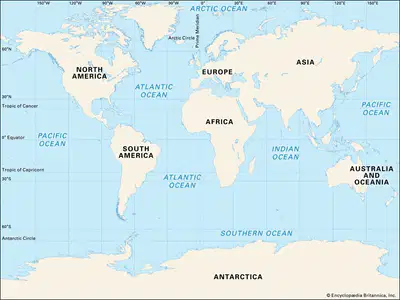
Labeling
Label the Earth's Oceans in this image...
3
Multiple Choice
About how much of Earth's surface is covered by oceans?
3/4
1/2
7/8
1/4
4
Multiple Choice
How are depth and temperature of the ocean related?
The ocean is colder near the surface and warmest at greater depths
Water is warmest near the surface and coldest near the deep zones
The ocean is more turbulent at greater depths thus creating stable temperatures
The ocean is more saline at greater depths
5
Deep-Ocean Basin
Mid-Ocean Ridge
Ocean Trench
Salinity
Thermocline
Continental Margin
6
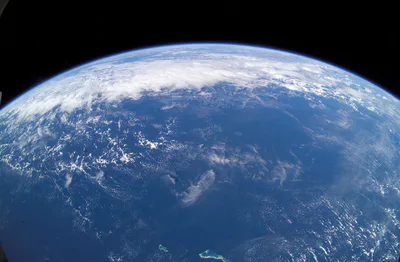
- Earth's oceans make up approxamately 97% of Earth's water
- About 3/4 of the Earth is covered by oceans.
- Earth's oceans can be up to 11 km deep!
Pale Blue Dot
7
8
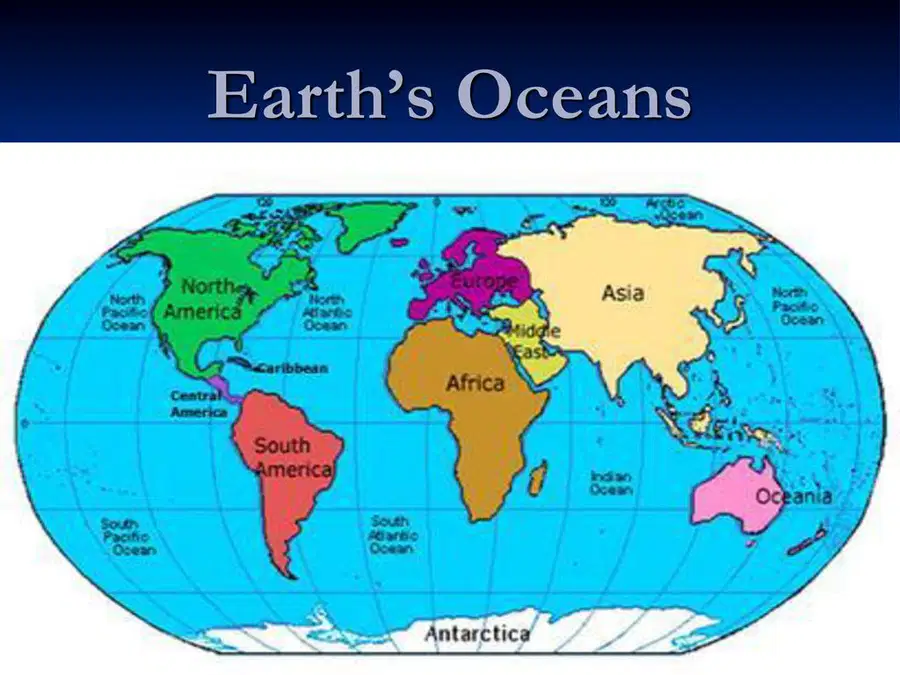
Labeling
Label the Earth's Oceans in this image...
9
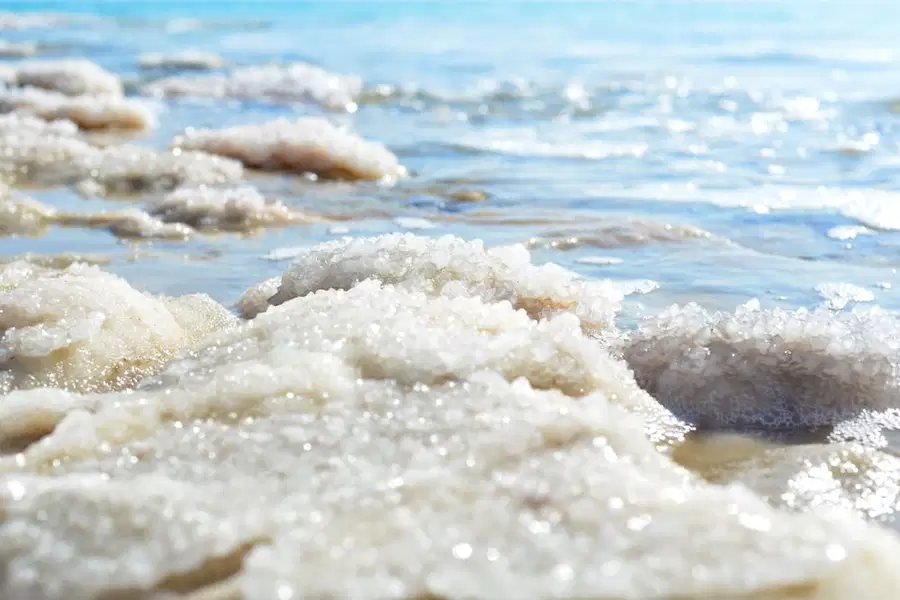
Chemical characteristics include...
- Salinity - the amount and type of dissolved salts
- The amount and type of gasses in the seawater.
Its physical characteristics include temperature and density.
10

- Overall salinity of seawater is about 3.5%
- Dissolved salts come from different sources - Rocks under the surface and volcanoes
- Salinity of seawater is relatively steady, but can vary based on a number of factors.
Salinity
11
12
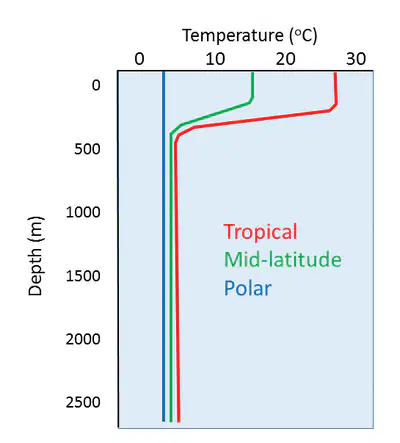
- Ocean water varies by latitude, depth, and season.
- Three distinct temperature layers
- Surface Zone - Warmest
- Thermocline - Temp drops with increased depth
- Deep Zone - Coldest
- By Latitude it is warmer near the equator and coldest near the poles.
Temperature
13
14
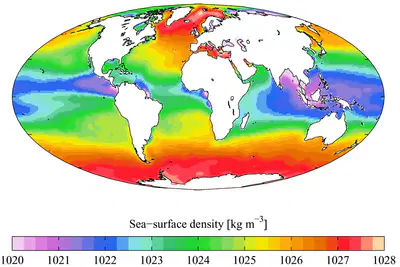
- Density depends on temperature and salinity
- Salt water is denser than fresh waster due to the salinity content.
- Temperature also affects density - Colder is denser
- Temp affects the density of ocean water more than salinity.
Density
15
Open Ended
How would an increase in salinity and a decrease in temperature effect the density of ocean water?
16
Open Ended
What are some ways that the salinity of ocean water can increase? How about decrease?
17
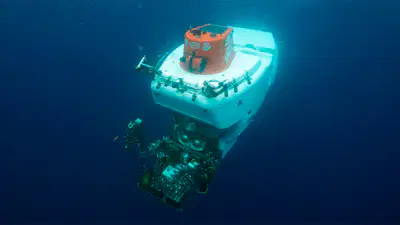
- Drones
- Submersibles
- Sattilites
- Sonar
- Drilling
Each has its own benefits and drawbacks.
Considered Earth's "Final Frontier"
Exploring the Ocean Floor
18
19
20
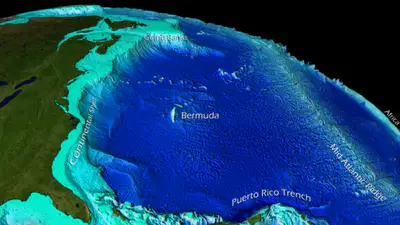
- The ocean floor is a complex and vast space.
- Many of the features that we will discuss, you have already learned about.
Features include
- Mid Ocean Ridge
- Ocean Trenches
- Abyssal Plains
- Continental Shelf
- Sea mounts
- Many Others!!!
Deep Ocean Features
21
22
Match

continental slope
seamount
abyssal plain
mid ocean ridges
volcanic island
A
B
C
D
E
A
B
C
D
E
23
Multiple Choice
the newest ocean floor would be found where
mid ocean ridge
The Gulf of Mexico
The South Pacific
The Red Sea
24
Multiple Choice
what type of rock is made when seafloor spreading occurs and makes up most of the ocean floor
igneous rock
Sandstone
Shale
Coal
25
Multiple Choice
The Mariana __________ is the deepest known place on Earth
Volcanoe
Seamount
Ridge
Trench
26
Multiple Choice
What is the source of most of the salt in the ocean?
human activites.
rocks and land
fish
wind
27
Multiple Choice
How many named oceans are there?
2
3
5
6
28
Multiple Choice
What is the scientific name for the drop off in Nemo?
continental shelf
continental slope
abyssal plain
mid-ocean ridge
29
Multiple Choice
What is the name of the feature of the ocean floor that you encounter when you first step into the ocean?
Continental shelf
continental slope
abyssal plain
mid-ocean ridge
30
Multiple Choice
_______ is the amount of dissolved salts that are present in water.
Salinity
Density
Sediment
Porosity
31
Multiple Choice
The largest ocean is the _______ Ocean, which contains nearly 50 percent of Earth’s ocean water.
Pacific
Indian
Atlantic
Southern
32
Multiple Choice
T/F: Salinity varies slightly from one location to another as a result of the water cycle and climate variations.
True
False
33
Multiple Choice
The water cycle can lower salinity in regions with _____ precipitation.
heavy
light
little
small
34
Multiple Choice
Salinity increases in areas of high __________.
evaporation
transpiration
condensation
sublimation
35
Multiple Select
Scientists divide the ocean into three temperature layers based on depth:
the surface layer
the thermocline
the deep zone.
the atmosphere
36
Multiple Choice
__________ affect the density of ocean water.
Temperature and salinity
Only salinity
Only temperature
Neither temperature nor salinity
37
Multiple Choice
The ______ of the water increases as its salinity increases.
density
flavor
liquidity
flow
38
Multiple Choice
Ocean water becomes denser as its temperature _______.
decreases
increases
remains constant
sharply increases
39
Multiple Select
Which of these are methods used by scientists to study the ocean floor?
sonar
sattelites
underwater vessels
drilling
40
Multiple Choice
______ uses sound waves to map the ocean floor.
sonar
drilling
dredging
w
41
Multiple Select
Ocean floor features are often divided into two large regions:
the continental margin
the deep-ocean basin
the shallow basin
the continental breakfast
42
Multiple Choice
Nearly __ percent of Earth’s surface is covered by water.
70
50
45
15
Earth's Oceans and the Ocean Floor
What lies within and beneath Earth's Oceans?
By the end of this lesson, you should be able to describe the properties and physical features of Earth's oceans.
Show answer
Auto Play
Slide 1 / 42
SLIDE
Similar Resources on Wayground

36 questions
Homeostasis Review
Presentation
•
6th Grade
38 questions
Forces and Motion Review
Presentation
•
6th Grade
39 questions
Severe Weather and Floods
Presentation
•
6th Grade
34 questions
Counting Atoms, Elements, Compounds, and Molecules
Presentation
•
6th Grade
34 questions
Qualities of Air and Weather Instruments
Presentation
•
6th Grade
34 questions
Independent and Dependent Variables
Presentation
•
6th Grade
33 questions
Unit 4 Lesson 5 - Earthquakes
Presentation
•
6th Grade
37 questions
Properties and Atoms
Presentation
•
7th Grade
Popular Resources on Wayground
10 questions
How much do you know about our Portrait of an Eagle?

Quiz
•
10th Grade
10 questions
Fast Food Slogans
Quiz
•
6th - 8th Grade
21 questions
Continents and Oceans
Quiz
•
6th Grade
20 questions
Parts of Speech
Quiz
•
5th Grade
16 questions
Subject & Predicate
Quiz
•
5th Grade
25 questions
Multiplication Facts
Quiz
•
5th Grade
12 questions
Map Skills
Quiz
•
3rd Grade
22 questions
Continents and Oceans
Quiz
•
5th Grade
Discover more resources for Science
10 questions
6.6D - Relative Density Review
Quiz
•
6th Grade
20 questions
Claim, Evidence and Reasoning (CER)
Quiz
•
6th - 8th Grade
20 questions
Density
Quiz
•
6th Grade
10 questions
Exploring Chemical and Physical Changes

Interactive video
•
6th - 10th Grade
20 questions
Food Chains & Food Webs
Quiz
•
5th - 7th Grade
18 questions
Interpreting Distance/Time Graphs
Quiz
•
6th Grade
10 questions
Decoding the Periodic Table of Elements
Interactive video
•
6th - 10th Grade
15 questions
Potential and Kinetic Energy
Quiz
•
6th Grade