

Speciation

Presentation
•
Science
•
1st Grade
•
Practice Problem
•
Hard
+3
Standards-aligned

Wayground Resources
FREE Resource
18 Slides • 19 Questions
1

2
3
Open Ended
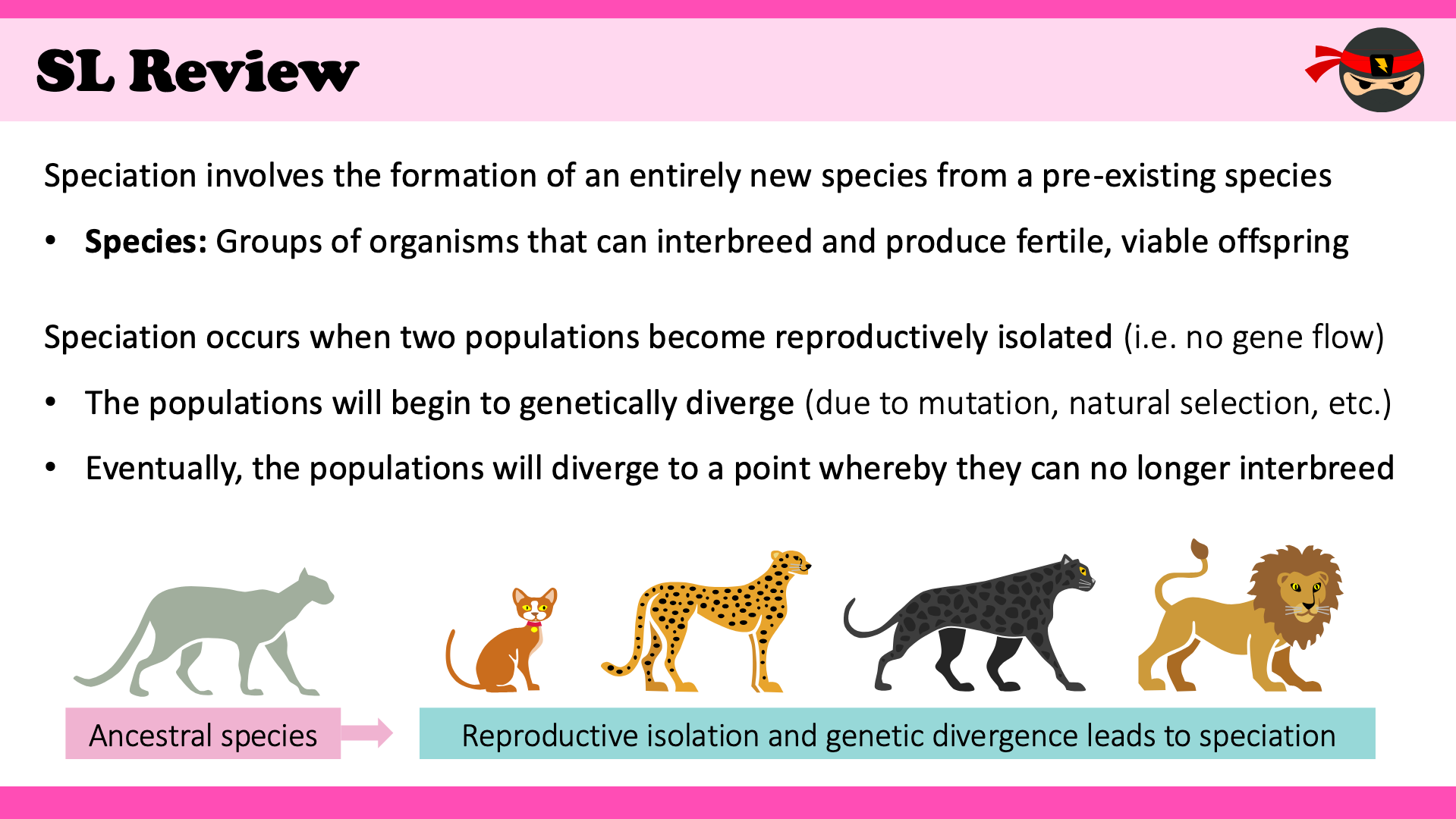
Describe how reproductive isolation can lead to the formation of new species.
4
Multiple Choice
Why is the process of speciation important for biodiversity?
It increases the variety of life forms on Earth
It reduces the number of species
It prevents evolution
It stops natural selection
5
6
Multiple Choice
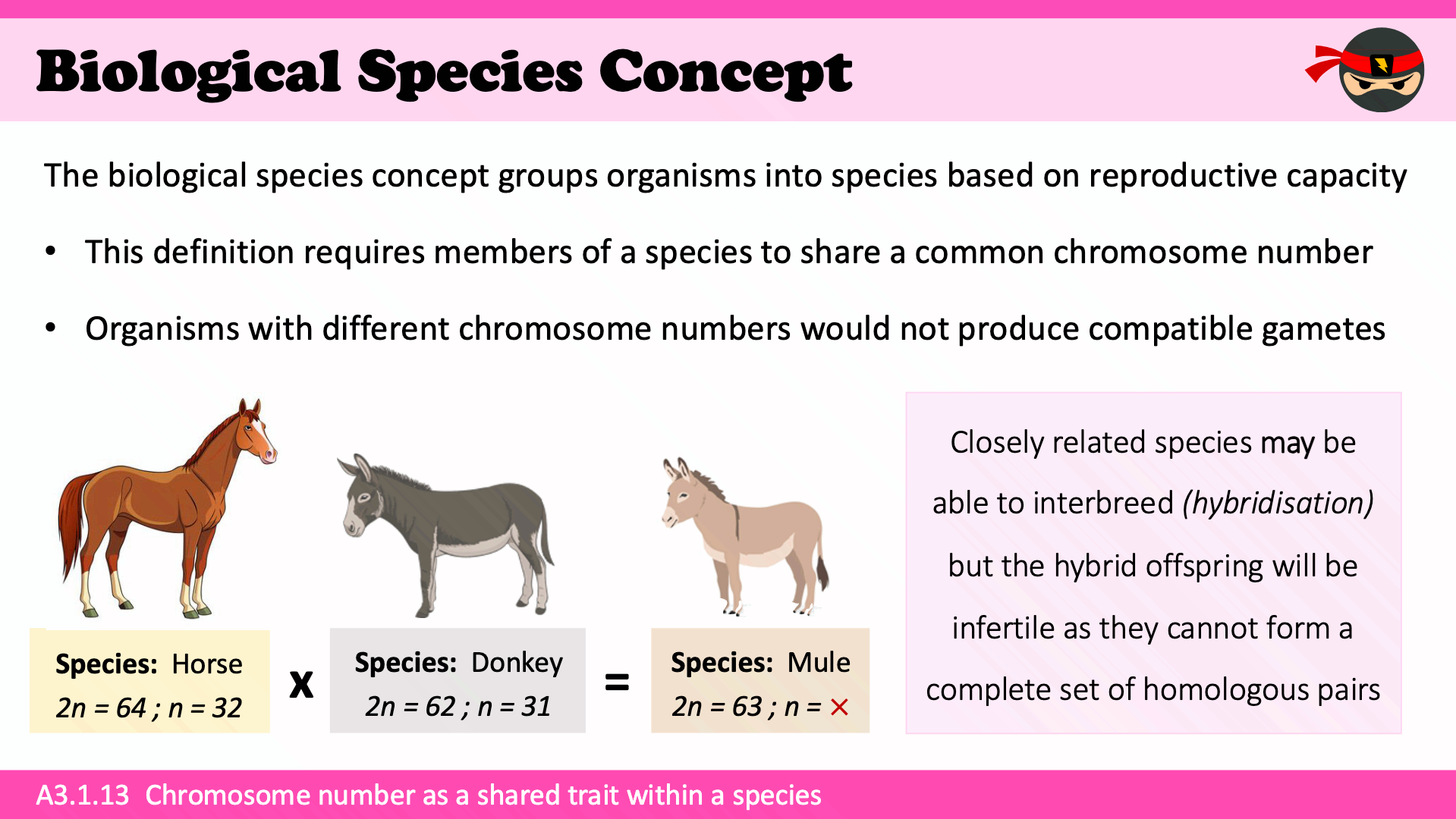
Which of the following is a requirement for organisms to be considered the same species according to the biological species concept?
They must share a common chromosome number.
They must live in the same environment.
They must have the same color.
They must eat the same food.
7
8
9
Multiple Select
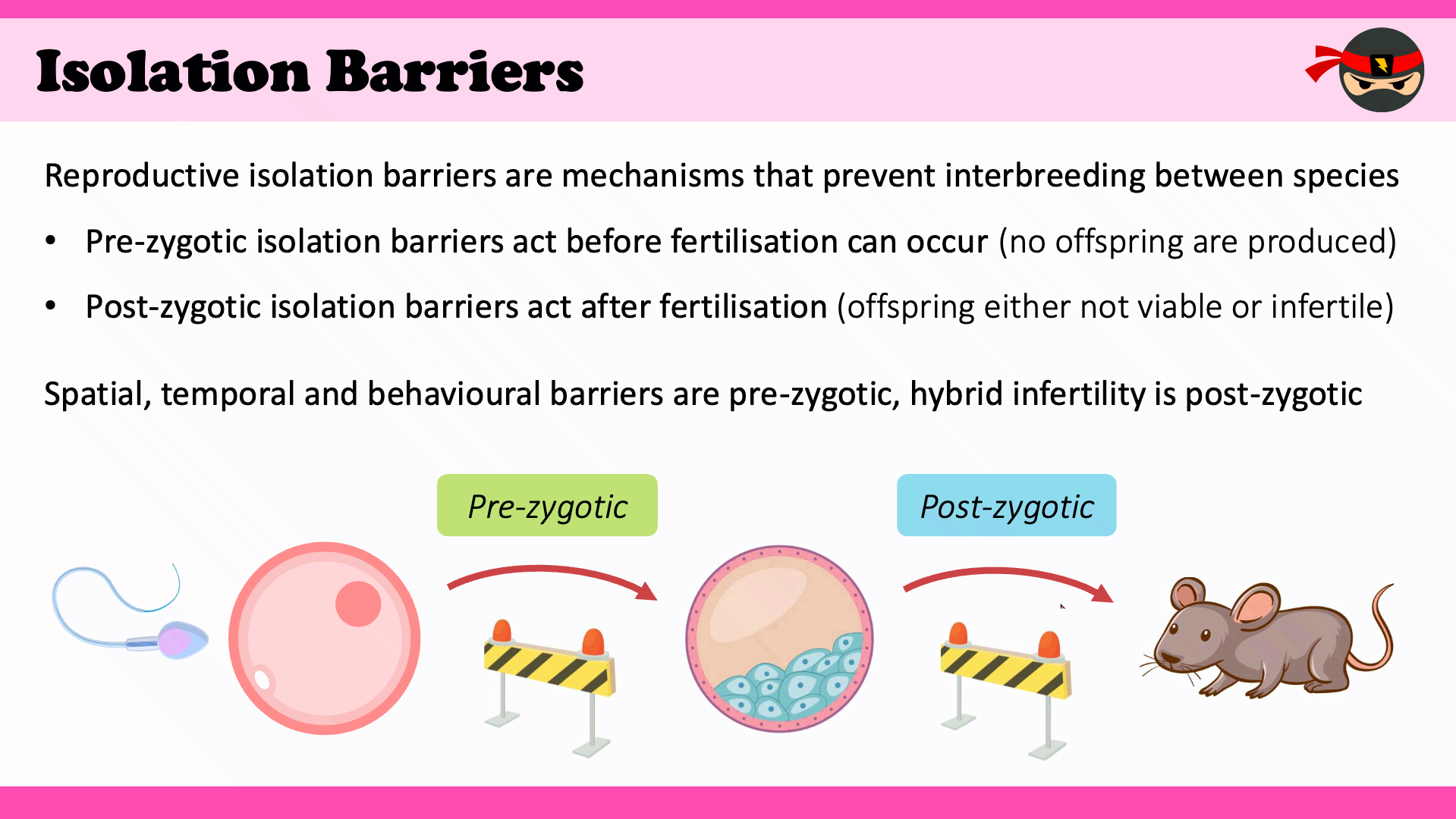
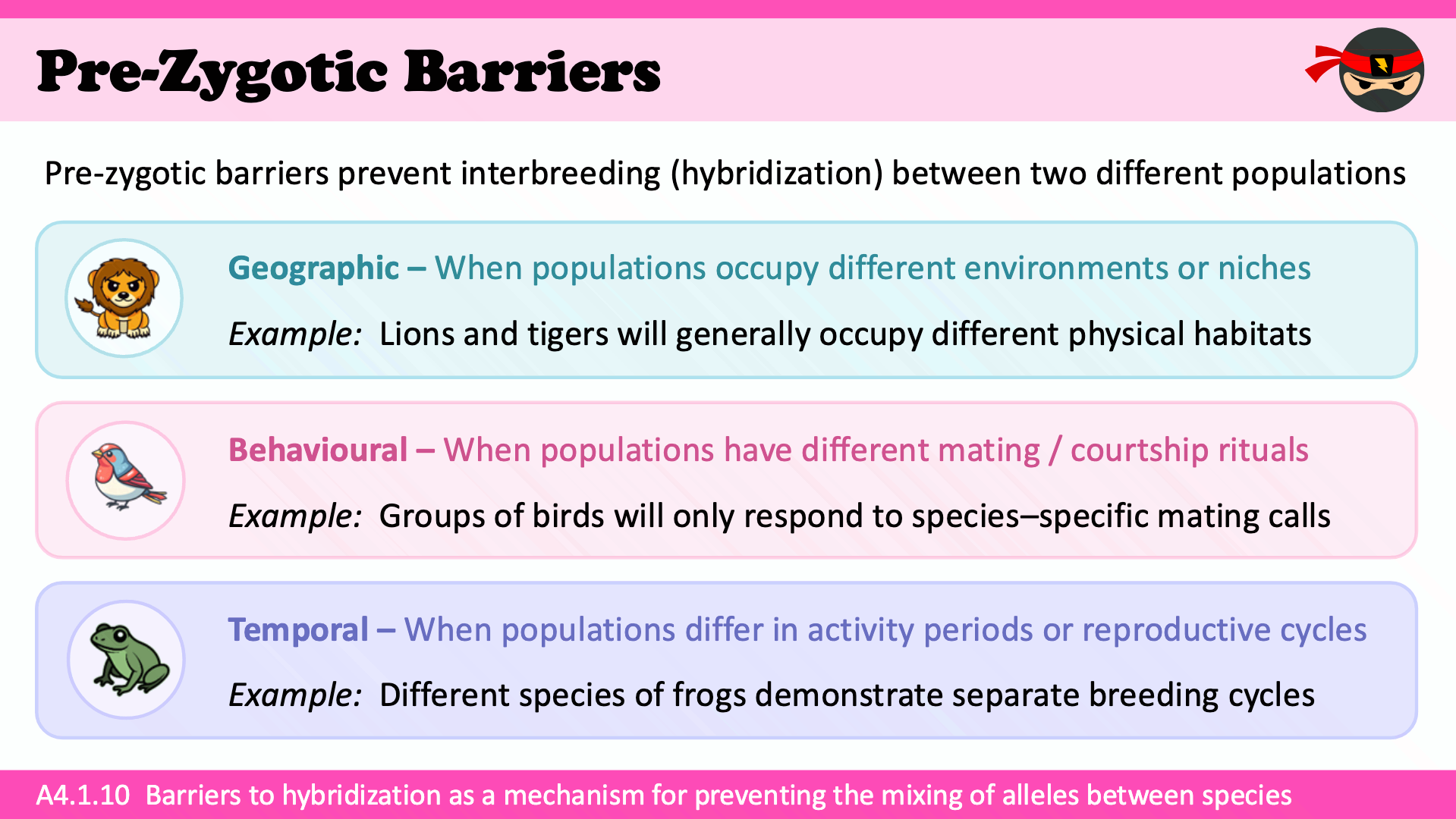
Which of the following are examples of pre-zygotic isolation barriers?
Geographic isolation
Hybrid infertility
Behavioural isolation
Temporal isolation
10
11
Open Ended
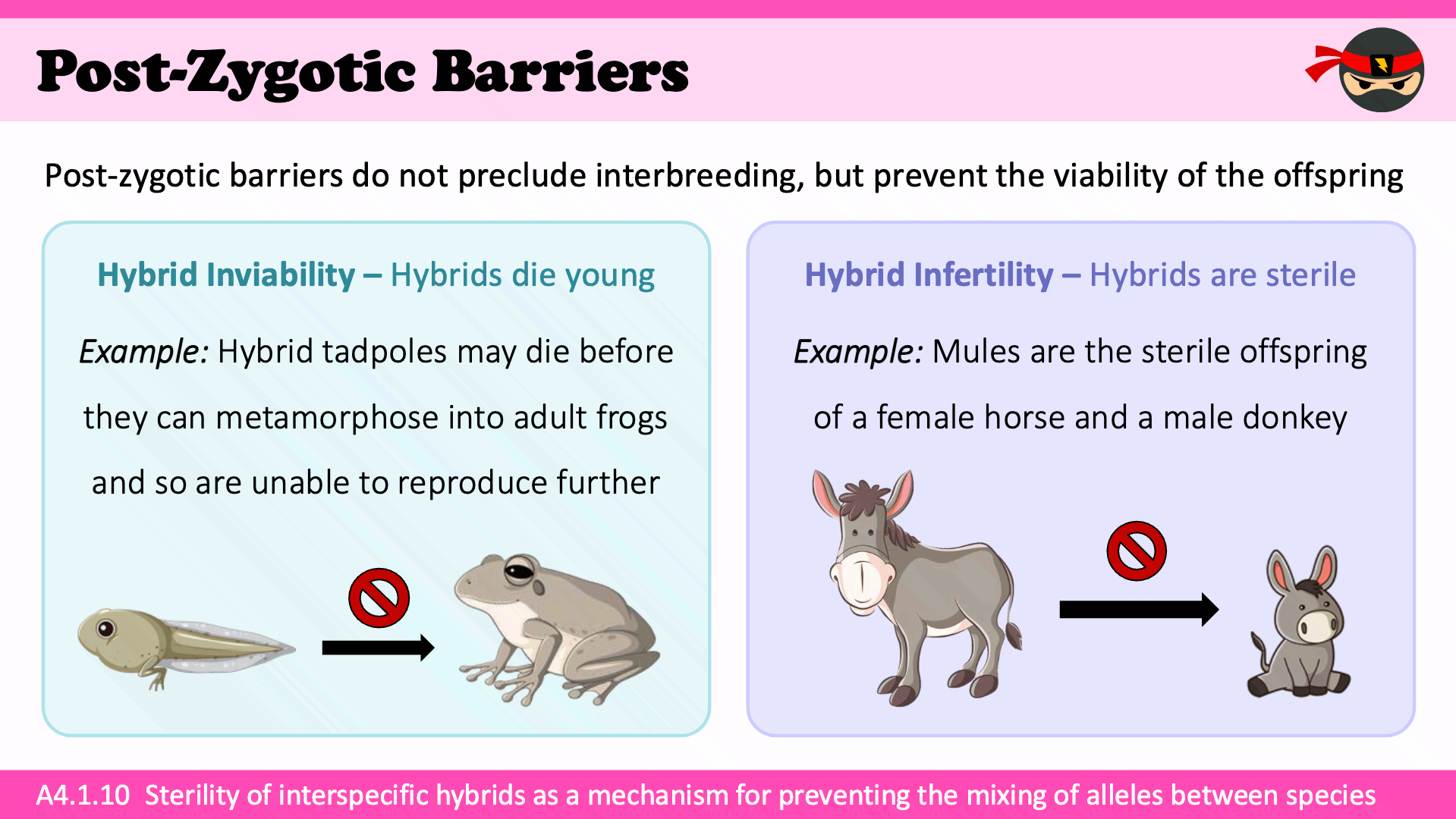
Explain how post-zygotic barriers contribute to the maintenance of species boundaries.
12
Fill in the Blanks
Mules are sterile because they cannot form a complete set of
Type answer...
13
14
Multiple Choice
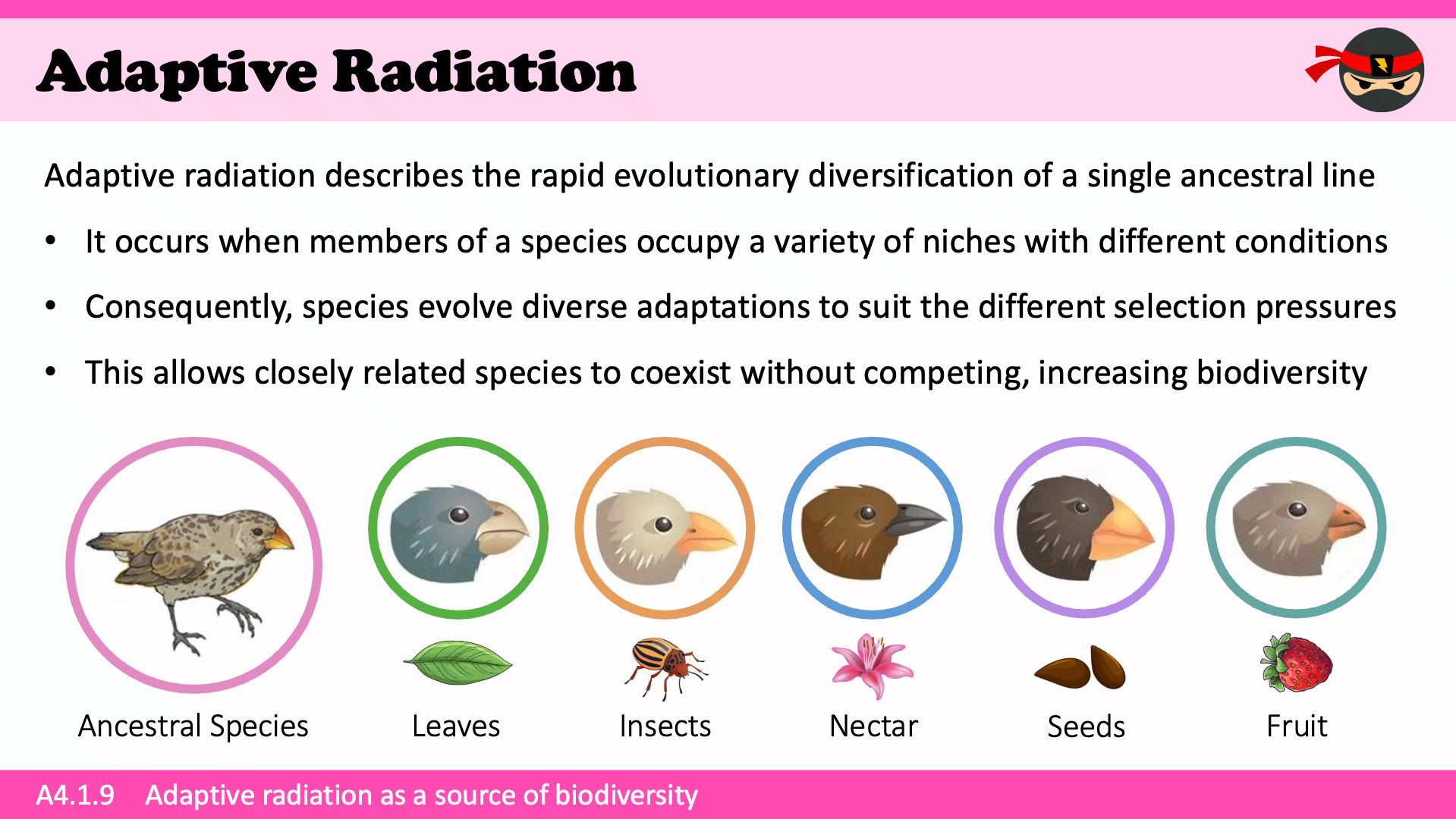
What is adaptive radiation?
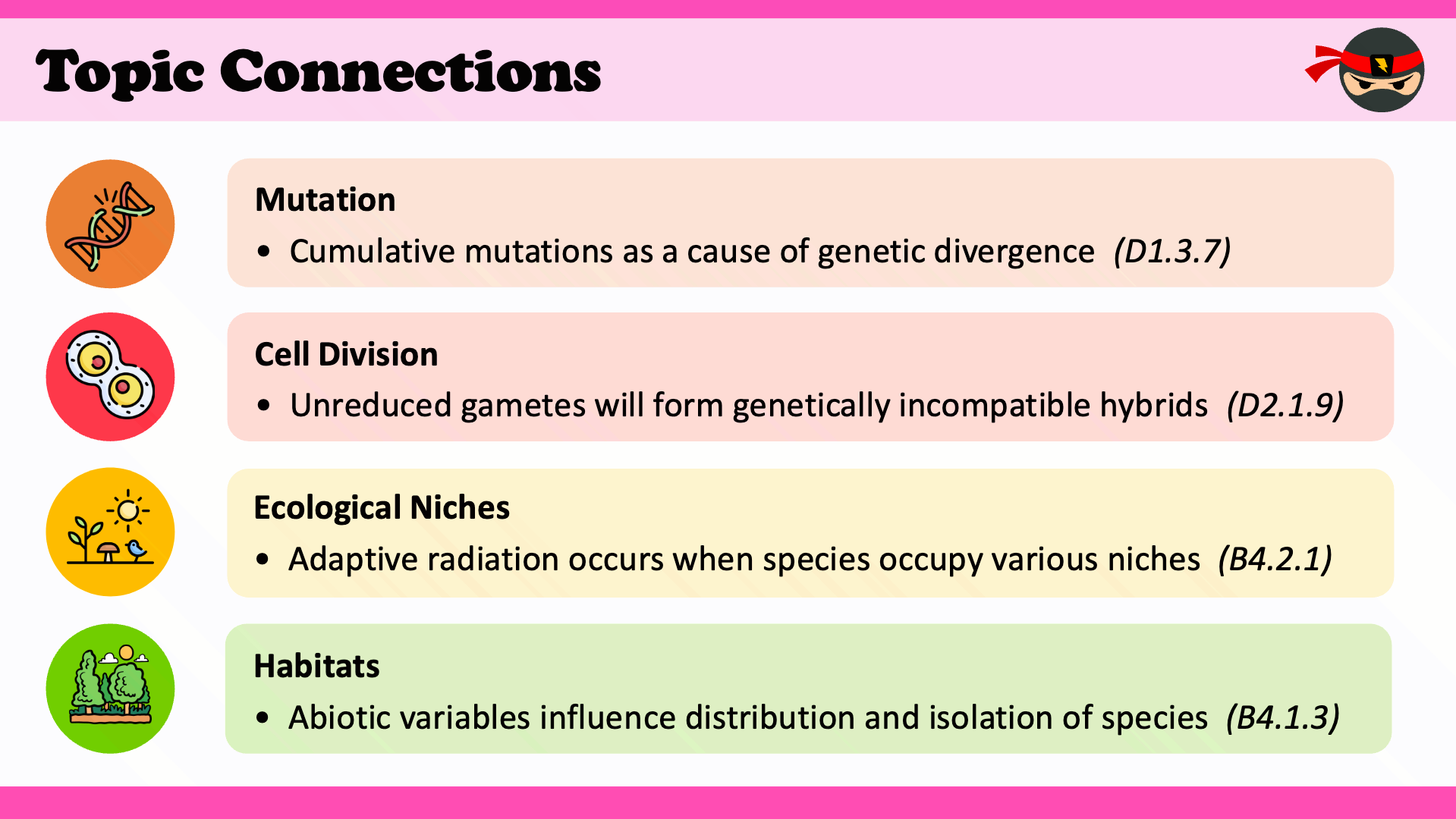
The rapid diversification of a single ancestral line into various species adapted to different niches.
The extinction of species due to competition.
The process by which species migrate to new environments.
The gradual change of a species over time without diversification.
15
16
Multiple Choice
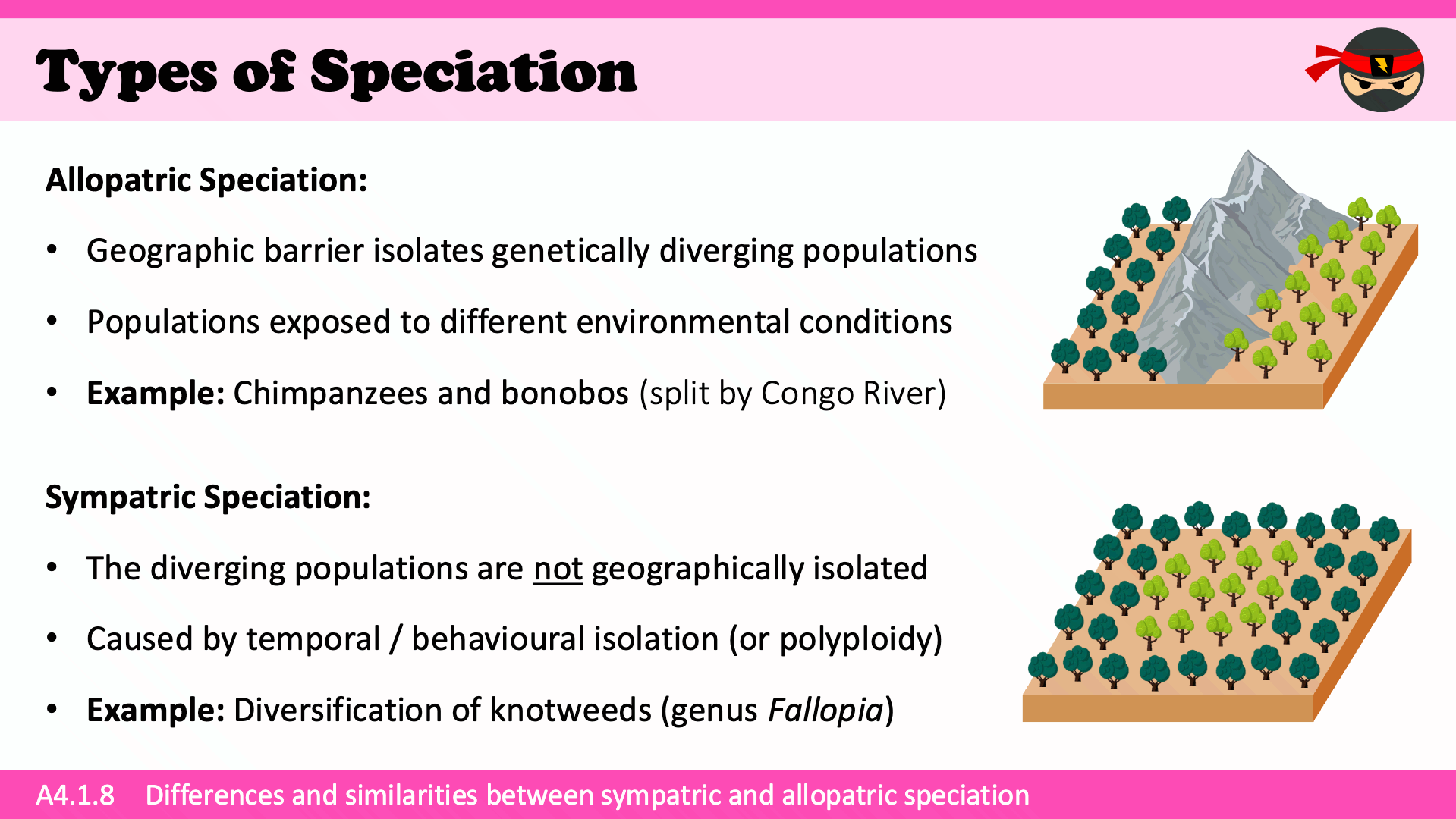
Which of the following best distinguishes allopatric speciation from sympatric speciation?
Allopatric speciation involves geographic isolation, while sympatric speciation does not.
Allopatric speciation is caused by behavioral isolation only.
Sympatric speciation requires a physical barrier.
Sympatric speciation cannot occur in plants.
17
18
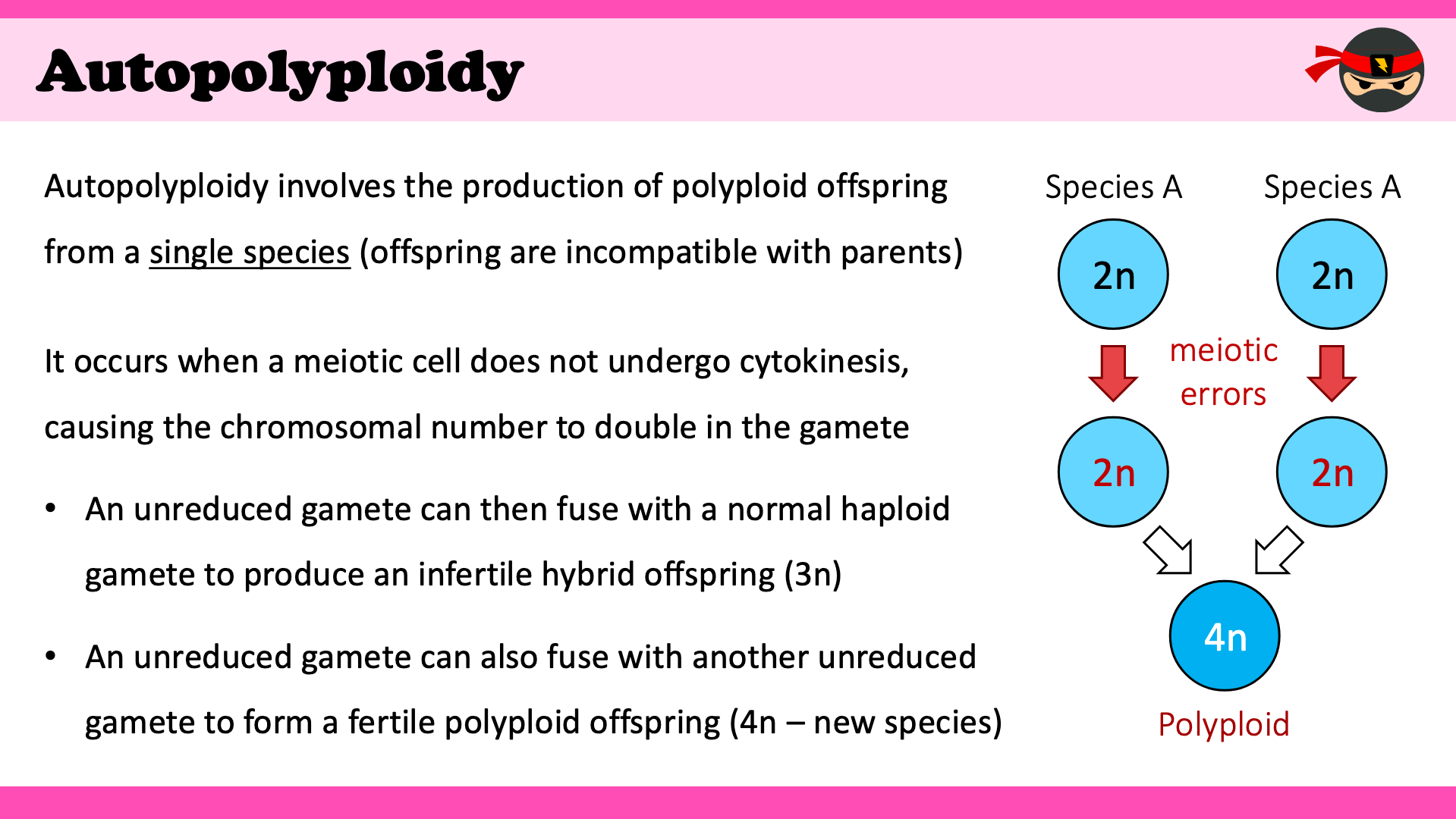
Multiple Choice
Which of the following statements best explains why polyploidy can cause instant speciation in plants?
Polyploidy increases the mutation rate in plants.
Polyploid offspring are not genetically compatible with their parents.
Polyploidy allows plants to survive in harsh environments.
Polyploidy reduces the number of chromosomes in offspring.
19
20
21
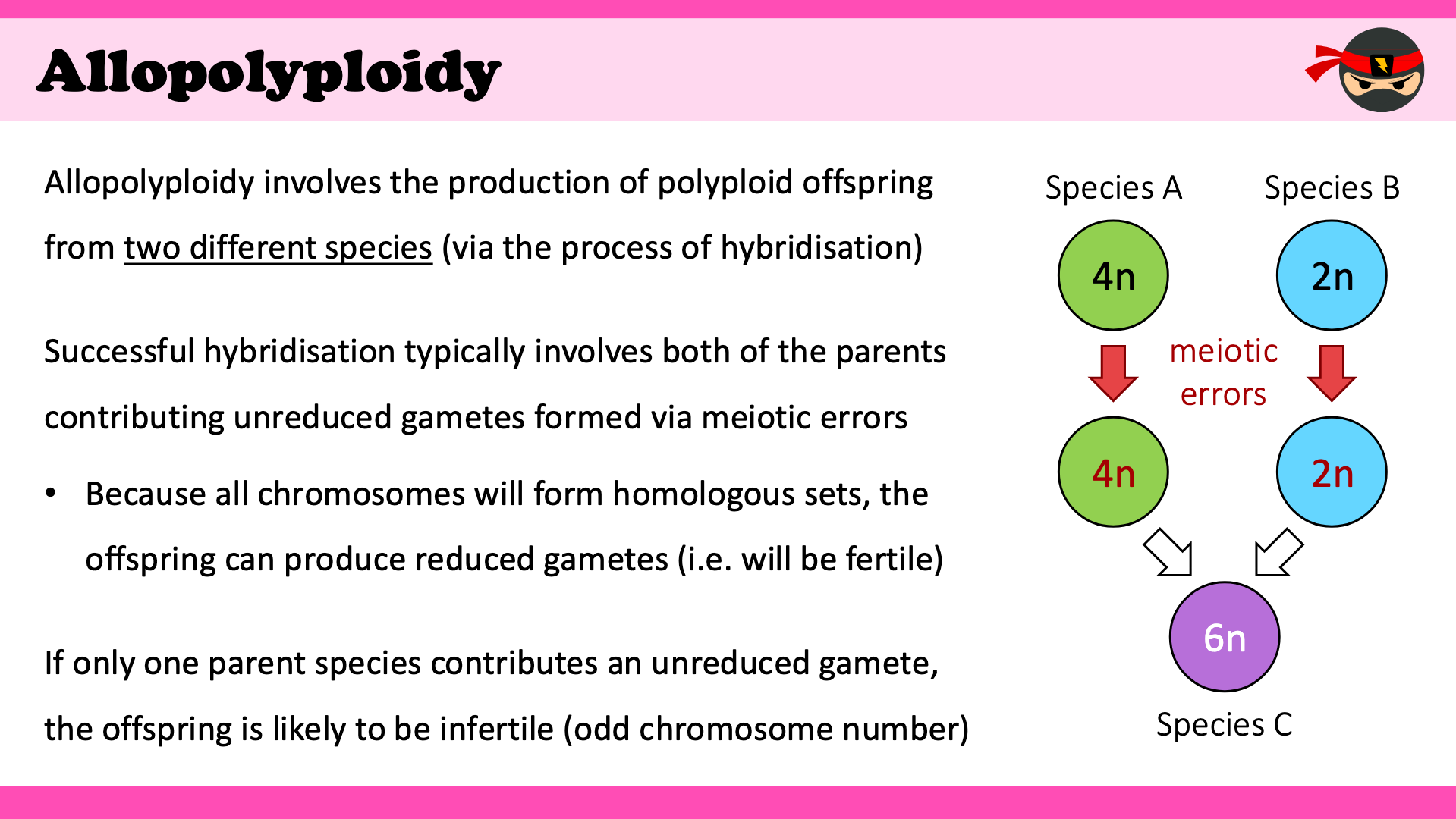
Multiple Select
Which of the following are true about allopolyploidy?
It involves two different species.
It results from hybridisation.
It always produces infertile offspring.
Both parents contribute unreduced gametes.
22
23
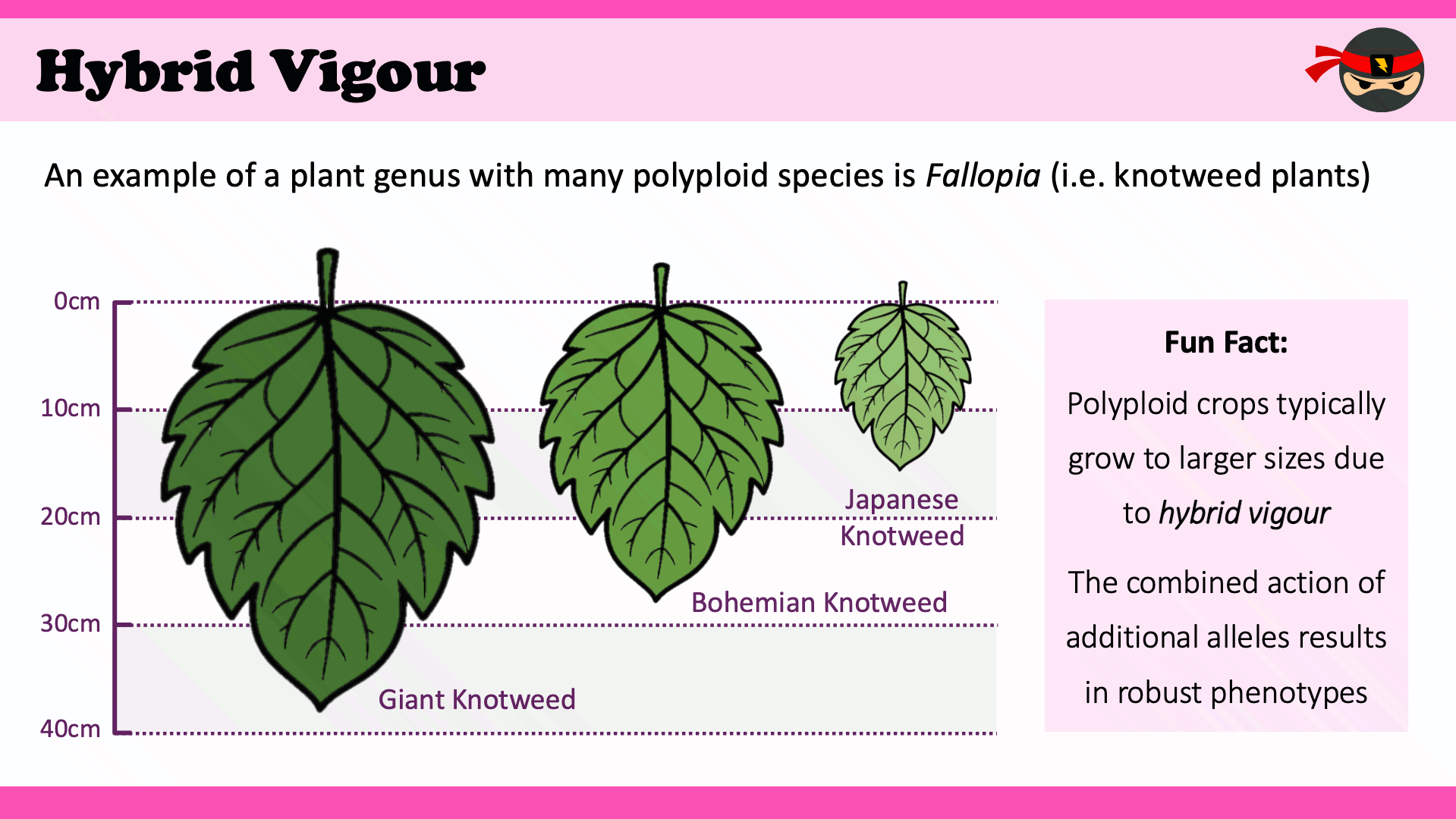
Fill in the Blanks
Polyploid crops typically grow to larger sizes due to
Type answer...
24
25
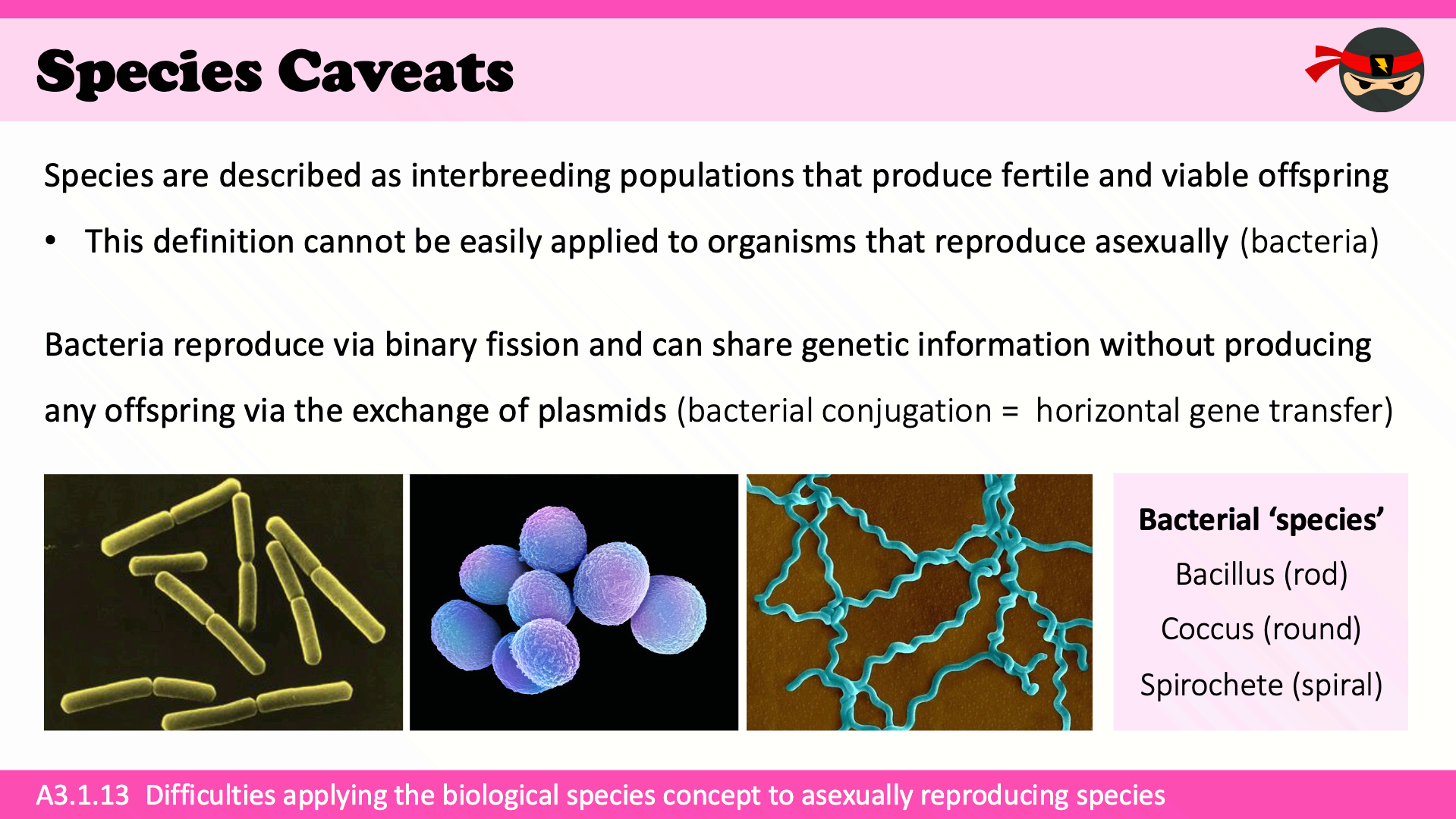
Open Ended
Why is the biological species concept difficult to apply to bacteria?
26
27
Fill in the Blanks
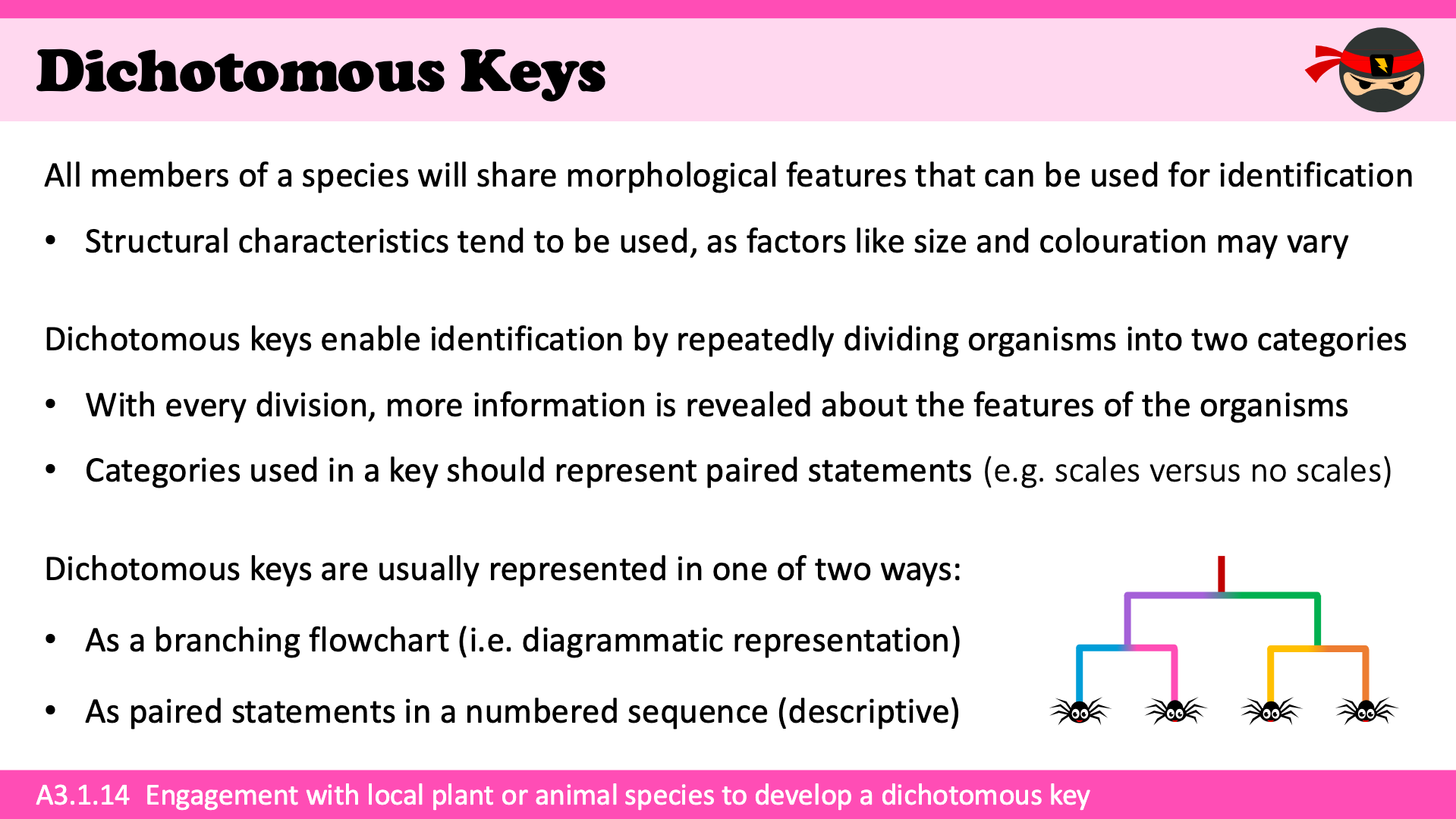
Dichotomous keys are most commonly used to identify organisms based on
Type answer...
28
29
Multiple Choice
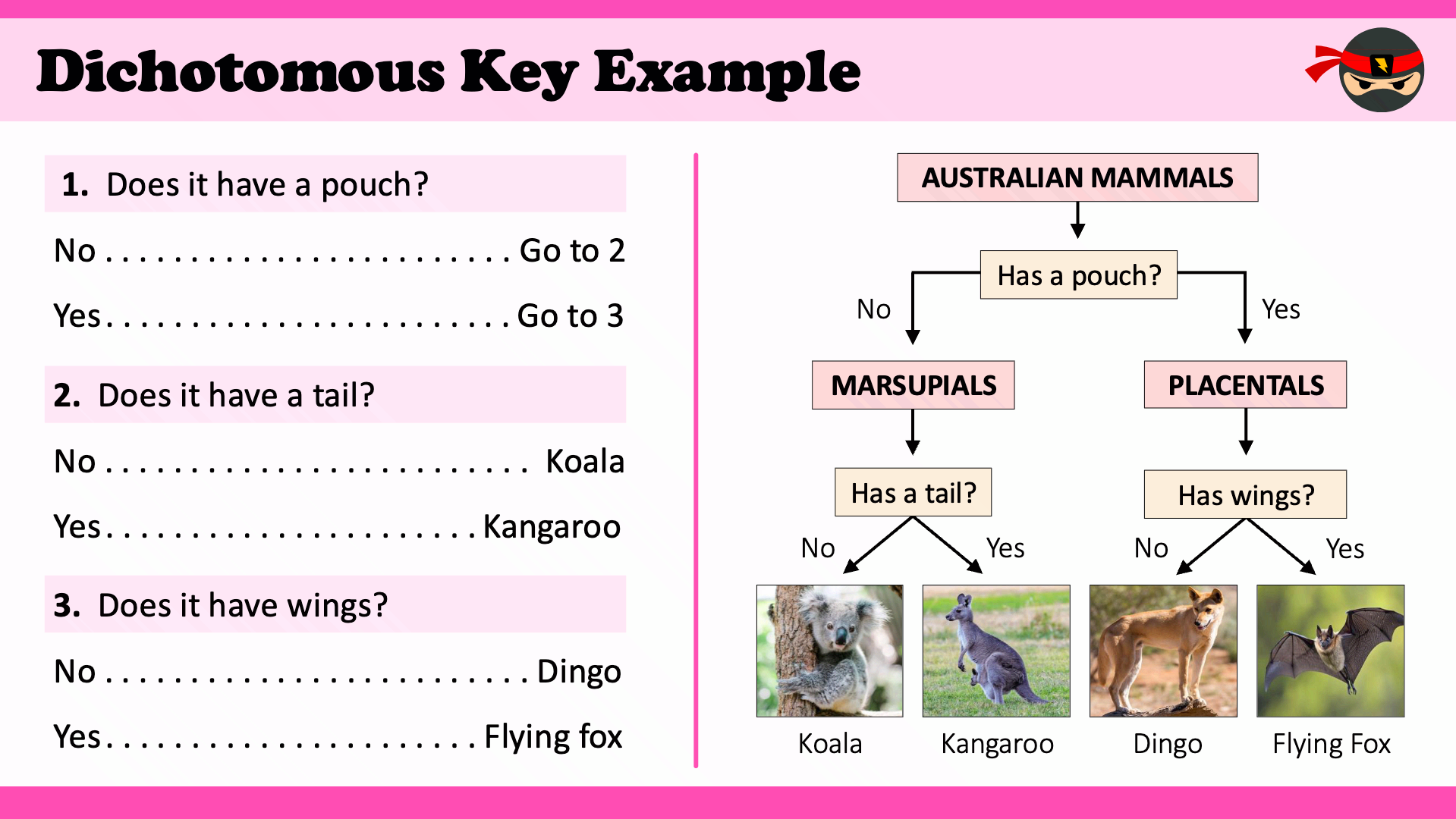
Which of the following features is used first to distinguish between Australian mammals in the dichotomous key example?
Has a tail
Has wings
Has a pouch
Is nocturnal
30
31
Multiple Select
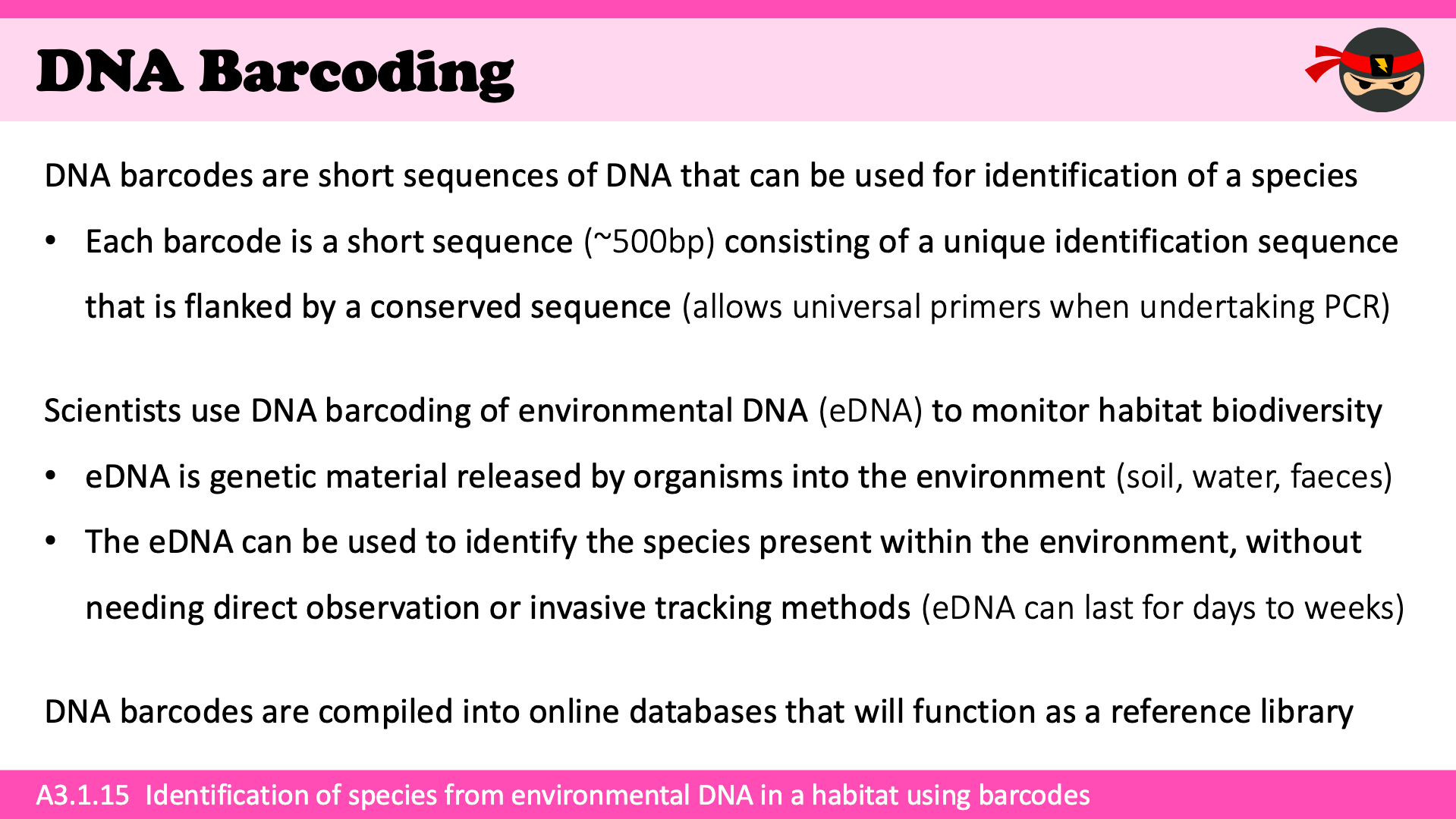
Which of the following statements about environmental DNA (eDNA) are correct?
eDNA is genetic material released by organisms into the environment.
eDNA can be used to identify species without direct observation.
eDNA can only be found in water samples.
eDNA can last for days to weeks in the environment.
32
Open Ended
Explain how DNA barcoding can be used to monitor habitat biodiversity and why it is advantageous compared to traditional observation methods.
33
34
35
Open Ended
What is one question you still have about the process of speciation or something you would like to learn more about?
36
Open Ended
How does reproductive isolation contribute to the process of speciation?
37
Fill in the Blanks
Adaptive radiation occurs when species occupy various
Type answer...
Show answer
Auto Play
Slide 1 / 37
SLIDE
Similar Resources on Wayground

31 questions
一年级科学复习课及练习
Presentation
•
1st Grade
34 questions
Collision Theory & Reaction Rate Experiment
Presentation
•
KG
30 questions
Penambahan & Penolakan Cahaya (pdpr)
Presentation
•
1st Grade
29 questions
Repaso
Presentation
•
1st Grade
35 questions
Science U3 Review
Presentation
•
1st Grade
32 questions
Hindi Shabdavali
Presentation
•
KG
28 questions
What are Habitats?
Presentation
•
1st Grade
28 questions
Untitled Presentation
Presentation
•
1st Grade
Popular Resources on Wayground
10 questions
How much do you know about our Portrait of an Eagle?

Quiz
•
10th Grade
10 questions
Fast Food Slogans
Quiz
•
6th - 8th Grade
21 questions
Continents and Oceans
Quiz
•
6th Grade
20 questions
Parts of Speech
Quiz
•
5th Grade
16 questions
Subject & Predicate
Quiz
•
5th Grade
25 questions
Multiplication Facts
Quiz
•
5th Grade
12 questions
Map Skills
Quiz
•
3rd Grade
22 questions
Continents and Oceans
Quiz
•
5th Grade
Discover more resources for Science
10 questions
Identifying Physical and Chemical Changes

Interactive video
•
1st - 5th Grade
10 questions
Discovering the Properties of Matter
Interactive video
•
1st - 5th Grade
7 questions
1st RC1 English
Quiz
•
1st Grade
5 questions
Sense and Response
Quiz
•
1st Grade
10 questions
science review
Quiz
•
1st - 5th Grade
10 questions
Exploring Physical and Chemical Changes in Chemistry
Interactive video
•
1st - 5th Grade
10 questions
Exploring the Formation of Landforms
Interactive video
•
1st - 5th Grade
7 questions
1st RC1 Spanish
Quiz
•
1st Grade