
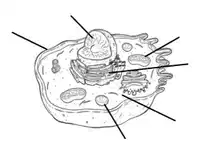
Structure and Function of ANIMAL Cells

Presentation
•
Science
•
7th Grade
•
Easy
Standards-aligned

Dana Wallach
Used 14+ times
FREE Resource
9 Slides • 8 Questions
1
By Potomac Middle Life Science Department
Content Objective: LS 2.b
Learning Target:
identify cellular organelles (cell parts)
relate organelles with the life processes they perform within a living cell
Language Objective: I can complete my notes by writing the missing information, and labeling a diagram
2
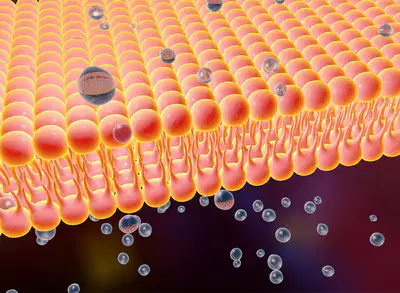
cell membrane: a thin, flexible barrier that surrounds all cells and that allows certain substances to enter and exit the cell
Cell Membrane
3
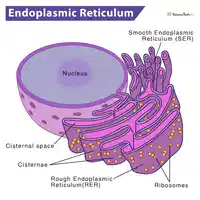
endoplasmic reticulum: a structure that forms a network of passageways in which proteins and other materials are transported from one part of the cell to another. It can be smooth or rough due to ribosomes (the small dots)
Endoplasmic Reticulum (ER)
4
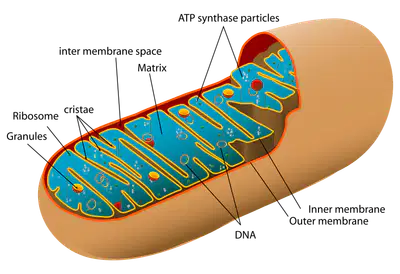
mitochondria: a bean-shaped structure that converts energy from food molecules (sugar) to energy the cell can use (ATP) to fuel its life processes
Mitochondria
Mitochondria is the plural form of the word, referring to more than one of the organelles, while mitochondrion is the singular form, referring to just one.
5
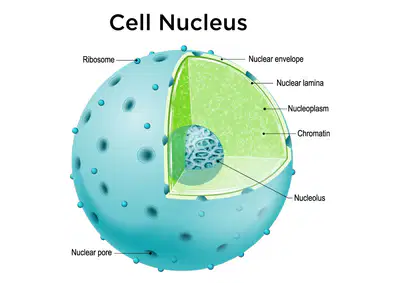
nucleus: the large structure that contains the DNA or cell’s important instructions and controls the cell’s activities
Nucleus
6
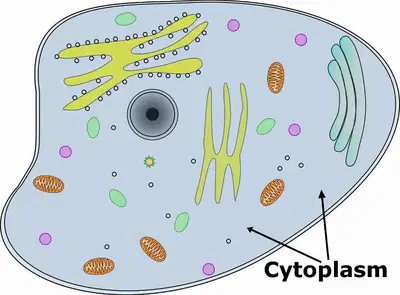
cytoplasm: not a structure, but a gel-like substance that fills up the cell, surrounds all the organelles, gives the cell shape, is where reactions can take place within the cell
Cytoplasm
7
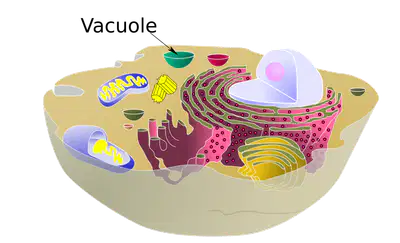
vacuole: a sac-like structure that stores molecules for the cell
Vacuole
8
Multiple Choice
Which cell organelle converts energy from food to energy that the cell can use (ATP)?
Mitochondria
Ribosomes
Cell Membrane
Endoplasmic Reticulum
9
Multiple Choice
What organelle controls the materials that enter and exit the cell?
cell membrane
nucelolus
mitochondria
ribosomes
10
Multiple Choice
Which organelle transports proteins and other materials throughout the cell?
cytoplasm
lysosomes
cell wall
endoplasmic reticulum (ER)
11
Multiple Choice
Animal cells store water and other molecules in which organelles?
mitochondria
ribosomes
vacuoles
chloroplasts
12
Multiple Choice
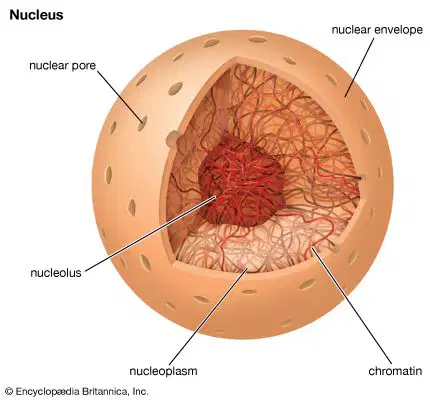
Which organelle directs all cell activities through the DNA located there?
ER
nucleus
ribosomes
mitochondria
13
Multiple Choice
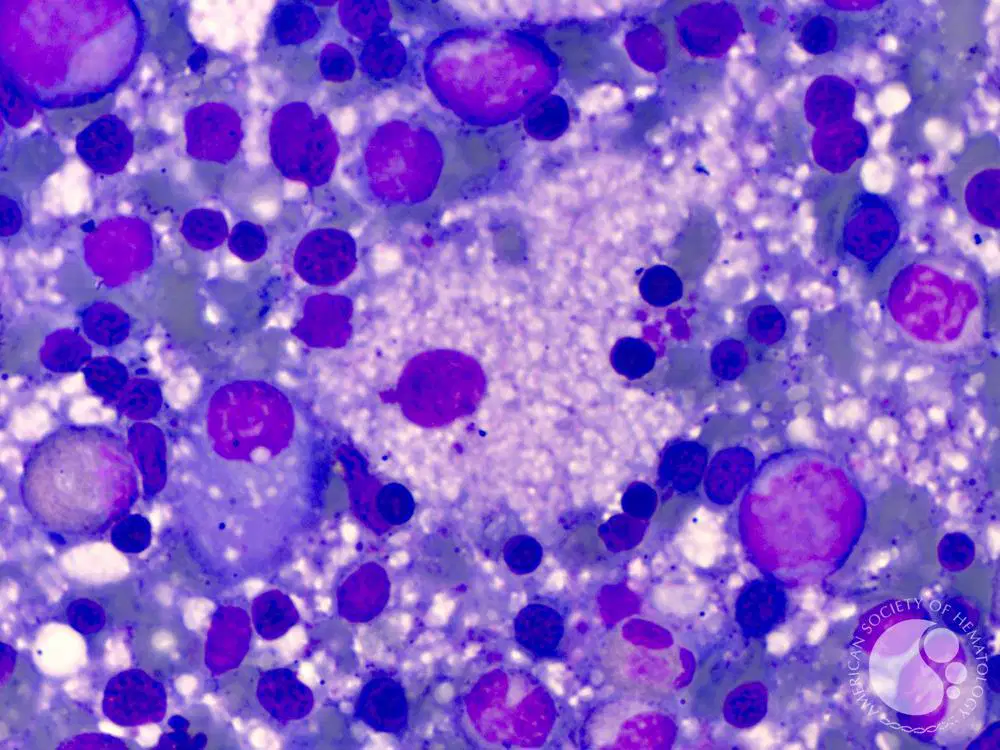
Select the gel-like substance that fills up the cell, surrounding all the organelles and giving the cell shape.
cytoplasm
cell membrane
cell wall
centrioles
14
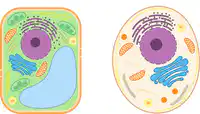
The diagram represents an animal cell, as indicated by its rounded or irregular shape. This characteristic shape is due to the absence of a rigid cell wall.
The next diagram represents a plant cell, as indicated by the rectangular shape, due to the presence of a rigid cell wall. The second diagram also shows the chloroplast and large central vacuole that are present in a plant cell.
You will complete the PLANT Cell later this week.
15
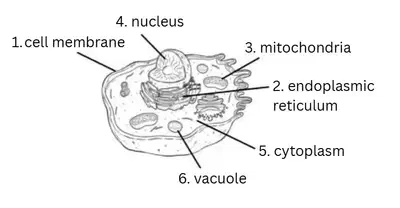
Label the cell diagram by writing the correct name and number of each structure next to its corresponding line.
16
Fill in the Blanks
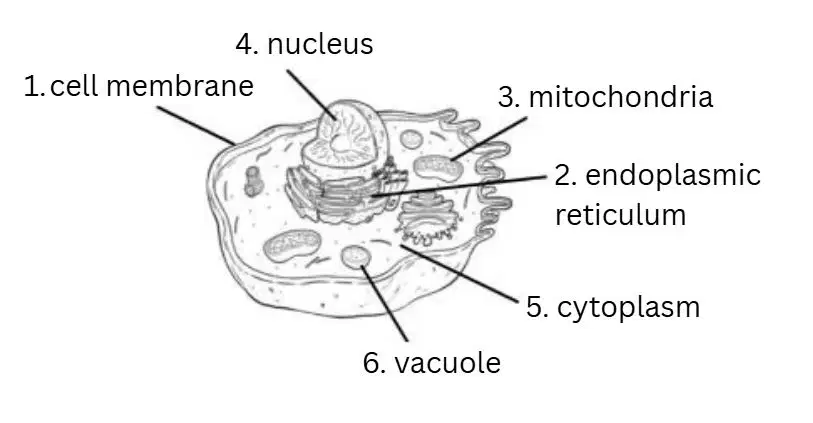
An animal cell has a rounded or
17
Poll
How confident do you feel about your understanding of animal cells after today’s notes?
I’m a cell expert!
I get the basics.
I need a bit more review.
I am still figuring it out.
By Potomac Middle Life Science Department
Content Objective: LS 2.b
Learning Target:
identify cellular organelles (cell parts)
relate organelles with the life processes they perform within a living cell
Language Objective: I can complete my notes by writing the missing information, and labeling a diagram
Show answer
Auto Play
Slide 1 / 17
SLIDE
Similar Resources on Wayground

13 questions
Transportation in plants and animals
Presentation
•
7th Grade
14 questions
Absolute Age Dating
Presentation
•
7th Grade
14 questions
Plate Motion and Surface Features
Presentation
•
7th Grade
12 questions
Motion and types of motion
Presentation
•
7th Grade
12 questions
Air Masses
Presentation
•
7th Grade
12 questions
types of energy
Presentation
•
7th Grade
11 questions
Weather and Atmosphere Review
Presentation
•
7th Grade
13 questions
The Circulatory System
Presentation
•
7th Grade
Popular Resources on Wayground
10 questions
Safety Day 2026 – Student Review

Quiz
•
9th Grade
21 questions
Continents and Oceans
Quiz
•
6th Grade
20 questions
Parts of Speech
Quiz
•
5th Grade
16 questions
Subject & Predicate
Quiz
•
5th Grade
25 questions
Multiplication Facts
Quiz
•
5th Grade
12 questions
Map Skills
Quiz
•
3rd Grade
22 questions
Continents and Oceans
Quiz
•
5th Grade
15 questions
Rounding Decimals
Quiz
•
5th Grade
Discover more resources for Science
10 questions
Exploring Chemical and Physical Changes

Interactive video
•
6th - 10th Grade
14 questions
Week 1 Falcon Flex Fast and Curious
Quiz
•
7th Grade
42 questions
Explore Plate Tectonics and Boundaries
Quiz
•
7th Grade
21 questions
Waves and Wave Properties
Quiz
•
6th - 8th Grade
16 questions
Photosynthesis and Cellular Respiration Review
Quiz
•
7th Grade
20 questions
Food Webs + Energy Pyramids
Quiz
•
7th Grade
9 questions
Biology: Cell Structure
Interactive video
•
7th Grade
8 questions
Diffusion and Osmosis Review
Presentation
•
6th - 8th Grade