

ATP-ADP ( coupled reaction)

Presentation
•
Biology
•
11th Grade
•
Medium
Standards-aligned

Egee Rae Reyes
Used 3+ times
FREE Resource
28 Slides • 22 Questions
1

ATP-ADP
2
Multiple Choice
What does ATP stand for?
Adenine Triphosphate
Adenosine Tetraphosphate
Adenosine Triphosphate
Adenosine Diphosphate
3
Multiple Choice
Describe the role of ATP in cellular energy.
ATP is the main energy carrier in cells, providing energy for various biological processes.
ATP is primarily used for DNA replication.
ATP is a waste product of cellular respiration.
ATP is a structural component of cell membranes.
4
Multiple Choice
How is ATP converted to ADP?
ATP is converted to ADP by condensation, forming a water molecule.
ATP is converted to ADP by oxidation, gaining a hydrogen atom.
ATP is converted to ADP through phosphorylation, adding a phosphate group.
ATP is converted to ADP by hydrolysis, releasing a phosphate group.
5
Multiple Choice
What is the significance of the phosphate groups in ATP?
They are responsible for DNA replication.
They help in the synthesis of proteins.
They act as a structural component of cell membranes.
The phosphate groups in ATP are significant because they store and release energy for cellular processes.
6
Multiple Choice
Explain the process of phosphorylation.
Phosphorylation is the process of breaking down proteins into amino acids.
Phosphorylation occurs only in the presence of oxygen.
Phosphorylation is the removal of a phosphate group from a molecule.
Phosphorylation is the addition of a phosphate group to a molecule, usually a protein, by kinases.
7
Multiple Choice
What is the energy currency of the cell?
FADH2
ATP
NADH
ADP
8
Multiple Choice
How do ATP and ADP relate to cellular respiration?
ATP and ADP are not involved in cellular respiration.
ADP is the primary energy source for cellular processes.
ATP is broken down into ADP during cellular respiration.
ATP is produced from ADP during cellular respiration, serving as the main energy currency of the cell.
9
Multiple Choice
What enzyme is responsible for the synthesis of ATP?
ATP synthase
ATPase
Phosphorylase
Kinase
10
Multiple Choice
In what cellular processes is ATP utilized?
DNA replication
Cell division
Photosynthesis
ATP is utilized in muscle contraction, active transport, biosynthesis, and cellular signaling.
11
12

13

14

15
16

17

18

19

20

21
22
Multiple Choice

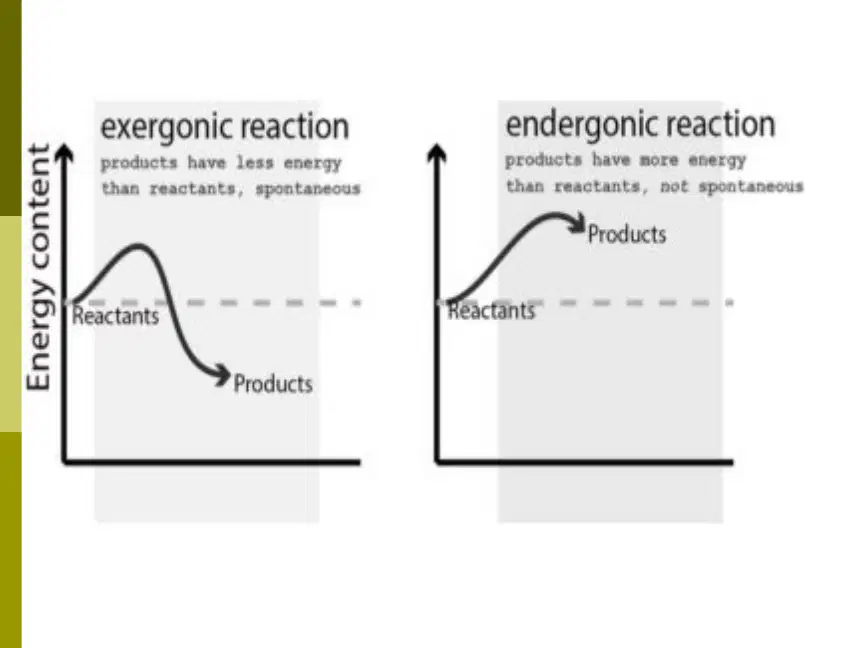
The image depicts an...
endergonic reaction
exergonic reaction
enzyme-catalyzed reaction
endothermic reaction
23
Multiple Choice
Which of the following best describes an exergonic reaction?
A reaction that absorbs energy
A reaction that releases energy
A reaction that neither absorbs nor releases energy
A reaction that requires a catalyst
24

25
26

27

28
29

30
31
32

33

34
Multiple Choice
35

36

37

38
39

40
Multiple Choice
What does ADP stand for?
Adenine Diphosphate
Adenosine Triphosphate
Adenosine Monophosphate
Adenosine Diphosphate
41
Multiple Choice
In what cellular processes is ATP utilized?
DNA replication
Cell division
Photosynthesis
ATP is utilized in muscle contraction, active transport, biosynthesis, and cellular signaling.
42
Multiple Choice
Describe the role of ATP in cellular energy.
ATP is the main energy carrier in cells, providing energy for various biological processes.
ATP is primarily used for DNA replication.
ATP is a waste product of cellular respiration.
ATP is a structural component of cell membranes.
43
Multiple Choice
How is ATP converted to ADP?
ATP is converted to ADP by condensation, forming a water molecule.
ATP is converted to ADP by oxidation, gaining a hydrogen atom.
ATP is converted to ADP through phosphorylation, adding a phosphate group.
ATP is converted to ADP by hydrolysis, releasing a phosphate group.
44
Multiple Choice
What is the significance of the phosphate groups in ATP?
They are responsible for DNA replication.
They help in the synthesis of proteins.
They act as a structural component of cell membranes.
The phosphate groups in ATP are significant because they store and release energy for cellular processes.
45
Multiple Choice
Explain the process of phosphorylation.
Phosphorylation is the process of breaking down proteins into amino acids.
Phosphorylation occurs only in the presence of oxygen.
Phosphorylation is the removal of a phosphate group from a molecule.
Phosphorylation is the addition of a phosphate group to a molecule, usually a protein, by kinases.
46
Multiple Choice
What is the energy currency of the cell?
FADH2
ATP
NADH
ADP
47
Multiple Choice
How do ATP and ADP relate to cellular respiration?
ATP and ADP are not involved in cellular respiration.
ADP is the primary energy source for cellular processes.
ATP is broken down into ADP during cellular respiration.
ATP is produced from ADP during cellular respiration, serving as the main energy currency of the cell.
48
Multiple Choice
What enzyme is responsible for the synthesis of ATP?
ATP synthase
ATPase
Phosphorylase
Kinase
49
Multiple Choice
In what cellular processes is ATP utilized?
DNA replication
Cell division
Photosynthesis
ATP is utilized in muscle contraction, active transport, biosynthesis, and cellular signaling.
50

ATP-ADP
Show answer
Auto Play
Slide 1 / 50
SLIDE
Similar Resources on Wayground

47 questions
Earth Subsystem
Presentation
•
11th Grade
43 questions
Biogeochemical Cycles Lesson
Presentation
•
10th Grade
45 questions
Biomes of the world
Presentation
•
10th Grade
45 questions
Adaptations, GE, Evolution
Presentation
•
11th Grade
45 questions
4GENBIO2 - GENETIC ENGINEERING
Presentation
•
11th Grade
44 questions
Fractures, bone lengenting, bone healing, types of ribs
Presentation
•
11th Grade
42 questions
Fetal Pig Dissection
Presentation
•
11th - 12th Grade
44 questions
Non-Mendelian Genetics Lesson
Presentation
•
10th Grade
Popular Resources on Wayground
10 questions
GPA Lesson
Presentation
•
9th - 12th Grade
7 questions
Albert Einstein

Quiz
•
3rd Grade
31 questions
Bridge A Review
Quiz
•
3rd Grade
6 questions
Blue Sue and Red Ruth
Quiz
•
3rd Grade
8 questions
(Day12 HW) Inverse Trig Ratios
Quiz
•
9th Grade
20 questions
Summer Geometry QUIZ (Week3)
Quiz
•
9th Grade
16 questions
Theme Practice
Quiz
•
7th Grade
20 questions
Taxes
Quiz
•
9th - 12th Grade