

Reconstruction (pt. 1) (Presidential Reconstruction)

Presentation
•
History
•
9th Grade
•
Practice Problem
•
Hard

Jacob Riggs
Used 15+ times
FREE Resource
26 Slides • 0 Questions
1
2
Reconstruction
Period from 1865-1877 in the South, proved to be a time of testing for American values
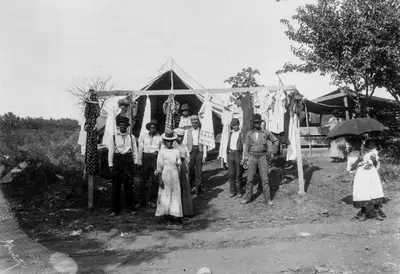
The Civil War secured liberty for black Americans

3
Some Americans were determined to also give former slaves, or freedmen, equality and the opportunity to prosper.
4

For Northerners, life after the war was not much different from life before the war
Little Northern property had been damaged in the war
Soldiers could return to their farms or their jobs
Immigration continued to add to the Northern population
The situation in the South was different
The South had lost many of its young men and slavery no longer existed; its labor force was disrupted
Reconstruction & The South
5
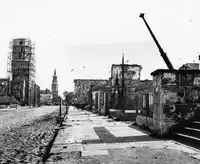
The South also suffered severe property damage
The war left many Southern cities--including Atlanta, Columbia, and Richmond--in ruins
The South's plantation system was dead

6
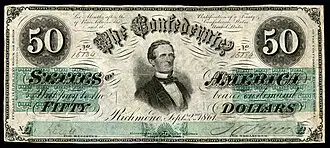
Confederate money was worthless
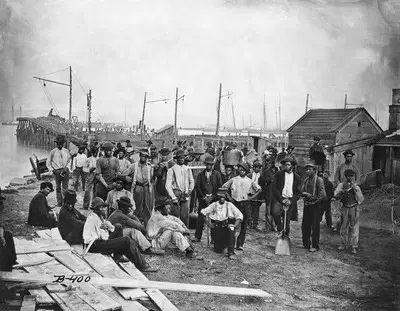
Black Southerners, numbering about four million, were now free
They faced challenges integrating
They had no money
7
A number of laws limited the kind of work freed slaves could pursue
They sought political & social equality, but often faced violence
They South had to reestablish its state governments
8

Officially, Reconstruction covered the twelve years from 1865 to 1877
The period can be divided into 3 phases:
Presidential Reconstruction
Congressional Reconstruction
Bourbon Reconstruction
Phases of Reconstruction
9
10
11

The period during which Presidents Abraham Lincoln & Andrew Johnson directed the Reconstruction process was known as Presidential Reconstruction.
Under Lincoln
12
10 Percent Plan
December 1863
Lincoln formulated the Ten Percent Plan for restoring the South
Military governor was to reestablish a civilian government as soon as ten percent of those who had voted in the 1860 election took an oath of allegiance to the Union
Lincoln appointed a governor for each captured state
The plan offered pardons to most former Confederates who would swear to support the Constitution and the Union
13
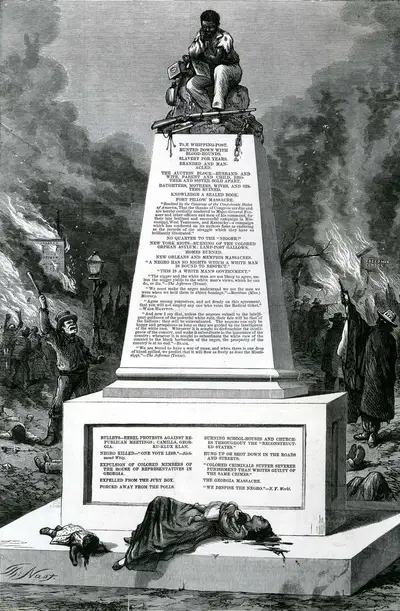
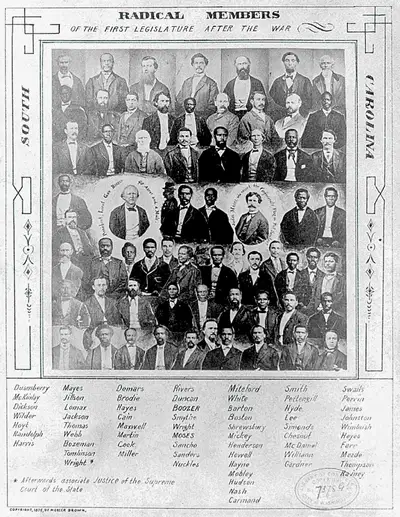
Radical Republicans resisted Lincoln's plan
Influential minority in the Republican Party that believed those who led the South during the Civil War should not be allowed to return to power
Radical Republicans Rejections
14
The South would receive more votes in Congress than before the war because freed blacks would count as full persons
Radical Republicans worried that the Southern Democrats would align with Northern Democrats and gain control of the national government
They wanted to secure political and civil rights for black Americans
Radicals also opposed the increase of presidential powers
15
1864
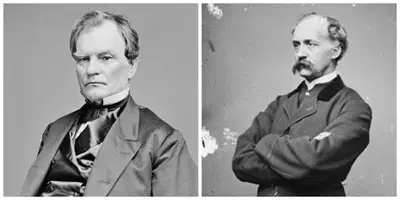
Congress developed its own Reconstruction plan: the Wade-Davis Bill
Lincoln believed it was too harsh and vetoed the bill
16
Congressional plan for Reconstruction requiring more than 50% of white male citizens to take an oath of allegiance to the Union before a state would be allowed to reenter; plan requiring states to abandon slavery and any claims on the federal government to repay war debts; states had to agree that former Confederate military and political leaders would not be allowed to vote or hold office
17

Johnson opposed Tennessee's vote to secede in 1861
He was the only Southern Senator not to resign his Senate seat
Lincoln named him military governor of the state of Tennessee
Under Johnson
18
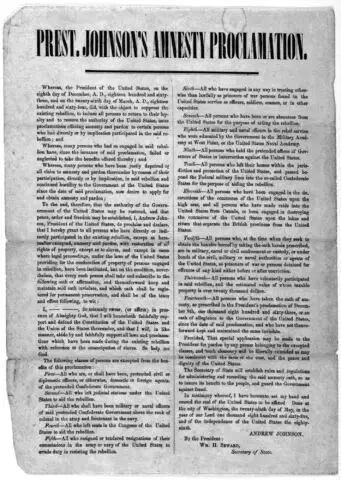
Johnson's plan was to first offer amnesty to Southerners who would swear loyalty to the Union
A group pardon
Southerners with large properties had to apply to him personally for a pardon
Unpardoned Southerners could not vote, hold office, or reclaim property
19
He planned to appoint temporary state governors to hold state conventions
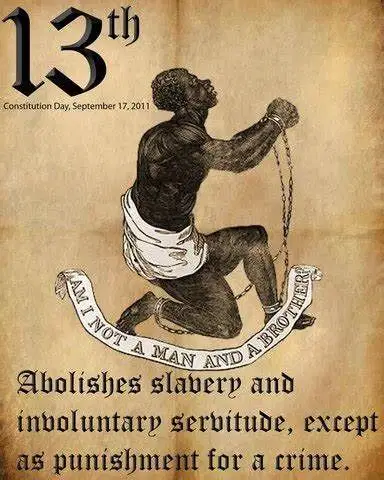
Those conventions would draft new state constitutions that would refuse to pay Confederate debt and would adopt the Thirteenth Amendment
Abolished slavery
20
While following Johnson's plan, no Southern states gave voting rights to blacks
They began instituting black codes
Restrictive laws passed in southern states that placed African Americans in an inferior position to white people
Black Codes
21
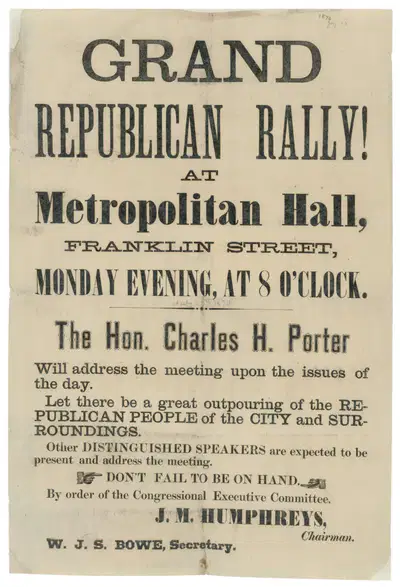
Republicans believed Johnson's plan was flawed
They insisted it did not address all the issues and noted its numerous shortcomings
Radical Republicans React
22
The Radical Republicans had long believed that black Americans should be not only freed from slavery but also given full rights of citizenship
Southern states would not have more power in national government
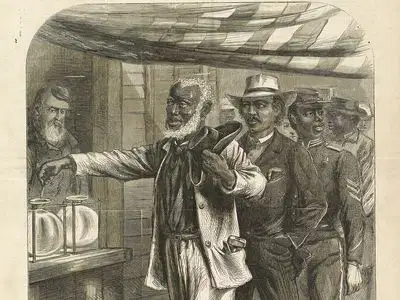
When Southern states held their elections in late 1865, most of them elected former confederates
23
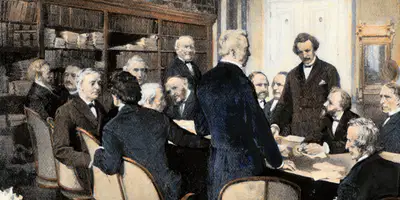
Congress refused to seat the newly elected Southern representatives
The moderate and Radical Republicans formed their own committee on Reconstruction
Congressional Reconstruction
24
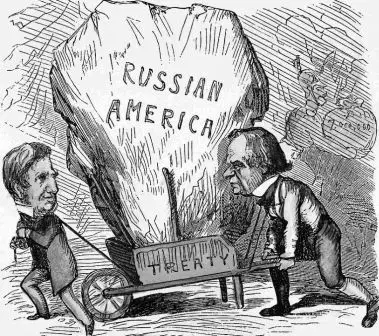
His administration achieved some accomplishments in foreign affairs
Most significant was Alaska
1867 - William Seward secretly negotiated a treaty with Russia to purchase Alaska
Noted as "Seward's Folly" by news
Seward also signed a treaty of friendship and commerce with China in 1868
Johnson & Foreign Affairs
25
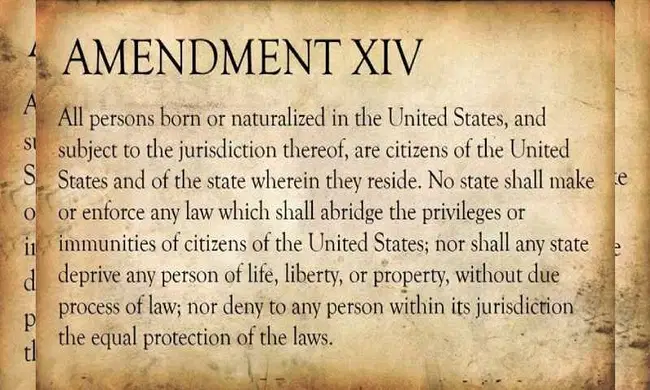
Granted full citizenship to black Americans
26
All Americans are citizens of both the nation and the states where they reside
A state's representation would be based on its whole population
Those who had sworn an oath to support the Constitution and had broken that oath by supporting the Confederacy were barred from holding government offices
Congress would not pay any Confederate debts
Show answer
Auto Play
Slide 1 / 26
SLIDE
Similar Resources on Wayground

18 questions
Cuban Missile Crisis
Presentation
•
9th - 10th Grade
21 questions
Imperialism in India
Presentation
•
10th Grade
21 questions
NEW SOUTH PART 1
Presentation
•
8th Grade
20 questions
Cell Structure/Function/Transport STAAR BLITZ
Presentation
•
9th Grade
20 questions
Protein Synthesis
Presentation
•
9th Grade
20 questions
How Many - How Much
Presentation
•
9th Grade
20 questions
Classifying Polynomials
Presentation
•
9th Grade
20 questions
Exponential Functions Intro
Presentation
•
9th Grade
Popular Resources on Wayground
10 questions
Safety Day 2026 – Student Review

Quiz
•
9th Grade
21 questions
Continents and Oceans
Quiz
•
6th Grade
20 questions
Parts of Speech
Quiz
•
5th Grade
16 questions
Subject & Predicate
Quiz
•
5th Grade
25 questions
Multiplication Facts
Quiz
•
5th Grade
12 questions
Map Skills
Quiz
•
3rd Grade
22 questions
Continents and Oceans
Quiz
•
5th Grade
15 questions
Rounding Decimals
Quiz
•
5th Grade
Discover more resources for History
25 questions
The American Revolution
Quiz
•
7th - 10th Grade
15 questions
The Bill of Rights
Quiz
•
8th - 12th Grade
15 questions
Ancient Rome
Quiz
•
7th - 10th Grade
16 questions
Students of Civics Unit 2: The Constitution
Quiz
•
7th - 11th Grade
10 questions
Exploring the 7 Principles of the Constitution

Interactive video
•
6th - 10th Grade
10 questions
Significance of the Declaration of Independence
Interactive video
•
6th - 10th Grade
22 questions
Beginning of WW2 Quiz
Quiz
•
9th Grade
10 questions
Exploring the Age of Exploration
Interactive video
•
6th - 10th Grade