Search Header Logo
Y10A P1.4 L1-Density

Y10A P1.4 L1-Density

Assessment

Presentation

Physics

9th - 12th Grade

Practice Problem

Hard

NGSS
MS-PS1-2, MS-PS1-1

Standards-aligned

Created by

YCIS CQ

FREE Resource

27 Slides • 30 Questions

1
media

​Y10 IGCSE Coordinated Sciences
PHYSICS

2

media

3

Open Ended

Why is understanding density important in everyday life?

4

media

5

Multiple Choice

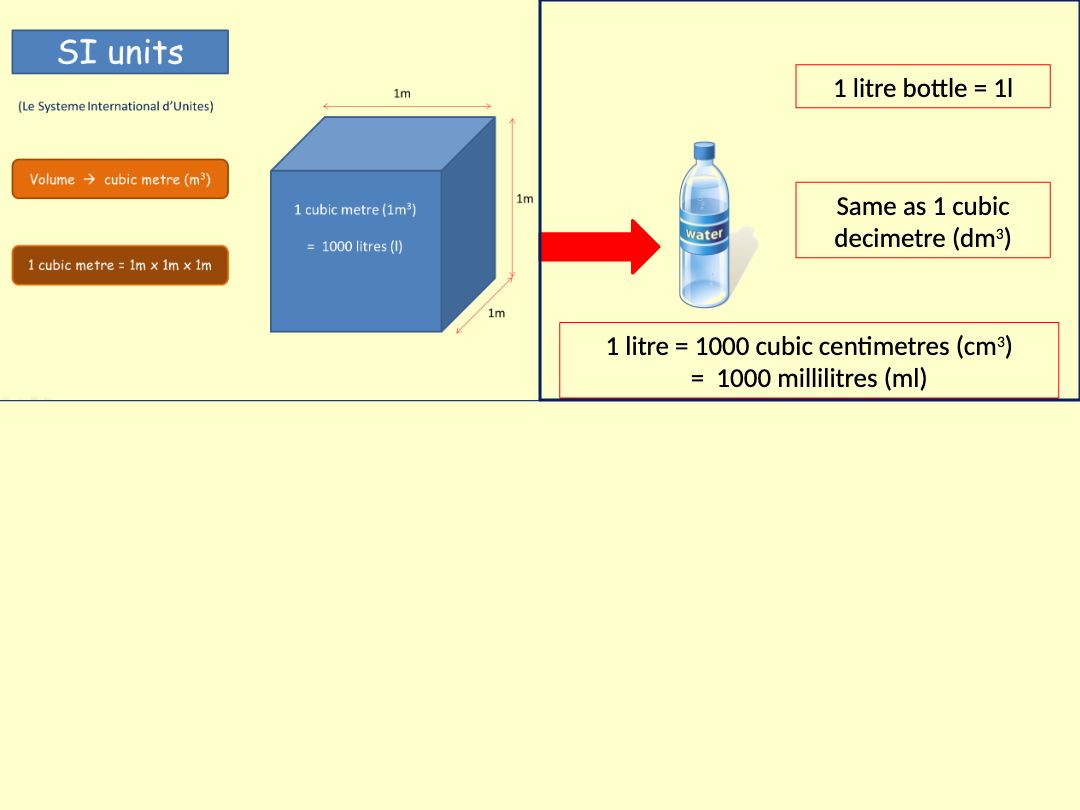
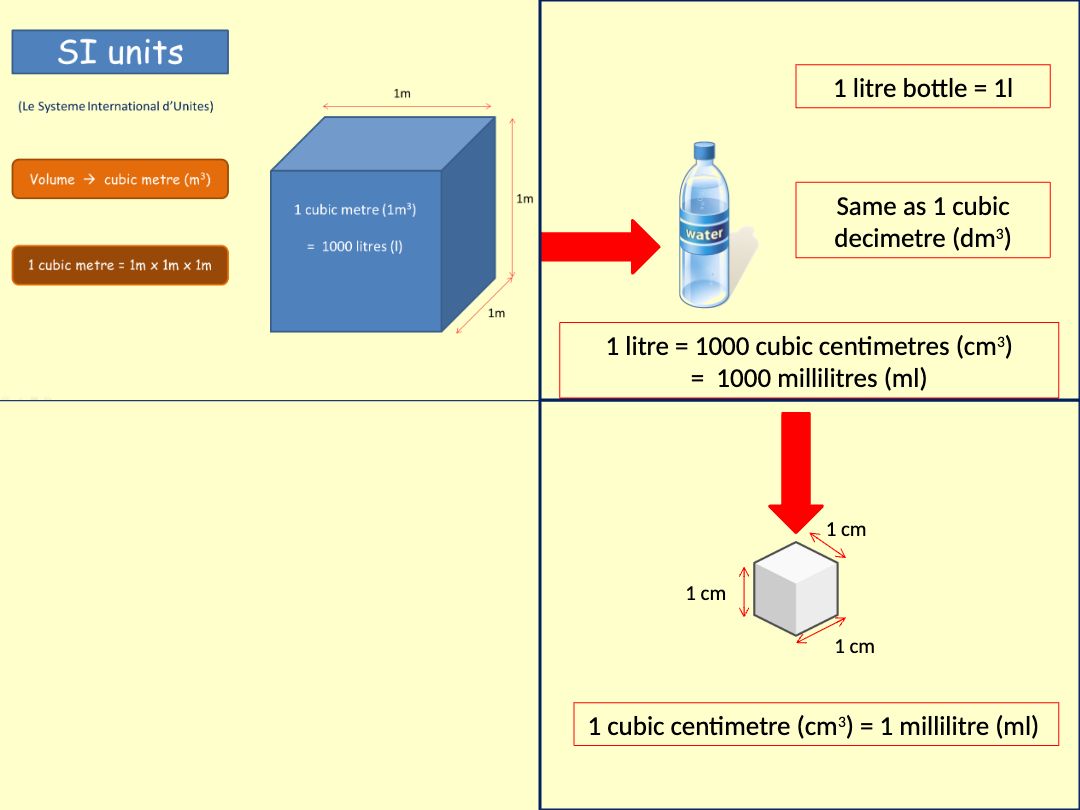
What is the SI unit for measuring volume?

1

Cubic metre (m³)

2

Litre (l)

3

Cubic centimetre (cm³)

4

Millilitre (ml)

6

media

7

Multiple Choice

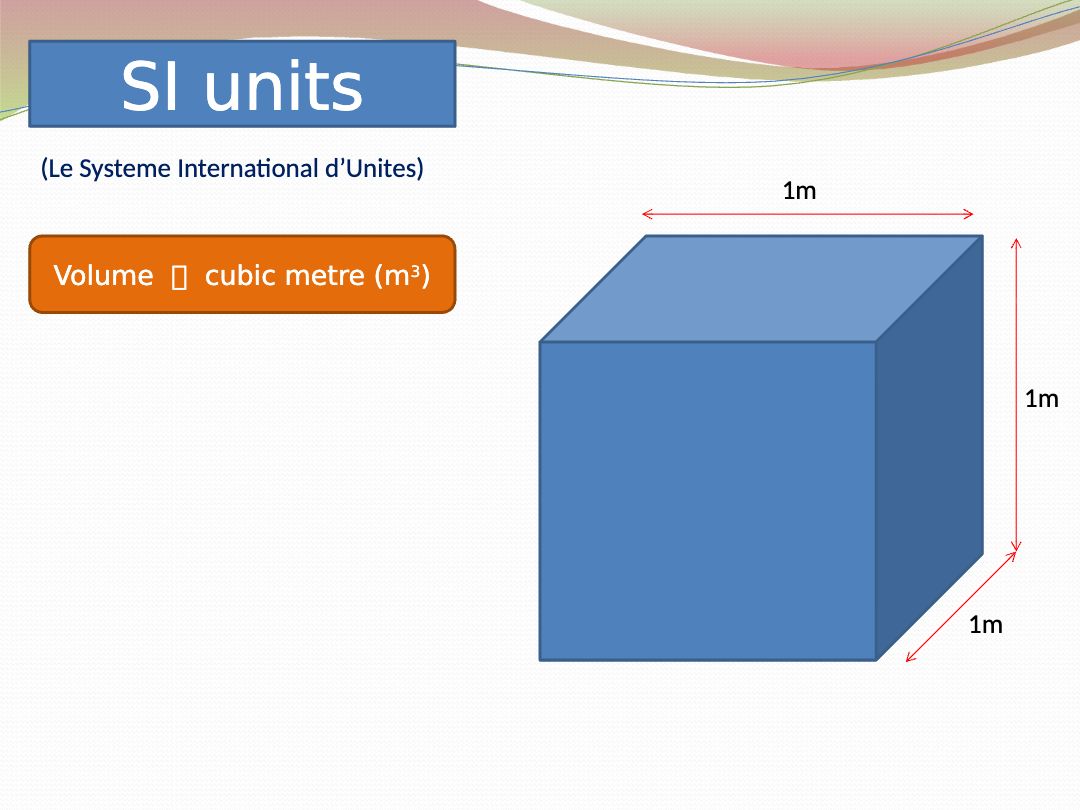
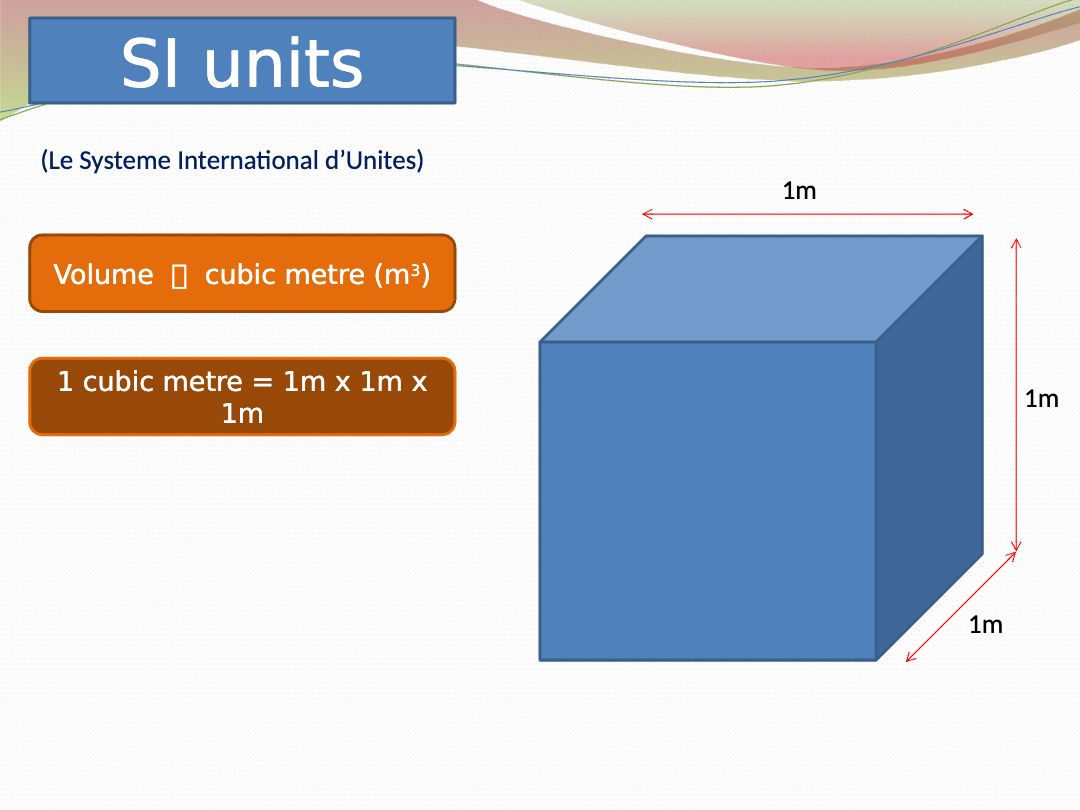
How is 1 cubic metre (m³) defined in terms of its dimensions?

1

1m x 1m x 1m

2

1m x 1m x 10m

3

10m x 10m x 10m

4

1m x 10m x 1m

8

media

9

Fill in the Blank

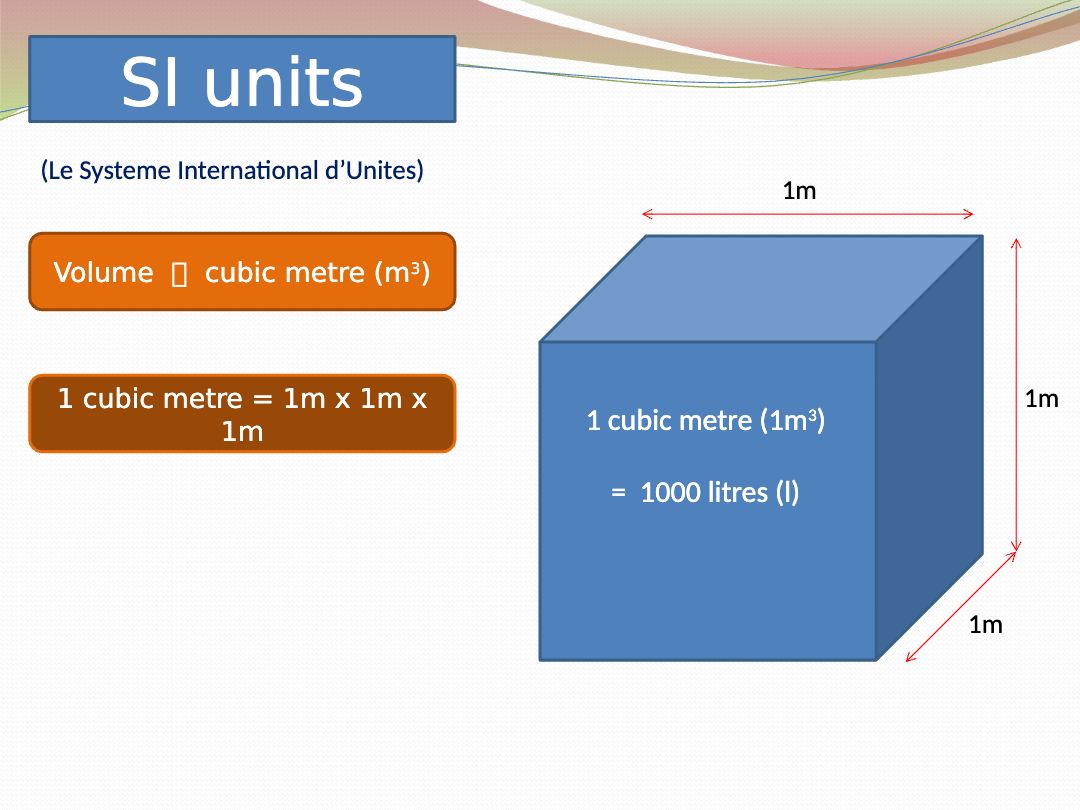
1 cubic metre (m³) is equal to ___ litres (l).

10

media

11

media

12

media

13

Multiple Choice

If you have a container with a volume of 250 cm³, how many millilitres of water can it hold?

1

250 ml

2

25 ml

3

2.5 ml

4

1000 ml

14

Multiple Select

Which of the following statements are correct about the relationship between litres, cubic centimetres, and millilitres?

1

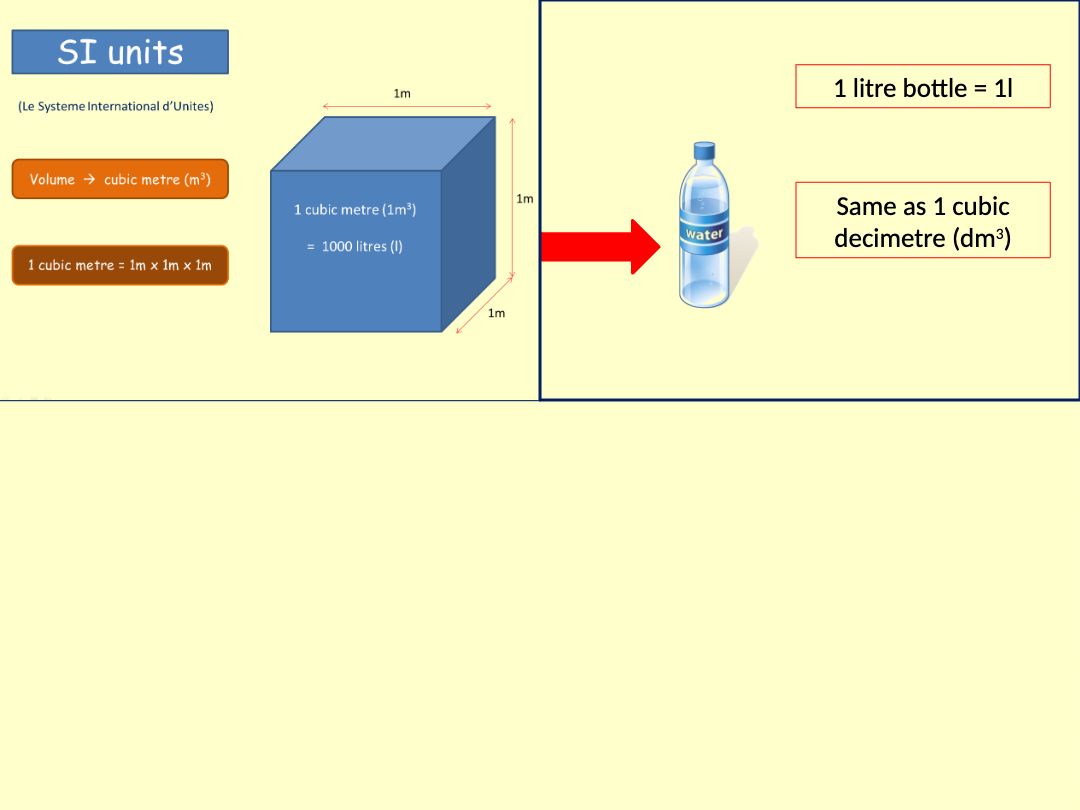
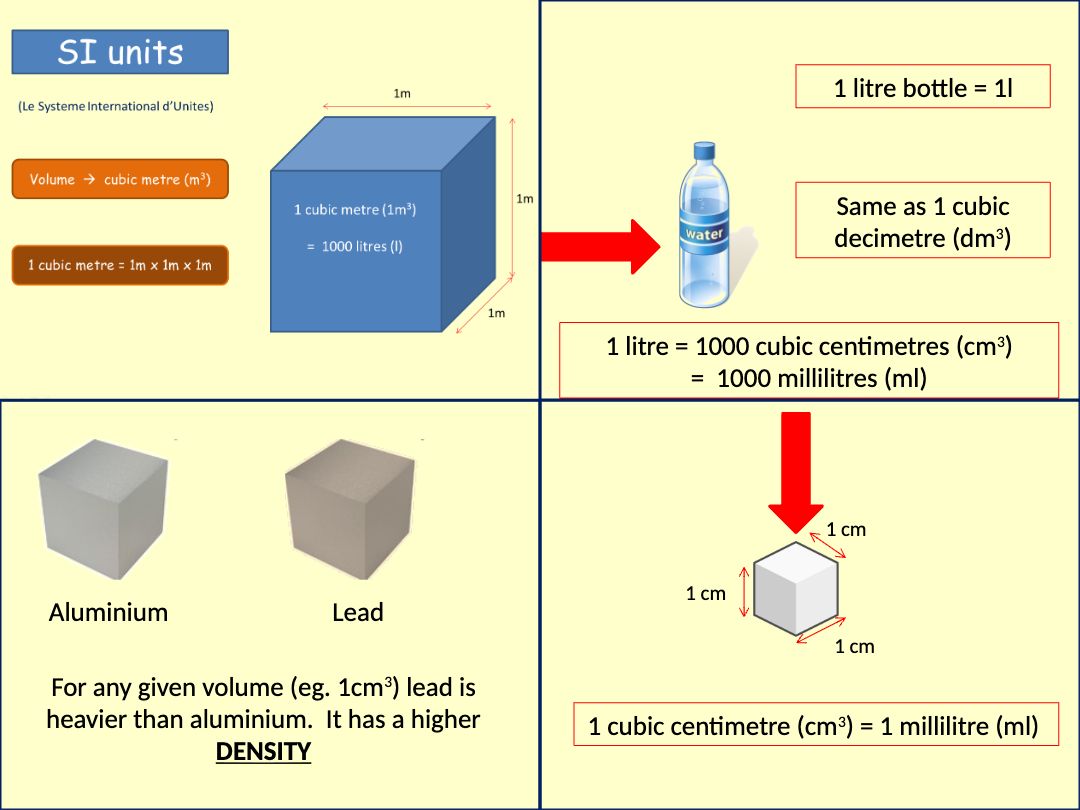
1 litre = 1000 cubic centimetres (cm³)

2

1 litre = 1000 millilitres (ml)

3

1 cubic centimetre (cm³) = 1 millilitre (ml)

4

1 litre = 100 cubic centimetres (cm³)

15

media

16

Multiple Choice

Which of the following statements about SI units of volume is correct?

1

1 cubic metre is equal to 1000 litres.

2

1 litre is equal to 100 cubic centimetres.

3

1 cubic centimetre is equal to 10 millilitres.

4

1 litre is equal to 100 cubic decimetres.

17

media

18

Fill in the Blank

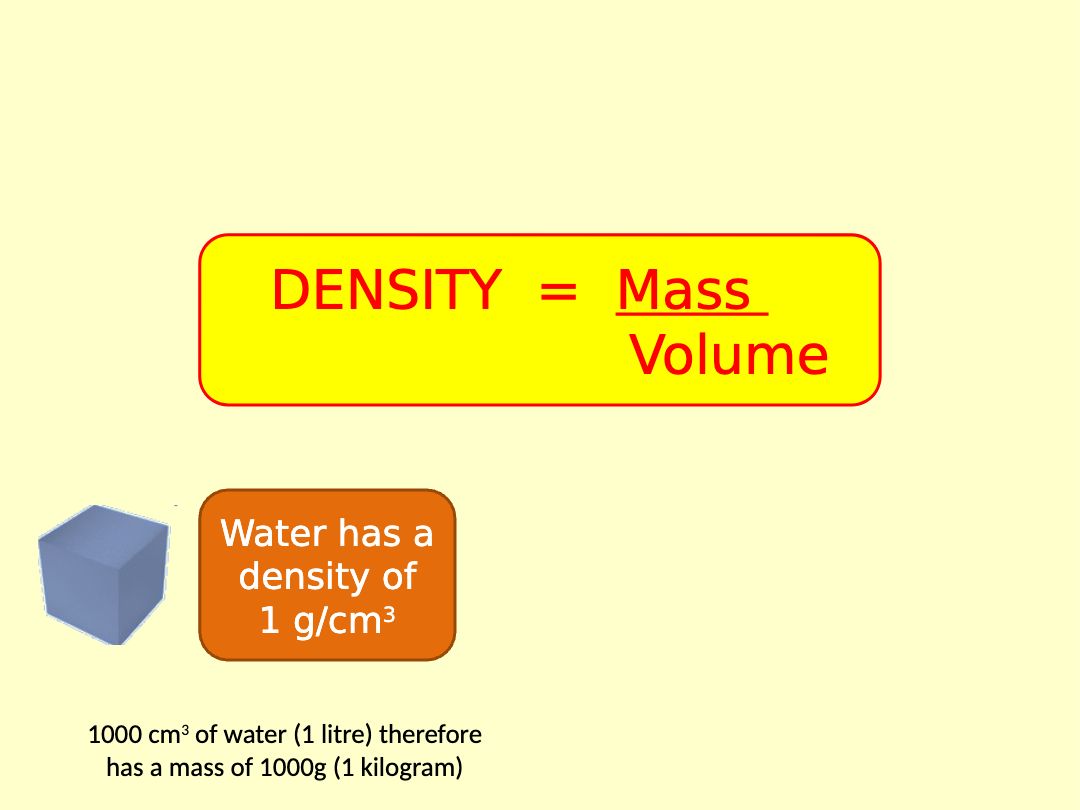
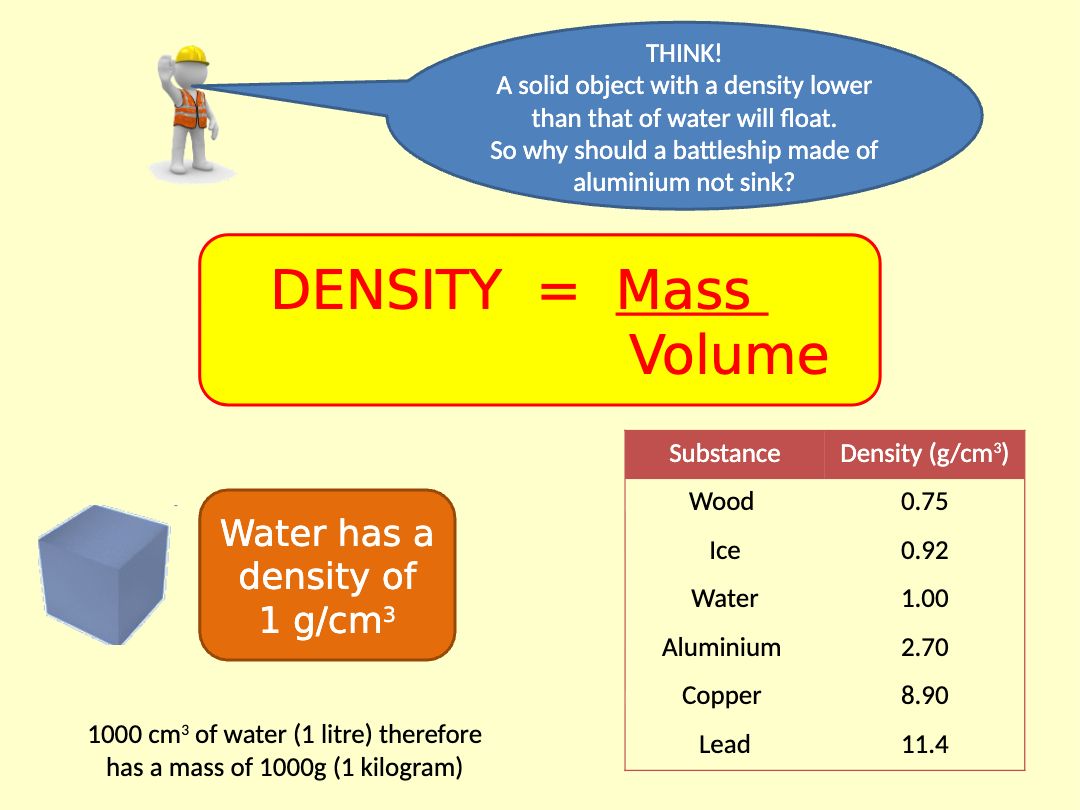
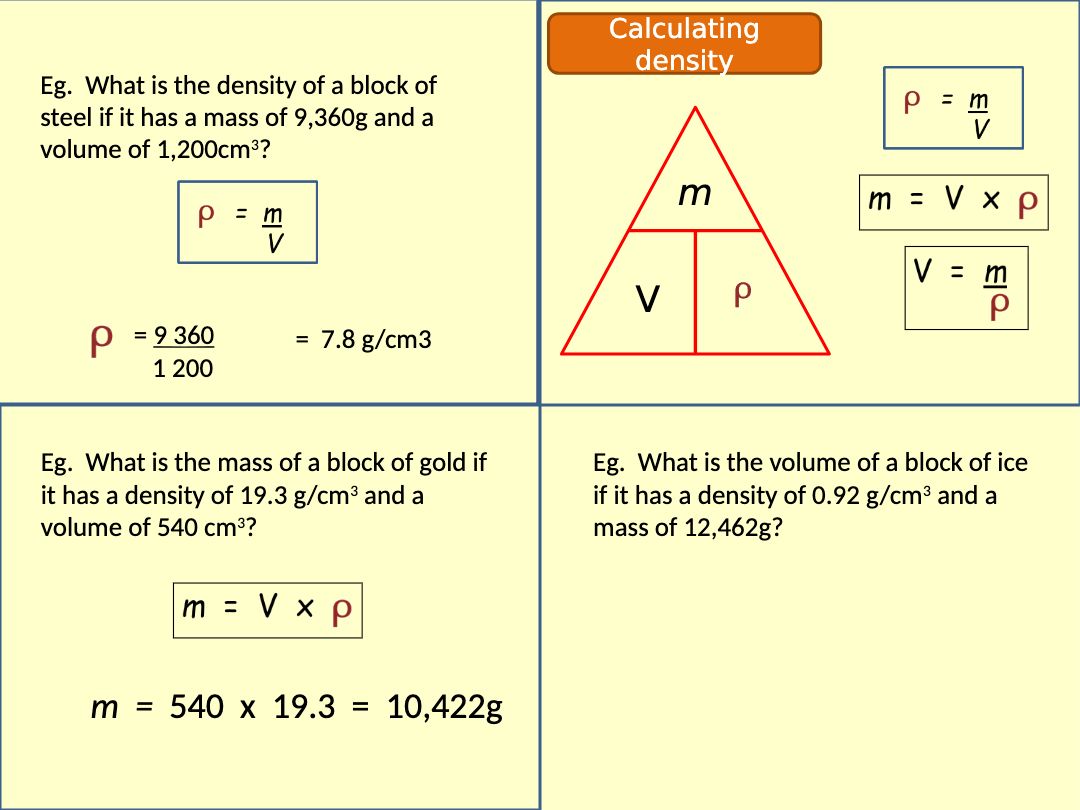
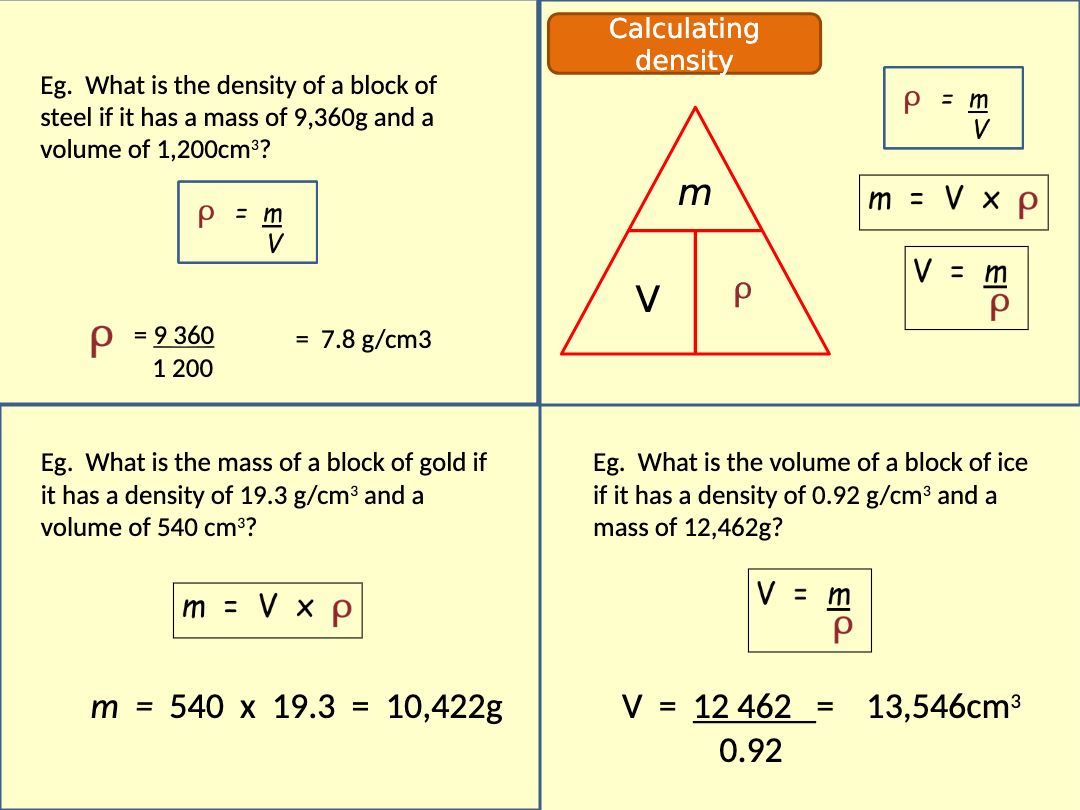
Fill in the blank: The formula for density is DENSITY = ___ / Volume.

19

media

20

Multiple Select

Select all the substances from the table that have a density less than water.

1

Wood

2

Ice

3

Copper

4

Lead

21

Multiple Choice

Question image

Which of the following substances has the highest density according to the table?

1

Copper

2

Lead

3

Aluminium

4

Water

22

Match

Question image

Look at the picture and match the following:

Density 1.25g/ml

Density

0.89 g/ml

Density

1.05g/ml

C

A

B

23

Open Ended

Explain why lead is heavier than aluminium for the same volume, using the concept of density.

24

media

25

media

26

Multiple Choice

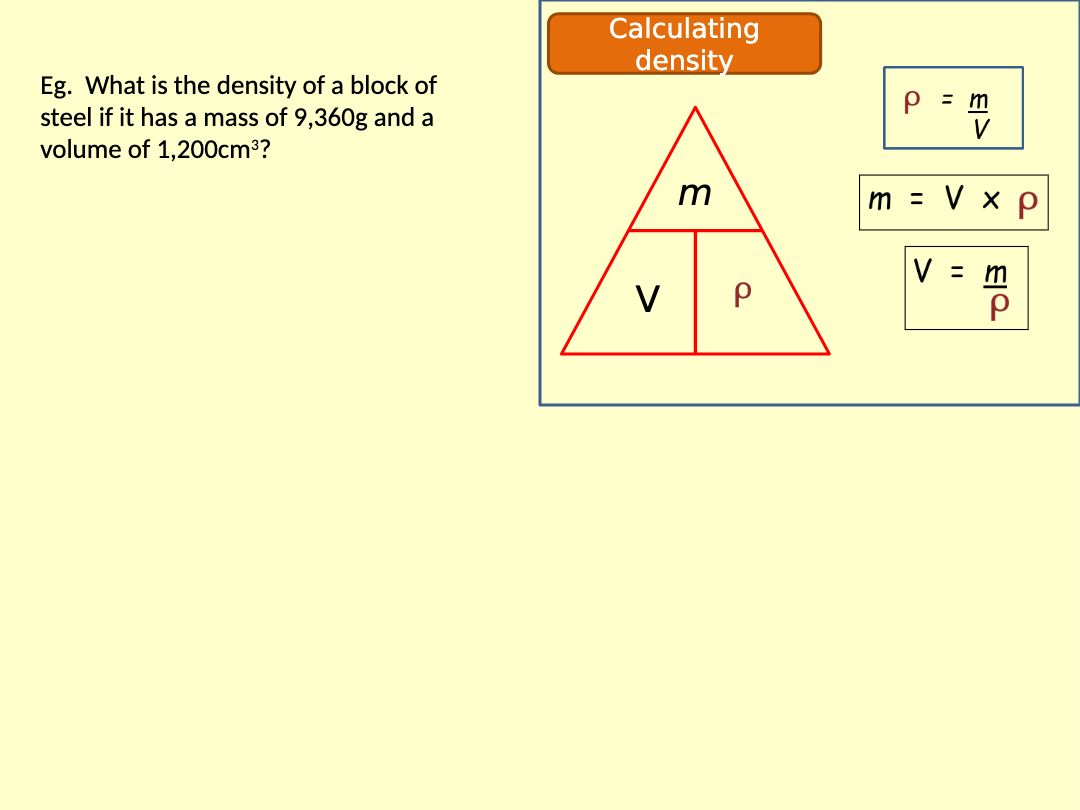
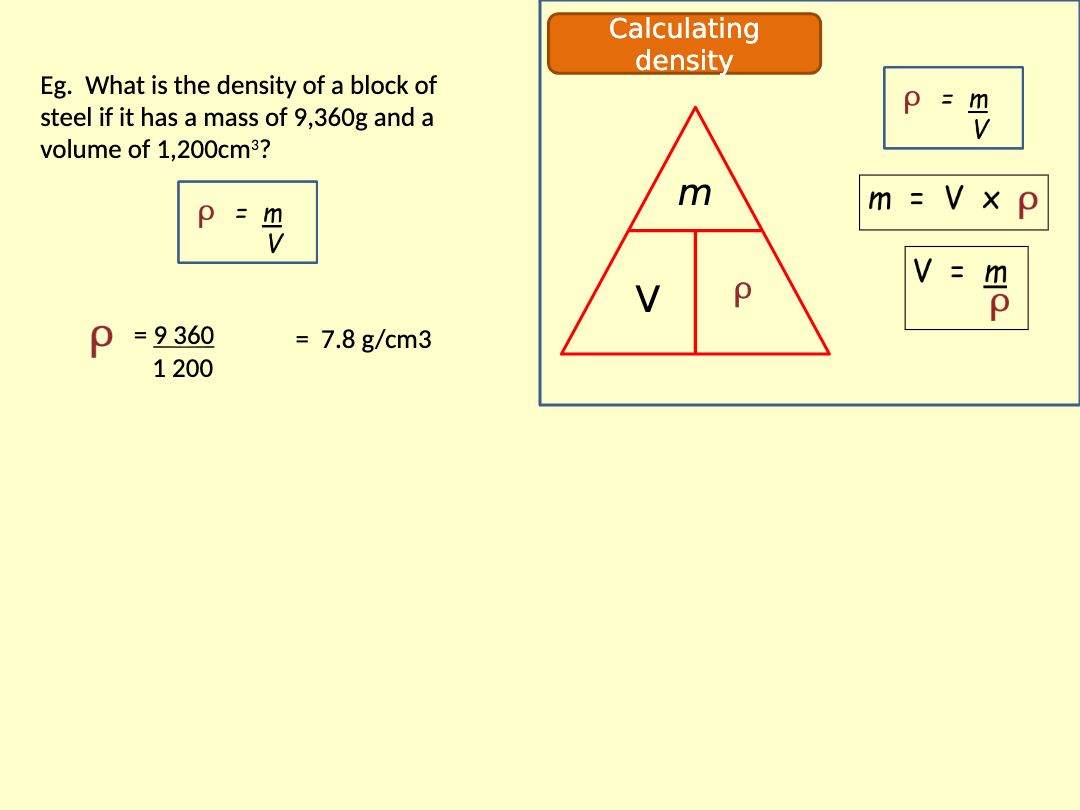
Which of the following formulas is used to calculate the density of an object?

1

density = mass / volume

2

density = volume / mass

3

density = mass x volume

4

density = mass + volume

27

Fill in the Blank

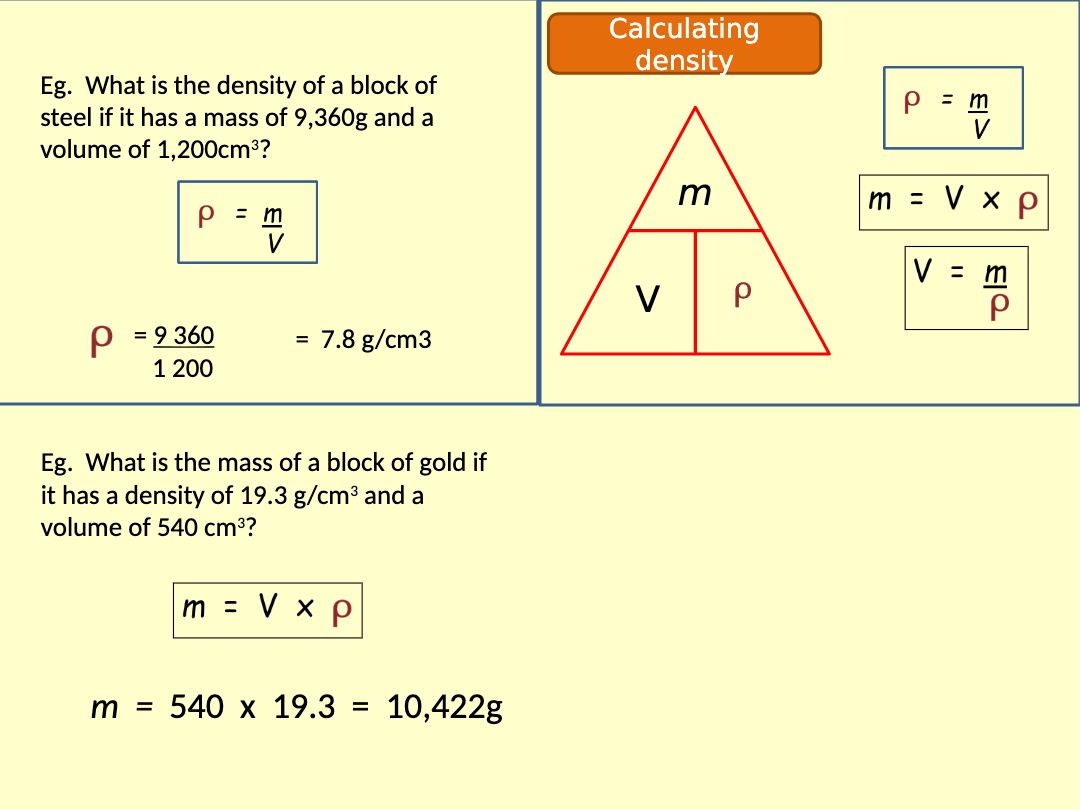
The formula for calculating mass is m = ___ x ρ.

28

media

29

media

30

media

31

media

32

media

33

Multiple Choice

Question image

Calculate the density of the rectangular prism

1

2 g/cm3

2

4 g/cm3

3

6 g/cm3

4

8 g/cm3

34

Multiple Choice

A mechanical pencil has the density of 3.000 g/cm3.  The volume of the pencil is 15.8 cm3.  What is the mass of the pencil?

1
47.4 g
2
50 g
3
0.190  g
4
5.27 g

35

Multiple Choice

Calculate the volume of a liquid with a density of 5.45 g/mL and a mass of 65 g.

1

11.9 mL

2

354 mL

3

0.0838 mL

4

59.6 mL

36

Multiple Choice

Pure gold has a density of 19.32 g/cm3. How large would a piece of gold be if it had a mass of 318.97 g?

1

6,163 cm3

2

16.51 cm3

3

0.6057 cm3

4

299.7 cm3

37

Multiple Choice

Question image

While digging in the backyard, you find an old coin. Its mass is 26.76 g and its volume is 3 cm3. What is the coin made of?

1

Marble

2

Quartz

3

Copper

4

Gold

5

Platinum

38

media

39

media

40

Calculating Volume of regular solids

For three-dimensional shapes like cubes and rectangular prisms, we can find the volume by measuring its dimensions; using a unit of length (e.g. meters or centimeters) and then applying the formula L x W x H to determine its volume. The unit of measurement would be the cubic value of the unit used for length.

media

41

Multiple Choice

Which formula would you use to calculate the volume of a rectangular block?

1

length x width x height

2

π x radius² x height

3

mass / volume

4

length + width + height

42

Multiple Choice

Which lab tool might you use to measure the volume of a liquid?
1
electric scale
2
bunsen burner
3
test tube
4
graduated cylinder

43

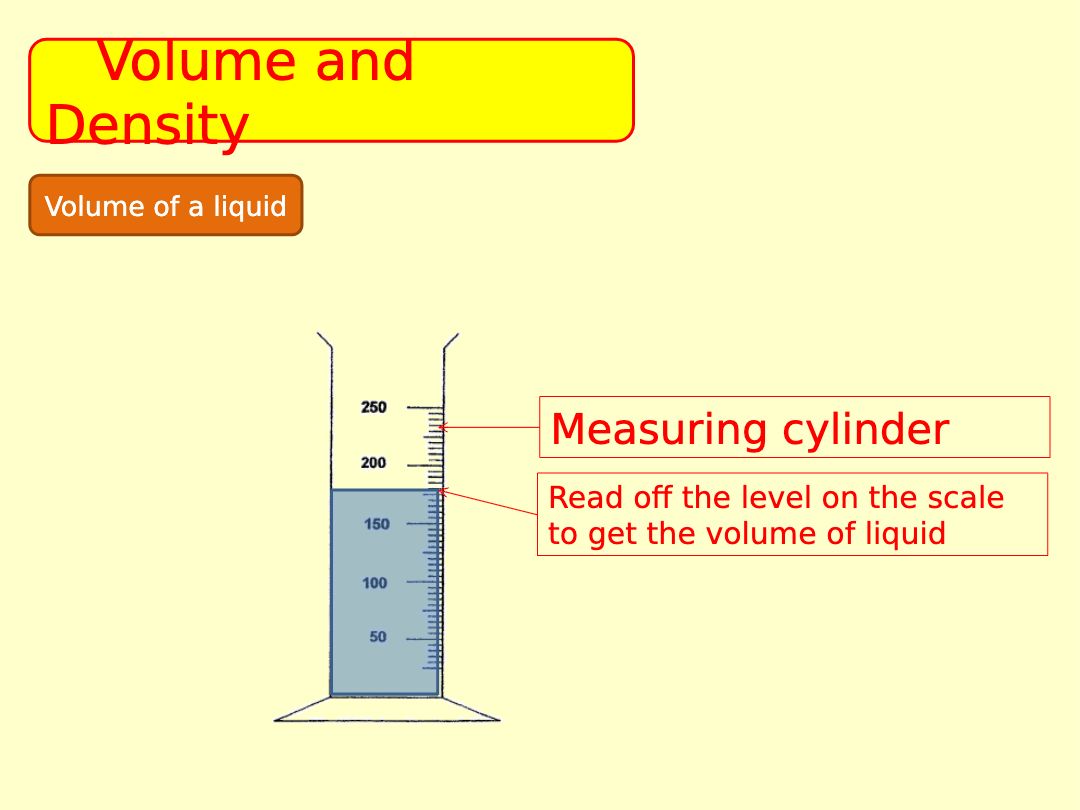
Calculating Volume of liquids

Measuring liquid volume requires a certain method. Vessels used to measure the volume of a liquid should always be placed on a flat surface.
The surface of liquids have a tendency to form a curve (called the meniscus) which should be read at the lowest level of the surface of the liquid, making sure that the eye is level with the surface of the liquid.

media

44

Multiple Choice

What do you call the curve in the surface of a liquid in a graduated cylinder that we use to measure the volume of an irregular object?

1

a measurement curve

2

menicus

3

eclipsis

45

Multiple Choice

Question image
At which point should your eyes be when you read a graduated cylinder? (Hint: see the letter next to the eye)
1
A
2
B
3
C

46

Multiple Choice

Question image
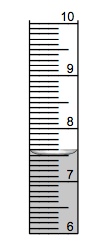
What is the volume of the liquid in this graduated cylinder?
1
8.5 mL 
2
7.5 mL 
3
8 mL 
4
.1 mL

47

Calculating volume of irregular solids

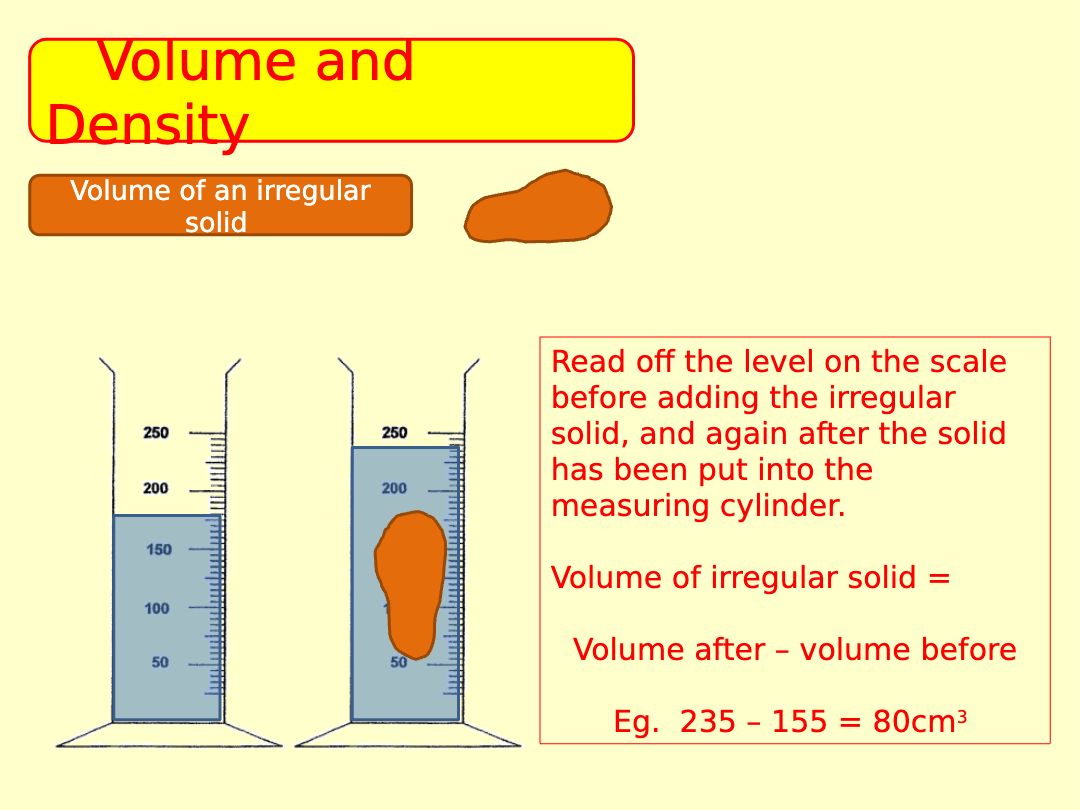
 We can find the volume of an irregular solid object using a method called water displacement method.

Step 1 is to fill the cylinder with enough water to immerse the object and measure the volume.

Next you would add the object to the water until it is totally submerged and measure the new volume of the water.
Subtract the first reading from the second to get the volume, in milliliters, of the object.

media

48

media

49

Multiple Select

Which of the following steps are necessary to determine the volume of an irregular solid using a measuring cylinder?

1

Measure the mass of the solid

2

Read the water level before and after adding the solid

3

Subtract the initial volume from the final volume

4

Multiply the mass by the volume

50

media

51

media

52

Multiple Choice

Question image
The green jade sample has a volume of
1
Cannot be determined
2
10.5 mL
3
50.0 mL
4
60.5 mL

53

Multiple Choice

If you start with 150 mL in a graduated cylinder and add an irregular shaped object and the water level raises to 157.6 mL, what is the volume of your irregular shaped object?

1

7 mL

2

157.6 mL

3

7.6 mL

54

Fill in the Blank

Question image

What is the volume of the object?

55

Multiple Choice

Which of the following best describes density?

1

The amount of space an object occupies

2

The amount of matter in an object

3

The mass per unit volume of a substance

4

The weight of an object in air

56

Open Ended

After learning about density, mass, and volume, what is one real-life situation where understanding these concepts could be useful?

57

media
media

​Y10 IGCSE Coordinated Sciences
PHYSICS

Show answer

Auto Play

Slide 1 / 57

SLIDE