Ecology 3.3
Presentation
•
Science
•
6th - 8th Grade
•
Practice Problem
•
Hard
+3
Standards-aligned
Bonnie Aylor
FREE Resource
26 Slides • 27 Questions
1
2
Open Ended
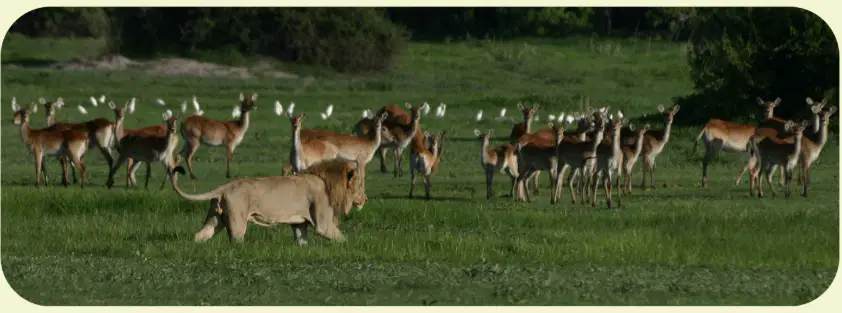
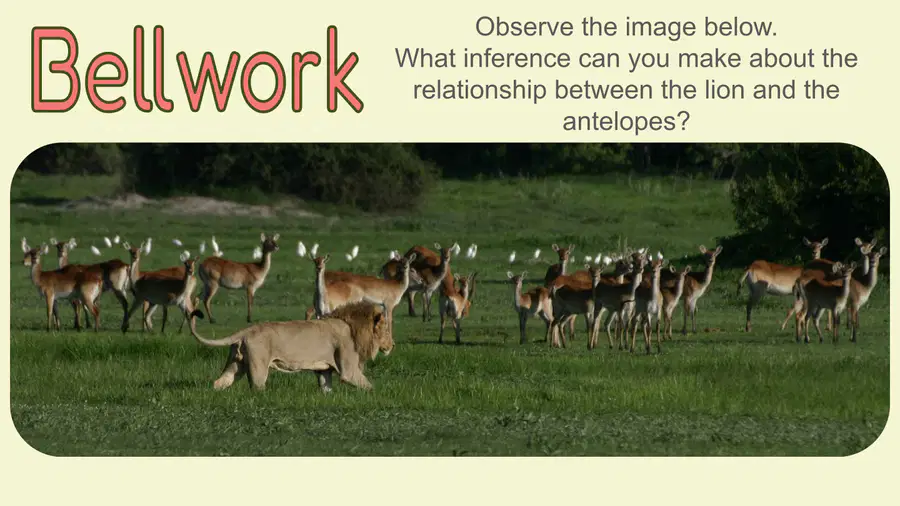
Observe the image below. What inference can you make about the relationship between the lion and the antelopes?
3
4
Multiple Choice
Why is it important to study ecological relationships in nature?
To understand how organisms interact and depend on each other
To learn how to protect endangered species
To discover new species of plants and animals
To find ways to make more money from natural resources
5
6
Multiple Choice
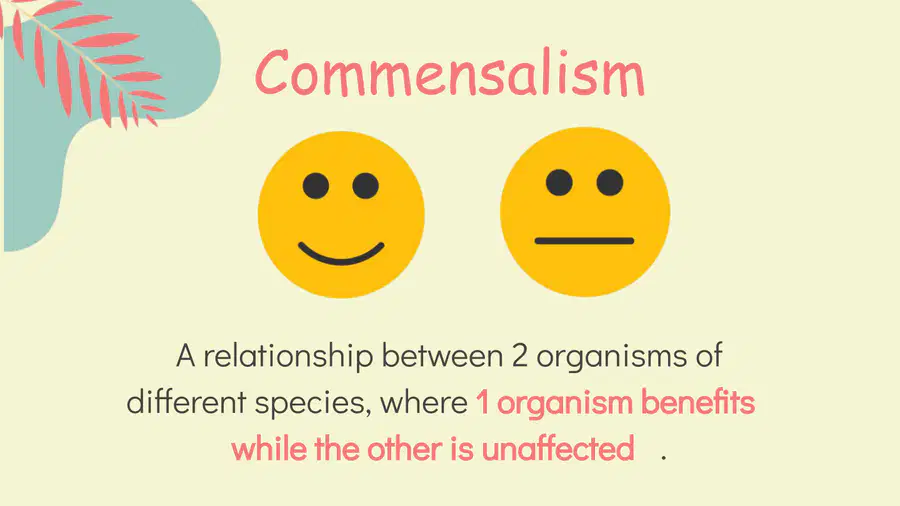
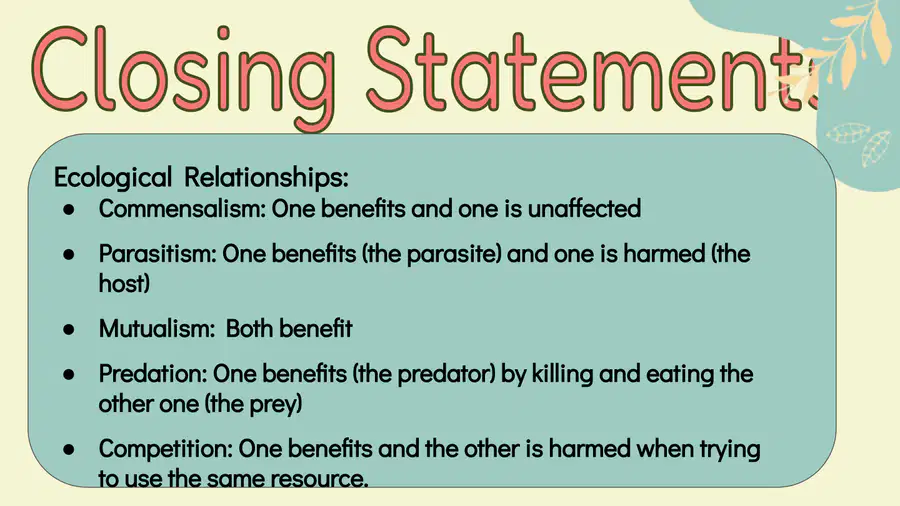
Which type of relationship involves one organism benefiting while the other is unaffected?
Commensalism
Parasitism
Mutualism
Predation
7
8
Fill in the Blanks
9
10
Multiple Choice
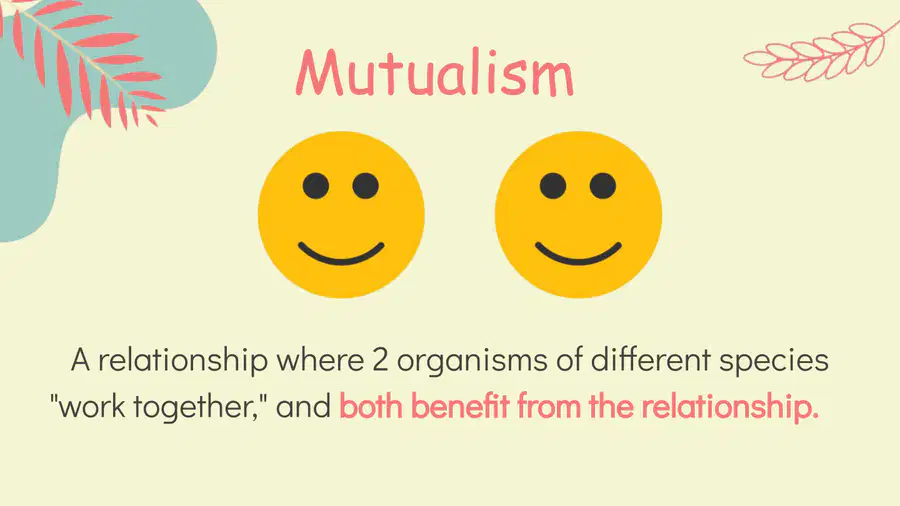
Which relationship is characterized by both organisms benefiting from the interaction?
Mutualism
Parasitism
Competition
Commensalism
11
12
Multiple Choice
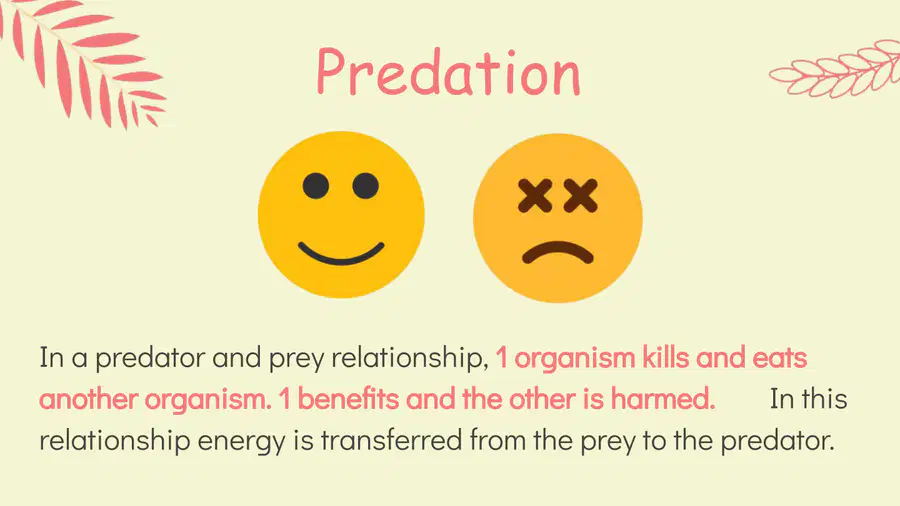
In which type of relationship does one organism kill and eat another organism, resulting in a transfer of energy?
Predation
Mutualism
Commensalism
Parasitism
13
14
Multiple Choice
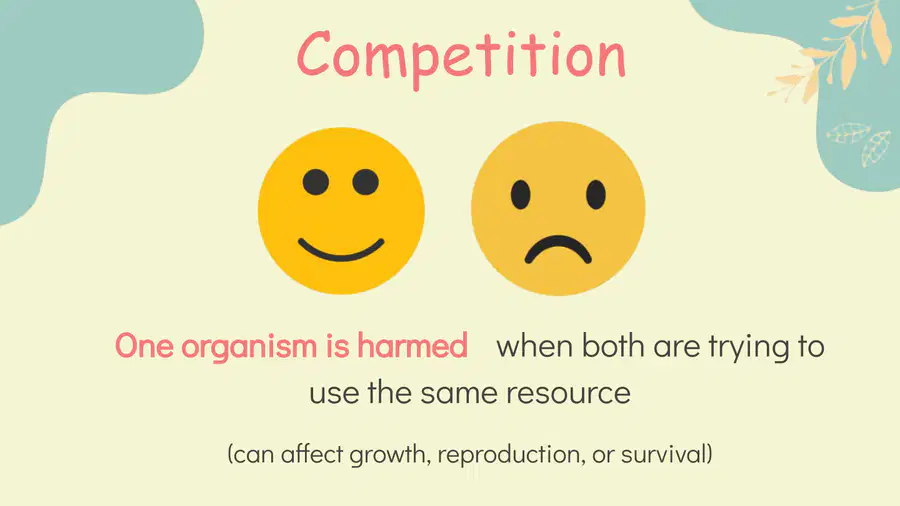
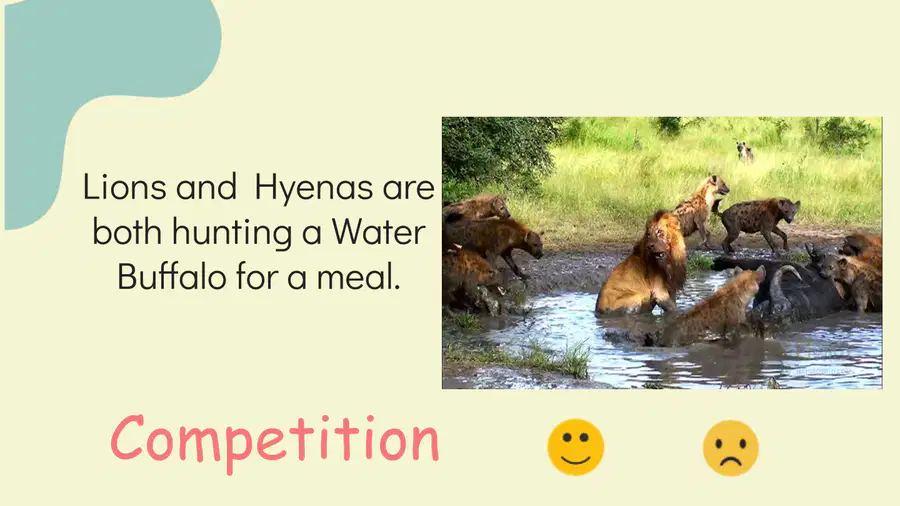
Which of the following relationships results in one organism being harmed while both are trying to use the same resource?
Competition
Mutualism
Commensalism
Parasitism
15
16
17
Multiple Choice
Which type of symbiotic relationship benefits both organisms involved?
Mutualism
Parasitism
Commensalism
Predation
18
Multiple Select
Select all the types of symbiotic relationships where at least one organism benefits.
Commensalism
Parasitism
Mutualism
Competition
19
20
Open Ended
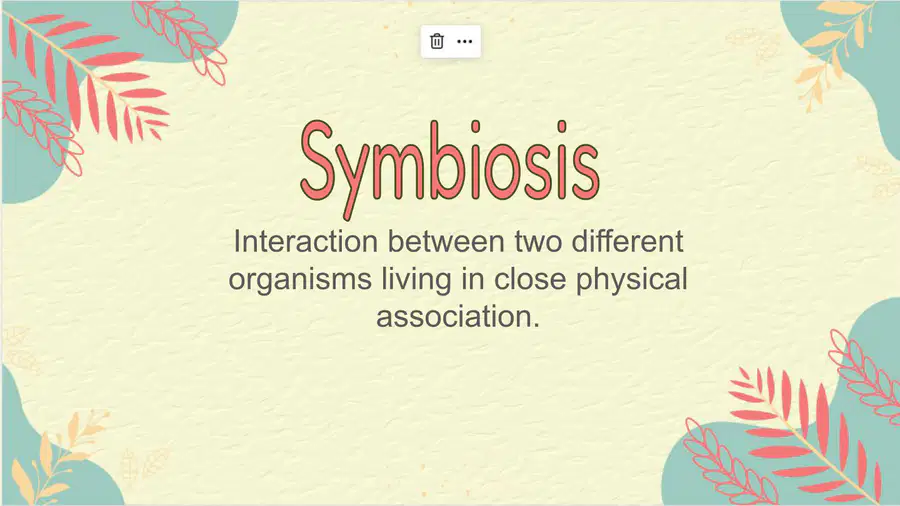
Explain the main idea of symbiosis and give an example from nature.
21
22
23
Open Ended
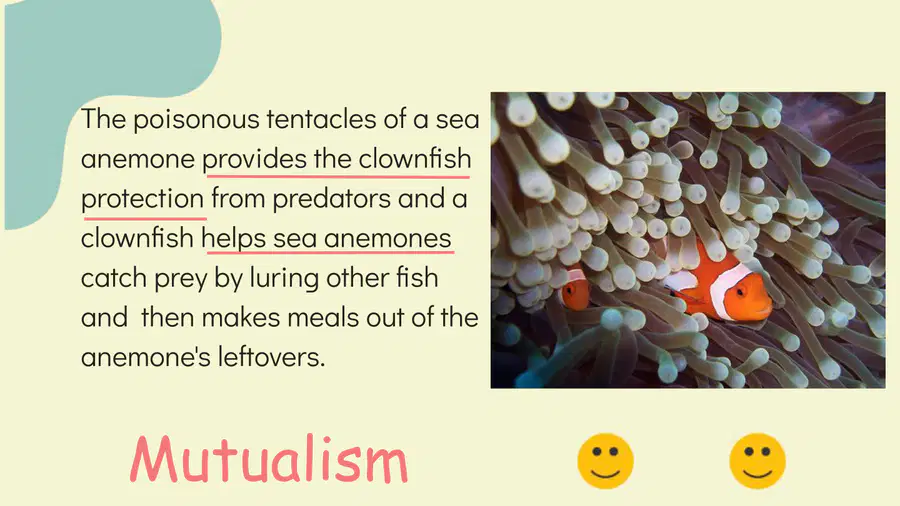
Describe how the relationship between the clownfish and sea anemone is an example of mutualism.
24
25
Multiple Choice
Which of the following scenarios best represents commensalism?
A bird eating insects off a buffalo's back
A tick feeding on a dog
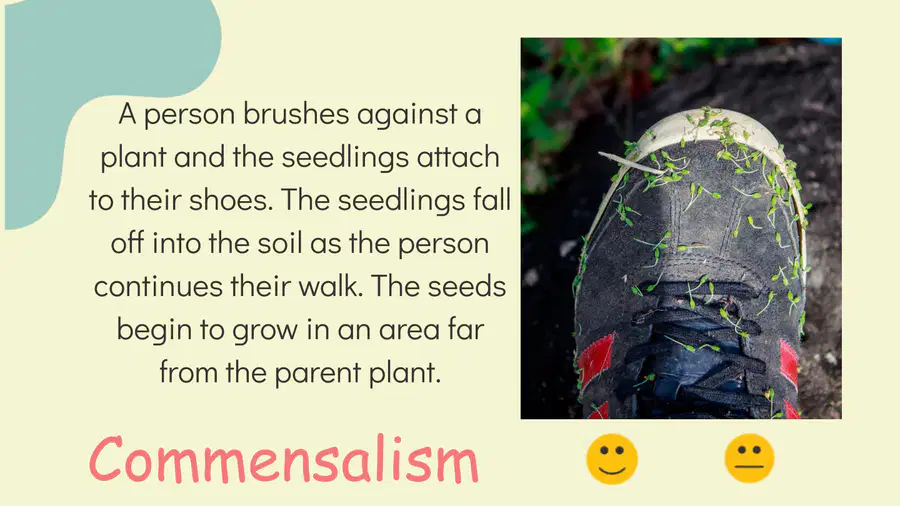
Seeds sticking to a person's shoe and being carried to new soil
Two lions fighting over prey
26
27
Fill in the Blanks
Type answer...
28
29
Multiple Choice
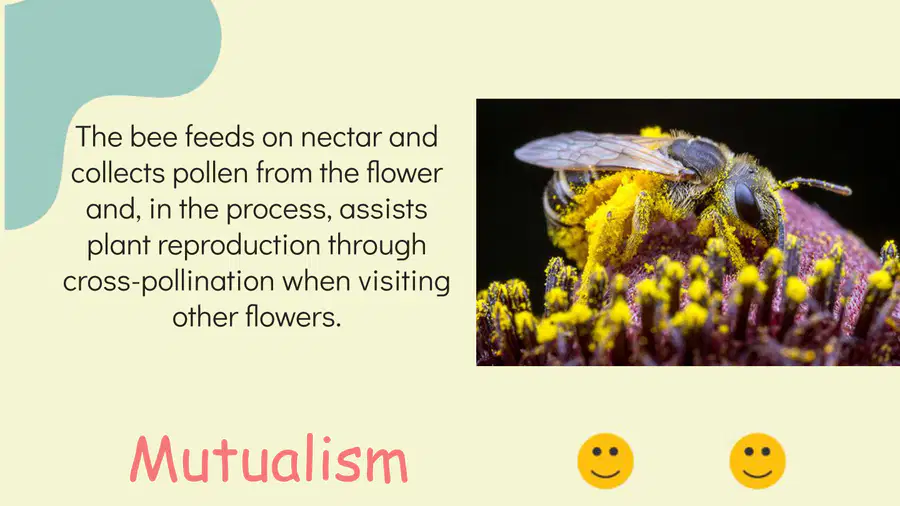
Which type of symbiotic relationship is demonstrated when a bee feeds on nectar and collects pollen from a flower, assisting in plant reproduction?
Mutualism
Parasitism
Predation
Commensalism
30
31
Multiple Choice
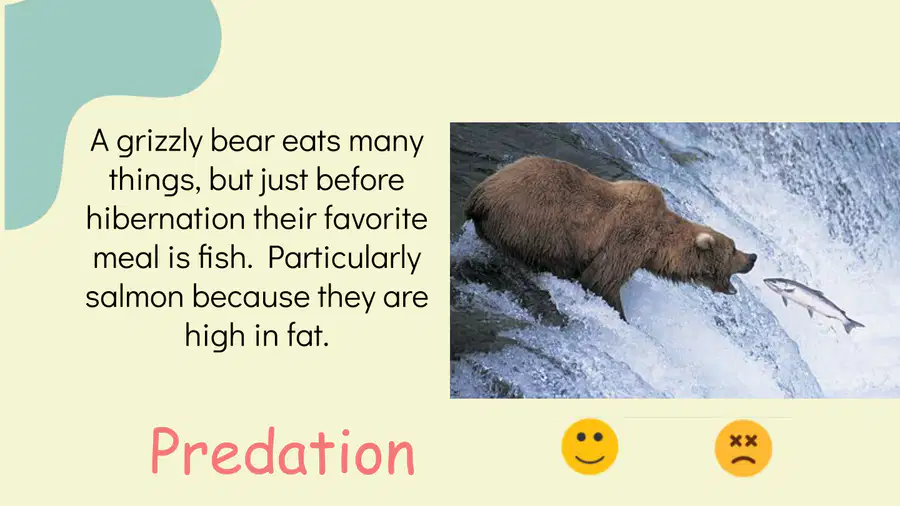
What is the main benefit for the grizzly bear in the predation relationship described in the image?
It gets a high-fat meal before hibernation
It helps the fish reproduce
It protects the river ecosystem
It provides shelter for other animals
32
33
Fill in the Blanks
Type answer...
34
Multiple Select
Which of the following are examples of symbiotic relationships described in the images?
Mutualism
Predation
Parasitism
Competition
35
Multiple Choice
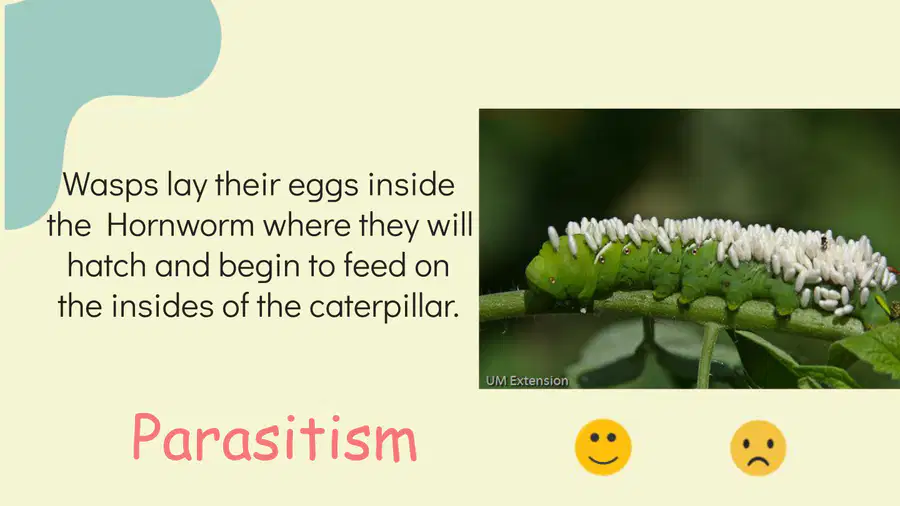
What happens to the hornworm when wasps lay their eggs inside it?
The hornworm is harmed as the larvae feed on its insides
The hornworm benefits from the wasps
The hornworm and wasps both benefit equally
The hornworm is unaffected
36
37
38
39
Open Ended
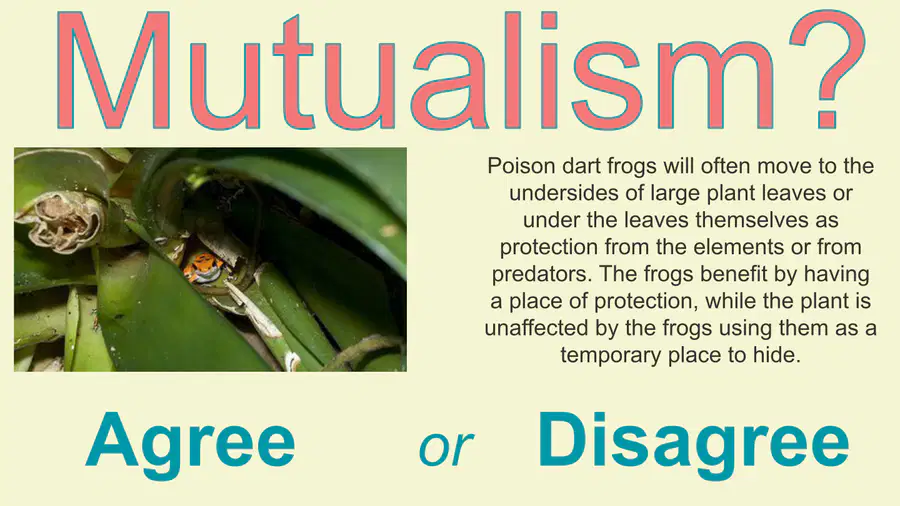
Explain how the relationship between the poison dart frog and the plant in the last image differs from mutualism. Use evidence from the image to support your answer.
40
41
Multiple Choice
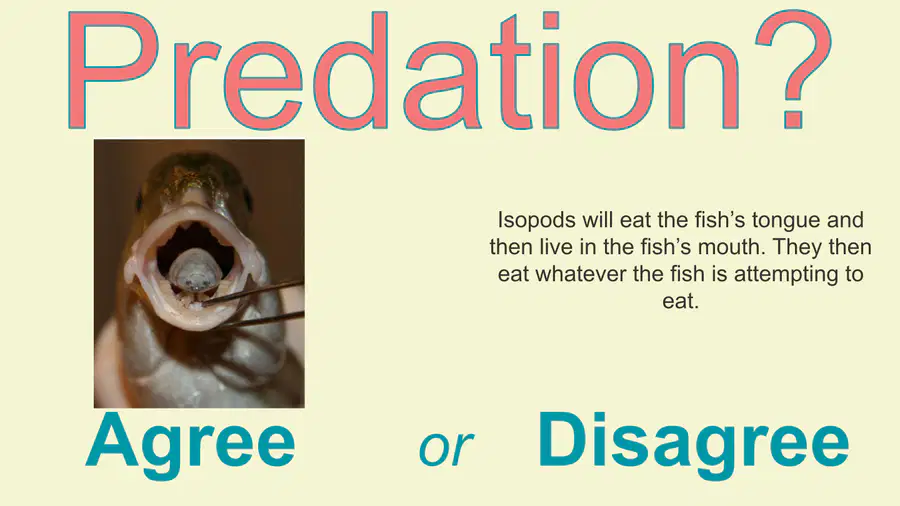
Is the relationship between isopods and fish an example of predation?
Yes, because the isopod kills the fish.
No, because the isopod only harms the fish but does not kill it.
Yes, because the isopod benefits and the fish is harmed.
No, because the isopod lives in the fish's mouth and eats what the fish eats.
42
43
Multiple Choice
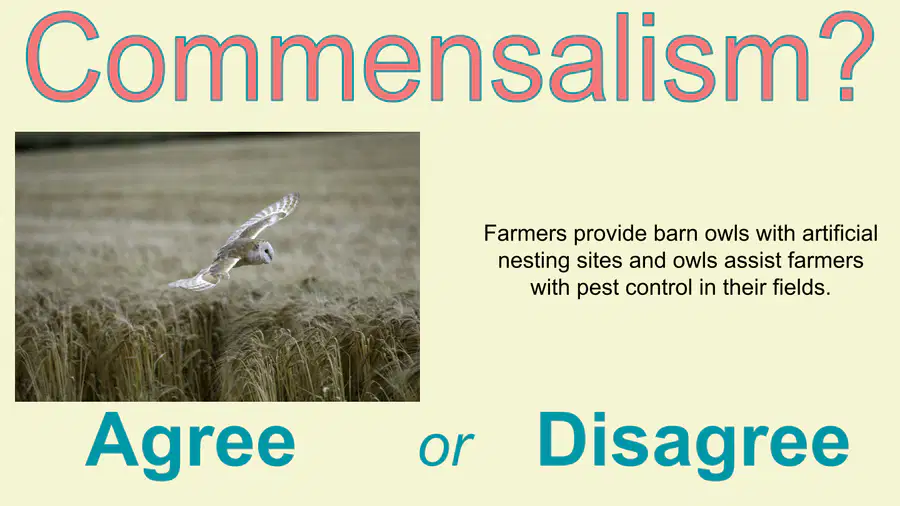
What type of ecological relationship is demonstrated when farmers provide barn owls with nesting sites and owls help with pest control?
Commensalism
Mutualism
Parasitism
Predation
44
45
Open Ended
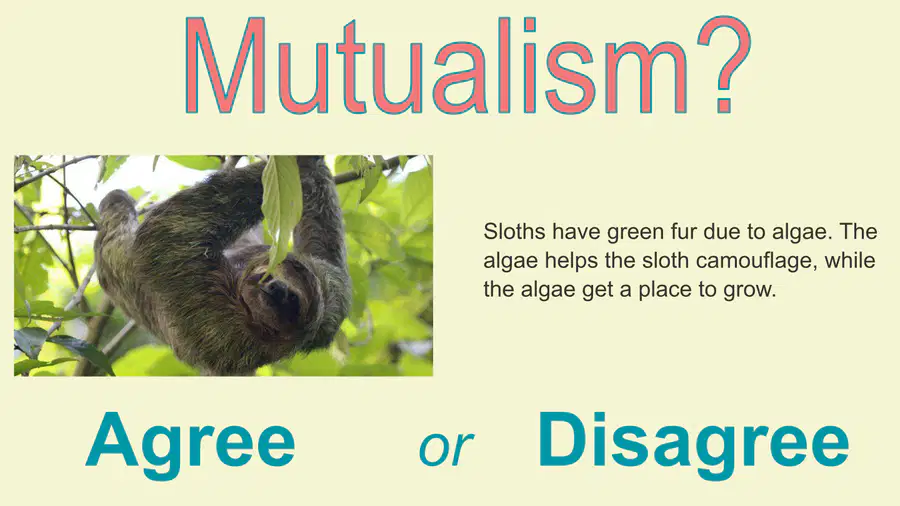
Explain how the relationship between sloths and algae is an example of mutualism.
46
47
48
Open Ended
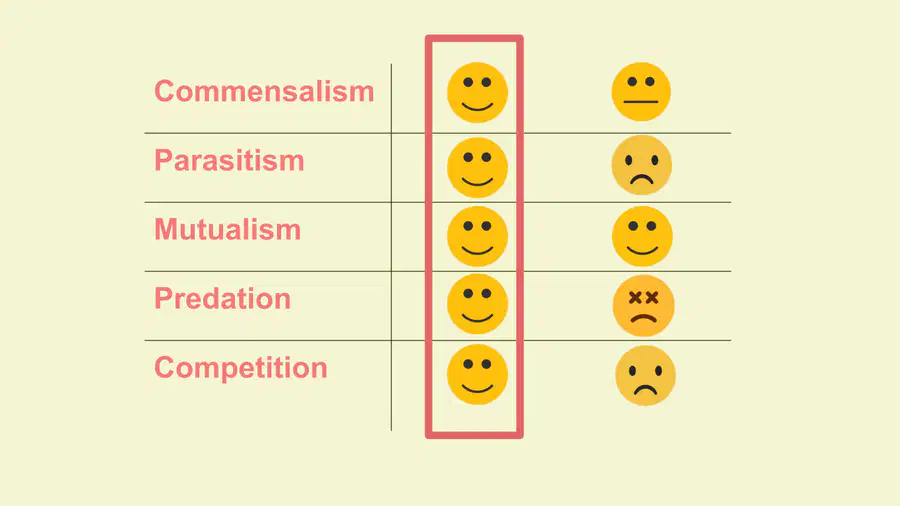
How are the 5 ecological relationships similar and different?
49
50
Fill in the Blanks
Type answer...
51
Multiple Choice
Which of the following ecological relationships is correctly matched with its definition?
Commensalism: Both benefit
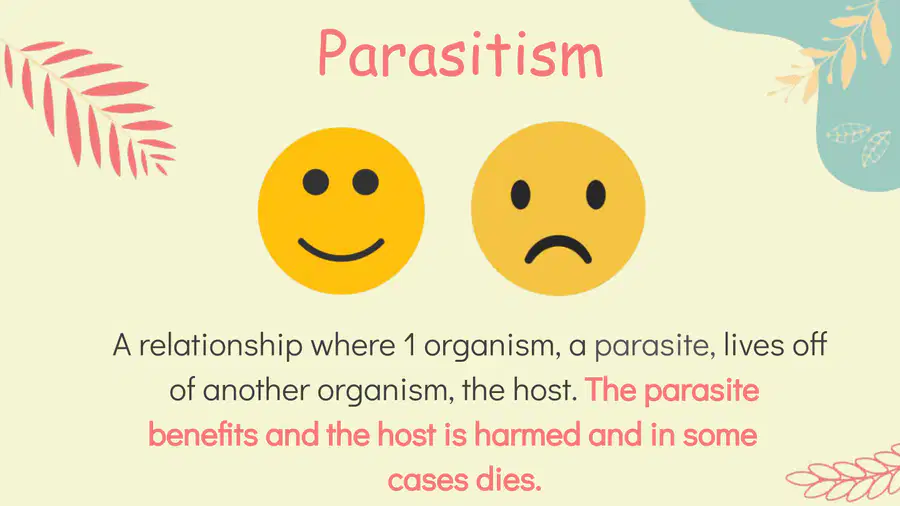
Parasitism: One benefits, one is harmed
Mutualism: One benefits, one is unaffected
Predation: Both are harmed
52
Open Ended
How do you think learning about ecological relationships can help us understand the natural world better?
53
Open Ended
What inference can you make about the relationship between the lion and the antelopes?
Show answer
Auto Play
Slide 1 / 53
SLIDE

Similar Resources on Wayground
45 questions
Evidence of Evolution Notes
Presentation
•
7th Grade
49 questions
Electricity and Magnetism
Presentation
•
6th - 8th Grade
46 questions
Cells
Presentation
•
6th - 8th Grade
46 questions
Forces
Presentation
•
6th - 8th Grade
48 questions
Figurative Language Review
Presentation
•
6th - 8th Grade
45 questions
cell organelles
Presentation
•
6th - 8th Grade
47 questions
Weather and Water
Presentation
•
6th - 8th Grade
51 questions
Catastrophic Events
Presentation
•
7th Grade
Popular Resources on Wayground
20 questions
Math Review
Quiz
•
3rd Grade
15 questions
Fast food
Quiz
•
7th Grade
20 questions
Context Clues
Quiz
•
6th Grade
20 questions
Inferences
Quiz
•
4th Grade
19 questions
Classifying Quadrilaterals
Quiz
•
3rd Grade
20 questions
Figurative Language Review
Quiz
•
6th Grade
20 questions
Equivalent Fractions
Quiz
•
3rd Grade
10 questions
Identify Fractions, Mixed Numbers & Improper Fractions
Quiz
•
3rd - 4th Grade
Discover more resources for Science
16 questions
Interactions within Ecosystems
Presentation
•
6th - 8th Grade
26 questions
Amplify Chemical Reactions
Quiz
•
6th - 8th Grade
20 questions
Rocks and The Rock Cycle
Quiz
•
6th Grade
16 questions
Photosynthesis and Cellular Respiration Review
Quiz
•
7th Grade
15 questions
Punnett Squares
Quiz
•
6th Grade
20 questions
genetics, punnett squares, heredity
Quiz
•
7th Grade
18 questions
Oceans, Atmosphere, Climate Vocabulary Amplify
Quiz
•
6th Grade
49 questions
NC Released EOG 8 Science (2024)
Quiz
•
8th Grade