

1-3 energy flow

Presentation
•
Science
•
9th - 12th Grade
•
Practice Problem
•
Easy
+4
Standards-aligned

Stacey Macoff
Used 4+ times
FREE Resource
21 Slides • 21 Questions
1
2
3
Multiple Choice
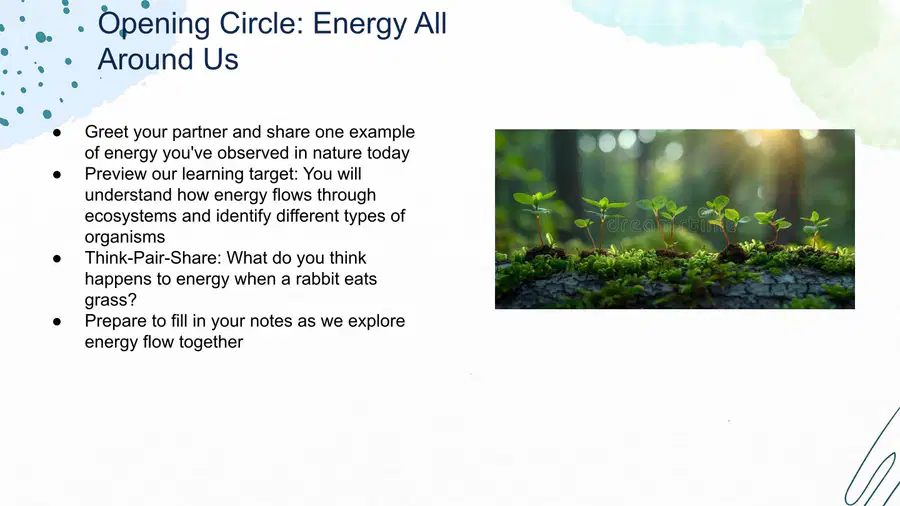
Which of the following is an example of energy you might observe in nature?
A bird flying in the sky
A rock sitting on the ground
A leaf changing color
A cloud floating by
4

5
Multiple Choice
Which of the following best describes the flow of energy in an ecosystem?
Energy enters from the sun and flows from one organism to another
Energy is created by animals and flows to plants
Energy is only transferred between plants
Energy flows from decomposers to the sun
6
7
Open Ended
Explain the difference between organisms that make their own food and those that eat others. Why is this distinction important for understanding energy flow in ecosystems?
8
9
Multiple Select
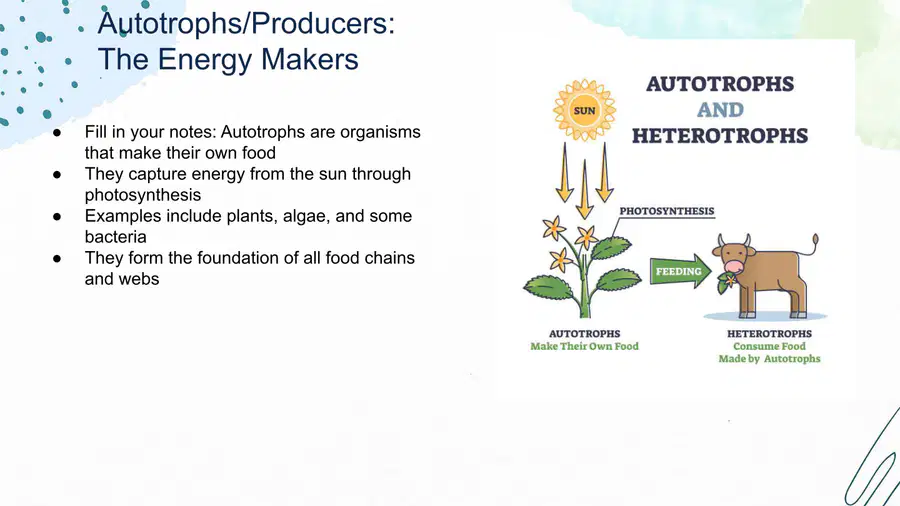
Which of the following are examples of autotrophs?
Plants
Algae
Cows
Some bacteria
10
11
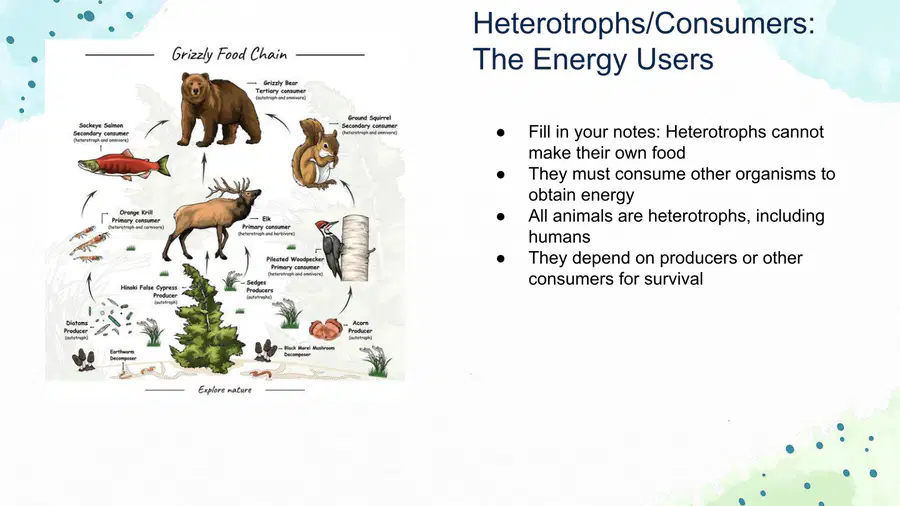
Multiple Choice
In the grizzly food chain, which organism is a secondary consumer?
Grizzly bear
Sockeye salmon
Hinoki false cypress
Earthworm
12
13
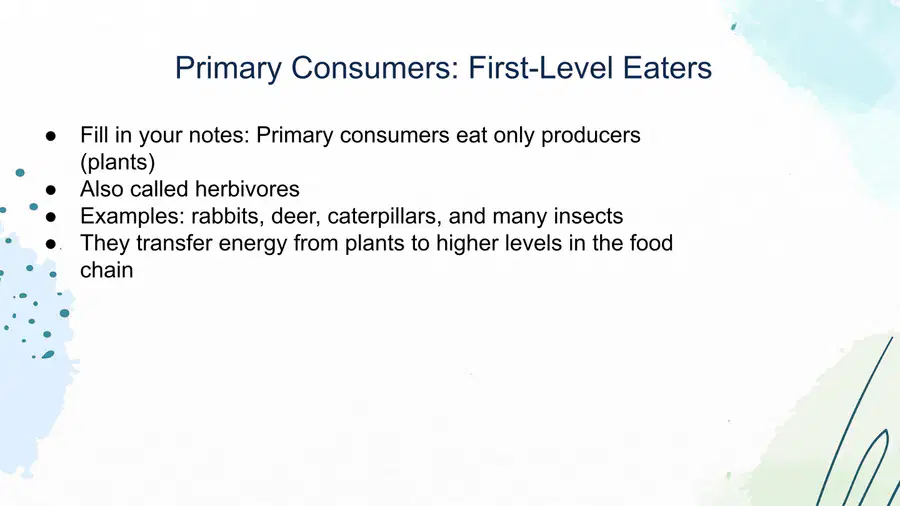
Fill in the Blanks
Primary consumers are also called
Type answer...
14
15
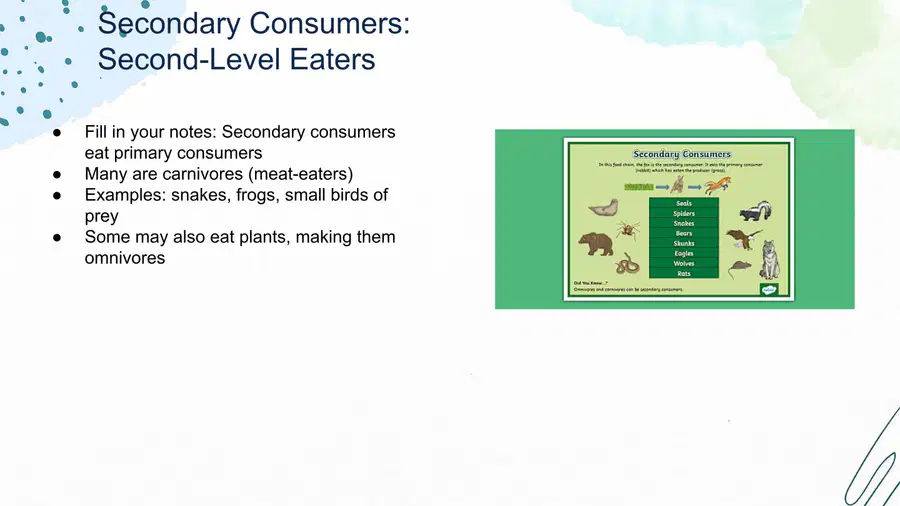
Multiple Choice
Which of the following statements about secondary consumers is correct?
They eat primary consumers
They are always herbivores
They only eat plants
They are decomposers
16
17
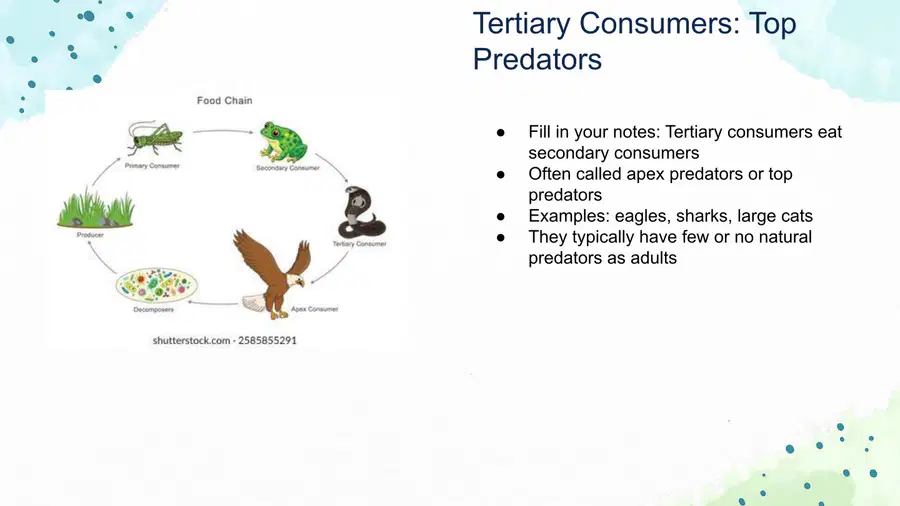
Multiple Choice
Which of the following best describes the role of tertiary consumers in a food chain?
They produce their own food through photosynthesis.
They break down dead organisms and recycle nutrients.
They eat secondary consumers and are often apex predators.
They eat only plants and are primary consumers.
18
19
Multiple Select
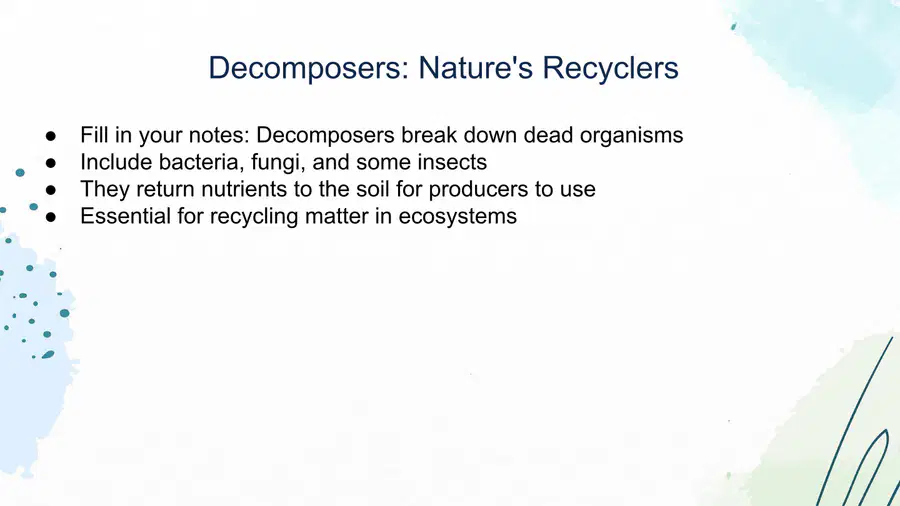
Which of the following statements about decomposers are correct?
They break down dead organisms.
They are always animals.
They return nutrients to the soil.
They are essential for recycling matter in ecosystems.
20
21
Multiple Choice
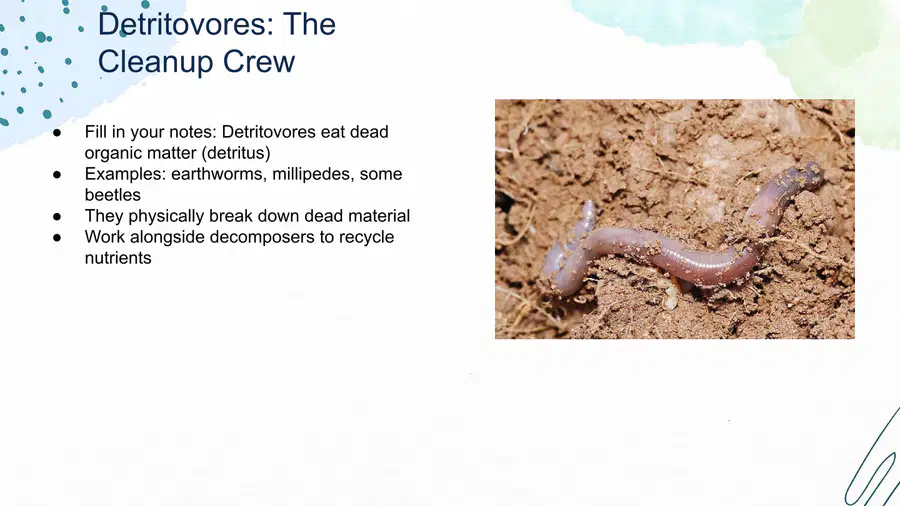
What is the main difference between detritivores and decomposers?
Detritivores break down dead material physically, while decomposers break it down chemically.
Detritivores are always insects, while decomposers are always fungi.
Decomposers eat living plants, while detritivores eat dead animals.
Detritivores recycle nutrients, decomposers do not.
22
23
Fill in the Blanks
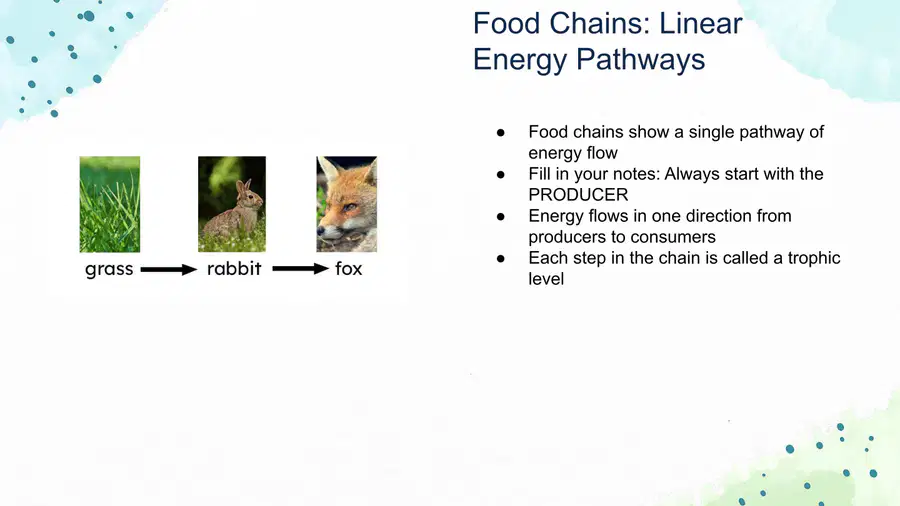
In a food chain, energy always flows from the
Type answer...
24
25
Open Ended
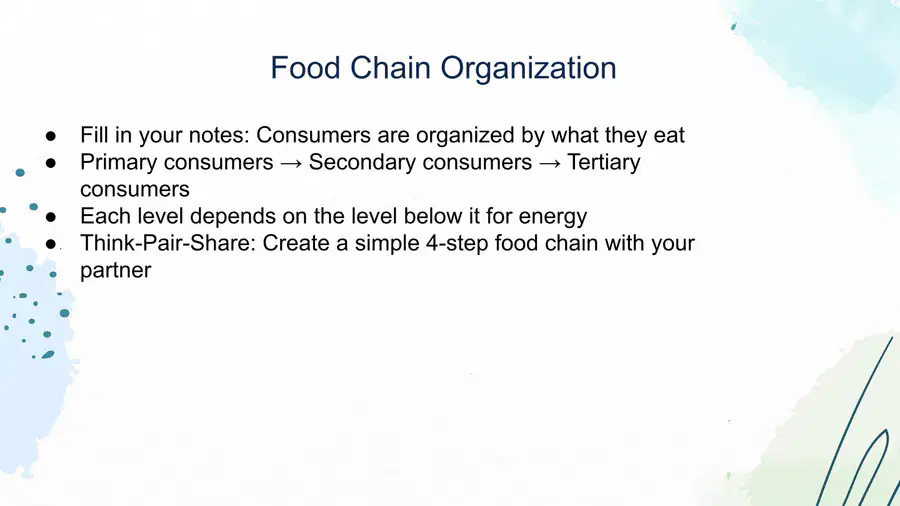
Explain how the organization of consumers in a food chain (primary, secondary, tertiary) helps maintain balance in an ecosystem.
26
27
Multiple Choice
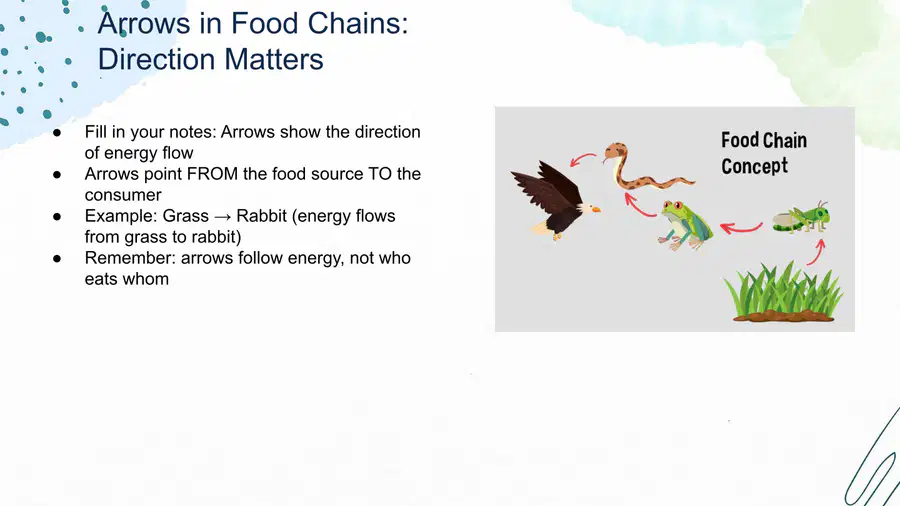
What do the arrows in a food chain represent?
The direction of energy flow from consumer to food source.
The direction of energy flow from food source to consumer.
The order in which animals are eaten.
The number of organisms at each level.
28
29
Multiple Choice
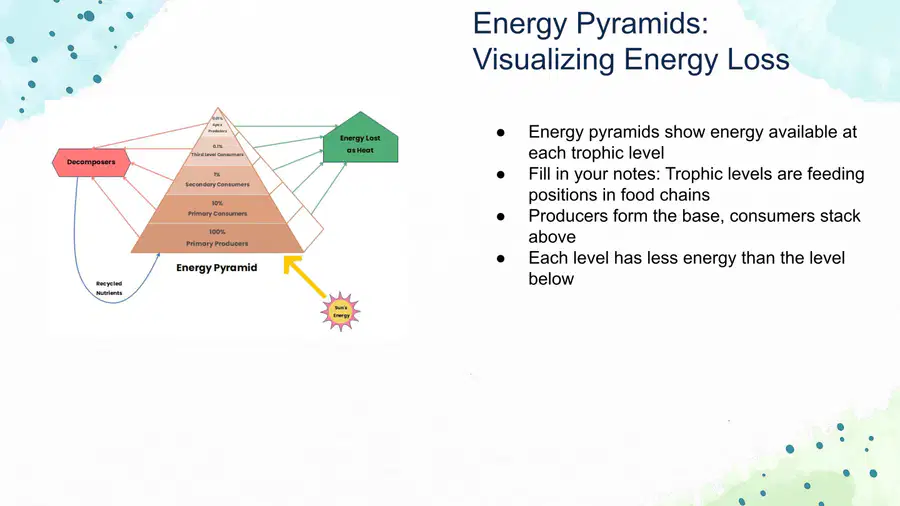
Which level of the energy pyramid contains the most energy?
Primary Producers
Primary Consumers
Secondary Consumers
Apex Predators
30
31
Multiple Choice
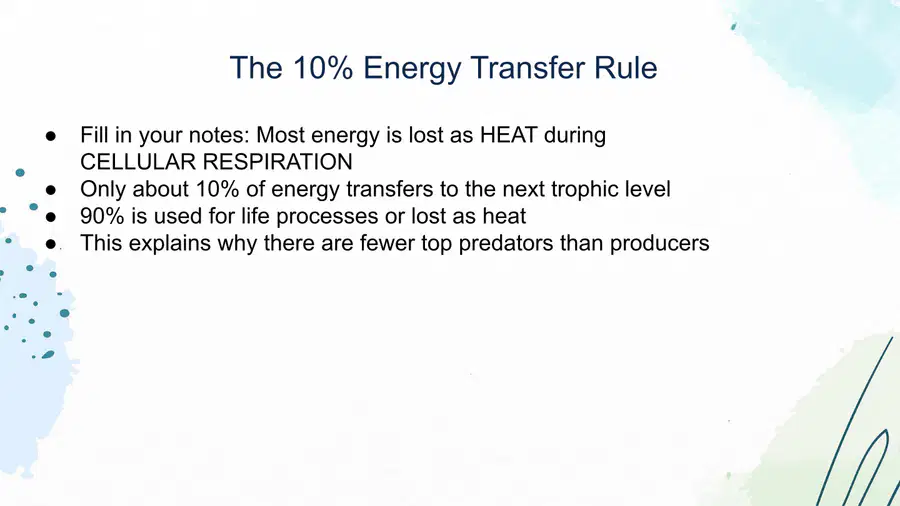
According to the 10% energy transfer rule, if a primary producer has 1000 units of energy, how much energy would be available to a secondary consumer?
1 unit
10 units
100 units
1000 units
32
Open Ended
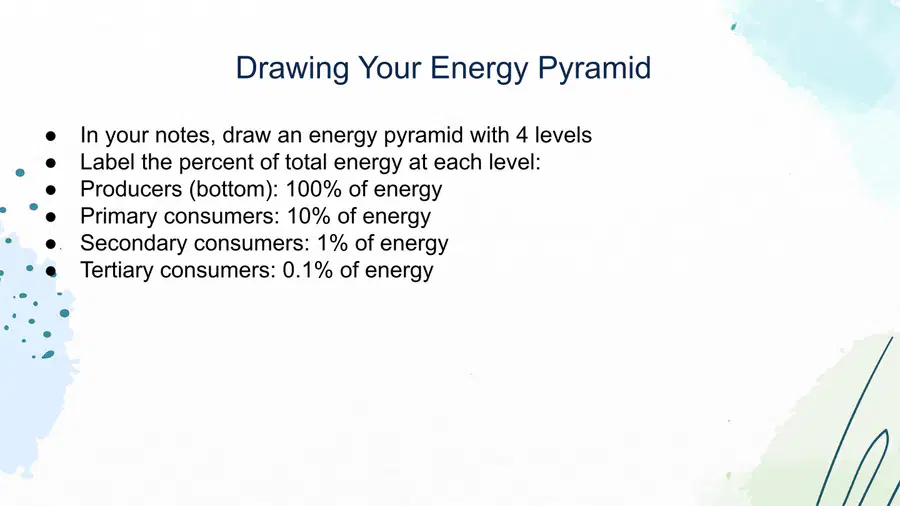
Explain why there are fewer top predators than producers in an ecosystem, using the concept of energy transfer.
33
34
35
Multiple Choice
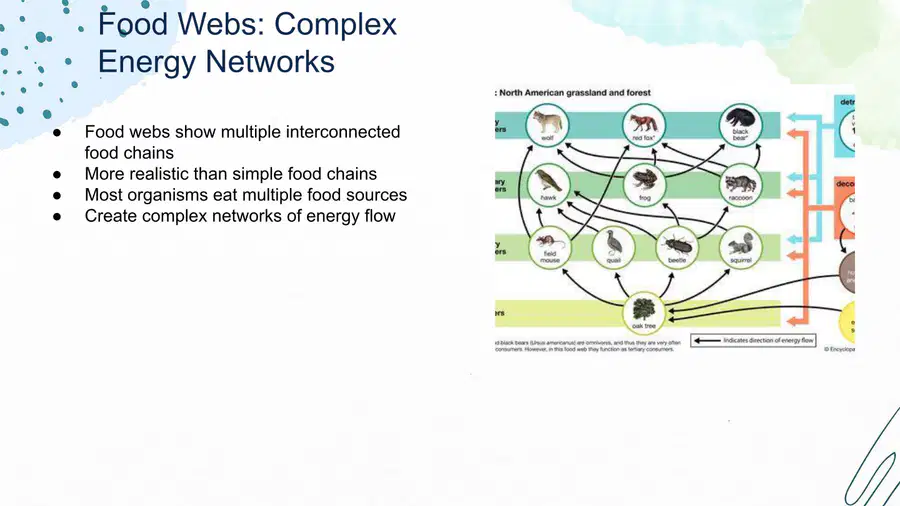
Which of the following statements about food webs is correct?
Food webs show only one food chain.
Food webs are less realistic than food chains.
Food webs show multiple interconnected food chains.
Food webs do not include decomposers.
36
37
Fill in the Blanks
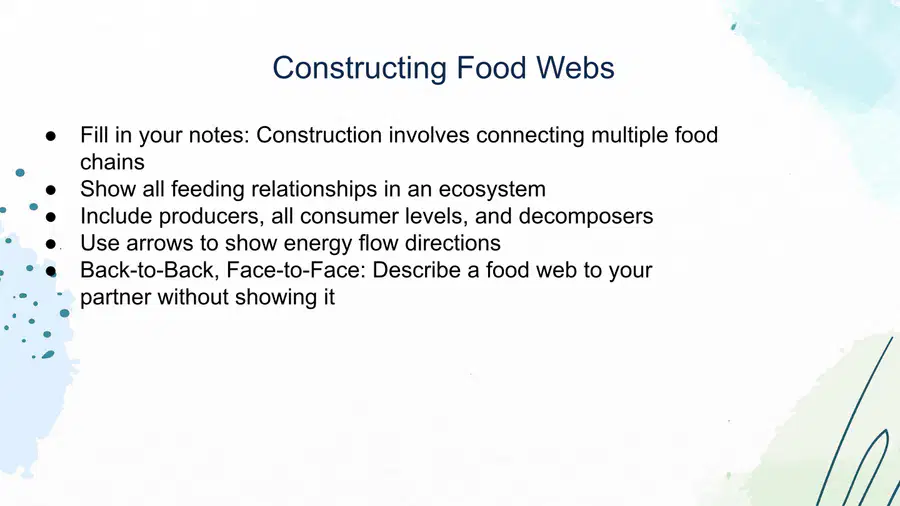
Fill in the blank: In a food web, arrows are used to show the direction of
Type answer...
38
39
Open Ended
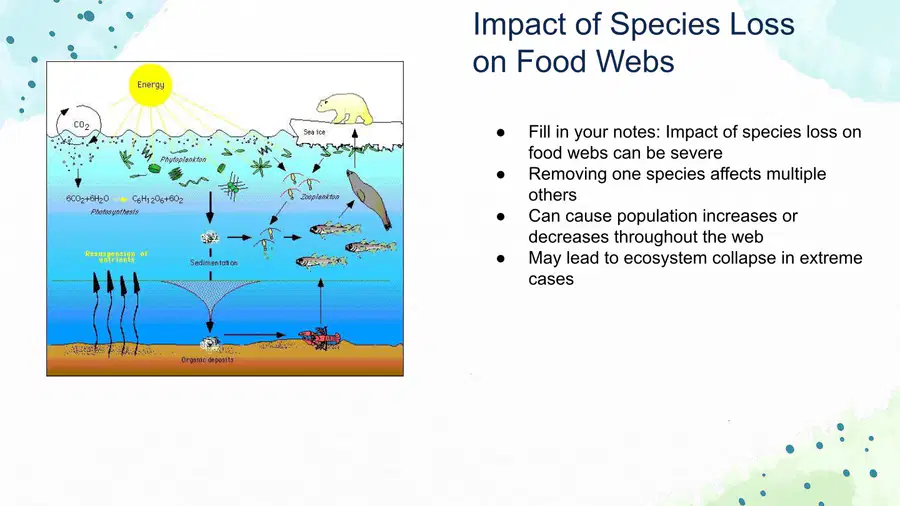
Describe how the removal of one species can impact the entire food web and potentially lead to ecosystem collapse.
40
41
Open Ended
How does understanding the flow of energy in ecosystems help us make better decisions about protecting the environment?
42
Open Ended
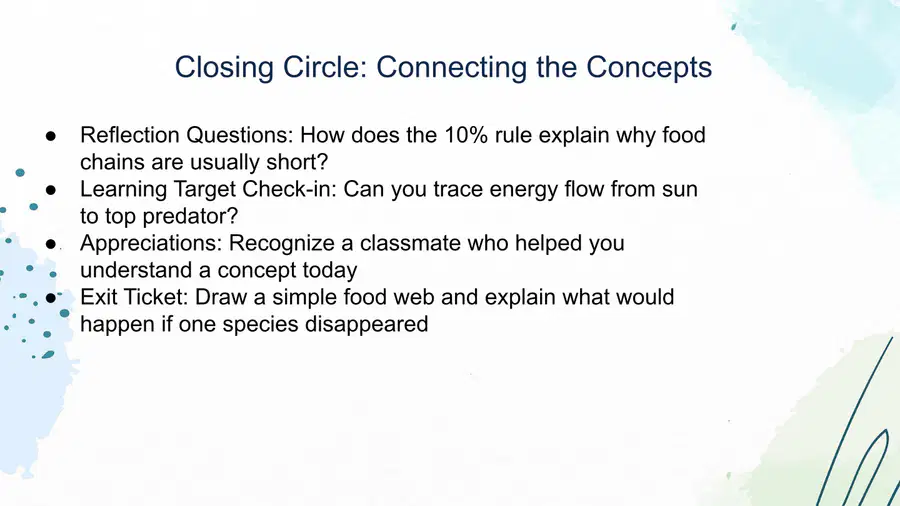
How does the 10% rule explain why food chains are usually short?
Show answer
Auto Play
Slide 1 / 42
SLIDE
Similar Resources on Wayground

38 questions
11.2 Water use & Management
Presentation
•
9th - 12th Grade
37 questions
ServSafe - Food Handler 4b - TCS Foods
Presentation
•
9th - 12th Grade
36 questions
2nd 6wks
Presentation
•
9th - 12th Grade
38 questions
Newton's Third law
Presentation
•
9th - 12th Grade
36 questions
Plant Hormones and Responses (Tropisms)
Presentation
•
9th - 12th Grade
38 questions
Pollution Control lesson
Presentation
•
9th - 12th Grade
37 questions
Static Electricity
Presentation
•
8th - 11th Grade
39 questions
Introduction to Solutions
Presentation
•
9th - 12th Grade
Popular Resources on Wayground
10 questions
How much do you know about our Portrait of an Eagle?

Quiz
•
10th Grade
10 questions
Fast Food Slogans
Quiz
•
6th - 8th Grade
21 questions
Continents and Oceans
Quiz
•
6th Grade
20 questions
Parts of Speech
Quiz
•
5th Grade
16 questions
Subject & Predicate
Quiz
•
5th Grade
25 questions
Multiplication Facts
Quiz
•
5th Grade
12 questions
Map Skills
Quiz
•
3rd Grade
22 questions
Continents and Oceans
Quiz
•
5th Grade
Discover more resources for Science
10 questions
Exploring Chemical and Physical Changes

Interactive video
•
6th - 10th Grade
20 questions
Atomic Structure
Quiz
•
9th Grade
10 questions
Decoding the Periodic Table of Elements
Interactive video
•
6th - 10th Grade
10 questions
Exploring the Periodic Table
Interactive video
•
6th - 10th Grade
14 questions
Physical and Chemical Changes
Quiz
•
10th Grade
22 questions
Periodic Table Review
Quiz
•
9th - 12th Grade
20 questions
Observation vs. Inference
Quiz
•
7th - 9th Grade
14 questions
Periodic Trends
Interactive video
•
11th Grade