Mixtures
Presentation
•
Science
•
9th - 12th Grade
•
Medium
+5
Standards-aligned
Yaw Boakye
Used 4+ times
FREE Resource
14 Slides • 41 Questions
1
Multiple Choice
2
Multiple Choice
3
Multiple Choice
Two substances have been combined physically and appear the same throughout is called a.........
A homogeneous mixture
A heterogeneous mixture
An element
A compound
4
Multiple Choice
5
Multiple Choice
6
Multiple Choice
7
Multiple Choice
8
Multiple Choice
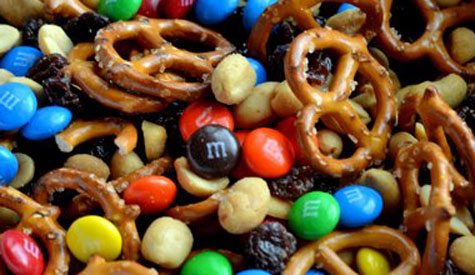
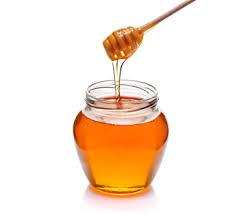
What kind of mixture is shown in the picture?
Homogeneous
Heterogeneous
9
Multiple Choice
10
Multiple Choice
11
Multiple Choice
12
Multiple Choice
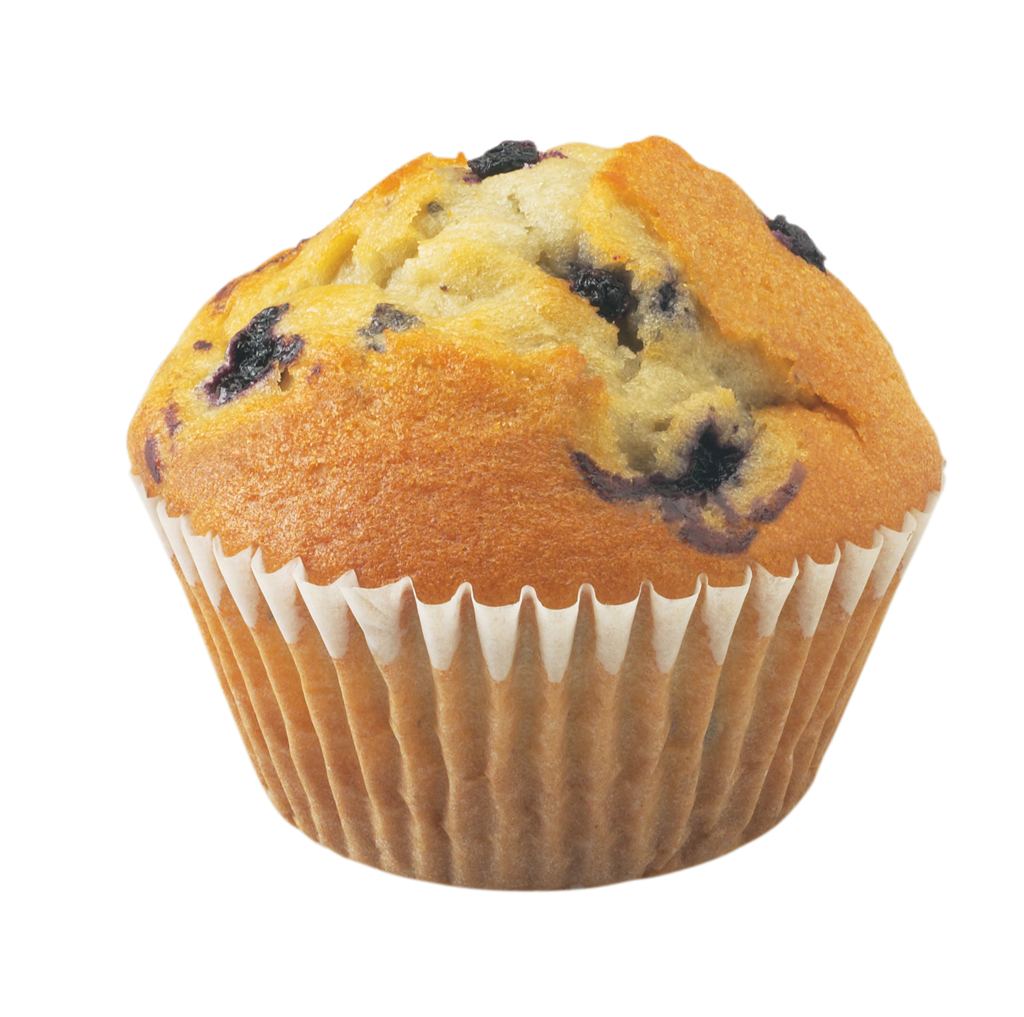
13
Multiple Choice
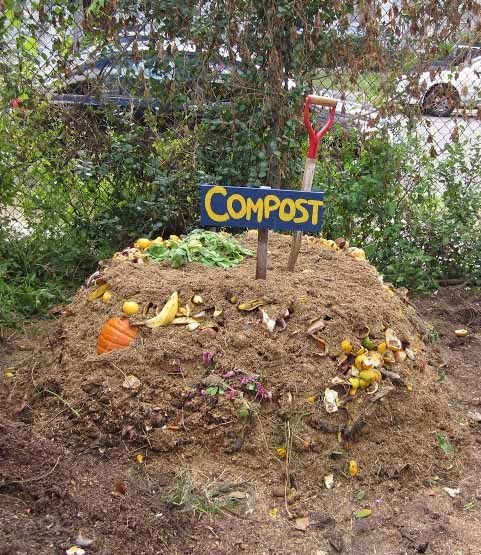
What kind of mixture is shown in the picture?
Homogeneous
Heterogeneous
14
Multiple Choice
Apple juice is what kind of mixture?
Homogeneous
Heterogeneous
15
Multiple Choice
16
Multiple Choice
What kind of mixture is shown in the picture?
Homogeneous
Heterogeneous
17
Multiple Choice
What type of mixture is this?
heterogeneous mixture
homogeneous mixture
solution
colloid
18
Multiple Choice
19
Multiple Choice
Boba tea is what kind of mixture?
Homogeneous
Heterogeneous
20
Multiple Choice
21
Multiple Choice
22
Multiple Choice
What is coffee?
homogeneous
heterogenous
23
Multiple Choice
Is this Salad an example of a Mixture?
Yes
No
24
Multiple Choice
25
26
Multiple Choice
Which of the following is a key property of a homogeneous mixture?
The components are evenly distributed throughout the mixture.
The components can be easily separated by hand.
The mixture contains only one type of element.
The mixture is always a solid.
27
Open Ended
Why is it important to understand the difference between mixtures and pure substances in everyday life?
28
29
Multiple Choice
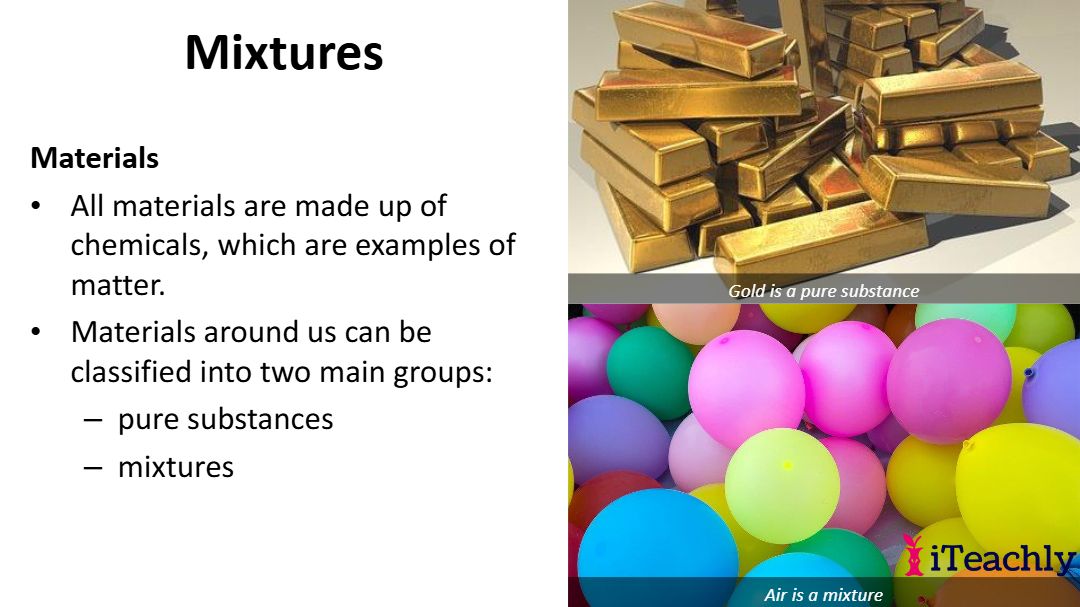
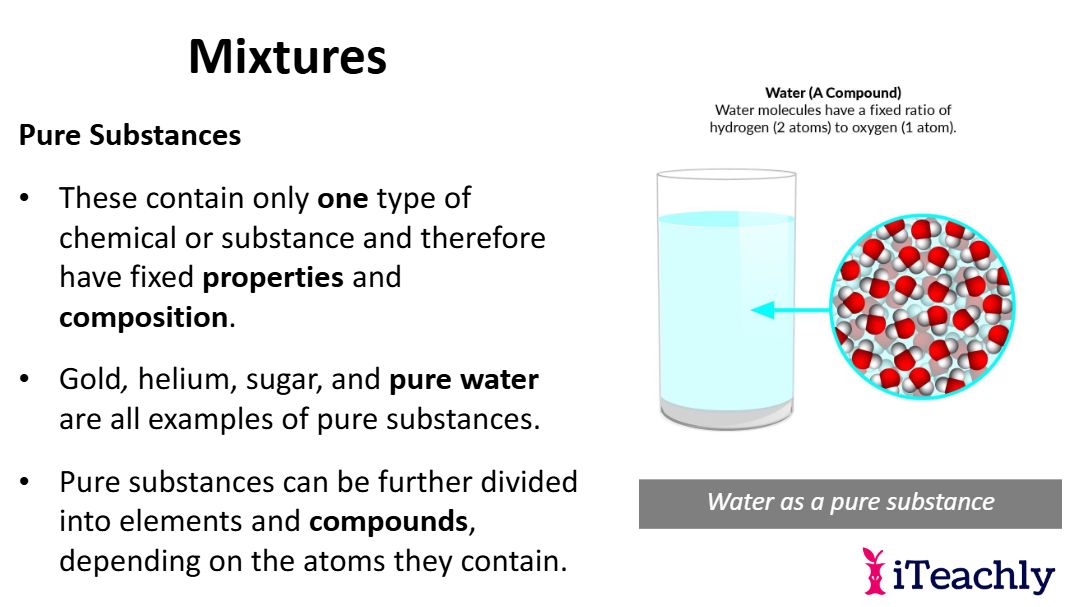
Which of the following is an example of a pure substance?
Gold
Air
Concrete
Lipstick
30
31
32
Multiple Select
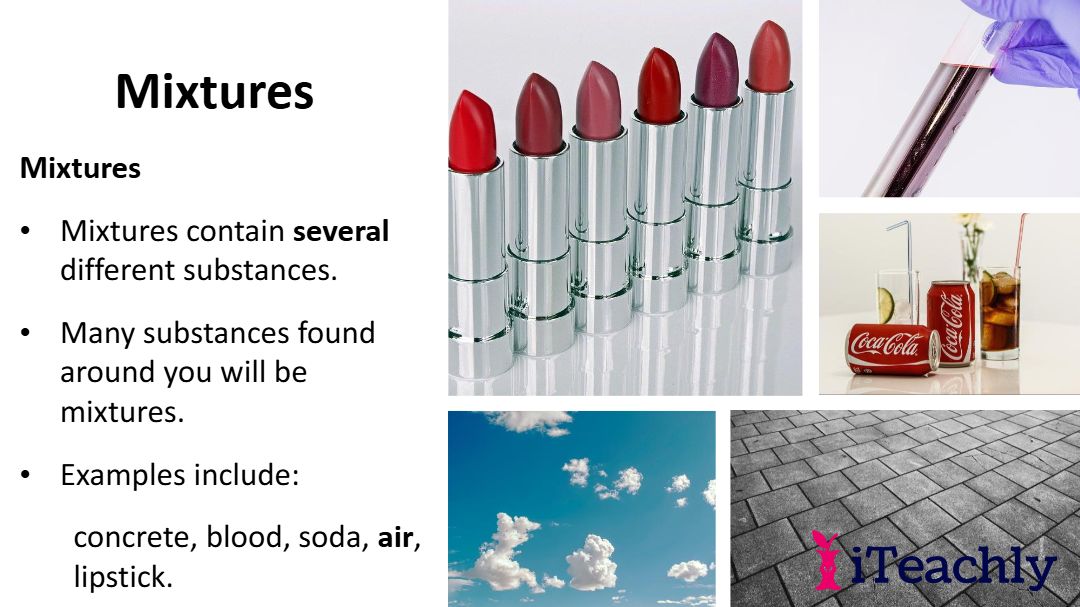
Which of the following are examples of mixtures?
Air
Lipstick
Gold
Pure water
33
Open Ended
Explain the difference between pure substances and mixtures, providing at least one example of each.
34
35
Fill in the Blanks
Type answer...
36
Multiple Choice
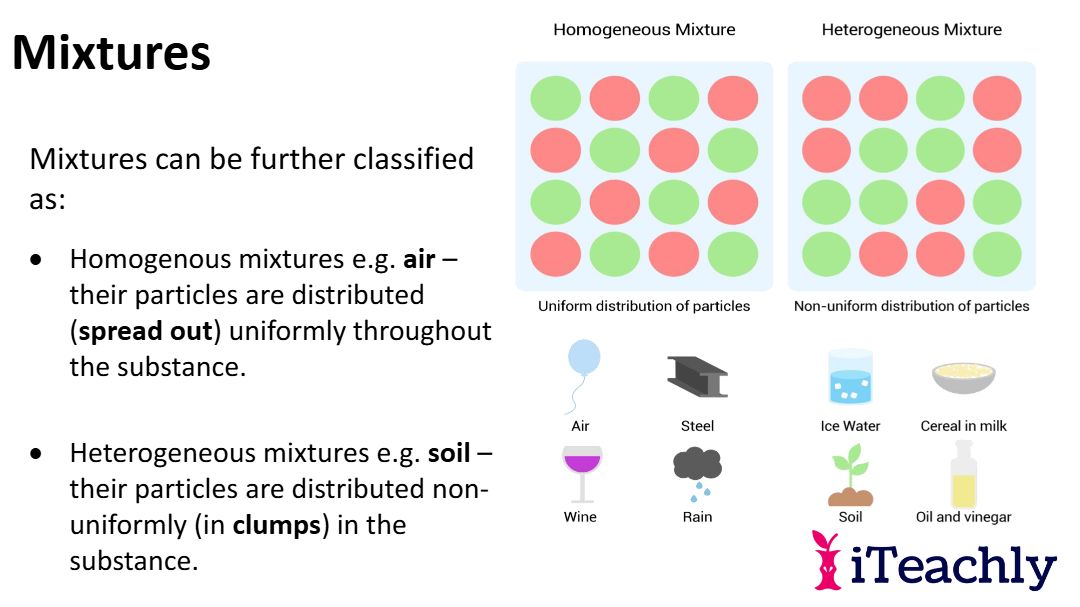
What is the main difference between a homogeneous mixture and a heterogeneous mixture?
Homogeneous mixtures have a uniform distribution of particles, while heterogeneous mixtures do not.
Homogeneous mixtures contain only one substance, while heterogeneous mixtures contain several.
Homogeneous mixtures are always liquids, while heterogeneous mixtures are always solids.
Homogeneous mixtures are always visible, while heterogeneous mixtures are invisible.
37
38
39
Multiple Choice
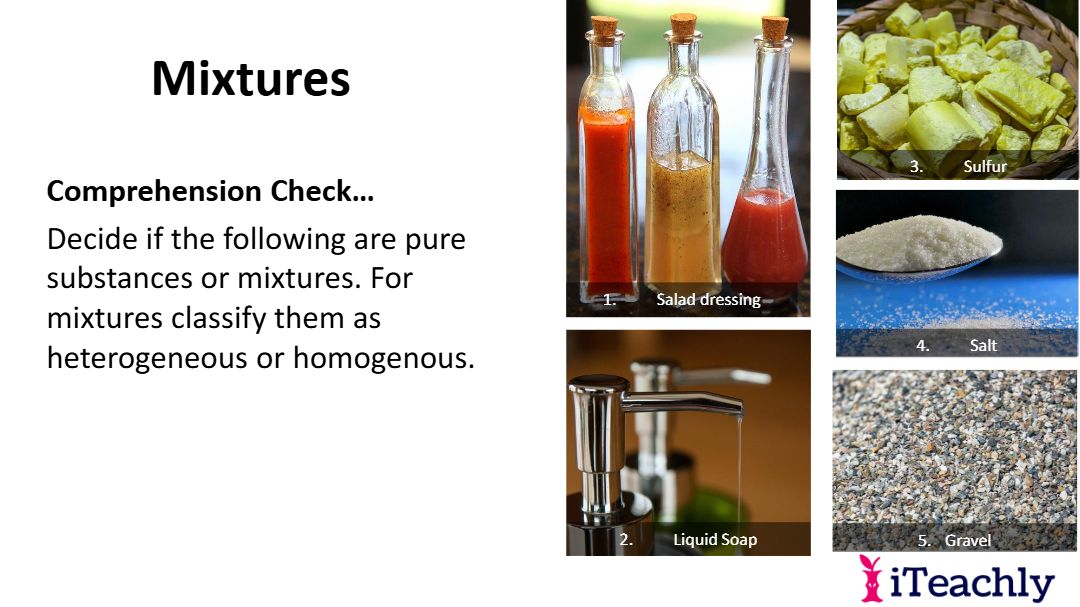
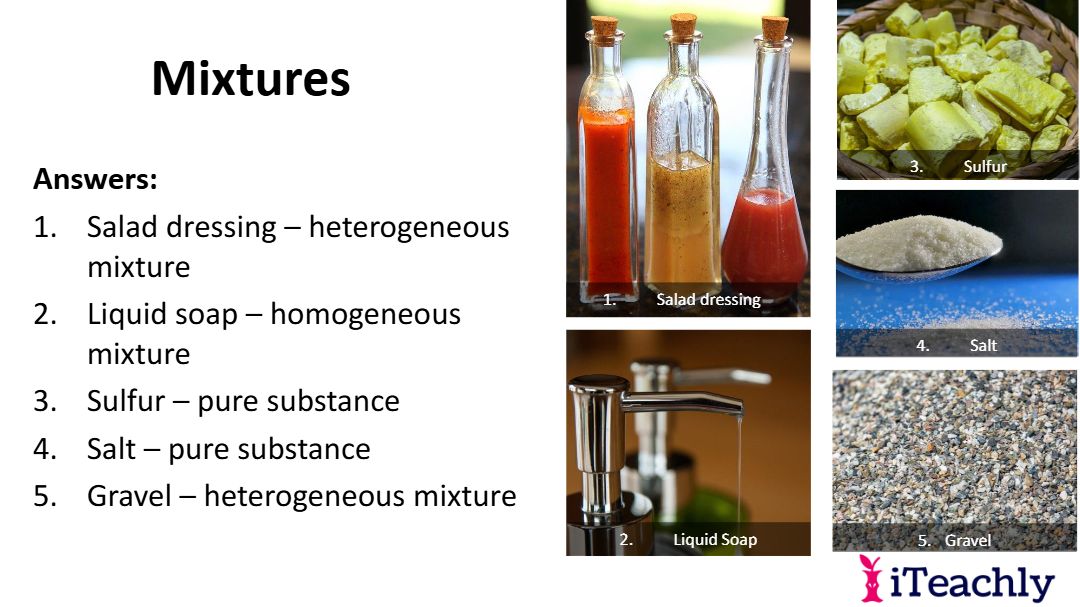
According to the answers provided, which of the following is a homogeneous mixture?
Salad dressing
Liquid soap
Sulfur
Gravel
40
41
Multiple Choice
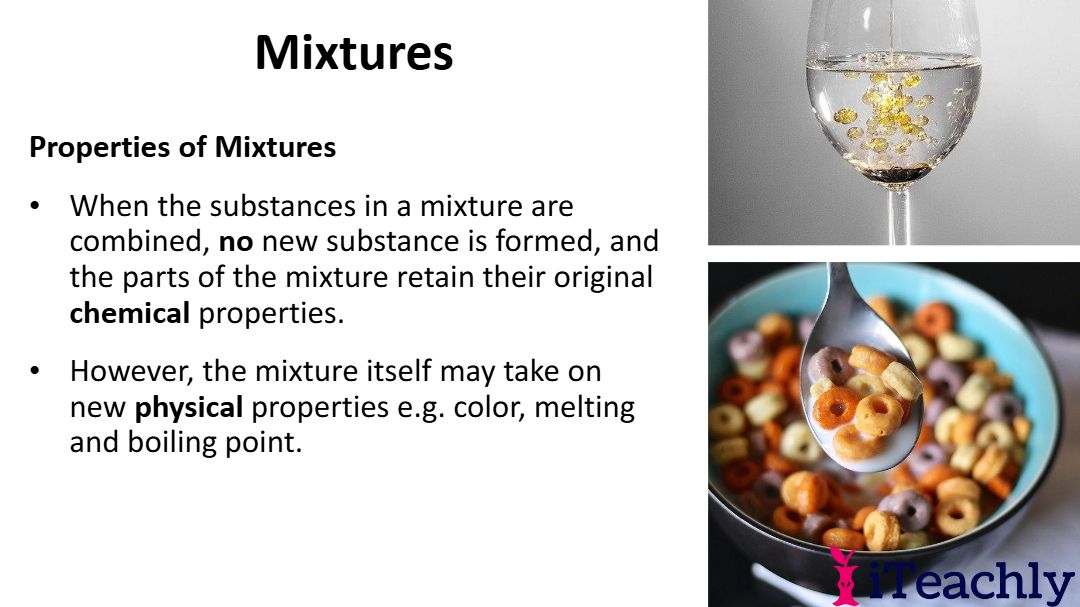
What is a key difference between the properties of the components in a mixture and the properties of the mixture itself?
The components lose their original properties in a mixture.
The mixture always has the same properties as its components.
The mixture may have new physical properties, but the components retain their chemical properties.
The mixture forms a new chemical substance.
42
Multiple Choice
Which of the following statements best describes what happens when substances are combined to form a mixture?
A new substance is formed with new chemical properties.
The substances lose their original properties.
No new substance is formed, and the substances retain their original chemical properties.
The substances combine to form a compound.
43
44
Open Ended
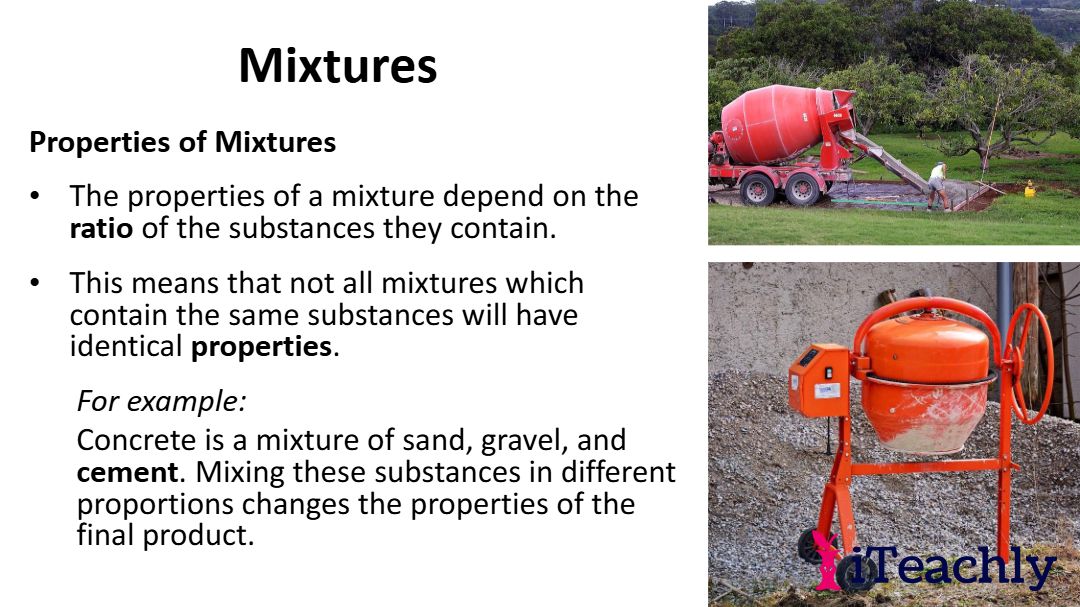
Explain how changing the ratio of substances in a mixture can affect its properties. Give an example from the slides to support your answer.
45
46
47
Fill in the Blanks
48
Multiple Select
Which of the following are examples of mixtures as described in the slides?
Concrete
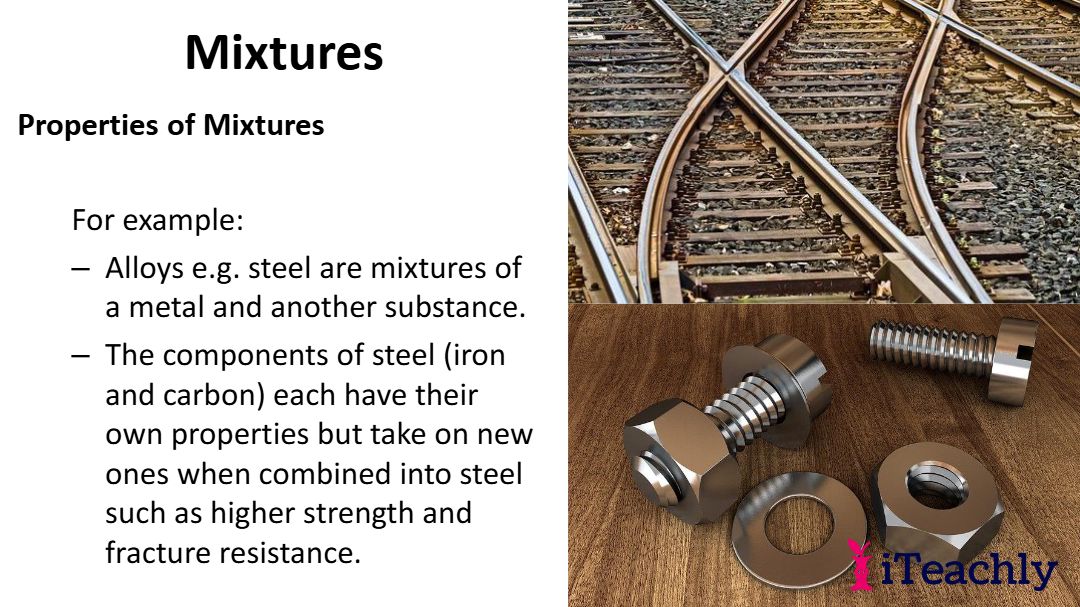
Steel
Soda
Pure water
49
50
Multiple Choice
Which method is commonly used to separate the components of a mixture such as sand and saltwater?
Evaporation
Filtration
Distillation
Sublimation
51
52
53
Multiple Choice
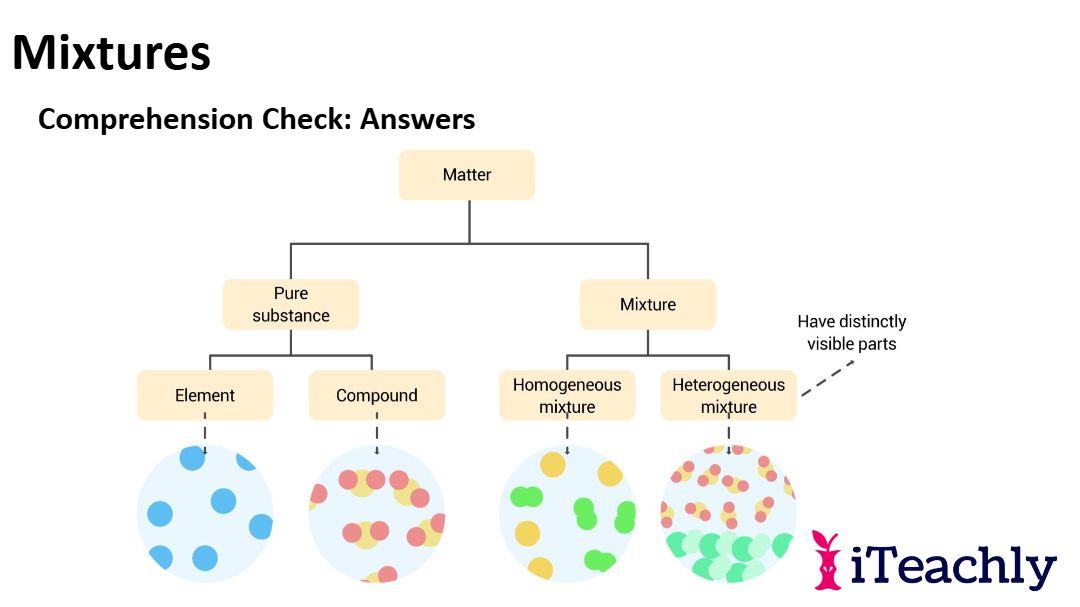
Which of the following best describes the difference between a homogeneous mixture and a heterogeneous mixture as shown in the diagram?
Homogeneous mixtures have a uniform composition throughout, while heterogeneous mixtures have distinctly visible parts.
Homogeneous mixtures are pure substances, while heterogeneous mixtures are not.
Homogeneous mixtures contain only one type of element, while heterogeneous mixtures contain compounds.
Homogeneous mixtures are always liquids, while heterogeneous mixtures are always solids.
54
Multiple Choice
Which of the following terms refers to a mixture that has a uniform composition throughout?
Alloy
Heterogeneous
Homogeneous
Pure substance
55
Open Ended
What are the key differences between a mixture and a pure substance?
Show answer
Auto Play
Slide 1 / 55
MULTIPLE CHOICE

Similar Resources on Wayground
48 questions
Lesson 10 - Enzymes
Presentation
•
9th - 12th Grade
51 questions
Memory
Presentation
•
9th - 12th Grade
49 questions
SS Chem Unit 3 Lesson
Presentation
•
9th - 12th Grade
52 questions
The Atom and Its History
Presentation
•
9th - 12th Grade
49 questions
Thermal Energy and Earth 12.04.2020
Presentation
•
9th - 12th Grade
48 questions
How Ecosystems Work
Presentation
•
9th - 12th Grade
47 questions
Scalars and Vectors
Presentation
•
9th - 12th Grade
Popular Resources on Wayground
6 questions
Secondary Safety Quiz
Presentation
•
9th - 12th Grade
10 questions
Afterschool Activities & Sports
Quiz
•
6th - 8th Grade
19 questions
ROAR Week 2026
Quiz
•
9th - 12th Grade
20 questions
Lab Safety Quiz
Quiz
•
6th Grade
15 questions
Cool Tool:Chromebook
Quiz
•
6th - 8th Grade
22 questions
would you rather
Quiz
•
3rd - 11th Grade
21 questions
Continents and Oceans
Quiz
•
6th Grade
20 questions
Parts of Speech
Quiz
•
5th Grade
Discover more resources for Science
10 questions
Scientific Method (The scientific method)
Interactive video
•
9th Grade
9 questions
Scientific method
Interactive video
•
9th - 12th Grade
10 questions
Lab Safety Essentials
Interactive video
•
6th - 10th Grade
10 questions
Essential Guidelines for Science Lab Safety
Interactive video
•
6th - 10th Grade
20 questions
States of Matter Quick Check
Quiz
•
9th Grade
14 questions
Flinn Lab Safety
Quiz
•
9th - 12th Grade
10 questions
Exploring the Steps of the Scientific Method for Kids
Interactive video
•
6th - 10th Grade
35 questions
Flinn Lab Safety
Quiz
•
11th Grade