

Physical Weathering

Presentation
•
Science
•
6th - 8th Grade
•
Practice Problem
•
Easy
Standards-aligned

Barbara White
Used 15+ times
FREE Resource
8 Slides • 8 Questions
1

Middle School

2
Define mechanical weathering and how it differs from chemical weathering.
Identify and describe the six main types of mechanical weathering.
Explain how physical processes break down rocks into smaller pieces.
Understand how mechanical weathering increases the surface area of a rock.


3
Key Vocabulary

Mechanical Weathering
The physical process of breaking down rocks into smaller pieces without any chemical alteration or changes.
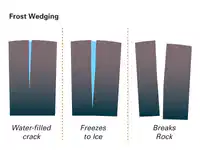
Frost Wedging
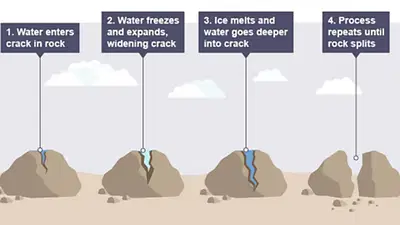
Water seeps into rock cracks, freezes, expands, and eventually breaks the rock apart over time.
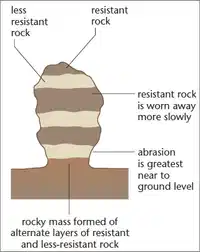
Abrasion
The process where rocks are broken down by moving particles carried by agents like wind or water.
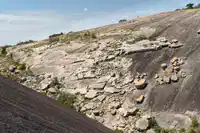
Exfoliation
A weathering process where the outer layers of rocks weather and peel off in very thin sheets.
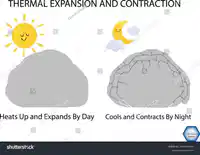
Thermal Expansion
The constant heating and cooling of rocks causes them to expand and contract, eventually causing breakage.
4
What is Mechanical Weathering?
This process breaks down large rocks into smaller pieces using physical forces.
The rock's size and shape change, but its chemical makeup stays the same.
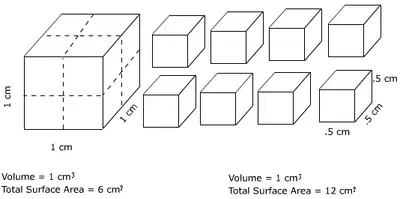
Breaking a large rock into smaller pieces increases its total surface area.
More exposed surface area allows other weathering processes to happen much faster.
5
Multiple Choice
What is the primary outcome of mechanical weathering?
It changes the rock's chemical composition.
It breaks the rock into smaller pieces.
It moves the rock to a new location.
It forms new minerals within the rock.
6
Types of Mechanical Weathering
Frost Wedging
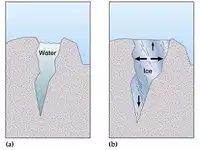
Water seeps into cracks in rocks and then freezes.
As water freezes, it expands and makes the crack wider.
This cycle of freezing and thawing breaks the rock apart.
Root Wedging
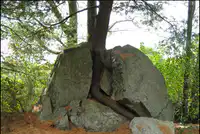
Plant roots can grow into the cracks of rocks.
As roots grow thicker, they exert pressure on the rock.
This increasing pressure eventually splits the rock wide open.
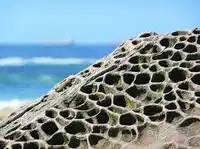
Salt Wedging
Water in rock cracks evaporates, leaving behind salt crystals.
Over time, these salt crystals grow larger and larger.
The growth of these crystals creates pressure, breaking the rock.
7
Multiple Choice
Which process involves water freezing and expanding to break rocks?
Root Wedging
Frost Wedging
Salt Wedging
Abrasion
8
More Types of Mechanical Weathering
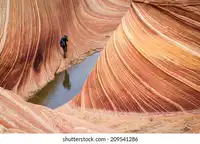
Abrasion
Rocks are broken by the scraping and grinding of moving particles.
These particles are carried by wind, water, ice, or gravity.
They act like sandpaper, grinding down the surface of the rock.
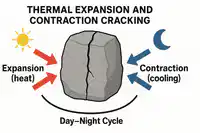
Thermal Expansion
Rocks break from the constant cycle of heating and subsequent cooling.
During the day, rocks heat up and expand in the sun.
This repeated cycle causes stress that can crack the rock surfaces.
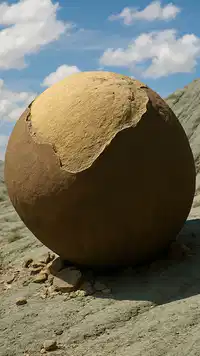
Exfoliation
This process makes the outer rock layers peel off in sheets.
It is often compared to peeling away the layers of an onion.
This weathering is common in large, uniform masses of rock.
9
Multiple Choice
A rock surface being smoothed and worn down by wind-blown sand is an example of what process?
Exfoliation
Thermal Expansion
Abrasion
Frost Wedging
10
Misconception | Correction |
|---|---|
Weathering is the same as erosion. | Weathering breaks down rocks, while erosion moves the broken pieces. |
Physical weathering changes the type of rock. | It only breaks rocks into smaller pieces, keeping the same chemical composition. |
Rocks are permanent and do not change. | Rocks constantly change due to weathering processes like frost wedging and abrasion. |
11
Multiple Choice
How do frost wedging and thermal expansion both rely on temperature changes to cause weathering?
Both processes involve water seeping into cracks and dissolving minerals.
Both processes involve expansion and contraction that create stress within the rock.
Both processes rely on plant roots to exert pressure on the rock.
Both processes only occur in hot, dry desert climates.
12
Multiple Choice
In a mountainous area with cold winters, which type of physical weathering is most likely to break apart large granite boulders?
Salt wedging
Thermal expansion
Frost wedging
Root wedging
13
Multiple Choice
A large boulder is broken into many smaller pebbles. What has happened to its total surface area, and why is this significant?
The surface area has decreased, making it more resistant to erosion.
The surface area has increased, allowing for faster future weathering.
The surface area has stayed the same, but the rock's composition has changed.
The surface area has become zero, and the rock has disappeared.
14
Multiple Choice
Imagine you are selecting stone for a statue to be placed in a city park where trees will be planted nearby. Which type of physical weathering would be a long-term concern for the statue's foundation?
Root wedging from the growing trees.
Abrasion from people touching the statue.
Thermal expansion from daily sun exposure.
Salt wedging from winter road salt.
15
Mechanical weathering physically breaks down rocks without changing their chemical composition.
The main types are frost, root, and salt wedging, abrasion, and exfoliation.
Breaking rocks into smaller pieces increases their total exposed surface area.
Weathering breaks rocks down, while erosion moves the broken pieces away.
16
Poll
On a scale of 1-4, how confident are you about the concepts covered in today's review?
1
2
3
4
Middle School
Show answer
Auto Play
Slide 1 / 16
SLIDE
Similar Resources on Wayground

12 questions
Habitat or Niche?
Presentation
•
6th - 7th Grade
12 questions
Matching Cell Organelles
Presentation
•
5th - 8th Grade
13 questions
Motion
Presentation
•
6th - 9th Grade
13 questions
The Forces of Flight
Presentation
•
6th - 8th Grade
10 questions
PWMS Food Webs & Energy Flow
Presentation
•
6th - 8th Grade
14 questions
Plate Tectonic Theory
Presentation
•
6th - 8th Grade
10 questions
Water Cycle
Presentation
•
6th - 7th Grade
10 questions
Sound Waves
Presentation
•
7th - 8th Grade
Popular Resources on Wayground
10 questions
How much do you know about our Portrait of an Eagle?

Quiz
•
10th Grade
10 questions
Fast Food Slogans
Quiz
•
6th - 8th Grade
21 questions
Continents and Oceans
Quiz
•
6th Grade
20 questions
Parts of Speech
Quiz
•
5th Grade
16 questions
Subject & Predicate
Quiz
•
5th Grade
25 questions
Multiplication Facts
Quiz
•
5th Grade
12 questions
Map Skills
Quiz
•
3rd Grade
22 questions
Continents and Oceans
Quiz
•
5th Grade
Discover more resources for Science
17 questions
7.6D Aqueous Solutions
Quiz
•
7th Grade
20 questions
Scientific Method and Variables
Quiz
•
8th Grade
20 questions
Scientific method and variables
Quiz
•
8th Grade
27 questions
Counting Atoms - Subscripts
Quiz
•
8th Grade
10 questions
6.6D - Relative Density Review
Quiz
•
6th Grade
20 questions
Claim, Evidence and Reasoning (CER)
Quiz
•
6th - 8th Grade
18 questions
Counting Atoms
Quiz
•
7th - 8th Grade
20 questions
Density
Quiz
•
6th Grade