

2.1.2 - Vital Signs

Presentation
•
Science
•
9th - 12th Grade
•
Hard
Standards-aligned

RYAN WELCH
FREE Resource
16 Slides • 18 Questions
1
2
3
Multiple Choice
Which of the following best describes the purpose of documenting patient vital signs?
To maintain accurate medical records for patient care
To increase the number of tests performed
To reduce the need for communication with patients
To avoid using technology in healthcare
4
Open Ended
Why is it important for healthcare professionals to accurately collect and interpret patient vital signs?
5
6
Multiple Choice
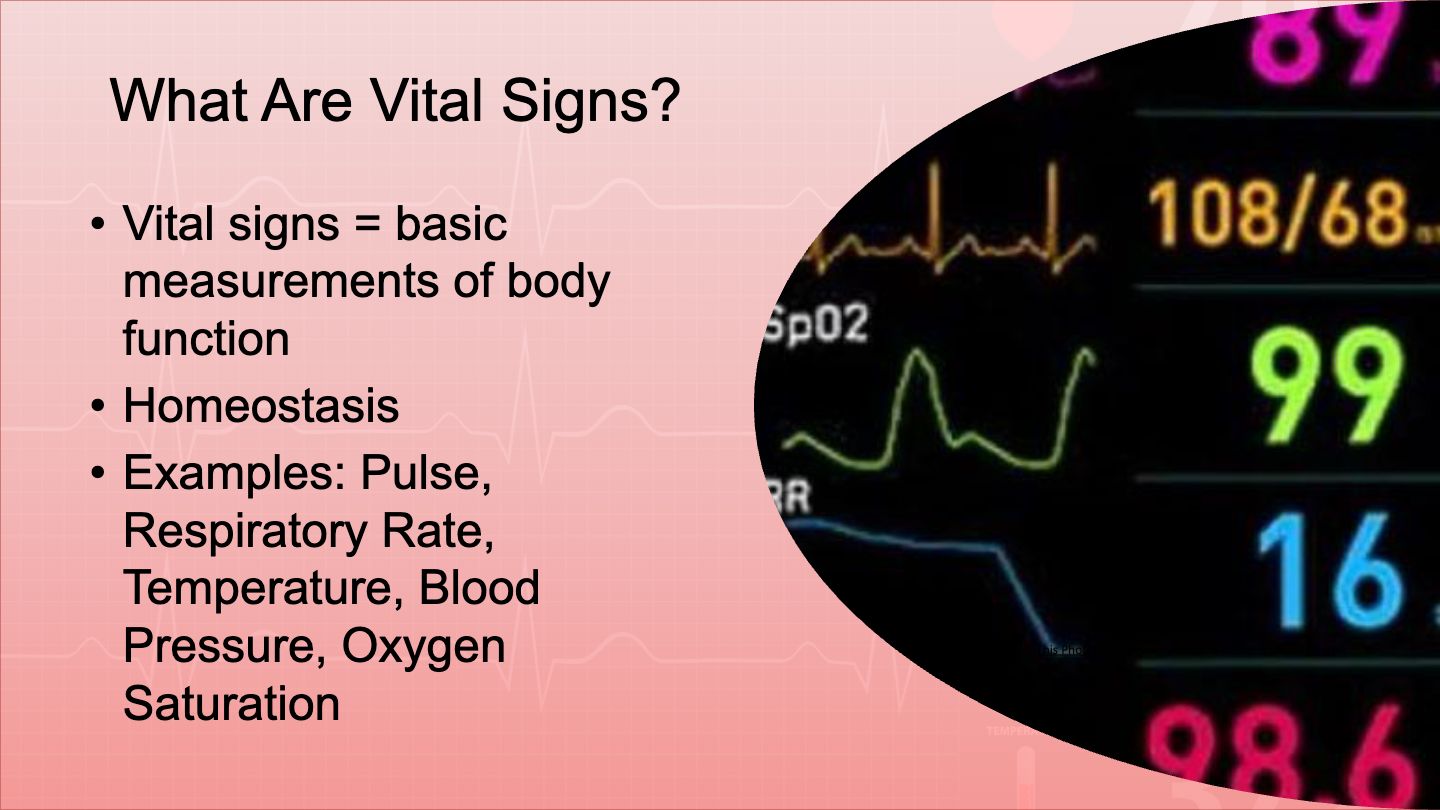
Which of the following is NOT considered a vital sign?
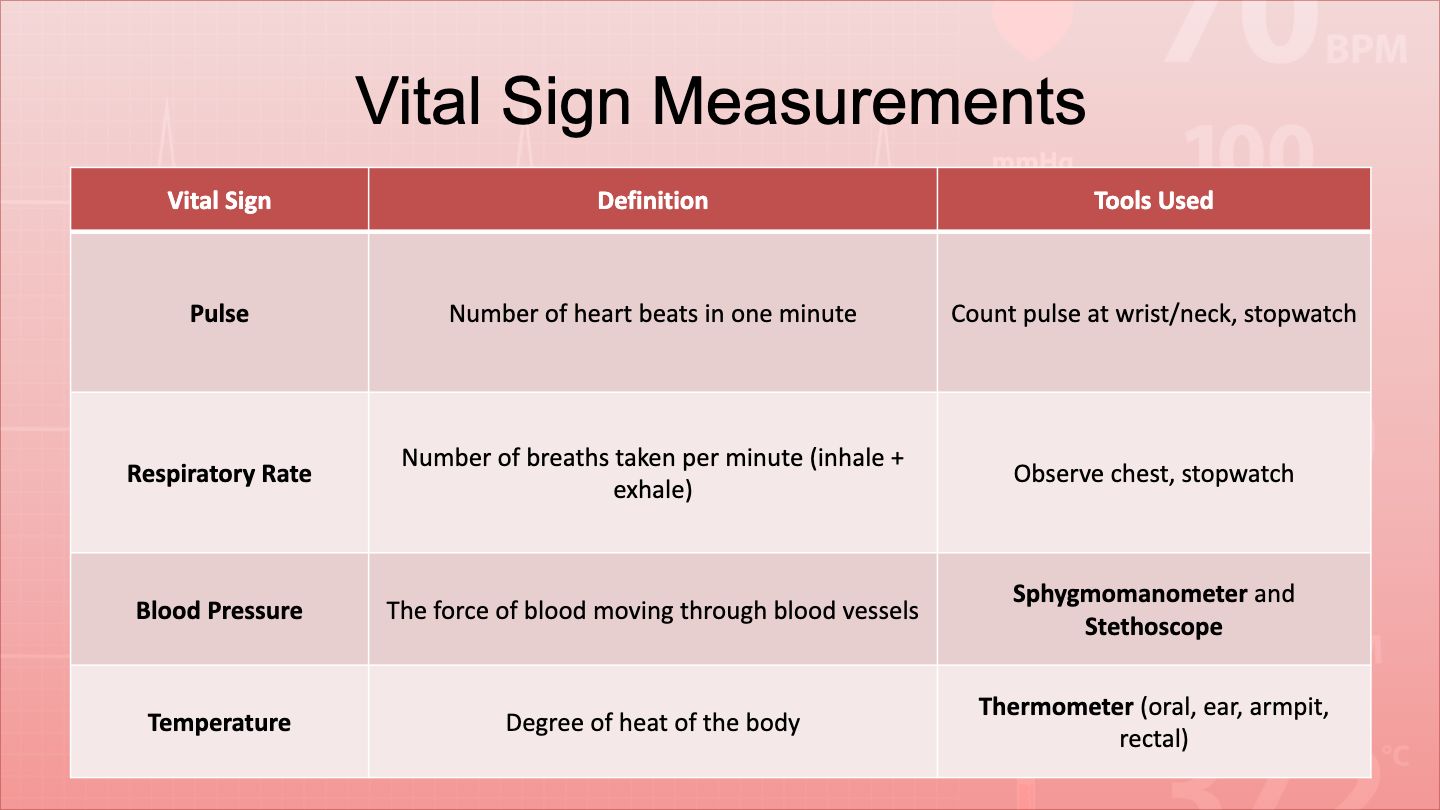
Pulse
Respiratory Rate
Blood Sugar
Oxygen Saturation
7
8
Open Ended
Explain why it is important to measure vital signs regularly in a healthcare setting.
9
10
11
Fill in the Blanks
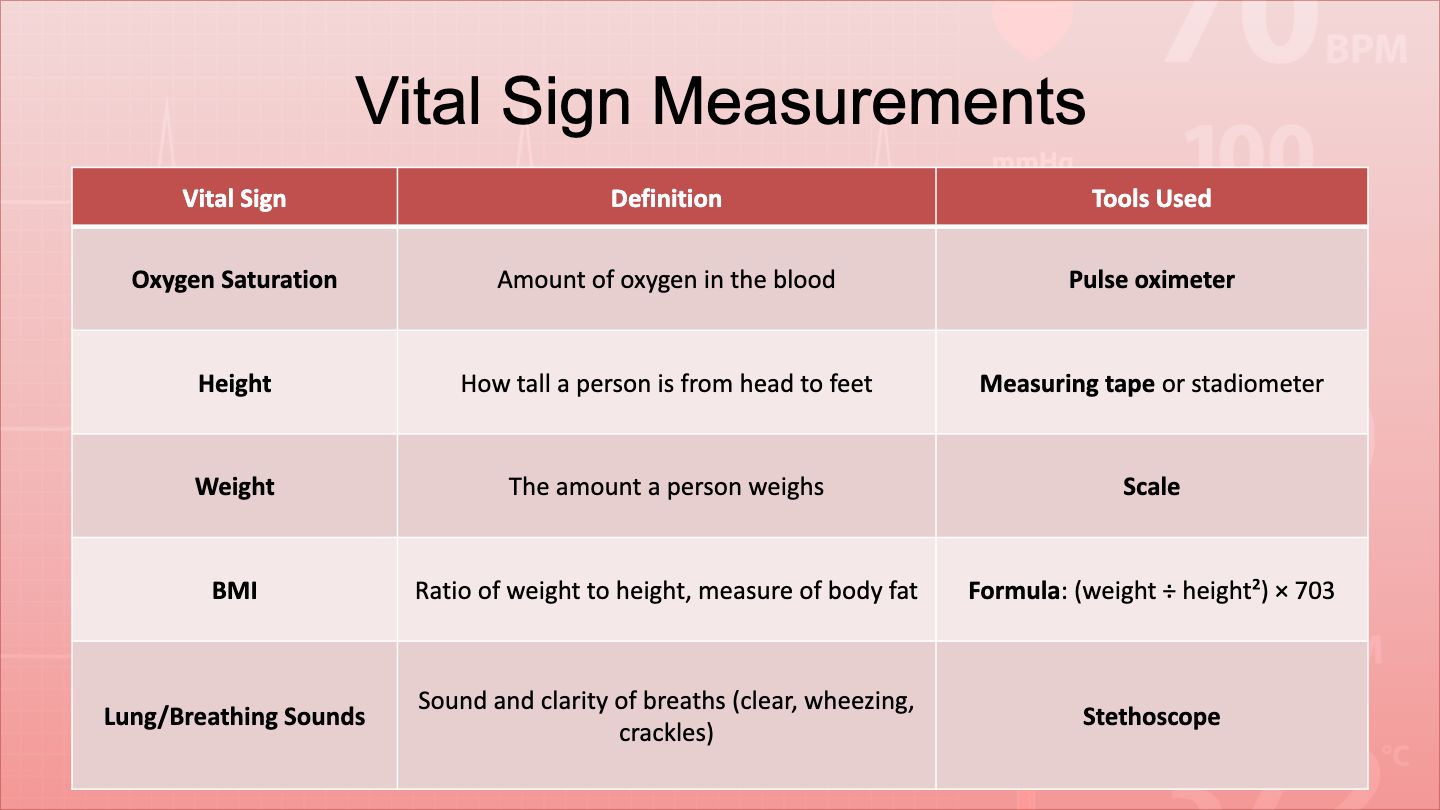
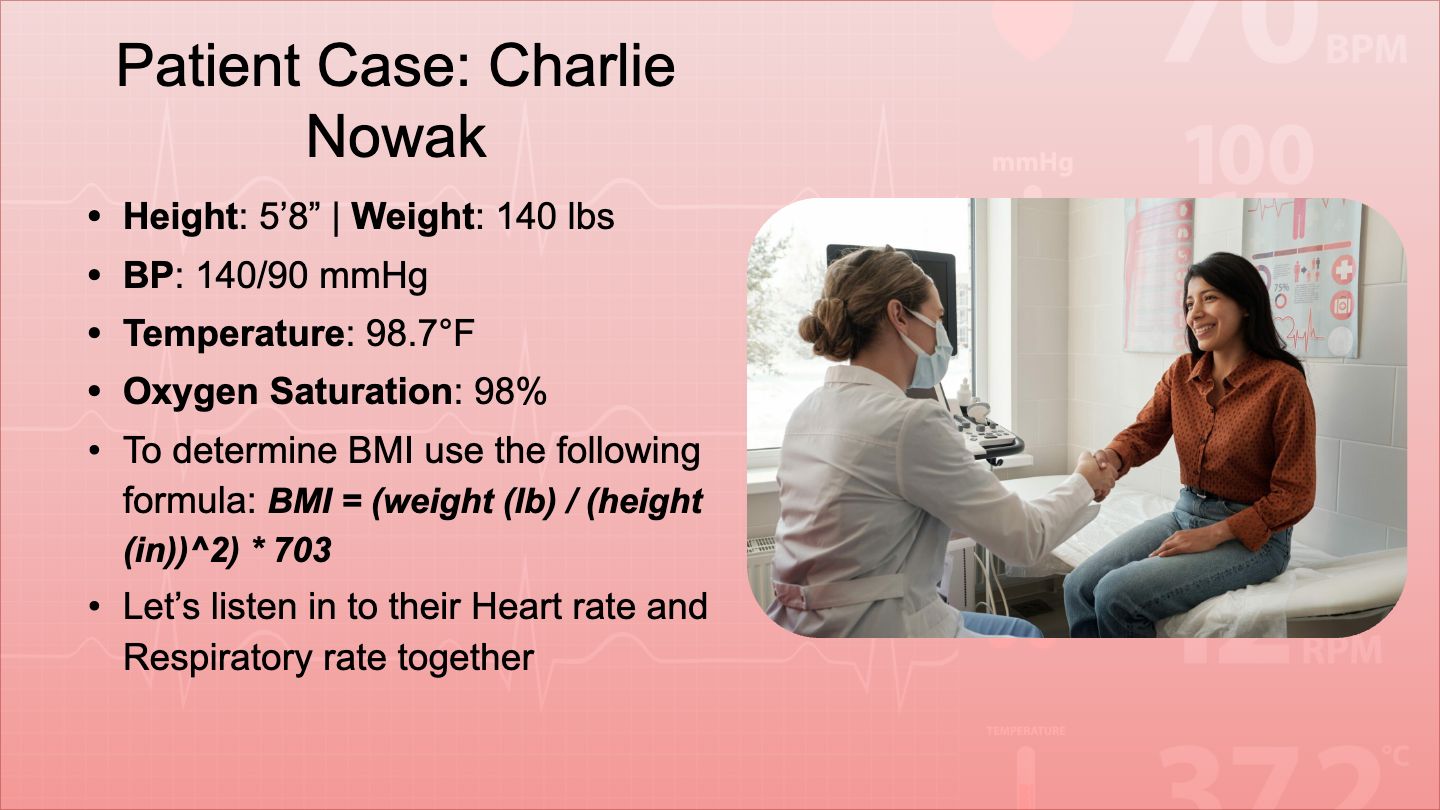
BMI is calculated using the formula: (weight ÷ height^2) ×
Type answer...
12
Multiple Select
Which of the following tools are correctly matched with the vital sign they measure?
Pulse - Stopwatch
Blood Pressure - Sphygmomanometer
Temperature - Stethoscope
Oxygen Saturation - Pulse oximeter
13
14
Multiple Choice
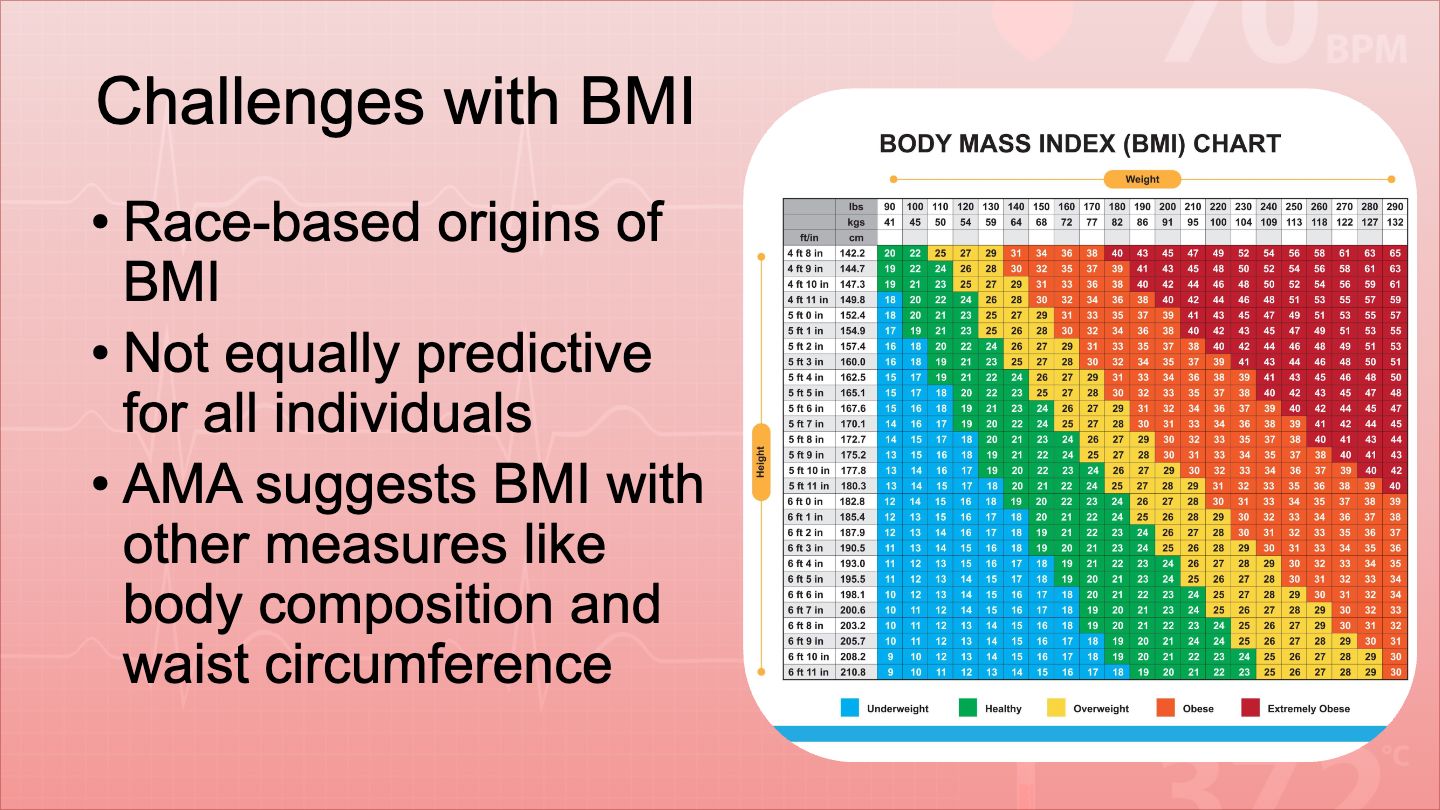
What is one limitation of using BMI as a measure of health?
It is difficult to calculate
It does not account for body composition
It requires expensive equipment
It is only used for children
15
16
Open Ended
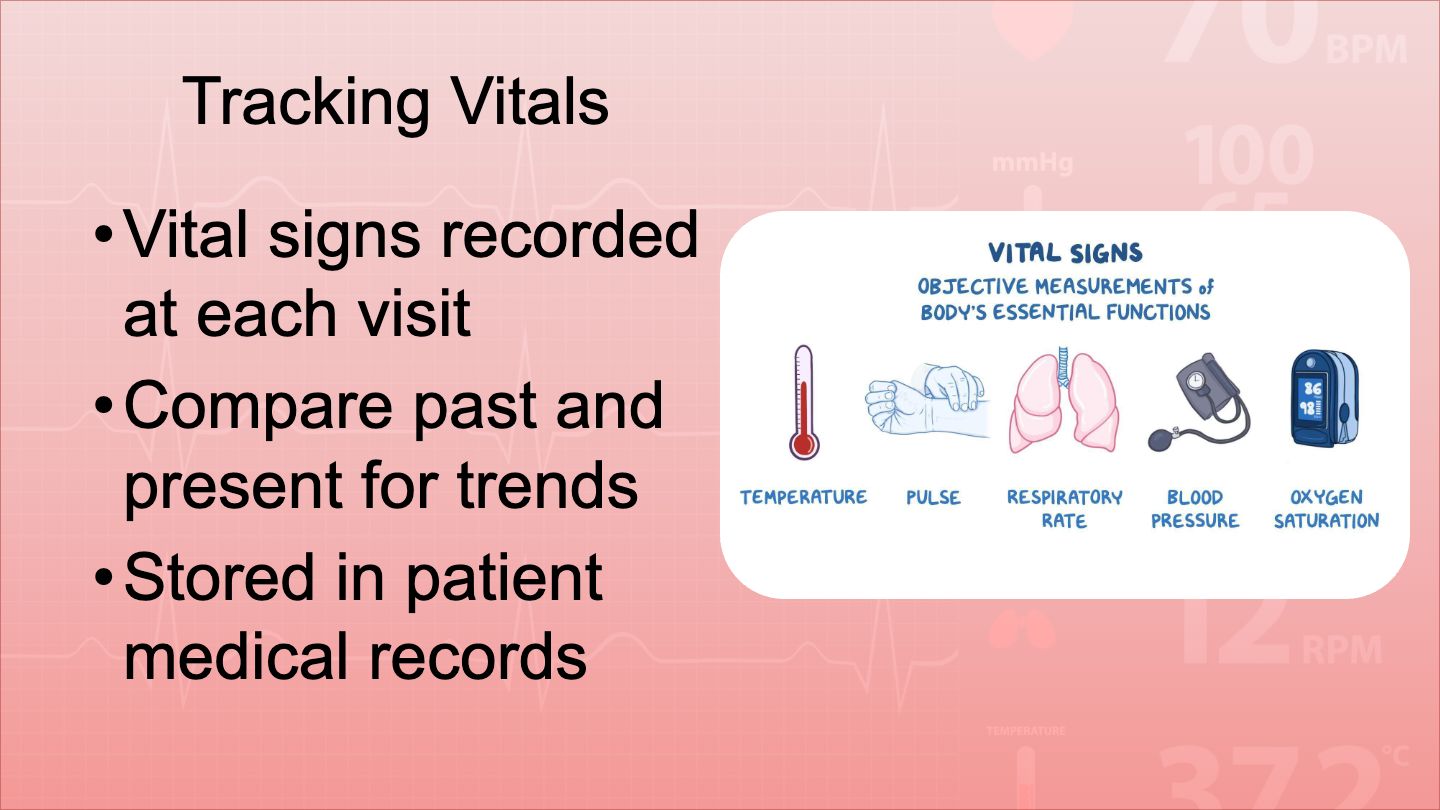
How can tracking vital signs over time help healthcare professionals make better decisions for patient care?
17
18
Multiple Choice
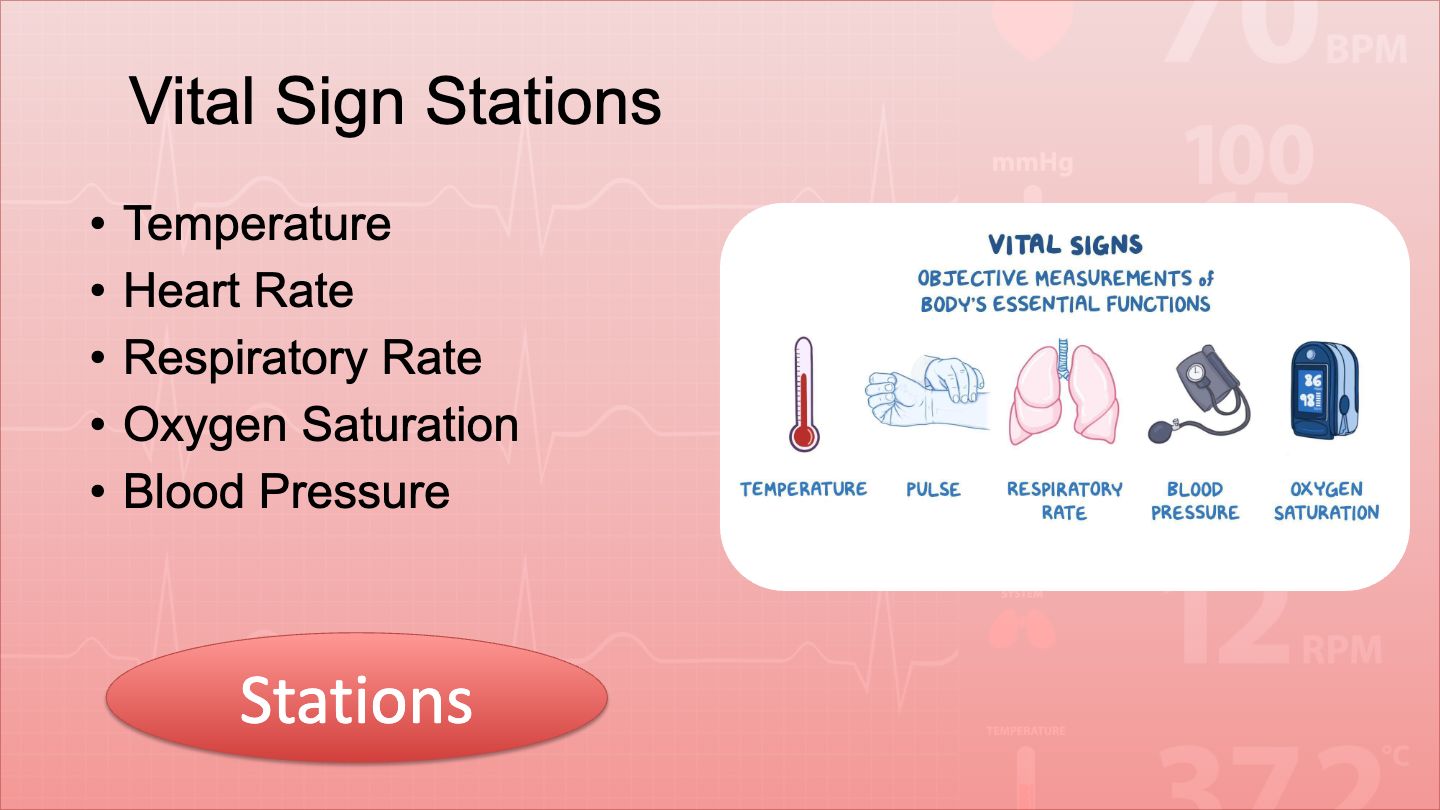
Which of the following is NOT considered a vital sign station?
Temperature
Heart Rate
Blood Glucose
Blood Pressure
19
20
Fill in the Blanks
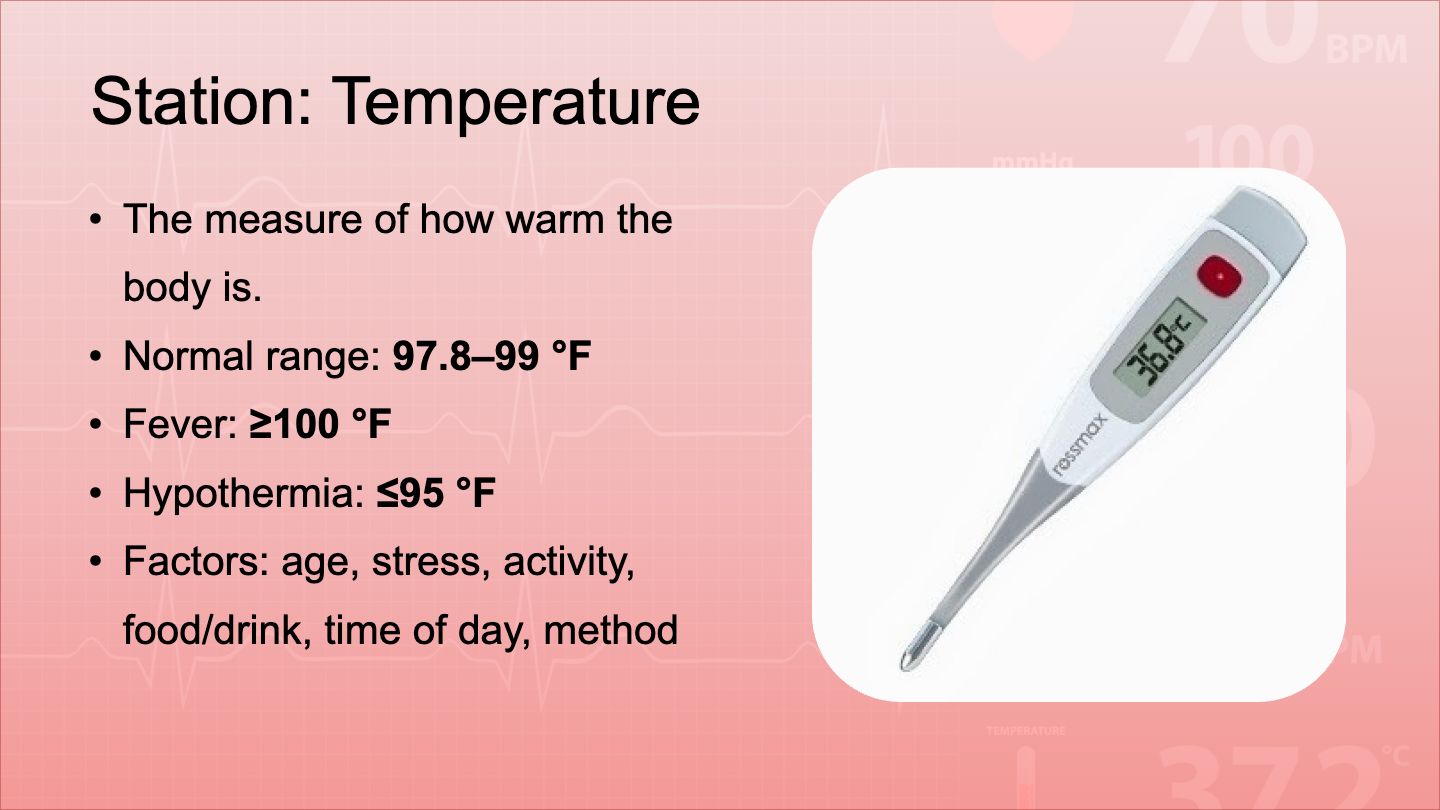
The normal range for body temperature is
Type answer...
21
22
Open Ended
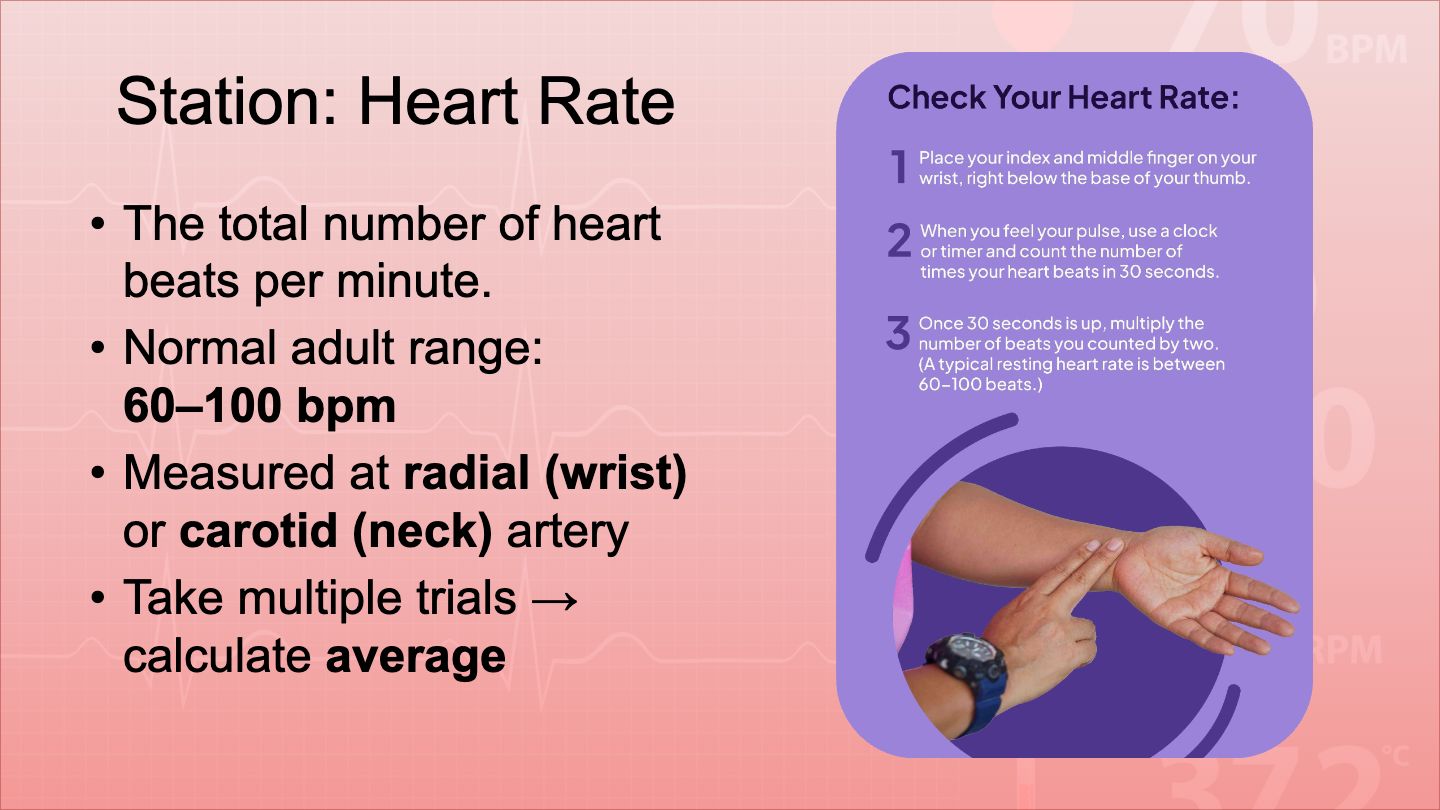
Explain how to measure heart rate and why it is important to take multiple trials.
23
24
Multiple Select
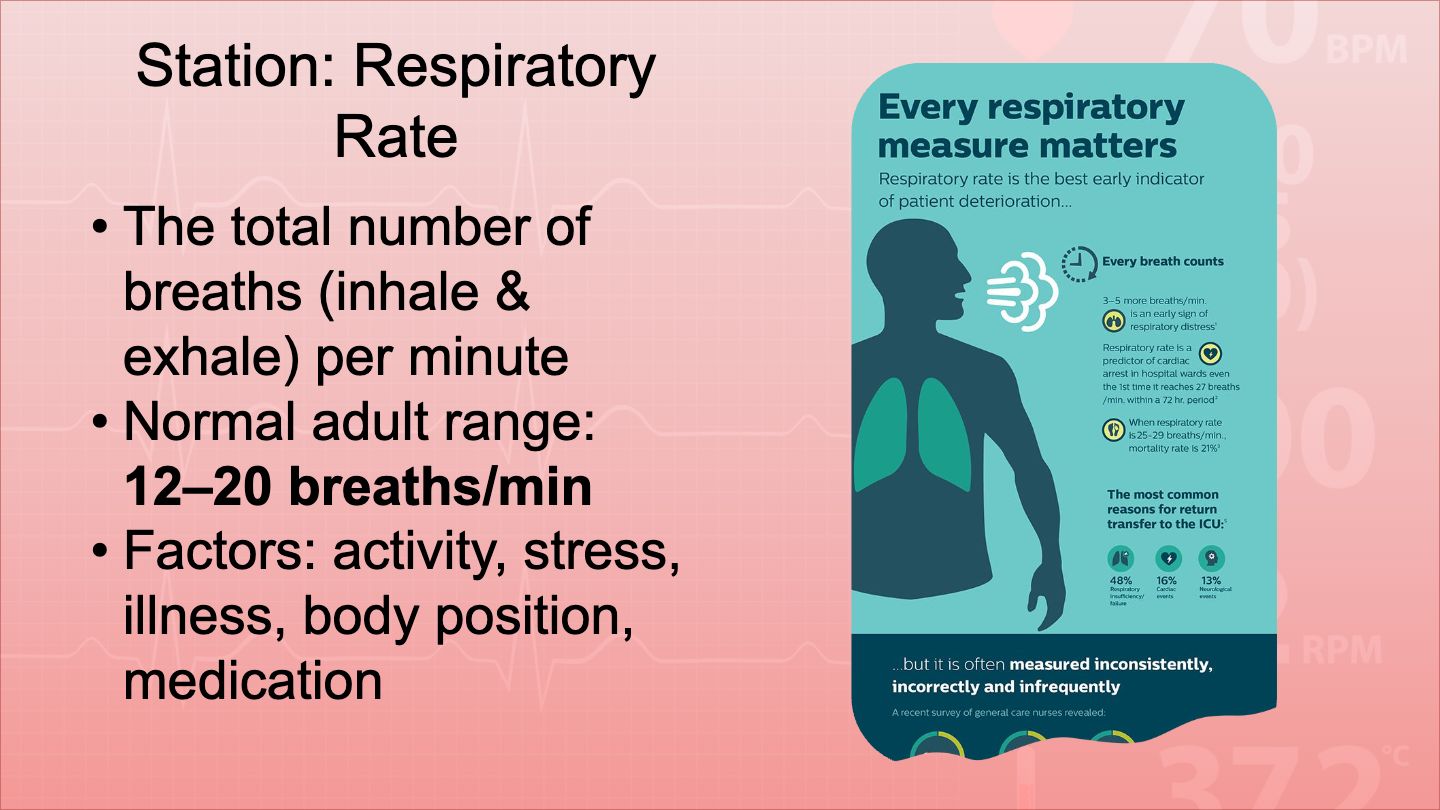
Which of the following factors can affect respiratory rate?
Activity
Illness
Body position
Allergy
25
26
Multiple Choice
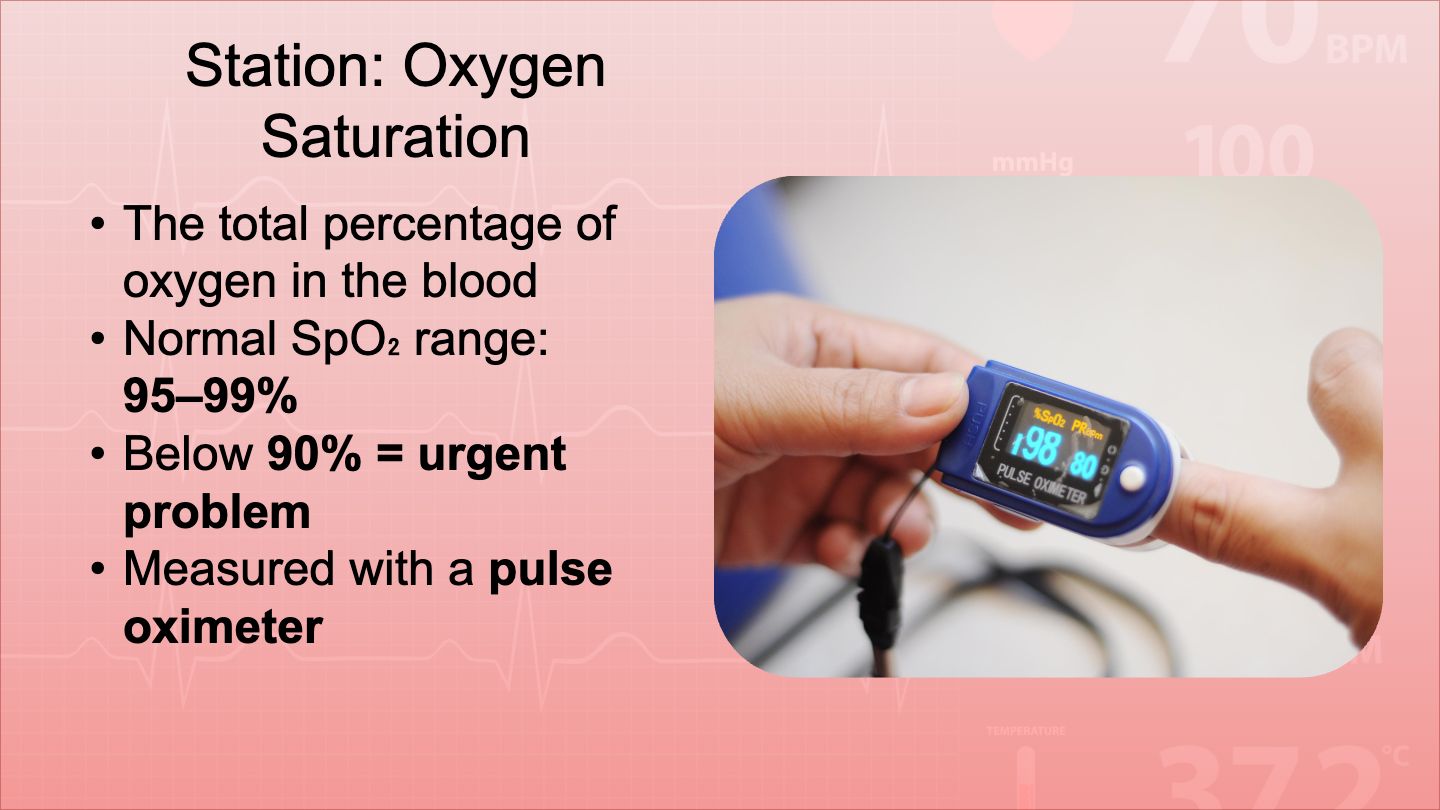
What is considered an urgent problem when measuring oxygen saturation?
SpO2 below 95%
SpO2 below 90%
SpO2 above 99%
SpO2 above 100%
27
28
Multiple Choice
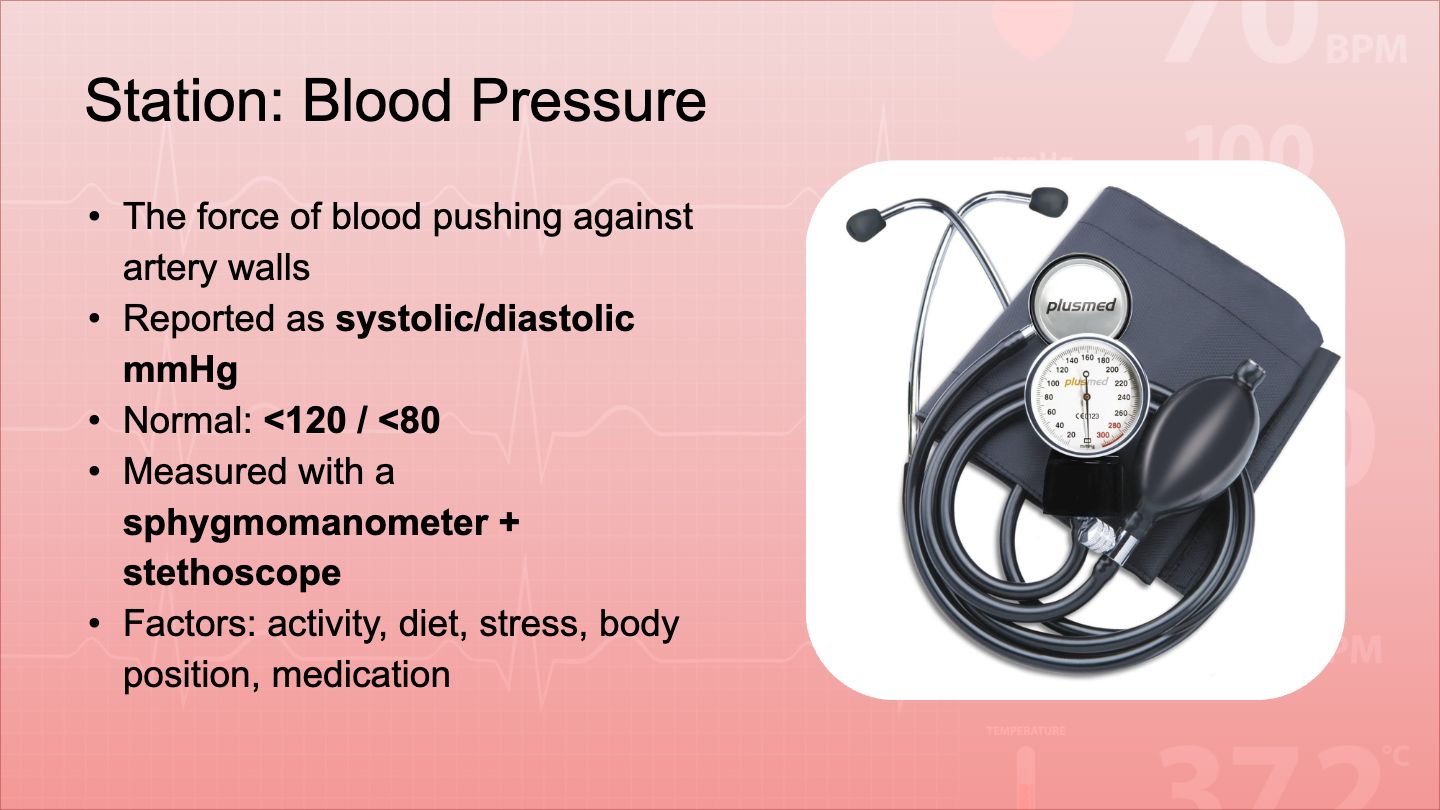
Which instrument is used to measure blood pressure?
Thermometer
Pulse oximeter
Sphygmomanometer
Stethoscope
29
30
Multiple Choice
Based on the information provided for Charlie Nowak, what is their Body Mass Index (BMI)?
21.3
25.1
19.8
23.5
31
32
Multiple Choice
Which of the following is NOT a goal of this lesson on vital signs?
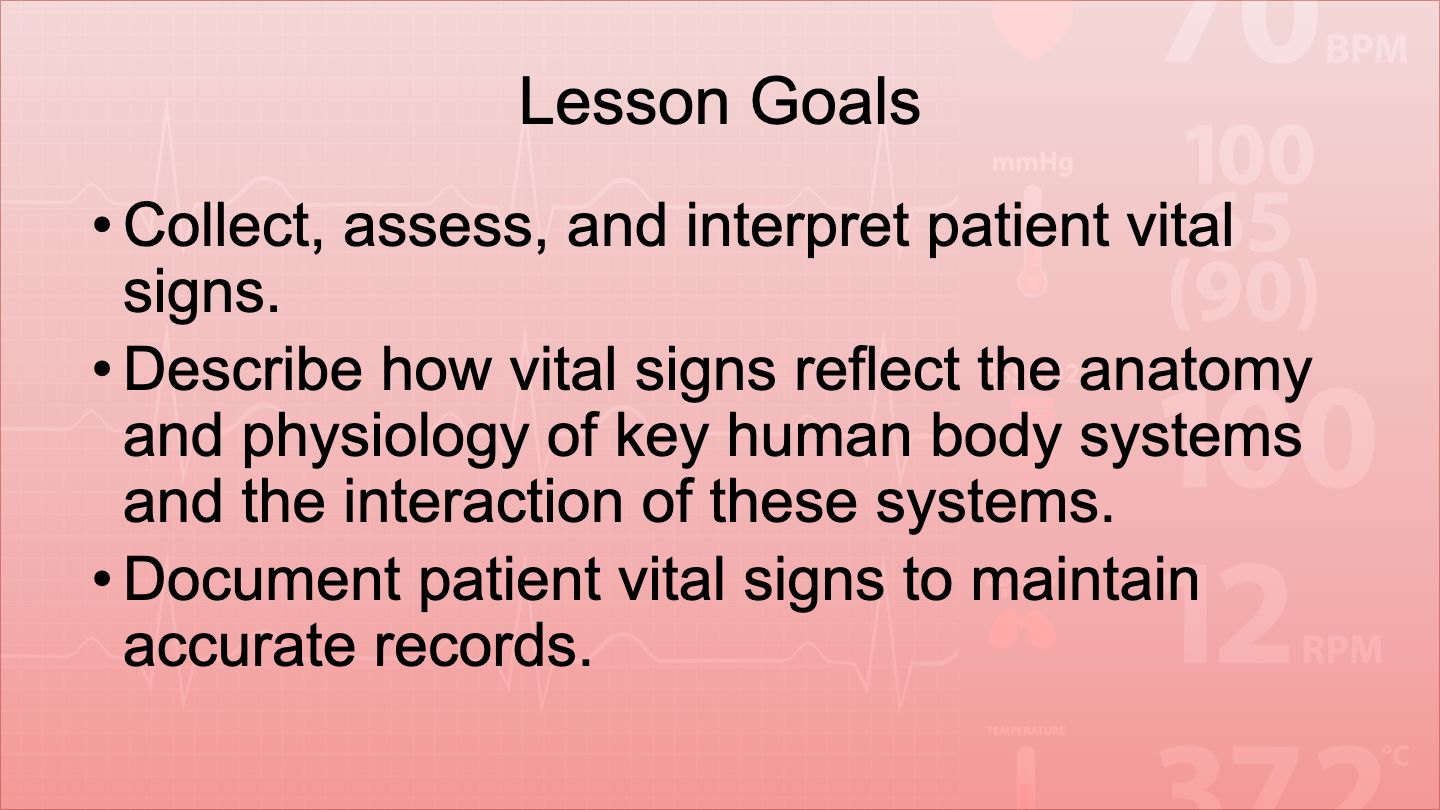
Collect, assess, and interpret patient vital signs.
Describe how vital signs reflect the anatomy and physiology of key human body systems.
Document patient vital signs to maintain accurate records.
Explain how to treat diseases using vital signs.
33
Open Ended
How do vital signs reflect the interaction of different human body systems?
34
Open Ended
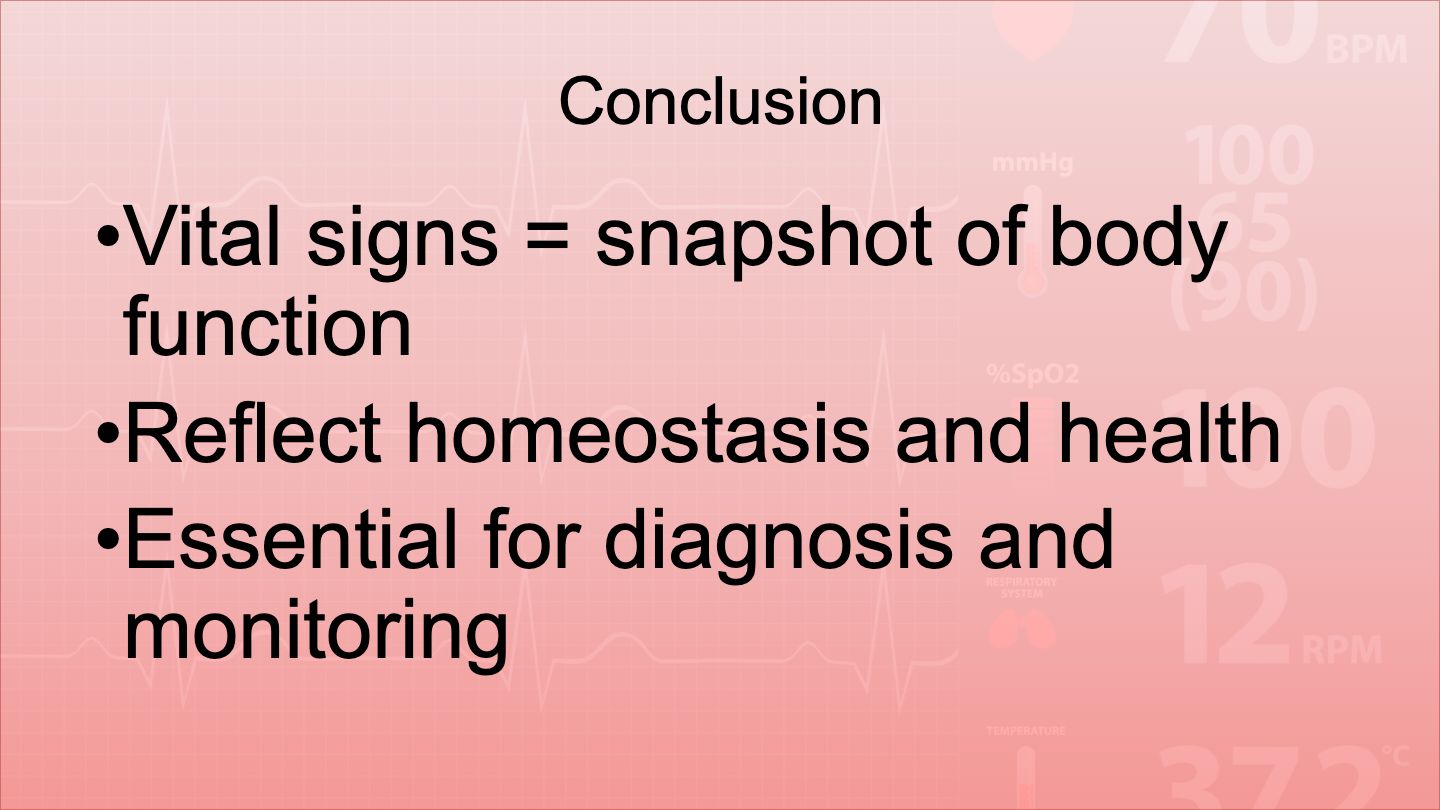
Explain why monitoring vital signs is essential for diagnosis and ongoing patient care, using the case of Charlie Nowak as an example.
Show answer
Auto Play
Slide 1 / 34
SLIDE
Similar Resources on Wayground

26 questions
Factoring: The Greatest Common Factor Lesson
Presentation
•
9th - 12th Grade
25 questions
Forensic Science Searching the Crime Scene
Presentation
•
9th - 12th Grade
27 questions
Starr Biology
Presentation
•
9th Grade - University
26 questions
VOLCANO - LONG TEST
Presentation
•
9th Grade - University
30 questions
Texas Aquatic Ecosystems
Presentation
•
9th - 12th Grade
29 questions
Bioteknologi Pangan
Presentation
•
9th - 12th Grade
26 questions
Animal Husbandry PPT
Presentation
•
9th - 12th Grade
24 questions
Mandatos Nosotros
Presentation
•
9th - 12th Grade
Popular Resources on Wayground
10 questions
Safety Day 2026 – Student Review

Quiz
•
9th Grade
21 questions
Continents and Oceans
Quiz
•
6th Grade
20 questions
Parts of Speech
Quiz
•
5th Grade
16 questions
Subject & Predicate
Quiz
•
5th Grade
25 questions
Multiplication Facts
Quiz
•
5th Grade
12 questions
Map Skills
Quiz
•
3rd Grade
22 questions
Continents and Oceans
Quiz
•
5th Grade
15 questions
Rounding Decimals
Quiz
•
5th Grade
Discover more resources for Science
10 questions
Exploring Chemical and Physical Changes

Interactive video
•
6th - 10th Grade
20 questions
Atomic Structure
Quiz
•
9th Grade
10 questions
Exploring the Electromagnetic Spectrum for Middle School Science
Interactive video
•
6th - 10th Grade
10 questions
Exploring Force and Motion Concepts
Interactive video
•
6th - 10th Grade
10 questions
Exploring Air Masses and Weather Fronts
Interactive video
•
6th - 10th Grade
14 questions
Periodic Trends
Interactive video
•
11th Grade
10 questions
Exploring the States of Matter
Interactive video
•
6th - 10th Grade
10 questions
Exploring Forces: Net Force, Normal Force, Gravity, and Friction
Interactive video
•
6th - 10th Grade