Week 7 Review AP Chemistry K-CHEMISTRY
Presentation
•
Chemistry
•
12th Grade
•
Medium
Standards-aligned
Hisham Mahmoud
Used 2+ times
FREE Resource
35 Slides • 24 Questions
1
2
Multiple Choice
3
Reorder
Reorder the following steps for drawing lewis structures
The Valence electrons
charge - add/subtract if there is a charge
Place the lower Electronegative atom in the centre and draw in bonds
Add remaining electrons as Lone pairs (terminal atoms first).
If any atoms dont have an Octet, use electrons to create double bonds.
Check each atom has the same number of electrons as it started with (formal charge)
4
5
6
7
8
9
10
11
Multiple Choice
What is the molecular geometry of the compound described in the image?
Tetrahedral
Trigonal planar
Linear
Bent
12
13
14
Fill in the Blanks
15
Multiple Choice
16
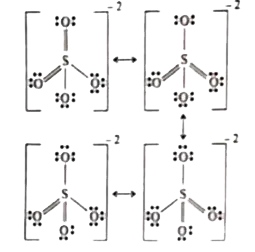
a) Sulfur is bonded to one oxygen with a double bond, and the other three oxygens with single bonds.
b) All four S–O bonds are equivalent due to resonance.
c) The shape of the ion is tetrahedral.
d) Both b and c.
17
✅ Answer:
d) Both b and c.
b) All four S–O bonds are equivalent due to resonance. c) The shape of the ion is tetrahedral.
18
Multiple Choice
19
Resonance means: when more than one valid Lewis structure can be drawn for a molecule/ion, the actual structureis a hybrid where electrons (usually π electrons or lone pairs) are delocalized across multiple bonds/atoms.
It is not confined to a single atom
20
21
Multiple Choice
What is the molecular geometry of the compound with 32 valence electrons and resonance that results in 4 equal S–O bonds?
Linear
Trigonal Planar
Tetrahedral
Octahedral
22
Multiple Choice
What shape would this have?
Trigonal planar
Pyramidal
Tetrahedral
Bent
23
24
Open Ended
Why is CO2 nonpolar?
25
26
Multiple Select
The shape of the carbon dioxide molecule allows it to be classified as
polar.
linear.
nonpolar.
charged.
27
28
29
Multiple Choice
A molecule of NH3 has the shape pictured. What is true about the molecule?
It has no lone pairs and is non polar
It has one lone pair and is polar
It has no lone pairs and is polar
It has one lone pair and is non polar
30
31
Open Ended
Is CH₂Cl₂ polar or nonpolar?
32
33
Multiple Choice
Why is the molecule polar?
There are nonbonding pairs on the central atom.
There are different types of elements bonded to the central atom.
There are no nonbonding pairs on the central atom and all of the atoms bonded to the central atom are the same.
34
35
36
Multiple Choice
37
Reorder
Reorder the following elements by increasing atomic radius.
Hydrogen
lithium
sodium
Potassium
Rubidium
38
39
40
Multiple Choice
Which has a higher ionization energy.. N or As?
N, because with more p+ in its nucleus it attracts e- more making them harder to remove.
As, because with more p+ in its nucleus it attracts e- more making them harder to remove.
As, because with less energy levels the ve- are closer to/ more attracted to the nucleus making them harder to remove.
N, because with less energy levels the valence e- are closer to/ more attracted to the nucleus making them harder to remove.
41
Reorder
Put the following in order of increasing ionization energy: Strontium (Sr) , Aluminum (Al) , Indium (In)
Strontium
Indium
Aluminum
42
43
44
Reorder
Reorder the following from lowest to highest electronegativity
Cs
Sr
As
P
F
45
Reorder
Rank the following from lowest to highest electronegativity
Mg
Si
P
S
Cl
46
47
48
Multiple Select
Which of these molecules exhibit London dispersion forces? (Select ALL that apply.)
a
b
c
d
49
50
51
Multiple Select
What kind of intermolecular force would you find between water (polar that has O and H hbond) and acetone (polarthat has O for hbond)?
(Check all that apply)
ion-dipole
H-bonds
dipole-dipole
london dispersion
none
52
Multiple Choice
What type of intermolecular forces are present in a polar bond that does not have a hydrogen bond donor?
Dipole-dipole
London dispersion
Hydrogen bonding
Ionic bonding
53
54
55
Multiple Choice
What are the intermolecular forces (IMF) present in CH3OH?
Hydrogen bonding
Dipole-dipole interactions
London dispersion forces
All of the above
56
57
58
Poll
How confident do you feel about these topics now?
59
Skills tested week 7 AP Chemistry Revision
unit 1
Periodic Trends – Atomic Radius
Periodic Trends – Ionization Energy
Periodic Trends – Electronegativity
unit 2
Lewis Diagrams
Resonance & Formal Charge
VSEPR & Bond Hybridization
Polarity of Bonds & Molecules
unit 3
Identify types of IMF
Rank IMF strength qualitatively.
Relate IMF strength to boiling point / melting point / vapor pressure.
Explain volatility and evaporation rate trends.
Skills tested week 7 AP Chemistry Revision
Show answer
Auto Play
Slide 1 / 59
SLIDE

Similar Resources on Wayground
49 questions
A diet to die for
Presentation
•
12th Grade
49 questions
Big Bang Theory and Formation of Stars
Presentation
•
11th - 12th Grade
61 questions
Chapter 9 Electrons in Atoms and the Periodic Table
Presentation
•
University
47 questions
Chemistry Chapter 1 Section 1
Presentation
•
11th Grade
49 questions
Periodic Table Notes (L2 - Full)
Presentation
•
11th Grade
54 questions
GENERAL CHEMISTRY 2
Presentation
•
12th Grade
53 questions
AP Biology Cell Respiration
Presentation
•
12th Grade
53 questions
Cellular Respiration AP Biology
Presentation
•
12th Grade
Popular Resources on Wayground
20 questions
"What is the question asking??" Grades 3-5
Quiz
•
1st - 5th Grade
20 questions
“What is the question asking??” Grades 6-8
Quiz
•
6th - 8th Grade
10 questions
Fire Safety Quiz
Quiz
•
12th Grade
20 questions
Equivalent Fractions
Quiz
•
3rd Grade
34 questions
STAAR Review 6th - 8th grade Reading Part 1
Quiz
•
6th - 8th Grade
20 questions
“What is the question asking??” English I-II
Quiz
•
9th - 12th Grade
20 questions
Main Idea and Details
Quiz
•
5th Grade
47 questions
8th Grade Reading STAAR Ultimate Review!
Quiz
•
8th Grade