

2.2 Europeans Gain Footholds in Asia

Presentation
•
Social Studies
•
9th - 12th Grade
•
Hard

KENNEDY STREETER
FREE Resource
16 Slides • 0 Questions
1
By KENNEDY STREETER

2
Lesson Objectives
SWBAT: summarize how Portugal built a trading empire in South and Southeast Asia, analyze the rise of Dutch and Spanish dominance in Asia and the Indian Ocean, understand how the decline of Mughal India affected European traders in the region, describe European contacts with Ming and Qing China, and summarize Korea's and Japan's attitudes toward contact with the outside world
SS.H.1.9-12. Evaluate how historical developments were shaped by time and place as well as broader historical contexts
SS.H.2.9-12. Analyze change and continuity within and across historical eras.
SS.H.3.9-12. Evaluate the methods utilized by people and institutions to promote change.
SS.H.11.9-12. Analyze multiple and complex causes and effects of events in the past.
SS.H.12.9-12. Analyze the geographic and cultural forces that have resulted in conflict and cooperation.
3

Essential Question: How successful were European attempts to establish missions and trade and Ming and Qing China?
4
1510- Portuguese seized the island of Goa- a coastal city seized in 1510 that became the commercial and military base of Portugal's India trade
Albuquerque burned coastal town/crushed Arab fleets at sea
1511: took Portuguese port of and killed cities Muslim inhabitants- Malacca- city located on the Malay peninsula near the strategic Straits of Malacca
Outposts- a distant military station or a remote settlement
Trading outposts Around the Indian Ocean
Afonso de Albuquerque- a Portuguese admiral who helped found Portugal's empire in the East; captured and built forts: Goa, Calicut, Malacca, and Hormoz; set up shipbuilding and other Portuguese industries in India/built churches
Muslim rulers (from central Asia) established the Mughal Empire throughout India
Mughal Empire-Muslim empire that ruled most of northern India from mid 1500s to the mid 1700s; aka the Mogul empire
Albuquerque and Portuguese won princes= end Muslim power and turn Indian ocean to 'Portuguese Lake"
Albuquerque in India
used cities to to resupply and repair ships
most of 1500s- Portugal controlled the spice trade between Europe and Asia
5
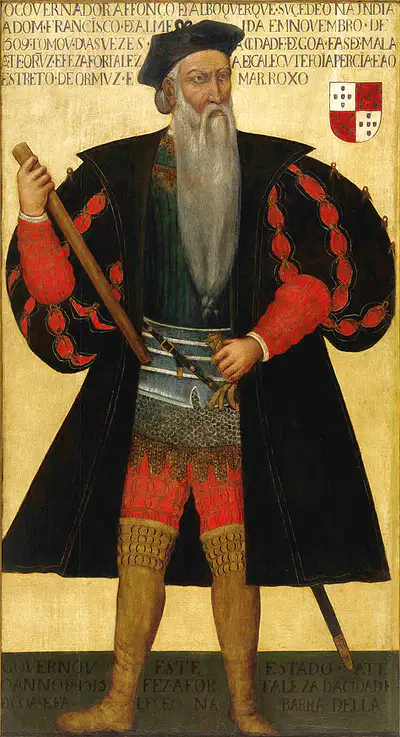
Portugal- 1st European power to gain foothold in Asia
pictured: Afonso De Albuquerque
Portugal Builds an Empire in Asia
6
Limited Impact
Portuguese had sea power but remained on outskirts of Asian trade
had neither strength nor resources to conquer territory on land
In India and China, only sought permission to trade
unwillingness of Portuguese missionaries= resentment
Goa= attacked Muslims, destroyed Hindu temples, and introduced the Inquisition (Church court set up to try people accused of heresy)
Portuguese behavior disrupted old trade patterns, exchanges continued among people in Asia
some bypasseed Portuguese controlled towns
late 1500s- Portuguese power declined overseas
7
Dutch (present day Netherlands)- 1st Europeans to challenge Portuguese domination of Asian trade
Protestant northern provinces won independence and competed against Portugal to control the rice spice trade of the Indies
Rise of the Dutch and the Spanish
8
1602: group of wealthy Dutch merchants formed the Dutch East India Company- a trading company established with full sovereign powers by the Netherlands in 1602 to protect and expand its trade in Asia
other countries expeditions were controlled by government but DEIC has full sovereign (having full, independent powers)
1641: Dutch captured Malacca from Portuguese opened trade w/China and enforced a monopoly (complete control of a product or business by one person or a group) in Spice Islands
The Dutch Dominate Indian Ocean Trade
1599- Dutch fleet returned to Amsterdam from Asia carrying cargo of pepper, cloves and other spices
used sea power to set up colonies and trading posts around world, as well as in Cape Town
Dutch Sea Power
9
Philippines= key link in Spain's overseas trading empire
Spanish- shipped silver mined in Mexico and Peru across the Pacific to Philippines
used silver to buy goods in China
large American silver flowed into the economics of East Asian nations
The Spanish Trade Network
Spain took over the Philippines- a country in southeastern Asia made up of several thousand islands;seized by Spanish in the 1500s; became an important link in Spain's overseas trading empire as the destination of silver fleets sent from the Americas
Spain conquered and colonized the island; renaming it for Spanish King Philip II
Catholic reformation, Spanish priests set out to convert Filipino to Christianity
Spain Capture the Philippines
10
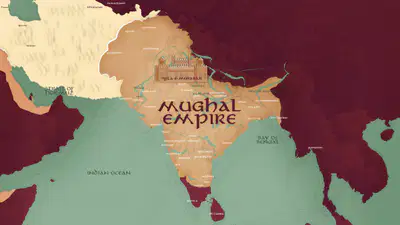
Europeans Trade in Mughal India
11
Mughal empire weakened overtime
Later rulers ended an earlier policy of religious toleration= conflict between Hindu and Mughal
Civil war drained Mughal resources
rulers increased taxes= peasant rebellions
Turmoil and Decline
Mughal Trade- the center of the valuable spice trade
leader in: textile manufacturing, exporting large quantities of silk and cotton cloth
Mughal empire- larger, richer and more powerful than any kingdom in Europe
Mughal emperors did not view Europeans as a threat; could build forts and warehouses on Indian coastal towns
A Thriving Trade Center
12
British- French Rivalry in India
Mughal power declined= French and English traders fought for power
French and English companies made alliances w/ local officials and independent rajahs (princely rulers)
ea. company had sepoys- Indian solider who served in an army set up by the French or English trading companies
British and French= struggle for global power
in India, the British East India Company used an army of British troops and sepoys to drive out French
13
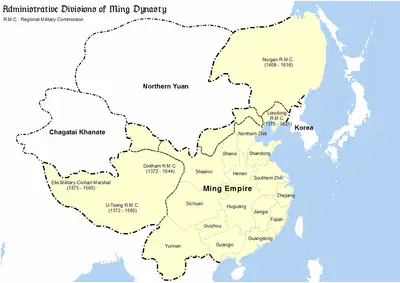
1514: Portuguese ships reached China
Chinese considered Portuguese and foreigners barbarian(lacked civil ways of Chinese)
Ming China and Europe
14
Ming allowed Portuguese to set up trading post in Macao, present day Guangzhou
Macao-trading post Ming Dynasty allowed Portuguese to set up trading post
Guangzhou- aka Canton- during Ming dynasty the Dutch, English and other European nations could trade w/ Chinese merchants under supervision of imperial officials and during trading season
Ming, had no interest in Europe- Ming doctrine claimed "our empire owns the world
Portuguese wanted Chinese silks and porcelains -had little to offer
Chinese demaded gold and silver as payment
Trade with Ming China
15
Christian Missionaries
Portuguese missionaries such as Jesuits arrived w/ traders
Jesuits (a religious order known for its commitment to education, missionary work, and the promotion of Catholicism)
Most Jesuits had broad knowledge of subjects and Chinese welcomed chance to learn about Renaissance Europe from them
Matteo Ricci- Italian scholar and Jesuit priest who traveled China. 1589- began to teach Chinese scholars European mathematical ideas
Goal to convert upper class Chinese to Christianity
Chinese fascinated w/ European technologies and discoveries
The priest had very little success in spreading religious beliefs
16
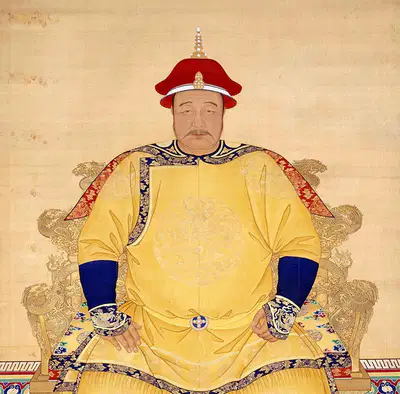
Manchus-people originally from Manchuria,north of China- conquered the Ming Dynasty and ruled China as the Qing dynasty from the mid 1600s to early 1900s
1644- Manchus seized Beijing and made it their capital.
By KENNEDY STREETER
Show answer
Auto Play
Slide 1 / 16
SLIDE
Similar Resources on Wayground

10 questions
Modeling with Quadratic
Presentation
•
9th - 12th Grade
13 questions
World History: Ch 11 Renaissance and Reformation
Presentation
•
9th - 12th Grade
11 questions
Equations of Circles
Presentation
•
9th - 12th Grade
12 questions
What is Science?
Presentation
•
KG - 12th Grade
12 questions
Counterarguments and Rebuttals
Presentation
•
9th - 12th Grade
10 questions
Summarizing
Presentation
•
9th - 12th Grade
12 questions
Discriminant
Presentation
•
9th - 12th Grade
12 questions
Unit 7 Review
Presentation
•
9th - 12th Grade
Popular Resources on Wayground
10 questions
How much do you know about our Portrait of an Eagle?

Quiz
•
10th Grade
10 questions
Fast Food Slogans
Quiz
•
6th - 8th Grade
21 questions
Continents and Oceans
Quiz
•
6th Grade
20 questions
Parts of Speech
Quiz
•
5th Grade
16 questions
Subject & Predicate
Quiz
•
5th Grade
25 questions
Multiplication Facts
Quiz
•
5th Grade
12 questions
Map Skills
Quiz
•
3rd Grade
22 questions
Continents and Oceans
Quiz
•
5th Grade
Discover more resources for Social Studies
10 questions
Exploring the Age of Exploration: Key Events and Figures

Interactive video
•
6th - 10th Grade
17 questions
1.3 Review
Presentation
•
11th Grade
10 questions
Exploring the 13 Colonies Regions
Interactive video
•
6th - 10th Grade
8 questions
Smith Unit 5 Quick Check #1 Big Business, Monopolies &Technology
Quiz
•
11th Grade
46 questions
Unit 1 Test REVIEW Ancient Greece and Rome
Quiz
•
9th - 12th Grade
10 questions
Exploring Ancient Mesopotamia Through Song
Interactive video
•
6th - 10th Grade
27 questions
Supply & Demand Test Review
Quiz
•
12th Grade
36 questions
Unit 5 Key Terms
Quiz
•
11th Grade - University