

Unit 1 - The cell(Biomolecuoles)

Presentation
•
Biology
•
9th Grade
•
Practice Problem
•
Hard

the OG G
FREE Resource
20 Slides • 22 Questions
1
2
Multiple Choice
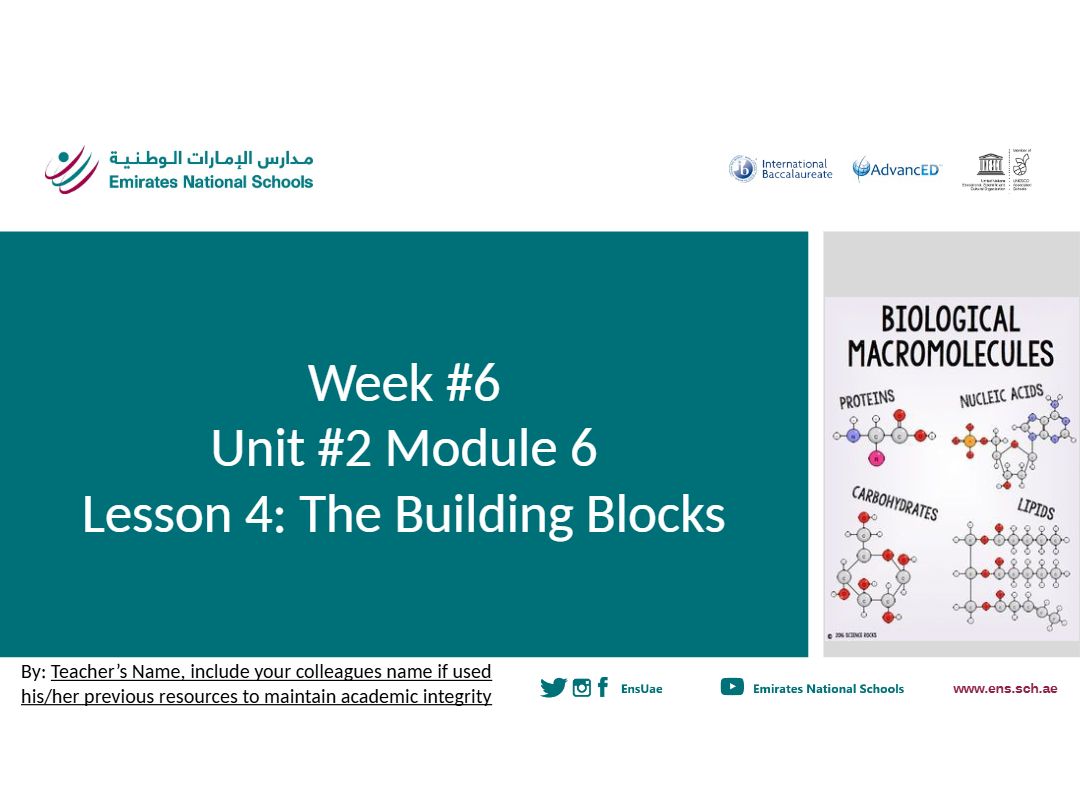
Which of the following is NOT a type of biological macromolecule?
Proteins
Carbohydrates
Vitamins
Nucleic acids
3
4
Open Ended
Why are biological macromolecules considered the building blocks of life?
5
6
Open Ended
Why is carbon essential to life?
7
8
9
Fill in the Blanks
Type answer...
10
11
Multiple Select
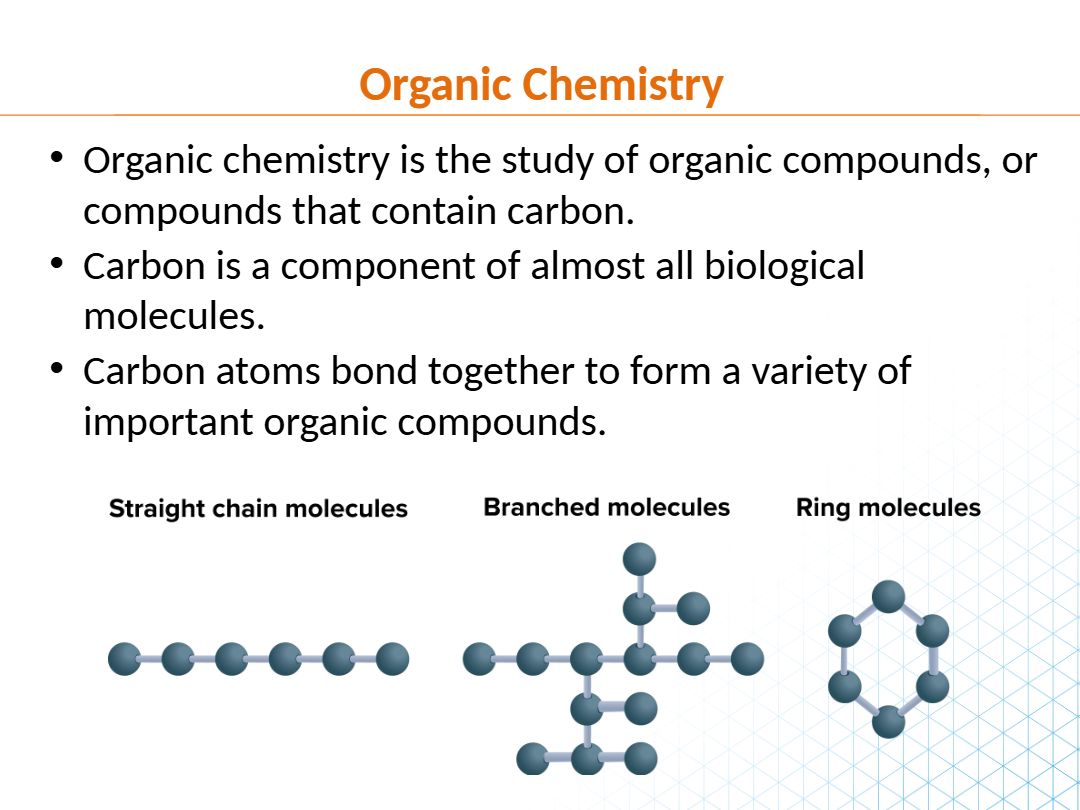
Which of the following statements about carbon atoms is/are correct?
They can form straight chain molecules.
They can form branched molecules.
They can form ring molecules.
They cannot bond with other carbon atoms.
12
13
Multiple Choice
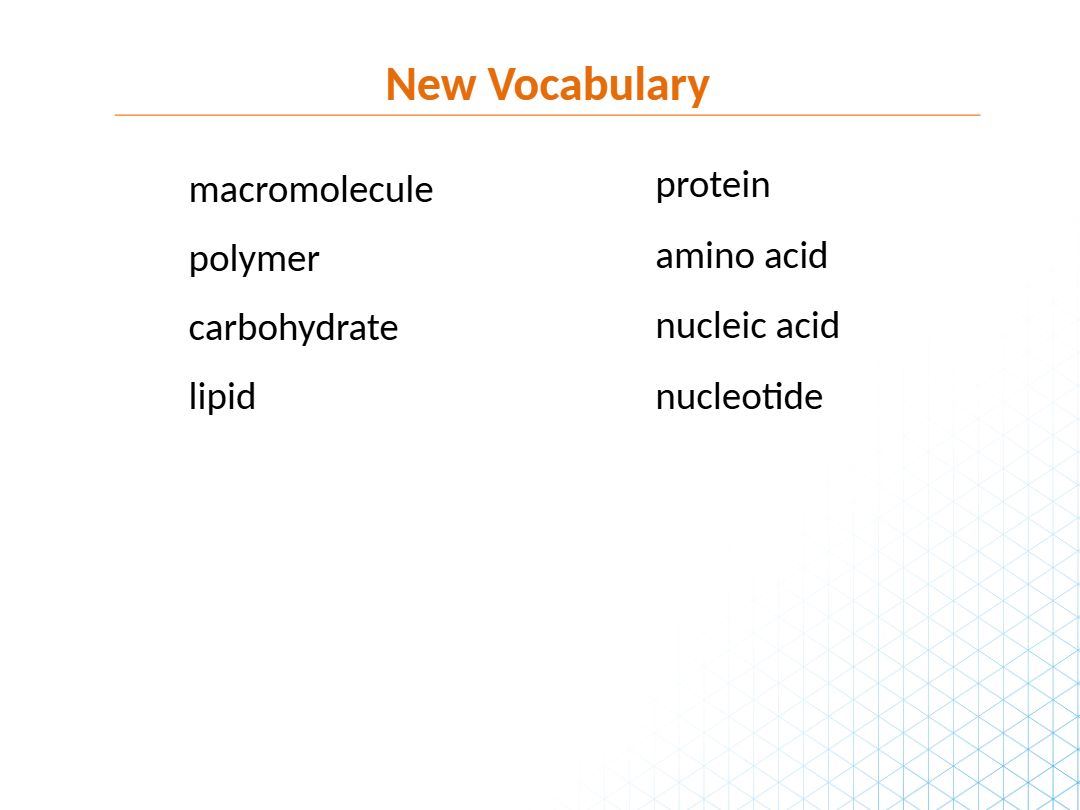
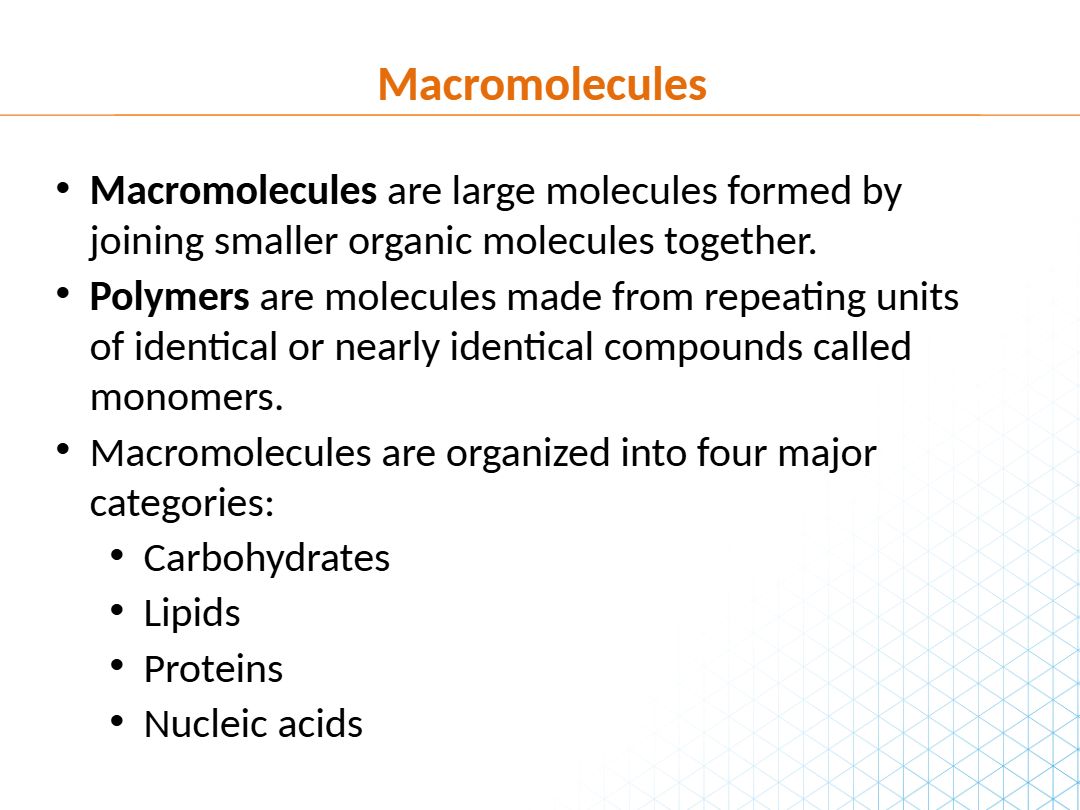
Which of the following terms refers to a molecule made from repeating units of identical or nearly identical compounds?
Macromolecule
Polymer
Carbohydrate
Nucleotide
14
15
Fill in the Blanks
Type answer...
16
Open Ended
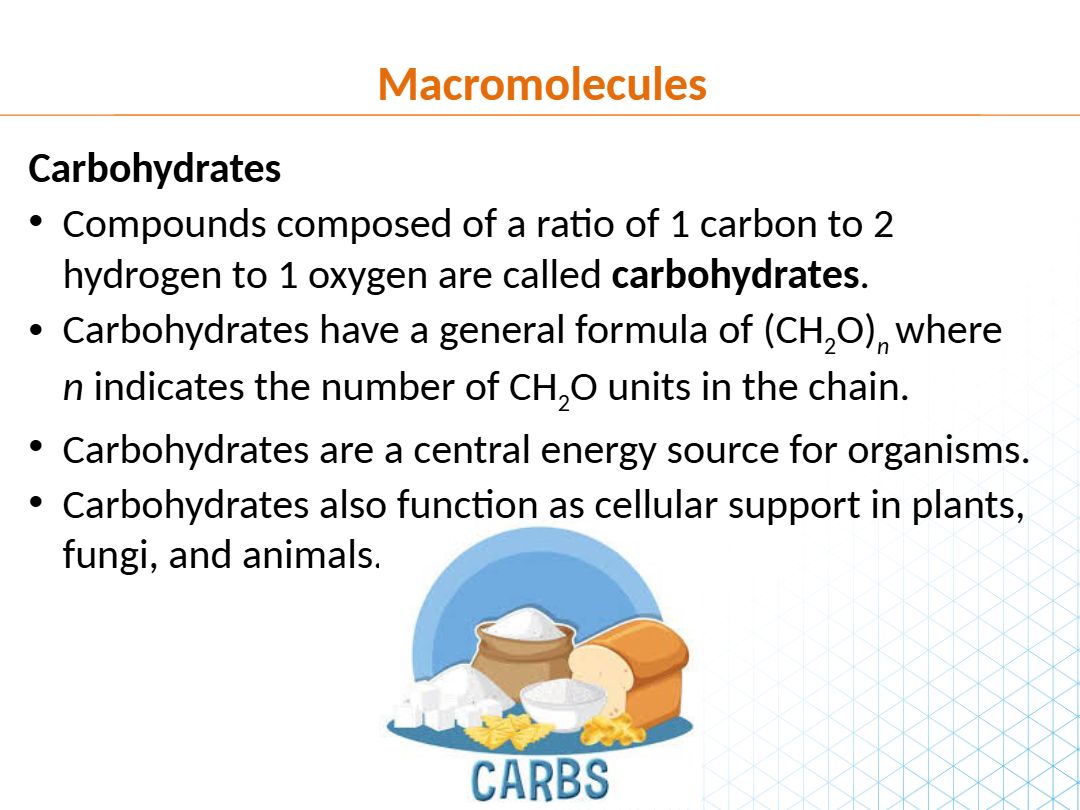
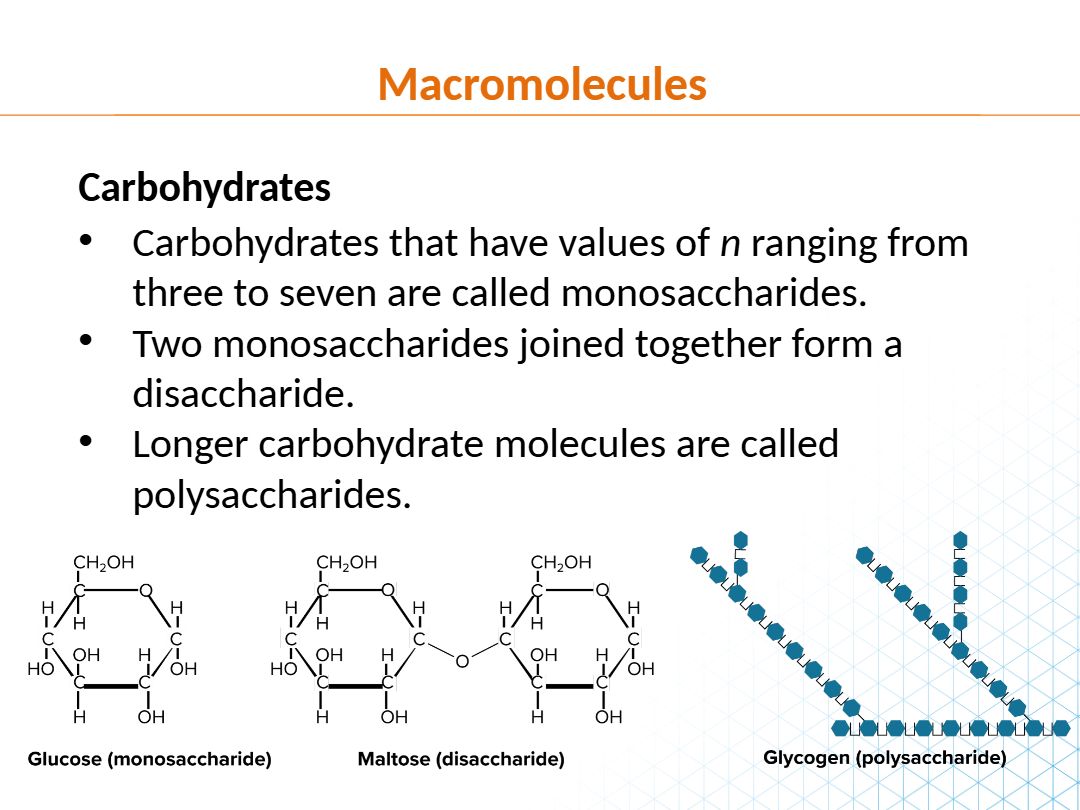
Explain how the structure of carbohydrates relates to their function in living organisms.
17
18
Multiple Choice
Which of the following is a polysaccharide?
Glucose
Maltose
Glycogen
Fructose
19
20
Open Ended
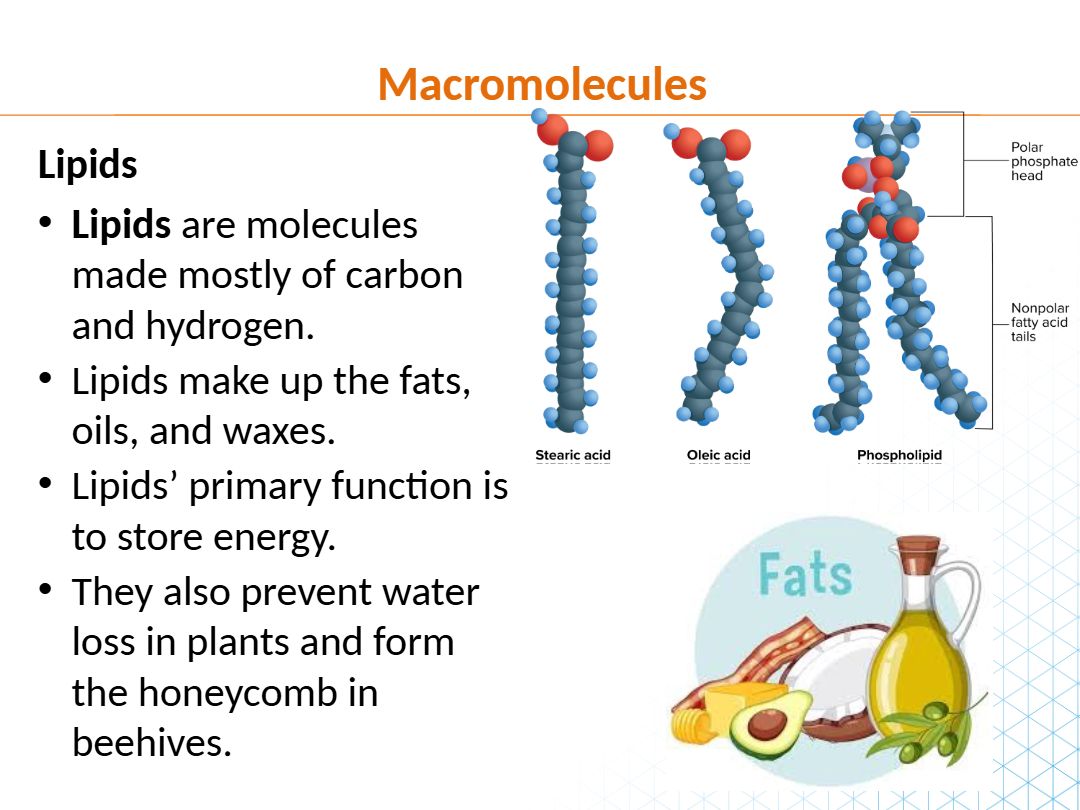
Compare the primary functions of carbohydrates and lipids as described in the slides.
21
22
Fill in the Blanks
Type answer...
23
24
Multiple Select
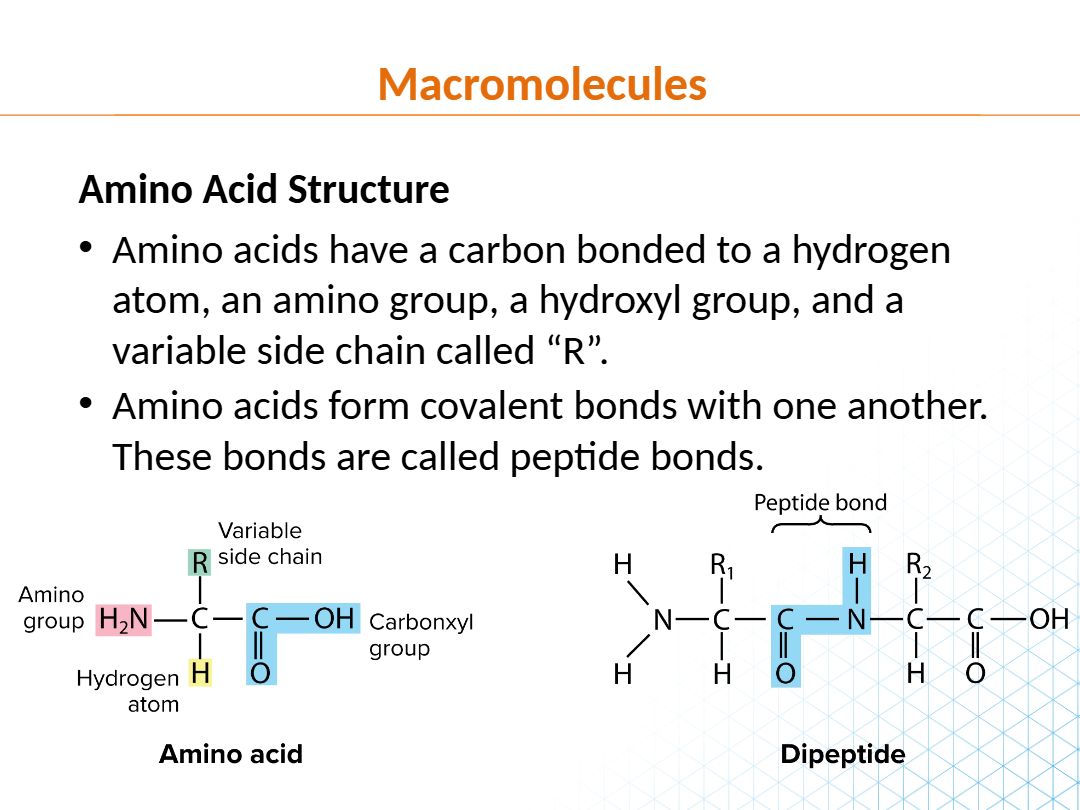
Which of the following are true about amino acids?
They all have a variable side chain called R.
They form peptide bonds with each other.
They are made only of carbon and hydrogen.
They are the building blocks of proteins.
25
26
Open Ended
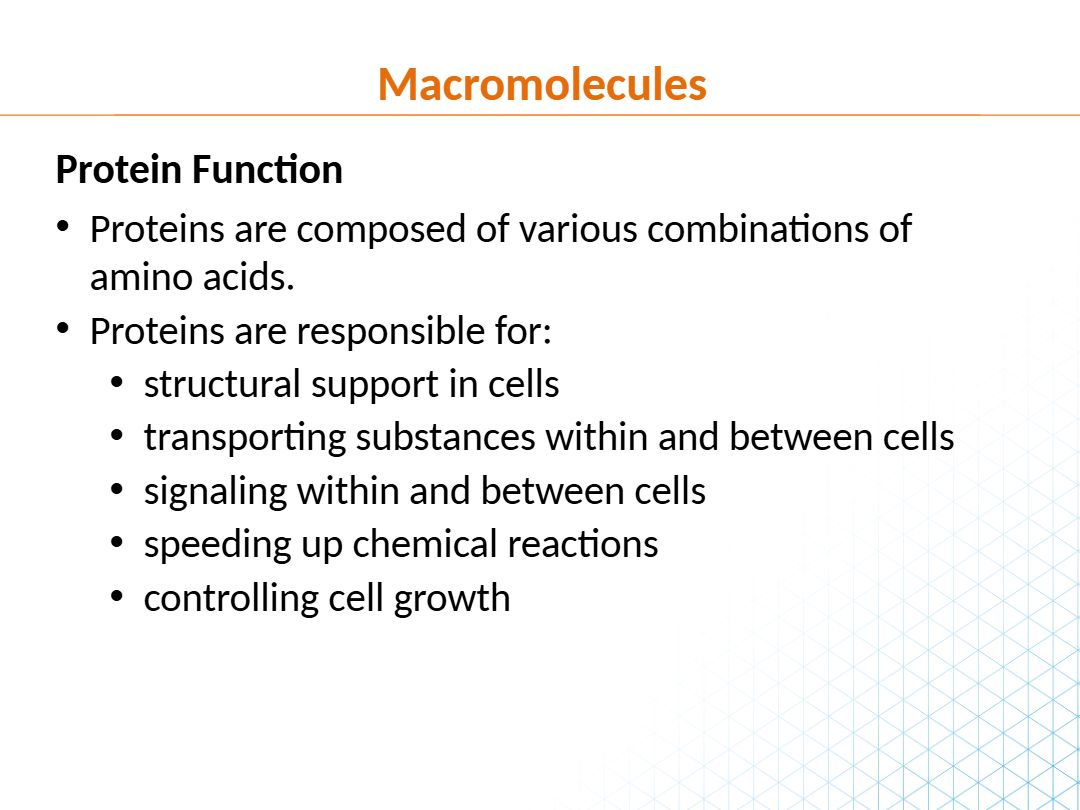
List two functions of proteins in cells based on the information provided.
27
28
Multiple Select
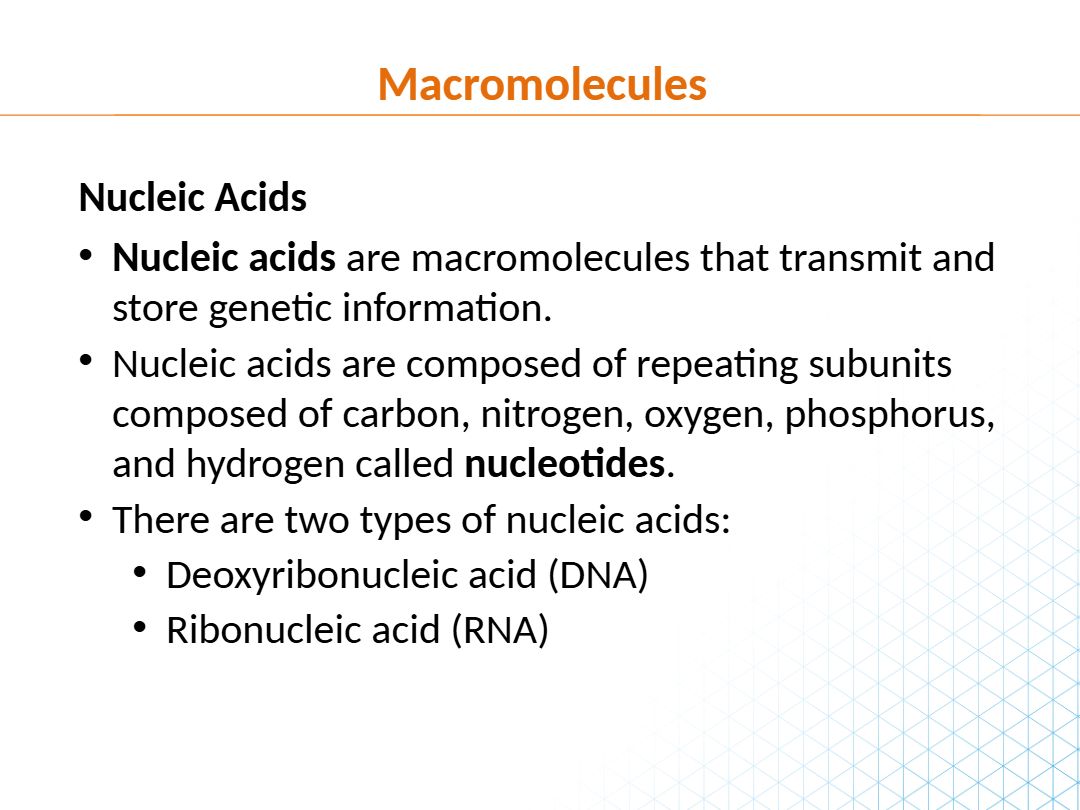
Which of the following statements about nucleic acids is correct?
Nucleic acids store genetic information.
Nucleic acids are made of amino acids.
There are three types of nucleic acids.
Nucleotides are the building blocks of nucleic acids.
29
30
Multiple Choice
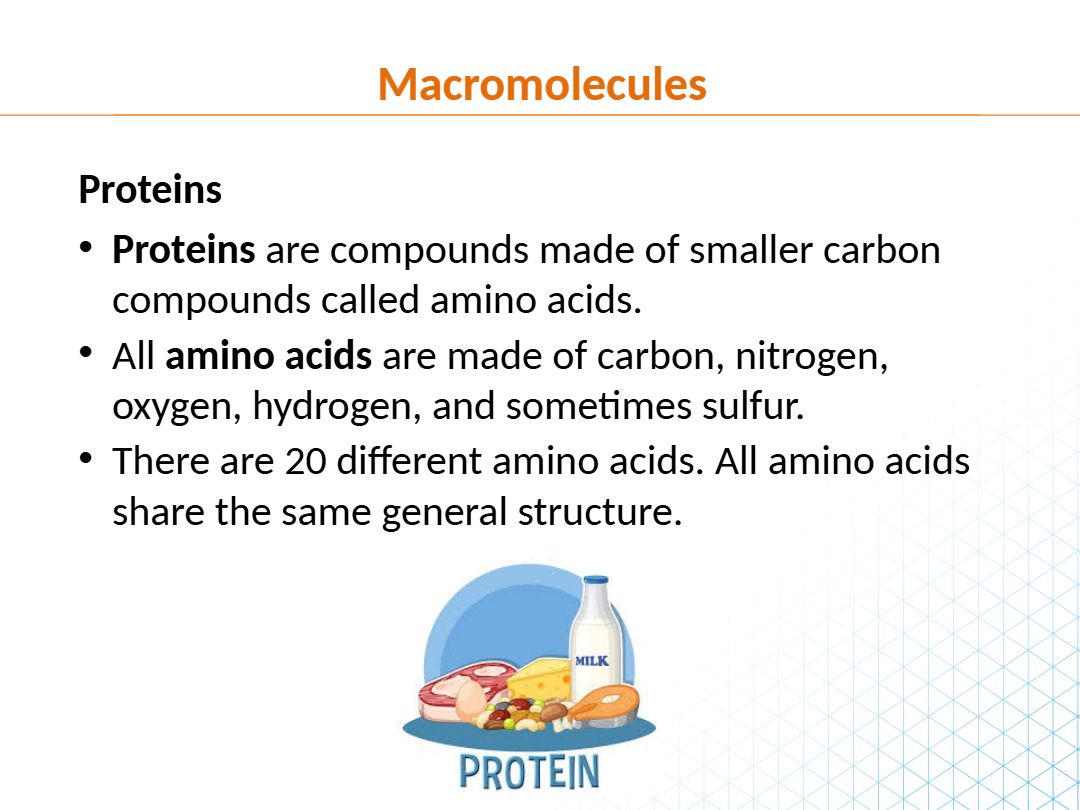
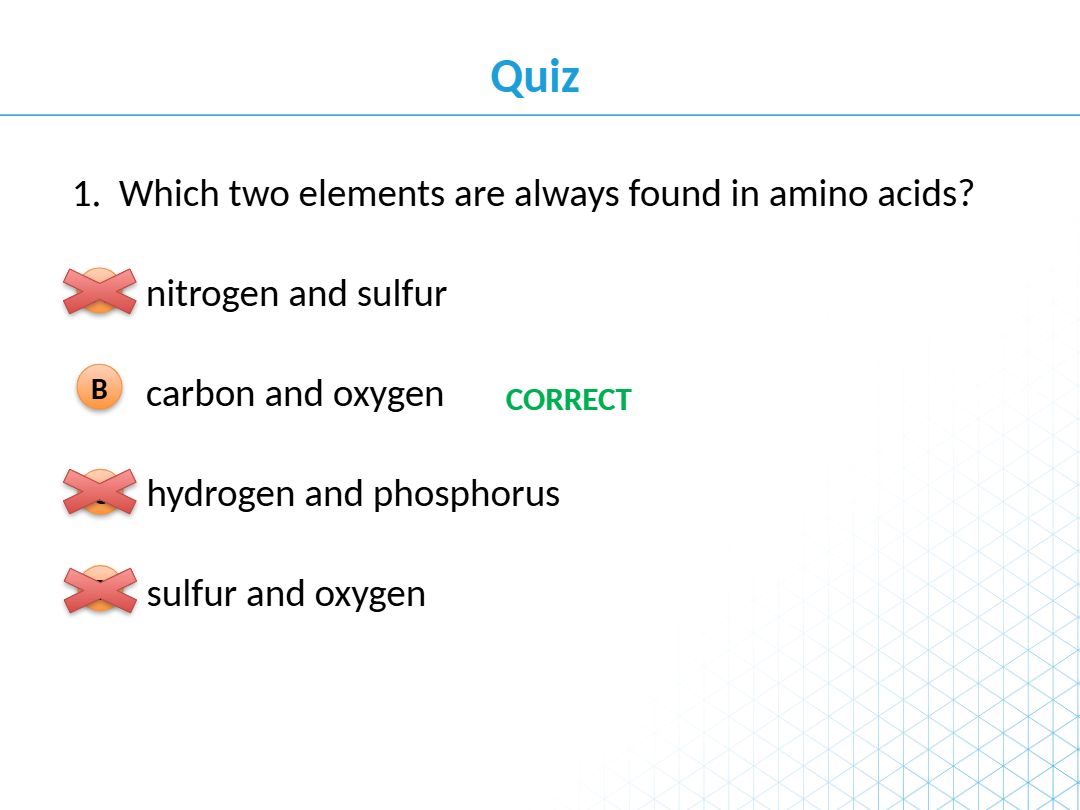
Which two elements are always found in amino acids?
nitrogen and sulfur
carbon and oxygen
hydrogen and phosphorus
sulfur and oxygen
31
32
Open Ended
Explain how the structure of amino acids allows them to join together to form proteins. Use information from images 0 and 1.
33
Multiple Choice
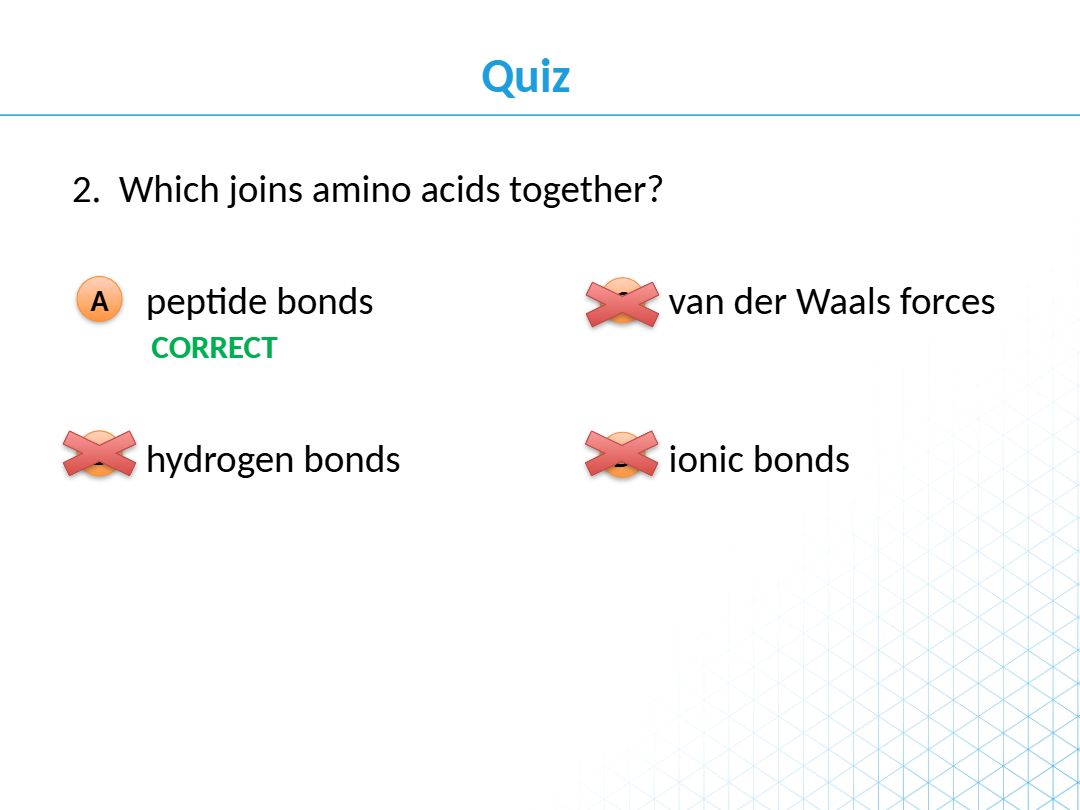
Which joins amino acids together?
peptide bonds
van der Waals forces
hydrogen bonds
ionic bonds
34
35
Multiple Choice
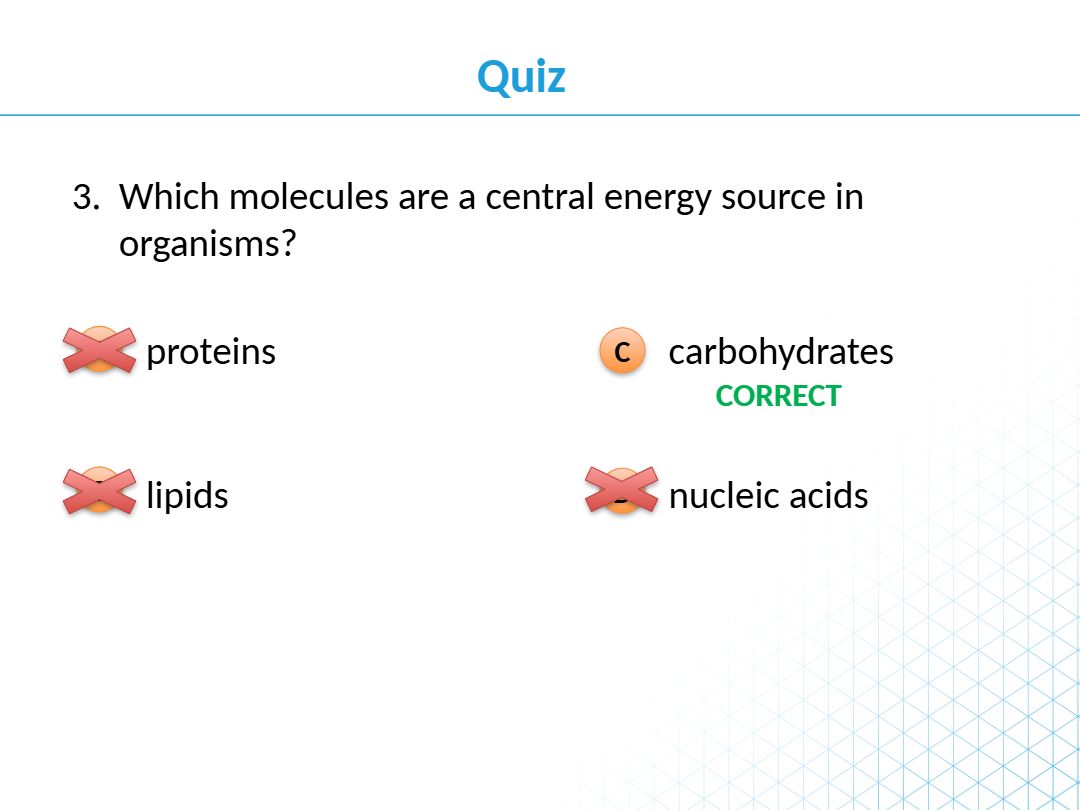
Which molecules are a central energy source in organisms?
proteins
carbohydrates
lipids
nucleic acids
36
37
Multiple Choice
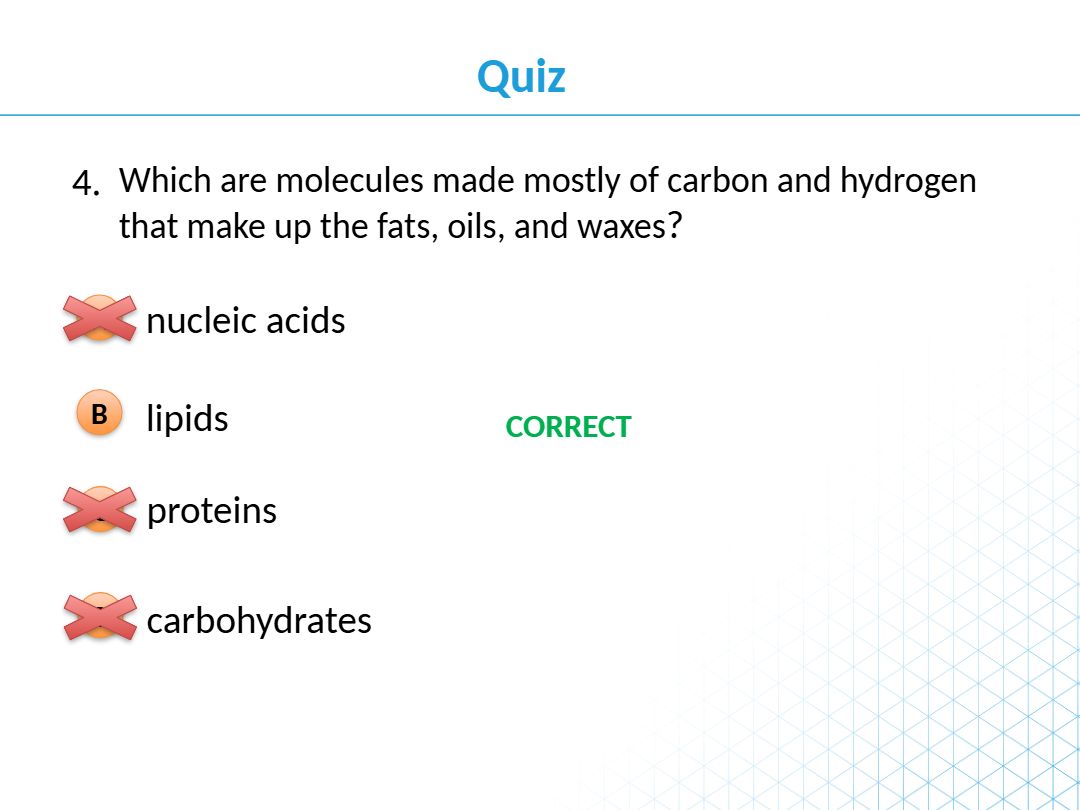
Which are molecules made mostly of carbon and hydrogen that make up the fats, oils, and waxes?
nucleic acids
lipids
proteins
carbohydrates
38
39
Multiple Choice
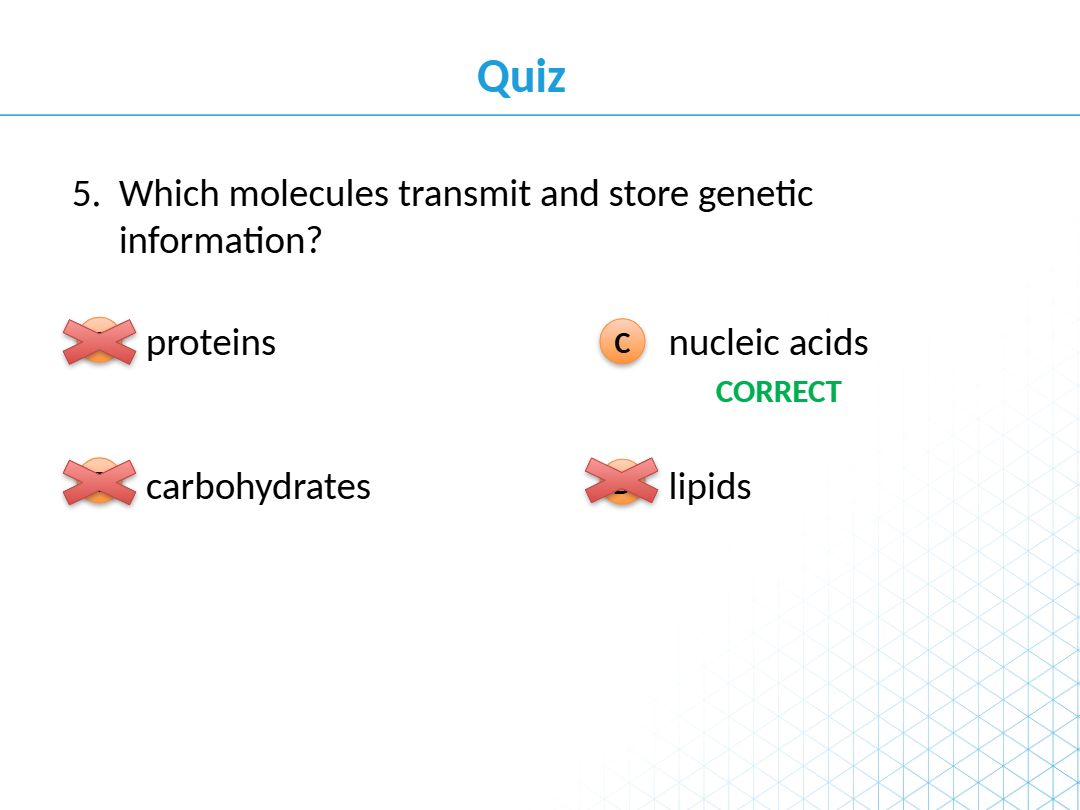
Which molecules transmit and store genetic information?
proteins
nucleic acids
carbohydrates
lipids
40

41
Open Ended
Reflecting on today's lesson about the building blocks of life, what is one question you still have or something you would like to learn more about?
42
Multiple Choice
What are the four main types of biological macromolecules discussed in this lesson?
Proteins, Nucleic acids, Carbohydrates, Lipids
Vitamins, Minerals, Water, Oxygen
DNA, RNA, Glucose, Fatty acids
Sugars, Starch, Enzymes, Hormones
Show answer
Auto Play
Slide 1 / 42
SLIDE
Similar Resources on Wayground

39 questions
Photosynthesis and Cellular Respiration
Presentation
•
9th Grade
35 questions
The Industrial Revolution
Presentation
•
9th Grade
39 questions
Algebra 1 EOC Review #5
Presentation
•
9th Grade
39 questions
11/ 2 Interphase and Mitosis Cell Cycle
Presentation
•
9th Grade
37 questions
Ch 14.1-2 Lecture
Presentation
•
9th Grade
36 questions
[Grade 7] EASE 3 Preparation
Presentation
•
9th Grade
37 questions
Immune System
Presentation
•
9th - 10th Grade
36 questions
Characteristics of Exponential Functions
Presentation
•
9th Grade
Popular Resources on Wayground
20 questions
STAAR Review Quiz #3

Quiz
•
8th Grade
20 questions
Equivalent Fractions
Quiz
•
3rd Grade
6 questions
Marshmallow Farm Quiz
Quiz
•
2nd - 5th Grade
20 questions
Main Idea and Details
Quiz
•
5th Grade
20 questions
Context Clues
Quiz
•
6th Grade
20 questions
Inferences
Quiz
•
4th Grade
19 questions
Classifying Quadrilaterals
Quiz
•
3rd Grade
12 questions
What makes Nebraska's government unique?
Quiz
•
4th - 5th Grade
Discover more resources for Biology
14 questions
Ecological Succession: Primary and Secondary
Quiz
•
9th Grade
20 questions
Structure & DNA Replication Quiz
Quiz
•
9th Grade
50 questions
Biology EOC Review
Quiz
•
9th Grade
33 questions
Module C - Virus vs Cells, Biomolecules & Enzymes
Quiz
•
9th Grade
25 questions
photosynthesis and cellular respiration
Quiz
•
9th Grade
25 questions
STAAR Evolution Vocabulary
Quiz
•
9th Grade
20 questions
Food Chains and Food Webs
Quiz
•
7th - 12th Grade
22 questions
Human Body Systems Overview
Quiz
•
9th Grade