Search Header Logo
  1. Resource Library
  2. Science
  3. Chemistry
  4. Ay2526 T2 Ww1 Reviewer (chemistry)
AY2526 T2 WW1 Reviewer (Chemistry)

AY2526 T2 WW1 Reviewer (Chemistry)

Assessment

Presentation

Science

8th Grade

Practice Problem

Easy

NGSS
MS-PS1-1

Standards-aligned

Created by

Rachel Caldaira

Used 2+ times

FREE Resource

57 Slides • 25 Questions

1

media

2

media

3

media

4

Open Ended

What are the particles circulating around the Nucleus

5

Multiple Choice

Question image

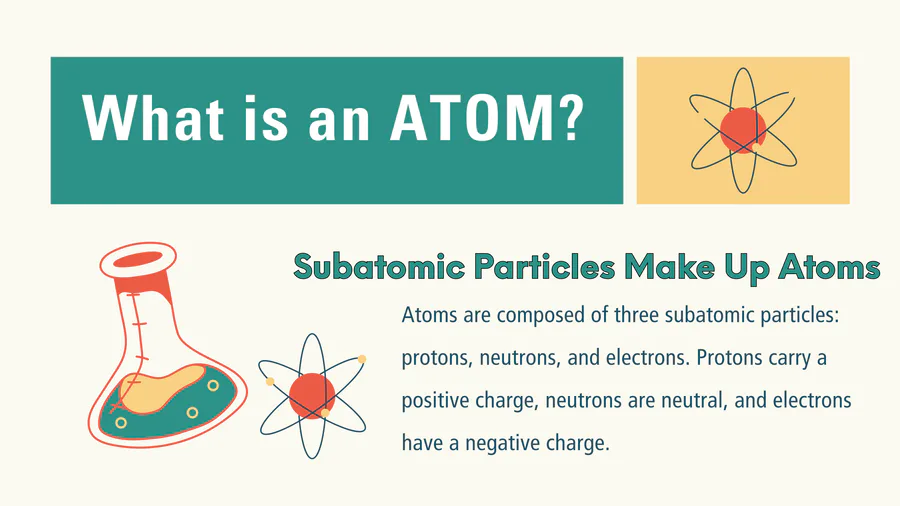
Atoms are made up of ________________

1

energy

2

electrons

3

subatomic particles

4

gasses

6

media

7

media

8

Categorize

Options (7)

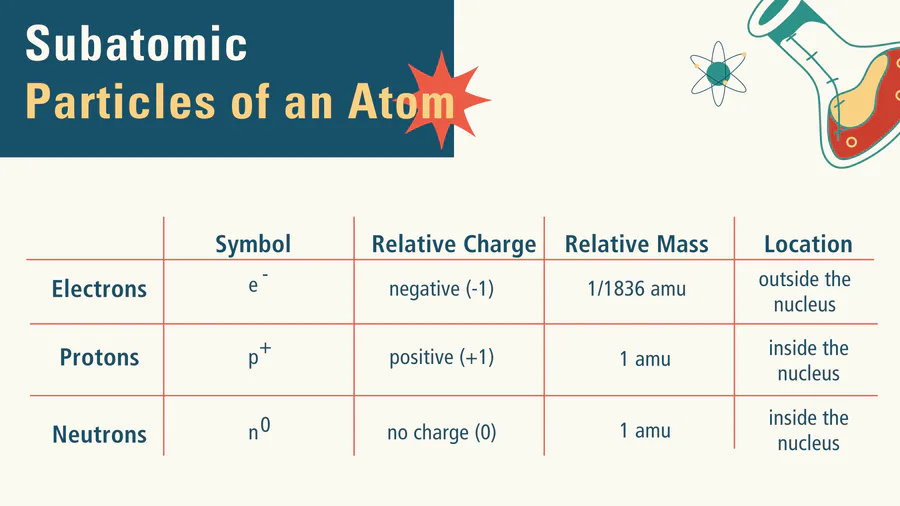
Positive Charge

No Charge

Negative Charge

Orbit Nucleus

Along with protons, determines the atom’s mass.

Determines the atom’s elemental identity

Determines what chemical bonds the atom will form.

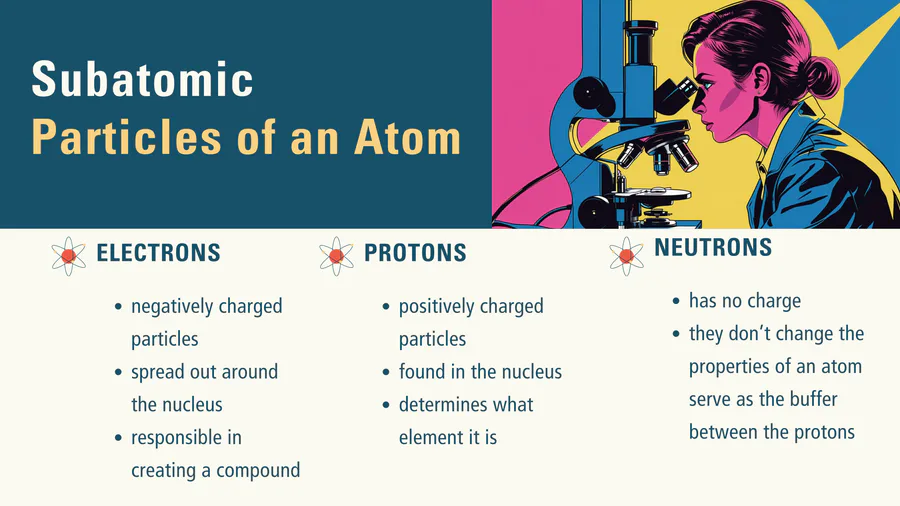
Identify each statement as describing a proton (p), neutron (n), or electron (e). - Positively charged. - Negatively charged. - No charge. - Orbit the nucleus. - Determines the atom’s elemental identity. - Determines what chemical bonds the atom will form. - Along with protons, determines the atom’s mass.

Proton
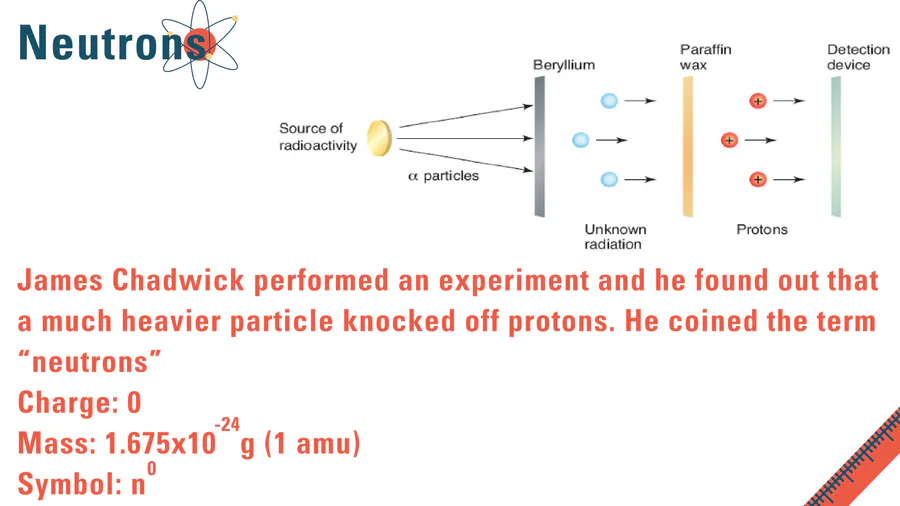
Neutron
Electron

9

media

10

Multiple Choice

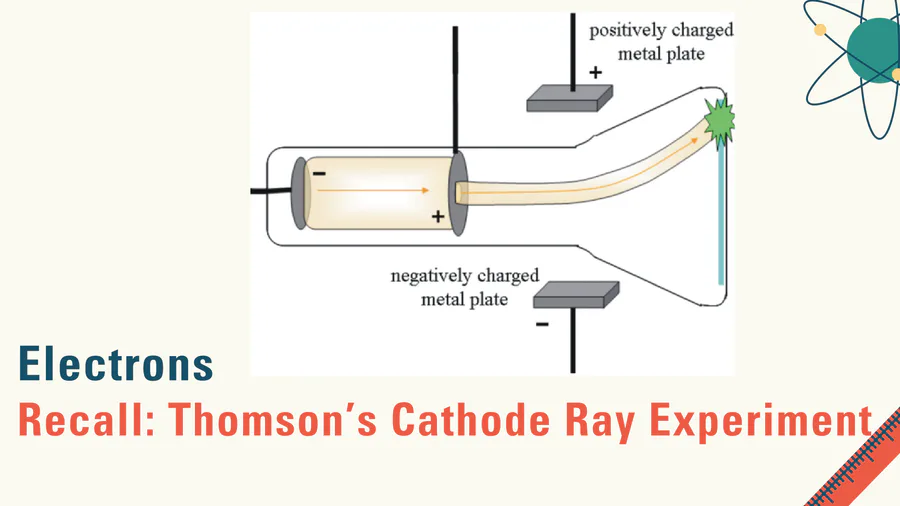
What is the purpose of Thomson's Cathode Ray Experiment as illustrated in the image?

1

To demonstrate the existence of electrons

2

To show the behavior of light

3

To prove the theory of relativity

4

To illustrate the structure of an atom

11

media

12

Multiple Choice

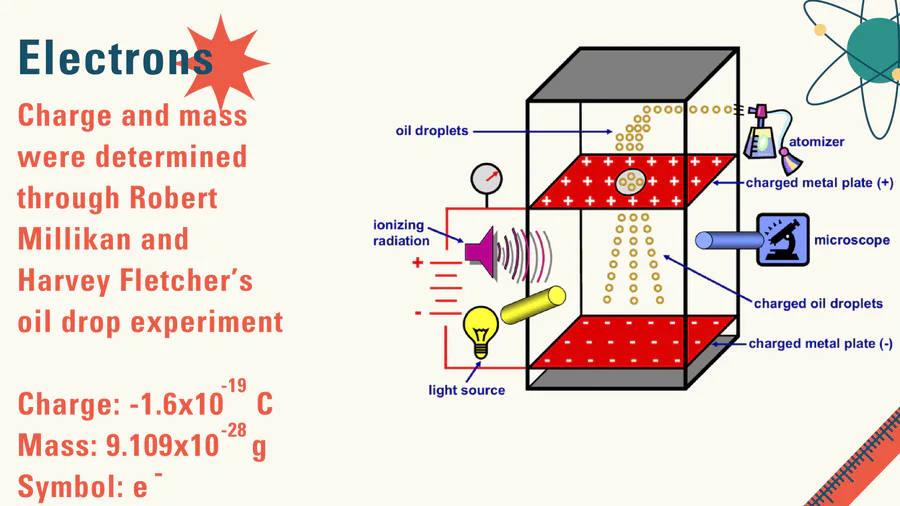
What were the charge and mass of an electron determined through Robert Millikan and Harvey Fletcher’s oil drop experiment?

1

-1.6x10^-19 C and 9.109x10^-28 g

2

-1.6x10^-19 C and 9.109x10^-26 g

3

-1.6x10^-18 C and 9.109x10^-28 g

4

-1.6x10^-19 C and 9.109x10^-30 g

13

media

14

Multiple Choice

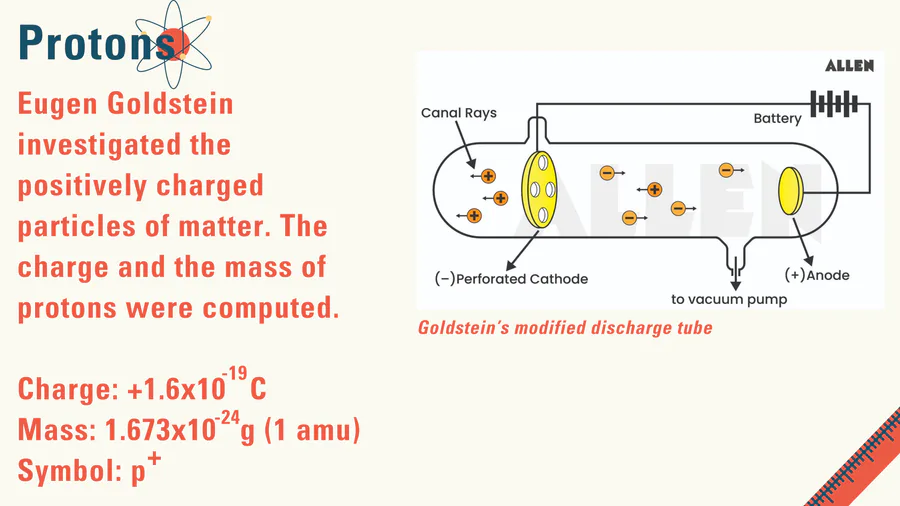
What are the charge and mass of protons as described in the image?

1

Charge: +1.6x10^-19 C, Mass: 1.673x10^-24 g

2

Charge: -1.6x10^-19 C, Mass: 1.673x10^-24 g

3

Charge: +1.6x10^-19 C, Mass: 1.673x10^-23 g

4

Charge: +1.6x10^-18 C, Mass: 1.673x10^-24 g

15

media

16

media

17

media

18

media

19

Categorize

Options (3)

electron

proton

neutron

Match the subatomic particle in the correct location.

nucleus
orbiting the nucleus

20

media

21

media

22

Dropdown

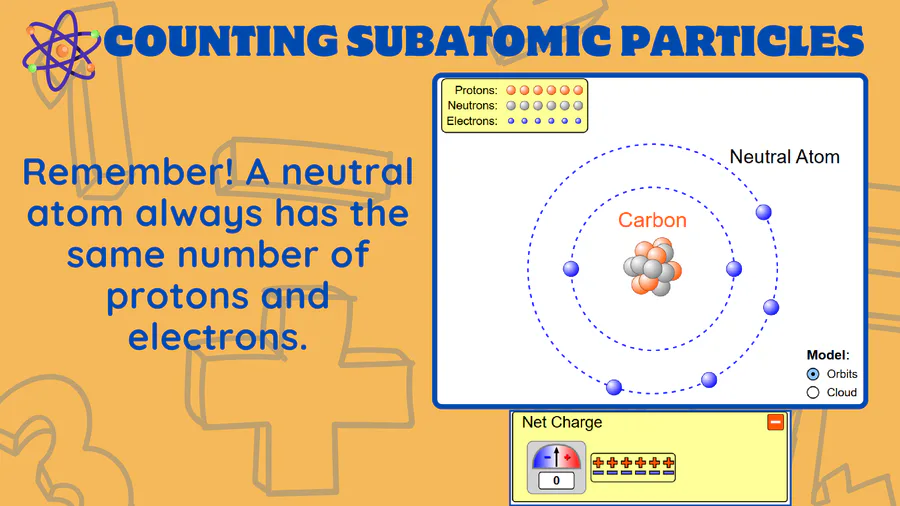
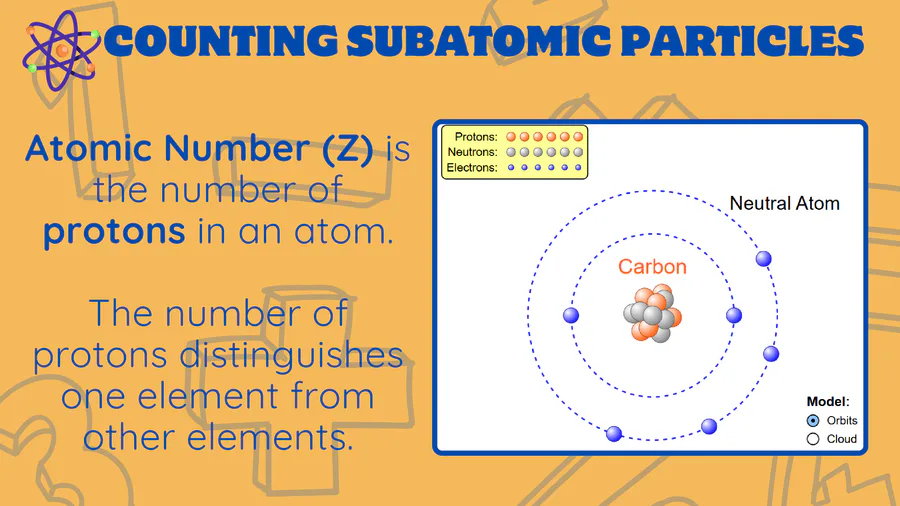
A neutral atom always has the​ ​
number of ​
and ​

23

media

24

media

25

Open Ended

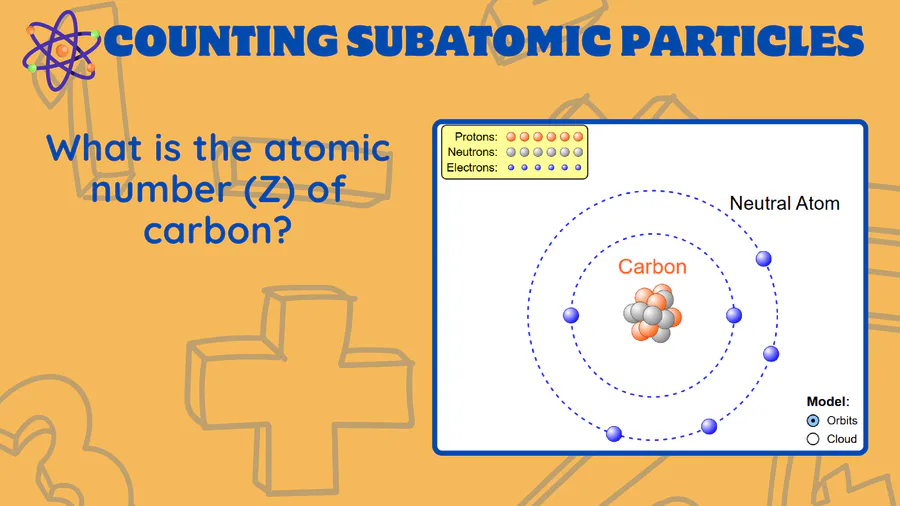
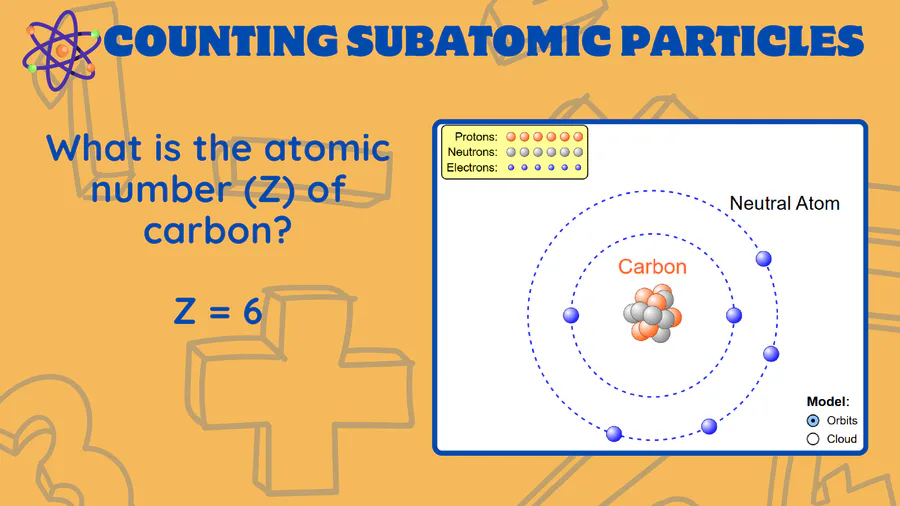
How do we identify the atomic number?

26

media

27

media

28

media

29

media

30

Drag and Drop

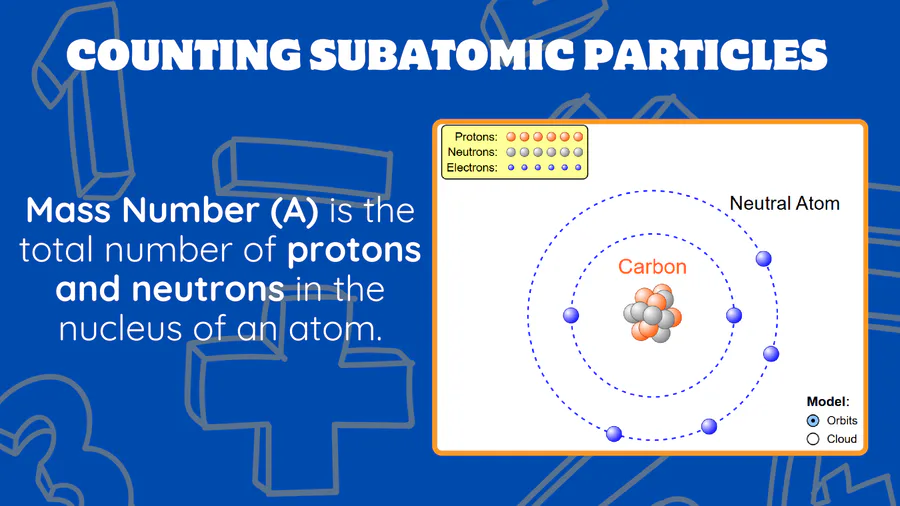
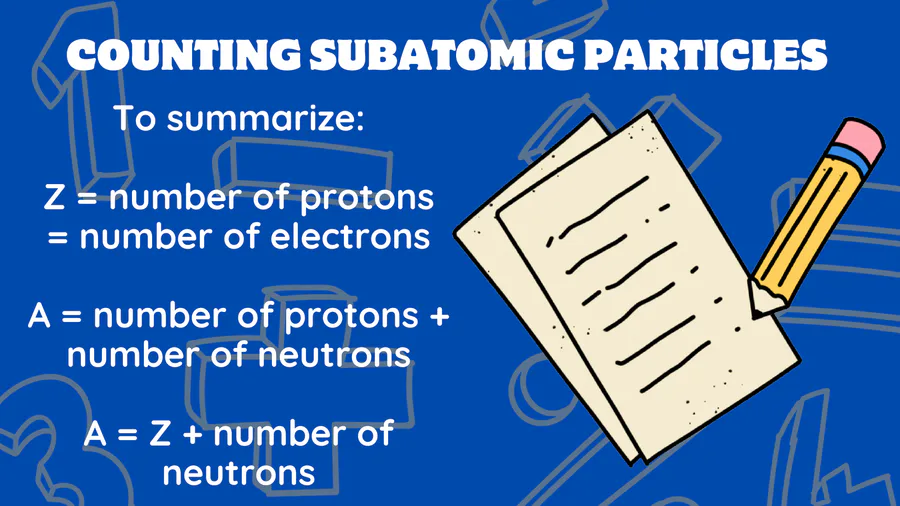
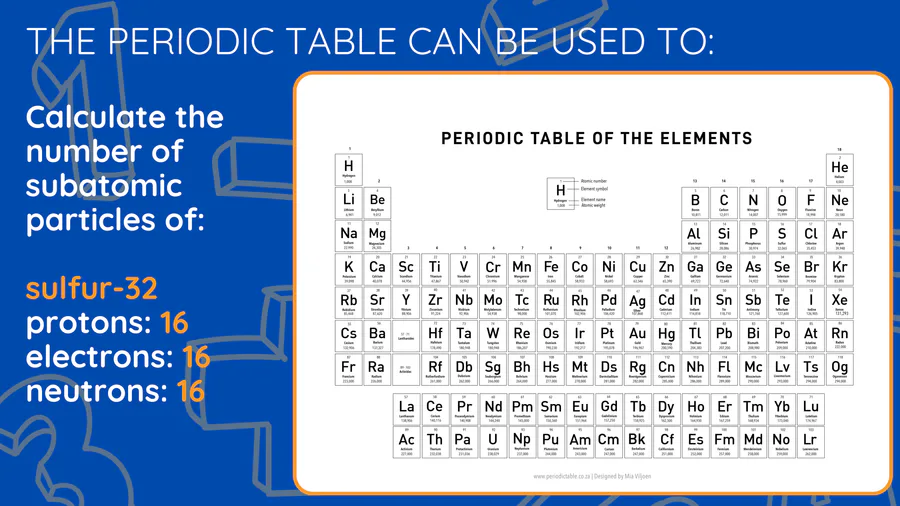
Atomic Mass = ​
+​
Drag these tiles and drop them in the correct blank above
Atomic Number
Number of Neutrons
Atomic Weight
Number of Protons
Number of Electrons
Atomic Size

31

media

32

media

33

Audio Response

In your own words, what is the difference between Atomic Number and Atomic Mass?

audio
Open Audio Recorder

34

media

35

media

36

Multiple Choice

Question image

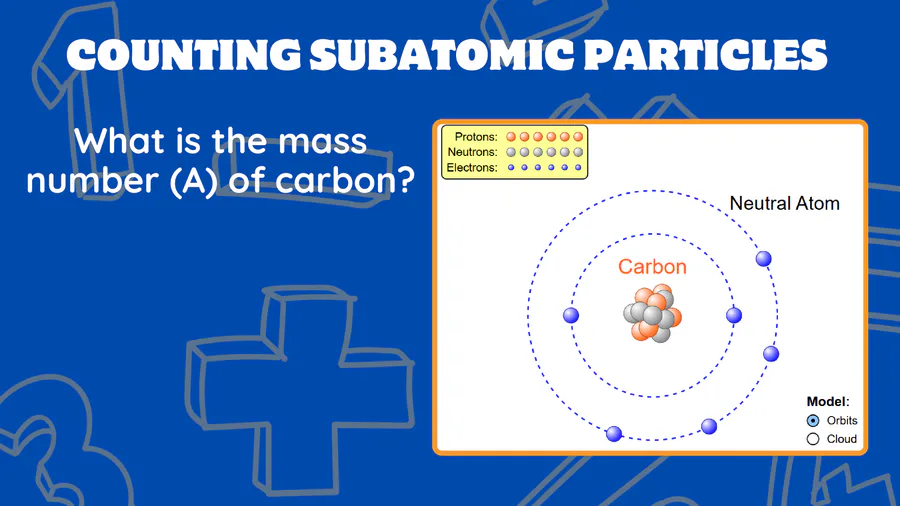
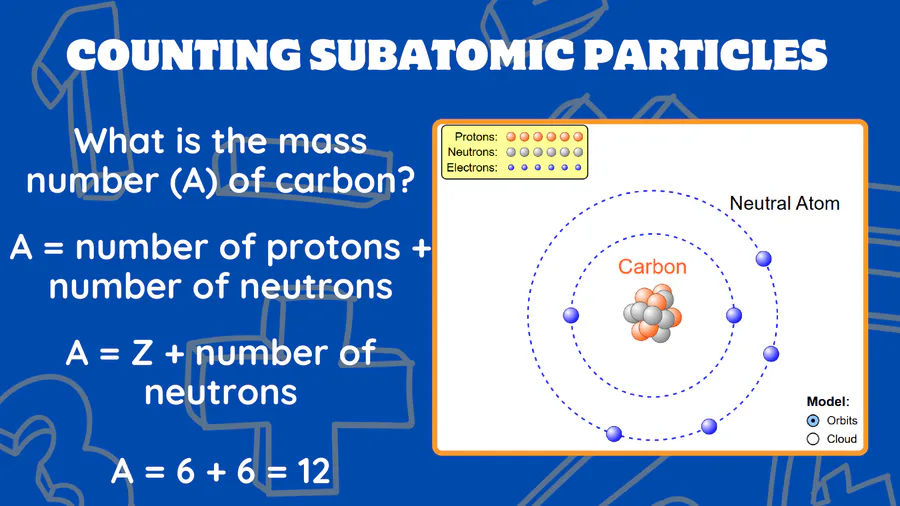
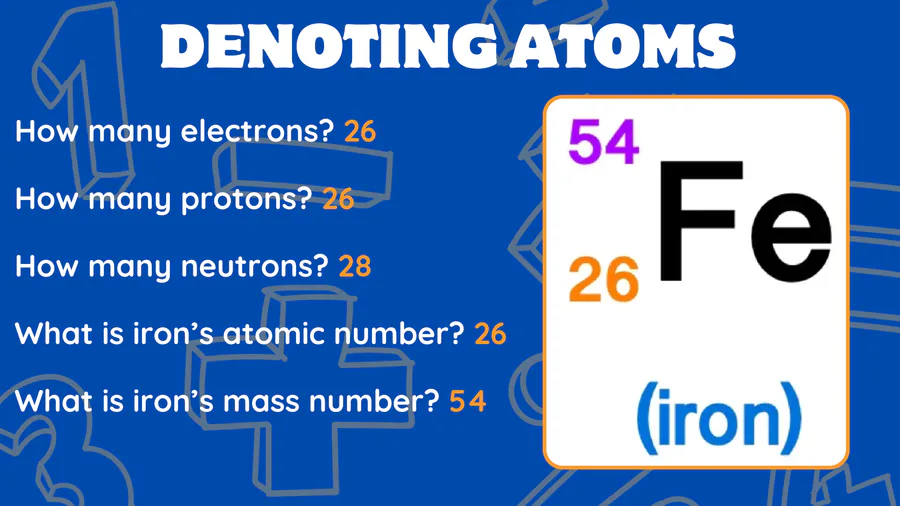
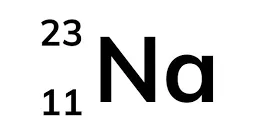
What is Sodium's mass number?

1

11

2

23

3

12

4

34

37

Multiple Choice

Question image

How many electrons?

1

11

2

23

3

12

4

34

38

Multiple Choice

Question image

How many electrons?

1

11

2

23

3

12

4

34

39

Multiple Choice

Question image

How many electrons?

1

11

2

23

3

12

4

34

40

media

41

media

42

media

43

Open Ended

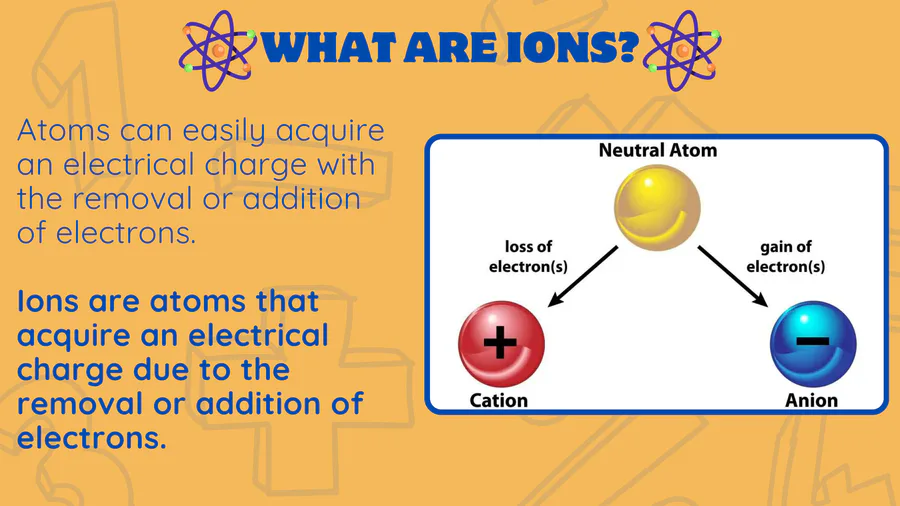
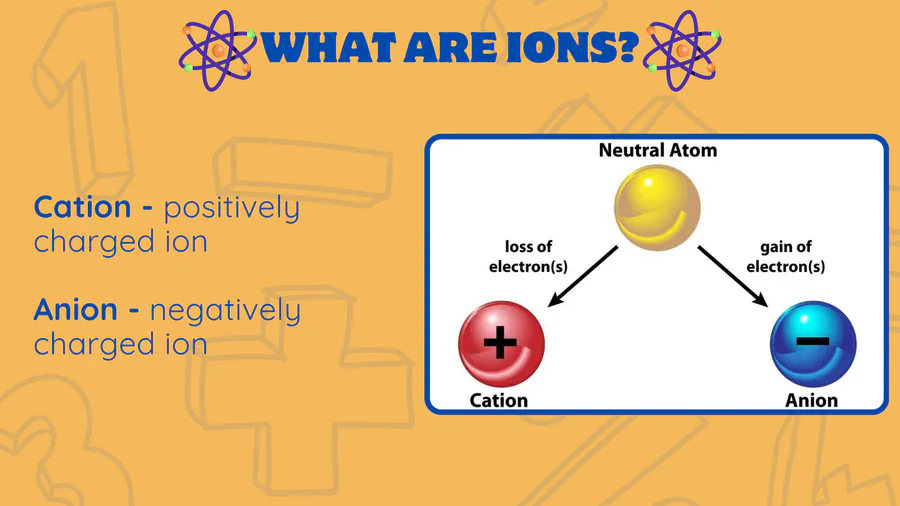
What are Ions?

44

media

45

media

46

media

47

Audio Response

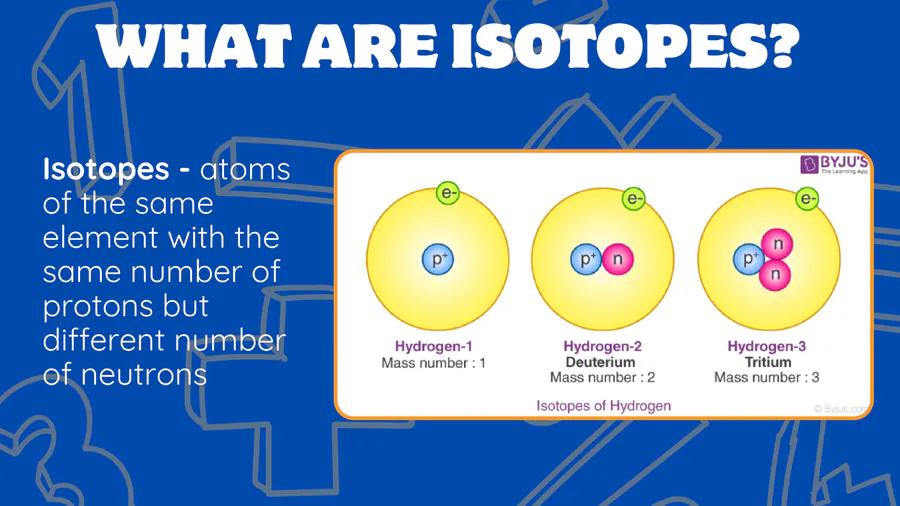
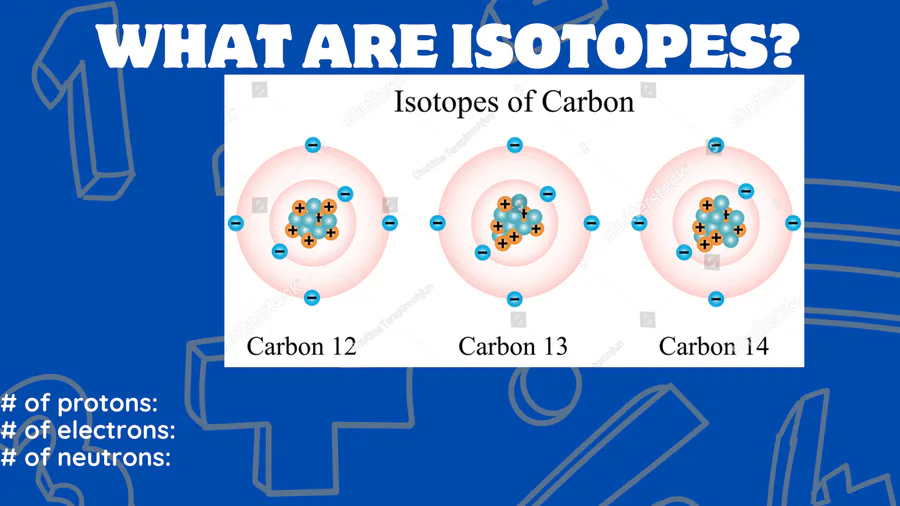
What are isotopes?

audio
Open Audio Recorder

48

media

49

media

50

media

51

media

52

media

53

media

54

Draw

Create a simple concept map using the following terms:
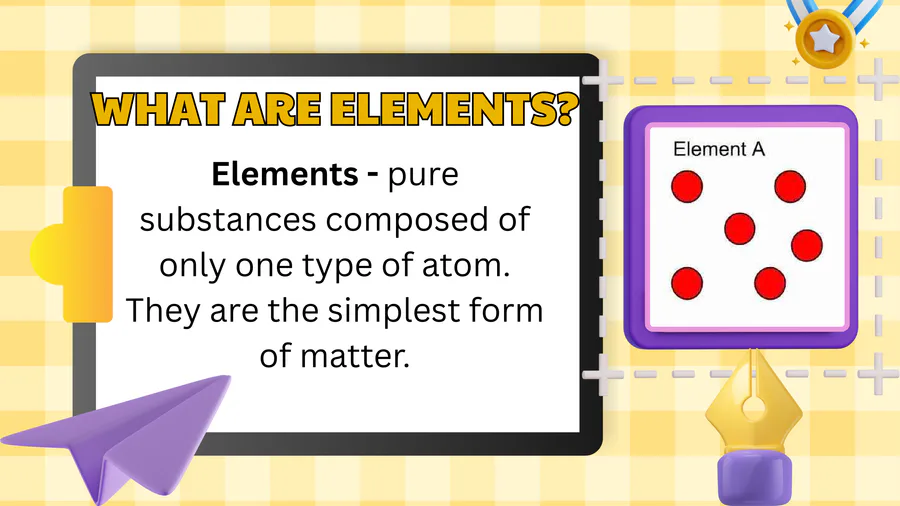
1) Elements
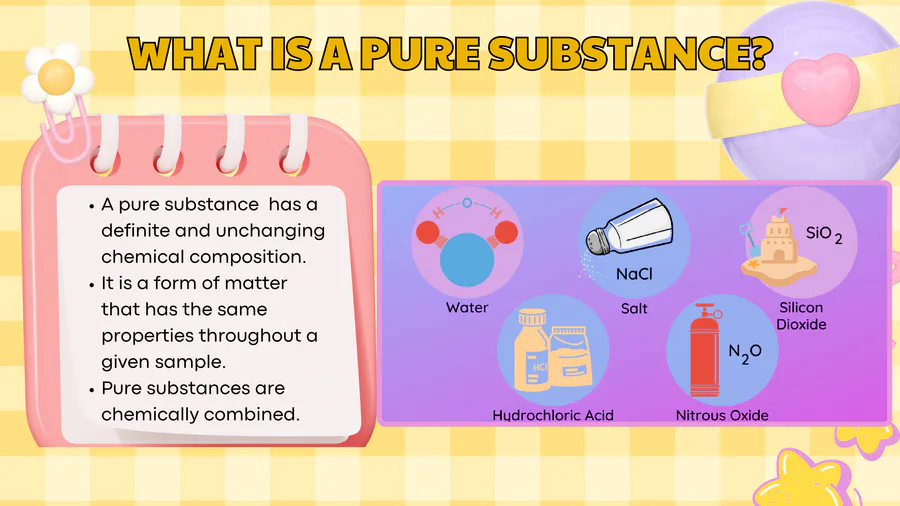
2) Pure Substance

3) Cannot be broken down into simpler substances

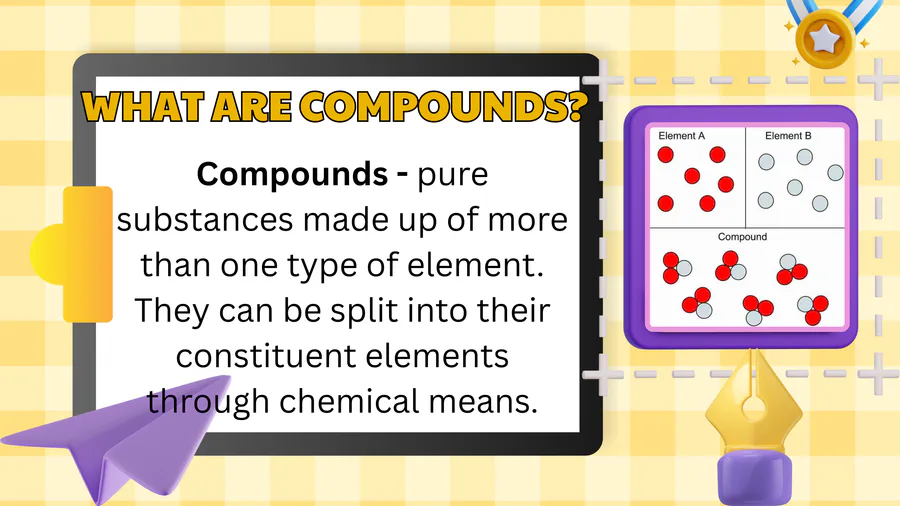
4) Compounds

5) Combination of one or more Elements

55

media

56

media

57

Categorize

Options (6)

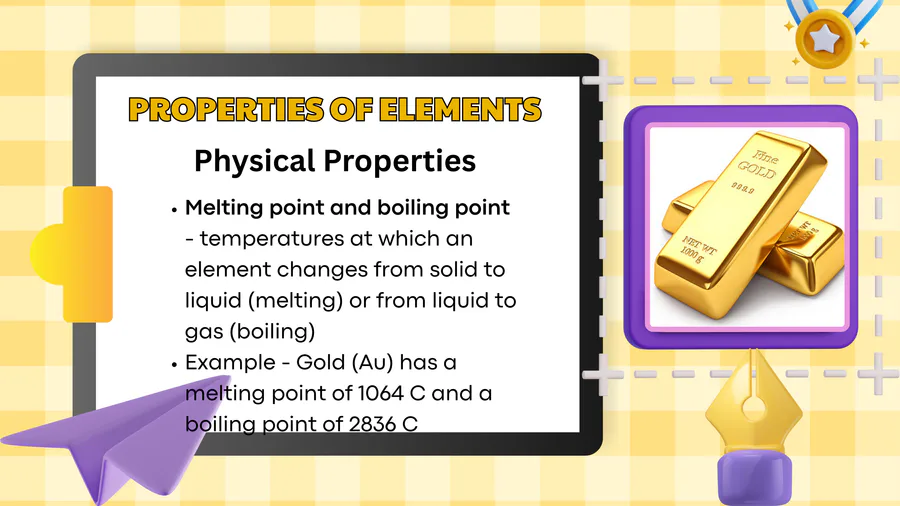
Melting Point

Boiling point

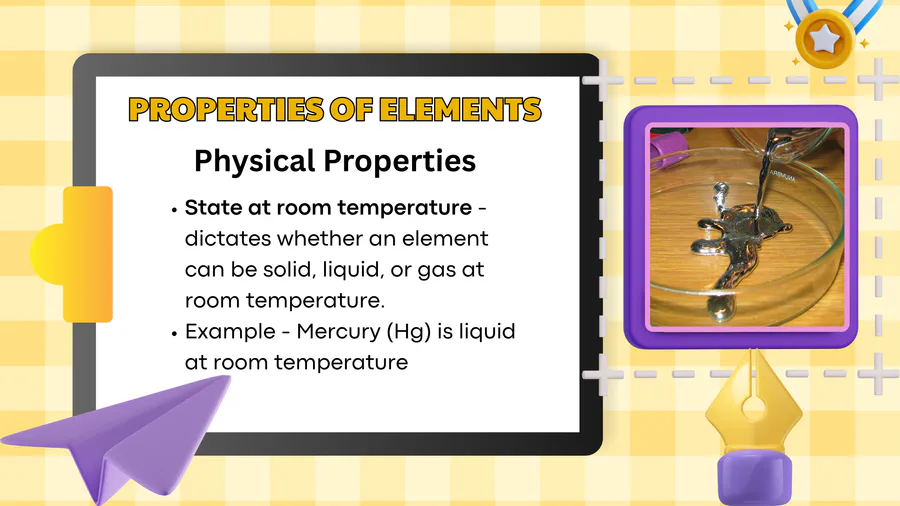
state at room temperature

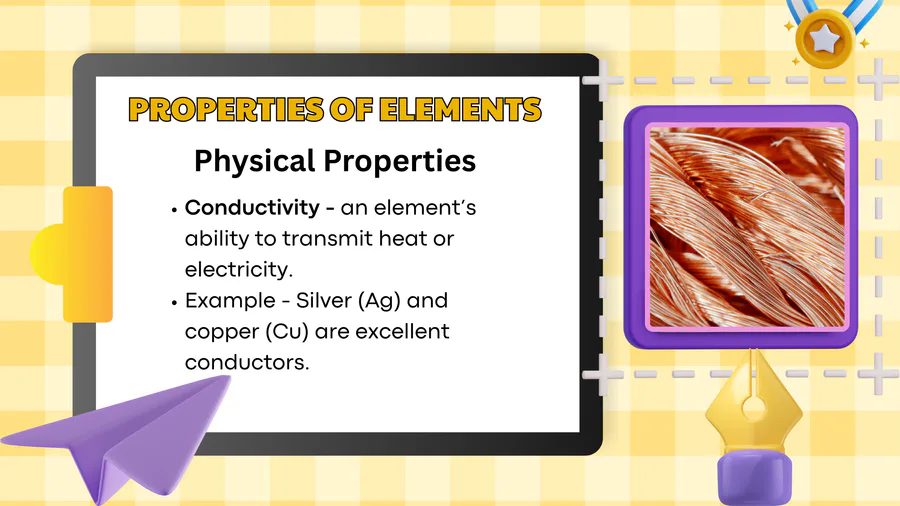
Conductivity

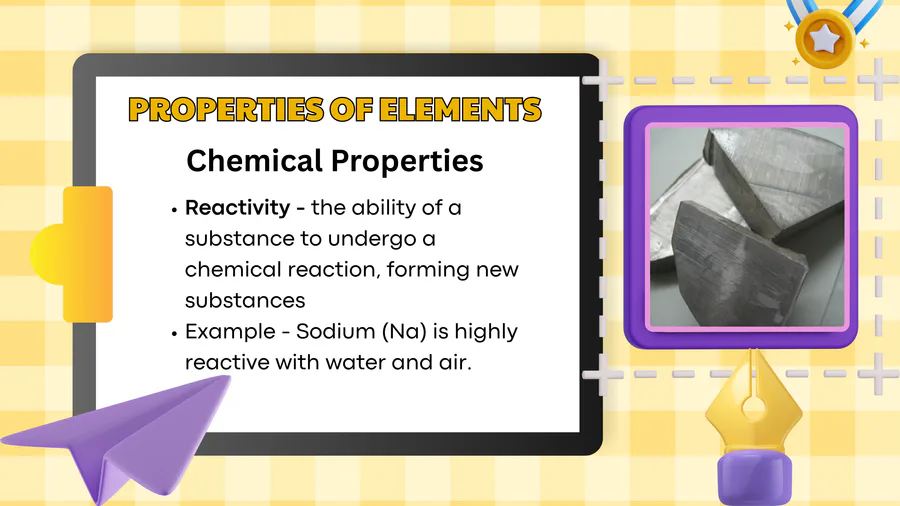
Reactivity

Oxidation States

Organize these options into the right categories

Physical Properties
Chemical Properties

58

media

59

media

60

media

61

media

62

media

63

media

64

media

65

Multiple Choice

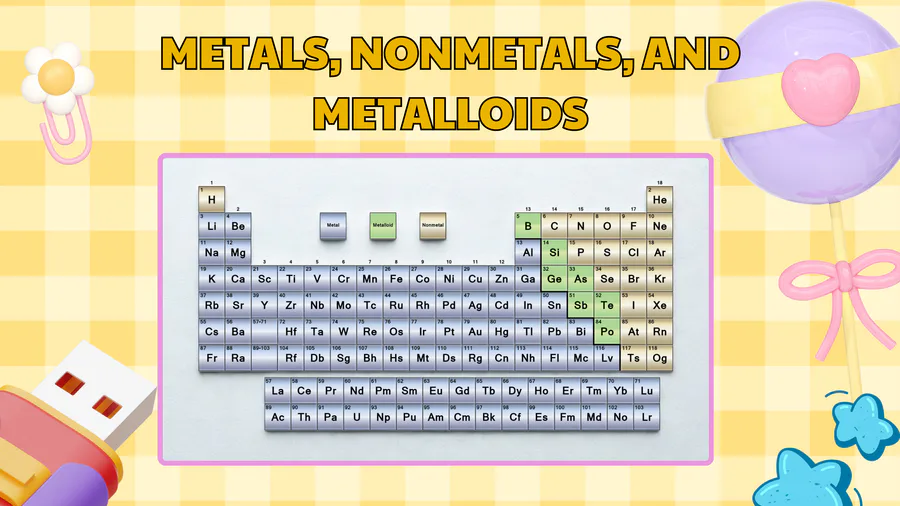
Which statement correctly describes metals?

1

It has low melting point and high boiling point.

2

It is brittle and non-reactive.

3

It is lustrous, shiny, and malleable.

4

None of the above

66

media

67

Multiple Choice

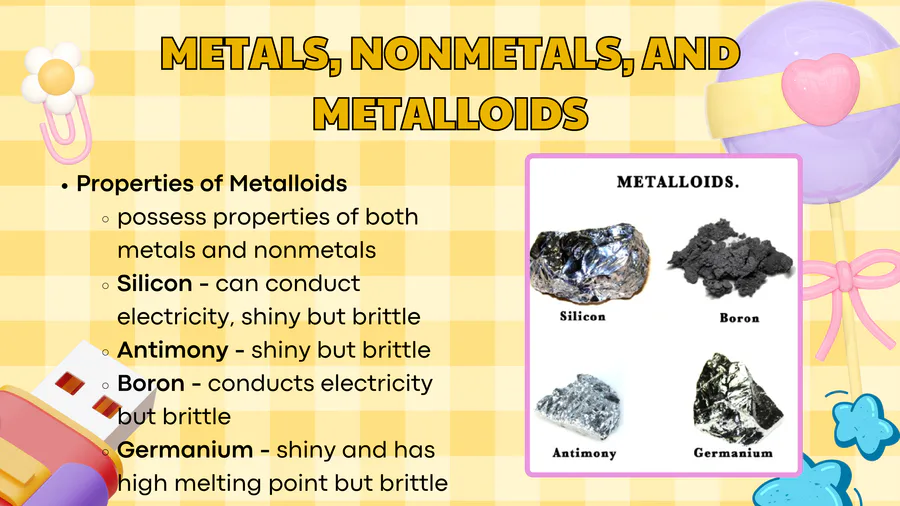
Which correctly describes a metalloid?

1
A metalloid is a pure metal with high conductivity.
2
A metalloid is an element that is always a gas at room temperature.
3
A metalloid is an element that only exhibits nonmetal properties.
4
A metalloid is an element with properties of both metals and nonmetals.

68

media

69

Multiple Choice

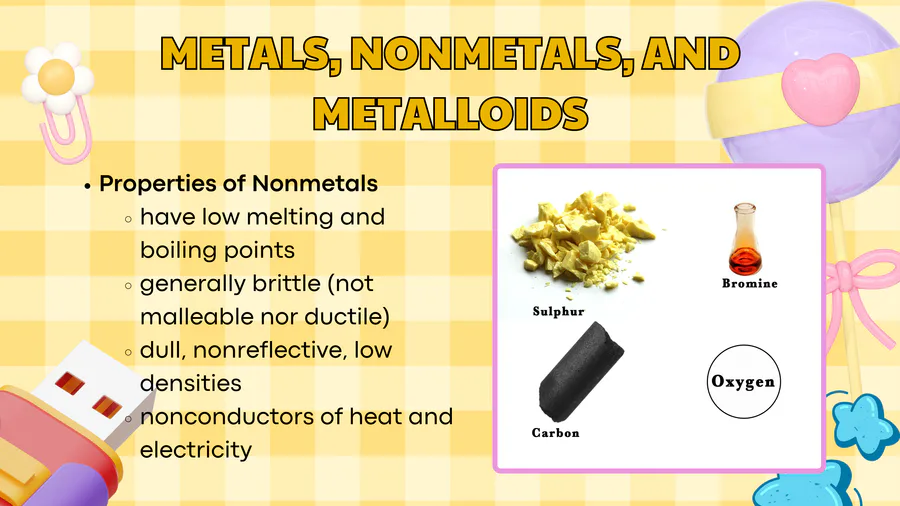
Which correctly describes non-metal?

1
Non-metals are always found in pure elemental states.
2
Non-metals are elements that are generally poor conductors of heat and electricity and can exist in various states.
3
Non-metals can only exist in solid form.
4
Non-metals are excellent conductors of heat and electricity.

70

media

71

Open Ended

Provide at least two uses of elements in technology?

72

media

73

media

74

media

75

Word Cloud

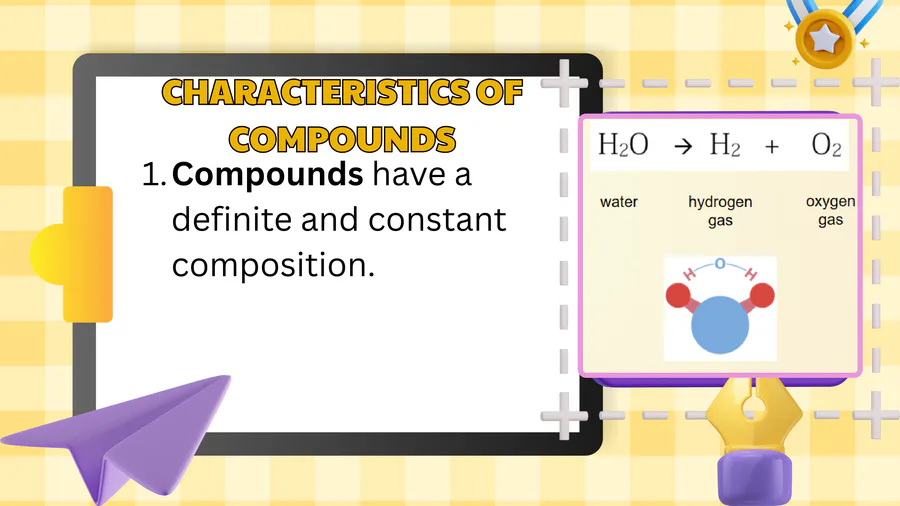
Compounds has a _______ and constant composition.

76

media

77

media

78

media

79

Draw

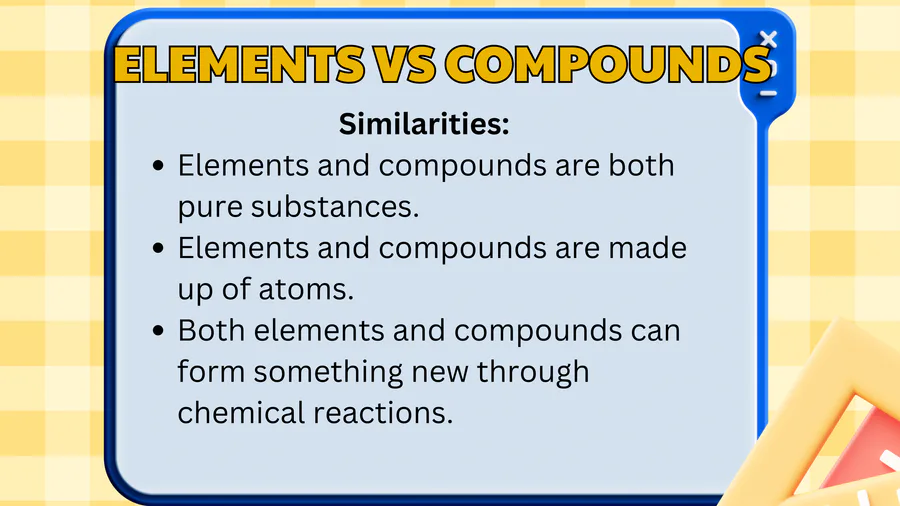
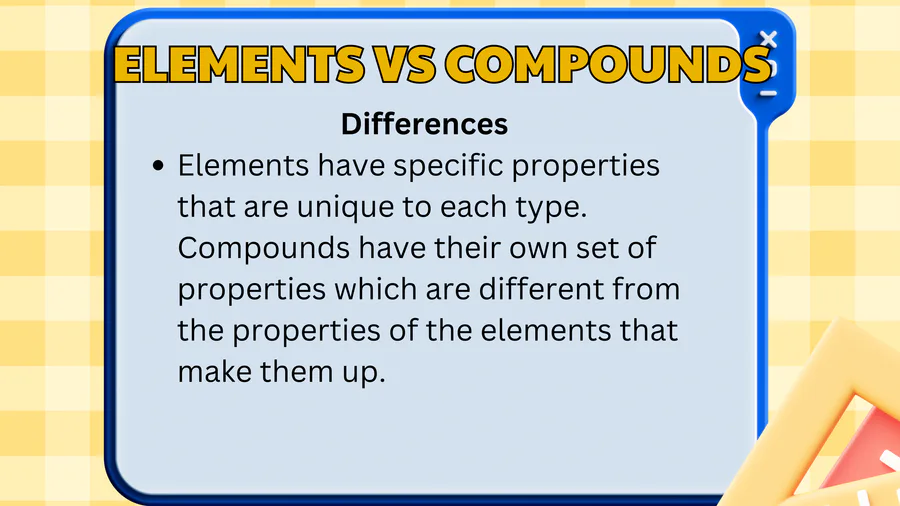
Create a Venn Diagram that differentiates and provides similarities of elements and compounds.

80

media

81

media

82

media
media

Show answer

Auto Play

Slide 1 / 82

SLIDE