Search Header Logo
  1. Resource Library
  2. Science
  3. Biology
  4. Cell Transport
  5. Cell Transport
Cell Transport

Cell Transport

Assessment

Presentation

•

Science

•

9th - 12th Grade

•

Practice Problem

•

Medium

•
NGSS
MS-LS1-2, MS-PS1-2, MS-LS2-1

+2

Standards-aligned

Created by

GHS Biology undefined

Used 4+ times

FREE Resource

15 Slides • 16 Questions

1

​Cell Transport

By GHS Biology

2

media

Please take out your notes!

3

Multiple Choice

Which type of cell transport REQUIRES energy?

1

Passive transport

2

Active transport

4

Multiple Choice

What kind of cell transport is osmosis?

1

Passive transport

2

Active transport

5

Multiple Choice

What kind of solution would cause a cell to shrink by osmosis?

1

Hypotonic

2

Hypertonic

3

Isotonic

6

Multiple Choice

Which organelle regulates movement of things in and out of the cell?

(Hint: Allows things to enter and exit the cell)

1

Cell membrane

2

Cell wall

3

Mitochondria

4

Chloroplast

7

Objective

Explain the role of cell membranes as a highly selective barrier during passive and active transport.

  • Diffusion

  • Osmosis

8

media

​

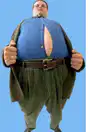
Is water deadly??

9

Turn and talk

Can you die from drinking too much water?

10

The Cell Membrane & Cell Transport

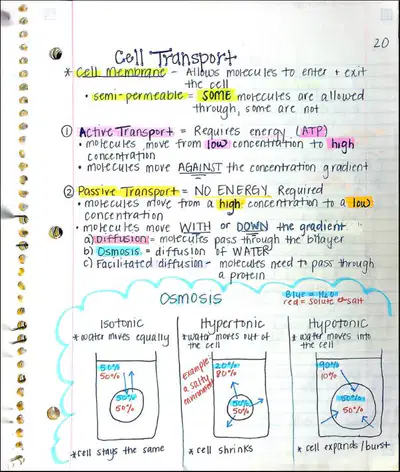
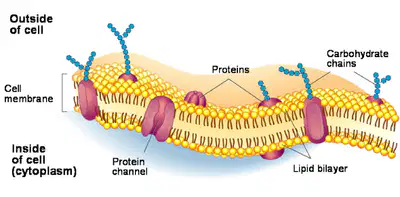
Cell Membrane: Semi-permeable barrier that regulates the movement of substances in and out of the cell.

Semi-Permeable: Only allows certain substances to pass through.

Cell Transport: Movement of substances in and out of the cell

media
media

11

Multiple Choice

What macromolecule makes up the main component of the cell membrane?

1

Lipids

2

Proteins

3

Nucleic Acid

4

Carbohydrates

12

What's the difference?
media
media

13

Multiple Choice

Question image

What macromolecule is this channel made of?

1

Lipid

2

Protein

3

Carbohydrate

4

Nucleic acid

14

media
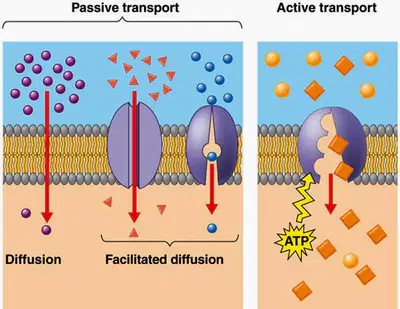
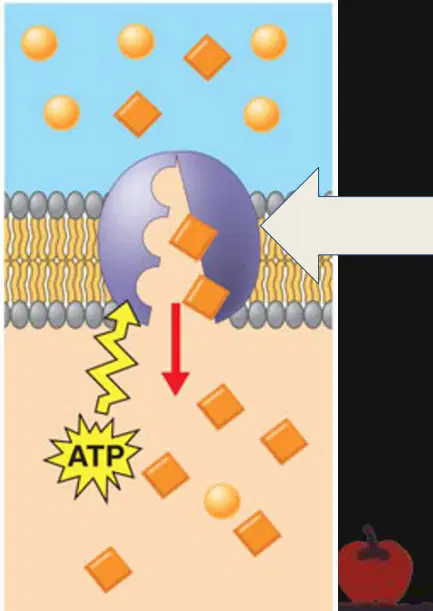
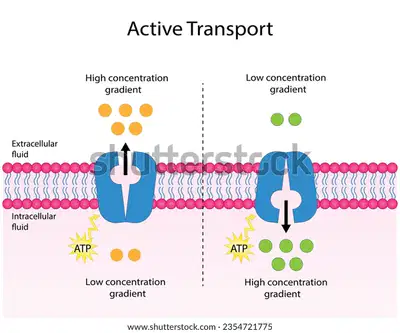
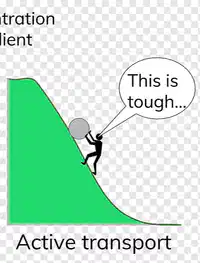
  • Requires energy (ATP energy)

  • Molecules move from LOW to HIGH concentrations

    • Concentration means "amount of"

​

Active TransPort

media

15

media
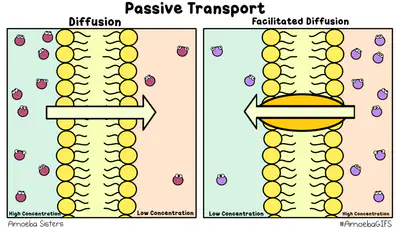
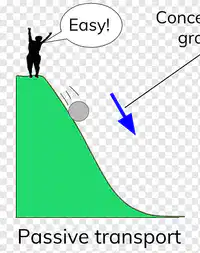
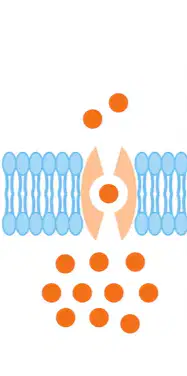
  • Does NOT require energy

  • Molecules move from HIGH to LOW concentrations

    • Concentration means "amount of"

Passive Transport

media

16

Multiple Choice

Question image

Under active transport, which direction will the molecules move?

1

Bottom to top

2

Top to bottom

17

Multiple Choice

Question image

What type of cell transport is occurring in Part C of the diagram shown?

1
Active Transport
2
Osmosis
3
Facilitated Diffusion
4
Diffusion

18

media
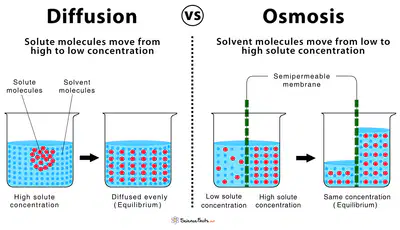
  • Diffusion = Movement of molecules from high to low concentrations.

    • Ex. Salt or sugar

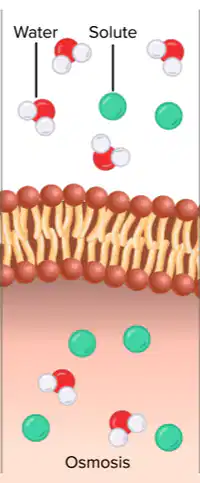
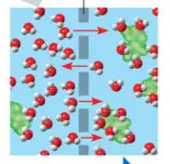
  • Osmosis = Movement of WATER across the membrane from high to low. ONLY WATER!!

Diffusion and Osmosis

19

Multiple Choice

Question image

Would this image represent osmosis or diffusion?

1

Osmosis

2

Diffusion

3

Active transport

20

Multiple Choice

Question image

Would this image represent osmosis or diffusion?

1

Osmosis

2

Diffusion

3

Active transport

21

Multiple Choice

Question image
In a nerve cell, ATP energy is used to pump sodium (Na) out of the cell and potassium (K) into the cell. This is an example of...
1
Facilitated Diffusion
2
Simple Diffusion
3
Active Transport
4
Osmosis

22

media
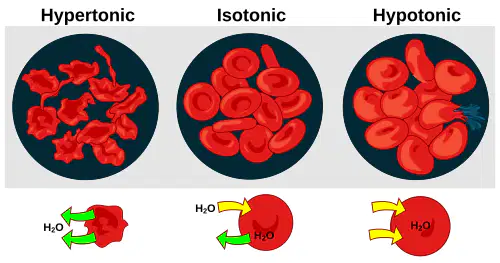
  • How water moves in different solutions

  • Water moves towards higher solute concentrations!

  • All of these are PASSIVE transport!

Osmosis

23

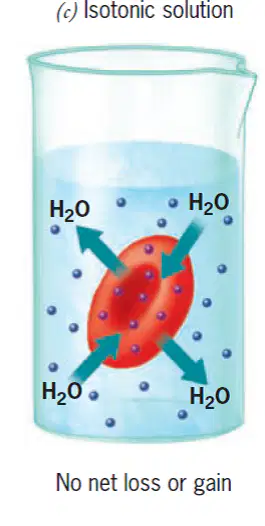
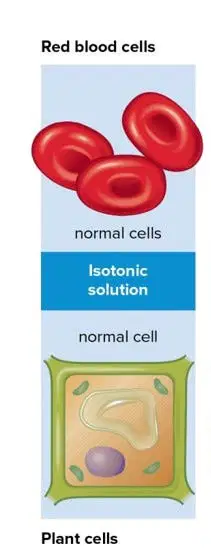
  • No net movement of water

  • Concentration of solutes inside and outside the cell are the same

  • Cell stays the same

​

Isotonic

media
media
media

24

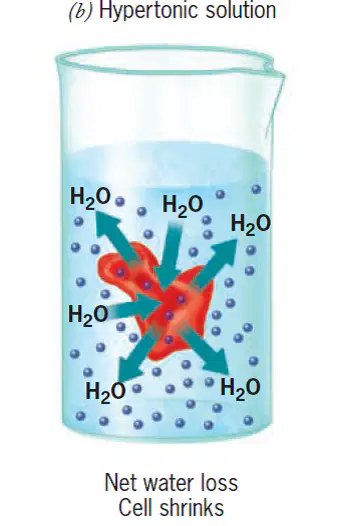
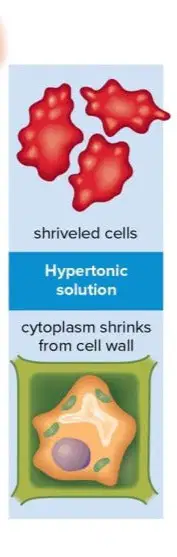
  • Water moves out of the cell

  • Higher concentration of solutes outside the cell than inside the cell

  • Cell shrinks

​

Hypertonic

media
media
media
media

25

Multiple Choice

What can we say about the shape of the plant cell when water leaves?

1

It shrivels and may cause a plant to wilt.

2

It swells and helps the plant stand upright.

3

It stays the same and nothing happens.

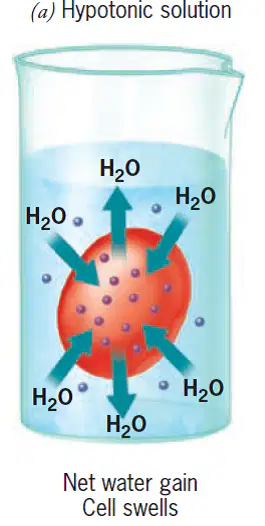
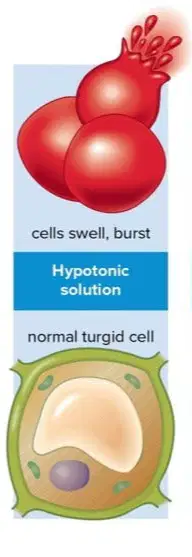
26

  • Water moves into the cell

  • Higher concentration of solutes inside the cell than outside the cell.

  • Cell swells/expands and can rupture.

​

Hypotonic

media
media
media
media

27

Multiple Choice

Question image

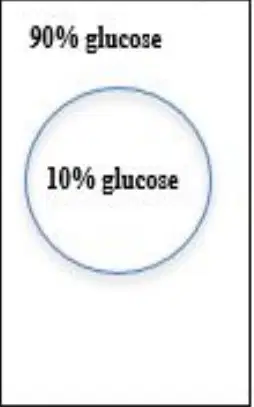
What is the % of glucose inside and outside the cell?

1

Inside cell: 90%

Outside cell: 10%

2

Inside cell: 10%

Outside cell: 90%

3

Inside cell: 50%

Outside cell: 50%

28

Multiple Choice

Question image

What kind of solution is this cell in?

1

Hypertonic

2

Hypotonic

3

Isotonic

29

Multiple Choice

Question image

Assuming the glucose molecules are too large to pass through a semi-permeable membrane on its own, in which direction will osmosis occur?

1

Water moves outside the cell

2

Water moves inside the cell

3

Water has equal net movement

30

Multiple Choice

Question image

What will happen to the cell in this solution?

1

It will swell/expand and possibly lyse (burst).

2

It will shrivel.

3

It will stay the same

31

Essential Question

What causes a person to die from drinking too much water? Explain what is happening to the cells.
pattern-tertiary
​Cell Transport

By GHS Biology

Show answer

Auto Play

Slide 1 / 31

SLIDE