Search Header Logo
  1. Resource Library
  2. Ela
  3. Reading
  4. ...
  5. Nonfiction Text Features
Nonfiction Text Features

Nonfiction Text Features

Assessment

Presentation

•

English

•

3rd Grade

•

Practice Problem

•

Medium

•
CCSS
RI.1.5, RI.3.7, RI.9-10.9

+23

Standards-aligned

Created by

Jill Stambaugh

Used 1+ times

FREE Resource

23 Slides • 19 Questions

1

media

2

media

3

Multiple Choice

Why are text features important when reading nonfiction texts?

1

They make the text longer

2

They help readers comprehend what they are reading

3

They add pictures to the text

4

They replace the main body of text

4

media

5

media

6

Multiple Choice

Question image

What year was the book published?

1
2008
2
2015
3
2012
4
2010

7

media

8

media

9

Multiple Choice

Question image

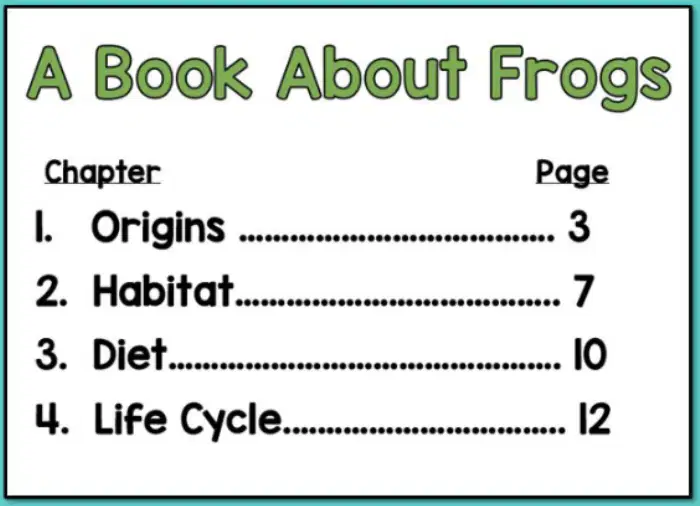
If you wanted to learn about a frog's habitat, which chapter would you look at in the table of contents?

1

Chapter 1 - Origins

2

Chapter 2 - Habitat

3

Chapter 3 - Diet

4

Chapter 4 - Life Cycle

10

Multiple Choice

Question image

If you wanted to learn about a frog's diet, which page would you turn to in the book?

1

Page 3

2

Page 7

3

Page 10

4

Page 12

11

Fill in the Blanks

media image

To which page would you turn to begin reading about the life cycle of a frog?

12

Multiple Choice

Question image

Which pages would you read to learn about the 'Origins' chapter in 'A Book About Frogs'?

1

Pages 3-6

2

Pages 7-9

3

Pages 10-11

4

Pages 12-14

13

media

14

media

15

Multiple Choice

Question image

If you wanted to find information about spawn, on which page(s) would you look?

1
7-9
2
20-22
3
5-6
4
10-12

16

Multiple Choice

Question image

Which of the following pages contain information about amphibians?

1

1, 2, 3, 14, 24

2

7, 8, 9

3

14, 21, 35

4

12, 13, 16, 31

17

media

18

Multiple Choice

The glossary is located at the ___ of the book.

1
end
2
beginning
3
middle
4
front

19

Multiple Choice

Question image

What does amphibious mean?

1
Able to live both on land and in water.
2
A type of land animal that cannot swim.
3
Only able to live in water.
4
Able to fly in the air and swim in water.

20

Multiple Choice

Question image

Which glossary word describes an organism that needs oxygen to live?

1
Aquatic
2
Terrestrial
3
Anaerobic
4
Aerobic

21

media

22

media

23

Multiple Choice

Question image

What is the heading on this page?

1
The Life Cycle of Toads
2
Frog Habitats
3
All About Frogs
4
Amphibian Adaptations

24

media

25

Multiple Choice

Question image

How many subheadings are on this page?

1
3
2
4
3
1
4
2

26

media

27

media

28

media

29

media

30

Multiple Choice

Why would an author use photographs in a nonfiction book?

1
To distract from the text.
2

To help with understanding and engagement.

3
To provide a historical context.
4
To fill space on the page.

31

media

32

media

33

media

34

media

35

Multiple Choice

Question image

What information is being displayed on the map?

1
The climate zones of the southeastern United States.
2
The migration patterns of birds in North America.
3

Where Northern Cricket Frogs live

4
The population of Northern Cricket Frogs in urban areas.

36

Multiple Choice

Question image

Which species of frogs can be found in Arkansas (where the arrow points)

1

Northern Cricket Frog

2
Green Tree Frog
3
American Bullfrog
4
Southern Leopard Frog

37

media

38

media

39

Multiple Choice

Question image

What happens BEFORE a frog's body enlarges and its tail shortens?

1
The tadpole hatches and begins to swim.
2
The frog lays eggs in water.
3
The tadpole grows legs and loses its gills.
4
The tadpole starts to breathe air.

40

Multiple Choice

Question image

How long does it take a frog to complete it's growth cycle?

1
12 to 16 weeks
2
8 to 10 weeks
3
20 to 24 weeks
4
4 to 6 months

41

media

42

Poll

How are you feeling about text features?

😁

🤩

😢

😩

pattern-tertiary
media

Show answer

Auto Play

Slide 1 / 42

SLIDE