Midterm 2 Test Review 25/26
Presentation
•
Biology
•
9th Grade
•
Medium
+7
Standards-aligned
ERICA VEGA
Used 18+ times
FREE Resource
36 Slides • 48 Questions
1
Test Review
By ERICA VEGA
2
3
4
5
6
Drag and Drop
7
8
Categorize
Deoxuribose sugar
RIbose Sugar
Double Strabded
Single Stranded
Adenine Goes with Thymine
denine goes with Uracil
Found in Nucleus for Euk Cells
Sort the following characteristics
9
Fill in the Blank
10
11
12
13
Multiple Choice
Which of these is not a function of lipids?
Quick energy
Sturctural components in cell membranes
Insulation to keep an organism warm
Long term energy storage
14
Multiple Choice
Lipids are made of...
CHO
CHON
CHONP
CHONS
15
Cell Transport
We just reviewed Biomolecules and ended with Lipids which leads us to review CELL TRANSPORT
16
17
18
19
The movement of substances across the cell membrane without using energy from the cell.
Examples:
diffusion
facilitated diffusion
osmosis.
(does not require energy)
Passive Transport
20
Active Transport
relies on the use of energy to move substances into and out of cells. Usually, molecules are traveling against a concentration gradient.
21
Multiple Choice
None of them
All of them
22
Multiple Choice
23
Protein pumps
24
Hotspot
Identify the part of the membrane that allows small molecules to pass through
25
Multiple Choice
26
Multiple Choice
27
28
Fill in the Blank
Type answer...
29
Multiple Choice
Prokaryotes are...
Newer, Smaller, Complicated
Older, Smaller, and Simpler
Newer, Larger, and Simpler
Older, Larger, and Simpler
30
Multiple Choice
Eukaryotic cells have a nucleus.
True
False
31
4
4. Eukaryotes include animal and plant cells
32
33
34
Multiple Choice
A chemical has been found to harm the same components in both prokaryotic and eukaryotic cells. Which components are those?
DNA, cell membrane, cytoplasm, and ribosomes
DNA, cell membrane, ribosomes, and membrane-bound organelles
DNA, cytoplasm, ribosomes, and nucleus
DNA, cell membrane, cytoplasm, and membrane-bound organelles
35
Open Ended
What is the entire object shown in the image? What evidence provides reasoning to your answer
36
Open Ended
Scientists observe the traits of cells on four microscope slides and record their observations in a table. Based on the scientists' observations, identify the cell type for each microscope slide in the table. Move the correct answer to each box. Each answer may be used more than once.
Options: Eukaryotic cells , Prokaryotic cells
3.
4.
37
Multiple Choice
Some students used information they gathered from lab investigations to prepare a table. They entered the table in their lab notebooks.
Which of these correctly identifies the two cells described in the table?
Cell 1 is eukaryotic, and Cell 2 is prokaryotic.
Cell 1 is prokaryotic, and Cell 2 is eukaryotic.
Both Cell 1 and Cell 2 are eukaryotic.
Both Cell 1 and Cell 2 are prokaryotic.
38
Multiple Choice
39
40
41
42
Multiple Select
Select the 3 reactants for photosynthesis?
Water
Sunlight
Carbon Dioxide
Glucose
43
Multiple Select
What are the products of photosynthesis?
Glucose
Oxygen
Carbon Dioxide
Light
44
45
46
47
48
49
Multiple Choice
What organelle is responsible for Cellular Respiration?
Chloroplast
Mitochondria
Nucleus
RIbosome
50
51
Open Ended
What is the relationship between the cellular respiration and photosynthesis formulas?
52
Multiple Choice
During which phase does DNA replication occur?
G1
S
G2
M
53
54
Multiple Choice
55
Multiple Choice
56
Multiple Choice
5A: Checkpoints occur between the stages of the cell cycle. If a cell does not meet certain criteria at the end of a stage, it will not move to the next stage. Which of these occurs just before the cell enters the G2 stage of the cell cycle?
The nuclear membrane disintegrates
DNA replicates
Centrioles form
The nucleolus divides
57
9C: Enzymes
58
59
Multiple Select
Enzymes are: Select two answers.
nucleic acids
proteins
decrease reactions
carbohydrates
catalyst
60
Multiple Select
What is the function of an enzyme? Select all that apply.
enzymes break themselves into small pieces
enzymes slow down chemical reactions
enzymes speed up chemical reactions
lower the activation energy
Catalyst
61
Multiple Choice
Enzymes are molecules that speed up specific chemical reactions that occur in an organism. The diagram shows an enzymatic metabolic pathway. What happens to this metabolic pathway when enzyme B is removed?
The reaction skips enzyme B and goes to enzyme C.
The reaction reverses.
The reaction speeds up.
The reactions stops.
62
(Polypeptides)
63
Multiple Choice
lipids
carbohydrates
polypeptides
sugar
64
Multiple Choice
What process is happening in the diagram?
transcription
translation
dna replication
mitosis
65
Multiple Choice
66
Open Ended
What process is being shown here? And what evidence supports your answer.
67
Multiple Choice
6C: The initial steps in gene expression are modeled above. Double-stranded DNA first unwinds into two strands. Which process and product are represented in Diagram 2?
Process: transcription; product: mRNA
Process: translation; product: protein
Process: replication; product: tRNA
Process: recombination; product: polymerase
68
Open Ended
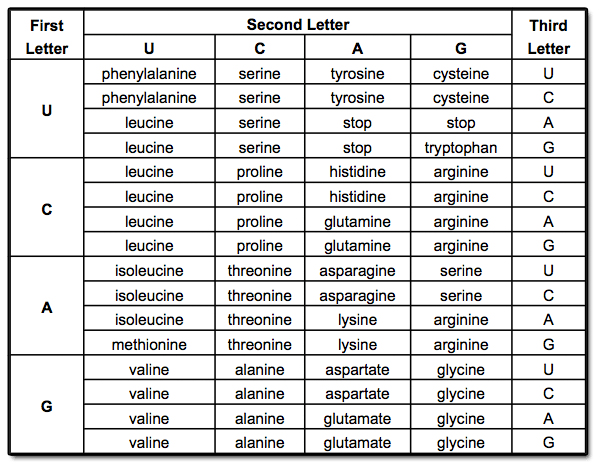
How many nucleotides/bases make up ONE codon?
69
Open Ended
What amino acid is represented by the codon UUA?
70
Multiple Choice
Which of the following bases is NOT found in RNA?
adenine
thymine
guanine
uracil
71
Multiple Choice
A DNA strand has the following bases: AAG CCA. What is the sequence of bases on the complementary strand of DNA?
AAG CCA
TTC GGT
ACC GAA
CCA TTC
72
Multiple Choice
What is the end product of transcription?
mRNA
DNA
amino acids
ribosomes
73
74
75
Multiple Choice
The shape of DNA is called:
Helix
Double helix
Triple helix
Ladder
76
Dropdown
Identify the part of the DNA segment that is labeled "X" in the diagram.
77
Multiple Choice
What is the monomer of DNA?
Amino acid
Glucose
Fatty acid
Nucleotide
78
Hotspot
A model of DNA is shown.
Which part of the DNA model is most directly associated with the coding of genetic information?
79
Multiple Choice
6A A segment of DNA is represented in the illustration
How is information for a specific protein carried on the DNA molecule?
As a sequence of nucleotides
In the double-helix shape of the condensed chromosome
In the ratio of adenines to thymines
As a pattern of phosphates and sugars
80
Hotspot
Tap on the part of DNA that is the code for your traits
81
82
Multiple Choice
What is the bond between nitrogen bases?
Carbon
Nitrogen
Hydrogen
Oxygen
83
Multiple Choice
6A A student builds a model of a DNA strand
Which of these models of a DNA strand shows bases that are complementary to the ones on the student’s DNA model?
84
Fill in the Blank
Test Review
By ERICA VEGA
Show answer
Auto Play
Slide 1 / 84
SLIDE

Similar Resources on Wayground
80 questions
THursday sev1e Lesson
Presentation
•
9th - 10th Grade
75 questions
Los Lugares de la Escuela y el Horario
Presentation
•
9th Grade
75 questions
Cell Biology (Unit 4: Biology)
Presentation
•
9th Grade
79 questions
Georgia Geography review lesson
Presentation
•
8th Grade
80 questions
7th Intro. to Life science Sect. 1 The Science of Biology Da
Presentation
•
8th Grade
80 questions
2nd Quarter Math 9
Presentation
•
9th Grade
80 questions
Geometry Saturday Review
Presentation
•
9th Grade
77 questions
F4 Being A Teen L43
Presentation
•
9th Grade
Popular Resources on Wayground
10 questions
5.P.1.3 Distance/Time Graphs
Quiz
•
5th Grade
10 questions
Fire Drill
Quiz
•
2nd - 5th Grade
20 questions
Equivalent Fractions
Quiz
•
3rd Grade
22 questions
School Wide Vocab Group 1 Master
Quiz
•
6th - 8th Grade
20 questions
Main Idea and Details
Quiz
•
5th Grade
20 questions
Context Clues
Quiz
•
6th Grade
20 questions
Inferences
Quiz
•
4th Grade
12 questions
What makes Nebraska's government unique?
Quiz
•
4th - 5th Grade
Discover more resources for Biology
14 questions
Ecological Succession: Primary and Secondary
Quiz
•
9th Grade
24 questions
BIOLOGY STAAR REVIEW
Quiz
•
9th Grade
25 questions
photosynthesis and cellular respiration
Quiz
•
9th Grade
21 questions
Cell Cycle and mitosis
Quiz
•
9th - 10th Grade
20 questions
Food Chains and Food Webs
Quiz
•
7th - 12th Grade
5 questions
Human Impacts: How Do People Disrupt Ecosystems?
Interactive video
•
4th Grade - University
10 questions
Ameoba Sisters: Introduction to cells
Interactive video
•
9th - 12th Grade
22 questions
AP Biology: Unit 7 Review (CED)
Quiz
•
9th - 12th Grade