

Middle East Governments

Presentation
•
Social Studies
•
7th Grade
•
Practice Problem
•
Easy

Noah Prince
Used 2+ times
FREE Resource
20 Slides • 20 Questions
1
2
3
4
Multiple Choice
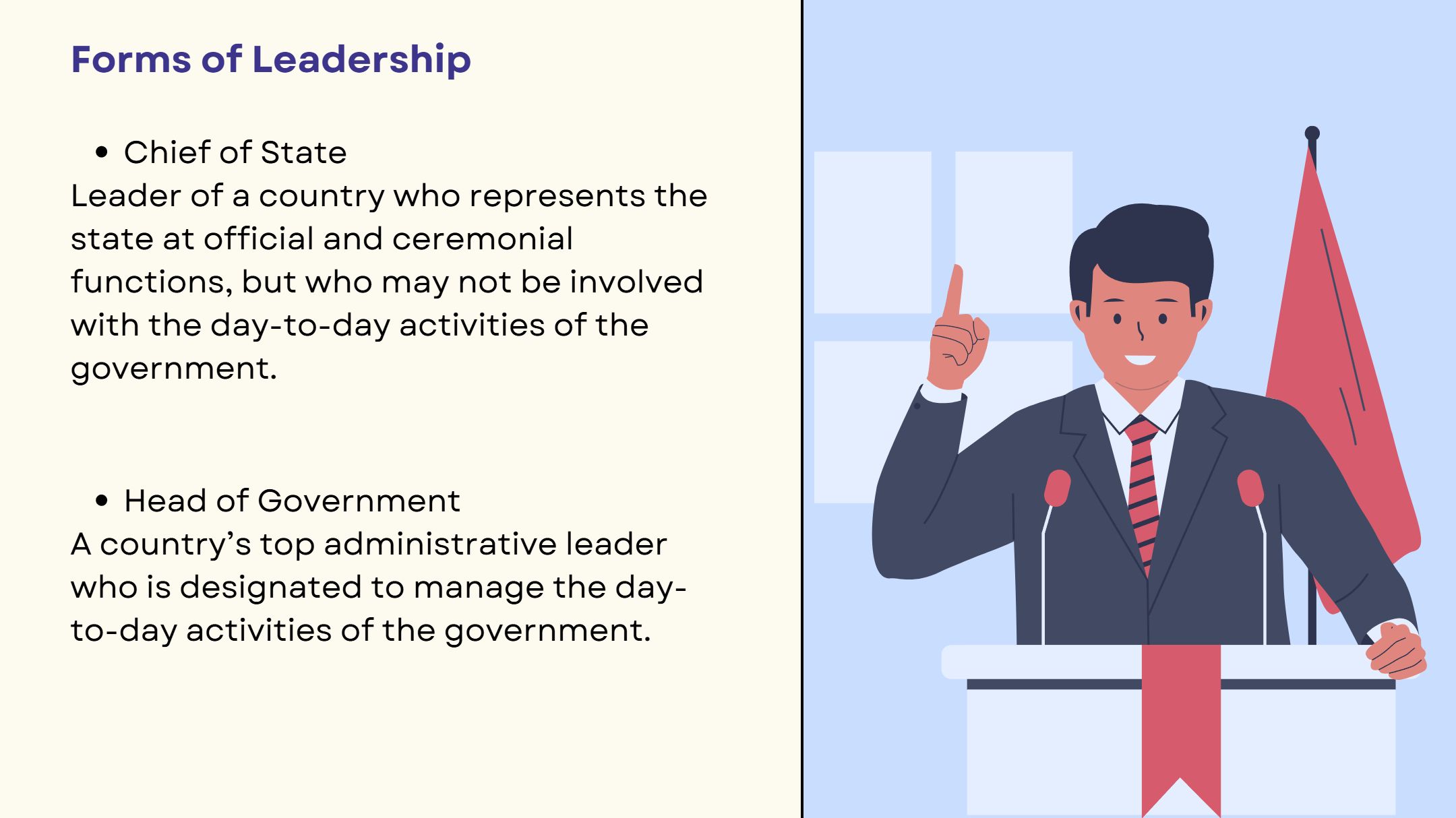
What is the main difference between a Chief of State and a Head of Government?
A Chief of State manages day-to-day government activities, while a Head of Government performs ceremonial duties.
A Chief of State represents the country at official and ceremonial functions, while a Head of Government manages day-to-day government activities.
A Chief of State is always elected, while a Head of Government is appointed.
A Chief of State is responsible for making laws, while a Head of Government enforces them.
5
6
7
Multiple Choice
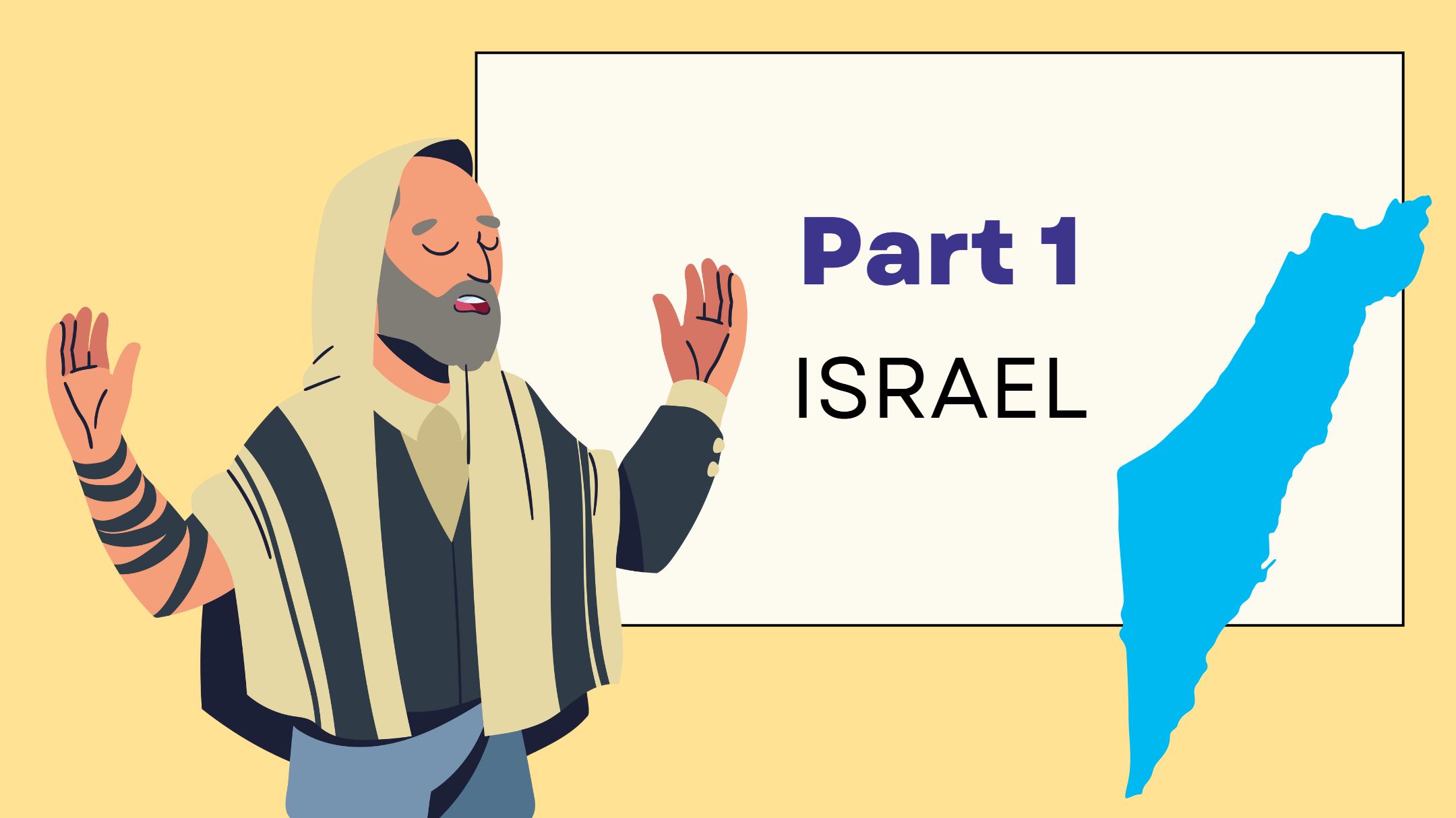
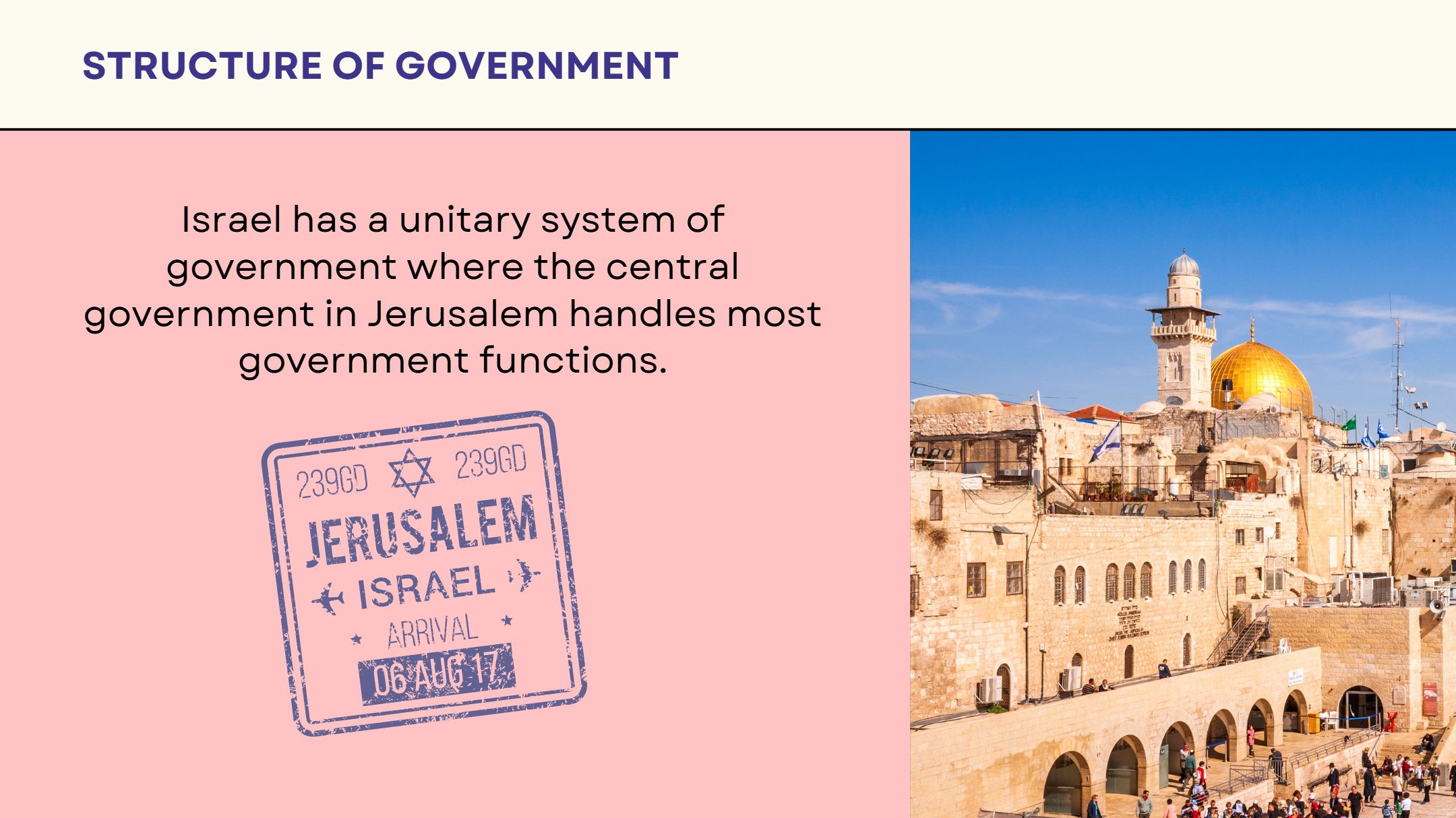
Which of the following statements about Israel's government is correct?
Israel has a federal system with power shared between central and regional governments.
Israel has a unitary system where the central government in Jerusalem handles most government functions.
Israel's government is led by a monarch.
Israel's government does not have a central authority.
8
9
Open Ended
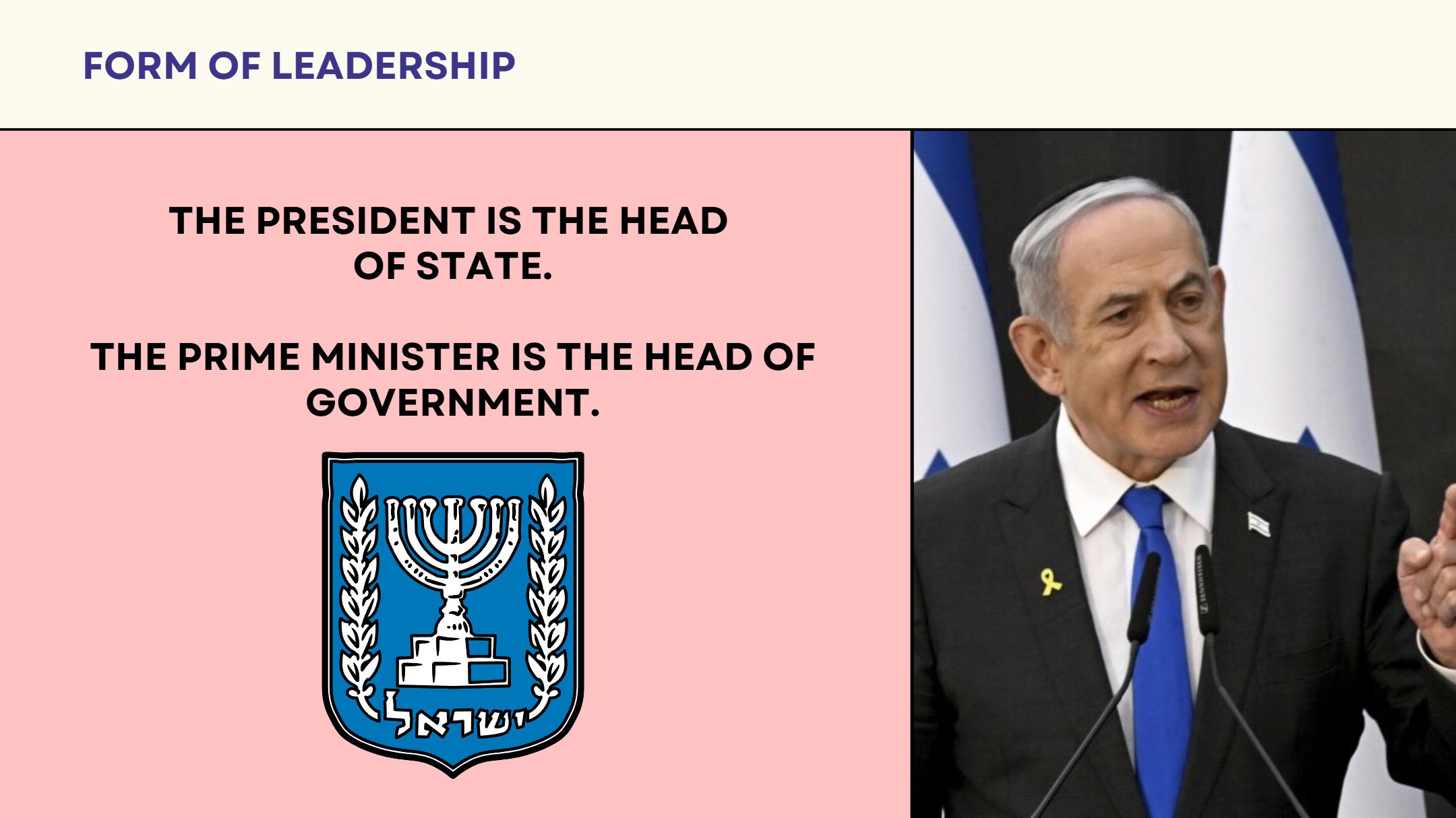
Explain how the roles of the President and Prime Minister differ in Israel's government.
10
11
Multiple Choice
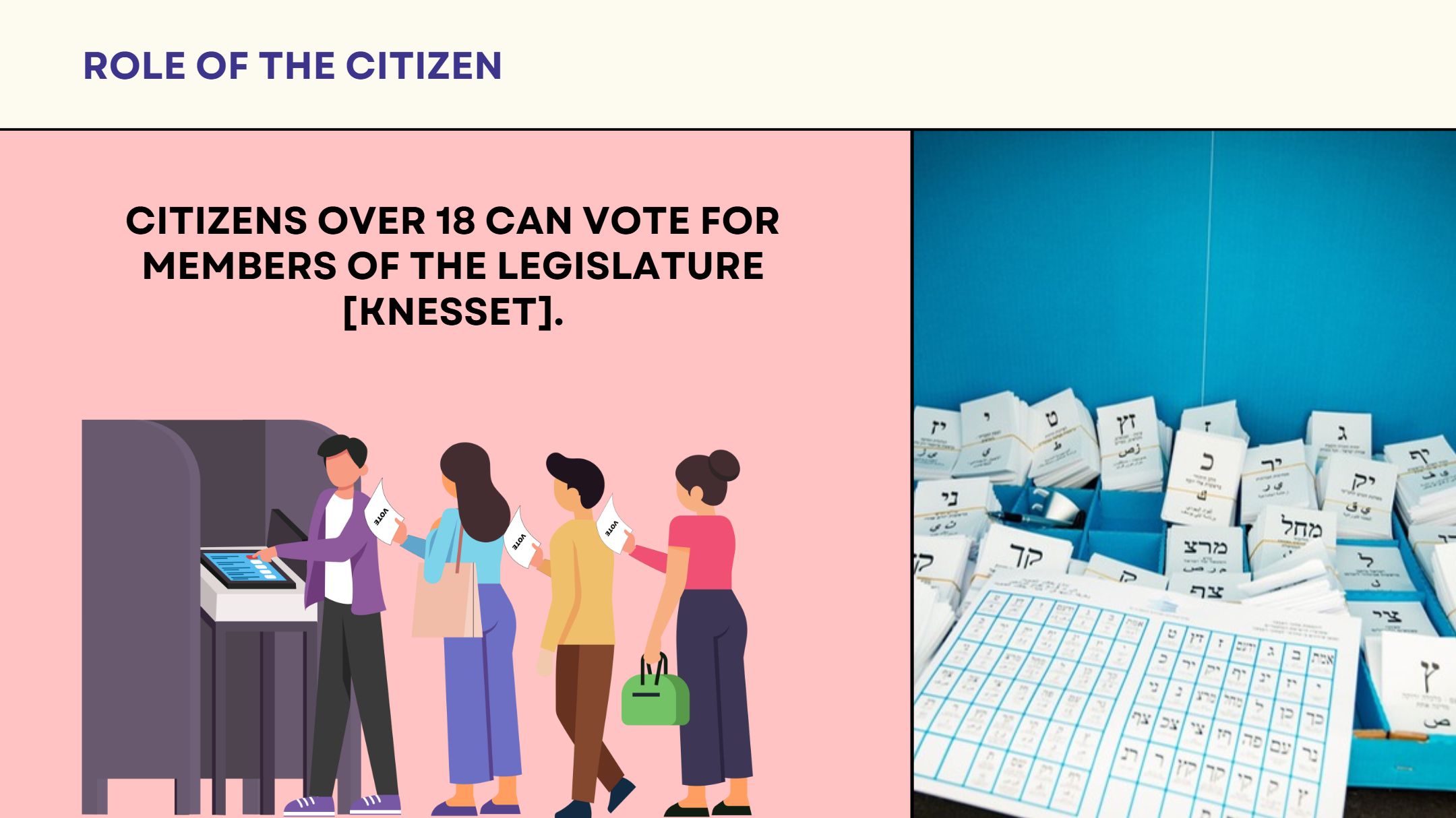
Which of the following are roles that citizens play in Israel's government?
Voting for members of the Knesset
Electing the President directly
Participating in ceremonial functions
Serving as Prime Minister
12
Fill in the Blanks
In Israel, citizens over the age of
13
14
Multiple Choice
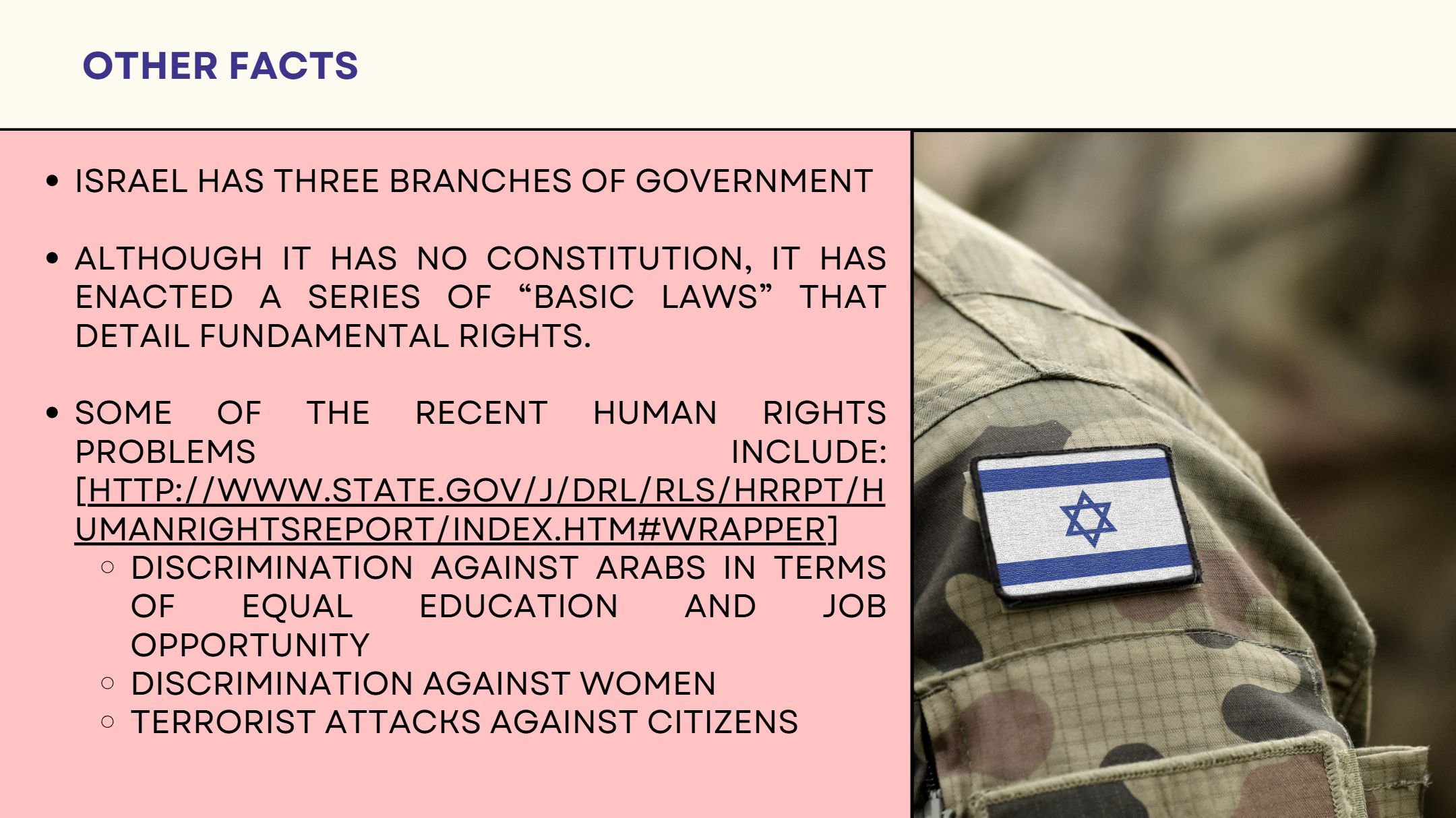
Which of the following is NOT listed as a recent human rights problem in Israel?
Discrimination against Arabs in terms of equal education and job opportunity
Discrimination against women
Terrorist attacks against citizens
Lack of freedom of religion
15
16
17
18
Fill in the Blanks
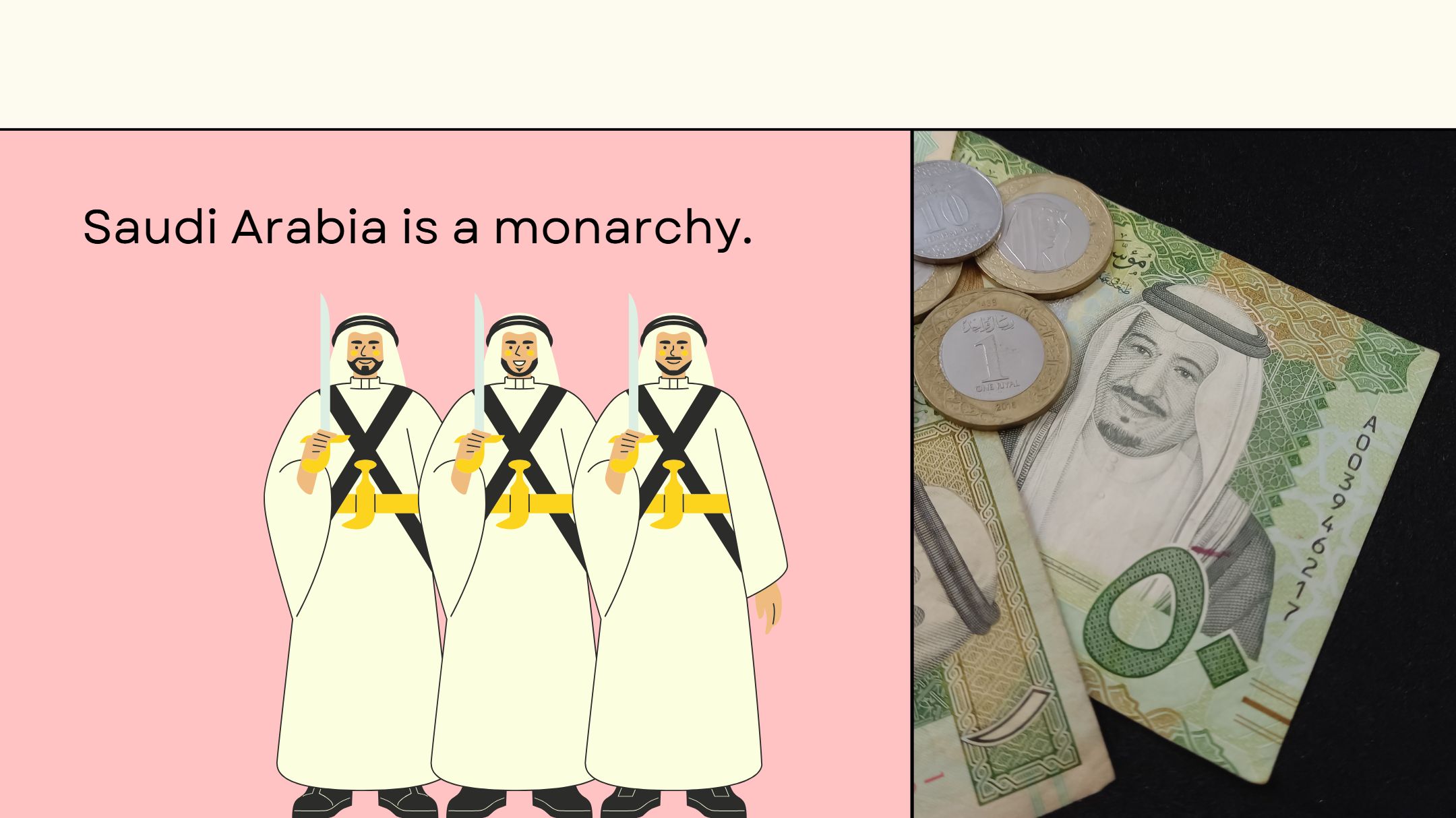
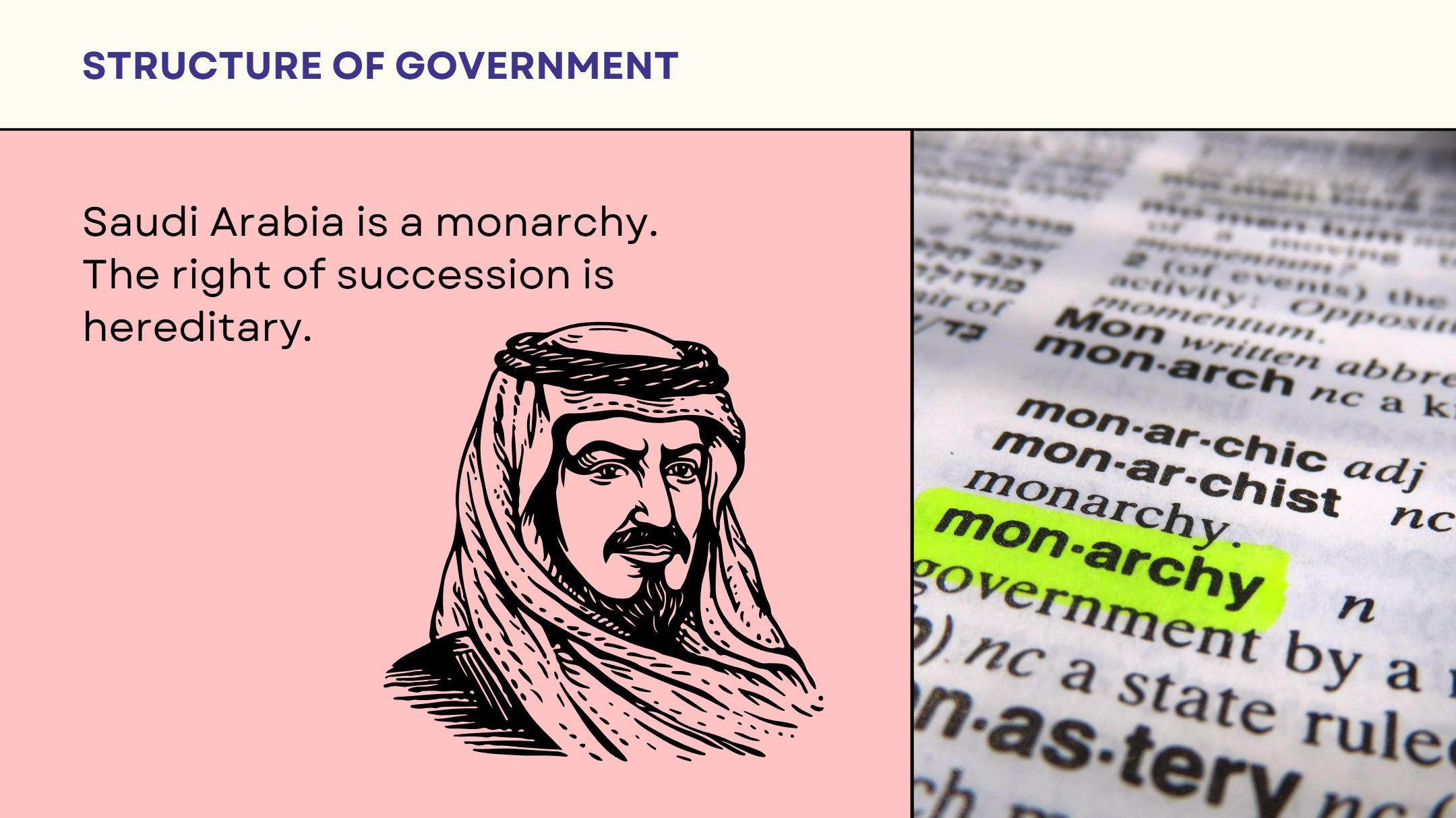
Fill in the blank: Saudi Arabia is a
19
Open Ended
Compare the structure of government in Israel and Saudi Arabia based on the information provided in the slides.
20
21
Multiple Choice
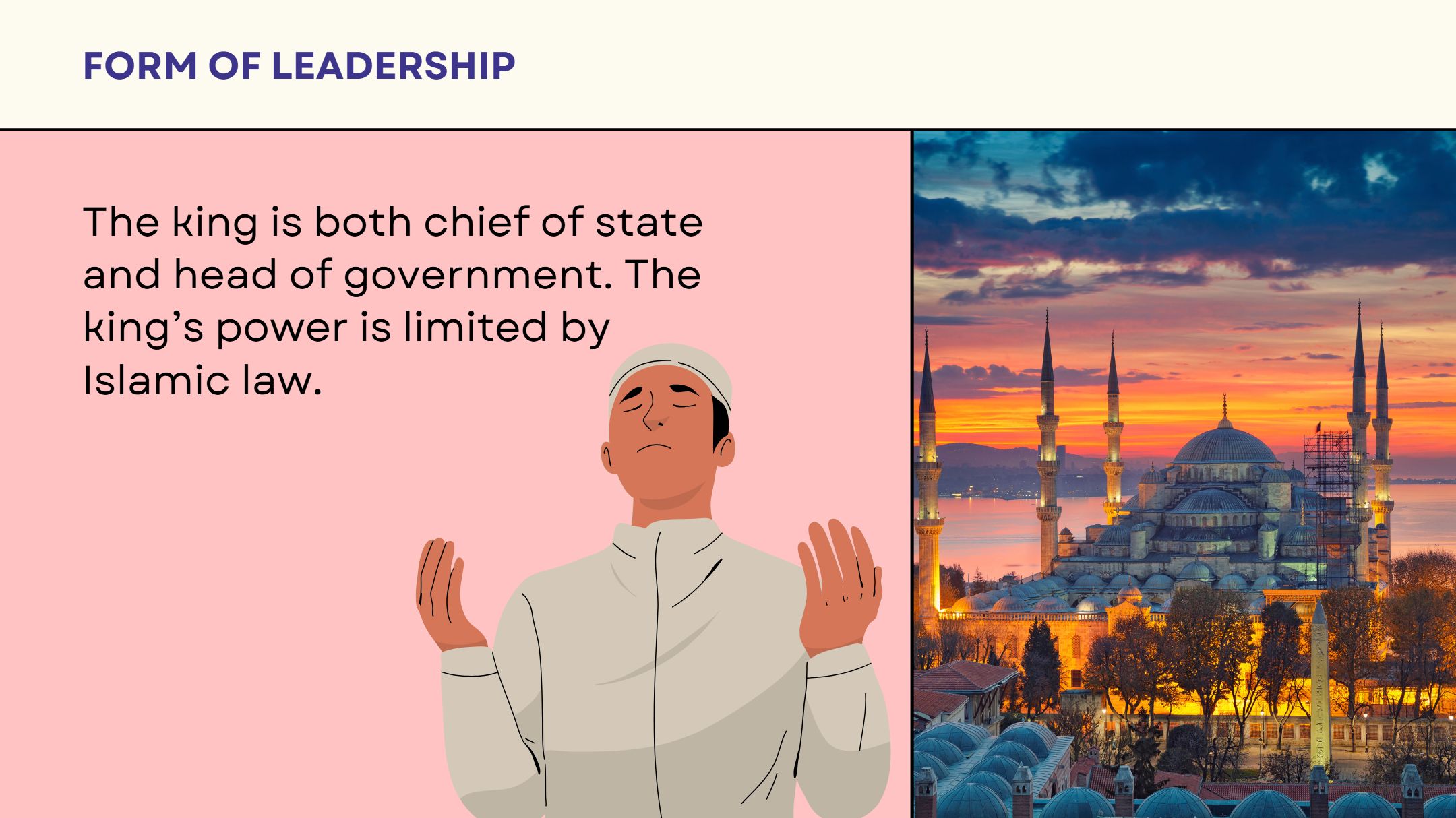
Which of the following statements about the king of Saudi Arabia is correct?
The king is only the chief of state.
The king's power is unlimited.
The king is both chief of state and head of government.
The king is elected by the people.
22
23
Open Ended
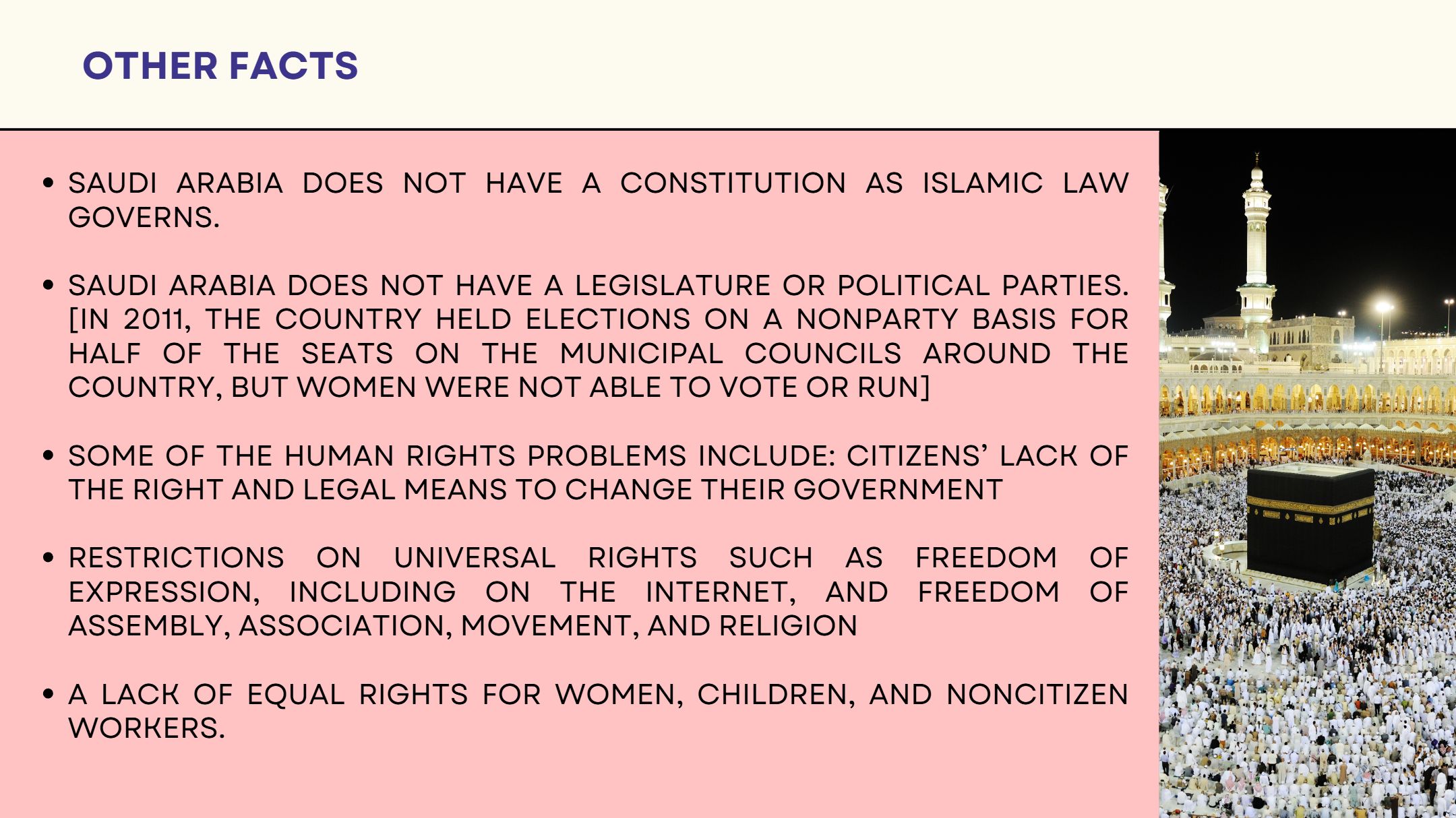
How does Islamic law influence the government and leadership structure in Saudi Arabia?
24
Multiple Select
Select all that apply: What are some of the human rights problems mentioned in Saudi Arabia?
Restrictions on freedom of expression
Universal suffrage for women
Lack of equal rights for noncitizen workers
Citizens’ lack of the right and legal means to change their government
25
26
27
Multiple Choice
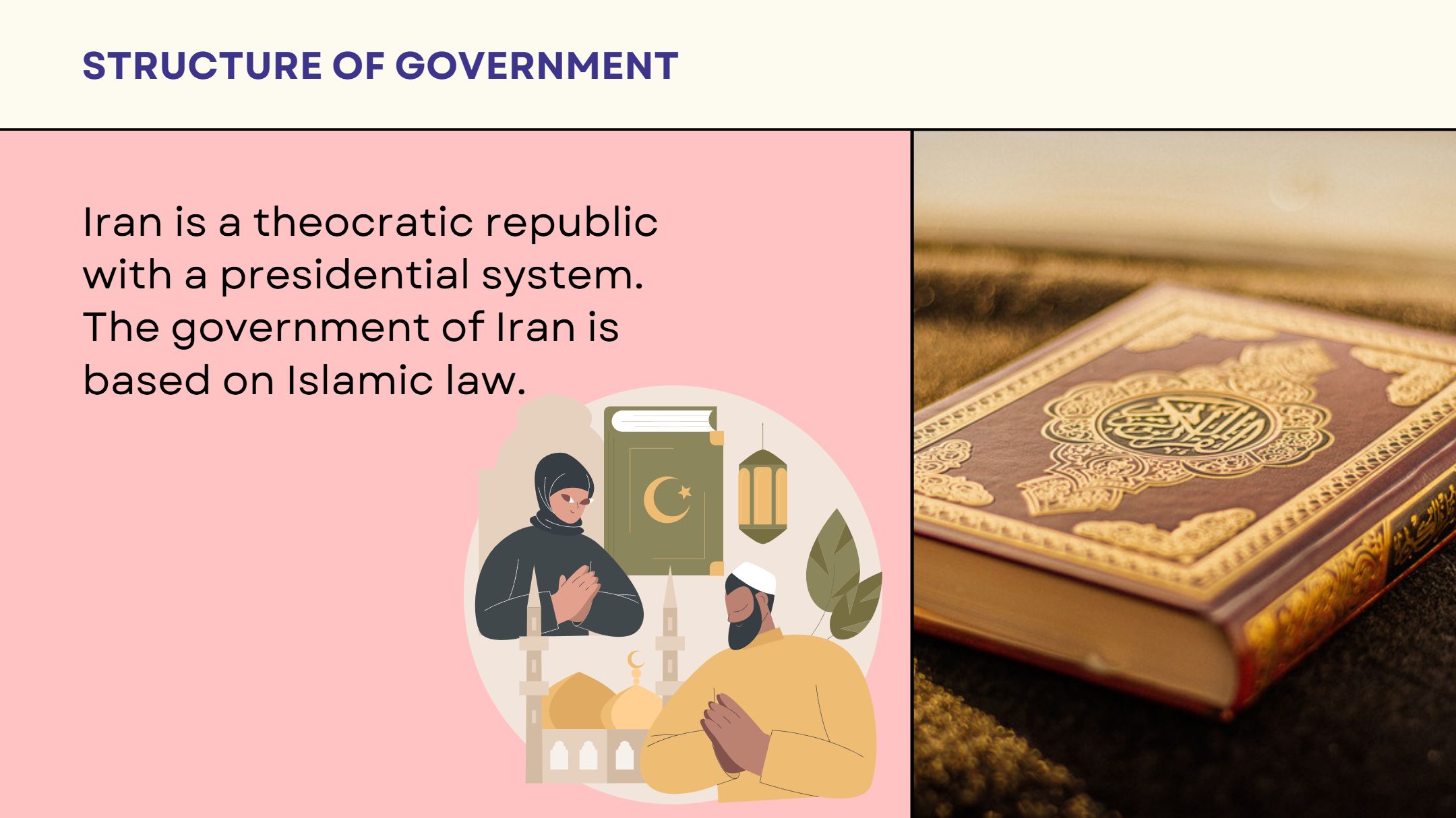
Which type of government does Iran have?
Theocratic republic
Constitutional monarchy
Parliamentary democracy
Military dictatorship
28
29
Open Ended
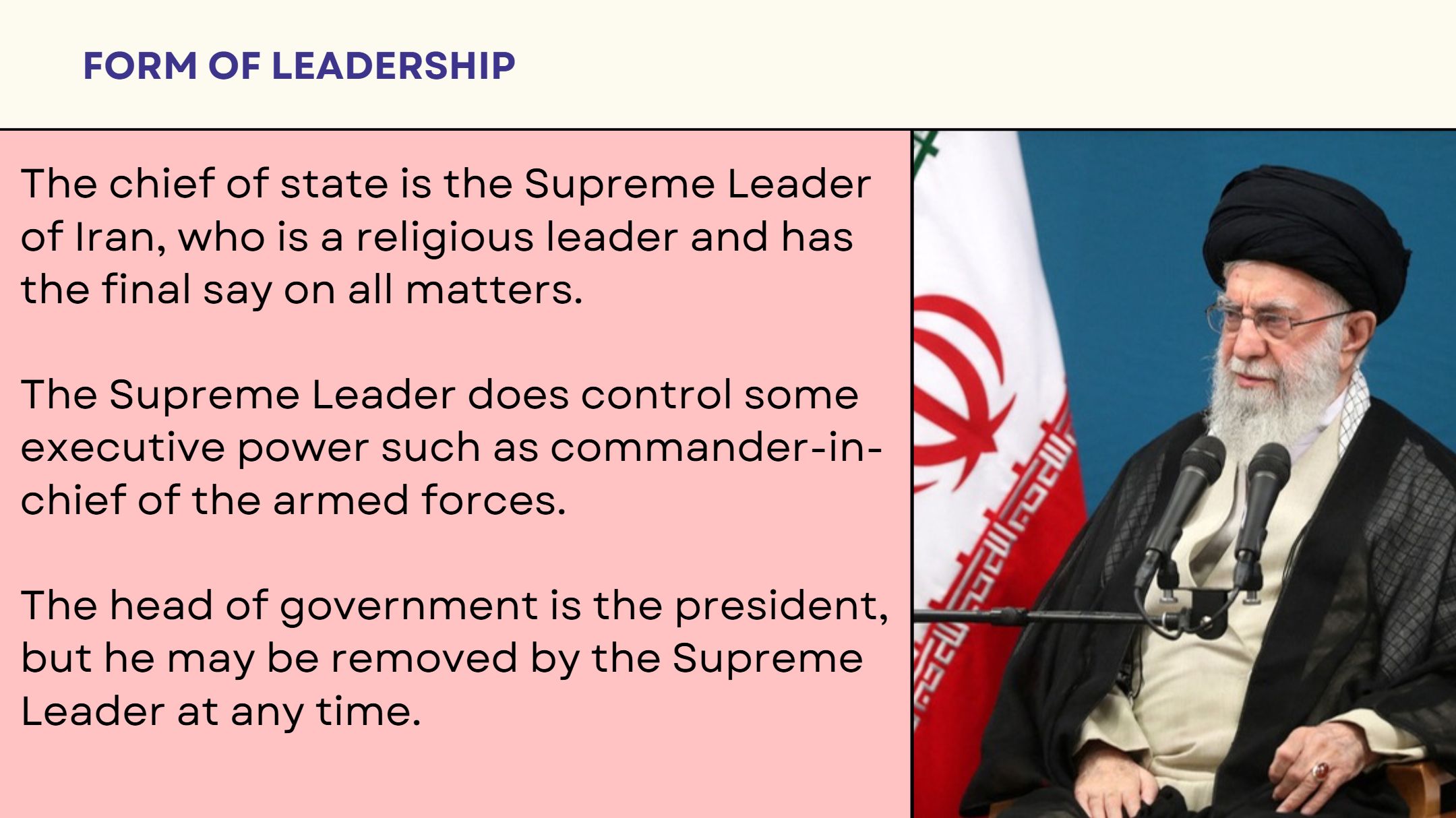
Explain the role of the Supreme Leader in Iran's government.
30
31
32
Fill in the Blanks
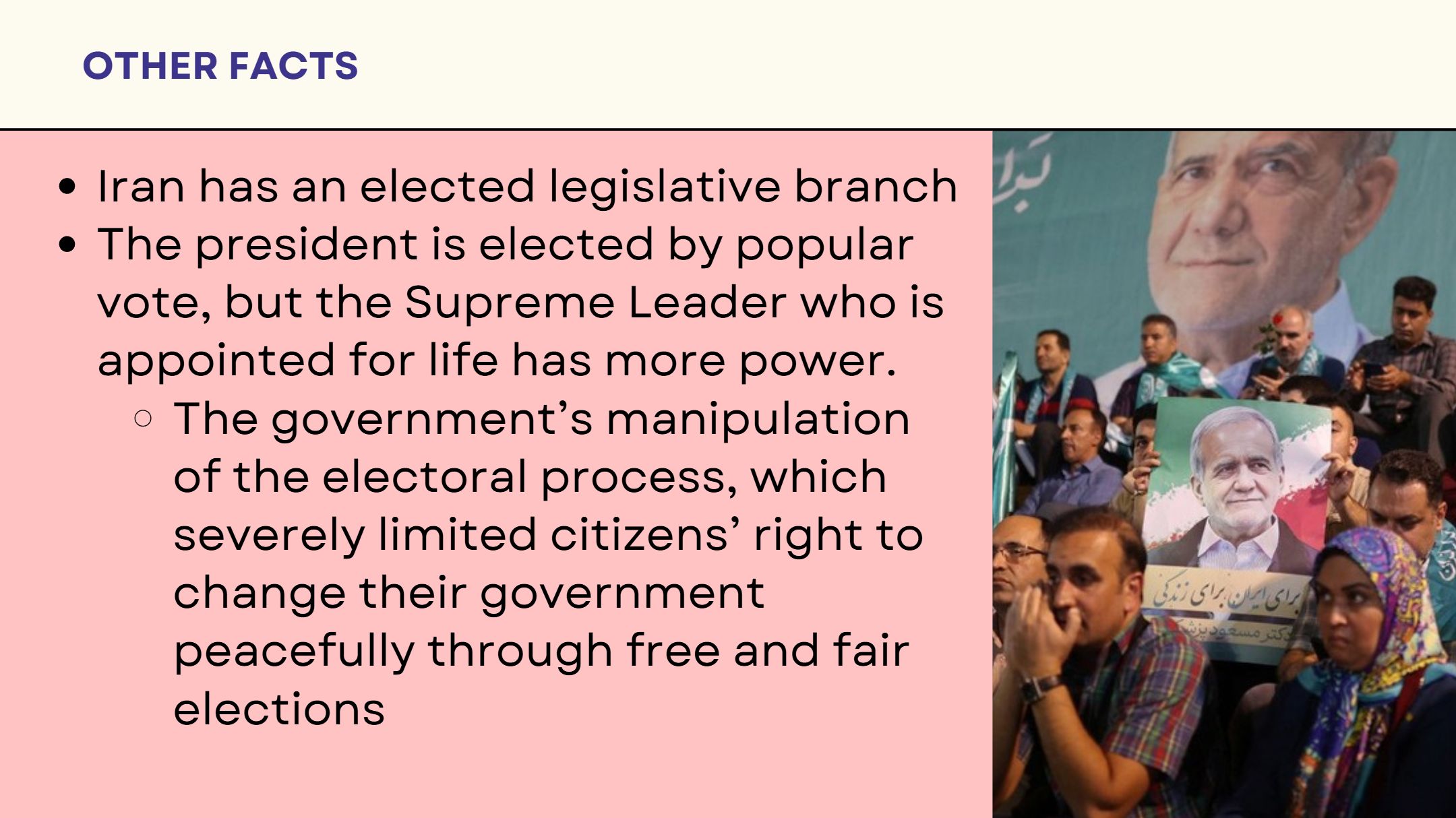
The president of Iran is elected by
33
Multiple Choice
Which of the following statements about the role of citizens in Iran is/are correct?
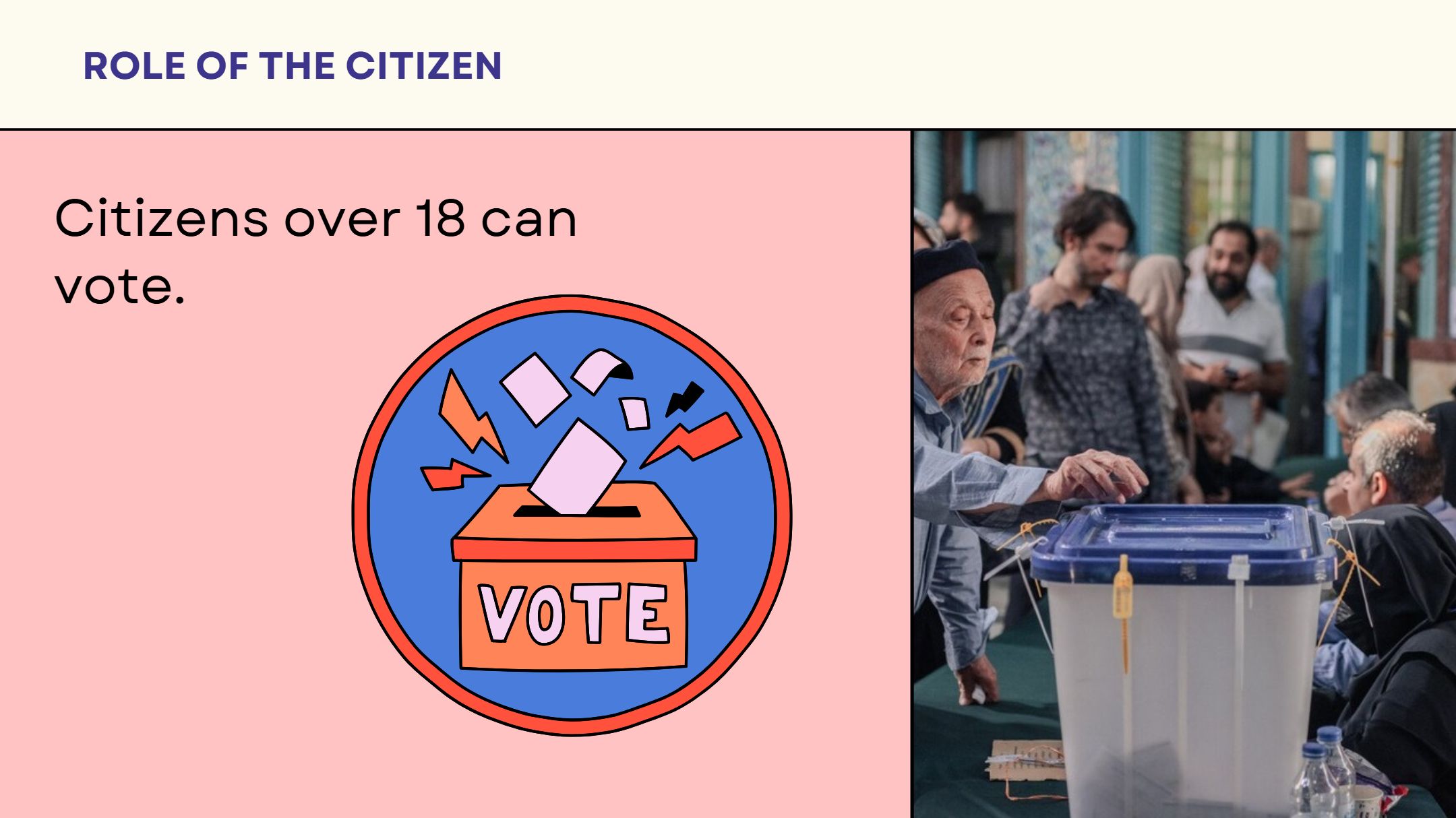
Citizens over 18 can vote.
All citizens have equal influence in government decisions.
Voting is mandatory for all citizens.
Citizens can freely change their government through elections.
34
35
Multiple Select
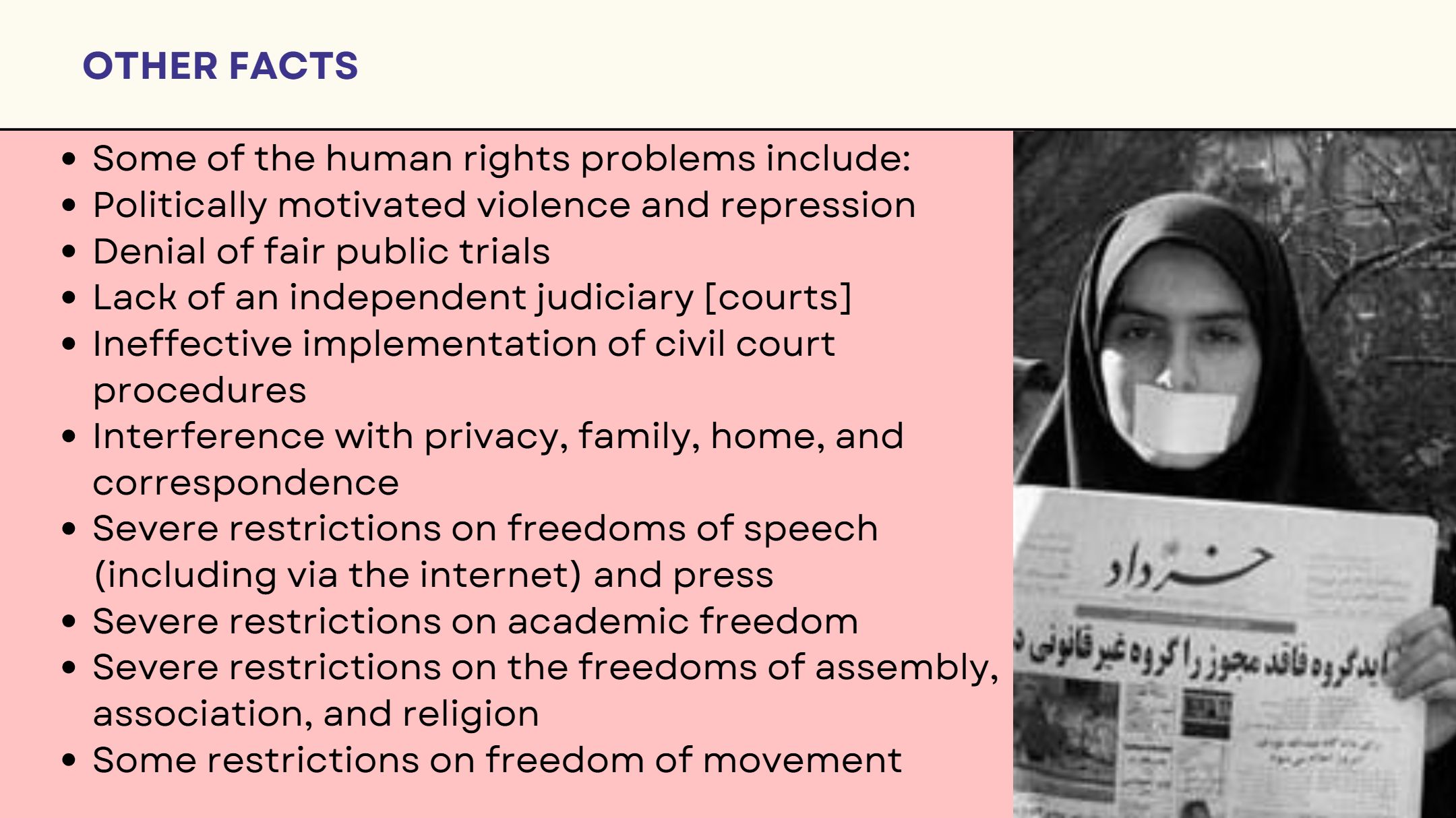
Which of the following are restrictions faced by citizens in Iran?
Restrictions on freedom of speech
Restrictions on academic freedom
Restrictions on freedom of assembly
No restrictions on freedom of movement
36
Open Ended
Describe two major human rights issues present in Iran.
37
38
Open Ended
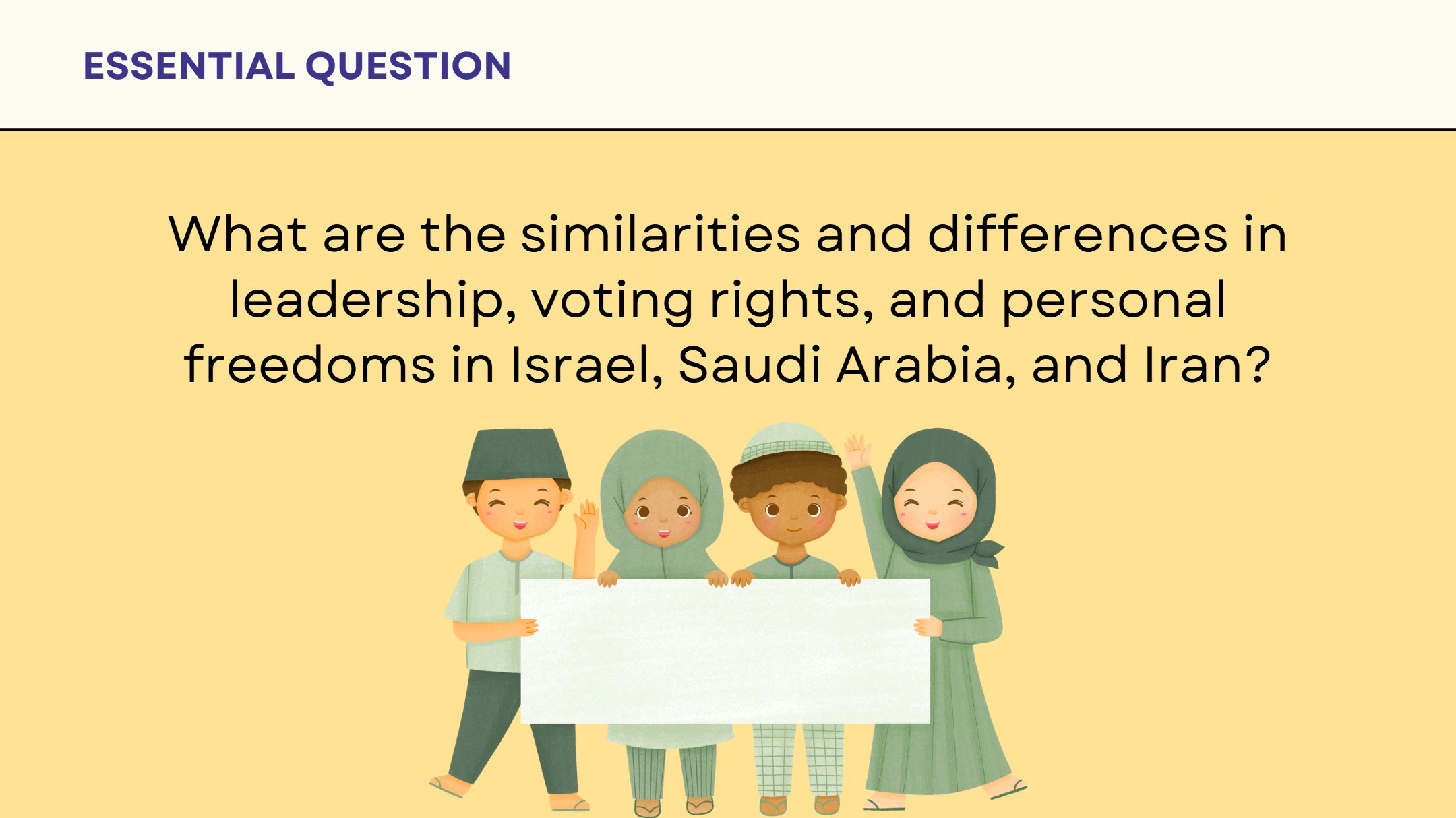
What are the similarities and differences in leadership, voting rights, and personal freedoms in Israel, Saudi Arabia, and Iran?
39
Open Ended
In all three of the Middle East governments studied, citizens could vote. Why then aren’t all three of the countries considered democracies?
40
Open Ended
Based on what you learned about Middle East governments, what is one question you still have or something you would like to know more about?
Show answer
Auto Play
Slide 1 / 40
SLIDE
Similar Resources on Wayground

34 questions
Unit 5: Houston and Lamar
Presentation
•
7th Grade
32 questions
Benchmark Two: Part 2
Presentation
•
7th Grade
35 questions
Battles of the American Revolution
Presentation
•
8th Grade
35 questions
Q2. Assessment 1 Practice: Quiz
Presentation
•
KG
36 questions
Spanish Colonization Pt. 2
Presentation
•
7th Grade
36 questions
Civil Rights Movement
Presentation
•
7th Grade
34 questions
australia
Presentation
•
7th Grade
39 questions
European Exploration Of Texas
Presentation
•
7th Grade
Popular Resources on Wayground
10 questions
Safety Day 2026 – Student Review

Quiz
•
9th Grade
21 questions
Continents and Oceans
Quiz
•
6th Grade
20 questions
Parts of Speech
Quiz
•
5th Grade
16 questions
Subject & Predicate
Quiz
•
5th Grade
25 questions
Multiplication Facts
Quiz
•
5th Grade
12 questions
Map Skills
Quiz
•
3rd Grade
22 questions
Continents and Oceans
Quiz
•
5th Grade
15 questions
Rounding Decimals
Quiz
•
5th Grade
Discover more resources for Social Studies
19 questions
Foundations of America
Quiz
•
6th - 8th Grade
10 questions
Exploring the Age of Exploration: Key Events and Figures

Interactive video
•
6th - 10th Grade
15 questions
Middle Ages of the Middle East Vocab List (CFA #2)
Quiz
•
6th - 8th Grade
10 questions
13 Colonies: Comparing Regions
Quiz
•
7th Grade
26 questions
SW Asia History
Quiz
•
7th Grade
16 questions
Causes of the Texas Revolution
Quiz
•
7th Grade
14 questions
Types of Government Overview (SW Asia)
Presentation
•
7th Grade
8 questions
DLT 1: Citizen Participations
Quiz
•
7th Grade