

US AND CANADA EXPLORATION

Presentation
•
Social Studies
•
6th - 8th Grade
•
Practice Problem
•
Easy

John Gibbon
Used 6+ times
FREE Resource
14 Slides • 4 Questions
1
By John Gibbon

2
What were the causes and effects of exploration in the United States and Canada?
Essential Question:
identify the reasons people wanted to move to the United States and Canada
Explain the causes and effects of exploration of the United States and Canada
Learners Can:
3
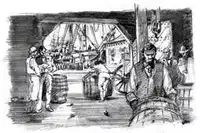
type of laborer who had a contract with their employer to repay a loan.
Indentured Servant
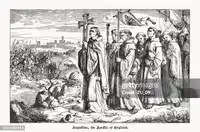
People sent on a religion mission.
Missionaries
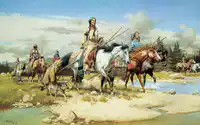
People who move from place to place without a permanent home
Nomads
Vocabulary
4
- Name of Author
5
Open Ended
What might be a pull factor that influenced early explorers from Europe to journey across the ocean to the Americas?
6
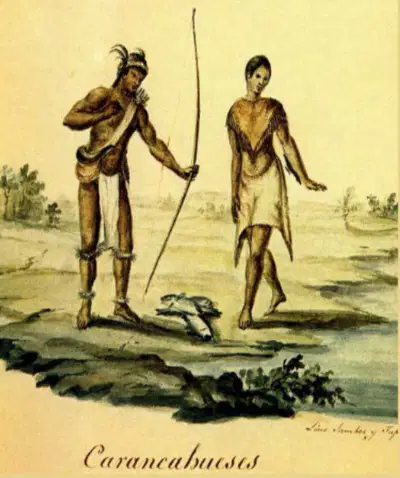
1/ The first people to settle in North America came from a land bridge that existed between Asia and Alaska.
2/ People could have migrated as nomads, people who move from place to place without a permanent home, from Central and South America.
Native Americans lived undisturbed until the 1500s.
Native Americans
Historians have two different theories about how Native Americans came to North America.
7
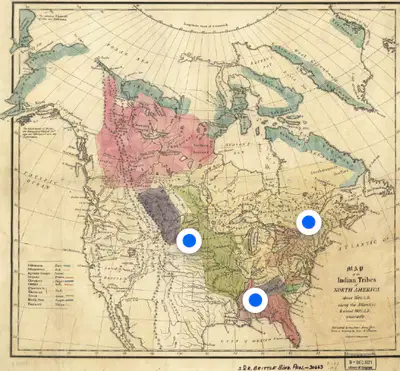
Since the land was dry and there were no trees on the Great Plains, tribes like the Sioux hunted for buffalo (food, clothing, and shelter).
In the southeast, native tribes like the Creeks, the Cherokees, and the Choctaws grew corn and other crops because the land was great for farming.
The colder temperatures and dry land made it hard to farm. so fishing and hunting for animals like deer were the ways the tribes of the northeast, like the Iroquois and the Algonquian, had to survive.
Native Americans
8
9
The Spanish were some of the first explorers of North America. They arrived in the mid-1500s in search of g___. The Spanish explored the southern part of the region and set up farms, cattle ranches, military posts, and religious buildings.
Spanish Exploration And Colonization
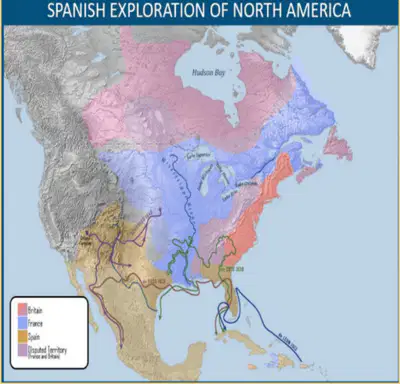
The colony of New Spain was created in 1535. This included lands in the present-day United States, Mexico, and the Caribbean. In many cases, Spanish explorers and settlers were able to mine and collect gold and silver to take back to Spain. They also took control of many natural resources and worked to convert Native Americans to the Roman Catholic religion, which was the primary religion in Spain.
10
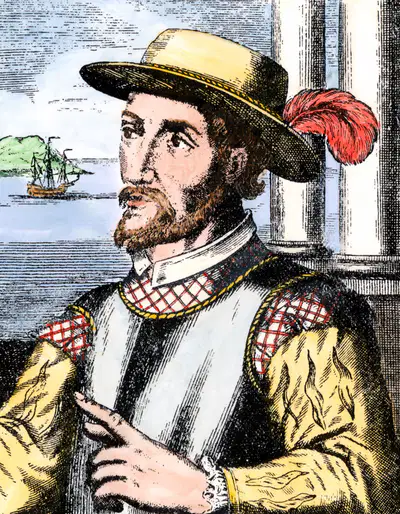
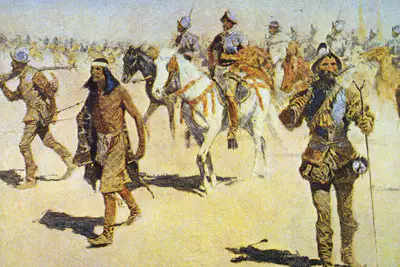
Tasked with finding the Fountain of Youth by the king of Spain. He found a land with flowering plants, and named in Florida.
He discovered the coast of Florida and explored inland toward the Florida Keys.
Ponce De Leon
Explored northern Mexico but later found Arizona and hoped to find gold,
Discovered the Grand Canyon. Later went to area known today as New Mexico
Francisco Vasquez de Coronado
11
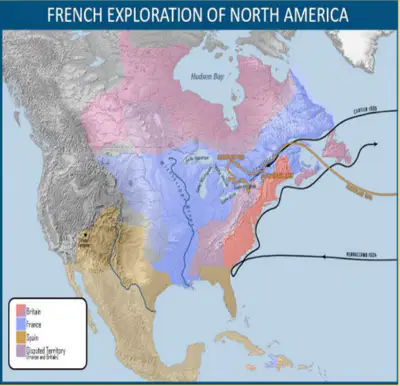
The French explored the northeastern part of North America, hoping to find a northwest passage to Asia. They built and set up trading posts and colonies around the Great Lakes. They were also greatly involved in the fishing and fur trading industries.
The colony of New France was created in 1534 in present-day northeast Canada. But the colony did not have a lot of settlers at first. The people who came to the area were mostly trappers, military, and missionaries, people sent on a religious mission.
Additionally, New France had trouble growing because of political issues happening at home in France.
French Exploration and Colonization
12
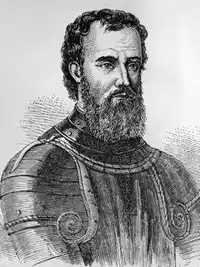
Tasked by the French king with locating a Northwest Passage to India that went around North America.
He landed on the coast of North Carolina, into New York Bay. He also made stops in present-day Rhode Island and Maine. He eventually sailed back to France.
Verrazzano
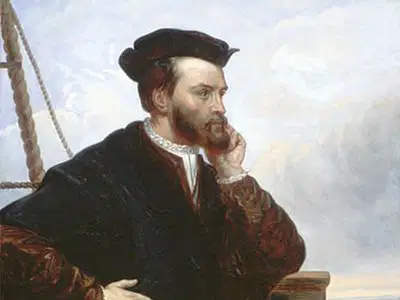
On his first voyage in 1534, Jacques Cartier landed in present-day Newfoundland. He then explored the Gulf of St. Lawrence.
He returned to France, after failing to find the Northwest Passage,
He came back, and explored more land in Canada along the St. Lawrence River.
Cartier
13
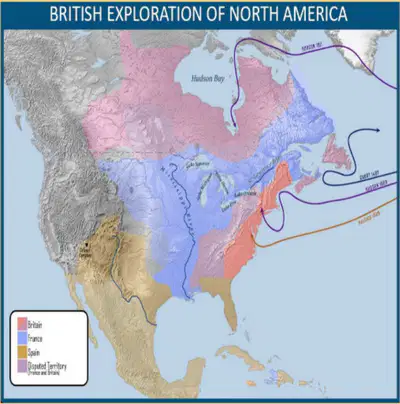
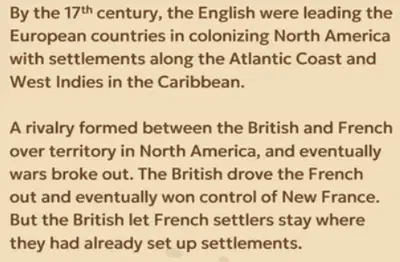
The British did not begin major exploration until the 1700s during the reign of Queen Elizabeth I. This was almost 200 years after Spain began looking for passages to Asia.
Does this mean they were unsuccessful?
British Exploration and Colonization
14
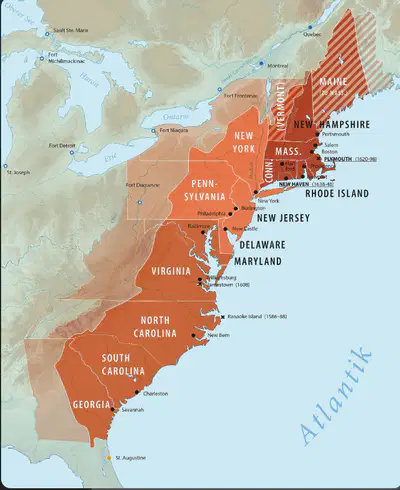
British Exploration and Colonization
15
Categorize
They wanted to find new trade routes.
The wanted to become rich with gold and silver.
The wanted to spread their religion.
They wanted to make friends with the natives.
They wanted to protect the rights of the native populations.
They wanted to learn about new religions.
They desired to control valuable resources.
Read each statement about WHY Europeans wanted to colonize North America.
Decide whether each statement is TRUE or FALSE.
Place each statement in the appropriate category.
16
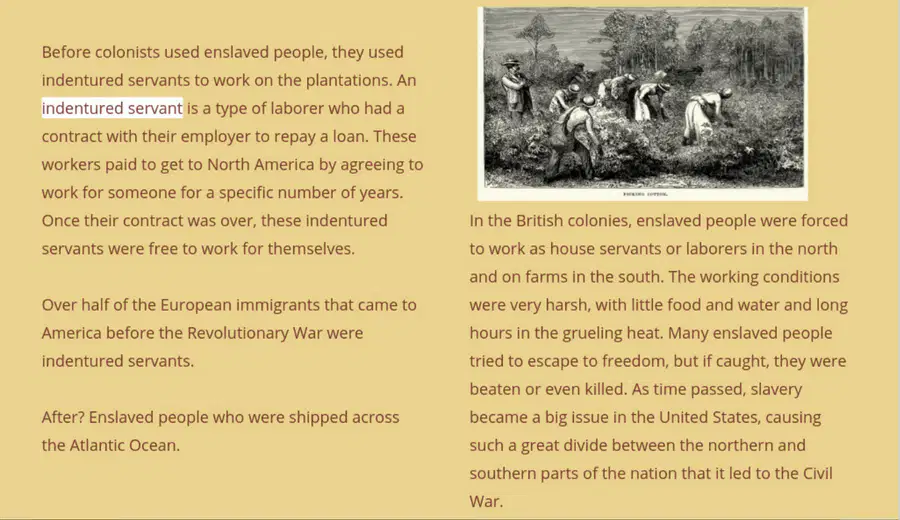
Indentured Servants and Slavery
Replace this with your body text. Duplicate this text as many times as you would like. All provided templates can be reused multiple times. Wish you a good day.
Happy teaching!
17
Multiple Choice
What caused slavery to occur during the colonization of North America?
a. The settlers wanted free labor for their farms.
b. The settlers needed the enslaved people to fight in wars.
c. The settlers thought the enslaved people would create more businesses in the colonies.
18
Reorder
Place the events in chronological order.
Native Americans lived undisturbed until the 1500s.
Once European colonization began, Native Americans throughout Canada and the United States were forced off of their lands.
European countries began setting up colonies in North America in search of wealth and power.
Colonists used indentured servants to work on their plantations.
Indentured servants were replaced with enslaved people who were shipped across the Atlantic Ocean.
By John Gibbon
Show answer
Auto Play
Slide 1 / 18
SLIDE
Similar Resources on Wayground

16 questions
Westward Expansion: Manifest Destiny
Presentation
•
5th - 8th Grade
14 questions
Greek Mythology Intro
Presentation
•
7th Grade
12 questions
SW Asia History DT#5: Continuing Conflicts and Change
Presentation
•
7th Grade
15 questions
Citizenship
Presentation
•
6th - 8th Grade
11 questions
Judicial Branch Review
Presentation
•
6th - 8th Grade
13 questions
Locke & Montesquieu: Review
Presentation
•
7th - 8th Grade
12 questions
Lesson 8 Intro - The Pharaohs
Presentation
•
6th - 8th Grade
13 questions
Intro to Mythology
Presentation
•
6th - 8th Grade
Popular Resources on Wayground
10 questions
How much do you know about our Portrait of an Eagle?

Quiz
•
10th Grade
10 questions
Fast Food Slogans
Quiz
•
6th - 8th Grade
21 questions
Continents and Oceans
Quiz
•
6th Grade
20 questions
Parts of Speech
Quiz
•
5th Grade
16 questions
Subject & Predicate
Quiz
•
5th Grade
25 questions
Multiplication Facts
Quiz
•
5th Grade
12 questions
Map Skills
Quiz
•
3rd Grade
22 questions
Continents and Oceans
Quiz
•
5th Grade
Discover more resources for Social Studies
10 questions
Exploring the Age of Exploration: Key Events and Figures

Interactive video
•
6th - 10th Grade
13 questions
13 Colonies Map Quiz
Quiz
•
6th - 8th Grade
20 questions
13 original colonies
Quiz
•
8th Grade
10 questions
Causes of the American Revolution
Quiz
•
8th Grade
19 questions
Unit 3 Spanish Colonial Era
Quiz
•
7th Grade
12 questions
7 Continents and 5 Major Oceans
Quiz
•
6th Grade
10 questions
Pillars of Free Enterprise
Quiz
•
6th - 8th Grade
26 questions
QA 1 Review
Quiz
•
6th - 8th Grade