

Identifying Themes in Fiction

Presentation
•
English
•
9th - 12th Grade
•
Practice Problem
•
Medium
+13
Standards-aligned

Elizabeth Mitchener
Used 1+ times
FREE Resource
18 Slides • 18 Questions
1
2
3
Multiple Choice
Which of the following best describes the significance of exploring themes in literature?
It helps readers uncover deeper meanings in stories.
It allows readers to memorize character names.
It focuses only on the plot events.
It makes stories longer and more complicated.
4
Open Ended
Why do you think it is important to identify themes in fiction?
5
6
Multiple Choice
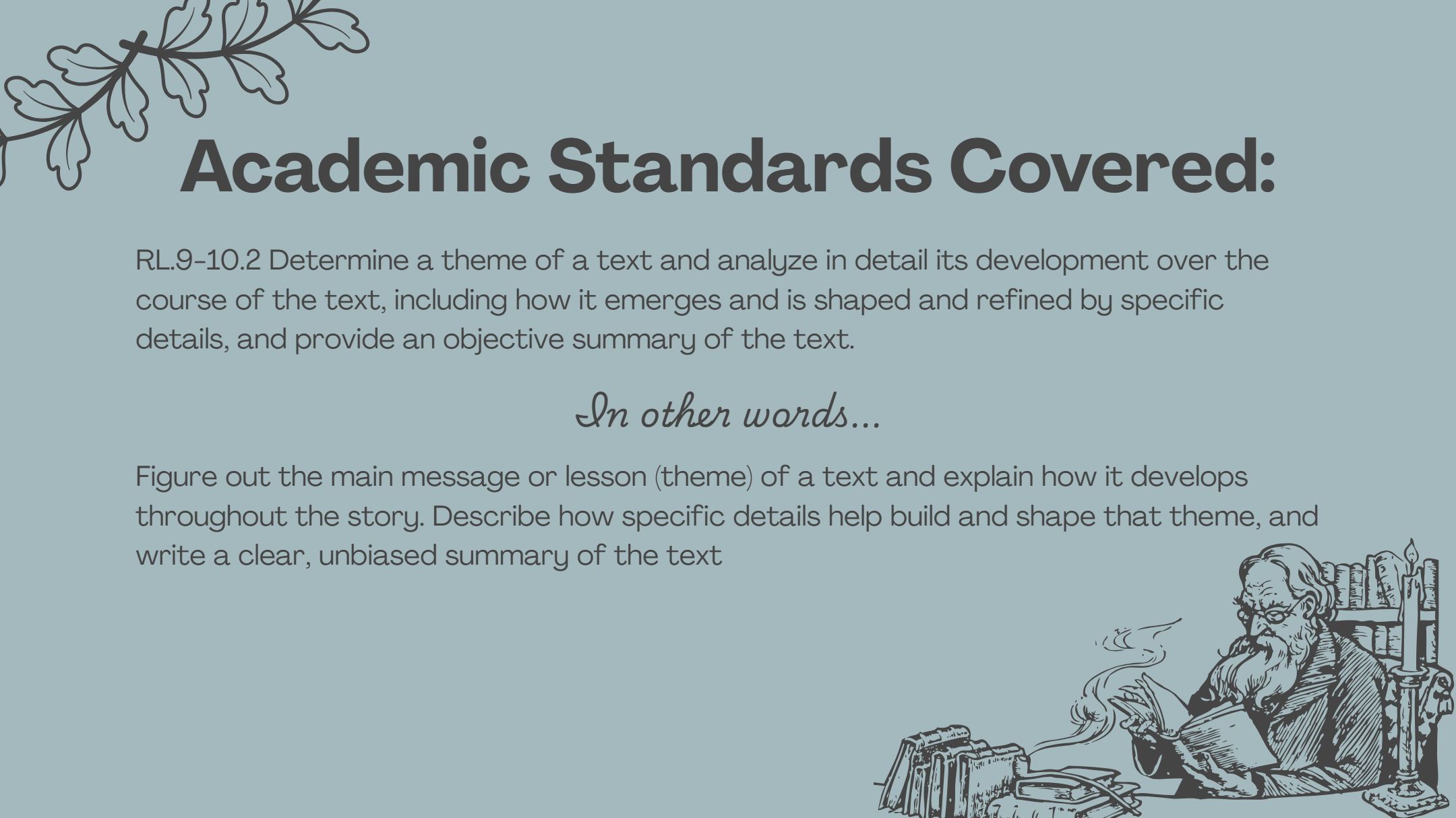
Which of the following best describes the main purpose of analyzing a theme in a text, as outlined in the academic standards?
To summarize the text subjectively
To identify the author’s favorite character
To determine the main message and explain how it develops
To memorize every detail in the story
7
8
Multiple Choice
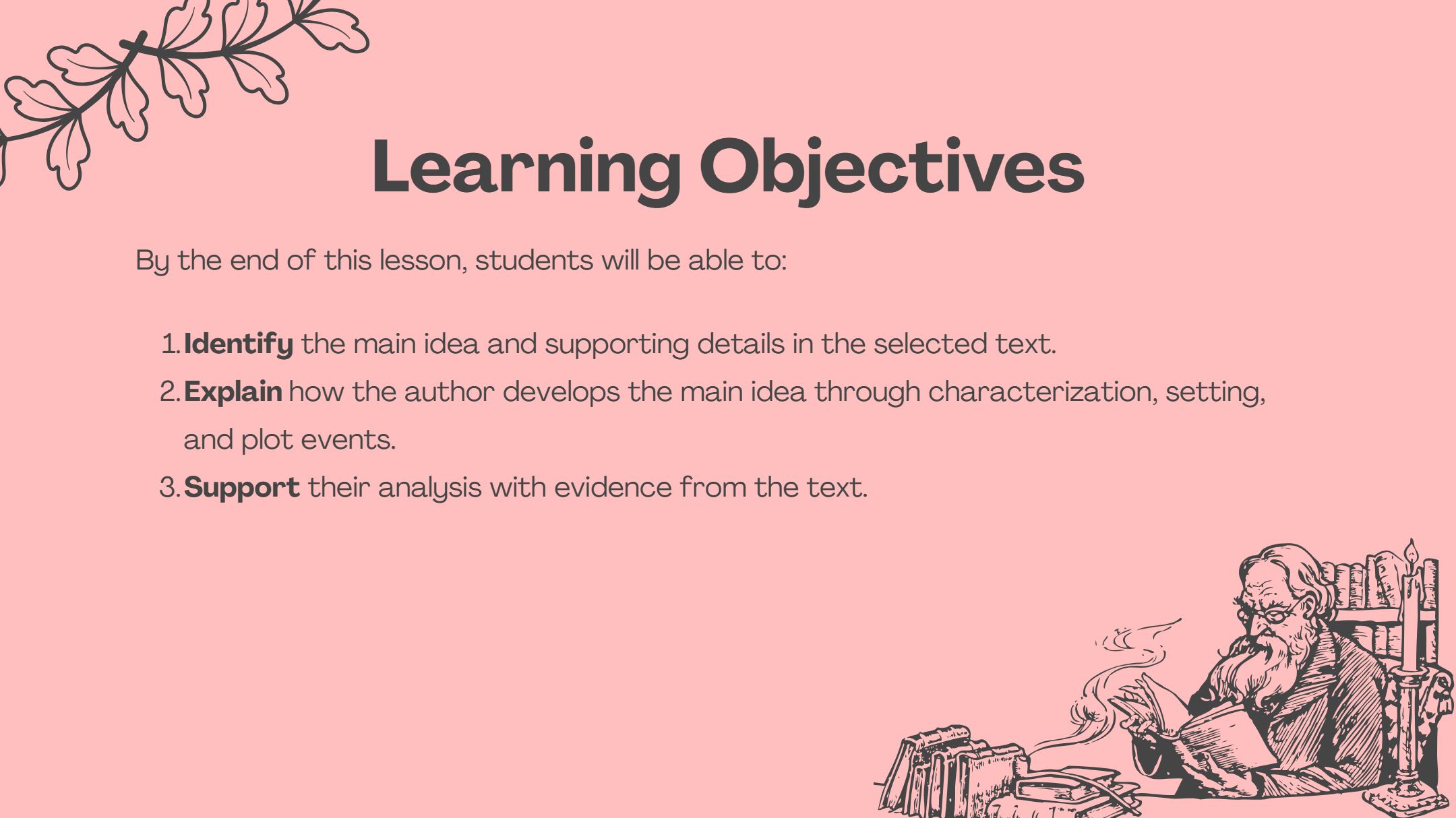
By the end of the lesson, what are students expected to be able to do according to the learning objectives?
Write a story from memory
Identify the main idea, explain its development, and support analysis with evidence
Summarize the author's biography
List all the characters in the text
9
10
11
Open Ended
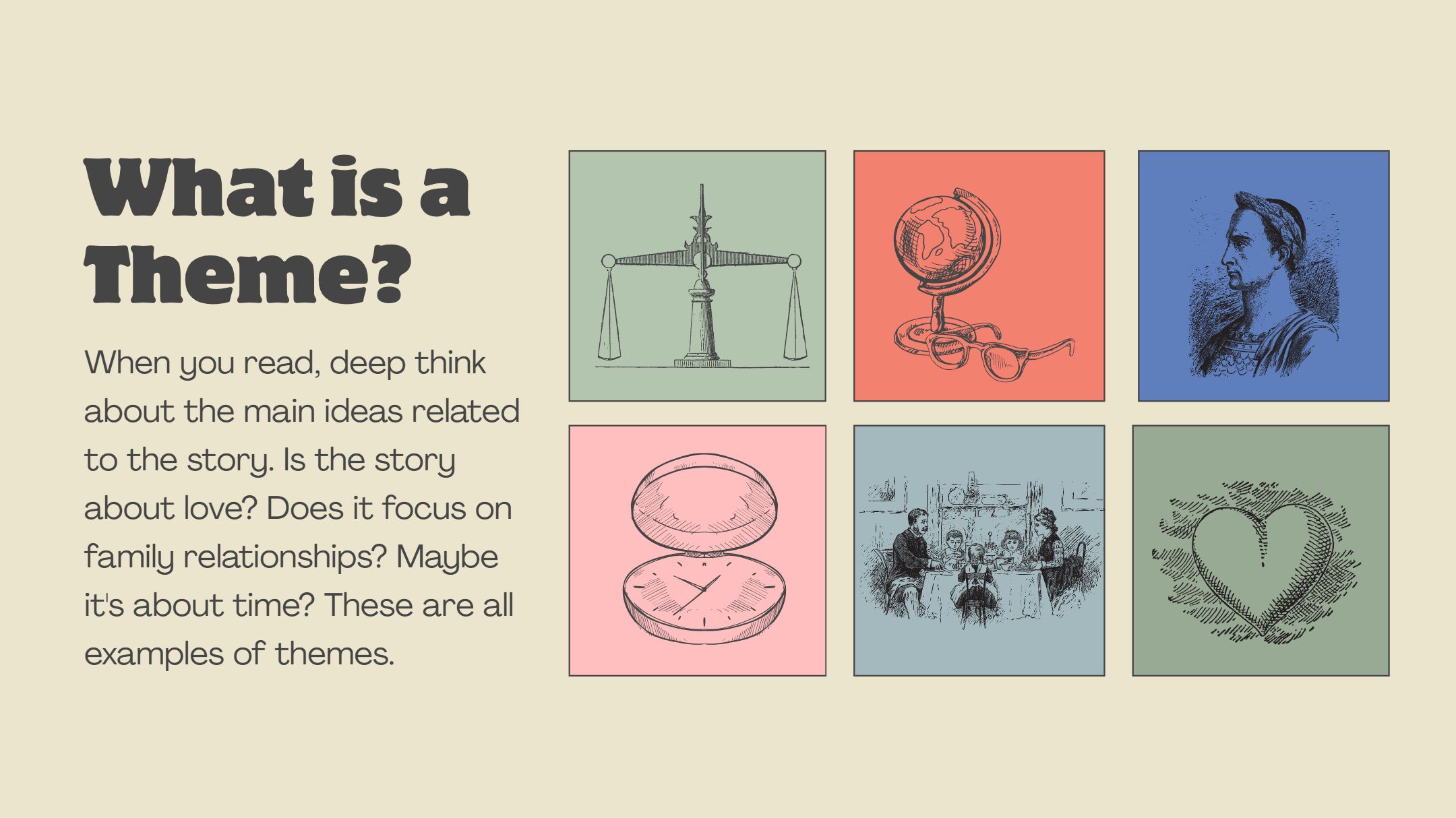
What are some examples of themes mentioned in the lesson, and how do they help shape a story?
12
13
Fill in the Blanks
Themes are the
14
15
Multiple Select
Select all the ways an author can develop the main idea or theme in a story.
Through characterization
By using setting and plot events
By including unrelated facts
By directly stating the theme
16
Multiple Choice
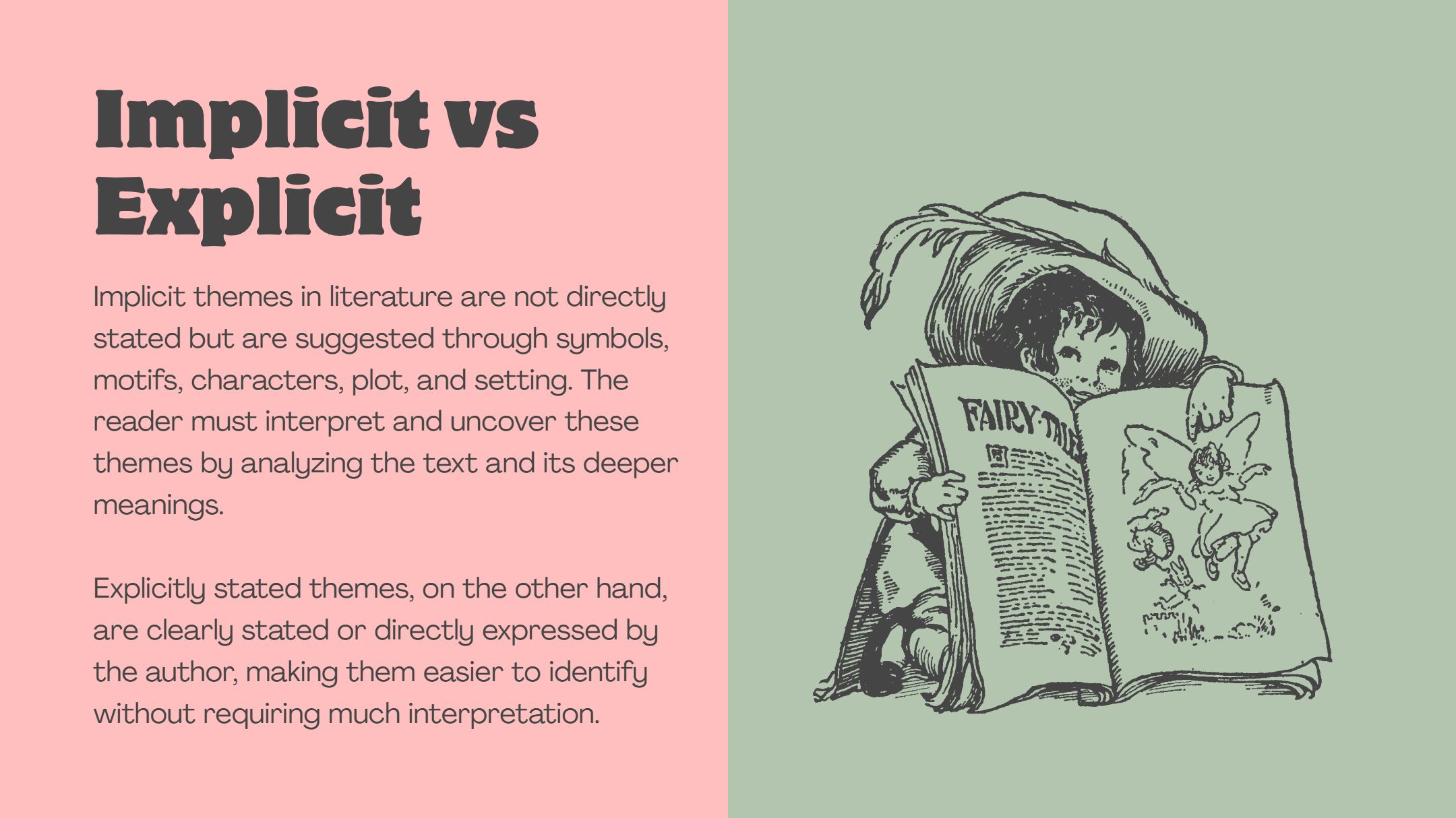
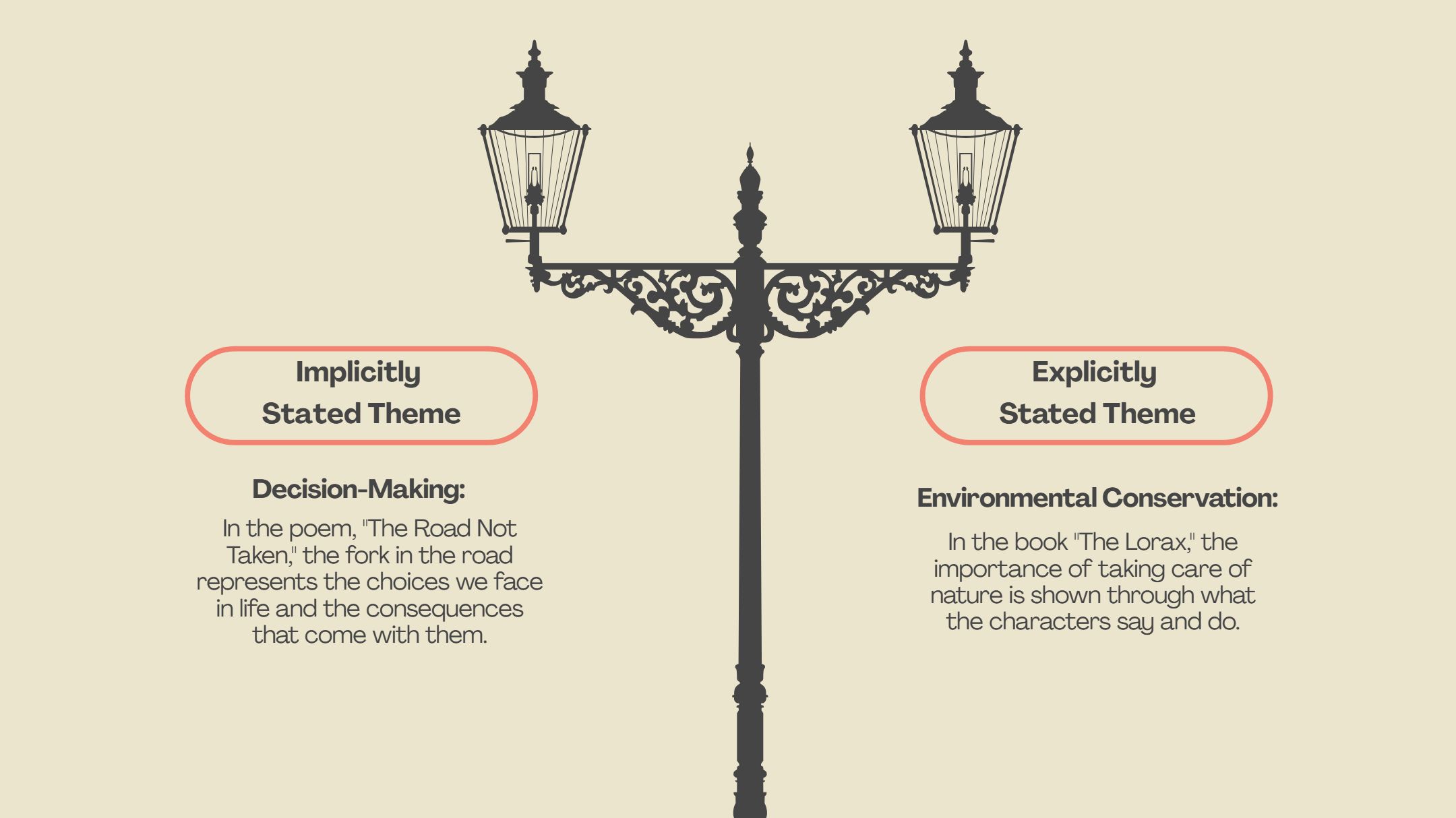
Which of the following statements about implicit and explicit themes is correct?
Implicit themes are always directly stated by the author.
Explicit themes require deep interpretation by the reader.
Implicit themes are suggested through symbols and require interpretation.
Explicit themes are never clearly stated in the text.
17
18
Multiple Choice
Which of the following best describes an implicitly stated theme?
A theme that is directly stated by the author.
A theme that is revealed through characters' actions and symbols.
A theme that is explained in the introduction.
A theme that is only found in poetry.
19
20
Multiple Choice
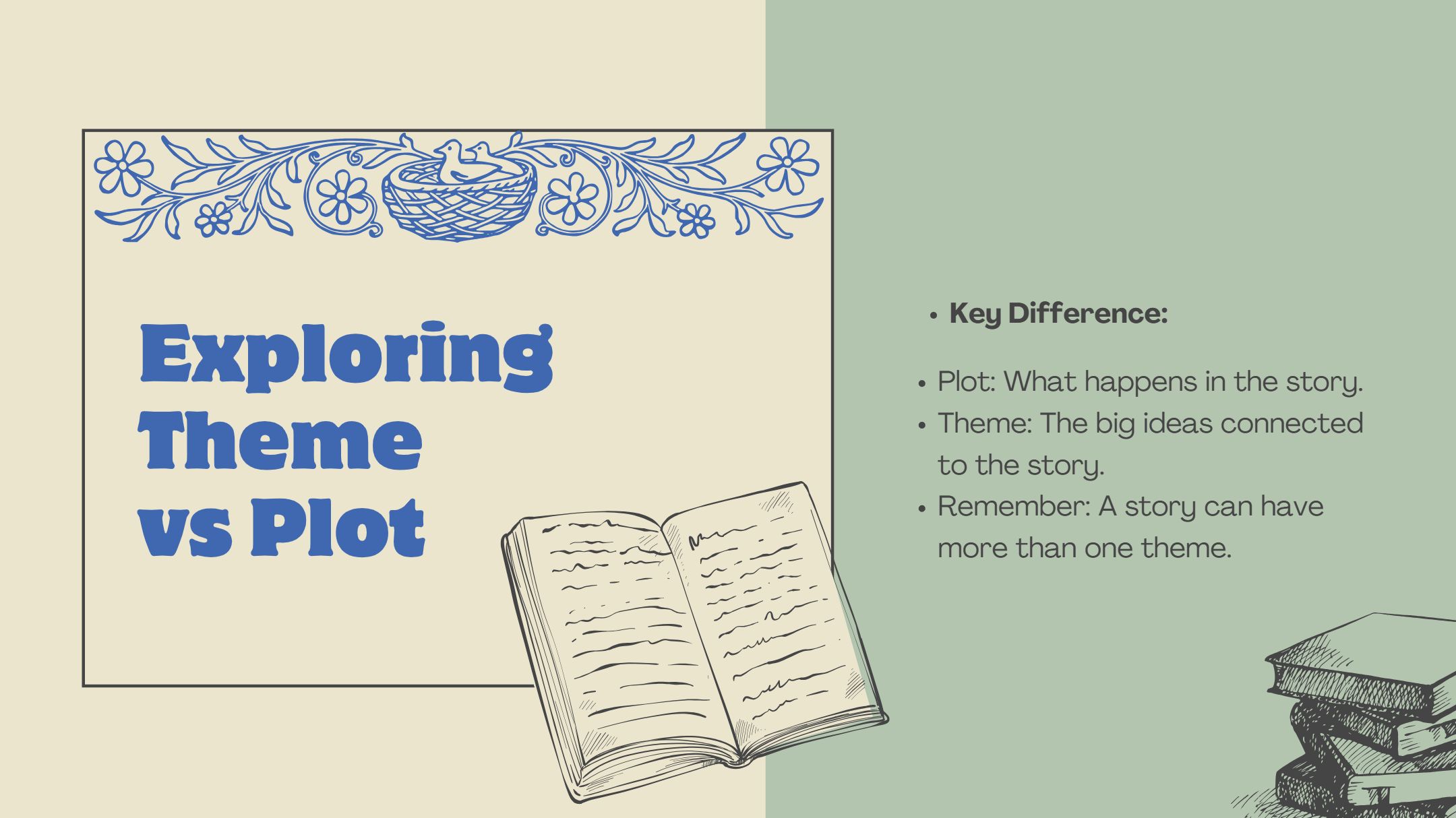
What is the key difference between theme and plot in a story?
Theme is what happens in the story; plot is the big idea.
Plot is the sequence of events; theme is the underlying message or big idea.
Theme and plot mean the same thing.
Plot is only found in non-fiction.
21
22
Open Ended
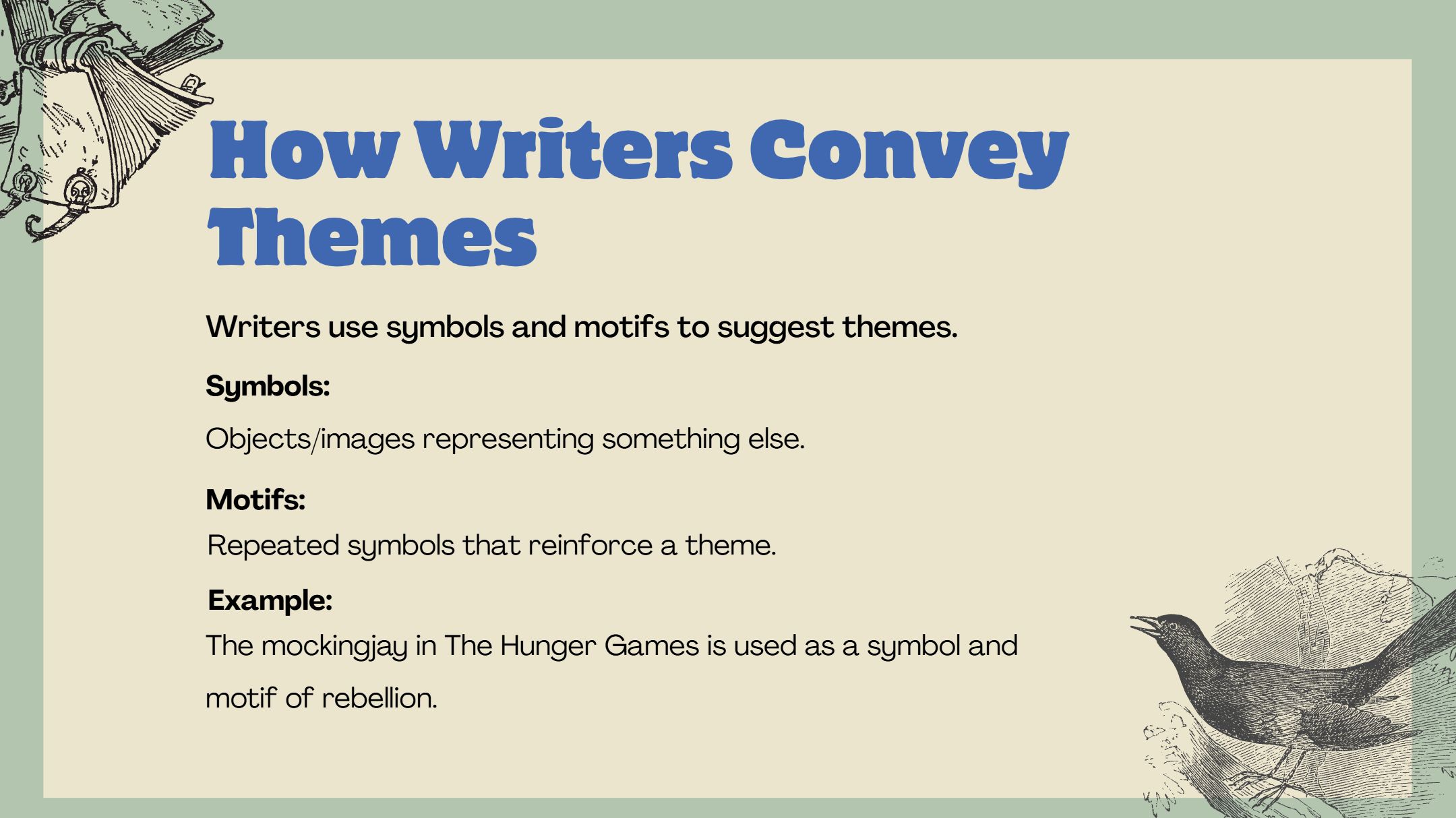
How do symbols and motifs help writers convey themes in literature?
23
24
Multiple Select
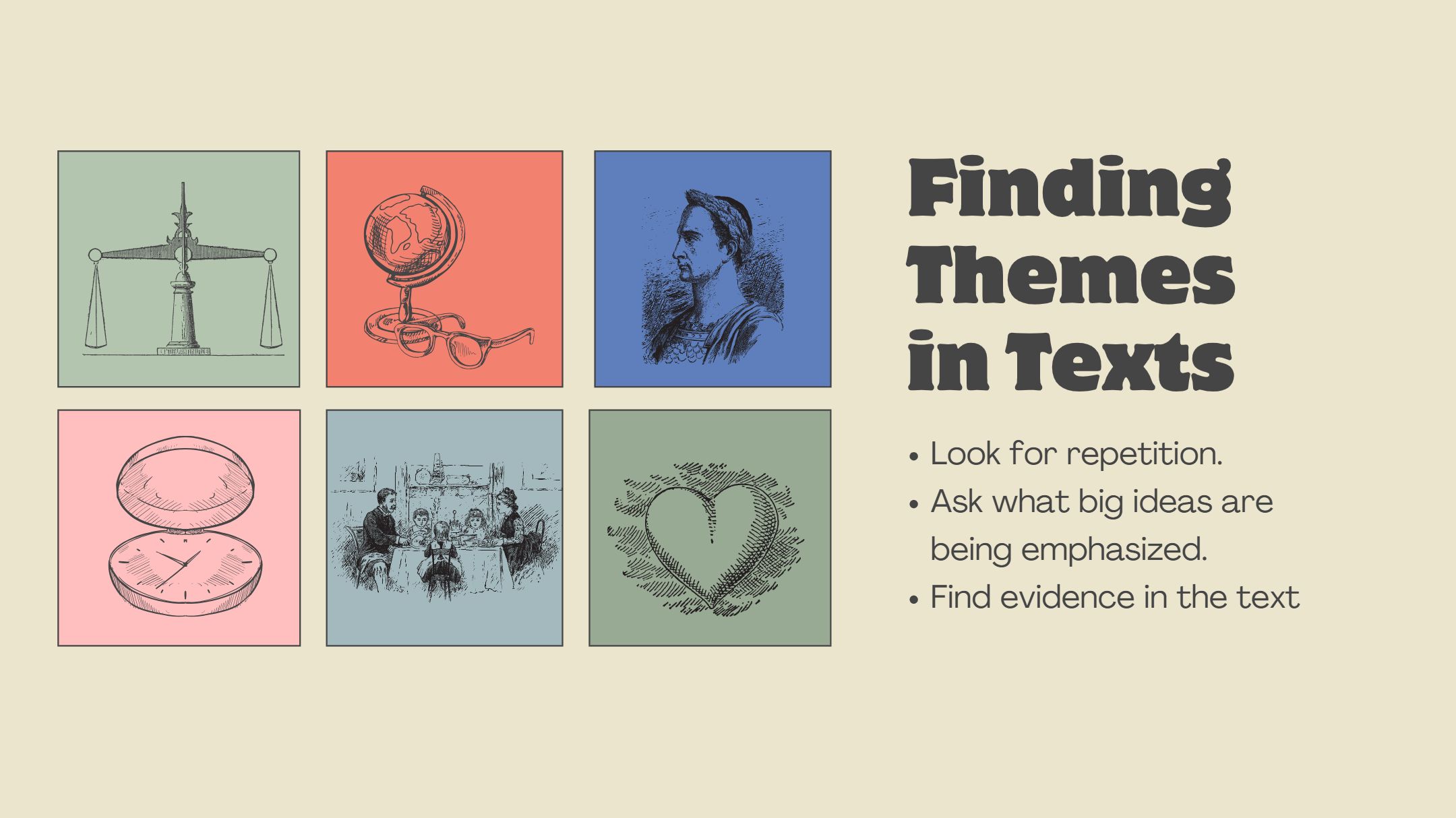
Which of the following strategies can help you find themes in a text?
Look for repetition.
Ask what big ideas are being emphasized.
Ignore the characters' actions.
Find evidence in the text.
25
26
Multiple Choice
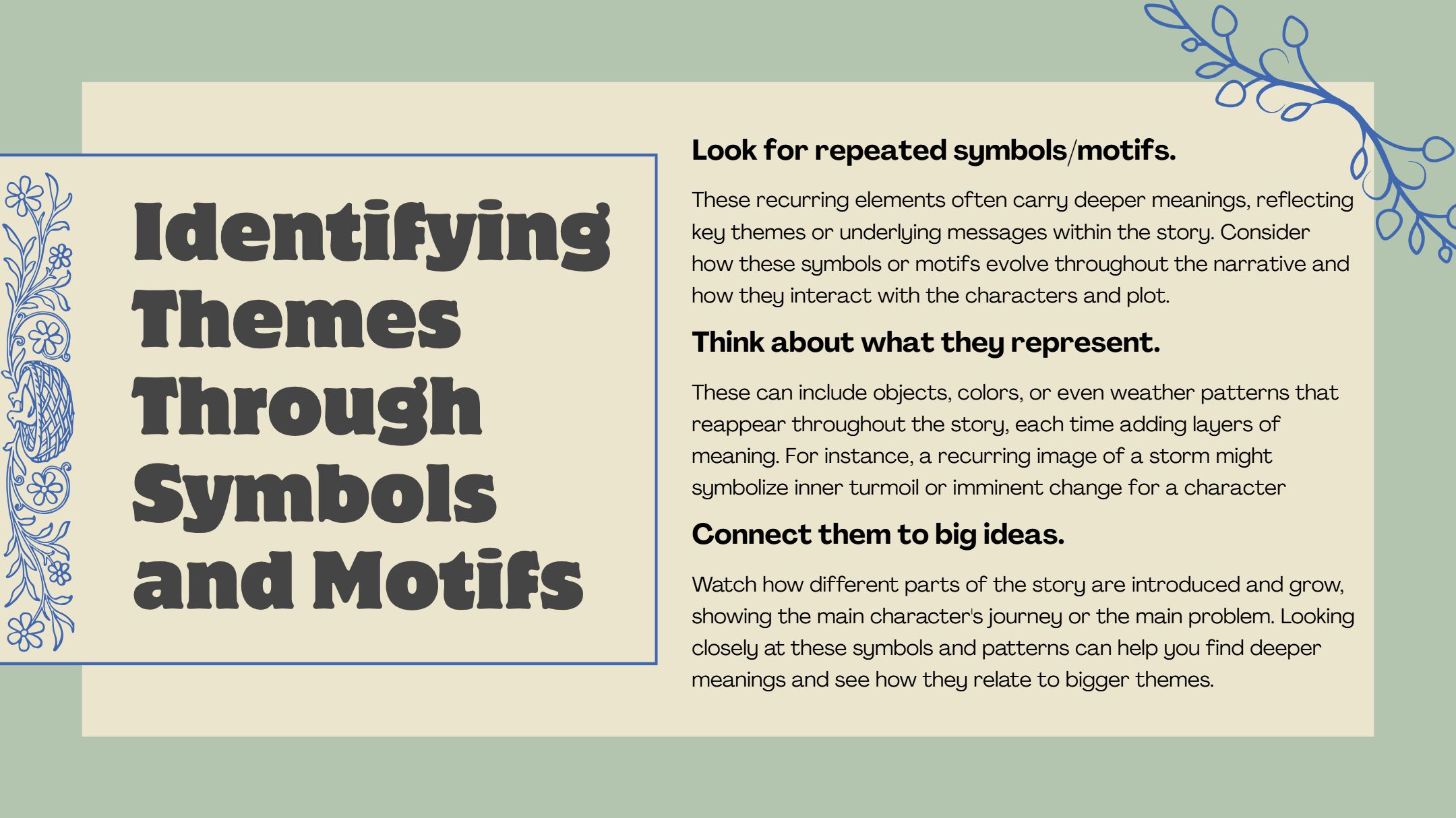
A recurring image of a storm in a story might symbolize inner turmoil or ___ change for a character.
avoidable
inexplicable
nonexistent
27
28
Open Ended
In what ways can a character's growth or change reflect the theme of a story?
29
30
Multiple Choice
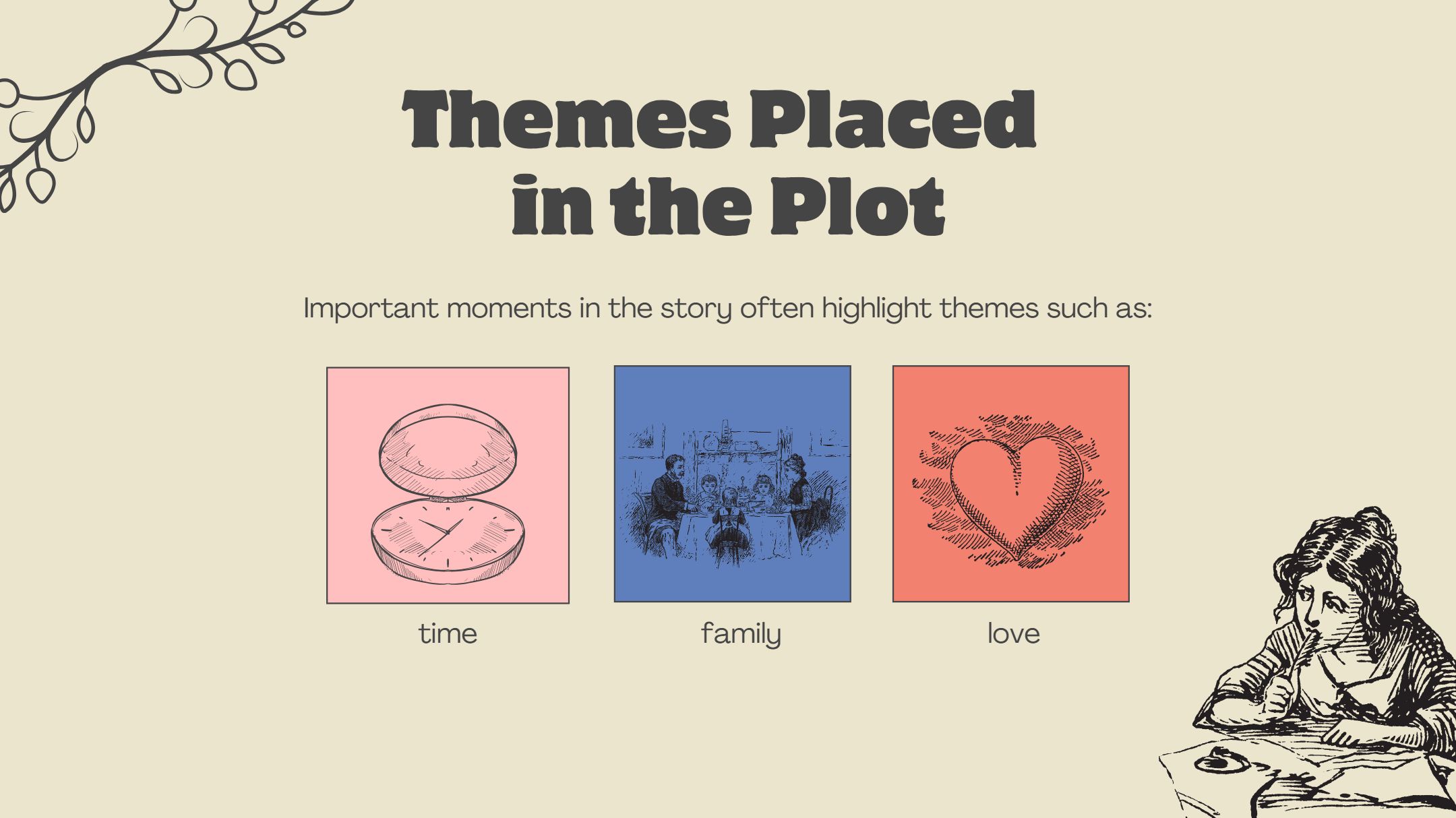
Which of the following is NOT mentioned as a theme that can be highlighted in a story's plot?
Time
Family
Love
Adventure
31
32
Open Ended
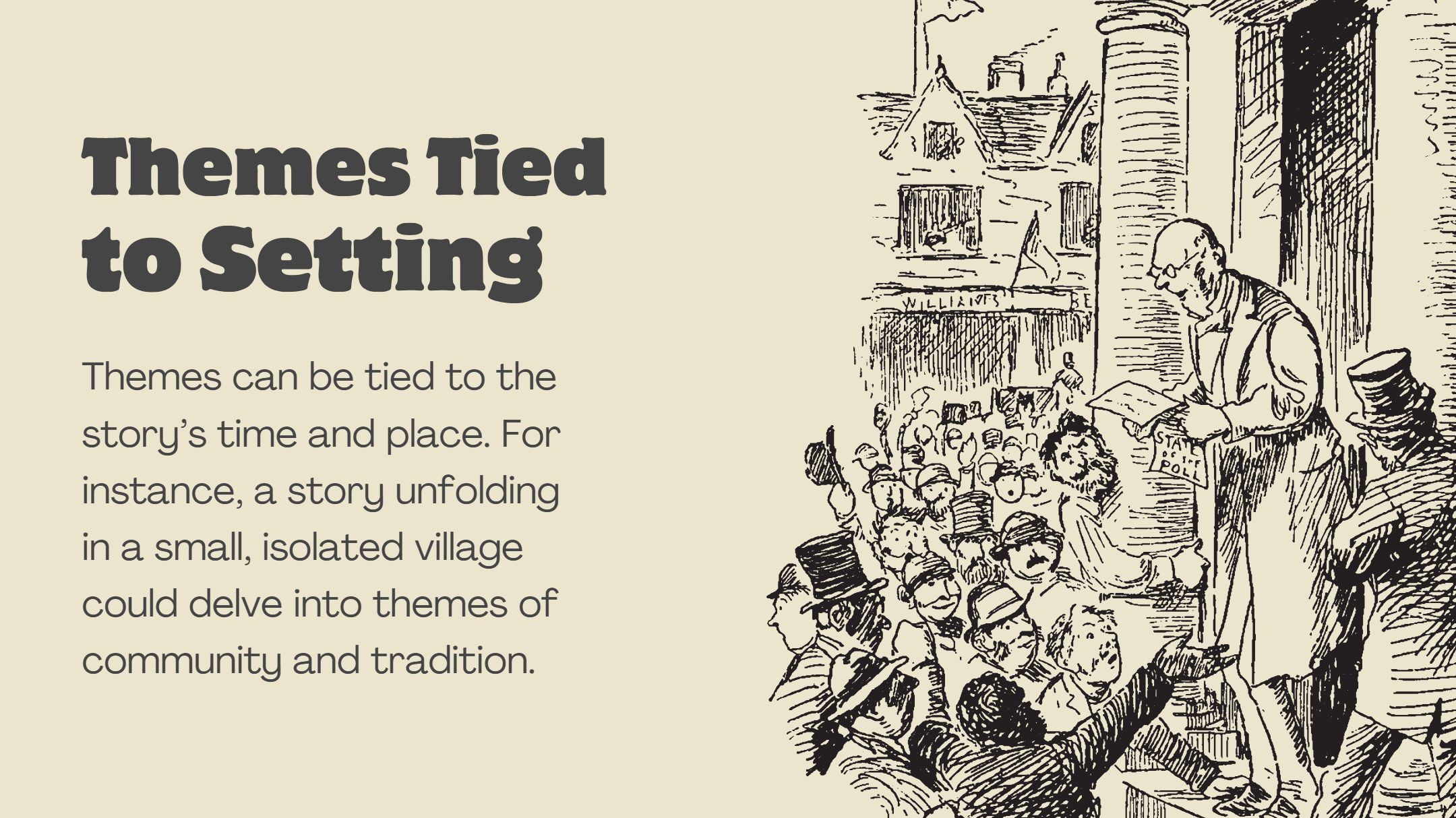
How can the setting of a story influence its themes?
33
34
Fill in the Blanks
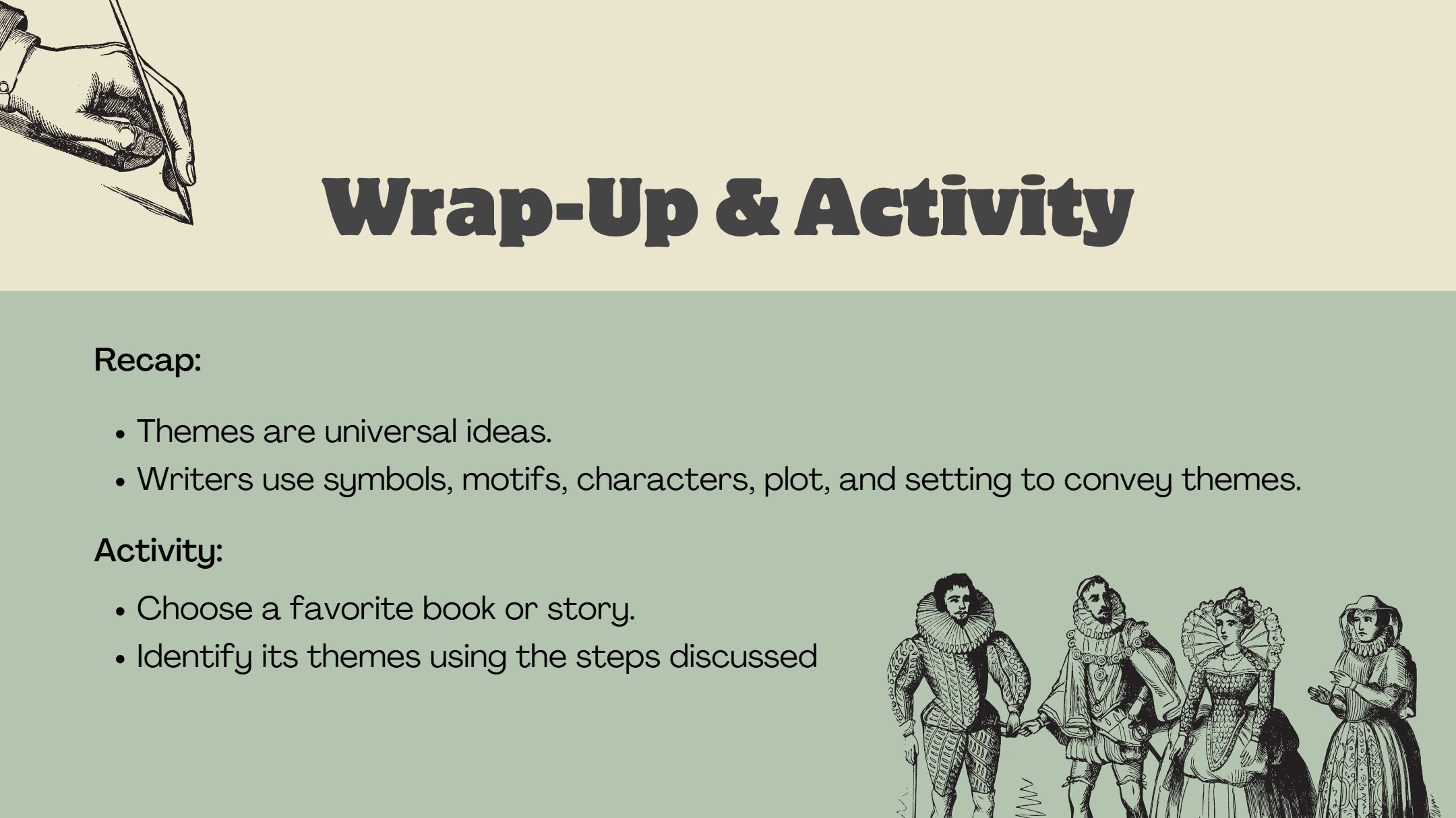
Themes are universal
35
Multiple Choice
According to the recap, which of the following are ways writers convey themes in their stories?
Symbols
Motifs
Characters
All of the above
36
Show answer
Auto Play
Slide 1 / 36
SLIDE
Similar Resources on Wayground

32 questions
Parallel Structure
Presentation
•
9th - 11th Grade
31 questions
Preterite of -ir Stem-Changing Verbs
Presentation
•
9th - 12th Grade
30 questions
Eukaryotic Cell Structure
Presentation
•
9th - 12th Grade
30 questions
Properties of Quadrilaterals
Presentation
•
9th - 12th Grade
30 questions
Evidence of Evolution
Presentation
•
9th - 12th Grade
30 questions
Evidence of Evolution
Presentation
•
9th - 12th Grade
29 questions
INFINITIVES AND INFINITIVE PHRASES
Presentation
•
9th - 11th Grade
28 questions
Inference and Evidence Review
Presentation
•
9th - 12th Grade
Popular Resources on Wayground
10 questions
How much do you know about our Portrait of an Eagle?

Quiz
•
10th Grade
10 questions
Fast Food Slogans
Quiz
•
6th - 8th Grade
21 questions
Continents and Oceans
Quiz
•
6th Grade
20 questions
Parts of Speech
Quiz
•
5th Grade
16 questions
Subject & Predicate
Quiz
•
5th Grade
25 questions
Multiplication Facts
Quiz
•
5th Grade
12 questions
Map Skills
Quiz
•
3rd Grade
22 questions
Continents and Oceans
Quiz
•
5th Grade
Discover more resources for English
15 questions
Simple, compound, and complex sentences
Quiz
•
9th Grade
16 questions
Ethos, Pathos, Logos Practice
Quiz
•
9th Grade
20 questions
Context clues
Quiz
•
10th Grade
20 questions
Parts of Speech Review
Quiz
•
9th Grade
15 questions
ENG 10 Grammar: 18.1 Prepositions or Adverbs P. 34
Quiz
•
10th Grade
10 questions
Making Inferences and Drawing Conclusions

Interactive video
•
6th - 10th Grade
10 questions
Crafting an Effective Thesis Statement
Interactive video
•
6th - 10th Grade
10 questions
Exploring Coordinating Conjunctions with FANBOYS
Interactive video
•
6th - 10th Grade