

DE Chapter 4 Safe Driving Rules and Regulations

Presentation
•
Health Sciences
•
10th Grade
•
Hard

Diane Nelson
FREE Resource
40 Slides • 28 Questions
1

2

3
Multiple Choice
Which of the following speed limits is correct for school zones according to the rules?
25mph
35mph
50mph
65mph
4
Open Ended
Why is it important to follow speed control rules while driving?
5

6
Multiple Choice
Which of the following situations requires you to slow down according to NJ speed limits?
Narrow or winding roads
Normal road conditions
Clear weather with no hazards
Dry and straight highways
7

8
Multiple Choice
What is the purpose of Safe Corridors on highways?
To designate areas with higher crash rates and double fines
To allow higher speed limits
To restrict truck traffic
To provide scenic routes
9

10
Open Ended
Describe the meaning of different lane markings and how they relate to passing rules.
11

12
Multiple Choice
You are driving on a highway with more than one lane going in the same direction. Under what circumstances are you allowed to pass to the right?
When the motorist ahead is making a left turn and there is room to pass
When you are in a hurry
When you want to avoid traffic
Whenever you feel it is safe
13

14
Fill in the Blanks
Type answer...
15

16
Multiple Choice
According to the rules for keeping to the right, what should you do when driving on a highway with multiple lanes?
Stay in the right lane unless passing or making a left turn
Drive in any lane you prefer
Always drive in the left lane
Switch lanes frequently
17

18
Multiple Choice
Which of the following vehicles must you always yield to according to the rules of the road?
Emergency vehicles with lights or sirens on
Bicycles on the road
Vehicles behind you
Pedestrians on the sidewalk
19

20
Multiple Choice
What are the possible consequences for motorists who fail to stop for pedestrians in a crosswalk?
Up to $500 fine, up to 25 days in jail, community service, loss of driving privileges up to 6 months, and 2 points
Only a verbal warning
A $50 fine and no other penalties
Mandatory driving school only
21

22
Fill in the Blanks
Type answer...
23

24
Open Ended
Explain the difference between a controlled and an uncontrolled intersection. Provide examples of how a driver should behave at each type.
25

26
Multiple Select
Which of the following are characteristics of a blind intersection?
Buildings blocking view
Parked vehicles blocking view
Bushes blocking view
Clear visibility in all directions
27

28
Multiple Choice
When approaching a traffic circle, what should a driver do if unsure about the right of way?
Yield to the driver on the right
Speed up to enter quickly
Always stop regardless of traffic
Ignore all signs
29

30
Multiple Choice
When must you yield to other motorists at a multi-way stop?
When you arrive at the same time as a motorist on your right
When you are the first to arrive
When you are in a hurry
When you are turning right
31
32
Multiple Select
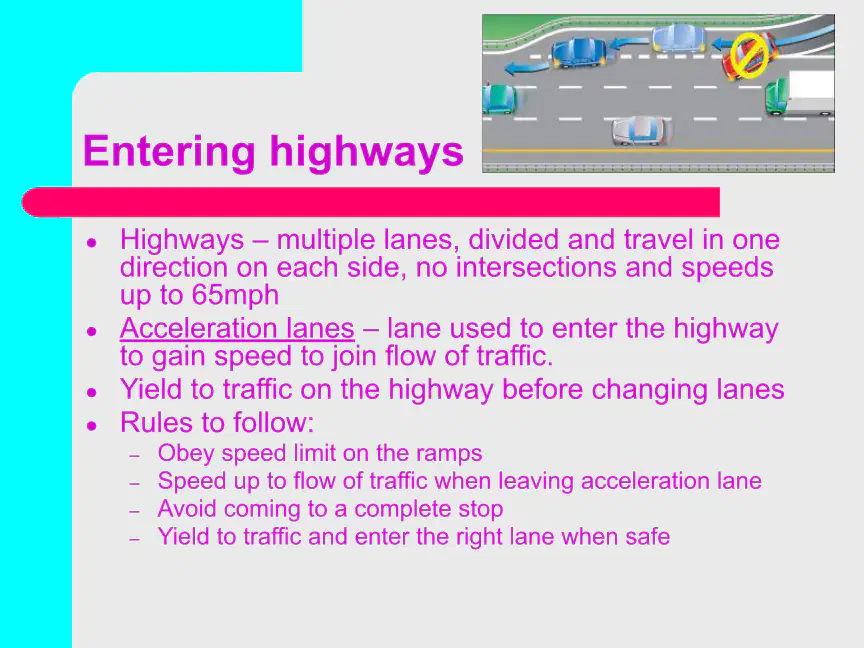
Which of the following are rules to follow when entering highways?
Obey speed limit on the ramps
Come to a complete stop before merging
Speed up to the flow of traffic when leaving acceleration lane
Yield to traffic and enter the right lane when safe
33
34
Fill in the Blanks
Type answer...
35

36
Open Ended
Explain how you should adjust your driving when approaching curves and interchanges on highways.
37

38
Multiple Choice
What is the main purpose of a cloverleaf interchange?
To allow vehicles to change directions without stopping
To provide parking spaces on highways
To reduce the number of traffic lights
To slow down traffic
39

40
Multiple Choice
According to NJ law, when is a right turn on red allowed?
Unless a 'No Turn on Red' sign is posted
Only when there is no traffic
Never allowed
Only during daylight hours
41

42
Multiple Choice
When making a right turn, what should you avoid doing?
Swinging outward into another lane
Staying close to the right
Checking your mirrors
Slowing down before the turn
43

44
Fill in the Blanks
Type answer...
45

46
Open Ended
Explain the steps a driver should take when approaching an intersection with a stop sign and multiple turning options, as shown in the diagram.
47

48
Multiple Choice
What should you do if the traffic light turns yellow as you approach an intersection?
Slow down and prepare to stop unless too close to stop safely
Speed up to beat the light
Stop immediately, even if in the intersection
Ignore the light and continue
49

50
Multiple Select
In which of the following situations must a motorist stop?
At a stop sign
When a school bus is letting off kids with red lights flashing
When a pedestrian is in a crosswalk
When the light is green
51

52
Multiple Choice
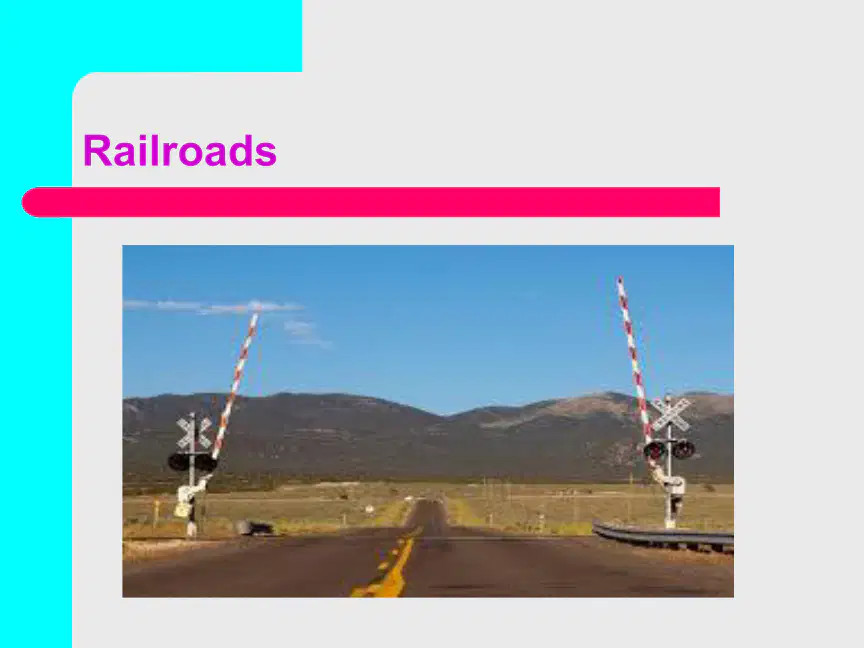
Which of the following is NOT a warning device at a railroad crossing?
Speed bumps
Flashing lights
Gates with flashing lights
Bells
53
54

55

56
57

58

59

60

61

62

63

64
65
66
67
Open Ended
After learning about speed control and legal speed limits, what questions do you still have or what would you like to know more about regarding safe driving rules and regulations?
68
Multiple Choice
What are the different speed limits for various types of roads and zones as described in the lesson?
25mph for school zones, business or residential districts; 35mph for suburban business & residential districts; 50mph for non-posted rural roads; 55mph for certain state highways and interstates; 65mph for certain state highways.
35mph for school zones, business or residential districts; 25mph for suburban business & residential districts; 65mph for non-posted rural roads; 50mph for certain state highways and interstates; 55mph for certain state highways.
50mph for school zones, business or residential districts; 25mph for suburban business & residential districts; 35mph for non-posted rural roads; 65mph for certain state highways and interstates; 55mph for certain state highways.
65mph for school zones, business or residential districts; 55mph for suburban business & residential districts; 25mph for non-posted rural roads; 35mph for certain state highways and interstates; 50mph for certain state highways.
Show answer
Auto Play
Slide 1 / 68
SLIDE
Similar Resources on Wayground

62 questions
BMIIIBC RL.10.1, 2, 3, 4, 5, The Raven
Presentation
•
10th Grade
62 questions
REVIEW Grade 10_Thermal Properties
Presentation
•
10th Grade
63 questions
Biogeochemical Cycles Review
Presentation
•
9th Grade
63 questions
Form 3 Reading Practice
Presentation
•
9th Grade
63 questions
Spreadsheet Lesson Ark
Presentation
•
10th Grade
68 questions
Part 5 EOC Review
Presentation
•
10th Grade
62 questions
S221 Sem 1 DBA Review
Presentation
•
10th Grade
62 questions
Unit 2 - Google Ads
Presentation
•
10th Grade
Popular Resources on Wayground
6 questions
Secondary Safety Quiz
Presentation
•
9th - 12th Grade
10 questions
MyPath Diagnostic Overview
Presentation
•
6th - 8th Grade
20 questions
Lab Safety Quiz

Quiz
•
6th Grade
21 questions
Continents and Oceans
Quiz
•
6th Grade
20 questions
Adding and Subtracting Decimals
Quiz
•
5th Grade
20 questions
Parts of Speech
Quiz
•
5th Grade
16 questions
Subject & Predicate
Quiz
•
5th Grade
21 questions
Lab Safety
Quiz
•
10th Grade
Discover more resources for Health Sciences
6 questions
Secondary Safety Quiz
Presentation
•
9th - 12th Grade
21 questions
Lab Safety
Quiz
•
10th Grade
10 questions
Fact Check Ice Breaker: Two truths and a lie
Quiz
•
5th - 12th Grade
20 questions
Bloom Day School Community Quiz
Quiz
•
10th Grade
20 questions
Characteristics of Life
Quiz
•
9th - 10th Grade
9 questions
Scientific method

Interactive video
•
9th - 12th Grade
10 questions
Lab Safety Essentials
Interactive video
•
6th - 10th Grade
20 questions
Flinn Lab Safety Quiz
Quiz
•
9th - 12th Grade