Evaluating Argument
Presentation
•
English
•
6th - 8th Grade
•
Practice Problem
•
Easy
+8
Standards-aligned
Donna Kapa
Used 3+ times
FREE Resource
14 Slides • 20 Questions
1
A Valid Point:
Evaluating Arguments
By Donna Kapa
2
Objectives:
Identify the criteria for evaluating an argument’s validity (relevant and sufficient evidence, and sound reasoning).
Identify examples of strong arguments based on their logical validity and supporting evidence.
Evaluate the evidence in a written argument.
3
Academic Vocabulary
evaluate
criteria
validity
relevance
evidence
4
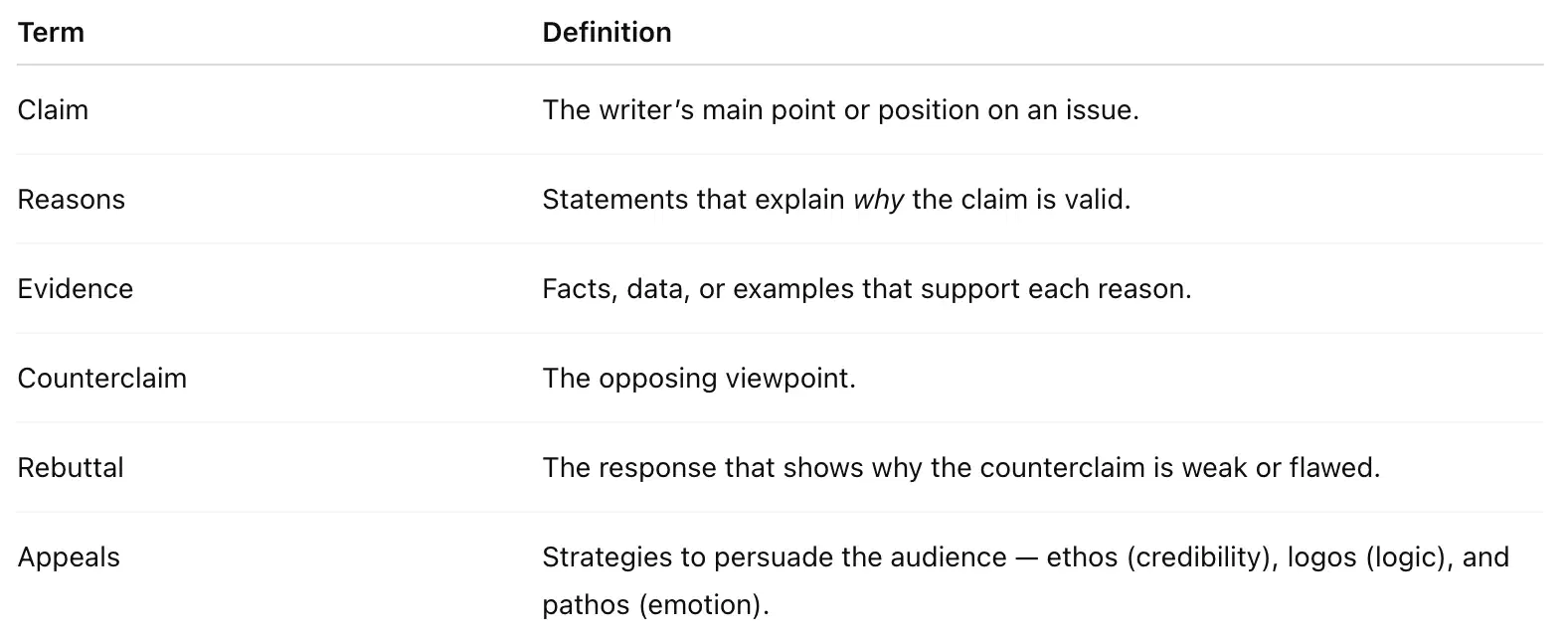
Review
Elements of an Argument:
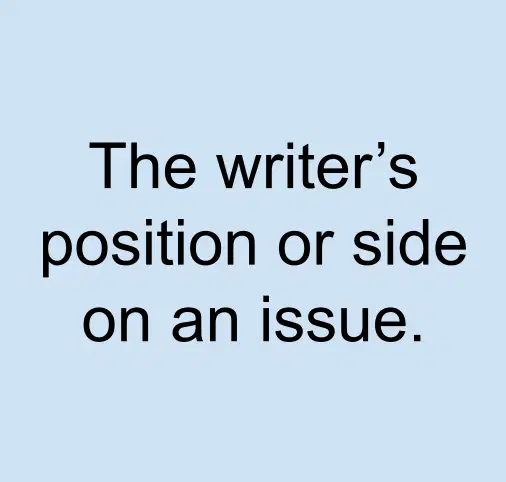
claim
reasons
evidence
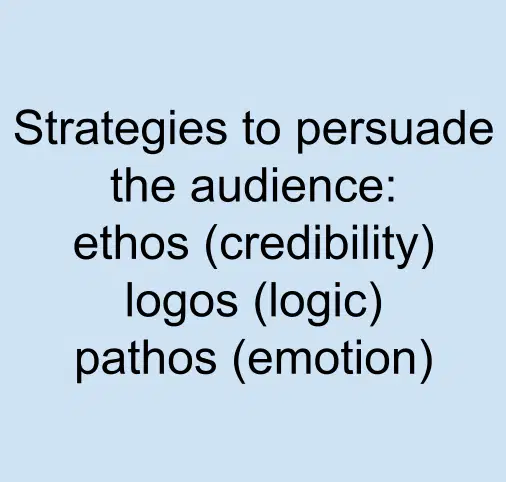
appeals
counterclaim
5
Categorize
Match each term to its definition.
6
Multiple Choice
What is the purpose of a rebuttal in an argument?
To restate the claim in a stronger way
To agree with the counterclaim
To explain why the counterclaim is weak or flawed
To introduce a new topic
7
Multiple Choice
Which statement best describes the purpose of appeals in an argument?
To list facts without emotion
To persuade the audience using credibility, logic, or emotion
To repeat the claim several times
To summarize all the evidence
8
Open Ended
Which element do you think is the most important when evaluating an argument? Why?
9
Evaluating Arguments
Every good argument isn’t just about having strong opinions — it’s about having strong reasons and evidence that actually work together to make sense.
10
Evaluating Arguments
When we evaluate someone’s argument, we ask three big questions to decide how strong it really is:
Is it convincing?
Is it enough?
Is it logical?
11
Is It Convincing?
A convincing argument has strong, relevant reasons that clearly support the claim.
The reason should make sense and connect directly to the issue.
12
Is It Convincing?
Claim: Paper bags are better for the environment than plastic bags.
Example (Strong- Focuses on the impact on the envirionment):
Paper bags are better for the environment because they decompose faster and cause less long-term pollution than plastic bags.
Non-Example (Weak - An opinion not related to the claim):
Paper bags are better because they look nicer than plastic bags.
13
Open Ended
Claim: Paper bags are better for the environment than plastic bags.
Evaluate: Which statement is more convincing? Why?
Which reason connects to the environment and renewable resources?
Which reason focuses on something unrelated to the claim?
14
Is It Enough?
An argument has enough evidence when it uses reliable facts, statistics, or examples to fully support its reasons — not just opinions or generalizations.
15
Is It Enough?
Claim: Plastic bags should be banned to reduce pollution and protect the environment.
Example (Strong - factual and sonncets to the claim):
According to the Environmental Protection Agency (EPA), Americans use over 100 billion plastic bags each year, and fewer than 10% are recycled.
Non-Example (Weak - opinion-based langauge; no varifiable facts):
Everyone knows plastic bags are bad for the Earth.
16
Is It Logical?
Claim: Plastic bags should be banned to protect wildlife.
Example (Strong):
Because plastic bags can take hundreds of years to break down, banning them would reduce the amount of plastic animals mistake for food.
Non-Example (Weak):
Plastic bags should be banned because they are annoying to carry and often blow away in the wind.
17
Open Ended
Claim: Paper bags are better for the environment than plastic bags.
Evaluate: Does each statement provide enough evidence to support the claim?
Which one uses reliable data?
Which one is based on personal observation or anecdote?
18
Putting It All Together
You’ve practiced identifying claims, reasons, and evidence — and you’ve learned to ask the big questions:
Is it convincing? Is it enough? Is it logical?
Now it’s time to put those skills to work by evaluating an essay.
19
Draw
✏️ Underline the claim in this paragraph in blue.
✏️ Underline one counterclaim the author addresses in red.
20
Key
Claim: “Plastic bags and bottles should be completely banned everywhere.”
Counterclaim: “Some people think we should recycle more.”
21
Draw
✏️ Underline the reason given to support the claim.
22
Open Ended
How does the evidence in this paragraph support the claim?
23
Multiple Choice
Which statement best describes the evidence in this paragraph?
Strong: It gives specific data from experts that prove the problem.
Weak: It repeats the writer’s opinion without adding proof.
Strong: It gives a scientific explanation for plastic pollution.
Weak: It uses a personal story from a YouTube video instead of credible research.
24
Draw
✏️ Underline the evidence presented.
25
Open Ended
Is the reasoning sound in this paragraph?
Does the evidence match the reason or go off-topic?
Does the writer make a logical leap (jumping to a conclusion without proof)?
Does the reasoning exaggerate what the evidence actually proves?
What would make the reasoning more logical or complete?
26
Multiple Choice
Does the evidence logically support the reason?
Partly—it supports harm to animals but not air pollution claims.
No—it talks about greenhouse gases only.
Yes—it clearly links plastic to all pollution types.
No—it provides no data at all.
27
Draw
✏️ Underline the counterclaim in red.
✏️ Underline rebuttal in green..
28
Open Ended
How does the author make the rebuttal convincing?
Use one of these sentence starters:
The rebuttal is convincing because…
The author makes a good point when…
This rebuttal is logical because…
29
Multiple Choice
What makes this rebuttal effective?
It uses facts from a reliable source to answer the counterclaim.
It explains how reusable materials save money in the long run.
It ignores the other side and adds new topics.
It only shares opinions without any proof.
30
Draw
✏️ Underline the restated claim in this paragraph.
31
Open Ended
Does the conclusion summarize the argument clearly and end with a strong call to action?
Use one of these sentence starters:
The conclusion is strong because…
The conclusion could be improved by…
The writer ends effectively by…
32
Multiple Choice
How effective is this conclusion?
Effective: It restates the claim and gives a clear call to action.
Effective: It connects the argument to the bigger goal of protecting the planet.
Not effective: It repeats ideas without adding a final thought.
Not effective: It ends suddenly without a clear message.
33
What we did today
Reviewed the parts of an argument — claim, reasons, evidence, counterclaim, and rebuttal.
Practiced asking the big questions:
Is it convincing?
Is it enough?
Is it logical?
Evaluated a full essay paragraph by paragraph, using underlining, multiple-choice, and open-ended questions.
Reflected on what makes an argument strong and believable.
34
Poll
Which skill from today’s lesson do you feel most confident about?
Finding the claim
Judging evidence
Checking logic
Identifying counterclaims and rebuttals
A Valid Point:
Evaluating Arguments
By Donna Kapa
Show answer
Auto Play
Slide 1 / 34
SLIDE

Similar Resources on Wayground
28 questions
Inappropriate Shifts in Verb Mood
Presentation
•
KG
25 questions
Rogue Wave- Grade 7
Presentation
•
6th - 8th Grade
24 questions
Preposition or Adverb & Interjections
Presentation
•
6th - 8th Grade
26 questions
CER Review
Presentation
•
7th Grade
29 questions
Perfect Tense Verbs
Presentation
•
5th - 7th Grade
27 questions
Measures of Central Tendency
Presentation
•
6th - 8th Grade
24 questions
Transition Words
Presentation
•
6th - 8th Grade
23 questions
Roots and Affixes
Presentation
•
6th - 8th Grade
Popular Resources on Wayground
16 questions
Grade 3 Simulation Assessment 2
Quiz
•
3rd Grade
19 questions
HCS Grade 5 Simulation Assessment_1 2526sy
Quiz
•
5th Grade
10 questions
Cinco de Mayo Trivia Questions
Interactive video
•
3rd - 5th Grade
17 questions
HCS Grade 4 Simulation Assessment_2 2526sy
Quiz
•
4th Grade
24 questions
HCS Grade 5 Simulation Assessment_2 2526sy
Quiz
•
5th Grade
13 questions
Cinco de mayo
Interactive video
•
6th - 8th Grade
20 questions
Math Review
Quiz
•
3rd Grade
30 questions
GVMS House Trivia 2026
Quiz
•
6th - 8th Grade
Discover more resources for English
20 questions
Context Clues
Quiz
•
6th Grade
20 questions
Figurative Language Review
Quiz
•
6th Grade
75 questions
Georgia K-12 ELA Standards – 7th Grade Questions
Quiz
•
7th Grade
14 questions
Context Clues
Quiz
•
4th - 6th Grade
37 questions
Georgia Milestones Grade 7 ELA Writing Key Terms Review
Quiz
•
7th Grade
12 questions
Final Figurative Language Review
Presentation
•
6th - 8th Grade
60 questions
FAST Reading Review #3
Quiz
•
6th - 8th Grade
55 questions
SC READY Reading Review
Quiz
•
6th - 8th Grade