ENERGY, Motion, & Newton's Laws Review
Presentation
•
Science
•
6th - 8th Grade
•
Practice Problem
•
Hard
+5
Standards-aligned
Rachel Evans
Used 1+ times
FREE Resource
27 Slides • 24 Questions
1
2
3
4
5
6
7
Multiple Choice
Using the Particle Model A. in the figure shown, what type of motion is represented? The type of motion represented in Particle Model A. is ____.
no motion
increasing speed
constant speed
decreasing speed
8
9
Multiple Choice
A person walks 10 meters east, then 10 meters west. What is the displacement?
20 meters
0 meters
10 meters east
10 meters west
10
11
Multiple Choice
What is the definition of direction?
The location of something
A measurement that has size only
A measurement that has both size and direction
The opposite of direction
12
13
14
Multiple Choice
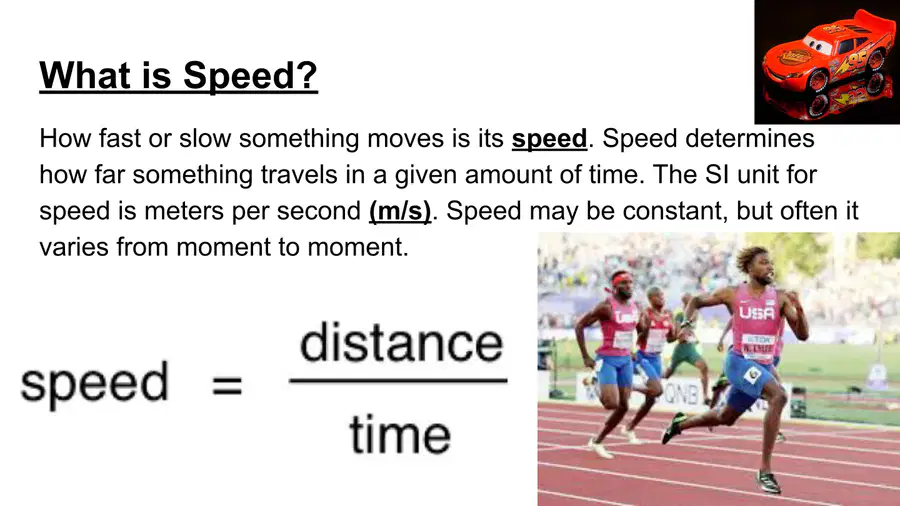
Which of the following is the correct formula for calculating speed?
Speed= force/distance (force divided by distance)
Speed= mass x acceleration (mass times acceleration)
Speed = distance/time (distance divided by time)
Speed = time x energy (time times energy)
15
Multiple Choice
Mrs. Labella's class was studying motion. The data table shows the results of an experiment. Based on the evidence, which students had balls that rolled at the same speed?
Gregory and Connor
Holly and Avery
Holly and Connor
Connor and Avery
16
17
18
Multiple Choice
In the diagram below, a girl sits on a sled and slides down a hill of snow. Which arrow represents the force of friction opposing the motion of the sled down the hill?
Arrow A
Arrow B
Arrow C
Arrow D
19
20
21
Multiple Choice
22
23
Multiple Choice
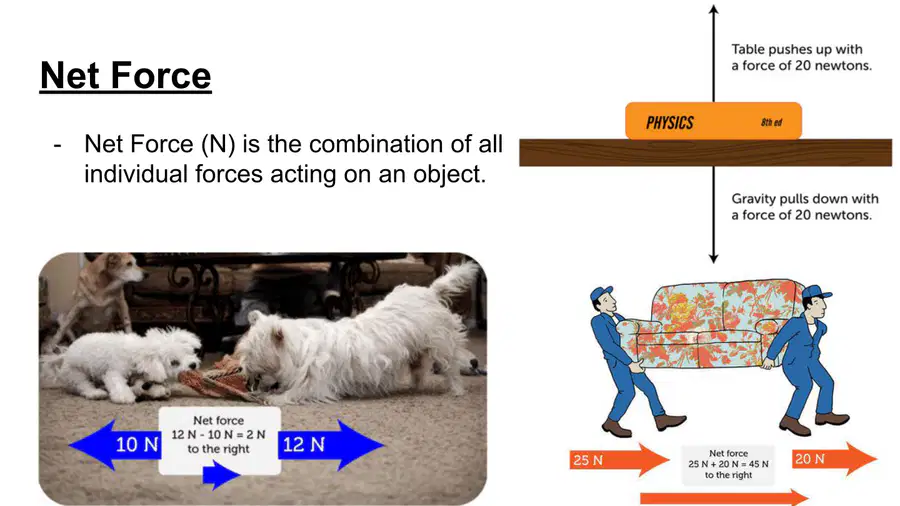
How do you find the net force of this image.
Add up all the arrows
Add a green arrow and the orange arrow.
Subtract all the arrows.
Add the green arrows and subtract the orange arrow.
24
Reorder
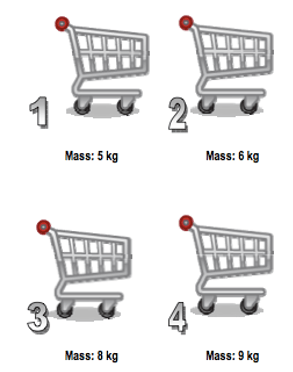
A force of 90N is applied to each cart. Put the carts in order from accelerating the MOST to the LEAST based on the masses of the carts.
Cart 1
25
26
Multiple Choice
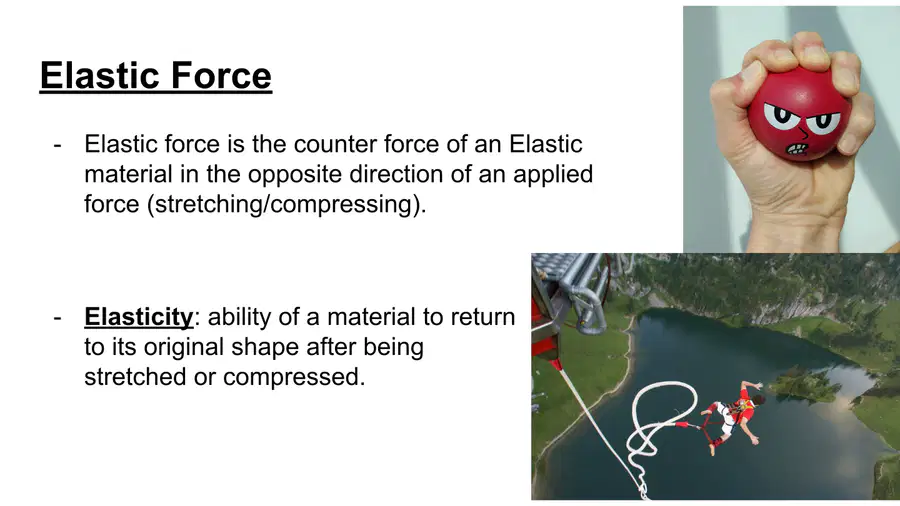
What does elasticity refer to in materials?
The ability to change shape permanently
The ability to return to original shape after deformation
The ability to absorb energy
The ability to conduct electricity
27
28
29
30
31
32
33
34
35
36
37
38
Match
Match Newton's laws with the description that best fits it.
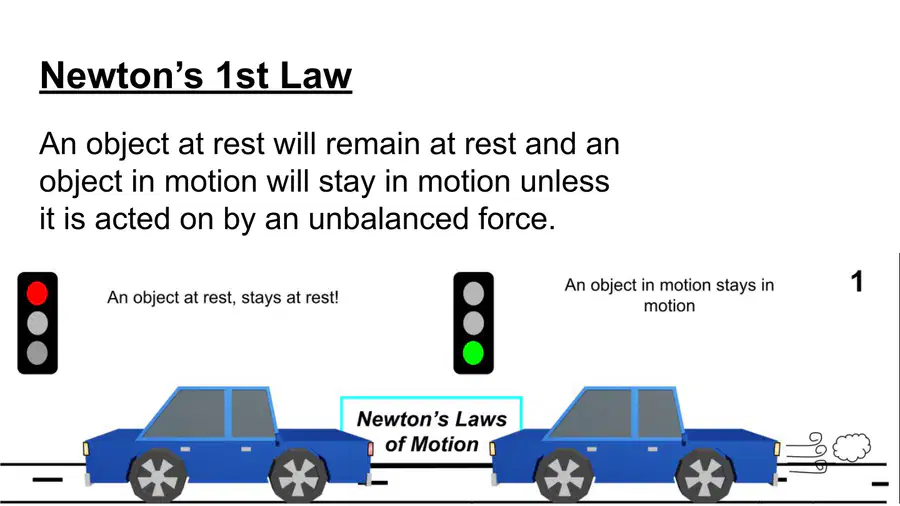
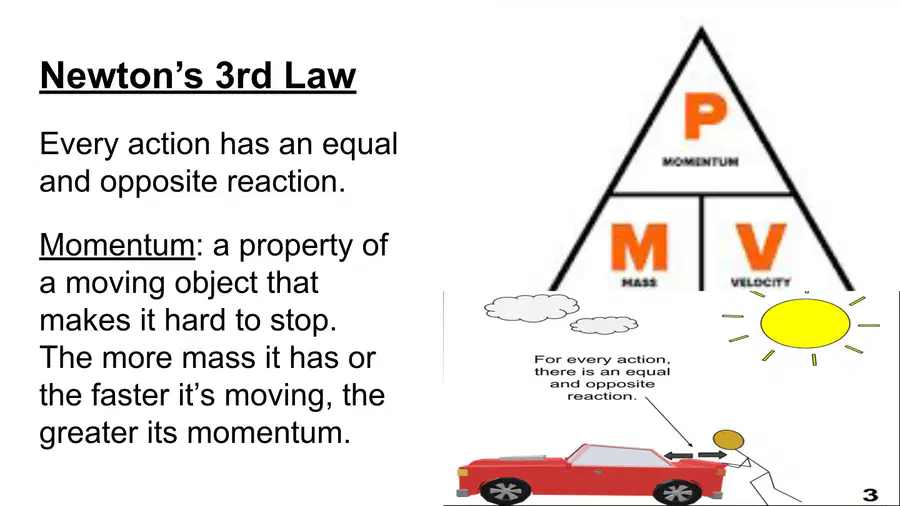
An object at rest and an object in motion will both maintain a constant state of motion - unless acted upon by an unbalanced force.
For every applied Force, there is an equal and opposite reactive Force.
The acceleration of a mass is proportional to the Net Force acting on it
Newton's 3rd Law
Newton's 2nd Law
Newton's 3rd Law
Newton's 2nd Law
39
Open Ended
If a person hits a softball and a bowling ball with the same force, will they both accelerate at the same rate? Why or why not? Explain your answer.
40
Multiple Choice
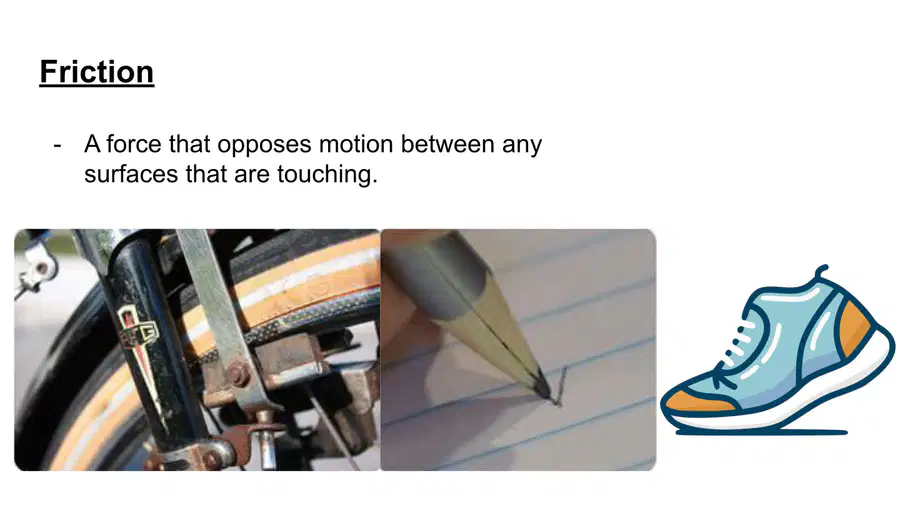
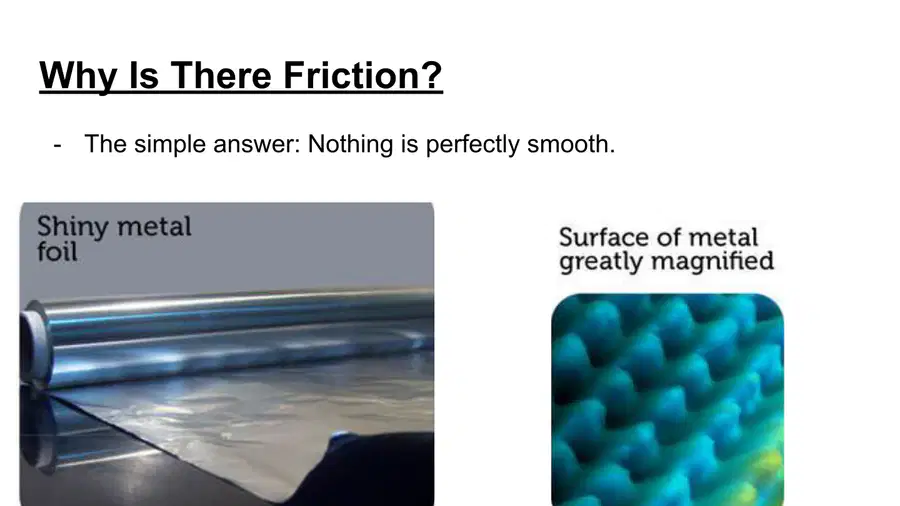
In which of the following scenarios will the object experience maximum friction?
Smooth object over smooth surface
Smooth object over rough surface
Rough object over smooth surface
Rough object over rough surface
41
Labeling
You have engineered a cage to safely drop an egg. The egg is dropping from the bleachers at Barry Field. Label the force diagram with the appropriate forces
Gravitational
Air Resistance
Tension
Buoyant
Friction
Normal
42
Multiple Choice
Marcy is driving on a road parallel to train tracks at a constant velocity. At the same time, a train is accelerating in the opposite direction at a rate of 5 . Marcy hypothesizes that if her car was not moving, the train would appear to accelerate at a slower rate.
Upon which scientific principle has Marcy based her hypothesis?
Objects in motion have a tendency to maintain their motion.
For every action, there is an equal and opposite reaction.
Energy tends to become more disordered with time.
All motion is relative to a frame of reference.
43
Dropdown
44
Multiple Choice
The girl on the sled will remain in motion unless
her motion is changed by magnetic forces.
she is stopped by an outside force.
she accelerates at a constant speed.
the force of friction forcer her to move faster.
45
Multiple Choice
What is the purpose of brake pad material in disc brakes?
To reduce the weight of the vehicle
To provide insulation to the rotor
To create friction against the rotor and slow down or stop the vehicle.
To make the brakes look shiny
46
Drag and Drop
Drag the correct directions of each force acting on the sled.
F friction:
F gravity:
F push:
F wind:
Left
Up
47
Match
Match the following definitions with the right Newton's Law of Motion
Newton's 1st Law
Newton's 2nd Law
Newton's 3rd Law
An object at rest will stay in its current motion unless an outside force acts upon it.
Force = (mass)x(acceleration)
For every action, there is an equal and opposite reaction.
An object at rest will stay in its current motion unless an outside force acts upon it.
Force = (mass)x(acceleration)
For every action, there is an equal and opposite reaction.
48
Drag and Drop
49
Multiple Choice
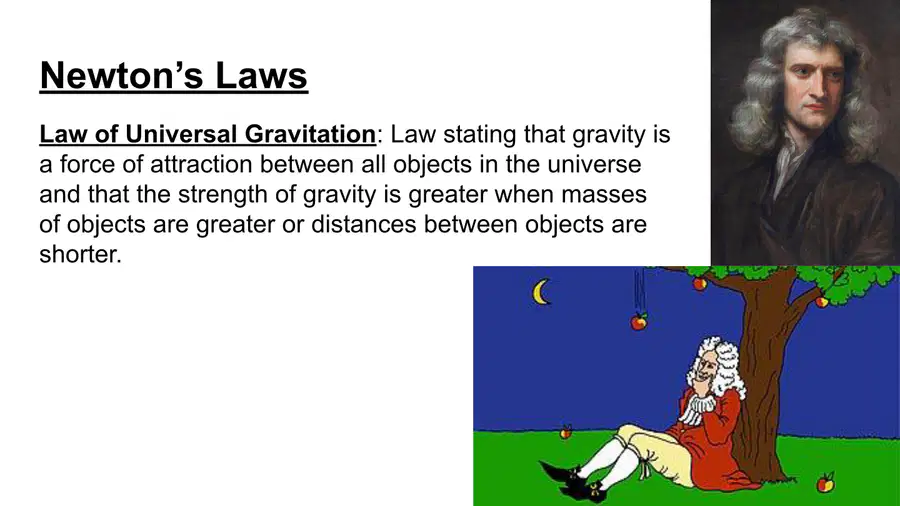
What does the Law of Universal Gravitation state?
It states that gravity is a force of attraction between all objects in the universe.
It states that gravity only affects large objects like planets.
It states that gravity is weaker when objects are closer together.
It states that gravity does not affect objects in space.
50
Fill in the Blanks
Another student wants to use another marble that will have a greater kinetic energy than either the ceramic marble or the steel marble at each point along the track. Explain how the mass and size of the third marble should compare to the masses and sizes of the ceramic and steel marbles.
1. Marble mass should be (doubled/tripled)
2. Marble size should be (bigger/kept the same)
3. Kinetic Energy only increases proportionally with an (increase/decrease) in mass.
4. Kinetic energy (increases/decreases) with the square of the speed.
Type answer...
51
Multiple Choice
Which type of friction is shown in the picture?
fluid
static
rolling
sliding
Show answer
Auto Play
Slide 1 / 51
SLIDE

Similar Resources on Wayground
47 questions
NOTES: Kinetic and Potential Energy
Presentation
•
6th - 8th Grade
46 questions
Solar Systems: Learning about the planets
Presentation
•
5th - 7th Grade
45 questions
Energy: Potential & Kinetic
Presentation
•
6th - 8th Grade
43 questions
evolution
Presentation
•
7th - 8th Grade
47 questions
The Cell thoery
Presentation
•
6th - 8th Grade
46 questions
6th-T6 L3: Heat & Materials
Presentation
•
6th - 8th Grade
47 questions
Invertebrates
Presentation
•
6th - 8th Grade
44 questions
Unit 4 Waves Test Review
Presentation
•
7th Grade
Popular Resources on Wayground
21 questions
Continents and Oceans
Quiz
•
6th Grade
20 questions
Parts of Speech
Quiz
•
5th Grade
16 questions
Subject & Predicate
Quiz
•
5th Grade
25 questions
Multiplication Facts
Quiz
•
5th Grade
12 questions
Map Skills
Quiz
•
3rd Grade
22 questions
Continents and Oceans
Quiz
•
5th Grade
15 questions
Rounding Decimals
Quiz
•
5th Grade
20 questions
Brand Labels
Quiz
•
5th - 12th Grade
Discover more resources for Science
20 questions
Newton's Laws of Motion
Quiz
•
8th Grade
20 questions
Elements, compounds, and mixtures
Quiz
•
6th Grade
17 questions
7.6D Aqueous Solutions
Quiz
•
7th Grade
20 questions
Scientific Method and Variables
Quiz
•
8th Grade
20 questions
Scientific method and variables
Quiz
•
8th Grade
10 questions
6.6D - Relative Density Review
Quiz
•
6th Grade
20 questions
Claim, Evidence and Reasoning (CER)
Quiz
•
6th - 8th Grade
21 questions
Newton's Laws of Motion
Quiz
•
8th Grade