Search Header Logo
  1. Resource Library
  2. Ela
  3. Writing
  4. ...
  5. Show Don't Tell
Show Don't Tell

Show Don't Tell

Assessment

Presentation

English

9th - 12th Grade

Easy

CCSS
RI.9-10.4, L.4.5, RL.9-10.3

+26

Standards-aligned

Created by

Elizabeth Mitchener

Used 1+ times

FREE Resource

11 Slides • 18 Questions

1
media

2

Open Ended

Why is it important for writers to use sensory details and actions in their stories?

3

media

4

media

5

Fill in the Blank

6

media

7

media

8

media

9

Multiple Choice

Which of the following best describes the purpose of using sensory language in narrative writing?

1

To make the story longer

2

To help readers visualize and experience the story

3

To use more adjectives

4

To summarize the main events

10

Multiple Select

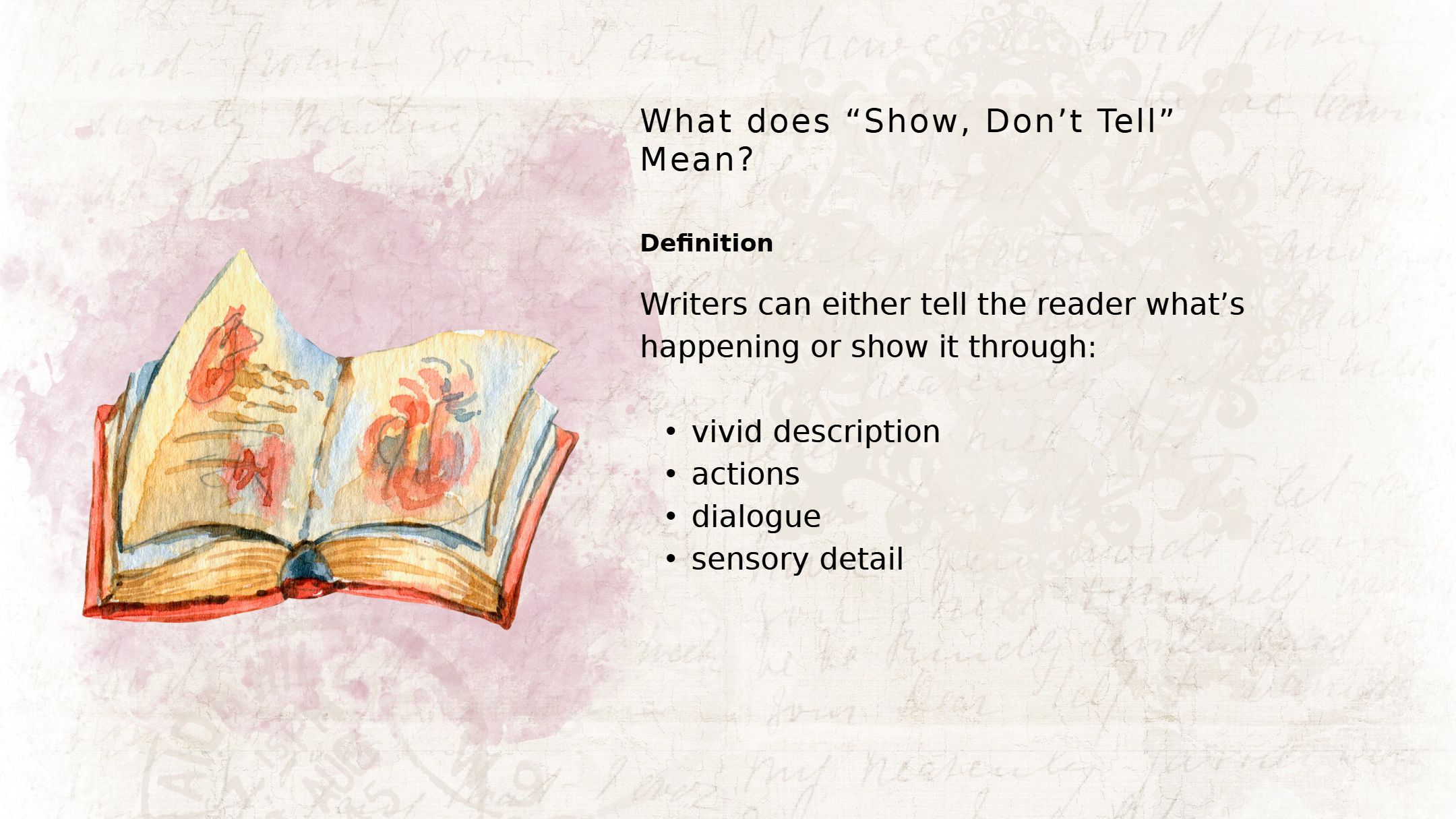
According to the lesson, which elements help writers 'show' rather than 'tell'?

1

Vivid description

2

Actions

3

Dialogue

4

Sensory detail

11

Multiple Choice

Question image

Which of the 5 senses does "The sweet scent of newly bloomed flowers fill the air." describe?

1

Sight (See)

2

Sound (Hear)

3

Smell

4

Taste

12

media

13

media

14

Open Ended

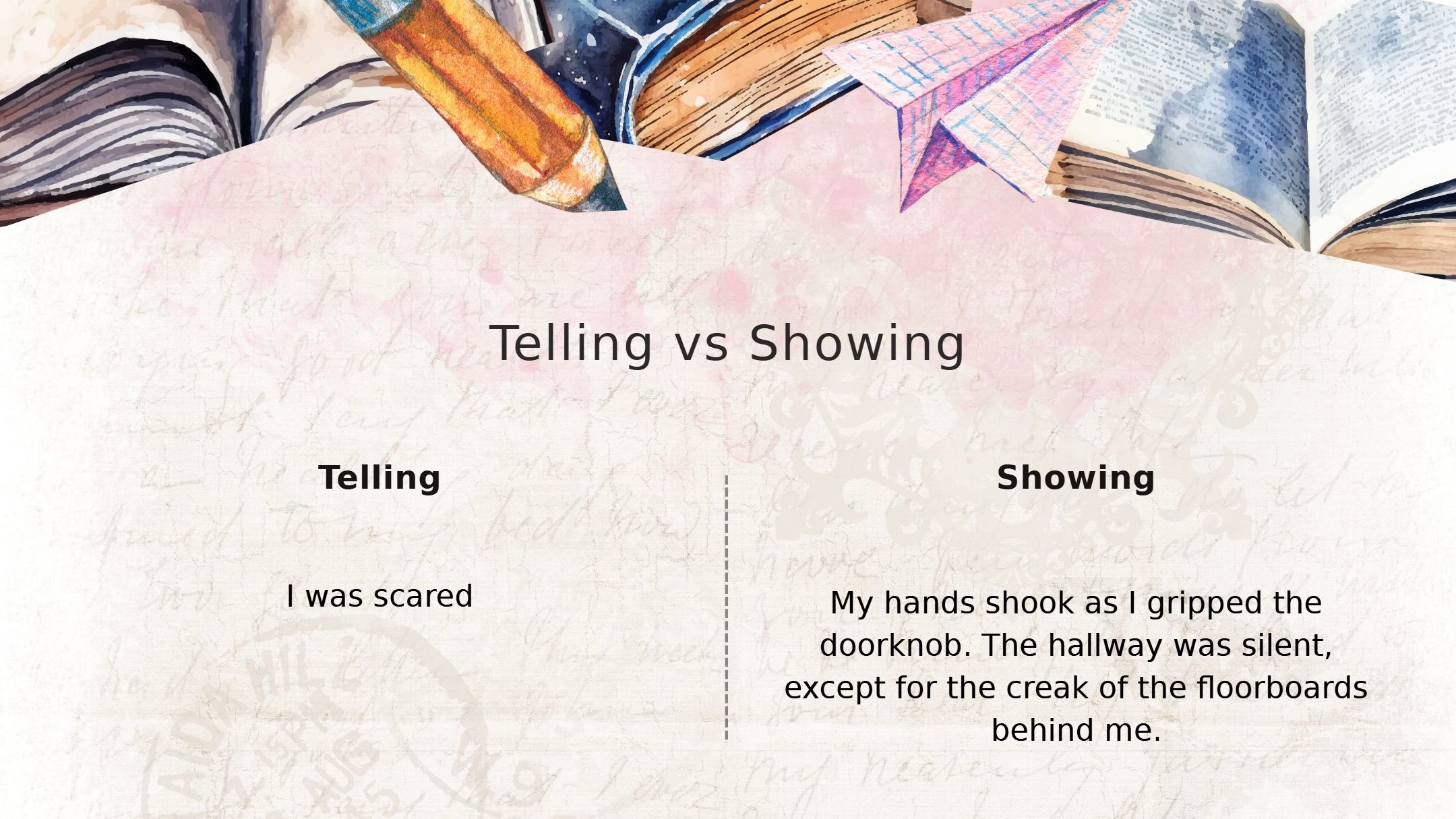
Explain the difference between 'telling' and 'showing' in narrative writing, using examples from the lesson.

15

media

16

media

17

Open Ended

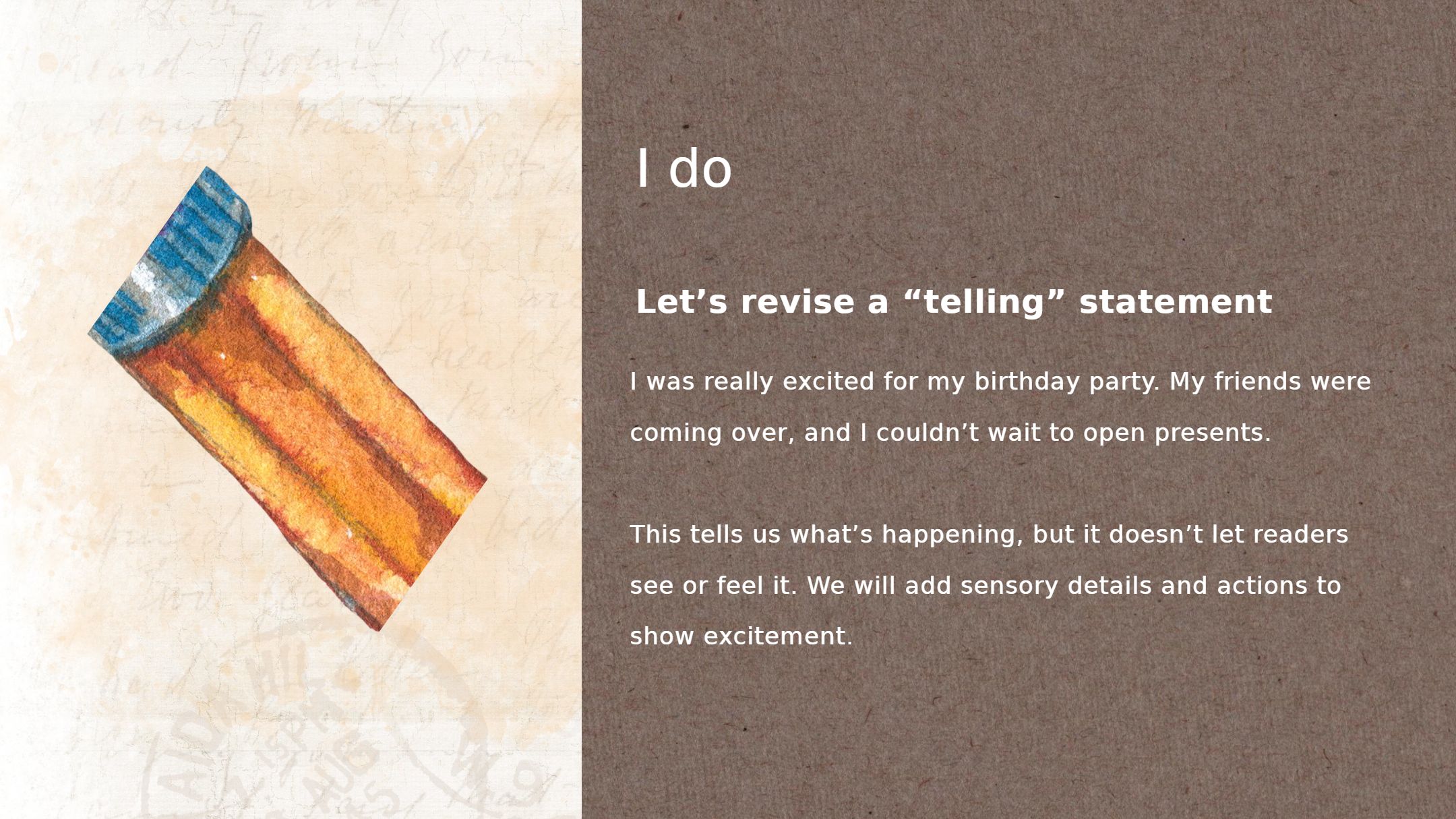
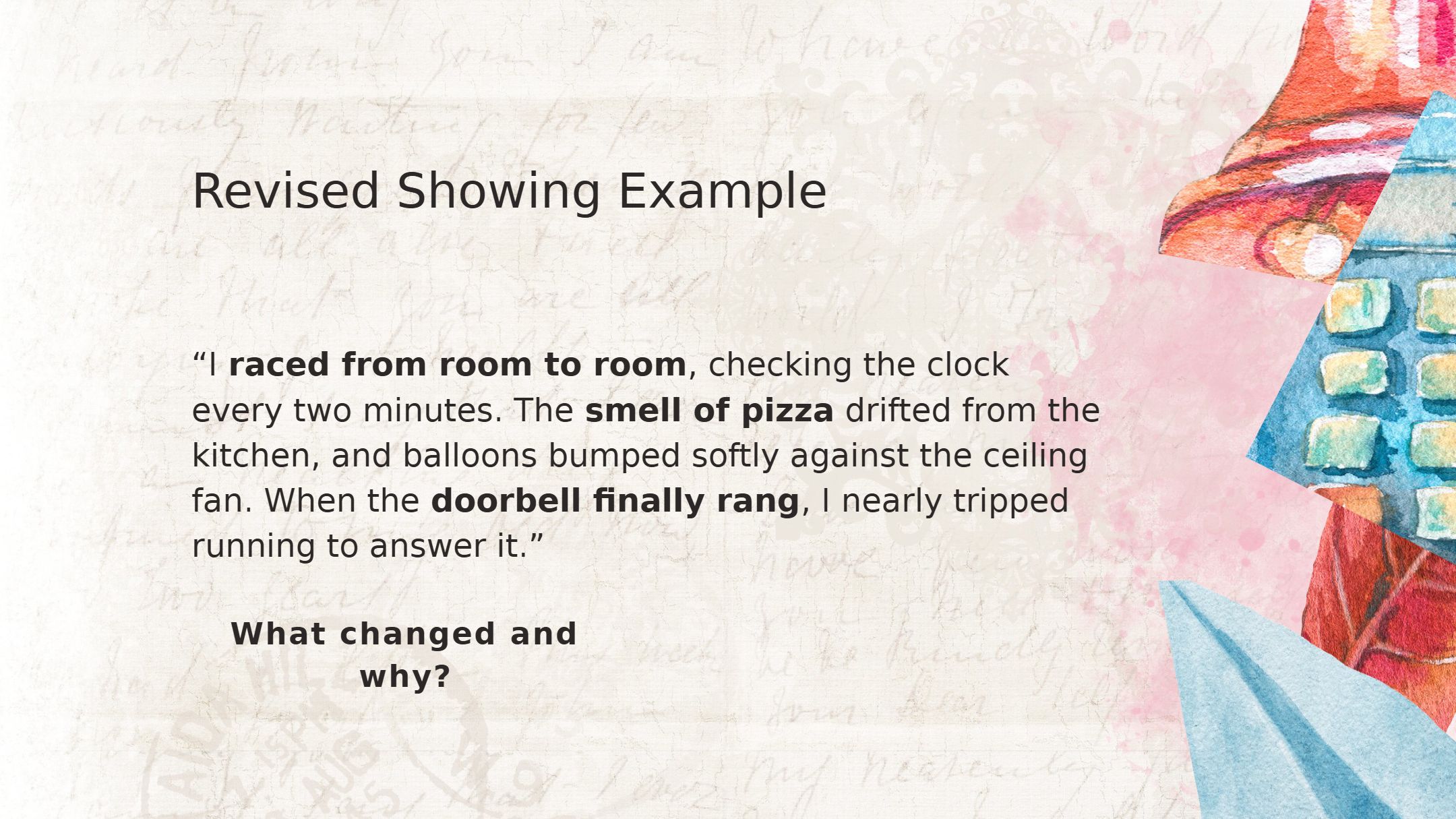
What changed in the revised example, and why is it more effective at showing excitement?

18

Multiple Choice

Which of the following best describes the difference between a 'telling' statement and a 'showing' statement in writing?

1

A telling statement simply states facts without sensory details, while a showing statement uses sensory details and actions to create vivid imagery.

2

A telling statement uses more adjectives, while a showing statement uses more verbs.

3

A telling statement is always longer than a showing statement.

4

A telling statement is used only in fiction, while a showing statement is used in non-fiction.

19

media

20

Multiple Choice

Question image
The little girl looked in the window.
1
Show
2
Tell

21

Multiple Choice

Question image
She tripped and fell backward, then stood up with blushing cheeks and shaking hands.
1
Show
2
Tell

22

Fill in the Blank

Type answer...

23

Multiple Choice

Question image
 My mother and I would take walks to watch the glow of the chapel’s stained glass.
1
Show
2
Tell

24

Multiple Choice

Question image

To describe "Angry", I can say

1

I yawned

2

I clapped my hands and giggled

3

I put on a jacket and rubbed my hands together

4

I clenched my fists and stomped my feet

25

Multiple Choice

Which of the following is an example of 'Show, Don't Tell'?

1

James stormed out of the room.

2

That’s it! James shouted. Standing, he shoved his chair in, its legs scraping against the yellowed linoleum flooring with a shriek that made me wince. Behind me, the door slammed, a splinter of wood falling to the ground from the impact.

3

She had been crying.

4

Her eyes were puffy, and red-rimmed. Dried streaks ran down her face, leaving discolored patches on her makeup.

26

Multiple Choice

Which of the following is an example of 'Show, Don't Tell' using dialogue?

1

She laughed.

2

"And then he went—he went—" Maria shook her head, her laughter so hard she couldn’t get the words out. Holding up a hand, she tried to catch her breath. "He went head over heels over the chair!" she howled, clutching her sides.

3

He was cold.

4

"I'm freezing," he said, shivering and wrapping his jacket tightly around himself.

27

Multiple Choice

How can dialogue be used to 'Show, Don't Tell'?

1

By allowing the reader to understand the thoughts of the protagonist

2

By providing straightforward information and facts

3

By creating suspense and mystery

4

By using emotional dialogue tags

28

Open Ended

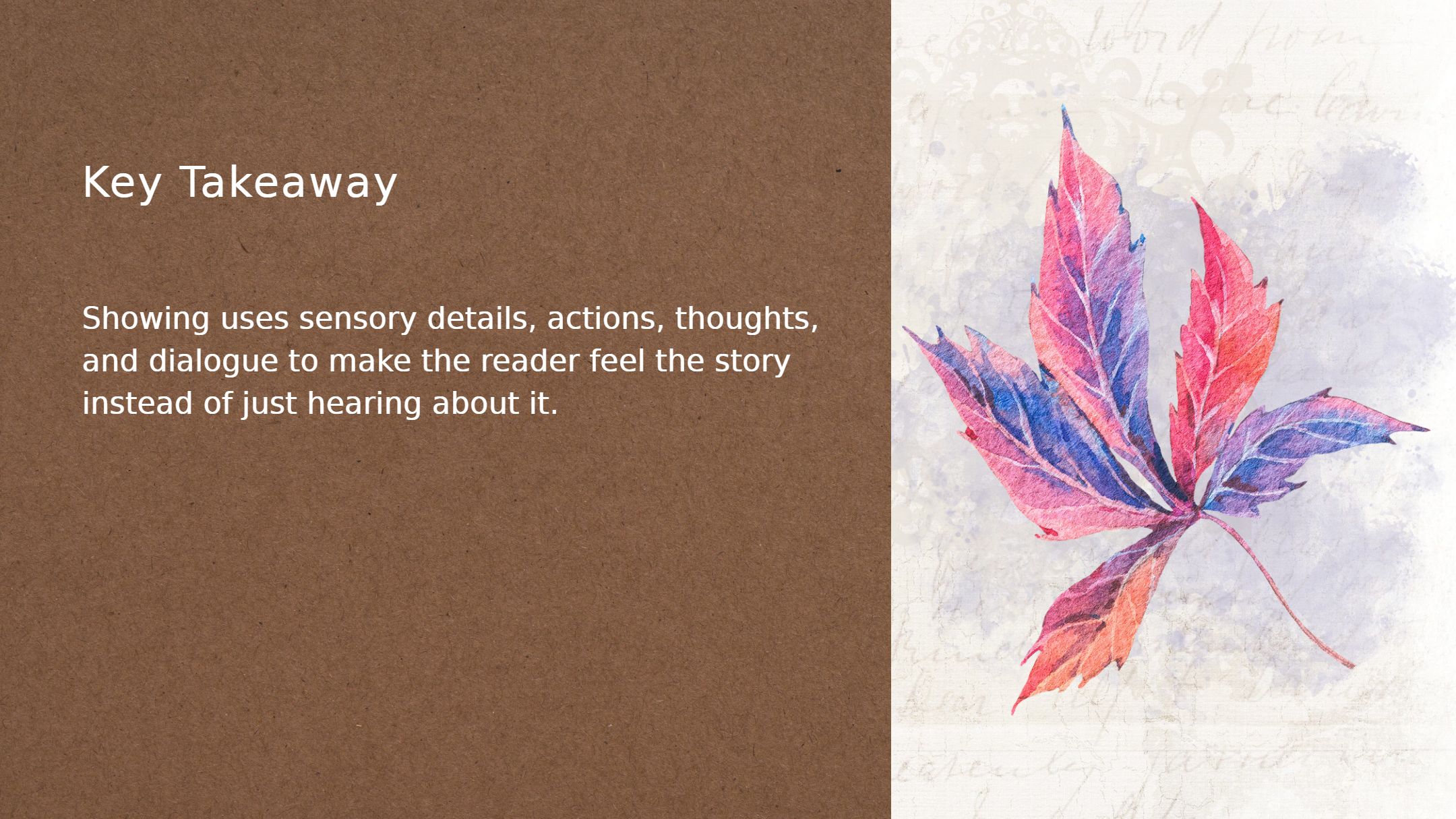
Why is it important for writers to 'show' rather than 'tell' when creating narratives?

29

Poll

give your emoji-con about our lesson activity today!

Excited

bored

happy

not bad

media

Show answer

Auto Play

Slide 1 / 29

SLIDE