

Biological Organization

Presentation
•
Science
•
6th - 8th Grade
•
Practice Problem
•
Medium
+6
Standards-aligned

Ma Pelita Espino
Used 5+ times
FREE Resource
30 Slides • 28 Questions
1

2
3
Multiple Choice
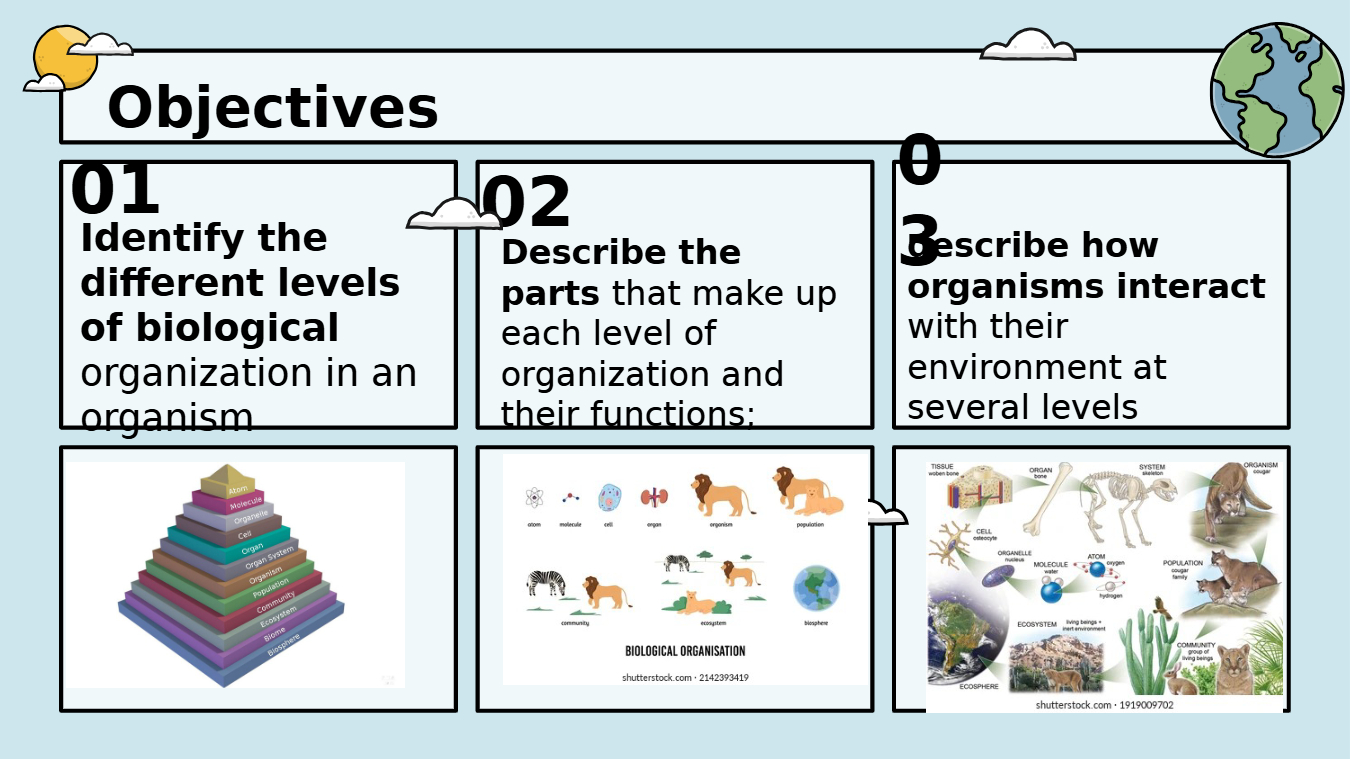
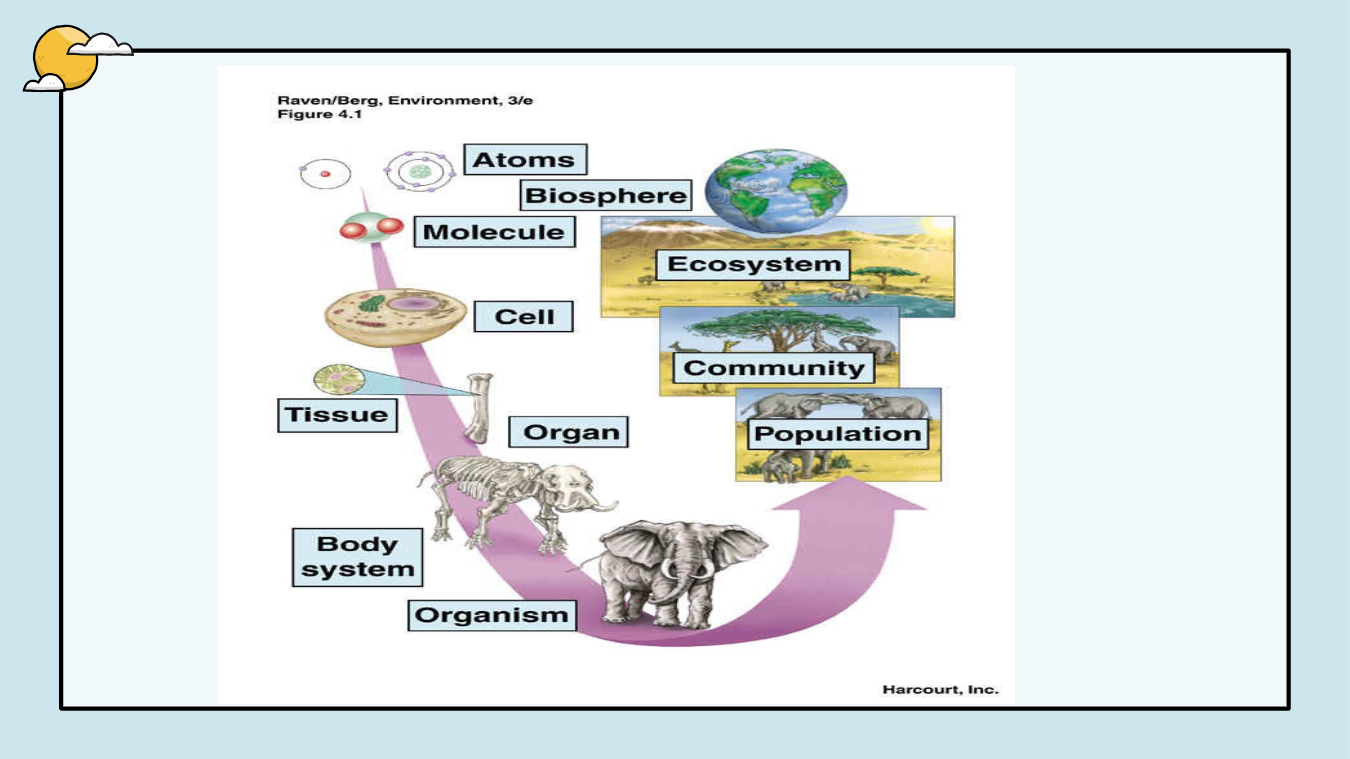
Which of the following is the correct sequence of levels of biological organization from smallest to largest?
Atom, Molecule, Cell, Organ, Organism, Population, Community, Ecosystem, Biosphere
Molecule, Atom, Cell, Organism, Organ, Population, Community, Ecosystem, Biosphere
Cell, Atom, Molecule, Organ, Organism, Population, Community, Ecosystem, Biosphere
Organism, Organ, Cell, Molecule, Atom, Population, Community, Ecosystem, Biosphere
4
Open Ended
Why is it important to understand the different levels of biological organization when studying living organisms?
5
6

7
Multiple Choice
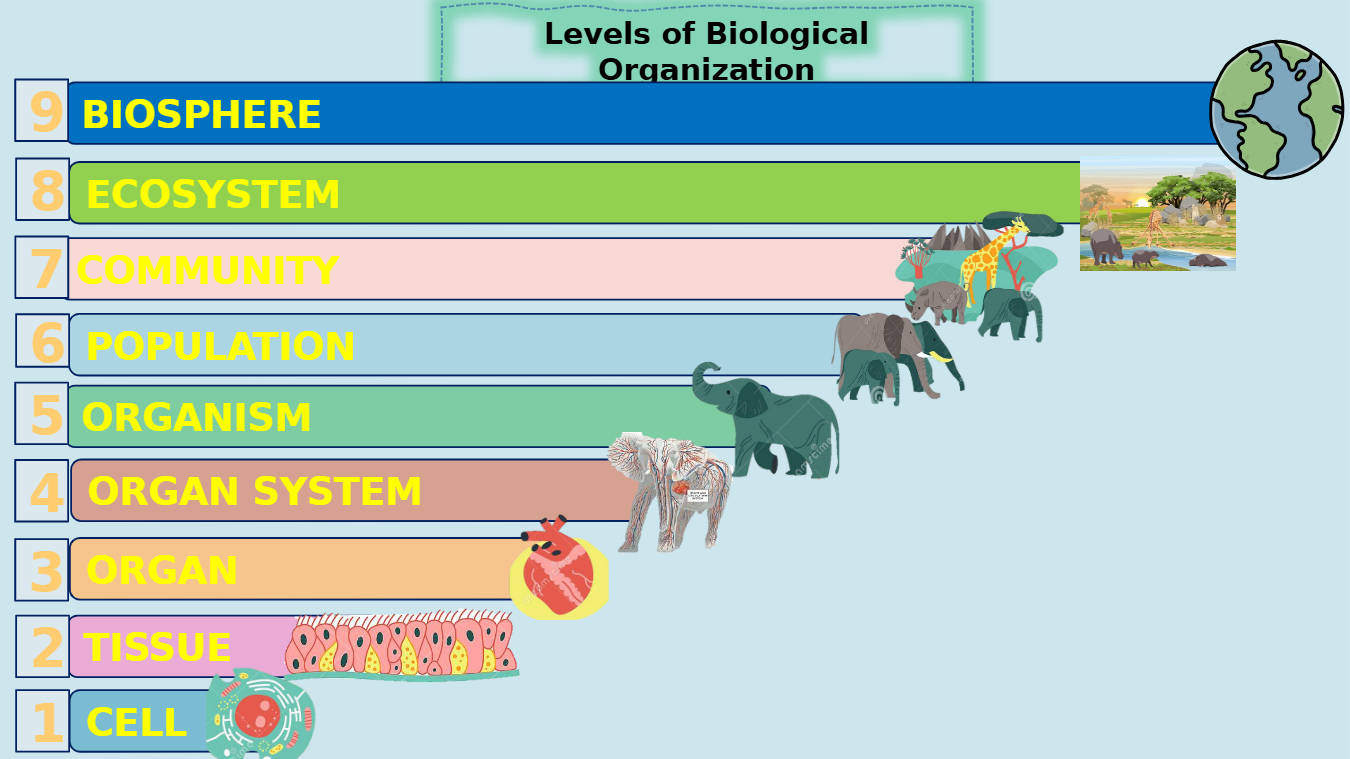
Which of the following best describes the hierarchical organization of living things?
Living things are made up of only cells.
Living things have a simple structure.
Living things are highly organized and structured in a hierarchy from atoms to biosphere.
Living things do not have any organization.
8
9
Open Ended
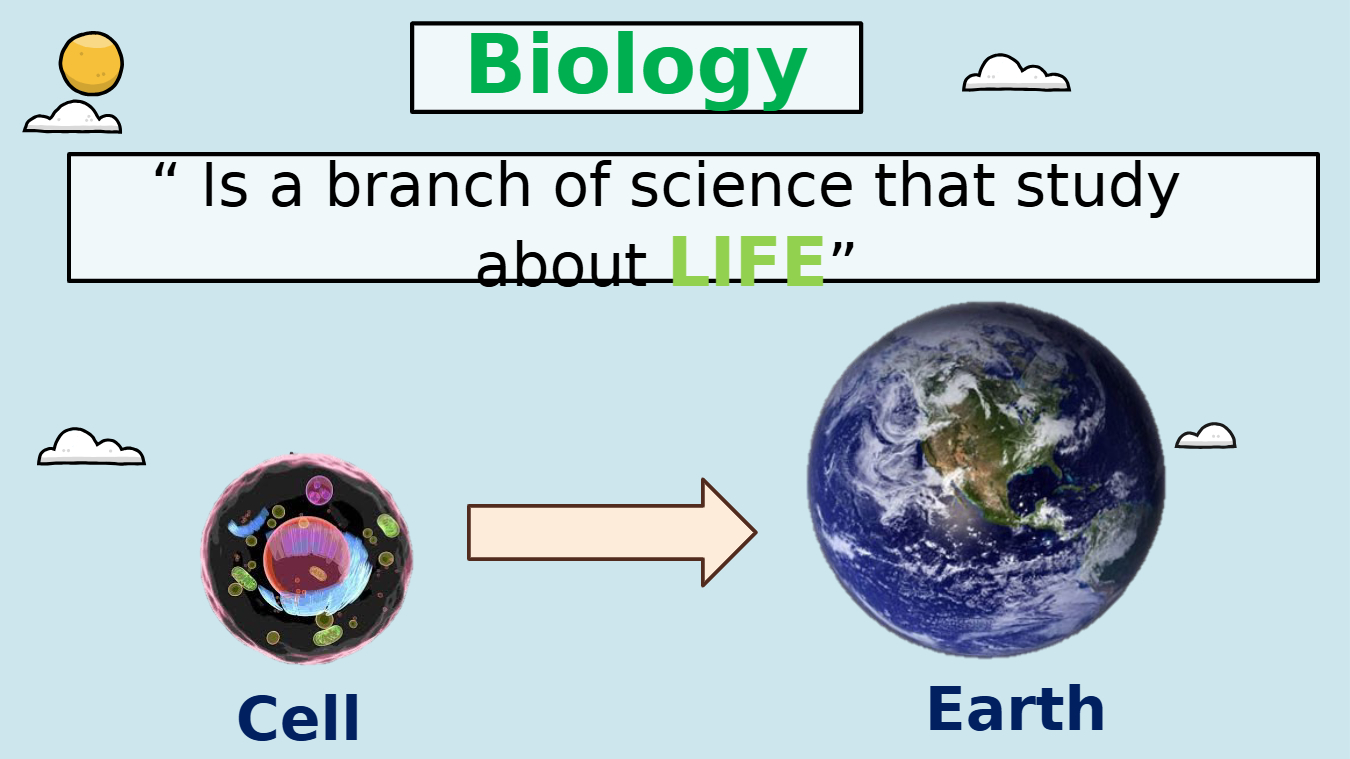
How does the concept of biological organization help us understand the relationship between cells and the biosphere?
10
Multiple Choice
Arrange the following levels of biological organization in the correct order from simplest to most complex: Cell, Organism, Ecosystem, Population.
Cell, Population, Organism, Ecosystem
Cell, Organism, Population, Ecosystem
Cell, Organism, Ecosystem, Population
Cell, Population, Ecosystem, Organism
11
12
Open Ended
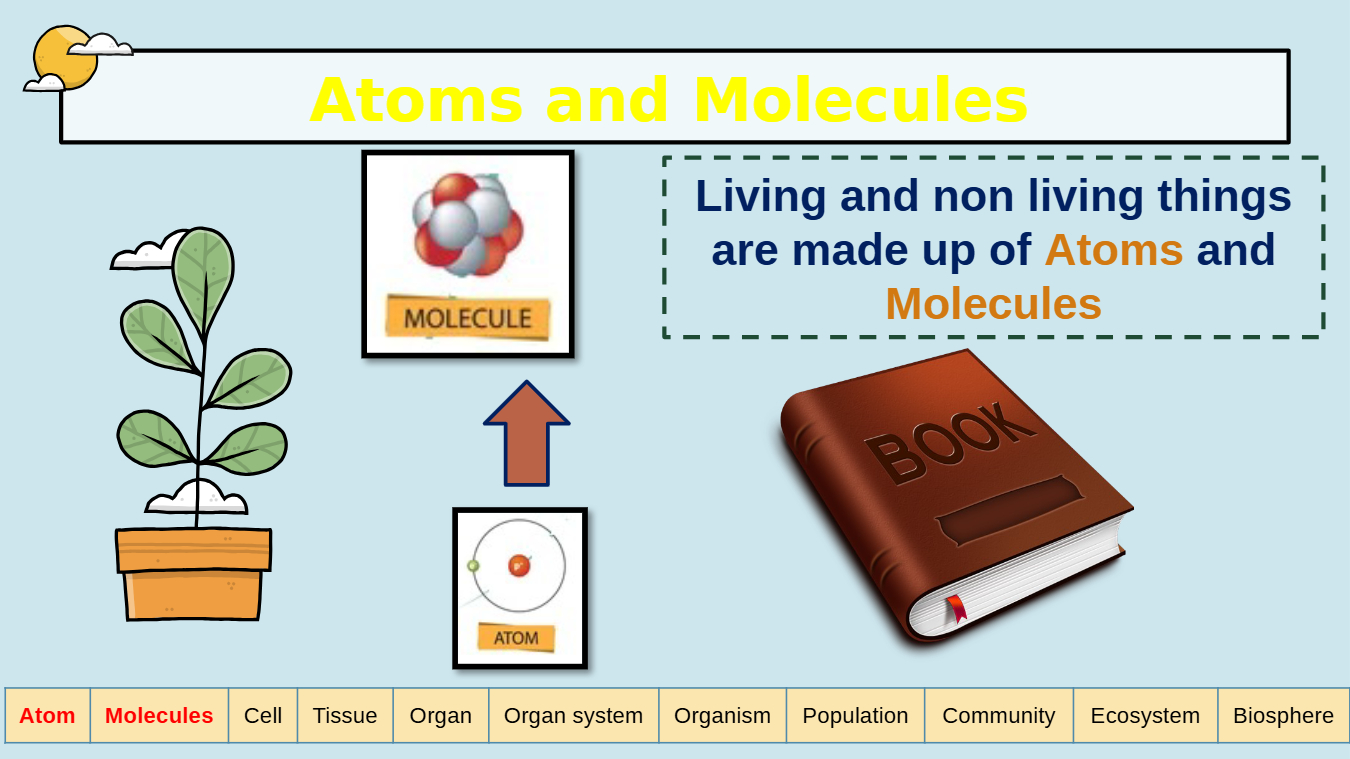
Explain how atoms and molecules contribute to the structure of living and non-living things.
13

14
Fill in the Blanks
A
Type answer...
15
16
Multiple Select
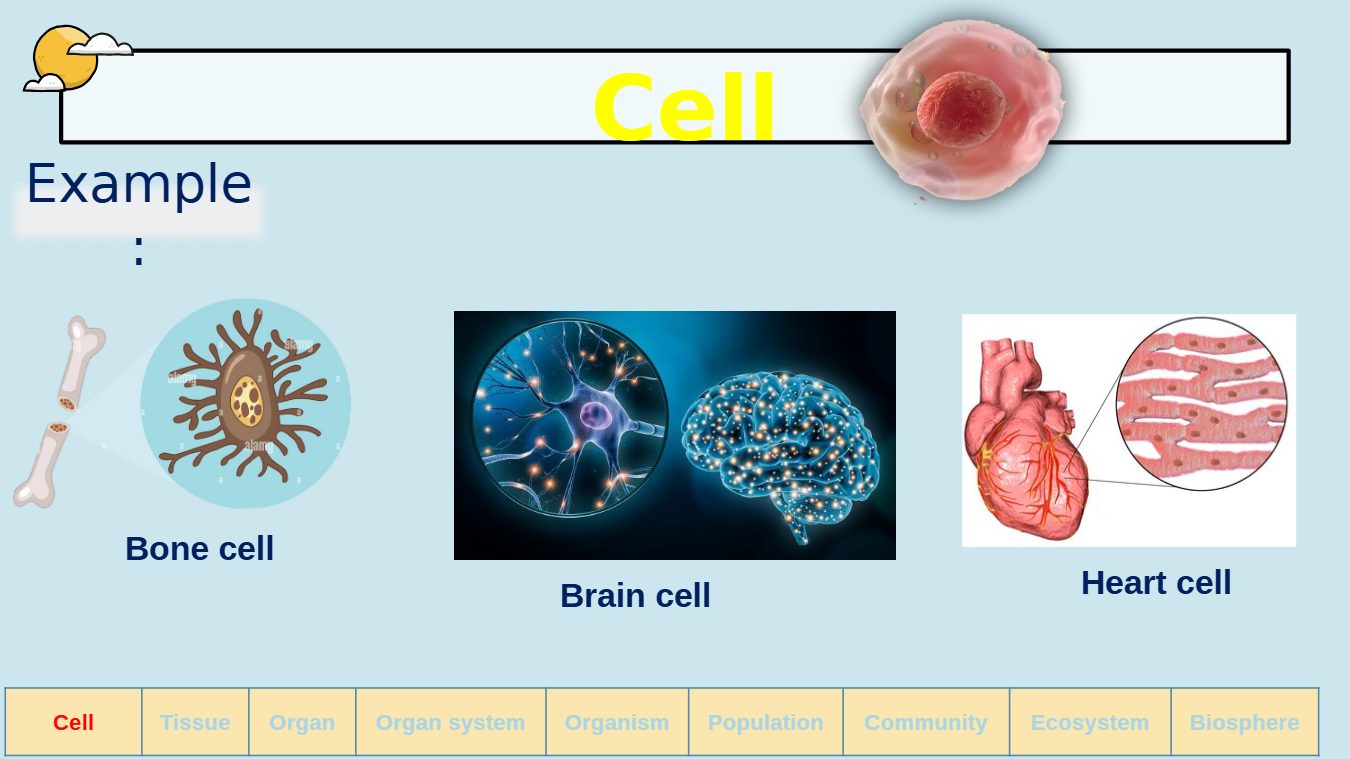
Which of the following are examples of specialized cells in the human body?
Bone cell
Brain cell
Heart cell
Skin cell
17
18
Multiple Choice
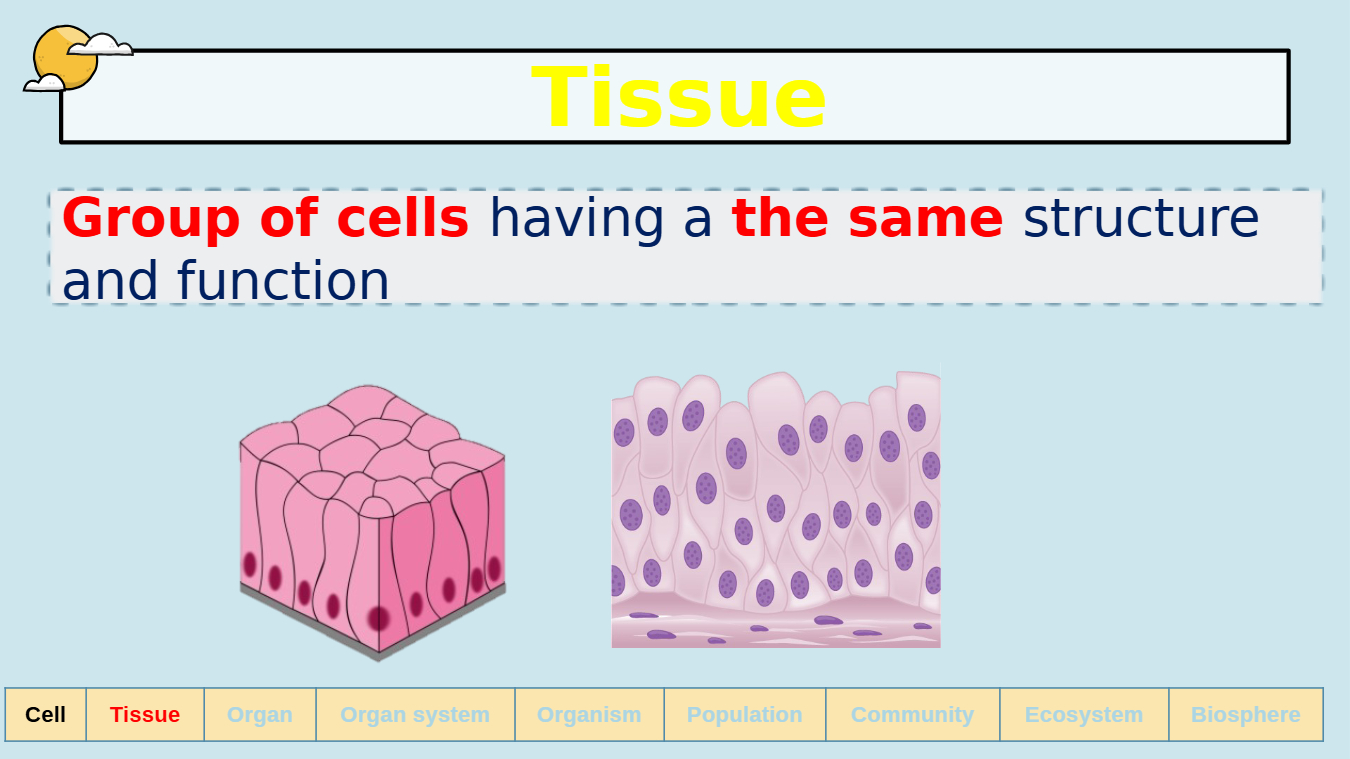
Which of the following best describes a tissue?
A group of cells with the same structure and function
A group of organs working together
A group of organ systems
A group of populations in an ecosystem
19
20
Open Ended
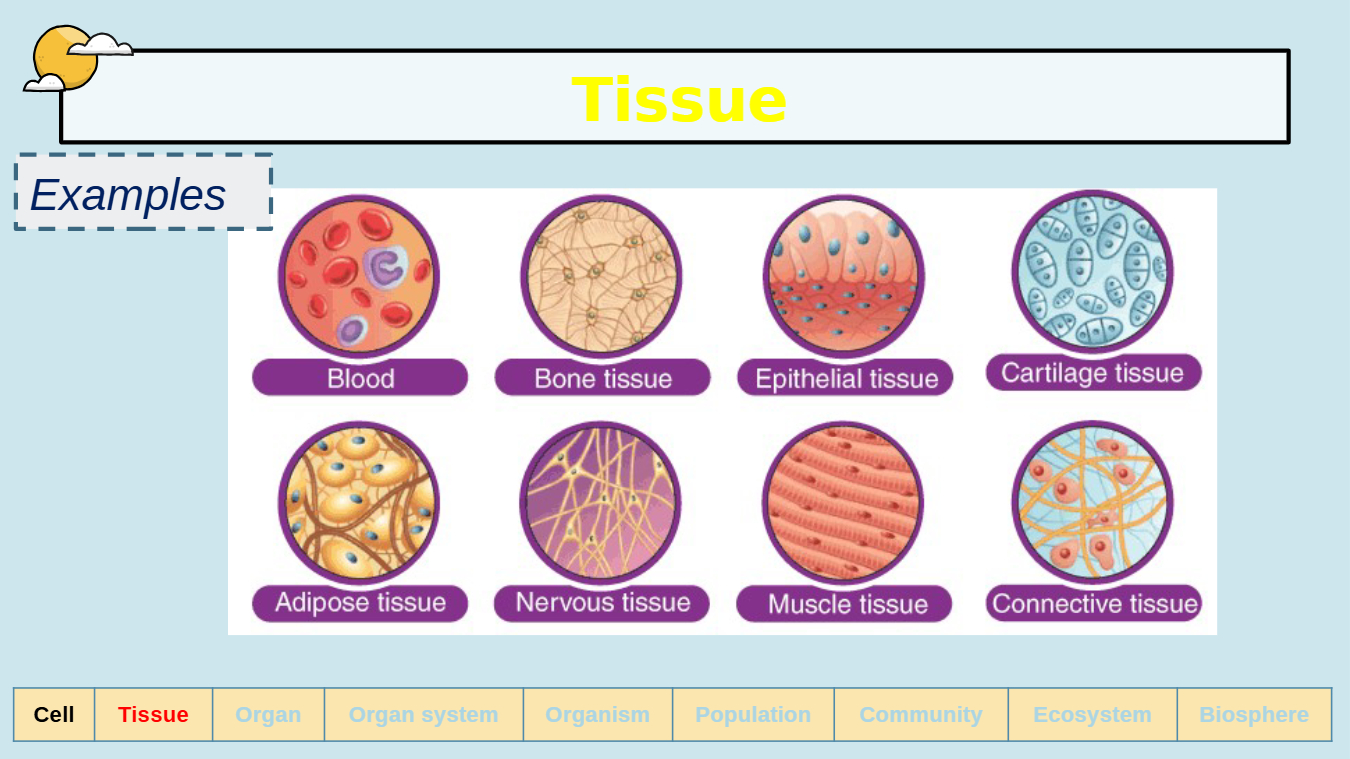
Identify two types of tissues shown in the examples and briefly describe their functions.
21

22
23
Fill in the Blanks
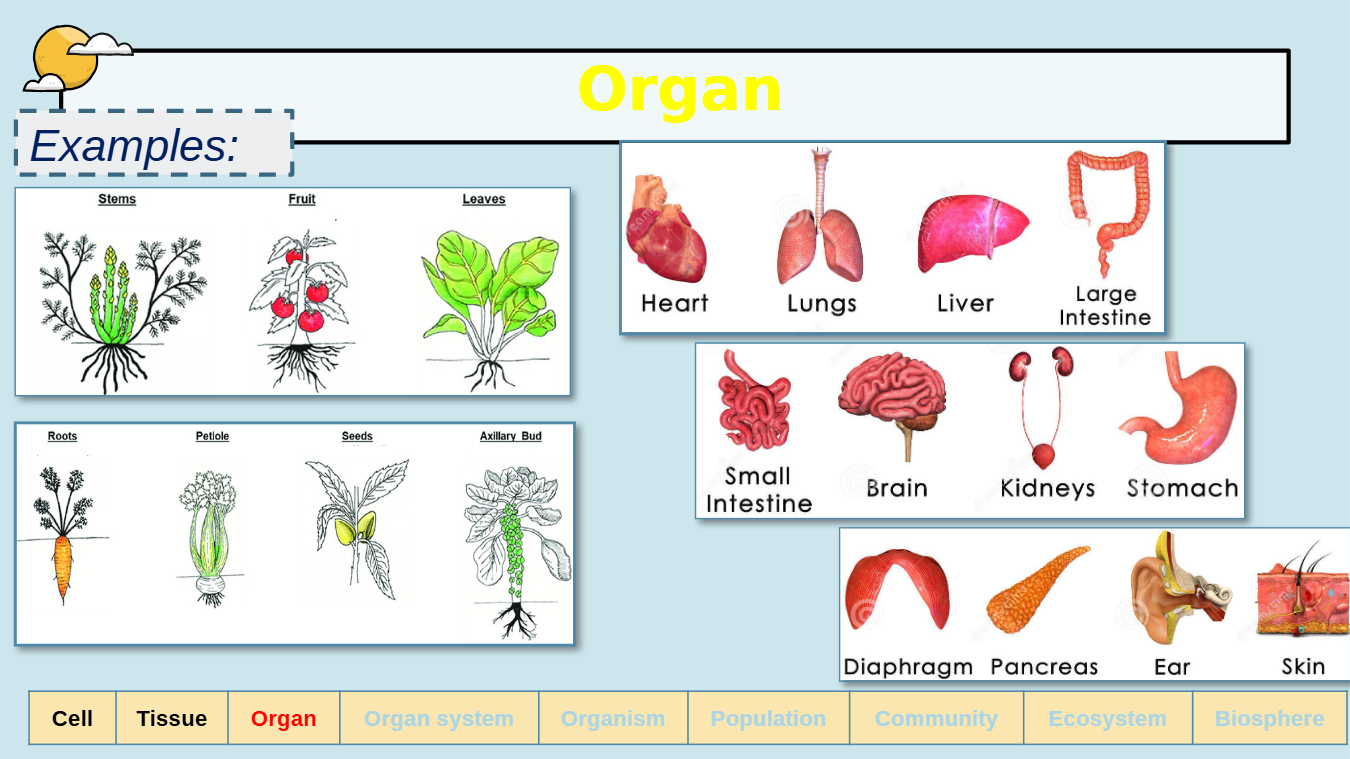
Organs such as roots, stems, and leaves are found in
Type answer...
24
Multiple Select
Which of the following are examples of organs in the human body?
Heart
Bone tissue
Muscle tissue
Liver
25

26
Open Ended
What is the main difference between an organ and an organ system?
27
28
Multiple Select
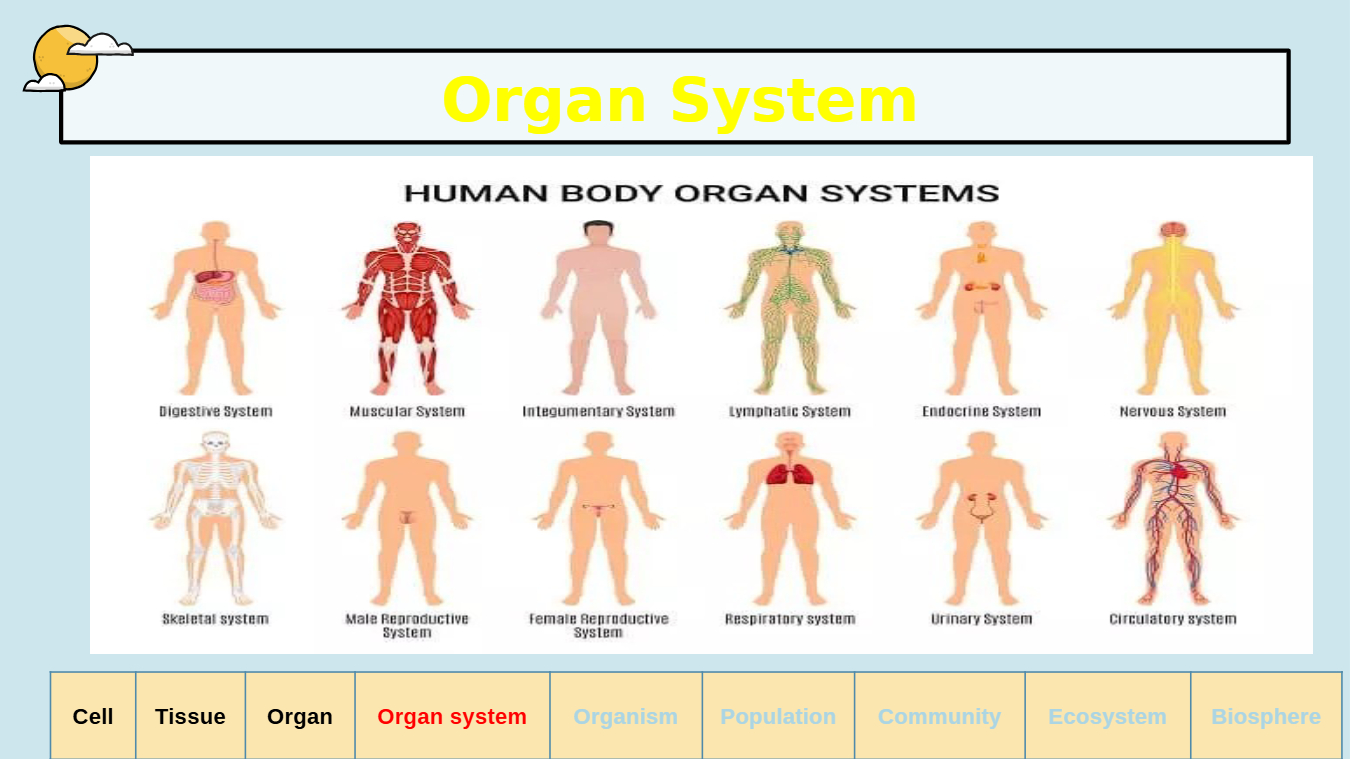
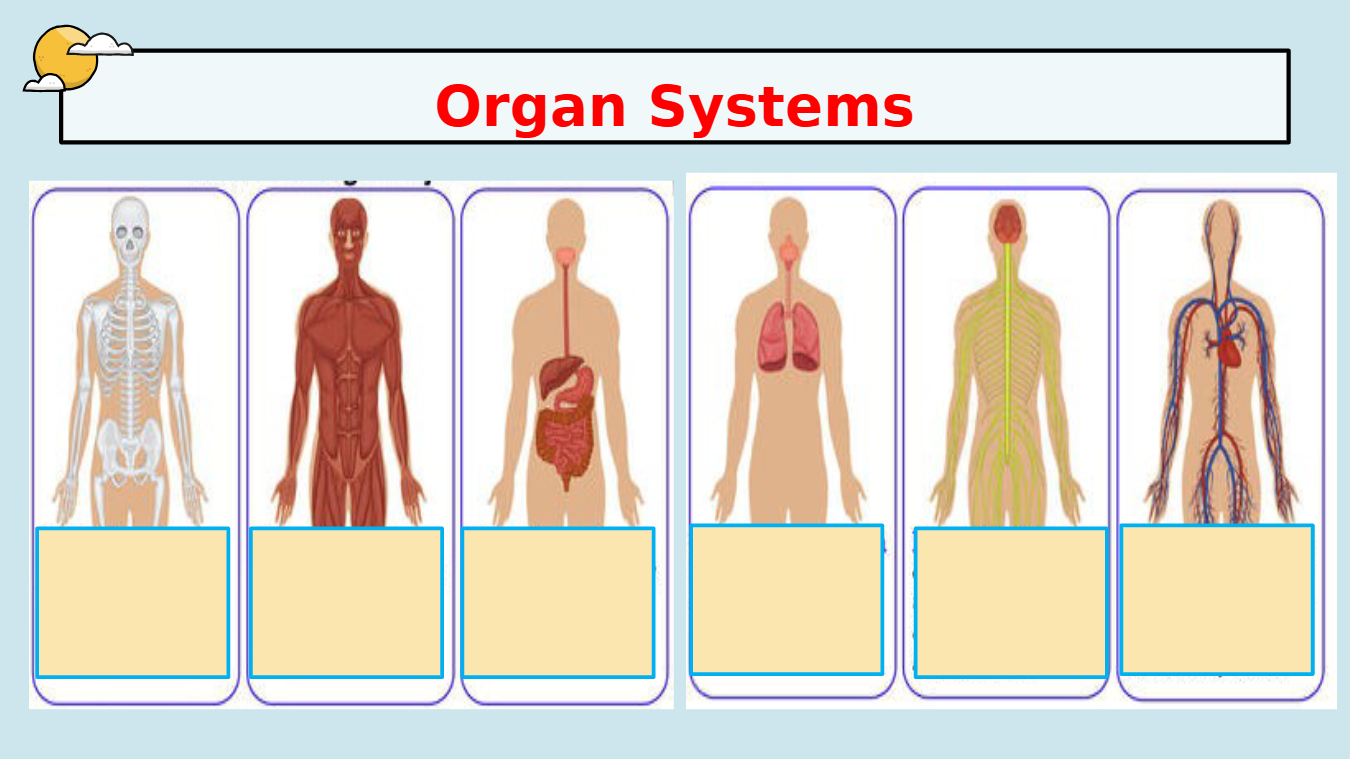
Which organ systems are present in the human body?
Digestive system
Muscular system
Nervous system
Respiratory system
29
30
31
Multiple Choice
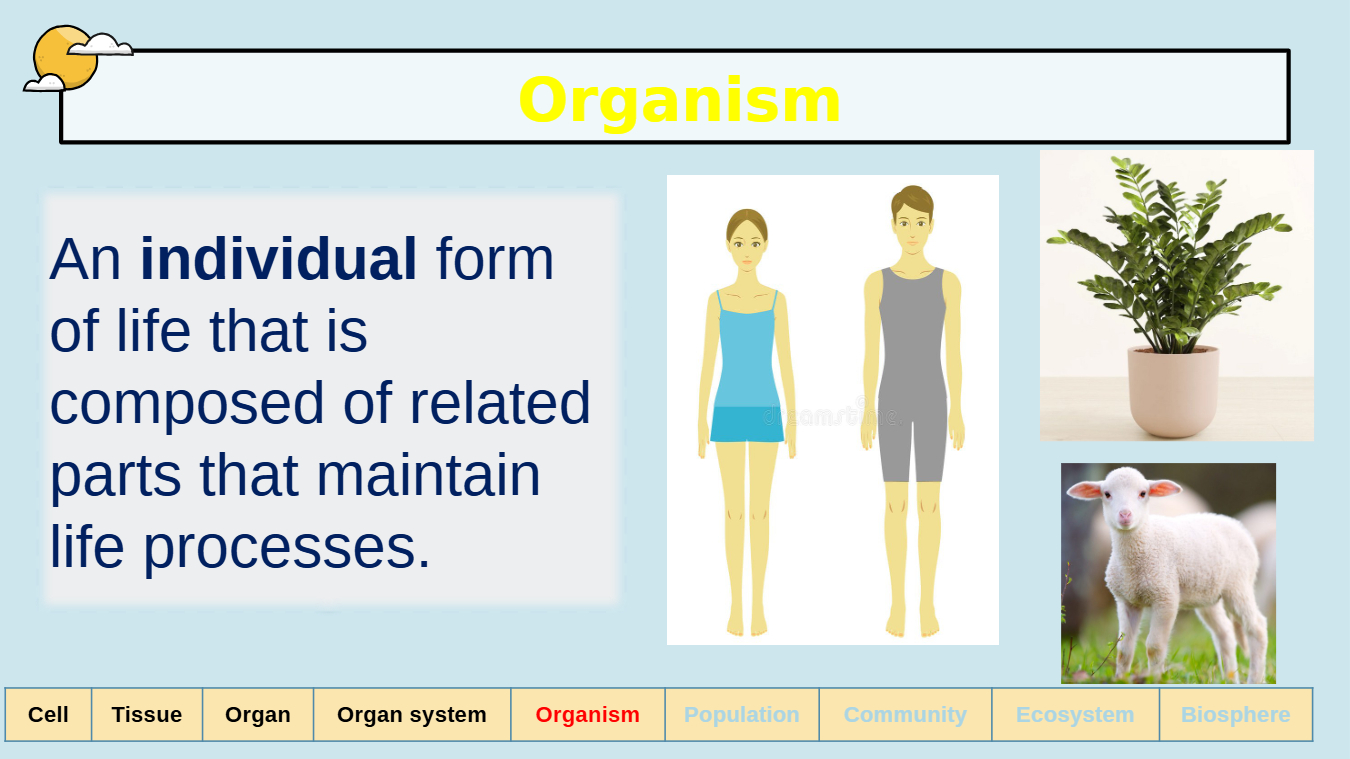
Which of the following best describes the relationship between an organ system and an organism?
An organ system is made up of multiple organisms.
An organism is made up of multiple organ systems.
An organ system is the smallest unit of life.
An organism is made up of only one organ system.
32

33
Multiple Choice
Which of the following is NOT an example of an organism?
A mushroom
A leaf
A lamb
A potted plant
34
35
36
Multiple Select
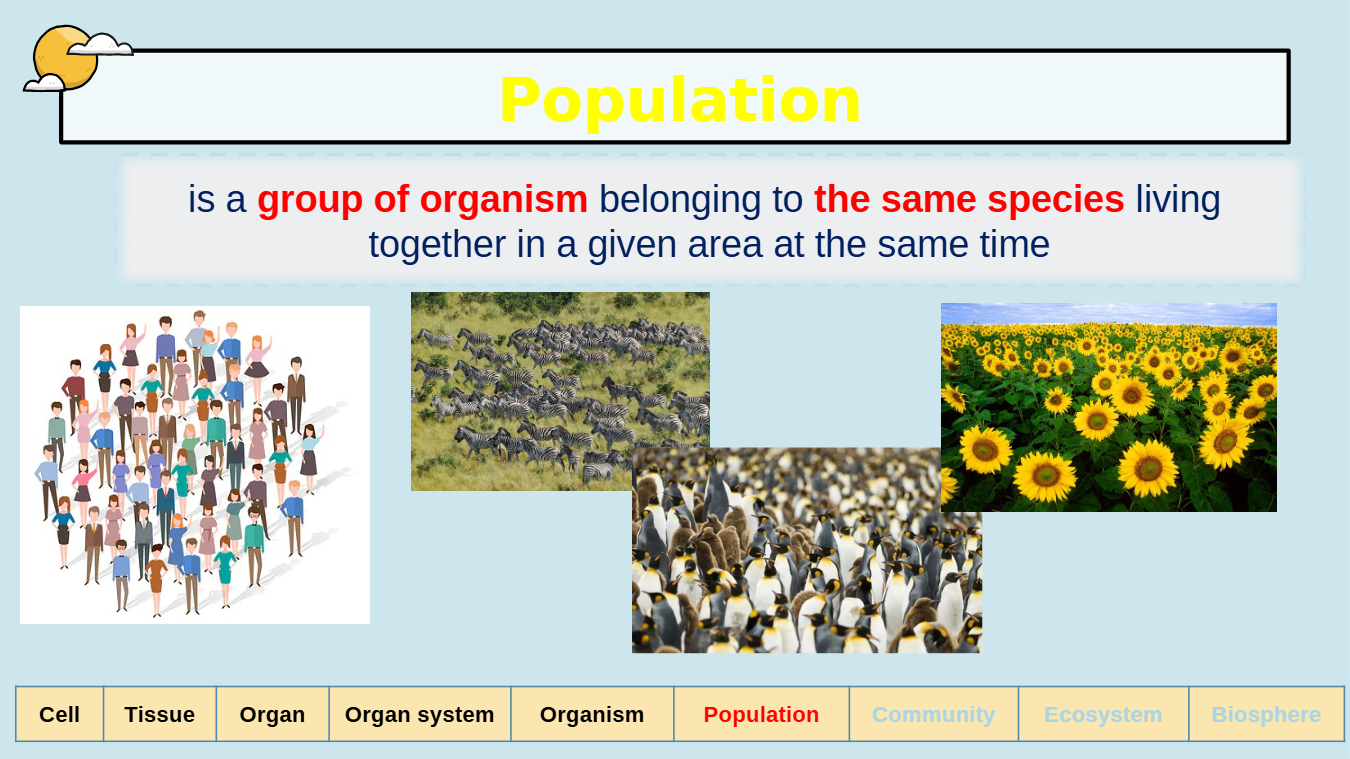
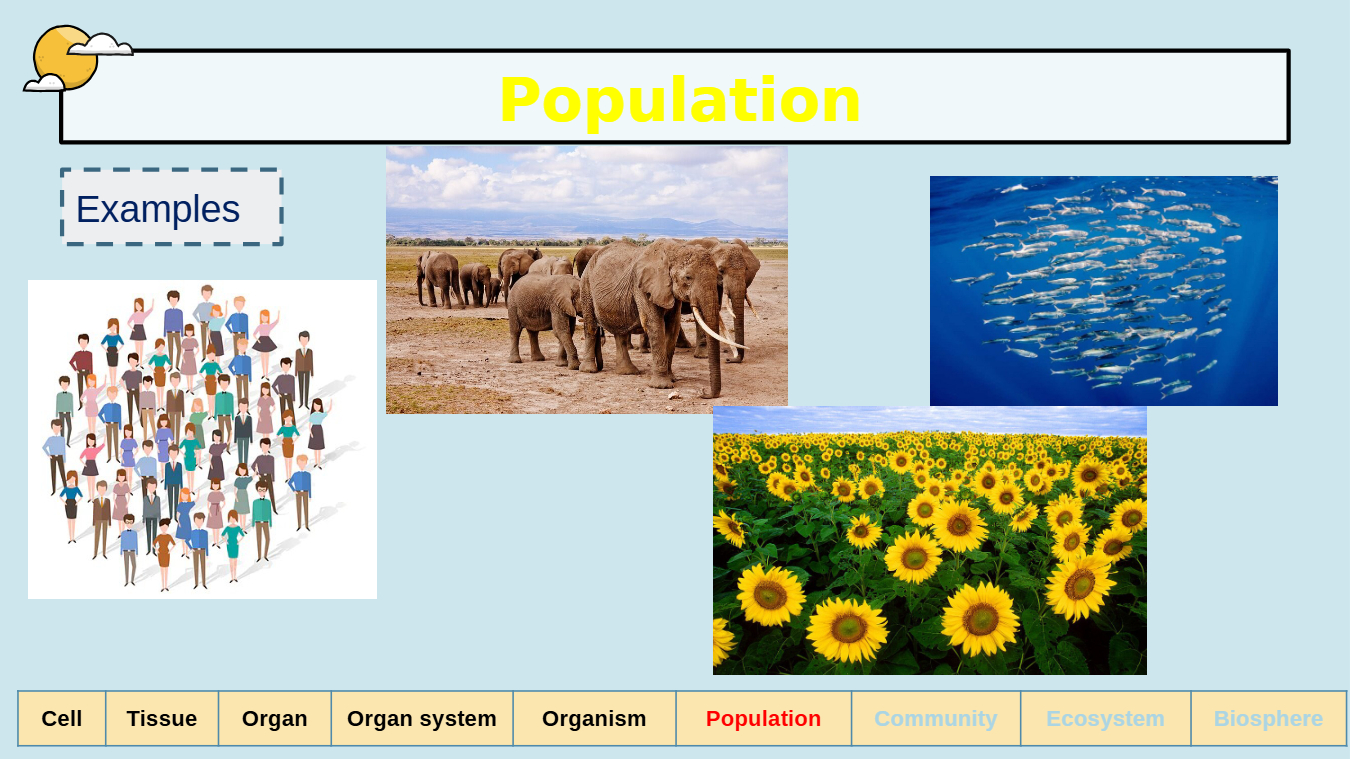
Which of the following are examples of populations?
A herd of elephants
A group of zebras and antelopes together
A field of sunflowers
A school of fish
37
38
Open Ended
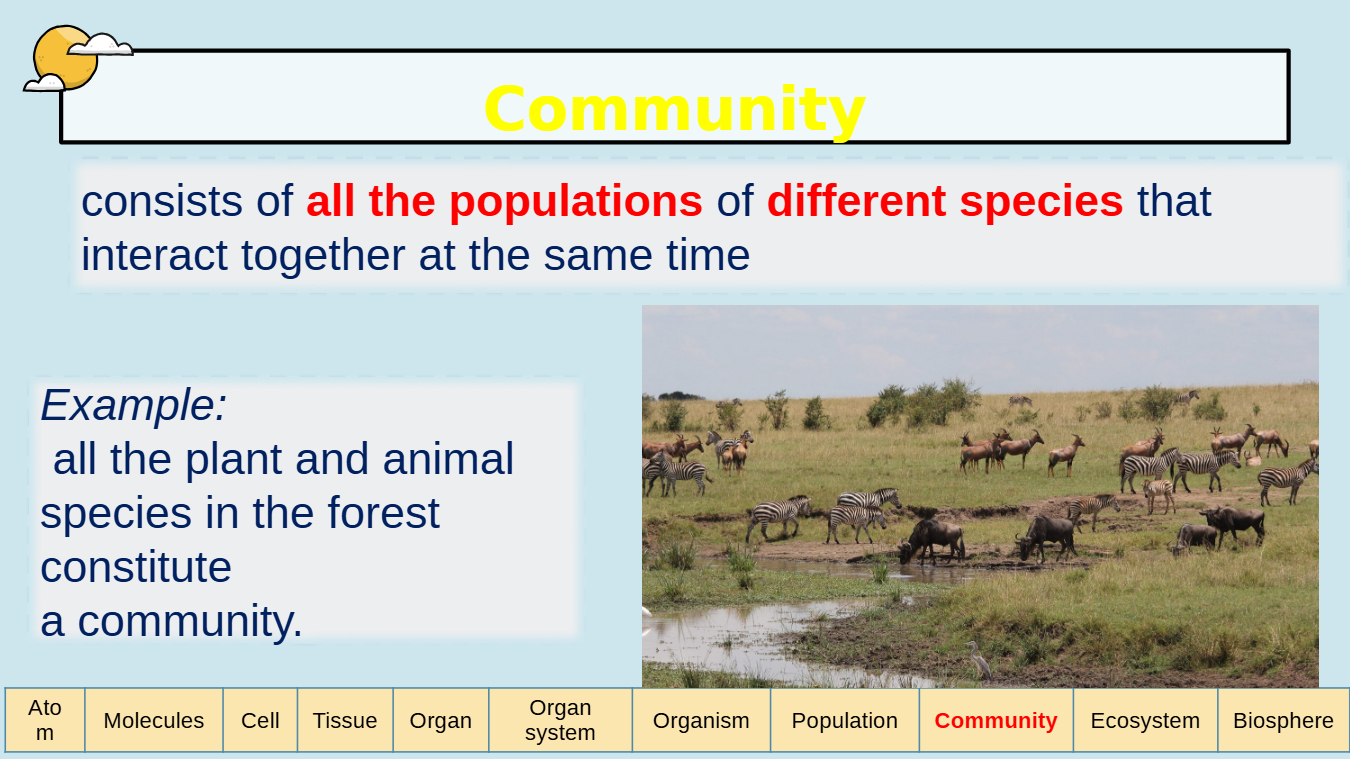
Describe the main difference between a population and a community, using examples from the images.
39
Fill in the Blanks
A community consists of all the populations of
Type answer...
40
Open Ended
Explain how populations and communities are related in an ecosystem.
41
42
Multiple Choice
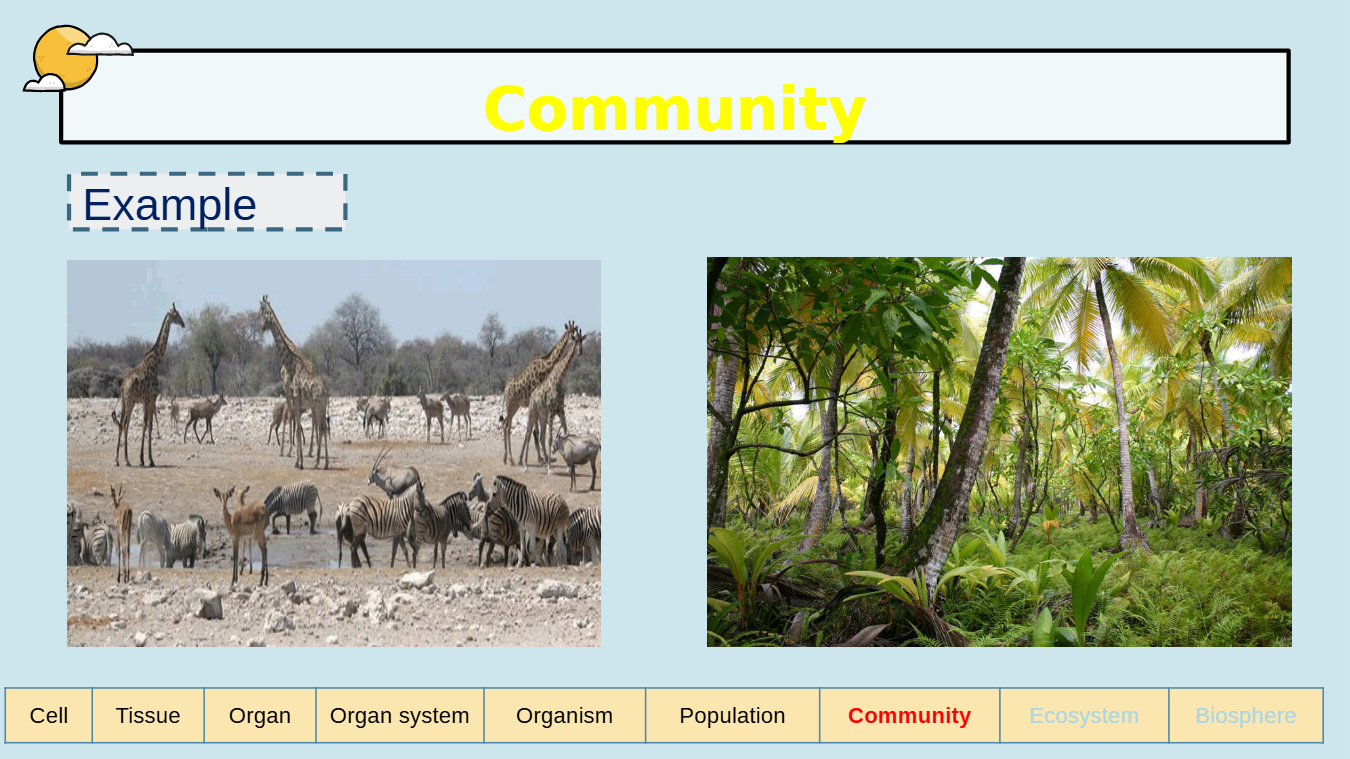
Which of the following best describes a biological community?
A group of organisms of the same species living together
All the abiotic factors in an area
Different species living together in an area
A single organism interacting with its environment
43

44
Fill in the Blanks
The main difference between a population and a community is that a population consists of ___ species, while a community consists of ___ species.
Type answer...
45
Open Ended
Compare and contrast the concepts of population and community using examples from the images.
46

47
Multiple Select
Which of the following are considered abiotic factors in an ecosystem?
Water
Plants
Animals
Minerals
48
49
Open Ended
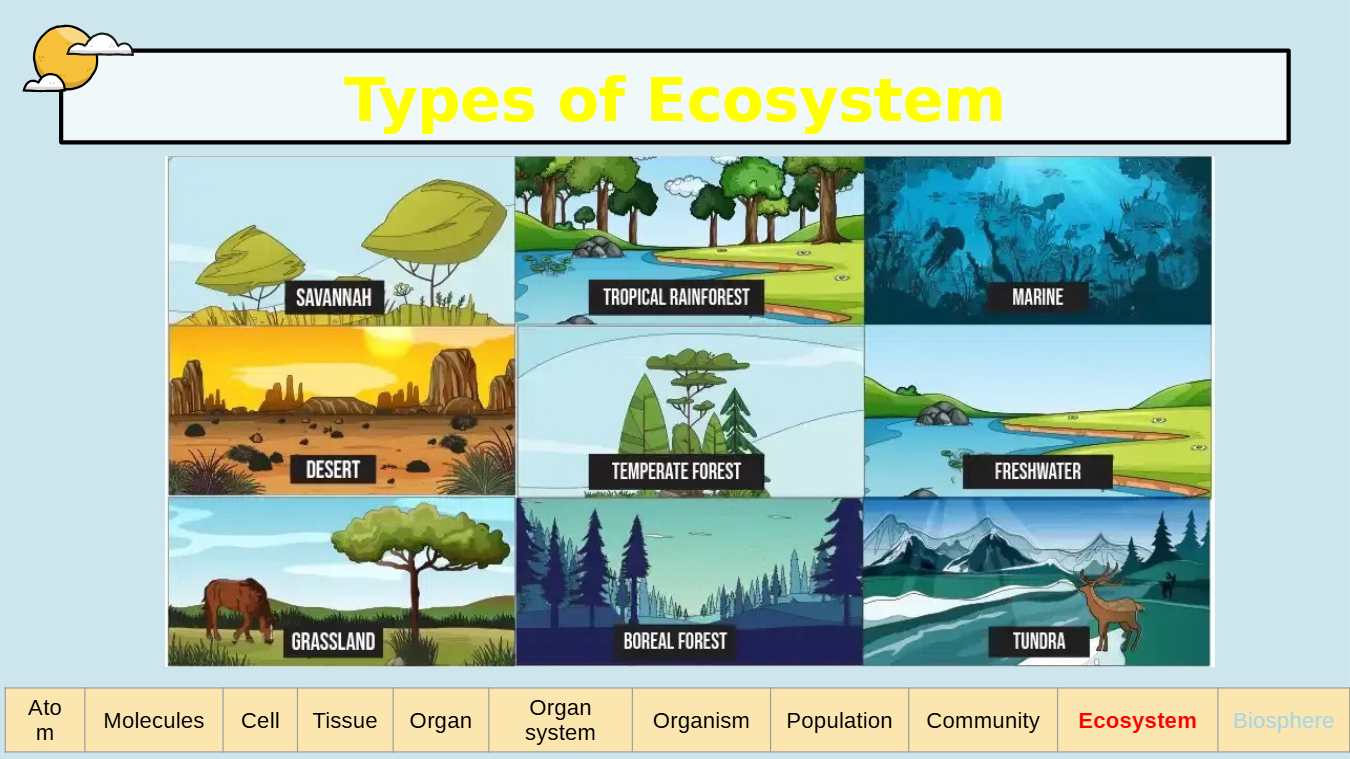
Name three types of ecosystems shown in the image and describe one characteristic of each.
50

51

52
Multiple Choice
The biosphere includes the atmosphere, land, and bodies of water to certain depths. Approximately how deep does the biosphere extend into the oceans?
100 meters
500 meters
1500 meters
5000 meters
53

54

55

56
57
Multiple Choice
Which of the following is NOT a level of biological organization?
Atom
Molecule
Planet
Organism
58
Open Ended
Reflecting on today's lesson about levels of biological organization, what is one question you still have or one concept you would like to explore further?
Show answer
Auto Play
Slide 1 / 58
SLIDE
Similar Resources on Wayground

53 questions
Mrs. Vandenbos' Scientific Method Review 7th Grade
Presentation
•
6th - 8th Grade
48 questions
Traits and Reproduction Test Review
Presentation
•
6th - 8th Grade
49 questions
Ecosystems - Biodiversity & Resilience
Presentation
•
6th - 8th Grade
51 questions
Motivation science presentation
Presentation
•
KG
51 questions
Wind and Weather
Presentation
•
6th - 8th Grade
51 questions
7.4.2-Types of Chemical Reactions
Presentation
•
6th - 8th Grade
49 questions
Energy Pyramid Doodle Notes
Presentation
•
6th - 8th Grade
Popular Resources on Wayground
10 questions
Impact of 9/11 and the War on Terror

Interactive video
•
10th - 12th Grade
21 questions
Continents and Oceans

Quiz
•
6th Grade
5 questions
9/11
Interactive video
•
9th Grade
20 questions
Parts of Speech
Quiz
•
5th Grade
16 questions
Subject & Predicate
Quiz
•
5th Grade
10 questions
Riddles Riddles fun Riddles
Quiz
•
6th - 12th Grade
21 questions
Lab Safety
Quiz
•
10th Grade
6 questions
PRIDE in the Hallways and Bathrooms
Presentation
•
12th Grade
Discover more resources for Science
20 questions
Lab Safety
Quiz
•
5th - 8th Grade
17 questions
7.6D Aqueous Solutions
Quiz
•
7th Grade
20 questions
Scientific Method and Variables
Quiz
•
8th Grade
20 questions
Scientific method and variables
Quiz
•
8th Grade
27 questions
Counting Atoms - Subscripts
Quiz
•
8th Grade
10 questions
6.6D - Relative Density Review
Quiz
•
6th Grade
14 questions
Science Variables
Quiz
•
7th Grade
20 questions
Elements, compounds, and mixtures
Quiz
•
6th Grade