mitosis and meiosis
Presentation
•
Science
•
9th - 12th Grade
•
Medium
+1
Standards-aligned
John Concepcion
Used 1+ times
FREE Resource
30 Slides • 40 Questions
1
2
3
4
5
6
7
8
9
10
11
12
13
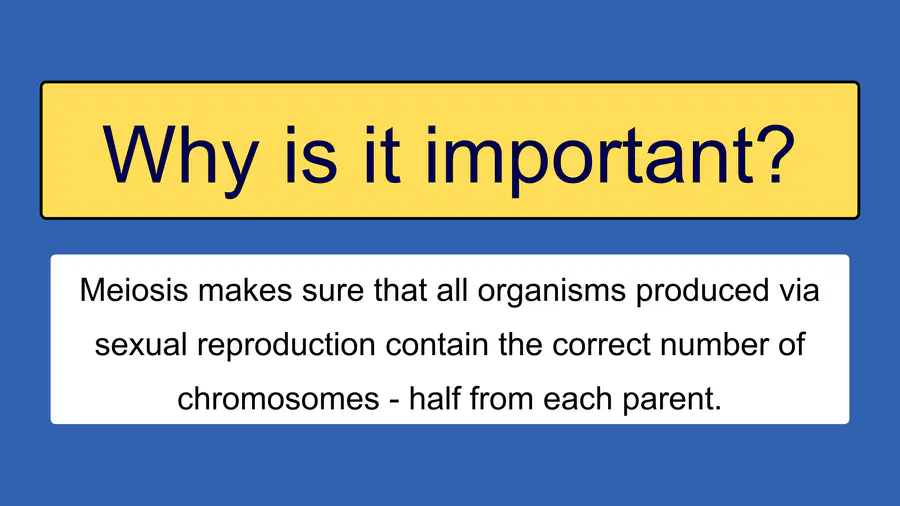
14
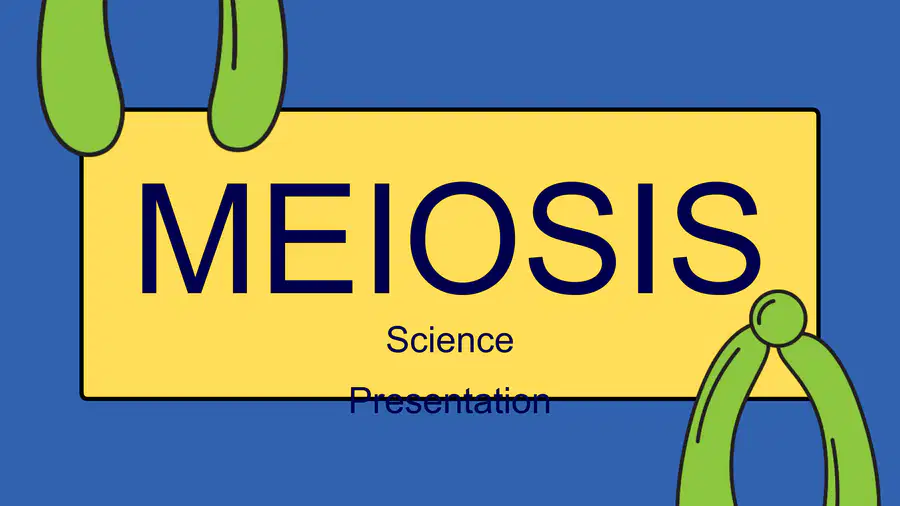
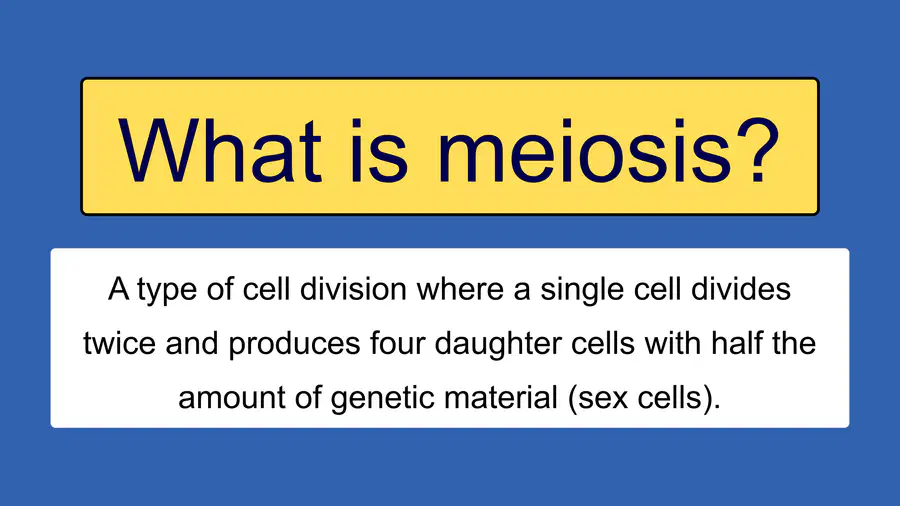
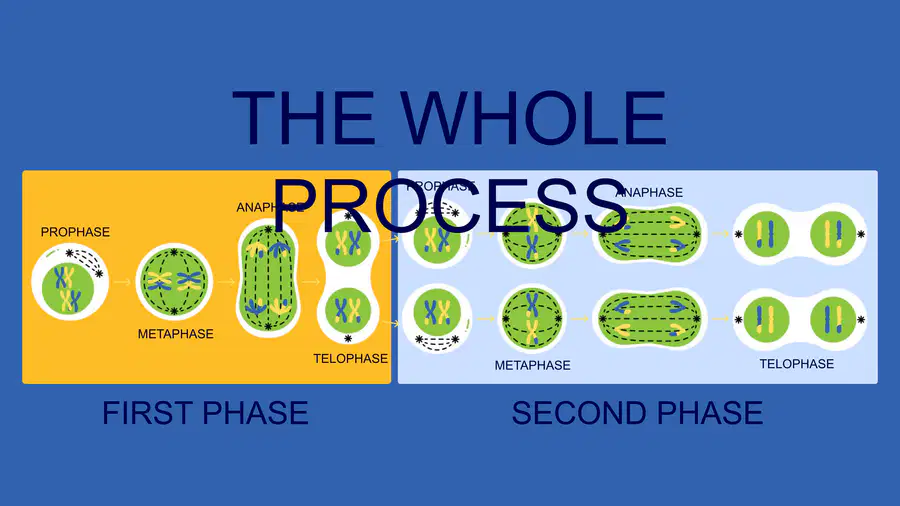
Meiosis
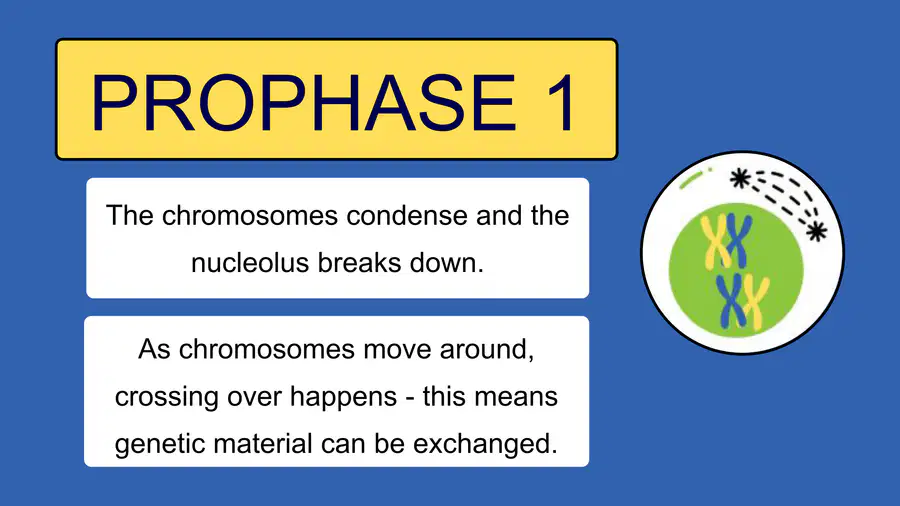
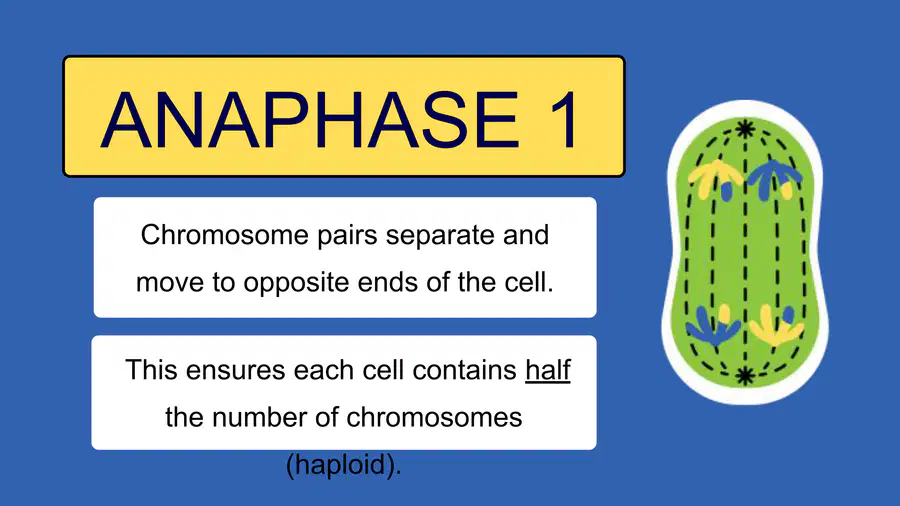
• Meiosis I - similar to mitosis, produces 2 diploid
daughter cells
• Meiosis II - occurs right after meiosis I, produces
2 haploid daughter cells each
For 1 parent cell, meiosis produces 4 haploid
daughter cells.
15
16
17
18
19
20
21
22
23
24
25
26
Mitosis vs. Meiosis
1. Meiosis has synapsis (pairing of two homologous chromosomes) during Prophase I.
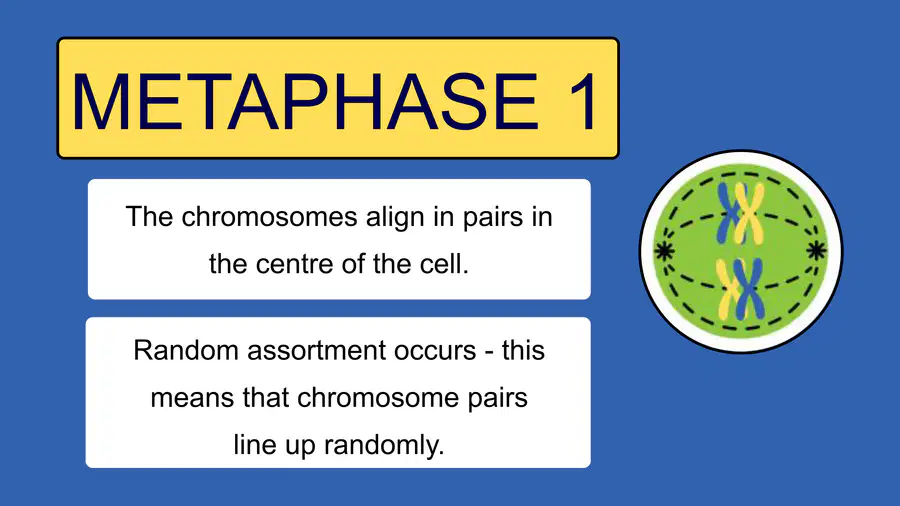
2. Metaphase I aligns two chromatids at a time, compared to one for mitosis.
3. Meiosis produces 4 haploid daughter cells with different genetic material while mitosis produces 2 diploid daughter cells with the same genetic material.
4. Meiosis occurs only to produce egg and/or sperm cells.
27
Primary purposes of Mitosis
1. Asexual Reproduction – Mitosis is the method of reproduction of single-celled asexual organisms.
2. Growth – Mitosis is involved in cell reproduction, which results in increased cell number which adds more mass to the body.
3. Tissue Repair – Mitosis produces cells which replace damaged or dead cells.
28
Primary purposes of Meiosis
1. Sexual Reproduction – Meiosis of a single
diploid germ cell involves DNA replication followed by two rounds of division, resulting in haploid cells called gametes. These haploid cells have half the number of chromosomes of the original single diploid germ cell. This also results in genetic variation among the haploid cells.
29
Primary purposes of Meiosis
2. Spermatogenesis - Immature sperm cells
undergo successive cell divisions
(spermatocytogenesis) and a change in cell form
(spermiogenesis) to produce mature sperm cells
(spermatozoa).
30
Primary purposes of Meiosis
3. Oogenesis - The formation of the ovum or egg.
Oogenesis consists of two events: the ovum
precursor germ cell undergoes meiotic division
and accumulates a significant amount of
cytoplasm.
31
Multiple Choice
During what phase of Mitosis do the chromosomes line up in the Middle
Metaphase
Prophase
Telophase
Anaphase
32
Multiple Choice
How many chromosomes to do most human cells have?
2
46
92
Identical to your age
33
Multiple Choice
What is the purpose of Mitosis?
Growth of an organism and Repair of damaged tissue
To help the body get rid of extra cells
To increase the amount of classwork you have to do
To get rid of the nucleus
34
Multiple Choice
35
Multiple Choice
36
Multiple Choice
37
Multiple Choice
38
Multiple Choice
39
Multiple Choice
40
Multiple Choice
Chromatids separate
Anaphase
Metaphase
Prophase
Telophase
41
Multiple Choice
Nuclear membrane reforms around the new daughter cells.
Cytoplasm begins to "pinch" in.
Anaphase
Metaphase
Telophase
Interphase
42
Multiple Choice
Two replicated cells split from each other and are able to move on their own.
Metaphase
Prophase
Cytokinesis
Telophase
43
Multiple Choice
Identical copies of chromosomes
Chromosome
Chromatid
Centriole
Centromere
44
Multiple Choice
The middle of a chromosome
Centriole
Cytokinesis
Centromere
Chromatid
45
Multiple Choice
Extend from centriole and pull sister chromatids apart
Spindle Fibers
Replication
Centriole
Interphase
46
Multiple Choice
47
Multiple Choice
48
Multiple Choice
49
Multiple Choice
50
Multiple Choice
51
Multiple Choice
52
Multiple Choice
In the following structure, the circled item is a
chromosome
chromatid
centromere
chromatin
53
Multiple Choice
1. Which stage of meiosis does homologous chromosomes pair up and crossing over take place?
A. Anaphase I
B. Metaphase I
C. Prophase I
D. Telophase I
54
Multiple Choice
2. What do you call the process by which sex cells are formed?
A. Gametogenesis
B. Spermatogenesis
C. Spermatogenesis
D. Oogenesis
55
Multiple Choice
6. Which of the following statements best explained evolutionary advantage of meiosis?
A. Meiosis alternates with mitosis from one to the next generation
B. Meiosis is essential for sexual reproduction
C. Passing of the same genetic system from one to next generation
D. Genetic recombination is possible from one to next generation
56
Multiple Choice
7. The meiotic division takes place in what type of cells?
A. Meristematic cells
B. Conductive cells
C. Vegetative cells
D. Reproductive cells
57
Multiple Choice
8. The picture depicts what phase of meiosis.
A. Prophase I
B. Prophase II
C. Anaphase I
D. Anaphase II
58
Multiple Choice
59
Multiple Choice
60
Multiple Choice
61
Multiple Choice
62
Multiple Choice
63
Multiple Choice
64
Multiple Choice
65
Multiple Choice
66
Multiple Choice
67
Multiple Choice
68
Multiple Choice
69
Multiple Choice
70
Poll
How confident do you feel about this topic now?
Show answer
Auto Play
Slide 1 / 70
SLIDE

Similar Resources on Wayground
70 questions
Biomolecules and Nutrition
Presentation
•
9th - 12th Grade
64 questions
👀 A&Physio U2 Respiratory Test Review
Presentation
•
10th Grade - University
64 questions
Nervous System
Presentation
•
9th - 12th Grade
65 questions
Digestive System
Presentation
•
10th - 12th Grade
71 questions
Benchmark Review Part 1
Presentation
•
KG
60 questions
HBS Lesson
Presentation
•
9th Grade - University
60 questions
Introduction to Human Body
Presentation
•
9th Grade - University
Popular Resources on Wayground
10 questions
HCS SCI 03 Summer School Assessment 1
Quiz
•
3rd Grade
15 questions
HCS SCI 05 Summer School Assessment 1 Review
Quiz
•
5th Grade
22 questions
Day 9 Equations and Inequalities Review
Quiz
•
9th Grade
10 questions
Writing and Identifying Ratios Practice
Quiz
•
5th - 6th Grade
7 questions
PYRAMID PERSPECTIVES part 1
Presentation
•
9th - 12th Grade
12 questions
Understanding the Fourth of July
Quiz
•
9th Grade
15 questions
Soccer World Cup Quiz Questions
Quiz
•
7th Grade